









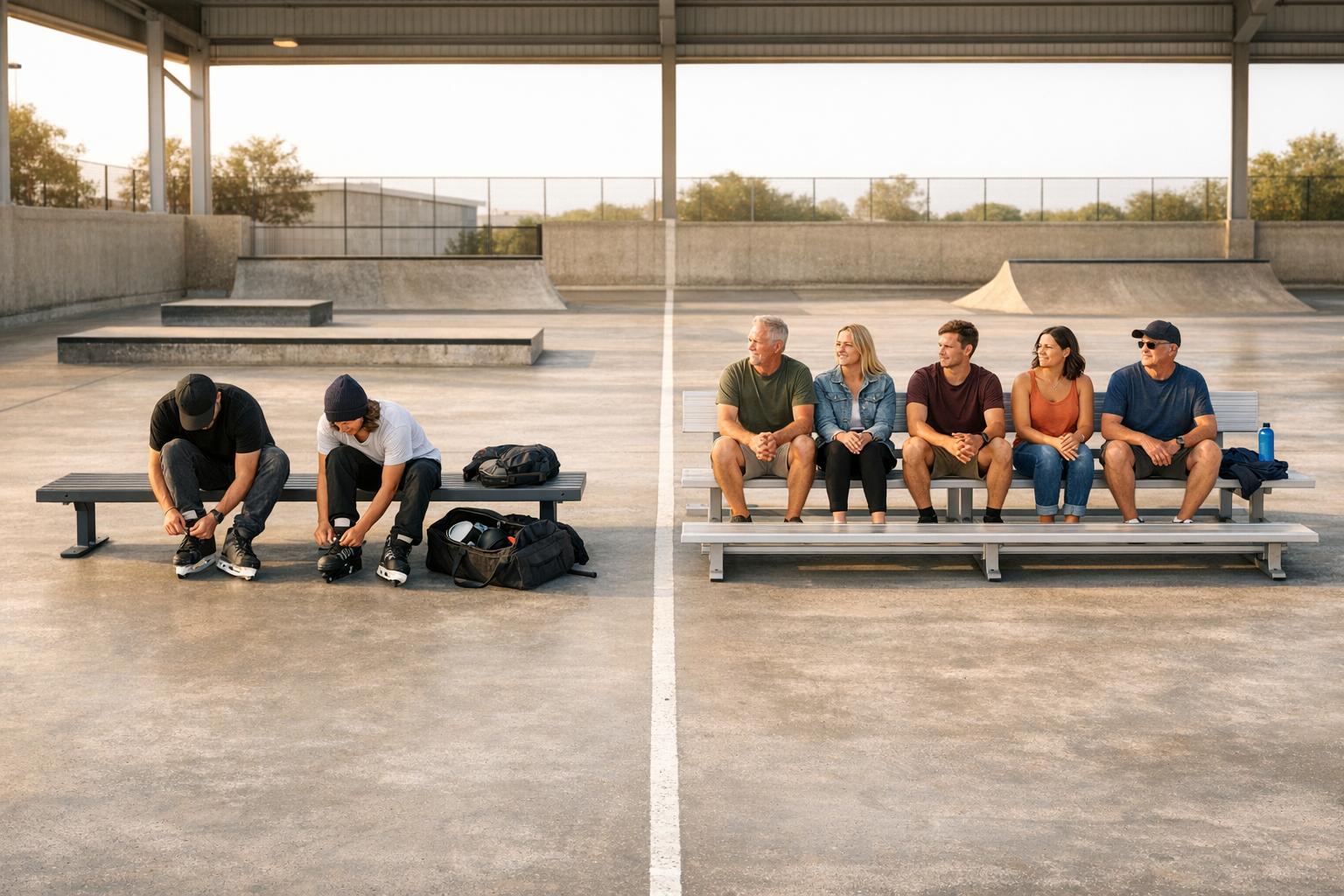
- bhavya gada
- No Comments
When choosing seating for skating zones, the decision often comes down to benches or bleachers. Here’s a quick breakdown to help you decide:
- Benches: Compact, low-maintenance, and ideal for smaller spaces or casual settings. They’re perfect for skaters to rest or gear up but may obstruct views for larger crowds.
- Bleachers: Designed for larger groups, their tiered structure provides excellent visibility for spectators. Great for events but require more space and can feel less inviting in smaller, residential areas.
Key Considerations:
- Space: Benches fit tight areas; bleachers maximize seating vertically.
- Capacity: Bleachers hold more people; benches work for smaller groups.
- Durability: Aluminum is the best material for weather resistance in Maryland’s climate.
- Purpose: Combine both for flexibility – benches for skaters, bleachers for spectators.
Quick Comparison:
| Feature | Benches | Bleachers |
|---|---|---|
| Space Needed | Minimal, fits tight areas | Requires more depth, expands vertically |
| Seating Capacity | Lower, good for small groups | Higher, ideal for events |
| Durability | Aluminum resists weather well | Aluminum and steel last longer |
| Best Use | Residential and casual settings | Events, competitions, larger crowds |
For the best results, consider a mix of both to balance functionality and comfort for skaters and spectators.
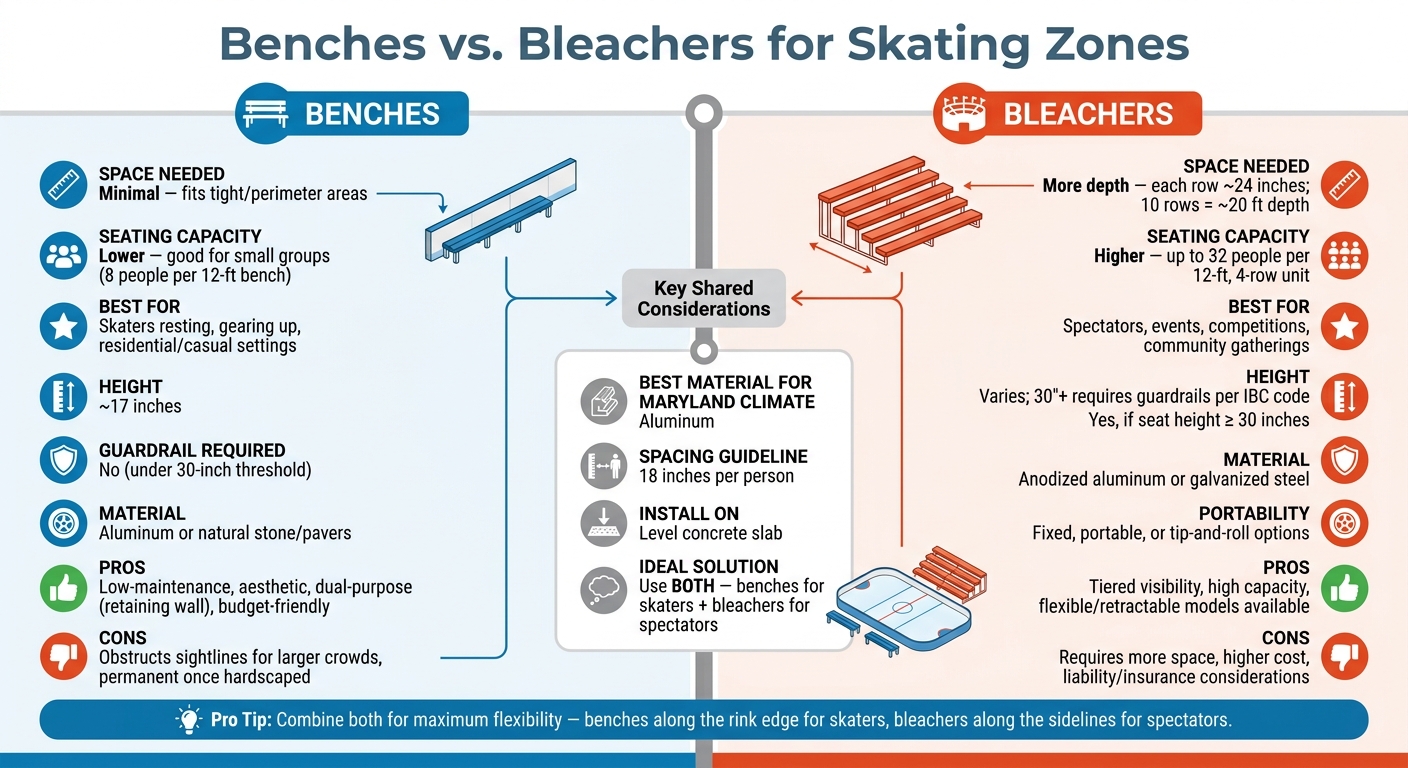
Benches vs. Bleachers for Skating Zones: Side-by-Side Comparison
What to Consider When Choosing Skating Zone Seating
When deciding between benches and bleachers for a skating zone, it’s essential to think about space, seating capacity, and durability. Addressing these factors upfront can help avoid costly changes later on.
Space and Layout
The main difference between benches and bleachers is how they utilize space. Benches take up minimal linear room, making them ideal for placing along perimeters or in tight corners without interfering with skating paths. Bleachers, on the other hand, expand vertically. Each row of bleachers requires about 24 inches, so a 10-row setup needs approximately 20 feet of depth.
This vertical design allows bleachers to hold more people in the same footprint. For example, a 20-foot depth can accommodate roughly 10 rows of bleachers, offering far more seating than benches. Additionally, for skating zones with curved or angled edges, custom mitered bleacher units can be designed to fit the space effectively.
"The footprint directly impacts the size and design of the bleacher system, including the number of rows and seating capacity." – Ryan Wilby, Sport Systems Canada [3]
For multipurpose areas, portable aluminum benches or tip-and-roll bleachers are great options. They allow for flexibility and keep traffic flow open when the seating isn’t in use [2][3].
Seating Capacity and Group Size
When calculating seating needs, plan for 18 inches per person [4][5]. For benches, divide the total bench length by 1.5 feet to determine capacity. For bleachers, multiply that number by the number of rows. For instance, a 12-foot, 4-row aluminum bleacher can seat about 32 people, compared to just 8 on a single bench.
Benches are often sufficient for smaller zones, such as neighborhood rinks where family groups gather. But for larger events like clinics, league practices, or community gatherings, bleachers are a more efficient choice. They accommodate more people without taking up excessive ground space. Low-rise aluminum bleachers are a great compromise for smaller venues, offering increased seating without towering height [4].
Keep in mind that any seating structure with a seat height of 30 inches or more must include guardrails to meet International Building Code (IBC) standards [5]. Always check local codes before finalizing your design.
Durability and Upkeep
Durability is another key factor, especially with Maryland’s unpredictable weather. Outdoor seating in this region faces challenges like freeze-thaw cycles in winter, high humidity in summer, and frequent rain. Aluminum is the go-to material for both benches and bleachers in outdoor settings. It resists rust, handles temperature swings, and requires far less maintenance than wood. Wooden bleachers, while traditional, are more prone to sun bleaching and moisture damage over time – an issue that actually led to the term "bleachers" [6].
To ensure stability, anchor seating to a solid, level concrete slab. This helps it withstand wind and prevents shifting [4]. Incorporating hardscaping elements like concrete pads, paver walkways, or natural stone can also stabilize the seating area and reduce erosion from heavy rain – a common concern in the Maryland/DC area [1]. Adding a shade structure or overhead cover can further protect the seating and make the area more comfortable during hot summer days [2].
sbb-itb-843f8be
Benches: Pros, Cons, and Best Uses
Benches bring both practical and aesthetic appeal to skating zones, but they come with their own set of strengths and limitations.
Advantages of Benches
Benches, often doubling as seating walls, serve a dual purpose: providing soil retention while offering a place for spectators to sit. They are incredibly versatile in design, with options ranging from natural stone for a rustic charm to manufactured pavers from brands like Techo-Bloc for a sleek, modern finish. Adding a stone veneer is an easy way to enhance texture without breaking the bank, creating seating that blends naturally into the surrounding landscape.
"Retaining walls provide essential structural support to prevent soil erosion, but they also serve as beautiful design elements… and can be customized with natural stone, brick, or concrete." – Pro Landscapes MD [1]
Drawbacks of Benches
Despite their benefits, benches have some drawbacks. Their 17-inch height can obstruct sightlines, particularly for larger gatherings, making it harder for people in the back to see. While this isn’t a major issue for small groups, it becomes problematic with bigger crowds [7]. Another limitation is their permanence. Once installed, hardscaped benches cannot be rearranged to accommodate special events or changing needs [1].
When Benches Work Best
Benches shine in smaller, residential skating zones or youth-focused areas where the emphasis is on aesthetics and intimate gatherings rather than accommodating large crowds. They integrate beautifully with patios and walkways, creating a cohesive and visually pleasing hardscape. This makes them a perfect fit for spaces where efficient use of space and design consistency are key priorities.
Bleachers: Pros, Cons, and Best Uses
When it comes to accommodating large crowds, bleachers are the clear choice. Unlike benches that focus on blending into the environment, bleachers are all about maximizing capacity and ensuring everyone has a great view of the action.
Advantages of Bleachers
Bleachers come in a wide range of sizes, from compact 3-tier options to massive 30-tier setups[8][9]. Their tiered design solves the visibility issues common with flat benches, making sure that even those seated in the back rows can see clearly. Elevated front aisles further enhance sightlines, making them ideal for events where visibility is key[8]. Some modern designs, like telescopic or "Tip and Roll" bleachers, can retract when not in use, freeing up valuable floor space[5]. For outdoor use, materials like anodized aluminum and galvanized steel make bleachers resistant to rust and weather damage, ensuring they hold up well in humid or rainy conditions[9].
"Typically speaking, elevated bleachers are usually larger in size and are used when spectator visibility is a main concern." – Sport Systems[5]
While these features make bleachers highly functional, they’re not without their challenges.
Drawbacks of Bleachers
Bleachers take up a lot more space than benches, which might not work well in smaller or residential settings. Large seating areas can also unintentionally change the vibe of a skate zone, potentially making it less inviting for beginners or younger skaters[10]. There’s also the issue of liability. According to skate park designer Dave Rebus, public seating in skating zones often becomes an "insurance nightmare" for officials, complicating the planning and approval process[10]. Additionally, U.S. building codes require guardrails for bleachers with seat heights of 30 inches or more, which increases both installation costs and design complexity[5].
When Bleachers Work Best
Bleachers truly shine in spaces that need flexible, durable seating options. In Maryland, for example, where recreational spaces vary widely, they’re perfect for community centers, public skate parks, or multi-use facilities hosting events, competitions, or group activities[4][5]. Portable or transportable bleachers are especially useful in spaces that serve multiple purposes – like switching between skating and community events on different days[4][5]. For outdoor rinks with permanent spectator areas, fixed aluminum bleachers installed on concrete slabs offer a long-lasting, low-maintenance solution[4].
Benches, Bleachers, or Both: How to Decide
Blending benches and bleachers can improve both functionality and comfort in skating areas. Benches offer skaters a place to rest, gear up, or wait their turn, while bleachers provide spectators with elevated views of the action. Together, they help manage crowd flow by keeping skaters and onlookers in distinct spaces. This section ties seating choices to hardscape design and local weather considerations, building on earlier discussions about space and materials.
When planning, use the 18-inch-per-person guideline to calculate how many rows of bleachers or bench spots are necessary for your setup.
Pairing Seating with Landscaping and Hardscaping
Seating areas need to be installed on solid, level surfaces, with clear paths for easy access. Walkways made of pavers or flagstone are great for directing foot traffic away from fragile landscaping while guiding people toward seating zones. For sloped areas, retaining walls can double as both support structures and informal seating.
"Hardscaping refers to the use of solid materials such as stone, concrete, and wood to build permanent landscape structures. These features create a foundation for your outdoor space, adding both form and function." – Pro Landscapes MD [1]
It’s crucial to ensure proper drainage around seating to avoid long-term wear and tear. Companies like Pro Landscapes MD specialize in hardscaping solutions, including paver patios, retaining walls, and drainage systems, making them a strong partner for creating durable outdoor skating areas.
Maryland Weather and Material Selection
Maryland’s climate – ranging from humid summers to rainy springs and cold winters – plays a big role in choosing seating materials. Aluminum is a popular choice for seating planks and decking because it resists rust and is lightweight, which is ideal for portable setups. For permanent bleachers, galvanized steel works well for the understructure due to its strength and durability under heavy loads [5].
For hardscape elements like patios, walkways, and retaining walls, materials such as Techo-Bloc, Belgard, and Pennsylvania flagstone hold up well against the region’s weather conditions [1].
Using Both Benches and Bleachers Together
To maximize efficiency and safety, place benches along the rink edge for skaters and bleachers along the sidelines for spectators. This setup keeps skaters and viewers separated, ensuring clear sightlines and minimizing interference. Low-rise bleachers with three rows or fewer often don’t require guardrails if the top seat stays under 30 inches high [11], making them easy to incorporate into casual environments. For larger gatherings, elevated bleachers with ADA-compliant wheelchair spaces and companion seating ensure accessibility for all [5].
Conclusion: Picking the Right Seating for Your Skating Zone
When it comes to seating for your skating zone, benches and bleachers each bring something different to the table. Benches are perfect for quick breaks and gear changes, while bleachers give spectators a better view of the action. Both options play specific roles in creating a functional and inviting space.
Choosing the right seating comes down to factors like crowd size, available space, and how the area is used daily. For instance, a small neighborhood rink might only need simple edge benches, while larger community facilities can benefit from a mix of bleachers and benches to accommodate different needs.
The materials you choose are just as important as the layout. For outdoor bleachers, aluminum is a smart pick since it handles moisture and temperature changes well. On the other hand, built-in stone seating, made from materials like Pennsylvania Flagstone or Techo-Bloc, offers a durable, low-maintenance option that blends beautifully with the surrounding landscape [1].
"We work closely with you to create hardscaping solutions that fit your style and enhance the overall design of your landscape." – Pro Landscapes MD [1]
To bring your vision to life, consider working with Pro Landscapes MD. They specialize in custom seating, paver patios, retaining walls, and drainage solutions for Maryland and Washington, DC [1].
FAQs
How do I choose between benches, bleachers, or both?
When choosing between benches, bleachers, or a mix of both for skating zones, it’s essential to think about their purpose and who will use them.
- Benches are ideal for skaters to take a break, tie their skates, or get ready. They’re especially suitable for smaller or residential areas where space is limited.
- Bleachers, on the other hand, are better for bigger spaces or events. Their tiered design provides plenty of seating for spectators, making them perfect for competitions or public gatherings.
If the space allows, combining both options can meet the needs of skaters while ensuring spectators are comfortable. It all depends on the size of the area and how it will be used.
Do bleachers for skating zones need guardrails or permits?
Bleachers in skating areas usually don’t need guardrails or permits if they’re temporary or portable. That said, safety should always come first – adding guardrails for elevated seating is a smart way to prevent falls. If the bleachers are permanent or larger in scale, permits might be necessary, particularly if they impact things like drainage systems or property boundaries. To be sure, review your local building codes for any specific rules in your area.
What foundation and drainage do outdoor seating areas need?
Outdoor seating areas, like benches or bleachers in skating zones, require a solid base and good drainage to stand the test of time. Using a compacted layer of gravel or crushed stone helps prevent shifting, keeping the foundation steady. To tackle water issues, features like French drains or dry riverbeds can be installed to stop water from pooling and causing erosion. Proper grading and leveling are also key, ensuring water flows away from the area, making it safer and more durable in the long run.
Chat with Us