









- bhavya gada
- No Comments
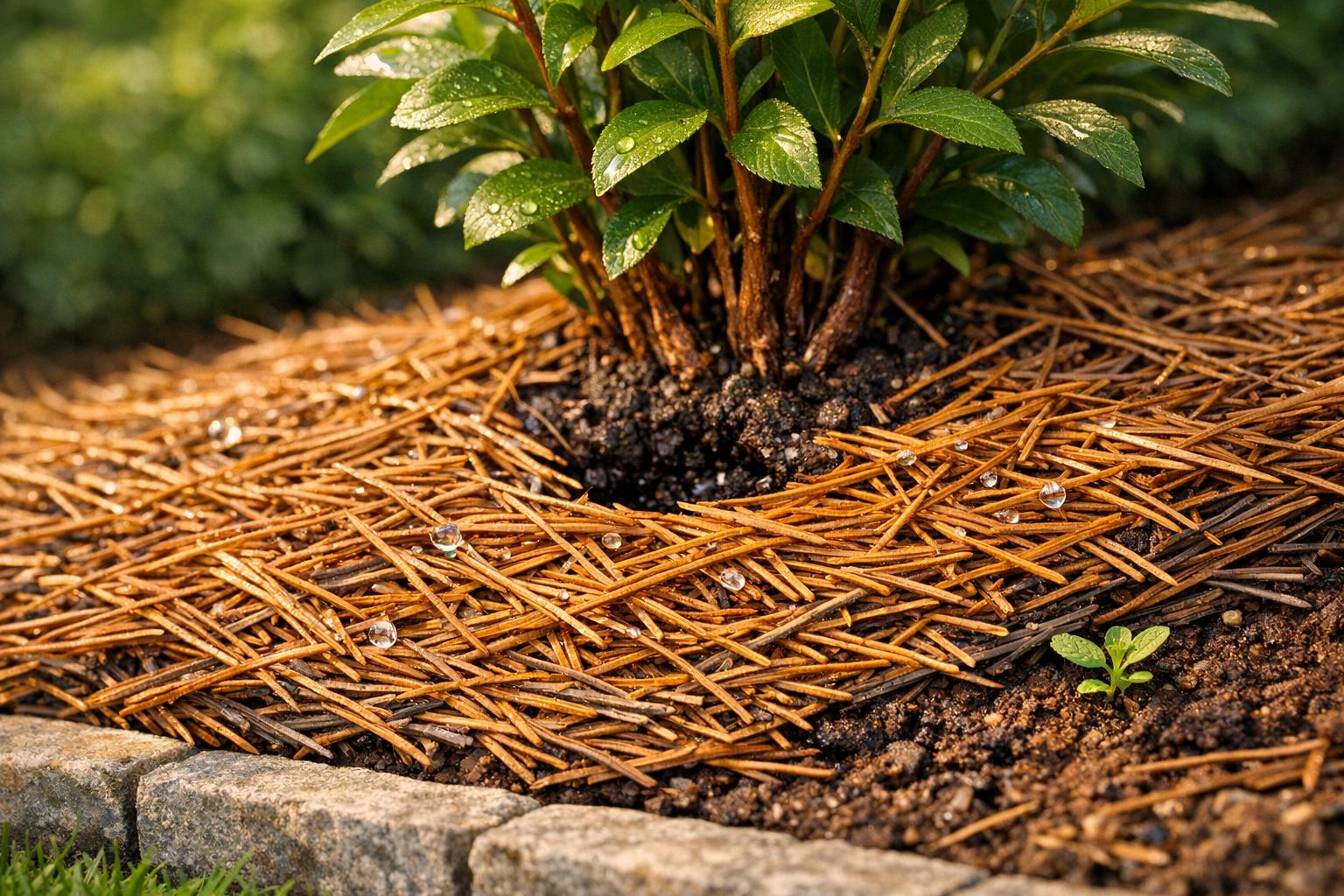
Pine needles are an excellent mulch option for your garden, offering practical advantages for weed control, moisture retention, soil health, and more. Here’s a quick breakdown of why they work so well:
- Weed Control: Pine needles form a dense mat that blocks sunlight, preventing weed growth.
- Moisture Retention: Their interwoven structure reduces evaporation, keeping the soil hydrated longer.
- Durability: They decompose slowly, lasting 1–2 years, reducing the need for frequent replacement.
- Soil Health: As they break down, they release nutrients and improve soil texture.
- Erosion Prevention & Temperature Control: Pine needles stay in place during heavy rains and help regulate soil temperature year-round.
These qualities make pine needles a practical and natural choice for gardeners, particularly for areas with slopes or acid-loving plants like azaleas and blueberries.
5 Benefits of Pine Needle Mulch for Your Garden
🌲 Pine Needle Mulch: Nature’s Perfect Cover 🌲
sbb-itb-843f8be
1. Weed Control
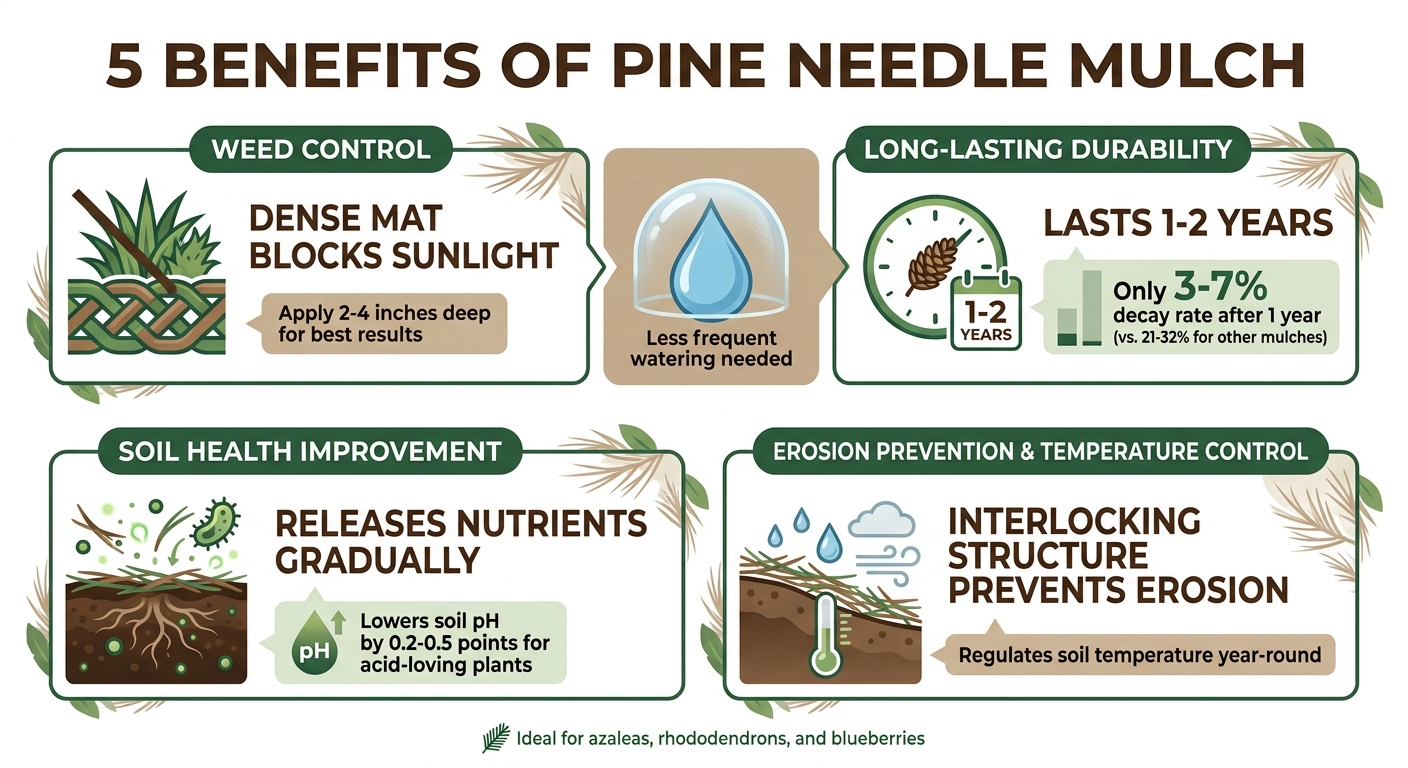
Pine needle mulch is a natural and eco-friendly way to keep weeds at bay. It forms a tightly woven mat that blocks sunlight from reaching the soil, stopping weed seeds from sprouting. Thanks to the fine texture of pine needles, they settle and interlock easily, creating a solid barrier with fewer gaps than chunkier options like wood chips. This makes them a reliable choice for consistent weed suppression.
For the best results, spread pine needle mulch in a layer about 2 to 4 inches deep [1][3]. Because the needles are lightweight, they’re easier to spread compared to heavier mulches. Plus, they’re long-lasting, breaking down slowly over one to two years [3], while still maintaining their weed-blocking ability longer than many other organic mulches. Even on slopes where retaining walls are often used, or in windy areas, their interlocking structure helps keep them in place, unlike other materials that might shift or blow away.
To keep your mulch layer effective, refresh it once or twice a year – usually in spring or fall – as the bottom layers naturally decompose [1]. Just make sure not to pile the needles directly against plant stems or tree trunks, as this could trap moisture and lead to rot.
Pine needles are especially useful around acid-loving plants like azaleas, rhododendrons, and blueberries. Not only do they keep weeds under control, but they also contribute to the slightly acidic soil conditions these plants thrive in.
2. Moisture Retention
Pine needles create a natural barrier that helps the soil hold onto moisture. By forming a dense, interwoven mat, they shield the ground from direct sunlight and drying winds, cutting down on evaporation during hot and dry weather.
"Pine needles help retain soil moisture by reducing evaporation. This is especially beneficial during dry spells, ensuring plants receive the hydration they need without frequent watering." – Strobert Tree Services [4]
Pine needle mulch can improve soil moisture retention by up to 15% compared to other mulches, which means less frequent watering is needed [5]. Unlike denser mulches that might prevent water from seeping into the soil, pine needles allow rain and irrigation to pass through easily while still reducing moisture loss.
Their natural, interlocking structure also keeps them in place, even on slopes or in windy conditions, ensuring reliable moisture protection in tough environments [1][3]. This ability to manage moisture effectively ties into the mulch’s durability, which will be explored in the next section.
3. Long-Lasting Durability
Pine needle mulch stands out not just for its weed control and moisture retention but also for how long it lasts. Unlike other organic mulches, pine needles break down much more slowly. This is thanks to their high lignin content, which makes them resistant to decay. For example, a study found that pine needle mulch had a decay rate of just 3% to 7% after one year, compared to eucalyptus mulch at 21% and utility-trimming mulch at 32% [7].
On average, pine needles remain effective for about 1 to 2 years, and in cooler climates, they can last even longer [1][2]. This durability makes them a better option than wood chips or shredded bark, which often need to be replaced within a single growing season. The result? Less maintenance and lower costs over time.
"The durability of pine needle mulch means it maintains its effectiveness for an extended period, providing value over time." – Mulch Pros Landscape Supply [1]
Another benefit? Many homeowners can gather fallen pine needles for free from their own yards or nearby areas, cutting material costs even further.
To keep your mulch performing well, add a fresh 2- to 4-inch layer when the existing layer thins below 2 inches. There’s no need to remove the old layer – let it decompose naturally. As it breaks down, it releases nutrients into the soil, enriching it without frequent replacement [6]. Just avoid using nitrogen-heavy fertilizers directly with the needles, as this can speed up decomposition and reduce their longevity [1].
4. Soil Health Improvement
Pine needle mulch doesn’t just help with weed control and moisture retention – it also plays a key role in improving soil health and yard maintenance. Unlike mulches that break down quickly, pine needles decompose over 1–2 years, steadily releasing nutrients into the soil[1]. This slow release ensures plants are fed consistently while enriching the soil’s structure over time.
As the needles break down, they contribute organic matter and humus, which enhance soil texture and support beneficial microbial activity. These microbes play a crucial role in maintaining healthy, productive soil. Since pine needles are a carbon-rich "brown" material, they not only improve soil structure but also provide essential food for these microorganisms[6].
"They break down over time, releasing nutrients into the soil at a gradual pace. This steady nutrient supply supports plant growth without overwhelming the soil." – Juan Rivera, Founder, FarmingThing.com [6]
The light, airy structure of pine needles prevents soil from becoming compacted, allowing oxygen and water to reach plant roots easily. Rainwater can pass through the loose mat they form, while new plant growth can push through without difficulty. This natural aeration reduces problems like waterlogging and ensures roots stay healthy and well-oxygenated[1].
For gardeners with acid-loving plants like blueberries, azaleas, or rhododendrons, pine needles offer an added benefit. Fresh needles have a pH between 3.2 and 3.8, and as they decompose, they can lower soil pH by 0.2 to 0.5 points – creating the slightly acidic conditions these plants thrive in[3]. If you want to speed up nutrient release, try using finely crushed needles or mix in a nitrogen-rich fertilizer to kickstart the decomposition process[1].
5. Erosion Prevention and Temperature Control
In addition to its ability to suppress weeds and retain moisture, pine needle mulch stands out for its effectiveness in preventing erosion and regulating soil temperature.
Pine needles have a natural interlocking structure that forms a dense, stable mat. This unique feature helps them stay in place even during heavy rainstorms, reducing the impact of rainfall and minimizing soil displacement.
"Pine needles are great for slopes since they help prevent soil erosion with their natural interlocking ability." – Mulch Pros Landscape Supply [1]
This makes pine needle mulch especially useful for sloped areas where other types of mulch often slide or wash away. The lightweight, interwoven needles adhere well to hillsides and embankments, offering dependable erosion control. Unlike other organic mulches, pine needles are less likely to float off during heavy rains [8].
Pine needle mulch doesn’t just protect against erosion – it also acts as a natural insulator for your soil. It helps regulate soil temperature by keeping roots cooler during hot summers and warmer during cold winters [1]. This year-round insulation is particularly helpful for protecting plants from weather extremes. For evergreens, a thick layer of pine needles shields roots from harsh northern winds, reducing the risk of winter windburn [3].
To maximize its benefits, keep the mulch a few inches away from plant stems and trunks to prevent moisture buildup and rot. Replenishing the mulch once or twice a year ensures it remains effective as it settles and decomposes over time [1].
Professionals at Pro Landscapes MD have successfully used pine needle mulch to protect sensitive garden areas and maintain optimal soil temperatures, demonstrating its practicality in sustainable landscaping.
Conclusion
Pine needle mulch offers several benefits for Maryland gardens. It helps suppress weeds, keeps soil moist during hot summers, lasts for 1 to 2 years, adds organic matter while slightly lowering soil pH by 0.2 to 0.5 points, and prevents erosion while regulating soil temperature to protect plant roots from extreme weather.
Applying it correctly is essential for these benefits to last. Maryland homeowners – from Annapolis and Bethesda to Columbia and Ellicott City – should ensure proper technique. For example, keeping the mulch a few inches away from plant stems can prevent moisture buildup and rot.
For the best results, especially on tricky terrain, professional installation is a smart choice. Pro Landscapes MD offers expert advice on choosing and applying the right mulch based on your soil type and plants. They also provide maintenance plans to keep your garden thriving all year.
Whether you’re working on a small garden or a large property, professional guidance can help you make the most of these eco-friendly benefits. Reach out to Pro Landscapes MD for landscaping services that can turn your outdoor space into a healthy, beautiful oasis across Maryland and Washington, DC.
FAQs
Will pine needles make my soil too acidic?
Pine needles won’t drastically change your soil’s acidity. They don’t lower soil pH enough to cause concern and are perfectly fine to use as mulch. In fact, they can be a great choice for acid-loving plants while also helping with soil health and retaining moisture.
How do I apply pine needle mulch around plants safely?
To use pine needle mulch effectively, spread it evenly around your plants in a layer about 3 to 4 inches deep. Be careful not to pile it directly against the trunks or stems, as this can lead to rot and other damage. A well-distributed layer helps insulate the soil, retain moisture, and maintain consistent soil temperatures. These steps can support healthy plant growth while minimizing risks to your plants.
Can pine needle mulch attract pests or cause mold?
Pine needle mulch can sometimes draw in pests like earwigs and millipedes, but only if these insects are already in the vicinity. That said, when applied and maintained properly, this type of mulch doesn’t naturally attract bugs or cause mold problems. The key lies in using it the right way to avoid any potential concerns.
Chat with Us