









- bhavya gada
- No Comments
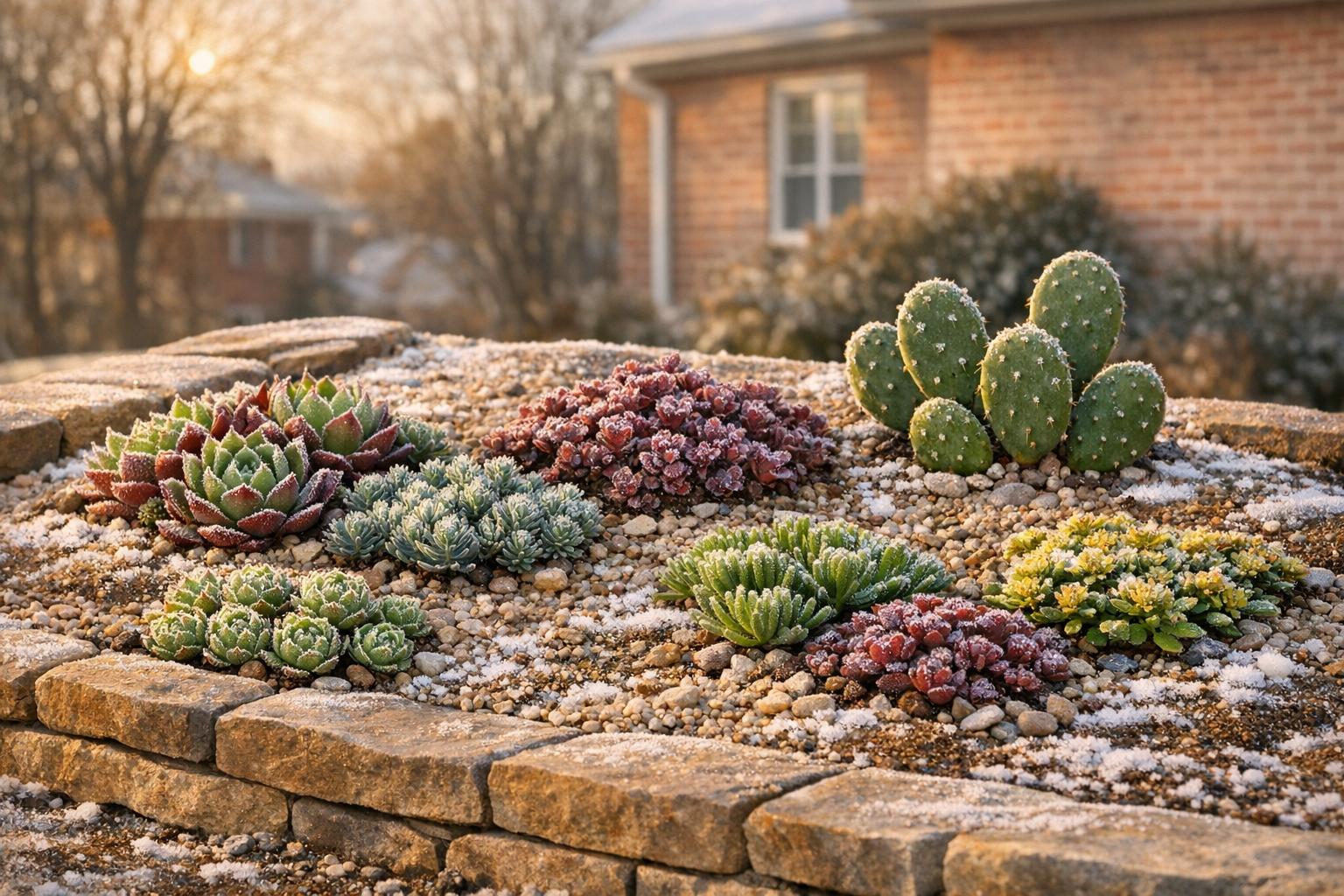
Maryland’s climate, ranging from USDA zones 5b to 7b, presents unique challenges for landscaping due to its cold winters and wet conditions. Cold-hardy succulents are an excellent option for creating low-maintenance, weather-resistant gardens. These plants thrive in freezing temperatures, require minimal care, and add year-round visual appeal. Here are seven succulents that can handle Maryland’s climate:
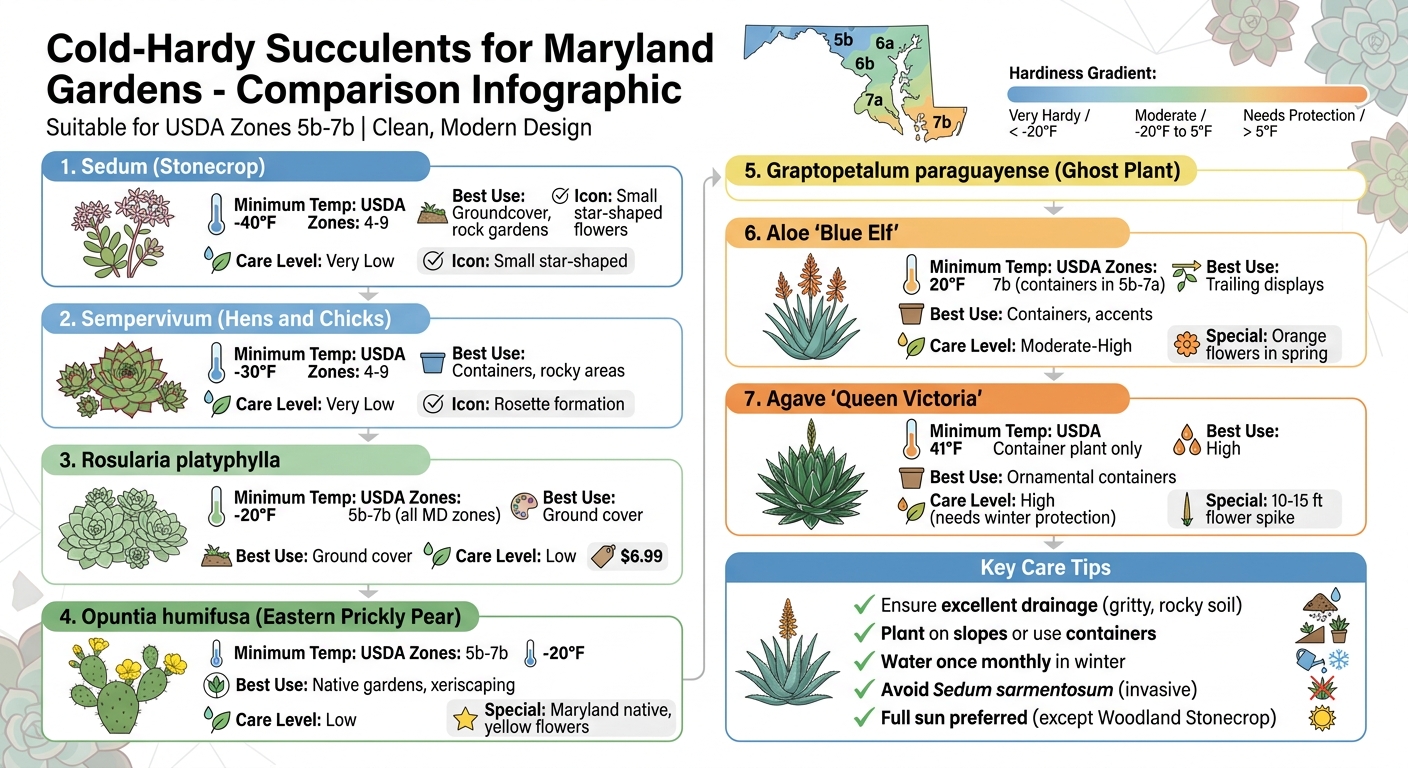
- Sempervivum (Hens and Chicks): Survives down to -30°F; ideal for rocky areas and containers.
- Sedum (Stonecrop): Tolerates temperatures as low as -40°F; includes options for both sun and partial shade.
- Agave ‘Queen Victoria’: Needs winter protection; best as a container plant.
- Graptopetalum paraguayense (Ghost Plant): Handles temperatures down to 5°F; great for trailing displays.
- Aloe ‘Blue Elf’: Thrives above 20°F; requires winter shelter in Maryland.
- Rosularia platyphylla: Withstands -20°F; perfect for ground cover in well-drained soil.
- Opuntia humifusa (Eastern Prickly Pear): Native to Maryland; tolerates -20°F and produces bright yellow flowers.
Key Care Tips:
- Ensure proper drainage to prevent root rot during wet winters.
- Use gritty, rocky soil or containers for optimal growth.
- For less hardy varieties, provide frost protection or move indoors during extreme cold.
These succulents combine resilience, beauty, and practicality, making them a great choice for Maryland gardens.
Cold-Hardy Succulents for Maryland: Temperature Tolerance and Care Guide
1. Sempervivum (Hens and Chicks)
Cold Hardiness (Minimum Temperature Tolerance)
Sempervivums are some of the toughest succulents you can grow in Maryland. Most varieties can withstand temperatures as low as –30°F [2]. Certain cultivars, like Sempervivum ‘Mahogany’, go even further, tolerating –35°F (Zone 3b) [2]. When freezing weather hits, these plants have a clever survival tactic: their rosettes close tightly, and their foliage darkens, often turning a deep red [2]. This color change isn’t a sign of distress – it’s their way of protecting themselves from the cold.
Suitability for Maryland’s USDA Zones (5b-7b)

Sempervivums thrive in USDA Hardiness Zones 4 through 9 [2], making them a great fit for Maryland’s varied climate. Whether you’re in the colder western mountains or the milder coastal areas, these plants adapt well. With over 700 varieties available [5], there’s plenty of room to find the right match for your garden. However, not all varieties handle the cold equally. For instance, Sempervivum calcareum is only hardy to Zone 7b (5°F to 10°F) [2], making it better suited for central and coastal Maryland rather than the colder western regions.
Soil and Drainage Requirements
Good drainage is a must [1] [2]. While Sempervivums can handle extreme cold, they’re susceptible to rot caused by melting snow or winter rain. These plants do best in gritty, rocky, or mineral-rich soils that drain well. Planting them on a slope can help prevent water from pooling during freeze–thaw cycles [1] [2]. If you’re working with heavy clay soil, containers can be a great alternative to ensure proper drainage [1] [2].
Aesthetic Appeal and Landscape Versatility
Sempervivums are known for thriving where other plants struggle – whether it’s rocky crevices, stone walls, or shallow soil [5]. They naturally multiply by producing offsets, or "chicks", around the mother plant, making them excellent groundcover or perfect for filling gaps in hardscaping [2] [5]. Their colors change throughout the year, shifting from green to striking shades of red, pink, or lavender depending on the season and sunlight [5]. With individual rosettes priced between $4.99 and $14.40, they’re an affordable way to add charm to rock gardens, containers, or walkways [2] [5]. These qualities make Sempervivums an ideal choice to kick off the list of cold-hardy succulents for Maryland.
sbb-itb-843f8be
2. Sedum (Stonecrop)
Cold Hardiness
Sedum is one of the toughest succulents around when it comes to cold weather, with some varieties enduring temperatures as low as –30°F to –40°F [2]. For instance, Dragon’s Blood and Golden Moss Sedum can survive –40°F, while Cape Blanco handles up to –20°F [2]. Although certain Sedum varieties may die back during winter, they bounce back in spring, often showcasing vibrant shades of red, pink, or purple [2]. Now, let’s see how Sedum handles Maryland’s varying light conditions.
Suitability for Maryland’s USDA Zones (5b–7b)
Sedum is perfectly suited for Maryland’s range of USDA zones, thriving in both sunny, rocky areas and semi-shaded spaces. Many hardy Sedum varieties are equipped to handle temperatures far colder than Maryland typically experiences. Native species like Allegheny Stonecrop (Hylotelephium telephioides) naturally flourish in the rocky landscapes of western Maryland [1]. Miri, from the University of Maryland Extension, highlights the adaptability of Woodland Stonecrop (Sedum ternatum):
For a semi-shaded site, Woodland Stonecrop (Sedum ternatum) is a good choice and it occurs in many Maryland counties [1].
While most Sedum varieties thrive in full sun, Woodland Stonecrop stands out as a shade-tolerant option, making it a versatile choice for gardens with mixed light conditions.
Soil and Drainage Requirements
Sedum thrives in gritty or rocky soil with excellent drainage, as this helps prevent root rot [1][2]. For instance, Allegheny Stonecrop favors sunny, rocky environments, while Woodland Stonecrop adapts well to semi-shaded areas [1]. If your garden has heavy clay soil, container planting is a great alternative. However, avoid planting Sedum sarmentosum, as it tends to spread aggressively and can become invasive [1].
Aesthetic Appeal and Landscape Versatility
Sedum isn’t just hardy – it’s also a visual treat. These plants bring versatility to Maryland gardens, working as drought-resistant groundcovers, low-maintenance lawn alternatives, or striking accents in rock gardens and between pavers [2]. Dragon’s Blood Sedum creates a groundcover that turns deep wine red in colder months, Golden Moss Sedum produces cheerful yellow flowers, and Cape Blanco Sedum forms tiny, waxy-coated rosettes that help retain moisture [2]. Their adaptability and beauty make them a favorite for gardeners looking to add texture and color to their landscapes.
3. Agave ‘Queen Victoria’
Cold Hardiness
Agave ‘Queen Victoria’ faces challenges in Maryland’s chilly winters. While the Agave genus is often praised for its ability to handle freezing conditions [2], this specific variety has a much higher minimum temperature requirement of 41°F (5°C) [5]. This makes it less cold-tolerant compared to Sempervivum and Sedum varieties, which can endure sub-zero temperatures. However, its striking ornamental features make it a worthy choice if you’re prepared to provide winter protection, especially in Maryland’s USDA zones 5b–7b, where winter temperatures frequently dip into the teens and twenties Fahrenheit.
Suitability for Maryland’s USDA Zones (5b–7b)
Given its sensitivity to temperatures below 41°F, Agave ‘Queen Victoria’ is better suited as a container plant in Maryland rather than being planted directly in the ground [5]. Containers allow you to move the plant indoors or to a protected spot during the coldest months. For those who want to try in-ground planting, extensive frost protection is necessary. Proper drainage is critical – standing water from melting snow can lead to root rot, so the planting area must allow water to drain quickly [2]. Choosing the right location and soil preparation are key to helping this plant thrive.
Soil and Drainage Requirements
As with other agave species, ‘Queen Victoria’ prefers gritty, mineral-rich soils [2]. Drainage is especially important in Maryland’s climate. For container planting, use pots with drainage holes and fill them with a soil mix that includes plenty of grit or sand [2]. For in-ground planting, amend heavy clay soils with gravel, sand, or grit to create the rocky texture this plant needs [1]. Position the plant in the sunniest spot possible, as sunlight helps the soil dry out faster and keeps the plant healthy [1][2].
Aesthetic Appeal and Landscape Versatility
Agave ‘Queen Victoria’ is a true showstopper in any landscape. Named after Queen Victoria of England, this perennial forms perfectly symmetrical rosettes with striking white markings on its dark green leaves [5]. Unlike many other agave species, it has smooth leaf edges without sharp teeth, making it safer for areas with foot traffic. However, the leaf tips do feature spines measuring 0.6 to 1.2 inches, so some caution is still needed [5]. After several years, the plant produces a dramatic flower spike that can reach 10 to 15 feet tall, adorned with creamy white blooms. This stunning display marks the end of the plant’s life cycle [5]. Its compact form, drought resistance, and rare beauty make it a fantastic choice for container gardens, patios, or sheltered areas where its unique appearance can be fully appreciated.
4. Graptopetalum paraguayense (Ghost Plant)
Cold Hardiness
The Ghost Plant can withstand Maryland’s chilly winters, surviving temperatures as low as 5°F (-15°C) [5]. Even when temperatures drop to around 14°F (-10°C) and the leaves freeze solid, this plant has an incredible ability to bounce back in the spring [5]. This resilience sets it apart from many other succulents that would not survive such harsh conditions.
Suitability for Maryland’s USDA Zones (5b–7b)
With its ability to handle temperatures down to 5°F, the Ghost Plant is ideal for Zone 7b in Maryland. However, in colder areas like Zones 5b–7a, it’s best to grow it in containers so it can be moved indoors or to a protected spot during extreme cold [1][5]. This succulent thrives across a wide temperature range, from its minimum tolerance of 5°F to highs of 104°F (40°C) [5].
Soil and Drainage Requirements
Proper drainage is critical for the Ghost Plant, particularly during Maryland’s wet winters when melting snow can saturate the soil [1][2]. This plant does best in gritty, rocky, or mineral-rich soil, as opposed to standard garden soil that retains too much moisture [1][2]. Using large pots with drainage holes filled with a sandy or gravelly mix is a great way to prevent root rot and support its trailing growth habit [1][5]. These soil conditions not only keep the plant healthy but also enhance its visual appeal.
Aesthetic Appeal and Landscape Versatility
Beyond its toughness, the Ghost Plant is a showstopper in any landscape. Its blue-gray rosettes transform into shades of pink, lavender, or "jelly yellow" when exposed to cold sunlight [5]. Over time, the plant develops woody stems – referred to by growers as "wooden old piles" – and forms cascading clusters of rosettes [5]. This trailing growth makes it an excellent choice for elevated containers, pedestals, or as a symmetrical feature flanking front doors for a touch of elegance [5]. Its ability to change color with the seasons adds a dynamic, eye-catching element to Maryland gardens during winter [5].
5. Aloe ‘Blue Elf’
Cold Hardiness
Aloe ‘Blue Elf’ can handle temperatures as low as 20°F (-6°C), but that’s about its limit [5]. In Maryland, where winter temperatures can plummet to -15°F, this succulent won’t survive outdoors without protection when it drops below 20°F [5].
Suitability for Maryland’s USDA Zones (5b–7b)
With its 20°F threshold, Aloe ‘Blue Elf’ isn’t naturally suited for Maryland winters [5]. To keep it thriving, consider growing it in containers that can be moved indoors or to a sheltered spot once the cold sets in. If you’re planting outdoors in zone 7b, select a protected microclimate – like a south-facing wall or near a foundation – and be ready with frost protection, such as frost blankets or heavy mulch, for those freezing nights [1][5]. Compared to hardier succulents like Sempervivum or Sedum, this Aloe requires more attention during winter.
Soil and Drainage Requirements
This Aloe, like most succulents, needs excellent drainage to avoid root rot [1]. Use gritty or rocky soil that sheds moisture quickly. For container gardening – recommended for Maryland – opt for a quality potting mix enhanced with sand or perlite, and make sure your pots have proper drainage holes. Its compact rosettes can grow up to 18 inches tall, making it a great fit for medium-sized containers [5]. Beyond practicality, it brings a unique visual charm to your garden.
Aesthetic Appeal and Landscape Versatility
Aloe ‘Blue Elf’ is a standout with its upright, narrow, gray-green leaves that add a bold, architectural element to your garden or containers [5]. When placed in full sun, the leaf edges turn a stunning pinkish-red, creating a striking contrast. In early spring, it puts on a show with purple flower spikes topped with tubular orange blooms – a cheerful sight as winter fades into spring [5]. This compact succulent is perfect as a mid-height accent in mixed container arrangements or as an eye-catching feature near entryways during the warmer months.
6. Rosularia platyphylla
Cold Hardiness
Rosularia platyphylla is one of the most resilient succulents you can grow in Maryland, withstanding temperatures as low as -20°F (-28.9°C) [5]. This level of cold tolerance ensures it can survive harsh winters typical of zone 5b, where temperatures often drop to -15°F. Unlike more fragile succulents that need to be brought indoors or covered during the winter, this plant thrives outdoors all year long.
Suitability for Maryland’s USDA Zones (5b–7b)
Thanks to its ability to endure temperatures down to -20°F, Rosularia platyphylla is well-suited for every USDA zone in Maryland, from 5b to 7b [5]. Its durability makes it a standout option for gardeners looking to add hardy, low-maintenance succulents to their landscapes. This adaptability also ensures it can handle Maryland’s varying weather conditions with ease.
Soil and Drainage Requirements
Proper drainage is essential for Rosularia platyphylla to thrive, as it is highly susceptible to root rot [1]. It should be planted in gritty, fast-draining soil, avoiding heavy clay at all costs. If your soil is dense, consider using containers with a specialized succulent mix or amending the ground with sand and gravel [1]. At just $6.99 per plant [5], it’s an affordable way to enhance well-drained areas in your garden.
Aesthetic Appeal and Landscape Versatility
Rosularia platyphylla doesn’t just survive Maryland’s climate – it adds a unique aesthetic to any garden. Its compact rosettes of flat, green, hairy leaves [5] bring an interesting texture that stands out among smoother-leaved succulents. This plant’s low-growing, spreading habit makes it perfect as ground cover, for filling gaps in rock gardens, or accentuating stone walls and pathways [5]. Its ability to thrive in extreme cold also makes it an excellent choice for drought-resistant and sustainable landscaping, adding both beauty and practicality to Maryland gardens.
7. Opuntia humifusa (Eastern Prickly Pear)
Cold Hardiness
Opuntia humifusa, one of Maryland’s few native succulents, is built to endure the frost, snow, and chilly winters common in USDA zones 5b–7b. This cactus has been documented in Allegany County and is hardy enough to survive even in Garrett County, Maryland’s coldest area [1]. Its natural resilience allows it to thrive across the state’s varying climates.
Suitability for Maryland’s USDA Zones (5b–7b)
The University of Maryland Extension notes that the "Prickly-pear Cactus (Opuntia humifusa) is recorded from Allegany County, though should be cold-hardy enough for Garrett" [1]. As a native plant, it is well-adapted to Maryland’s temperature swings, from the milder winters in zone 7b to the harsher conditions in zone 5b.
Soil and Drainage Requirements
This cactus thrives in well-draining, rocky soil and prefers gritty conditions where water doesn’t pool or linger [1]. According to the University of Maryland Extension, "They flower best in sun, but will tolerate partial shade, as long as the soil doesn’t stay too moist" [1]. In areas with heavy clay soil, planting in containers filled with a well-draining succulent mix is a smart alternative.
Aesthetic Appeal and Landscape Versatility
Opuntia humifusa isn’t just practical – it’s a visual standout. Its flat, rounded pads, adorned with sharp spines, bring a desert-like charm to Maryland gardens. In spring, it produces vibrant yellow flowers that attract pollinators and later bear sweet, edible fruits. Its low water needs make it a perfect choice for drought-resistant gardens. Whether used in xeriscaping, rock gardens, or native plant landscapes, this cactus offers year-round interest with minimal upkeep. Once established, it’s a low-maintenance addition that combines beauty with resilience.
Cold Hardy Succulents 101 – Care Tips & Unique Traits
Planting and Care Tips for Maryland
If you’re planning a cold-hardy succulent garden in Maryland, success starts with smart planting choices and attentive care. Picking the right location is critical. Choose the sunniest spot you can find since these succulents thrive in full sun for both growth and blooms. If you’re working with a partially shaded area, consider Woodland Stonecrop (Sedum ternatum), which naturally grows in semi-shaded spots across Maryland. To prevent waterlogging during wet winters, use slopes or raised beds to improve drainage.
Soil preparation is another key step. As Arietza from Vego Garden notes:
Poor drainage and winter moisture buildup are primary threats [4].
To replicate the rocky, well-draining soils of Maryland’s native habitats, mix grit or small rocks into your soil. If your garden has heavy clay soil, raised beds or containers filled with a quality succulent mix are excellent alternatives [1].
When it comes to winter protection, moisture management is more important than just dealing with the cold. Before the first frost, clear away dead leaves from the base of your plants to reduce the risk of mold caused by trapped moisture [6]. For potted succulents, either plant them in the ground at least a month before frost or move them to a protected spot with frost cloth [6]. Hardy varieties like Sempervivum and Sedum only need watering about once a month during winter, and even then, only on sunny days [6].
Here’s a quick guide to some popular cold-hardy succulents:
| Succulent Species | Hardiness Zone | Mature Size | Water Requirements |
|---|---|---|---|
| Sempervivum (Hens and Chicks) | Zone 4–5 (-20°F) | 3-foot-wide colonies | Low; once monthly in winter |
| Woodland Stonecrop (Sedum ternatum) | Zone 5 (-20°F) | Groundcover up to 2 ft | Low; prefers rocky, well-drained soil |
| Hardy Agave (Parry’s Agave) | Zone 5 (-15°F to -20°F) | 2–5 ft wide rosettes | Minimal once established |
| Opuntia humifusa (Eastern Prickly Pear) | Zone 5 (-20°F) | 6–10 ft spread | Low; requires sharp drainage |
Finally, steer clear of planting Sedum sarmentosum, as it can become invasive in Maryland. Instead, consider native options like Allegheny Stonecrop or reliable non-natives like Sempervivum for a garden that’s both beautiful and manageable.
How Pro Landscapes MD Can Help with Succulent Gardens

Creating a thriving succulent garden in Maryland takes more than just planting a few hardy species. It requires thoughtful planning for soil, drainage, and climate challenges. Pro Landscapes MD brings the know-how needed to design and maintain gardens that can handle Maryland’s changing seasons while staying lush and vibrant.
Soil and Drainage Solutions
Maryland’s natural clay-heavy soil isn’t ideal for succulents, which can struggle with poor drainage. Pro Landscapes MD tackles this by introducing gritty, rocky soil blends that keep roots from sitting in water [1]. They also use techniques like French drains, land leveling, and grading to channel water away, ensuring your plants stay healthy even during the rainiest months.
Choosing the Right Plants
Picking succulents that can handle Maryland’s climate is key. For areas with milder winters, varieties like Aloe ‘Blue Elf’ (tolerant down to 20°F) are a great fit. In colder spots, ultra-hardy options such as Sedum ‘Golden Glow’ (to -22°F) and Rosularia platyphylla (to -20°F) are better choices [5]. Pro Landscapes MD also incorporates native plants like Opuntia humifusa and Sedum ternatum, carefully matching each species to specific light and temperature conditions, whether full sun or partial shade [1].
Blending Succulents into the Landscape
A great succulent garden doesn’t just stand alone – it enhances your entire outdoor space. Pro Landscapes MD integrates succulents seamlessly into existing hardscapes. They use them as eye-catching accents around flagstone patios, between pavers, or even cascading over retaining walls. This approach creates low-maintenance gardens with year-round beauty and texture.
With their deep understanding of Maryland’s microclimates, Pro Landscapes MD customizes every project to suit local conditions. From soil testing and site assessments to expert installation and ongoing care, they handle every detail. Their drainage expertise ensures your succulents stay dry during Maryland’s wettest seasons, setting the stage for a garden that thrives with minimal upkeep.
Conclusion
Cold-hardy succulents bring both durability and charm to Maryland landscapes. These plants thrive in freezing winters – some can survive temperatures as low as -22°F – and are prized for their easy care once established[5]. They add year-round interest with their vibrant colors and unique textures, while flowering varieties like Sedum spectabile and Opuntia humifusa also support pollinators[3].
In late April, these succulents spring to life. For example, the Eastern Prickly Pear showcases bright yellow blooms, signaling a garden that can handle summer’s heat with little effort[5][3].
To keep your succulents healthy, proper drainage is key to avoiding root rot. Collaborating with seasoned landscaping professionals can ensure your soil is prepared, your plant choices align with your location, and drainage systems are effective[1][3]. Their expertise is especially helpful in managing Maryland’s diverse microclimates, from coastal plains to mountainous regions.
Whether you’re designing a low-maintenance garden ideal for aging in place or a drought-tolerant landscape that looks great all year, cold-hardy succulents are a smart choice. With affordable options like Sempervivum starting at just $4.99, these plants make sustainable landscaping accessible[5]. Their combination of low upkeep, weather resilience, and beauty makes them a worthwhile addition to any Maryland yard. Incorporate these hardy succulents to craft a stunning, eco-friendly garden.
FAQs
Which succulents can stay outside all winter in Maryland?
Succulents that can handle Maryland winters include Pachyveria pachytoides, which can withstand temperatures as low as 14°F (-10°C). Another great option is the Sempervivum species, which are well-known for their ability to thrive in cold climates and even under snow, outperforming many other succulents in harsh conditions.
How do I improve drainage for succulents in Maryland clay soil?
To address drainage issues in Maryland’s clay soil, you can mix it with coarse sand, gravel, or small stones. This helps reduce water retention and improves soil structure. Aim for a 50:50 blend of these materials with the native soil. Another option is to create raised beds or mound the soil to elevate the planting area, which encourages better drainage. For succulents, consider planting them in containers with drainage holes and use a fast-draining cactus or succulent potting mix to minimize the risk of root rot.
When should I move container succulents indoors in Maryland?
When living in Maryland, it’s essential to bring container succulents indoors once temperatures dip below 40°F. Most succulents can’t handle freezing conditions (32°F or below) and may suffer damage or even die. Moving them inside before the chill sets in is key to keeping them healthy.
Chat with Us