









- bhavya gada
- No Comments
Looking to light up your outdoor kitchen while keeping energy costs low? Here’s a quick overview of the top energy-efficient lighting options to consider:
- Solar-Powered LED Path Lights: Solar energy, no wiring, up to 12 hours of illumination, ideal for pathways and accents.
- Low-Voltage LED Under-Cabinet Strips: Bright task lighting for countertops and grills, operates on 12-24 volts, durable and energy-saving.
- Recessed LED Can Lights: Sleek, built-in lights for ambient and accent lighting, long-lasting but requires professional installation.
- Solar LED Pendant Lights: Stylish overhead lighting for pergolas and covered areas, powered by solar panels.
- Motion-Activated Solar Wall Lanterns: Combines security and task lighting, activates only when motion is detected, great for entrances and cooking areas.
Each option balances energy efficiency, durability, and functionality, making them perfect for layered lighting in outdoor spaces. Whether you want solar-powered simplicity or wired reliability, there’s a solution for every need and budget.
Quick Comparison Table:
| Lighting Option | Energy Source | Brightness (Lumens) | Cost Range | Installation Difficulty | Best Use |
|---|---|---|---|---|---|
| Solar LED Path Lights | Solar | 100–200 | $20–$50 | Very Easy | Walkways, accents |
| Low-Voltage LED Strips | Wired (12-24V) | 100–200 | $80–$115 | Moderate | Countertops, prep areas |
| Recessed LED Can Lights | Wired | 100–200 | $30–$60 | Difficult | Overhead lighting |
| Solar LED Pendant Lights | Solar | <100 | $40–$100 | Easy | Dining, ambiance |
| Motion-Activated Solar Lanterns | Solar | 700+ | $35–$70 | Easy | Entrances, security |
These lighting options ensure safety, style, and efficiency for your outdoor kitchen. Read on for detailed insights into each type.
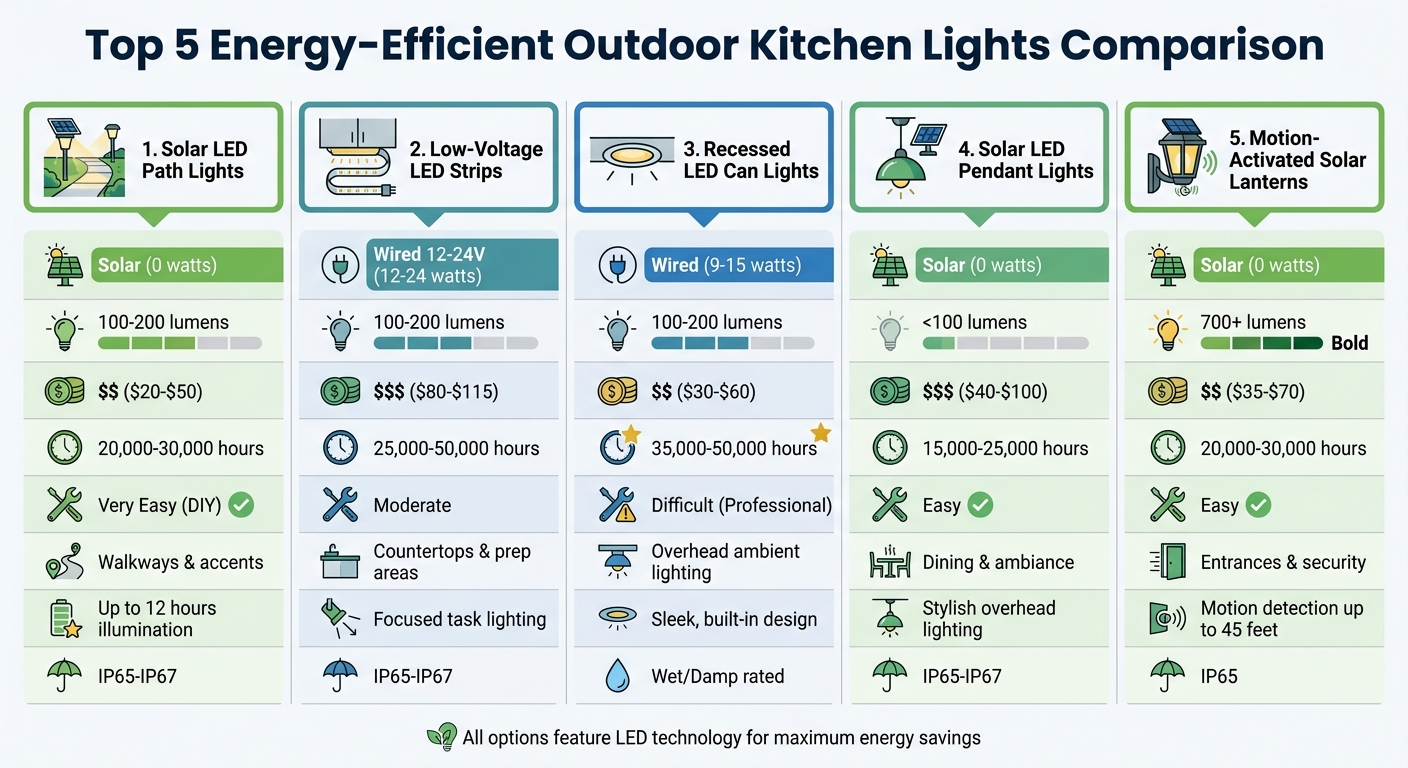
Energy-Efficient Outdoor Kitchen Lighting Comparison Chart
How To Light an Outdoor Space | Outdoor Kitchen Part 9
sbb-itb-843f8be
1. Solar-Powered LED Path Lights
Solar-powered LED path lights are a fantastic option for lighting up outdoor kitchens. They draw energy directly from the sun, meaning no added electricity costs, and they don’t require any wiring. Using photovoltaic cells, these lights convert sunlight into stored energy and automatically turn on at dusk and off at dawn, thanks to built-in ambient light sensors.
Energy Efficiency
Once fully charged, these lights can brighten pathways for up to 12 hours [1]. Take the Beau Jardin Color-Changing Solar Pathway Lights as an example – they’ve earned a perfect 5/5 rating for their light quality, appearance, and value. Users even report they stay lit until sunrise, even after cloudy days [1]. This highlights how well-designed solar lights can deliver reliable illumination, making them a practical choice for outdoor kitchen spaces. Combining solar charging with LED technology ensures strong brightness while keeping energy use to a minimum.
Durability
Top-quality solar path lights are built to handle tough weather. Look for options with IP65 or IP67 ratings, which mean the lights are dustproof and can endure heavy rain or even brief water immersion [1]. For instance, the Linkind StarRay Solar Spotlights boast an IP67 rating and a perfect 5/5 durability score. Similarly, the Kemeco Cast Aluminum Post Light, rated 4.5/5, has been tested to handle freezing temperatures, heat up to 122°F, wind, rain, and snow [1]. Premium models are often made from rust-resistant stainless steel, cast aluminum, and thick glass for added longevity.
Installation Ease
Installing these lights is a breeze. Most models come with stakes that you can simply push into soft soil or landscaping – no tools, outlets, or extension cords needed.
"Outdoor solar lights simplify exterior illumination, offering beautiful, functional lighting without the need for wiring." – Bob Vila [1]
For areas with limited sunlight, consider lights with detachable solar panels that can be mounted separately. Prices range from about $10 for basic models to $130 for high-end fixtures [1].
Functionality
Solar path lights do more than just illuminate walkways – they add both safety and style to outdoor kitchens. Typically emitting between 100 and 200 lumens, they provide enough light for safely navigating paths and stairs while also serving as accent lights. Many models feature textured glass that creates decorative patterns, adding a touch of elegance to your space. Maintenance is minimal; just wipe the solar panels occasionally to ensure they keep charging efficiently [1]. Their low-maintenance nature and dual-purpose functionality make them a smart choice for layering lighting in outdoor spaces.
For expert advice on incorporating these lighting options into your outdoor kitchen, reach out to Pro Landscapes MD (https://prolandscapesmd.com). Their landscaping and hardscaping expertise can help you achieve lighting that’s both practical and visually stunning.
2. Low-Voltage LED Under-Cabinet Strips
Low-voltage LED under-cabinet strips provide focused lighting for outdoor kitchen tasks while keeping energy consumption low. Running on 12 or 24 volts, these strips are perfect for brightening countertops, grills, and food prep areas.
Energy Efficiency
With an output of 100–200 lumens, these LED strips are ideal for task lighting while operating at low voltage [1]. Their design allows multiple strips to be powered by a single transformer without significantly increasing energy costs. Plus, LEDs consume far less power than incandescent bulbs and produce minimal heat, making them a cost-effective and energy-conscious choice over time.
Durability
Outdoor-ready under-cabinet LED strips often come with IP65 or IP67 ratings, ensuring protection against dust and moisture [1]. Built with materials like rust-resistant steel or cast aluminum and featuring shatterproof covers, these strips are designed to withstand impacts, corrosion, and tough outdoor conditions. Many models are also engineered to handle extreme temperatures, ensuring reliable performance no matter the weather.
Installation Ease
Setting up low-voltage LED strips involves connecting them to a transformer and securing them with screws or anchors. While this process takes more time compared to plug-and-play solar options, it guarantees consistent power delivery, especially in areas with limited sunlight. Although DIY installation is possible, the wiring and mounting steps require some effort. This dependable wired setup pairs well with other energy-efficient lighting solutions for a well-lit outdoor kitchen.
Functionality
These LED strips excel at task lighting, offering bright, cool-toned illumination that enhances visibility for activities like chopping, grilling, and plating. Their focused light output makes them an essential part of any layered lighting plan for outdoor kitchens, ensuring both practicality and style.
3. Recessed LED Can Lights
Recessed LED can lights are a sleek, built-in lighting option for outdoor kitchens, offering both ambient and accent lighting without the need for bulky fixtures. Installed flush with ceilings or soffits, they provide a modern, energy-conscious solution that blends seamlessly into your space.
Energy Efficiency
One of the standout features of recessed LED can lights is their energy-saving capability. Thanks to LED technology, these lights consume far less energy compared to traditional incandescent or halogen bulbs. For outdoor kitchen use, LEDs producing between 100 and 200 lumens strike the right balance – offering enough brightness for visibility while keeping energy use low. Plus, their long lifespan means you’ll only need to replace the bulbs occasionally. Choosing the right color temperature can make all the difference: cooler tones like white or blue are perfect for food prep areas, while warmer tones create a cozy atmosphere for dining and entertaining [1].
Durability
Outdoor kitchens present unique challenges for lighting due to exposure to humidity, steam, and weather conditions. Recessed LED can lights designed for Wet or Damp locations are built to handle these challenges. High-quality models feature weather-resistant housings that protect internal components from moisture and corrosion. When properly rated and installed, these lights can endure rain, temperature swings, and the general wear and tear of outdoor environments.
Installation Ease
Unlike simpler lighting options like solar-powered fixtures, recessed LED can lights require hardwiring into your home’s electrical system. Installation involves cutting precise openings in the ceiling or soffit, and it’s typically best handled by a licensed electrician. They’ll ensure proper wiring, waterproof sealing, and compliance with electrical codes. While the process is more involved, the result is a permanent and reliable lighting system that works consistently, no matter the weather or time of day.
Functionality
Recessed LED can lights shine when it comes to versatility. They provide even ambient lighting across your outdoor kitchen, ensuring comfortable visibility. Additionally, they serve as excellent accent lights, perfect for showcasing architectural features, backsplashes, or bar areas. Their directional design allows you to focus light exactly where it’s needed, making them an essential part of a layered lighting plan for your outdoor space.
4. Solar LED Pendant Lights
Solar LED pendant lights bring a touch of style and energy independence to outdoor kitchens. These hanging fixtures are perfect for installation on pergolas, gazebos, or other covered structures, providing soft overhead lighting without relying on your home’s electrical system. They’re a smart choice for spaces where running electrical wiring could be tricky or might interfere with the design. As part of a layered lighting plan, they contribute ambient illumination without adding to your energy bill.
Energy Efficiency
Powered by renewable solar energy, these lights typically need 6–8 hours of direct sunlight to fully charge and can provide 4–12 hours of illumination. Many models feature built-in sensors that automatically turn the lights on at dusk and off at dawn, eliminating the need for manual operation or additional electricity. To ensure optimal performance, place the solar panel in a location with unobstructed sunlight, even if the pendant itself is installed in a shaded spot. Most decorative options emit under 100 lumens, making them best suited for ambient or accent lighting rather than tasks that require bright, focused light [1].
Durability
Durability is key when choosing solar LED pendant lights for outdoor use. Look for models with an IP65 or IP67 rating, which ensures protection against dust and water exposure, including heavy rain or temporary immersion. For instance, the Brightech Ambience Pro Solar String Lights are highly rated for their rugged design, featuring shatterproof Edison-style bulbs and weatherproof materials. Many high-quality options are also heat-resistant up to 122°F and made from rust-resistant steel or sturdy, shatterproof plastics, allowing them to withstand wind, rain, and temperature fluctuations. Maintenance is minimal – usually just occasional battery replacements and cleaning the solar panel to maintain efficiency [1].
Installation Ease
Installing solar LED pendant lights is straightforward since they don’t require wiring or access to electrical outlets. For covered outdoor kitchens, choose models with a separate solar panel connected by an extended cord. This setup allows you to mount the panel in a sunny location while keeping the pendant light under shelter.
Functionality
Solar LED pendants add charm and ambiance to outdoor kitchens, making them a great addition to layered lighting designs. These lights provide a warm, inviting glow that highlights architectural details and creates a cozy atmosphere for dining or entertaining after dark. While they aren’t bright enough for tasks like food prep – where recessed or under-cabinet lighting would be more effective – they excel at enhancing the overall mood and aesthetic of the space. When combined with 5 to 7 other light sources, they help achieve a balanced and visually appealing lighting scheme [2].
5. Motion-Activated Solar Wall Lanterns
Motion-activated solar wall lanterns are a great blend of security and practicality, offering bright task lighting only when motion is detected. These versatile lights can be mounted on exterior walls, fence posts, or deck railings, making them a functional choice for outdoor spaces.
Energy Efficiency
These lanterns take solar power a step further by adding motion detection, making them a smart option for conserving energy. Since they run entirely on solar energy, there’s no need for wiring, and they help reduce energy costs. Most models need about 6 to 8 hours of direct sunlight to fully charge and often feature multiple modes. For example, a "motion-only" mode activates the light solely when movement is detected, while a "dim-to-bright" mode adjusts brightness as needed. The Ring Solar Floodlight, for instance, detects motion up to 45 feet away and delivers up to 1,200 lumens of light [1].
Durability
Top-tier solar wall lanterns are built to withstand the elements, often boasting an IP65 rating, which means they’re dust-tight and resistant to water jets from any angle. They’re also designed to handle extreme temperatures, from freezing cold to 122°F, ensuring reliable performance throughout the year. A great example is the Aootek Solar Security Lights, which earned a 4.5 out of 5 durability rating after enduring harsh weather like freezing conditions and heavy rain. Materials such as cast aluminum or shatterproof plastics further enhance their longevity [1].
Installation Ease
One of the biggest perks of these lanterns is their hassle-free installation – no electrical wiring required. You simply mount the light using the provided screws and anchors, and set your preferred operating mode before securing it in place. For shaded areas, like outdoor kitchens, some models even come with detachable solar panels that can be placed in direct sunlight while the light fixture stays put. Prices typically range from $10 for basic designs to $130 for more advanced, smart-integrated options [1]. This straightforward setup ensures the lights are ready to enhance safety and conserve energy.
Functionality
These lanterns shine in more ways than one. They’re perfect for task lighting, such as illuminating cooking areas, while also doubling as security lights for your outdoor kitchen’s perimeter. Michelle Larson, Product Reviews Tester at Bob Vila, highlighted their dual purpose:
"We really appreciate the sense of security it provides via bright, motion-activated light and mobile notifications" [1].
While they’re not meant for continuous ambient lighting, these lights are excellent for lighting up workspaces during active use.
Comparison of Top Options
Finding the right balance between energy use, cost, and ease of installation can be tricky. The table below breaks down some of the most popular lighting choices to help you decide.
| Lighting Option | Energy Use (Watts) | Lifespan (Hours) | Cost Range | Installation Difficulty | Recommended Use |
|---|---|---|---|---|---|
| Solar LED Path Lights | 0 (Solar) | 20,000 – 30,000 | $20 – $50 | Very Easy | Walkways & Perimeter |
| Low-Voltage LED Strips | 12W – 24W | 25,000 – 50,000 | $80 – $115 | Moderate | Under-cabinets & Prep areas |
| Recessed LED Can Lights | 9W – 15W | 35,000 – 50,000 | $30 – $60 | Difficult | General overhead lighting |
| Solar LED Pendant | 0 (Solar) | 15,000 – 25,000 | $40 – $100 | Easy | Dining & Ambiance |
| Motion Solar Lanterns | 0 (Solar) | 20,000 – 30,000 | $35 – $70 | Easy | Entrances & Security |
Here are some essential takeaways to help narrow your choices:
- Solar-powered lights: These options are energy-free and simple to set up, making them ideal for DIY projects. However, keep in mind that their batteries typically need replacing every 2 to 3 years to maintain performance [1].
- LED strips: A great choice for task lighting, these strips last up to 50,000 hours. While they provide excellent brightness for work areas, the installation process is moderately challenging and may require some planning [3].
- Recessed LED can lights: If you’re looking for consistent, powerful illumination, these hardwired lights are a solid option. They offer up to 50,000 hours of runtime but often require professional installation. Camryn Rabideau, a product reviewer, notes that these fixtures "may require an electrician due to their complex setup" [3].
Mike Costello, a home improvement expert, emphasizes the ease of solar lighting, calling it "a great DIY weekend project" [3].
Brightness levels matter, too. For decorative purposes, aim for under 100 lumens. Pathway or step lights work well with 100 to 200 lumens, while security lighting should exceed 700 lumens [1]. Choosing the right brightness ensures you won’t overspend on power or compromise functionality.
Conclusion
Energy-efficient outdoor kitchen lighting offers more than just reduced energy use – it also cuts down on operating costs [1]. Solar-powered fixtures take advantage of renewable energy without adding to your electric bill, while LED options use far less power and last much longer [1]. This means fewer replacements, lower maintenance costs, and a reduced environmental impact for your outdoor space.
But the benefits don’t stop at savings. These lighting solutions also improve safety and functionality. Proper illumination helps prevent accidents on walkways and stairs, enhances visibility for grilling and food prep, and adds security with motion-activated lights – all while conserving energy.
"By making eco-friendly lighting choices, you can enjoy a well-lit outdoor space while minimizing your impact on the environment." [4]
A well-planned lighting design that incorporates task, ambient, and accent lighting ensures every corner of your outdoor kitchen is lit effectively.
These advantages extend to the design and installation process as well. For homeowners in Maryland, Pro Landscapes MD seamlessly integrates energy-efficient lighting into custom outdoor kitchen designs. Their team installs solar path lights along walkways, places motion-activated lanterns near cooking areas, and strings decorative lights over dining spaces – all while ensuring fixtures are positioned to receive enough sunlight for optimal performance. This thoughtful approach allows for flexible lighting placement in any outdoor kitchen layout [1].
Whether you’re planning a new outdoor kitchen in Columbia, Bethesda, or Ellicott City, combining professional hardscaping with smart lighting placement creates a functional and welcoming space that works beautifully all year long. Pro Landscapes MD proudly serves communities across Howard County, Montgomery County, Carroll County, Frederick County, Prince George’s County, Baltimore County, and Washington, DC.
FAQs
How do I choose the right lumen level for each outdoor kitchen area?
When deciding on lighting, consider the function and mood of each space. For areas like countertops or cooking stations where tasks require clarity, choose brighter lighting in the range of 300–700 lumens. This ensures proper visibility and safety. Meanwhile, for ambient or decorative spaces, go for lower lumen levels to create a warm, inviting atmosphere. Think about the purpose of each area – bright lighting for functionality and softer lighting for comfort – and pick fixtures that match those needs.
Do solar lights work well in shade or cloudy weather?
Solar lights struggle to function efficiently in shaded or cloudy conditions because they rely on direct sunlight to charge their batteries. When sunlight is limited, the energy stored is insufficient for them to operate at their best.
Do I need an electrician for low-voltage strips or recessed can lights?
When it comes to installing low-voltage light strips or recessed can lights, it’s wise to call in a licensed electrician, particularly if electrical work isn’t your strong suit. These professionals ensure everything is installed safely, wired correctly, and adheres to local codes. For outdoor lighting, hiring an expert is even more important – they help prevent potential hazards and make sure the setup complies with all necessary regulations.
Chat with Us