









- bhavya gada
- No Comments
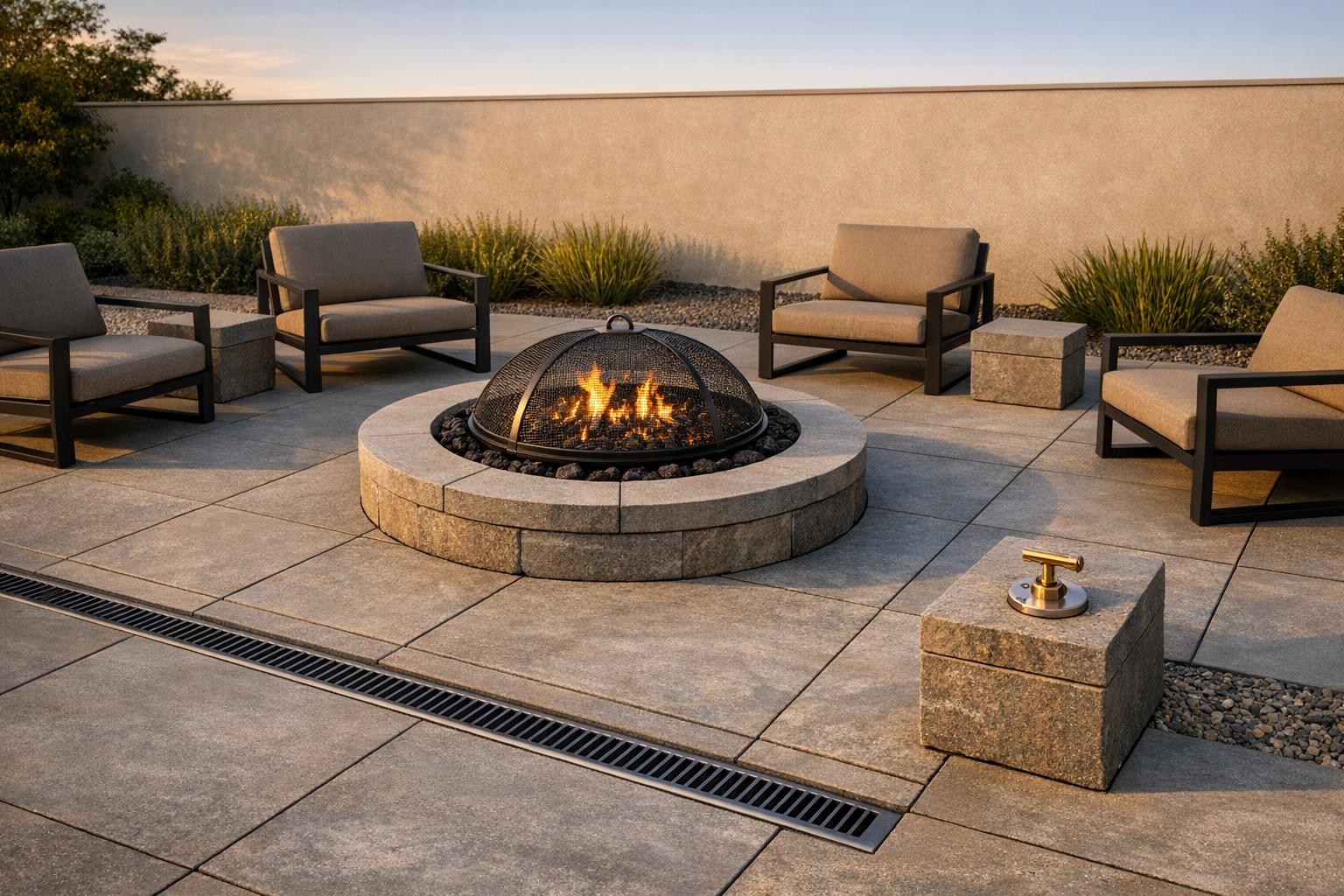
Patio fire pits are a great way to create a warm, inviting outdoor space, but they come with risks. Prioritizing safety features can help prevent accidents, protect your property, and ensure everyone enjoys the experience. Here’s what you need to know:
- Clearance and Placement: Keep at least 10–25 feet of distance from structures, trees, and flammable materials. Ensure seating is positioned safely, with enough room for movement.
- Noncombustible Surroundings: Use fire-resistant materials like stone or concrete under and around the fire pit to minimize fire risks.
- Built-In Safety Features: For gas fire pits, include flame-sensing thermocouples, automatic shutoff valves, and proper ventilation to avoid gas leaks. Wood-burning pits need spark screens to contain embers.
- Drainage and Maintenance: Install drainage systems to prevent water buildup and inspect components regularly to ensure long-term safety.
- Local Codes: Check local regulations for setback distances, permits, and installation requirements, especially for gas fire pits.
A well-designed fire pit balances safety with functionality, making it a secure centerpiece for your patio. Whether you’re using a wood-burning or gas model, thoughtful planning and proper upkeep are key.
Quick Safety Tip: Always have a fire extinguisher or water source nearby, and never leave a fire unattended.
Fire Pit Safety Features: Clearances, Materials & Built-In Safeguards
Design and Placement Safety Features
Safe Clearance Distances from Structures and Seating
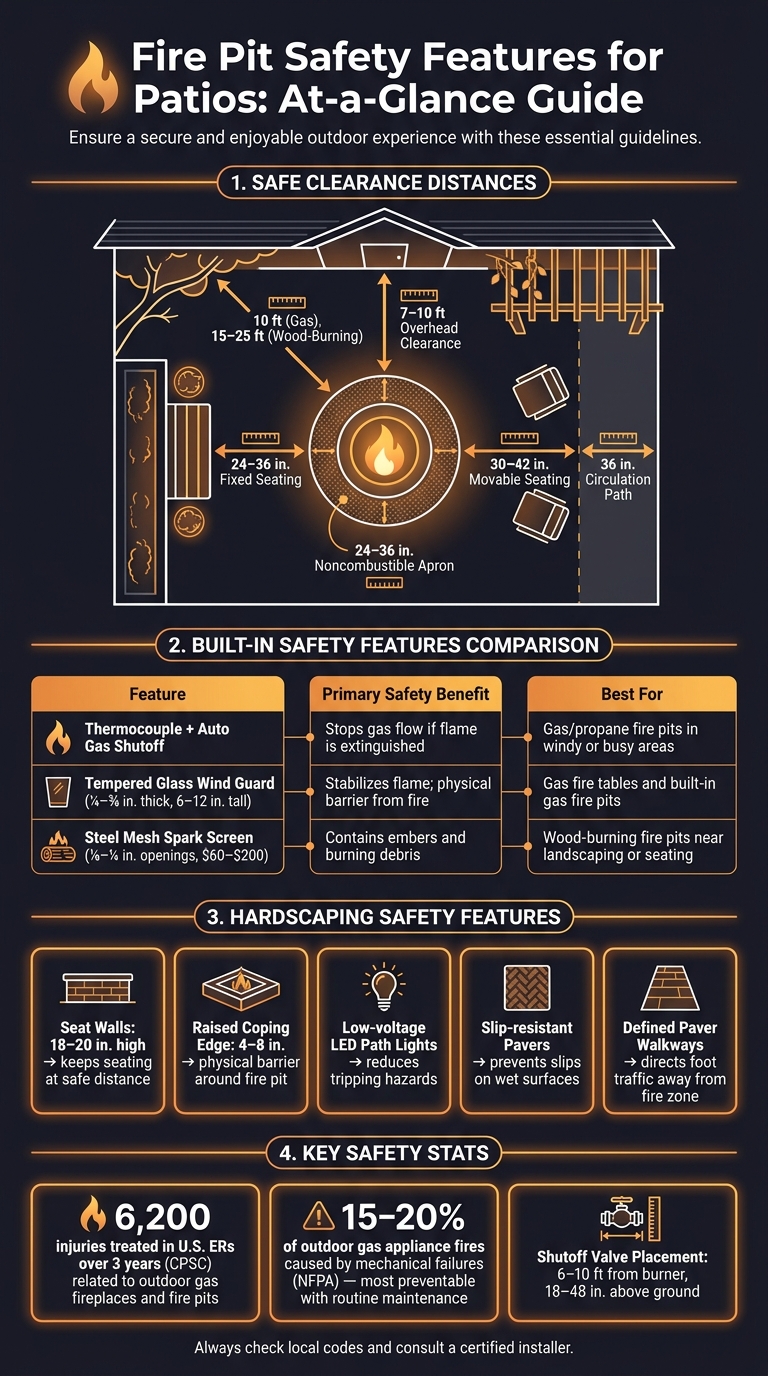
When setting up a fire pit, proper placement is key to ensuring safety. Your fire pit should be positioned with at least 10 feet of clearance from your house, garage, fences, or any overhanging branches. For wood-burning models, it’s best to allow for 15–25 feet of clearance, as sparks and embers can be unpredictable. Overhead clearance is just as important – maintain a space of 7–10 feet between the flame and anything above it, like soffits, pergola rafters, or tree canopies. Avoid placing fire pits directly under a standard roof overhang unless the structure is specifically designed for that purpose.
When it comes to seating, keep 30–42 inches of clearance for movable chairs and 24–36 inches for fixed seating. Additionally, leave a 36-inch circulation path behind chairs to allow people to move freely without coming into contact with hot surfaces. Ensure the main path from your back door to the yard stays completely outside the fire pit’s heat zone to avoid any potential accidents. These spacing guidelines, combined with fire-resistant materials, form the backbone of a safe and functional patio design.
Fire-Resistant Surfaces and Surrounds
The ground beneath and around your fire pit must be entirely noncombustible. Materials like natural stone (flagstone, bluestone, granite), concrete pavers, or poured concrete are ideal. These options are resistant to stray embers, can handle temperature changes, and provide a stable, level surface to minimize tipping hazards.
To enhance safety, create a noncombustible buffer zone by extending a paver or stone apron 24–36 inches beyond the fire pit’s edge. This helps keep furniture, planters, and outdoor rugs from gradually creeping too close. If you have mulch beds nearby, consider replacing the mulch within this zone with stone or gravel, as dry mulch can ignite from a single stray ember. Companies like Pro Landscapes MD specialize in designing these hardscape zones using materials such as PA flagstone, Techo-Bloc concrete pavers, and stone veneer, ensuring both safety and aesthetic appeal.
Ventilation and Drainage for Built-In Fire Pits
For built-in gas fire pits, ventilation is a must. Propane, being heavier than air, can accumulate in a sealed enclosure if there’s a leak. To prevent this, install low-level vents on opposite sides of the enclosure, ensuring they meet the burner’s BTU rating and the manufacturer’s specifications. These vents should be integrated into the stone or paver walls during construction and kept clear – don’t store cushions or firewood in the enclosure.
Drainage is equally important. A drain hole or fitting at the base of the fire bowl, connected to a gravel sump or drain line, prevents rainwater from pooling around burners and gas connections. Additionally, ensure the surrounding patio slopes 1–2% away from the fire pit to direct surface water away. This combination of drainage and slope protects the fire pit’s foundation from frost heave and cracking over time, keeping it safe and durable.
sbb-itb-843f8be
Are Backyard Fire Pits Safe? Top Tips for Outdoor Fire Pit Safety | Hinkle Outdoor Living

Top Built-In Safety Features for Fire Pits
When it comes to fire pits, safety features go beyond proper placement. Built-in safeguards can significantly reduce risks and enhance peace of mind.
Flame-Sensing Thermocouples and Gas Shutoff Valves
A thermocouple is a small metal probe that sits in the flame, generating a tiny electrical signal when exposed to heat. This signal keeps the gas valve open. If the flame goes out – due to wind or splashes – the probe cools, cutting off the gas flow to prevent dangerous buildups near seating or structures.
This feature is especially important for fire pits on exposed patios where gusts of wind and foot traffic are common. Pairing a thermocouple with an automatic gas shutoff valve adds an extra layer of safety. For manual control, a key valve positioned 18–36 inches above the patio surface allows quick gas shutoff without needing to reach over the fire.
The U.S. Consumer Product Safety Commission (CPSC) reported that 6,200 injuries related to outdoor gas fireplaces and fire pits were treated in U.S. emergency rooms over a three-year period. Many of these injuries involved contact with hot surfaces rather than flames, highlighting the importance of automatic shutoff systems. When choosing components, prioritize CSA– or ANSI-certified burner systems, as these certifications ensure built-in flame-safety controls.
In addition to automatic shutoff systems, physical barriers can further improve safety.
Glass Wind Guards and Physical Barriers
Tempered glass wind guards serve a dual purpose: they stabilize the flame in windy conditions and act as a protective barrier between guests and the fire. These guards are made from heat-treated glass that can withstand temperature changes. If they break, they crumble into small, harmless pieces, making them safer than standard glass.
Residential gas fire tables typically use glass panels ¼–⅜ inch thick, standing 6–12 inches above the burner surface. For patios that are more exposed or elevated, taller guards may be a better choice. Beyond glass, features like raised stone coping or masonry edges – usually 4–8 inches high – create a visual and physical boundary, discouraging guests from moving chairs too close. A recessed or sunken burner design adds another layer of safety by positioning the flame below the top surface, keeping it farther away from loose clothing or curious hands.
For wood-burning fire pits, a different safeguard is essential: the spark screen.
Spark Screens for Wood-Burning Fire Pits
A spark screen is a must-have for wood-burning fire pits. When logs shift or collapse, embers and burning debris can travel several feet, potentially igniting nearby mulch, dry grass, or furniture – or even injuring guests. A well-fitted screen keeps those sparks contained.
The best spark screens are made from steel or stainless steel mesh with openings around ⅛–¼ inch, which are small enough to trap sparks while still allowing heat and smoke to escape. Stainless steel screens are particularly durable, resisting rust over time. Domed or pyramid-shaped screens are practical designs, offering enough clearance for stacking logs while maintaining full coverage. Look for models with heat-resistant handles or lifting rings for safe removal when adding wood – fireplace gloves are also a smart addition. Basic spark screens for a 24–30 inch fire pit typically cost $60–$200, making them an affordable way to boost safety.
The table below provides a quick comparison of these safety features:
| Feature | Primary Safety Benefit | Best For |
|---|---|---|
| Thermocouple + automatic gas shutoff | Stops gas flow if flame is extinguished | Gas/propane fire pits in windy or busy areas |
| Tempered glass wind guard | Stabilizes flame; physical barrier from fire | Gas fire tables and built-in gas fire pits |
| Steel mesh spark screen | Contains embers and burning debris | Wood-burning fire pits near landscaping or seating |
Maintenance and Long-Term Safety Features
Safety features in a fire pit are only effective if the pit remains in good condition over time. Consistent maintenance and thoughtful design choices from the beginning are key to ensuring your patio fire pit stays safe year after year.
Weather-Resistant Covers and Components
Maryland’s climate – with its humid summers, heavy rainfall, and freeze-thaw cycles – can be tough on outdoor fire pits. A waterproof cover made from UV-resistant vinyl or marine-grade polyester is one of the simplest ways to protect your fire pit when it’s not in use. Without it, water and debris can accumulate in the burner pan, clogging drainage holes and causing issues like delayed ignition or uneven flames. Plus, skipping the cover might void warranties since it speeds up corrosion.
For internal components, opt for 304 or 316 stainless steel burners paired with brass fittings. Use flexible gas lines specifically rated for outdoor use, and ensure ignition systems are labeled for wet or outdoor locations. For the exterior, choose noncombustible stone or paver surrounds that can handle freeze-thaw cycles to prevent cracks that might damage gas lines. Regular inspections will help maintain the integrity of these materials.
Building for Easy Inspection and Maintenance
Fully enclosed fire pits without access panels can pose long-term safety concerns. If gas connections, flex lines, or ignition systems are hard to reach, small problems like corrosion, loose fittings, or even insect nests in air inlets can go unnoticed until they become dangerous. The fix? Include a removable access panel or door in the fire pit’s base or seat wall, aligning it with the gas shutoff, regulator, and burner connections for easy access.
A seasonal maintenance routine is invaluable. In the spring, clean burner ports with a soft brush or compressed air, check air inlets for spider webs, and test connections for leaks using soapy water. In the fall, rinse fire media like lava rocks or fire glass, inspect masonry for cracks, and ensure drainage holes are clear before covering the pit for winter. According to NFPA data, mechanical failures or malfunctions cause about 15–20% of outdoor gas appliance fires – most of which can be avoided with routine upkeep. Accessible controls also play a crucial role in maintaining safety.
Accessible and Clearly Marked Shutoff Valves
In emergencies, a hidden or obstructed shutoff valve is practically useless. Manual gas shutoff valves should be located within 6–10 feet of the burner along the gas line, positioned 18–48 inches above ground level, and kept completely free of patio furniture, built-in seating, or dense plants. Every household member should know exactly where the valve is and how to operate it.
For durability, use permanent, weather-resistant labeling. An engraved metal tag or etched stainless steel plate marked "FIRE PIT GAS SHUTOFF" is far more reliable than a sticker that could fade or peel after just one season. Regularly ensure the valve handle moves freely and address any stiffness or corrosion immediately – because a valve that won’t turn quickly in an emergency is as good as useless.
Adding Fire Pit Safety to Your Patio and Landscape Design
Safety and style don’t have to clash – in fact, they work best when planned together from the start. A well-designed patio can incorporate fire pit safety seamlessly, making it feel like a natural part of the space instead of an afterthought.
Planning Patio Layout and Foot Traffic Flow
When designing your patio, avoid placing the fire pit along the main path from your house to the outdoor areas. If guests have to pass too close to the fire to move around, the risk of accidental contact increases, especially during evening gatherings.
The ideal setup places the fire pit in a dedicated conversation area, away from high-traffic zones. Keep a 3–4 foot noncombustible perimeter around the pit, and position seating 4–7 feet from the edge, depending on the flame size. Adding a separate walkway – made of pavers or flagstone – around the seating area gives guests a clear path to exit without crossing the heat zone. This thoughtful layout minimizes risks while keeping the space open and inviting.
These adjustments can be easily paired with hardscaping features to create a cohesive, safe design.
Using Hardscaping Features to Improve Safety
Hardscaping doesn’t just make your patio look great – it can also add discreet safety measures around your fire pit. Fixed elements like seat walls and raised edges are particularly effective for creating boundaries and reducing hazards.
- Seat walls: Built at 18–20 inches high, these walls provide a permanent seating option while keeping portable chairs from creeping too close to the fire.
- Raised coping edges: Adding a 4–8 inch raised edge around the fire pit creates a clear visual and physical barrier, helping to keep children and guests out of the burn zone.
- Low-voltage LED lighting: Integrated lights along steps, seat walls, and pathways reduce tripping hazards and guide foot traffic after dark.
- Slip-resistant pavers: Textured pavers help prevent slips and falls, especially when surfaces are wet from rain or spills.
Here’s a quick look at how these features balance safety and style:
| Hardscaping Feature | Safety Benefit | Design Benefit |
|---|---|---|
| Seat walls (18–20 in. high) | Keeps seating at a safe distance | Creates a permanent gathering space |
| Raised coping edge (4–8 in.) | Acts as a barrier to the fire pit area | Adds a clean, polished look to the design |
| Low-voltage step/path lights | Reduces tripping hazards and guides traffic | Enhances ambiance and highlights edges |
| Slip-resistant pavers | Prevents slips on wet surfaces | Adds texture and visual interest |
| Defined paver walkways | Directs foot traffic away from the fire zone | Improves flow and structure in the layout |
Fire Pit Installation by Pro Landscapes MD

Pairing layout design with professional installation ensures your fire pit is both safe and functional. Companies like Pro Landscapes MD handle every detail – from layout and materials to drainage and gas line placement – so safety is built into the project from the beginning.
Conclusion: Safe and Well-Designed Patio Fire Pits
Creating a safe patio fire pit comes down to smart placement, durable materials, and dependable safety features. When you combine proper clearances, noncombustible surfaces, flame-sensing shutoffs, spark screens, and easy-to-access shutoff valves, you end up with a fire feature that’s both inviting and secure.
The layout plays a big role in safety. The fire pit’s position, seating arrangement, and even how people move through the space all affect how safe the area feels. Poor design choices are often linked to injuries, so thoughtful planning is key.
Accessibility is another important factor. A well-maintained fire pit reduces risks like gas leaks or corrosion, which can lead to bigger problems down the line. Keeping up with local codes is just as critical. For example, Maryland homeowners can rely on professionals like Pro Landscapes MD, who are familiar with local regulations. They handle everything from base preparation and drainage to gas line coordination and surrounding features like seat walls and paver pathways, ensuring the entire project is built to last and meets safety standards.
A fire pit doesn’t have to sacrifice style for safety. With careful planning and attention to detail, it can be a beautiful centerpiece and a secure gathering spot all in one. This balance of design and safety ensures your patio fire pit is a place where everyone can relax and enjoy.
FAQs
Should I choose a gas or wood-burning fire pit for a patio?
Gas fire pits are all about convenience – quick to light and hassle-free. On the other hand, wood-burning fire pits bring that classic campfire vibe, complete with crackling logs and a rustic feel. Both options can transform your outdoor space into a warm, inviting spot for gatherings. If you’re unsure which suits your needs, Pro Landscapes MD can design custom fire pits tailored to your patio’s style and functionality.
What safety features are worth paying extra for on a fire pit?
Investing in professional installation guarantees that your fire pit is both safe to use and built to last. At Pro Landscapes MD, custom fire pits are designed to blend visual appeal with solid construction, minimizing the risks that often come with DIY projects. With expert hardscaping services, you get skilled stonework and thoughtful design, ensuring your fire pit becomes a secure and practical centerpiece for your patio for years to come.
When should I call a pro to install a patio fire pit?
When you’re looking for a custom-built, long-lasting fire pit that prioritizes safety and complements your outdoor space, hiring a professional is the way to go. A skilled installer ensures the fire pit is constructed with precision and designed for durability, giving you peace of mind and years of enjoyment.
Pro Landscapes MD specializes in fire pit and patio design and installation throughout Maryland and Washington, DC. Their team is dedicated to creating outdoor spaces that are both functional and visually stunning. Ready to transform your backyard? Give them a call at 410-940-9664 to get started.
Chat with Us