









- bhavya gada
- No Comments
Want to support pollinators in your Maryland garden? Native perennials are your best choice. They provide nectar, pollen, and habitats for bees, butterflies, and other insects while thriving in local conditions with minimal care. Here’s a quick guide to 10 native plants that help pollinators year-round:
- Black-Eyed Susan: Maryland’s state flower, blooming July–October, attracts bees and butterflies.
- Butterfly Weed: Striking orange blooms, host for caterpillars, thrives in full sun.
- New England Aster: Late-summer to fall blooms, supports pollinators preparing for winter.
- Goldenrod: Fall-blooming, essential for bees and butterflies as the season ends.
- Swamp Milkweed: Summer blooms, host for monarch caterpillars, ideal for wet areas.
- Blazing Star: Tall purple spikes, summer nectar source for bees and hummingbirds.
- Joe-Pye Weed: Summer blooms, attracts butterflies and supports caterpillars.
- Wild Bergamot: Tubular flowers, summer food for bees, butterflies, and hummingbirds.
- Purple Coneflower: Mid-summer to fall blooms, provides nectar and winter shelter.
- Foxglove Beardtongue: Spring bloomer, early-season nectar for emerging pollinators.
These plants are easy to grow, require little maintenance, and create a thriving habitat for pollinators. Pair them to ensure blooms from spring to fall, and leave stalks standing through winter for nesting bees. Skip pesticides to keep your garden safe for pollinators.
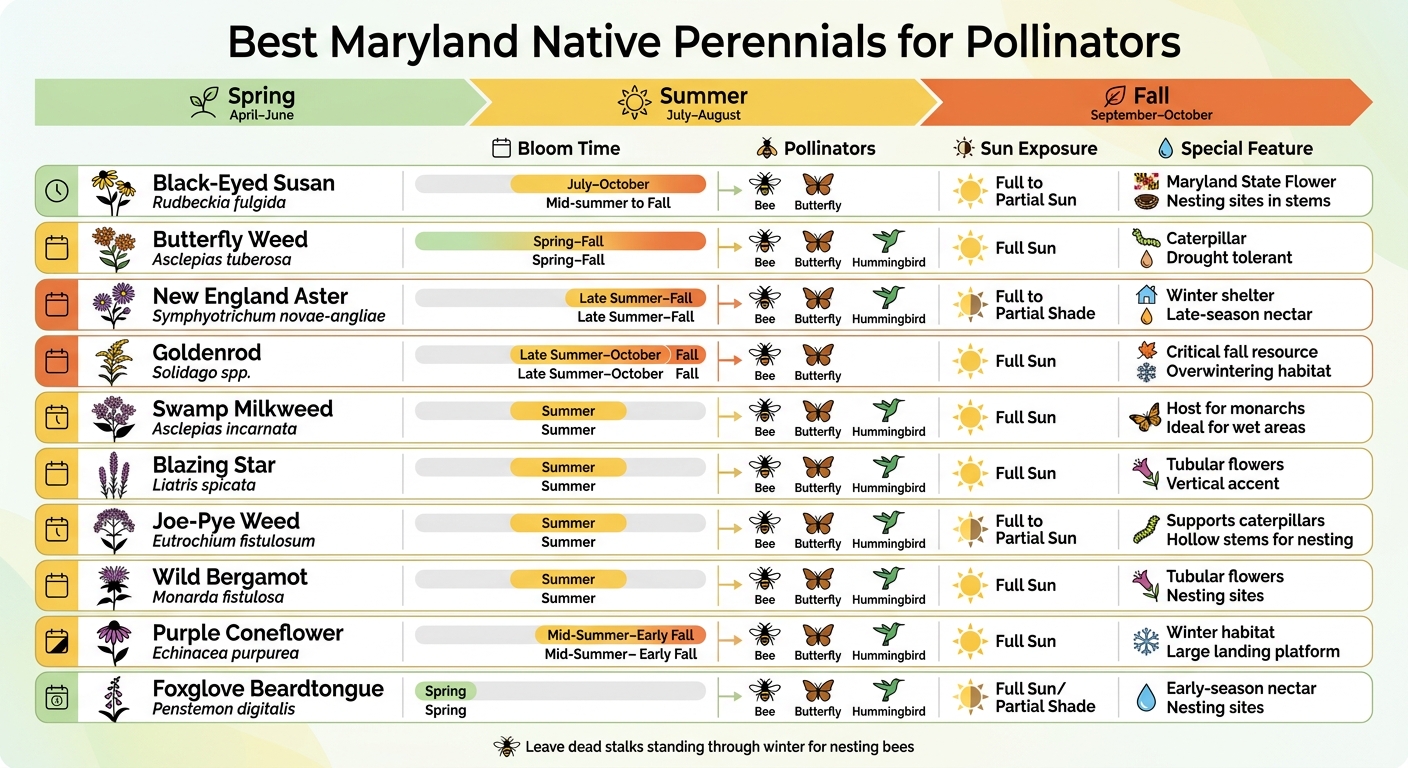
Maryland Native Perennials Bloom Time and Pollinator Guide
Native Plants: Hairy Beardtongue (Penstemon hirsutus) for a Pollinator Garden
sbb-itb-843f8be
1. Black-Eyed Susan (Rudbeckia fulgida)
The Black-Eyed Susan, Maryland’s official state flower, is a dependable native perennial that plays a key role in supporting pollinators. Its bright yellow petals and dark centers create a striking visual from mid-summer to fall (July to October), offering essential food resources when pollinators need them most.
Bloom Time and Pollinator Support
This plant blooms during the height of pollinator activity, providing a steady supply of nectar and pollen for several months. As a member of the Asteraceae family (which includes daisies and sunflowers), it pairs well with other native plants that have overlapping flowering periods. This combination ensures continuous support for pollinators, while also enhancing the garden’s visual appeal. The extended bloom period draws a variety of bees and butterflies, making it a garden favorite.
Pollinators It Attracts
Black-Eyed Susans are magnets for bees, butterflies, and other beneficial insects. According to the University of Maryland Extension, native plants like this often serve as vital food sources for specialist insects during critical stages of their life cycles. Additionally, their hollow stems provide nesting spaces for leaf-cutter and mason bees, making them doubly valuable for pollinator habitats [1].
Growing Conditions: Soil, Sun, and Water
These flowers thrive in full to partial sun and are highly adaptable to Maryland’s varied conditions. From dry, sunny areas to more moist spots, Black-Eyed Susans can handle it all. Once established, they require minimal care, needing little supplemental watering or fertilizing. Their natural resistance to local pests and compatibility with Maryland’s rainfall patterns make them a low-maintenance choice [1].
Benefits Beyond Beauty
Black-Eyed Susans offer more than just aesthetic value – they provide critical ecological benefits. Their flowers deliver immediate sustenance for pollinators, while their stems and structure create habitats for nesting and overwintering. To fully support these benefits, avoid trimming dead stalks until late spring. This allows stem-nesting bees to complete their life cycles. Also, steer clear of pesticides to protect the pollinators that these plants attract [1].
2. Butterfly Weed (Asclepias tuberosa)
Butterfly Weed is a standout among Maryland’s native perennials, known for its striking orange blooms and its role in supporting pollinators throughout the year. This plant not only offers nectar but also serves as an essential host for caterpillars, making it a vital addition to pollinator-friendly gardens.
Bloom Time and Seasonal Support for Pollinators
With a long blooming period that stretches from spring to fall, Butterfly Weed ensures pollinators have a reliable food source across multiple seasons. When paired with other native plants like Black-Eyed Susan, it creates a continuous support system for pollinators, providing nectar and pollen exactly when they’re needed most [1].
Specific Pollinators Attracted
Butterfly Weed is a magnet for a variety of pollinators, including butterflies, bees, and even hummingbirds. According to the University of Maryland Extension, it offers critical resources like pollen, nectar, and oils that specialist insects require during key stages of their life cycles [1]. It also supports predatory and parasitoid insects, which play a role in naturally managing garden pests.
Soil, Sun, and Water Requirements
This perennial thrives in full sun and well-drained soil, making it an excellent fit for Maryland gardens. Once established, it’s low-maintenance, needing minimal watering or fertilizer. Its drought tolerance and resistance to local pests allow it to adapt well across Maryland’s diverse landscapes, from the western mountains to the coastal plain.
Ecological Benefits
Butterfly Weed does more than add beauty to your garden – it actively strengthens local ecosystems. To maximize its benefits, leave dead stalks standing through winter and into late spring. This simple step provides much-needed habitat for stem-nesting bees like mason bees and leaf-cutter bees. By planting Butterfly Weed, you’re contributing to the survival and success of local pollinator populations throughout their life cycle.
3. New England Aster (Symphyotrichum novae-angliae)
New England Aster stands out as a late-season champion, offering nectar and pollen well into the fall months.
Bloom Time and Seasonal Support for Pollinators
This perennial blooms from late summer through fall, filling an essential gap when pollinators are gearing up for winter. By planting it alongside earlier-blooming species, you can ensure a continuous food source throughout the growing season. This overlap is key to supporting pollinators as they prepare for colder months.
Specific Pollinators Attracted
The striking purple-pink flowers of New England Aster are a magnet for bees, butterflies, and hummingbirds. It plays a vital role in sustaining specialist insects during critical periods of their life cycles, offering an abundant supply of both nectar and pollen.
Soil, Sun, and Water Requirements
This perennial thrives in a variety of conditions across Maryland, performing best in full sun to partial shade with moist to moderately wet soil. Once established, it demands little maintenance, requiring minimal watering and no extra fertilization when planted in suitable conditions.
Ecological Benefits
Beyond its beauty, New England Aster provides crucial winter shelter for beneficial insects. Its sturdy structure offers a safe haven for pollinators during the colder months, making it a perfect complement to earlier-blooming plants. Together, they create a year-round support system for pollinators in your garden.
4. Goldenrod (Solidago spp., e.g., Seaside Goldenrod)
Goldenrod plays a key role in supporting Maryland’s pollinators. Its vibrant yellow blooms signal the start of fall and provide essential resources during a time when other flowering plants are scarce. This seasonal timing ensures pollinators have what they need as the growing season winds down.
Bloom Time and Seasonal Support for Pollinators
As fall-blooming perennials, goldenrods step in to fill a critical gap, offering a wealth of nectar and pollen from late summer through October. Pairing goldenrod with spring and summer bloomers like Black-Eyed Susan and Purple Coneflower creates an overlapping bloom cycle. This approach ensures a steady food supply for pollinators, helping them build energy reserves for the winter months.
Specific Pollinators Attracted
Goldenrod’s clusters of bright yellow flowers are a magnet for a variety of specialist insects. Bees, including leaf-cutter and mason bees, flock to its blooms for both nectar and pollen. Butterflies and other beneficial insects also rely on goldenrod as a key late-season resource.
Soil, Sun, and Water Requirements
Goldenrod thrives across Maryland’s diverse regions, from the western mountains to the Piedmont plateau and the coastal plain. Different species are suited to specific areas: Seaside Goldenrod flourishes in warmer coastal zones, while Gray Goldenrod (Solidago nemoralis) and Wrinkleleaf Goldenrod (Solidago rugosa) are better suited to other parts of the state. These plants prefer full sun and can adapt to various soil moisture levels. Once established, they are low-maintenance, needing minimal watering and no fertilization.
Ecological Benefits
Goldenrods do more than provide nectar and pollen – they play an outsized role in supporting local ecosystems. By leaving dead stalks standing through winter, you create critical habitats for overwintering insects and nesting spots for stem-nesting bees, which use the hollow or pithy stems for shelter. To protect these pollinators, it’s best to avoid using pesticides near goldenrod plantings, as these chemicals can harm the very insects the plants are meant to sustain.
5. Swamp Milkweed (Asclepias incarnata)
Swamp Milkweed stands out with its pink flower clusters that not only add beauty to your garden but also attract butterflies, bees, and hummingbirds. It’s a vital host for butterfly and moth caterpillars, making it a valuable addition to any pollinator-friendly landscape [1][3].
Bloom Time and Seasonal Support for Pollinators
This perennial blooms during the summer, bridging the gap between early and late-season flowers. By including Swamp Milkweed in your garden, you ensure pollinators have a consistent food source throughout the peak growing season.
Specific Pollinators Attracted
The nectar-filled flowers are a magnet for specialist bees that depend on specific pollen sources. They also attract beneficial insects, such as predatory and parasitoid species, which naturally help manage garden pests. If you leave the dead stalks standing over the winter, they become nesting sites for above-ground bees, further supporting the ecosystem [1][3].
Soil, Sun, and Water Requirements
Swamp Milkweed thrives in sunny spots with moist, well-drained soil, making it perfect for wet areas or rain gardens. Unlike many perennials that prefer drier conditions, this plant is well-suited for low-lying, damp areas. Once established, it requires minimal watering and fertilization, making it a low-maintenance choice [1].
Ecological Benefits
To protect pollinators and caterpillars, steer clear of pesticides. Leaving dead stalks intact through fall and winter provides critical overwintering habitat for native bees. Adding a regularly refreshed birdbath can further support pollinators in your garden [1].
6. Blazing Star (Liatris spicata)
Blazing Star is a perennial native that brings striking vertical accents to your pollinator garden with its tall spikes of purple, tubular flowers. It’s a great alternative to invasive species, offering reliable nectar and pollen throughout the summer.
Bloom Time and Seasonal Support for Pollinators
This summer-blooming plant is a lifeline for pollinators during the growing season. Even after blooming, its dead stalks can serve as nesting sites for stem-nesting insects like leaf-cutter bees and mason bees if left standing through winter.
Specific Pollinators Attracted
Blazing Star’s tubular flowers are magnets for butterflies, bees, and even hummingbirds, thanks to their rich nectar supply. When you prune the plant, consider placing the clippings in an undisturbed area to help stem-nesting bees find shelter.
Soil, Sun, and Water Requirements
This plant thrives across Maryland, preferring full sun and moist to wet soils. It’s adaptable to sunny spots with adequate moisture and requires very little watering or fertilizing once established. Plus, it’s naturally resistant to local pests, making it a low-maintenance addition to your garden.
Ecological Benefits
Blazing Star doesn’t just provide nectar and pollen – it also adds structural variety to your garden, creating shelter and spaces for pollinators to reproduce. To protect these vital visitors, avoid using pesticides. Pairing Blazing Star with other native plants can extend bloom times, ensuring pollinators have a continuous supply of resources throughout the season. This combination of structure and resource availability mirrors the benefits offered by other native species in Maryland.
7. Joe-Pye Weed (Eutrochium fistulosum)
Joe-Pye Weed is a tall perennial that stands out in Maryland pollinator gardens. Its eye-catching, dome-shaped flower clusters not only draw in pollinators but also serve as a striking centerpiece. The flowers, ranging from dusty pink to mauve, provide essential nectar and pollen during the summer months, making them a key resource for garden biodiversity.
Bloom Time and Seasonal Support for Pollinators
Blooming in summer, Joe-Pye Weed bridges the gap when spring flowers fade. To ensure pollinators have food throughout the year, pair it with spring bloomers like Foxglove Beardtongue and fall species such as New England Aster or Goldenrod [4]. This combination creates a continuous food source for pollinators across seasons. Additionally, leaving the plant’s dead stalks standing through winter provides nesting sites for bees like leaf-cutter and mason bees [1].
Specific Pollinators Attracted
The flowers of Joe-Pye Weed are a magnet for butterflies, bees, and even hummingbirds [1]. Beyond offering nectar, the plant also supports butterfly and moth caterpillars [1][3]. Its hollow stems provide essential overwintering spots for beneficial insects, including specialist bees and predatory species that help manage garden pests [3]. For extra habitat, consider piling pruned stems in a quiet area of your garden [1].
Soil, Sun, and Water Requirements
This plant thrives in full to partial sun and prefers consistently moist soil [1]. It’s naturally found in Maryland’s Piedmont plateau and coastal plain regions, making it well-suited to local conditions [1][2]. According to the University of Maryland Extension, Joe-Pye Weed is ideal for gardens with "Sunny and Moist", "Part Sun and Moist", or "Wet" environments [1]. Once established, it requires little supplemental watering or fertilizing.
Ecological Benefits
Joe-Pye Weed provides real ecological value as a native alternative to non-native species like butterfly bush [1]. As the University of Maryland Extension explains:
Pollinators need what every animal needs: food, shelter, water, and a place to raise a family [1].
To protect pollinators, avoid pesticides and design your garden with overlapping bloom periods to maintain a continuous food supply. This thoughtful approach helps create a thriving habitat for a variety of species.
8. Wild Bergamot (Monarda fistulosa)
Wild Bergamot (Monarda fistulosa), also known as native bee balm, stands out with its striking tubular flowers, making it an excellent addition to Maryland pollinator gardens. As a native perennial, it thrives across Maryland’s diverse regions – from the western mountains to the coastal plain – making it a dependable choice for gardeners.
Bloom Time and Seasonal Support for Pollinators
Wild Bergamot blooms during the growing season, offering a crucial source of nectar and pollen when pollinators are most active. Pairing it with other plants that bloom at different times ensures a steady nectar supply throughout the season. After its flowers fade, the hollow stems become nesting spots for leaf-cutter and mason bees. To support these bees, leave the stalks standing through winter and into early spring rather than cutting them back in the fall.
Specific Pollinators Attracted
Its tubular flowers are a magnet for butterflies, bees, and hummingbirds. Wild Bergamot also supports specialist bees that depend on its pollen at critical points in their life cycles. Additionally, it attracts predatory and parasitoid insects, which naturally help control garden pests.
Soil, Sun, and Water Requirements
This plant thrives in full sun and adapts well to both dry and moist conditions. Once established, it requires minimal watering and is naturally resistant to many local pests. As a native species, Wild Bergamot generally needs less fertilization and maintenance, especially when planted in conditions that match its natural habitat.
Ecological Benefits
Wild Bergamot isn’t just a nectar and pollen source – it also provides overwintering habitats for beneficial insects. By planting this native perennial, you’re supporting Maryland’s pollinators with a habitat they’ve evolved to rely on, reducing the need for non-native alternatives in your garden.
9. Purple Coneflower (Echinacea purpurea)
Purple Coneflower, a perennial native to the Asteraceae family, is a favorite among Maryland pollinators. Its large, daisy-like flowers provide an excellent landing platform for various beneficial insects. Being native, it thrives in Maryland’s diverse climates and naturally fends off local pests. This makes it a reliable seasonal addition to the nectar supply provided by other native plants.
Bloom Time and Seasonal Support for Pollinators
Purple Coneflower blooms from mid-summer to early fall, stepping in when many spring flowers have faded. This extended bloom period ensures pollinators have access to vital nectar and pollen during a critical time. Pair it with plants that flower earlier or later in the season to maintain a consistent food source. After the flowers fade, leave the dead stalks intact – they offer winter habitat for insects.
Specific Pollinators Attracted
With its showy blossoms and tubular disk flowers, Purple Coneflower is a magnet for butterflies, bees, and even hummingbirds. It provides much-needed nectar and pollen for both generalist and specialist pollinators. The plant’s hollow stems are also perfect nesting and overwintering spots for leaf-cutter and mason bees. To keep these pollinators safe, skip using pesticides in your garden.
Soil, Sun, and Water Requirements
This hardy perennial loves full sun and can adapt to various soil types commonly found in Maryland. Once established, it requires little watering or fertilizing, making it an excellent low-maintenance option for gardeners. For the best results, ensure it gets plenty of sunlight and consistent soil moisture. Adding a shallow water source, like a birdbath with stones, can also help keep visiting pollinators hydrated.
Ecological Benefits
Purple Coneflower does more than just look pretty – it plays a key role in supporting Maryland’s pollinator ecosystem. Its striking purple-pink flowers and varying heights attract a wide range of beneficial insects. Plus, its natural resistance to local pests helps create a healthier and more balanced garden environment.
10. Foxglove Beardtongue (Penstemon digitalis)
Foxglove Beardtongue is a spring-blooming perennial that plays a key role in supporting pollinators during Maryland’s early growing season. While many gardeners focus on summer and fall flowers, this plant steps in to provide nectar and pollen just as pollinators emerge from winter or migrate into the region. Its tubular blooms are not only functional but also add a beautiful touch to any garden.
Bloom Time and Seasonal Support for Pollinators
This plant blooms in spring, filling a critical gap before summer flowers take over. Its early blossoms are a lifeline for pollinators when food sources are still scarce. To ensure continuous support for pollinators throughout the year, consider pairing it with plants that bloom later in the season. After the flowers fade, leave the dead stalks intact – these hollow stems are perfect nesting spots for stem-nesting bees like mason and leaf-cutter bees [1].
Specific Pollinators Attracted
The tubular flowers are a favorite for bees, butterflies, and hummingbirds. These blooms not only provide essential nectar but also serve as nesting sites in their hollow stems. To protect these beneficial visitors, avoid using pesticides in your garden [1].
Soil, Sun, and Water Requirements
Foxglove Beardtongue thrives in a variety of conditions across Maryland. It does well in full sun to partial shade and can adapt to different soil moisture levels. Whether you’re planting in the mountains, the Piedmont plateau, or the coastal plain, this native plant is a versatile choice. Once established, it requires little maintenance, needing minimal watering and no fertilization, making it a great option for gardeners looking for easy-care plants [1].
Ecological Benefits
In addition to attracting pollinators, Foxglove Beardtongue supports specialist insects that depend on native plants. Its adaptability across Maryland’s diverse landscapes makes it a reliable addition to pollinator gardens. By blooming early, it complements later-blooming natives, ensuring a steady supply of resources for pollinators throughout the growing season.
Professional Planting Services from Pro Landscapes MD

Creating a flourishing pollinator garden in Maryland means understanding how native plants interact with the state’s diverse regions. Maryland’s geography includes the mountains, Piedmont, and coastal plain – each with distinct climates, soils, and terrain. These differences play a huge role in determining which native perennials will thrive in your garden [1]. That’s where Pro Landscapes MD steps in, offering planting solutions tailored to your specific location and conditions.
Pro Landscapes MD serves central Maryland communities, including Howard, Montgomery, Carroll, Frederick, Prince George’s, and Baltimore counties. Their team assesses key factors like sunlight, soil type, and moisture levels on your property to select the most suitable native plants. This ensures your pollinator garden is not only low-maintenance but also teeming with life.
But their services don’t stop at planting. They specialize in creating gardens with varied plant structures to attract a wide range of pollinators. From ensuring nectar and pollen availability throughout the growing season to including host plants for caterpillars and features for nesting bees, their designs support pollinators at every stage of their lifecycle.
Professional installation avoids common mistakes, like improper plant selection or placement. Pro Landscapes MD often recommends native options like blazing star or butterfly weed, which are proven to support pollinators. They can also incorporate water features, such as birdbaths or small ponds, to provide hydration while managing water to prevent mosquito problems.
Whether you’re in Ellicott City, Bethesda, Columbia, or nearby areas, Pro Landscapes MD transforms outdoor spaces into vibrant pollinator havens. Their thoughtful designs and expert installations maximize the ecological benefits of native plants, helping sustain Maryland’s essential pollinator populations year-round.
Conclusion
Planting native perennials in your Maryland garden is a win-win for both your yard and the pollinators that call the region home. These plants are perfectly suited to Maryland’s varied landscapes – from the western mountains to the Piedmont plateau to the coastal plain – and they thrive with little effort once established [1]. As the University of Maryland Extension explains:
Mainly, they are adapted to the environment in which they naturally occur. This means they generally require less tending from gardeners because they are more resistant to regional pests, require less additional watering and fertilizing once established.
Native perennials do more than just beautify your garden – they play a critical role in supporting pollinators. By serving as host plants for caterpillars, offering nectar and pollen for adult pollinators, and providing nesting sites for bees like mason and leaf-cutter species, these plants support pollinators at every stage of life. A garden planned to include blooms from early spring to late fall ensures a continuous food and shelter supply, creating a thriving habitat year-round.
Even small efforts, like adding a few native plants in containers or beds, can make a noticeable impact. Success, however, depends on matching plants to your yard’s specific conditions, such as sunlight, soil type, and moisture levels. With Maryland’s diverse ecosystems, expert advice can be invaluable in choosing plants and finding nurseries that stock true native species.
Whether you’re making a small addition or reimagining your entire landscape, the rewards are immense. Native perennials not only support local wildlife but also help pollinators adapt to changing climates. They create resilient ecosystems that thrive in Maryland’s unique environments. With thoughtful planting, your garden can become a haven for pollinators, ensuring their survival – and your garden’s vitality – for years to come.
FAQs
How do I pick the right native perennials for my yard conditions?
To pick the right native perennials for your Maryland yard, start by identifying your ecoregion – mountain, Piedmont plateau, or coastal plain. Then, match the plants to your yard’s specific conditions like soil type, sunlight, and moisture levels. For instance, Christmas Fern does well in shaded, moist spots, while Golden Groundsel thrives in sunny areas. Choose plants that provide nectar, pollen, and habitat for pollinators, and steer clear of invasive species. This approach ensures your garden remains low-maintenance while benefiting the local ecosystem.
When should I cut back native perennials for bee nesting?
In spring, rather than winter, trim native perennials to help protect pollinators that spend the colder months in the plant stems. When pruning, make sure to leave at least two feet of stems intact. This provides essential nesting spots and habitat for bees.
Where can I buy true Maryland native plants?
You can find authentic Maryland native plants at local nurseries like Redbud Native Plant Nursery. These nurseries focus on species that naturally flourish in Maryland’s climate and contribute to the health of local ecosystems.
Chat with Us