









- bhavya gada
- No Comments
If a Maryland bed gets 6+ hours of sun, holds heat off brick or pavement, and sits in clay soil, shrub choice comes down to one thing: match the plant to moisture and drainage first.
I’d keep it simple:
- Pick Black Chokeberry, Red Chokeberry, or Northern Bayberry for hot, drier spots
- Use Inkberry Holly where you want evergreen shape and the soil stays more evenly moist
- Plant Virginia Sweetspire or Summersweet only in sunny areas with steady moisture
- Add 2–4 inches of mulch to cool roots and slow water loss
- Water deeply, not lightly and often
- If water stands after rain, fix drainage before planting
Hot sun is only part of the problem. In many Maryland yards, clay soil can turn a bed into a place that is dry in summer, hard on top, and slow to drain after storms. That mix puts shrubs under stress fast, especially near driveways, patios, south-facing walls, and slopes.
9 Great Native Shrubs For Small Spaces
sbb-itb-843f8be
Quick Comparison
| Shrub | Sun | Soil Moisture | Heat Tolerance | Size | Best Use |
|---|---|---|---|---|---|
| Black Chokeberry | Full sun to part shade | Moist to dry | High | 3–6 ft | Slopes, borders, native-style plantings |
| Red Chokeberry | Full sun to part shade | Moist to dry | High | 6–10 ft | Back borders, bird cover, mass plantings |
| Northern Bayberry | Full sun | Dry to moist, well-drained | High | 5–12 ft | Driveway edges, banks, exposed beds |
| Inkberry Holly | Full sun to part shade | Moist to wet | High | 5–8 ft | Hedges, year-round form, rain garden areas |
| Virginia Sweetspire | Full sun to part shade | Moist, well-drained | Moderate | 3–5 ft | Borders, bed edges, spots with runoff nearby |
| Summersweet | Full sun to part shade | Moist, well-drained | Moderate | 4–8 ft | Moist sunny beds, patio borders, native plantings |
Bottom line: I’d choose the shrub based on how fast the site dries out after rain, not just how much sun it gets.
How to Pick the Right Shrub for the Site
Start with the site, not the plant. South- and west-facing beds get the harshest afternoon sun and hold the most heat [1]. That creates a very different setup than a bed with morning sun and afternoon shade, even if both are labeled full sun. From there, line up the site with the shrub’s needs for sun, moisture, and reflected heat.
Match Sun, Soil Moisture, and Reflected Heat
Some full-sun shrubs can handle dry beds that bake in reflected heat. Others need full sun but still want steady moisture at the roots. And that heat can sneak up on you. Pavers, brick walls, sidewalks, and stone masonry can make a planting area much hotter than a nearby lawn.
Maryland’s heavy clay soil makes things trickier [1]. After rain, water may sit on the surface instead of soaking down into the root zone. So a bed can be hot and slow to drain at the same time.
Before planting, check for two simple warning signs [1]:
- Watch where water pools after a heavy rain
- Look for crusting, runoff, or standing water after rain
Those clues usually point to soil or heat stress that will shape how well a shrub does [1].
Compare Shrubs Before You Plant
A side-by-side comparison makes the choice a lot easier.
| Shrub | Sun Exposure | Water Needs | Heat/Drought Tolerance | Mature Size | Best Landscape Use |
|---|---|---|---|---|---|
| Black Chokeberry | Full Sun to Part Shade | Moist to Dry | High | 3–6 ft | Slopes, borders, native plantings |
| Red Chokeberry | Full Sun to Part Shade | Moist to Dry | High | 6–10 ft | Back borders, bird habitat, mass plantings |
| Northern Bayberry | Full Sun | Dry to Moist, Well-drained | High | 5–12 ft | Driveway edges, slopes, coastal-style beds |
| Inkberry Holly | Full Sun to Part Shade | Moist to Wet | High | 5–8 ft | Year-round structure, hedges, rain gardens |
| Virginia Sweetspire | Full Sun to Part Shade | Moist, Well-drained | Moderate | 3–5 ft | Foundation beds, borders, rain garden edges |
| Summersweet | Full Sun to Part Shade | Moist, Well-drained | Moderate | 4–8 ft | Moist sunny beds, patio borders, native plantings |
Use these site details to narrow the shrub options in the roundup below.
How Site Grading and Drainage Affect Shrub Success
Even a drought-tolerant shrub can struggle if it ends up sitting in water after every rain. Slopes may drain too fast, while low spots can catch runoff and stay wet longer than the rest of the yard [1]. Both situations can cause trouble if the shrub isn’t picked for that exact spot.
If your sunny bed also has a grading or drainage problem, deal with that before planting or while you plant, not later. Once you understand how water moves through the site, it’s much easier to sort shrubs by moisture and heat tolerance.
Best Maryland Shrubs for Hot Sun Spots
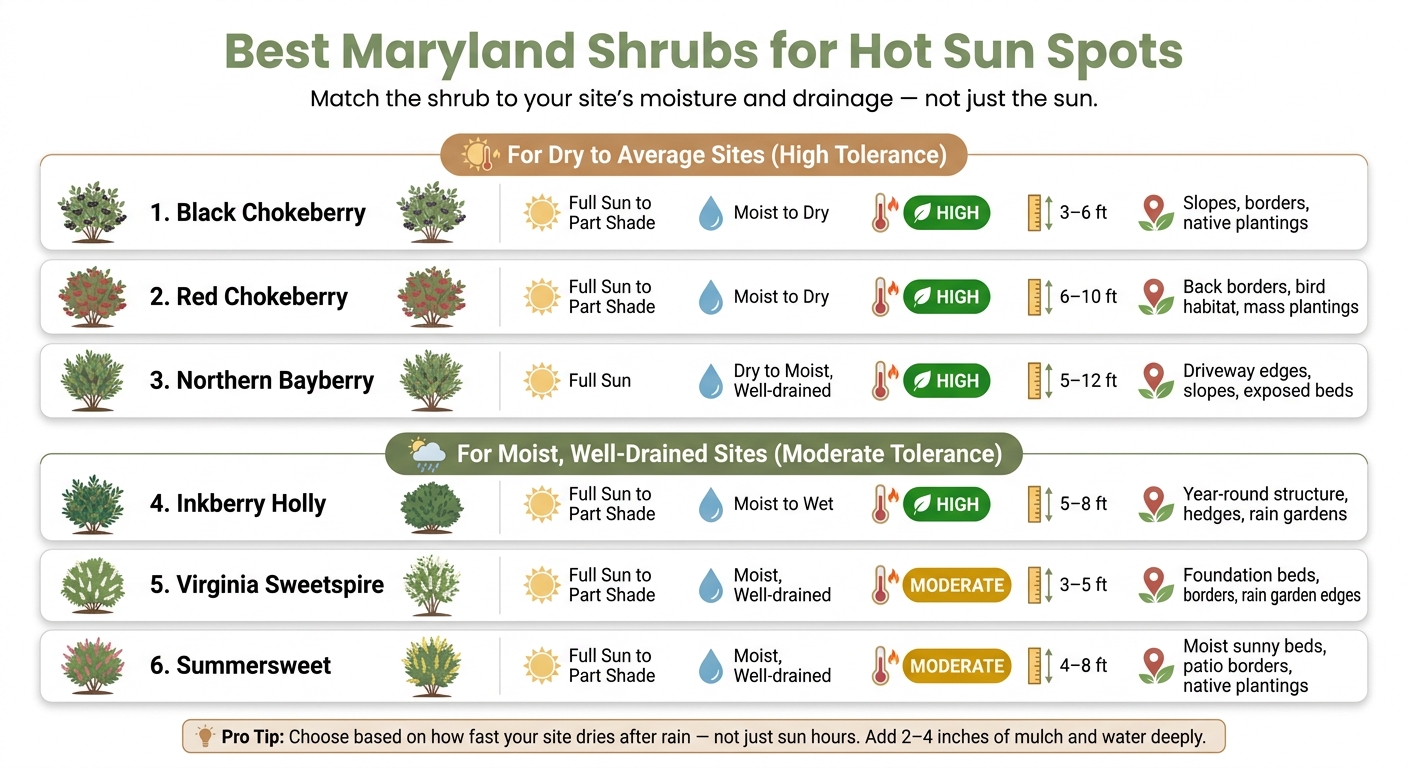
Best Maryland Shrubs for Hot Sun: Quick Comparison Guide
Use the sun-and-moisture match above to pick shrubs for hot Maryland spaces, from dry slopes and property edges to moist foundation beds and rain garden borders.
Black Chokeberry, Red Chokeberry, and Northern Bayberry
Black Chokeberry, Red Chokeberry, and Northern Bayberry do well in sunny Maryland spots that dry between rains. Once established, all three can get through short dry spells. But during the first growing season, they still need steady watering.
Add 2 to 4 inches of wood-chip mulch to keep roots cooler and slow water loss [1]. That simple step helps a lot in the hottest, driest parts of the yard. If you’ve got a sunny bank or an exposed edge that bakes in summer, these shrubs are a good fit.
Inkberry Holly for Year-Round Structure in Full Sun
Inkberry Holly works well in foundation beds and low hedges where you want year-round shape. It needs steadier moisture than chokeberries or bayberry, so it’s a better match for sites that don’t dry out as hard.
A drip system or soaker hose is a smart setup here. It keeps the foliage dry and can cut fungal risk during Maryland’s humid summers [1]. If your sunny spot stays wetter than that, the next two shrubs make more sense.
Virginia Sweetspire and Summersweet for Sunny Sites with More Moisture
Virginia Sweetspire and Summersweet need full sun and soil that stays moist. They fit places like rain garden edges, runoff low spots, or beds near downspouts. They are not the right pick for dry, baked slopes.
In moist sunny sites, full sun helps both shrubs put on better blooms and stronger fall color [1].
Watering, Mulch, and Placement for Long-Term Performance
Water Deeply During Establishment and Summer Dry Spells
Once you pick the right shrub, watering and placement do a lot of the heavy lifting.
The biggest mistake is shallow, frequent watering. It may seem helpful, but it trains roots to stay near the surface. Deep, less frequent watering pushes roots farther down, which helps shrubs get through Maryland’s dry summer stretches.
During the first growing season, check soil moisture often. The root ball can dry out fast before roots move into the surrounding soil. Water early in the day, and try not to wet the leaves. When possible, use drip lines or soaker hoses instead of overhead sprinklers [1].
Apply Mulch Correctly to Cool Roots and Reduce Moisture Loss
Use 2–3 inches of organic mulch, such as wood chips or shredded leaves, to keep soil cooler and slow moisture loss [1]. This matters even more in beds near driveways, patios, and walls, where heat tends to build up.
Keep mulch away from the crown, and spread it in a wide ring instead of piling it up against the base. A mulch volcano might look neat, but it does shrubs no favors.
Place Shrubs Where Their Moisture Needs Match the Site
Even a good shrub will struggle in the wrong place. Dry-tolerant shrubs do best in hot, exposed areas. Shrubs that like more moisture belong in beds that drain well but stay evenly moist.
In Maryland’s clay soil, avoid spots where water sits after rain [1]. Plant choice alone won’t fix a bad site. If a bed stays wet or compacted, deal with grading or drainage first. In some cases, it makes sense to amend the soil or plant in a raised bed before putting anything in the ground.
Conclusion: Match the Shrub to the Heat, Soil, and Water Conditions
The best Maryland shrubs for hot, sunny spots are the ones that fit the site. Full sun matters, sure. But moisture matters just as much. A drought-tolerant shrub in a place where water sits will struggle fast. And a shrub that likes moist soil won’t do well in a hot, exposed area.
Water deeply, add mulch 2 to 4 inches thick, and put each shrub where the sun and drainage fit what it needs.
The small details in a yard matter more than many people think. South-facing walls, driveway edges, and low spots can create tougher heat stress than the rest of the space. Spotting those areas before you plant can save you a lot of time, money, and replacement work later.
If those hot spots also have poor drainage, planting by itself won’t fix it. When a site is hot, wet, or poorly graded, fix the drainage first. Then plant.
FAQs
How do I tell if my sunny bed is too wet or too dry?
Dig 2 to 3 inches into the soil and check how it feels. If it’s dry at that depth, it’s time to water.
A few common signs of soil that’s too dry:
- Wilting that doesn’t recover overnight
- Browning on hydrangeas
- Leaf scorch on broad-leaf evergreens
To check for soil that’s too wet, look at the area during or right after heavy rain. If water collects, runs across the surface, or sits there for more than 24 hours, the drainage is poor and plants may be at risk for root rot.
Which shrub is best for a hot spot near a driveway or wall?
For a hot, sunny spot near a driveway or wall, spicebush (Lindera benzoin) works well as a mid-layer shrub. It handles the partial shade you often get near walls and still adds interest through the season.
Should I fix drainage before planting shrubs in clay soil?
Yes – fix drainage before planting shrubs in heavy clay soil.
When clay soil stays wet, it can trap water around roots, cut down oxygen, and increase the risk of root rot. That’s a bad setup for new shrubs, which need air in the soil as much as they need water.
Start by checking how fast the area drains. If water sits for too long, improve the planting area with organic matter or use raised beds to give roots a better place to grow. And if the drainage issue is more than minor, install the right drainage fix before you plant.
Pro Landscapes MD can help with grading and drainage work.
Chat with Us