









- bhavya gada
- No Comments
Stormwater basins manage runoff and improve water quality, especially in urban areas. Native plants are ideal for these systems due to their deep roots, which improve water absorption, reduce soil erosion, and filter pollutants. They also attract wildlife, require minimal maintenance, and thrive in local conditions. Key plant zones in basins include wet bottoms, moist slopes, and dry rims, each suiting specific native species like Swamp Milkweed, Blue Flag Iris, and Little Bluestem. Avoid aggressive species like Cattails or Reed Canary Grass, as they disrupt functionality. For effective basin design, match plants to water exposure zones and plant in spring or fall for best results.
Wild Ones Presents "Native Plants for Improving Stormwater" with Eric Fuselier
Why Use Native Plants in Stormwater Basins
Native plants enhance the performance of stormwater basins while keeping upkeep manageable. Because they’re suited to the local environment, they can handle the challenges of basin conditions – like heavy flooding and dry spells – better than non-native species. This makes them an ideal choice for matching plants to specific basin zones.
Water Absorption and Soil Stability
Native plants excel at managing water because they’re perfectly suited to local conditions. Take Swamp Milkweed (Asclepias incarnata), for example – it thrives in both waterlogged soils and during dry periods. This adaptability allows it to absorb excess rainwater efficiently, helping prevent standing water that could lead to infrastructure damage or mosquito problems.
Sedges, such as Oval Sedge and Brown Fox Sedge, also play an important role. Their dense, fine leaves slow down runoff, reducing water velocity as it moves through the basin. This gives the water more time to soak into the ground instead of rushing downstream. Plus, these plants act as natural filters, removing pollutants from the water, which helps manage both water quantity and quality.
Support for Wildlife and Pollinators
Stormwater basins filled with native plants double as thriving habitats for wildlife. These plants provide essential food and shelter for birds, butterflies, and pollinators like bumblebees and skippers. For instance, Cardinal Flower attracts hummingbirds in late summer, while Blue Flag Iris offers nectar to bees when it blooms in soggy meadows during late spring. By planting species with staggered bloom times, such as Golden Alexanders in spring and Cardinal Flower in late summer, you ensure a steady supply of food and habitat throughout the growing season.
Lower Maintenance Requirements
Once they’ve settled in, native plants require very little care. They don’t need much in the way of fertilizers, pesticides, or extra watering. For example, Great Blue Lobelia can handle occasional flooding while naturally maintaining moisture levels, which helps reduce maintenance expenses. This ability to withstand fluctuating conditions makes native plants a smart, cost-effective solution for long-term stormwater management.
How to Select Native Plants for Your Basin
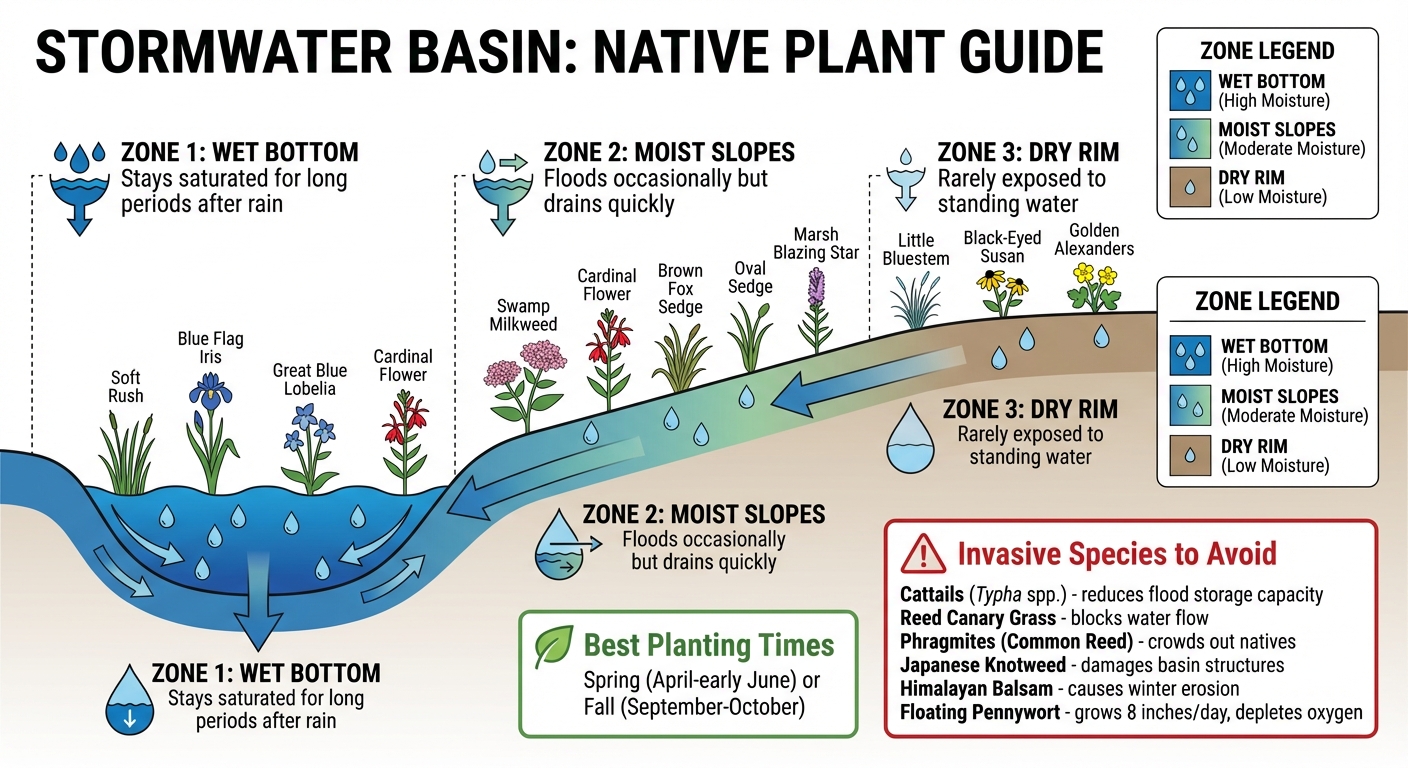
Native Plant Selection Guide for Stormwater Basin Zones
Start by evaluating your basin’s layout and water flow patterns. Since moisture levels vary across different areas, it’s crucial to choose plants that align with these conditions to ensure they thrive.
Matching Plants to Basin Zones
Stormwater basins naturally divide into three zones, each with unique conditions based on water exposure:
- Wet bottom: This area stays saturated for long periods after rain, making it ideal for plants that can handle standing water, like Soft Rush or Blue Flag Iris.
- Moist slopes: These zones flood occasionally but drain quickly, making them suitable for species such as Swamp Milkweed or Cardinal Flower.
- Dry rim: Rarely exposed to standing water, this zone supports drought-tolerant plants like Little Bluestem or Black-Eyed Susan.
After a rainfall, observe where water collects and how long it takes to drain. This will help you identify the appropriate plants for each zone, avoiding mistakes like placing water-loving plants in dry areas or drought-tolerant species in waterlogged spots.
Once you’ve matched plants to zones, focus on adding diversity to strengthen the ecosystem.
Using Multiple Species and Planting Times
Incorporating a variety of native plants creates a more resilient ecosystem that supports pollinators and thrives year-round. Aim to plant at least five to seven native species with staggered bloom times to ensure continuous growth and ecological balance from spring to fall.
The best times to plant are spring (April through early June) and fall (September through October). Spring planting allows plants to establish strong roots before winter, while fall planting benefits from cooler weather and steady rainfall. Avoid planting in summer when heat and dryness can stress young plants and increase watering needs.
Plants to Avoid
While selecting native plants, it’s important to steer clear of invasive species that can disrupt basin functionality. These plants can outcompete beneficial natives and reduce the basin’s effectiveness in managing water.
- Cattails (Typha spp.) grow aggressively, filling basins with sediment and reducing their flood storage capacity [6].
- Reed Canary Grass (Phalaris arundinacea) and Phragmites (Common Reed) form dense stands that block water flow and crowd out native species [4][6].
- Japanese Knotweed (Fallopia japonica) has invasive roots that can damage basin structures. Even tiny root fragments can regenerate [7].
- Himalayan Balsam dies back in winter, leaving slopes vulnerable to erosion [5].
- Floating Pennywort grows rapidly – up to 8 inches per day in warm weather – forming dense mats that deplete oxygen in the water [5][7].
If you notice any of these invasive plants during your seasonal inspections, remove them immediately before they go to seed. Don’t compost them – bag and dispose of them through your local waste management system to prevent further spread [4].
sbb-itb-843f8be
Best Native Plants for Stormwater Basins
Choosing native plants for the dry rims of stormwater basins can improve water management and encourage local wildlife. These plants thrive in well-drained areas, helping to reduce runoff while supporting ecological diversity.
Plants for Dry Basin Rims
Here are some excellent options for the dry edges of stormwater basins:
- Golden Alexanders: This vibrant wildflower grows well in well-drained soils and plays a role in maintaining the surrounding ecosystem.
- Swamp Milkweed (Asclepias incarnata): Known for attracting pollinators, this plant handles short dry periods and boosts biodiversity.
- Oval Sedge (Carex bicknellii): With its dense growth, this sedge slows down runoff and adapts to varying moisture levels.
These plants not only enhance the functionality of stormwater basins but also integrate naturally into the broader landscape, complementing water management systems.
Combining Native Plants with Stormwater Infrastructure
Native plants work hand-in-hand with engineered systems – like French drains, dry riverbeds, and grading installations by Pro Landscapes MD – to improve water management and support local ecosystems.
Take deep-rooted native species like Swamp Milkweed and Blue Flag Iris, for example. These plants create natural soil channels that absorb excess runoff, easing the workload on French drains and other drainage systems. Meanwhile, dense sedges such as Brown Fox Sedge or Oval Sedge help slow down water flow across the landscape. This not only prevents soil erosion but also protects the structural integrity of drainage installations and grading work.
Beyond managing water flow, native plants act as natural filters. They help remove pollutants from stormwater before it enters drainage systems, improving water quality and reducing the need for frequent maintenance of pipes and catch basins. Some species, like Cardinal Flower, Marsh Blazing Star, and Great Blue Lobelia, are particularly well-suited for stormwater basins. They thrive in the alternating flood-and-drought conditions, meaning they can handle temporary inundation or dry spells without needing constant replacement.
By incorporating shallow basins with native plants, you can create rain gardens that collect and infiltrate water before it even reaches traditional drains. Pro Landscapes MD’s drainage solutions – such as dry riverbeds and land leveling – can be further enhanced by placing these gardens in areas prone to flooding. Using a variety of plant species ensures that root systems remain active throughout the growing season, helping to stabilize the soil and maintain water absorption.
This combination of engineered systems and native plantings shifts stormwater management from a purely mechanical process to a more eco-friendly system. The result? Properties are better protected from water damage while also providing habitats for local wildlife. This approach is particularly effective across central Maryland, including Howard and Montgomery Counties, where it addresses water issues while nurturing the local environment.
Conclusion
Native plants bring stormwater basins to life, turning them into ecosystems that naturally manage water. Their deep roots – reaching depths of up to 15 feet – break through compacted soil and significantly improve water infiltration compared to turf grass[8]. This not only reduces runoff but also helps replenish groundwater supplies.
Once established, native plants require very little upkeep. They need minimal watering, weeding, or fertilizing, which translates to lower long-term costs compared to traditional landscaping methods[1][2]. Beyond their practicality, these plants support biodiversity by attracting over three times more beneficial insects than non-native species. They also provide essential food and shelter for pollinators, songbirds, and other wildlife[1][3]. By combining water management with habitat creation and low maintenance, stormwater basins become valuable assets for both property owners and local ecosystems.
The key to success lies in thoughtful design and plant selection. Pro Landscapes MD specializes in choosing native species tailored to each basin zone and blending them seamlessly with drainage systems. Their expertise ensures that native vegetation complements engineered solutions, serving communities across Howard County, Montgomery County, and central Maryland.
With expert planning, these basins achieve full vegetative cover within three years, offering year-round ecological and functional benefits[1][3].
FAQs
How do I figure out my basin’s wet, moist, and dry zones?
Monitoring water levels and soil conditions during and after storms is key to understanding how your landscape handles water. Here’s a breakdown of the different zones you might observe:
- Wet zones: These areas retain water year-round or for extended periods, making them ideal for water-loving plants like pickerelweed.
- Moist zones: These spots stay damp for a short time after storms and can support plants such as blueflag iris.
- Dry zones: These areas drain quickly, making them perfect for hardy grasses like switchgrass.
By keeping an eye on these conditions, you can identify the right zones and choose plants that thrive in each – helping to create a more effective stormwater management system.
How long does it take for native plants to establish in a basin?
Native plants typically need about 1 to 2 years to become fully established in a basin. During this period, they require regular watering and attentive care to support their growth and help them adjust to their surroundings.
How can I stop invasive plants from taking over my basin?
To keep invasive plants out of your stormwater basin, consider planting native species such as Pickerelweed, Switchgrass, Little Bluestem, and Buttonbush. These plants thrive in local conditions and naturally discourage invasive species from taking over.
Regular upkeep is essential – this includes removing unwanted plants, clearing out debris, and keeping an eye on the health of your vegetation. For guidance on choosing the right plants for your area, reach out to local native plant programs or nurseries. They can help you create a durable and environmentally friendly landscape.
Chat with Us