









- bhavya gada
- No Comments
Pollinators like bees and butterflies are vital for gardens and agriculture, but many pest control methods can harm them. Here’s how you can manage pests while keeping pollinators safe:
- Companion Planting: Use plants like marigolds, onions, and garlic to repel pests naturally, while flowers like lavender and thyme attract pollinators.
- Attracting Helpful Insects: Introduce ladybugs, hoverflies, and parasitic wasps to prey on pests without harming pollinators.
- Physical Barriers: Row covers block pests while allowing sunlight and water through. Remove them when pollination is needed.
- Neem Oil Sprays: A natural pesticide effective against pests like aphids, applied in the evening to avoid pollinator exposure.
- Bacillus Thuringiensis (Bt): A bacteria-based solution that targets specific pests like caterpillars without affecting bees or butterflies.
These methods reduce chemical use, protect pollinators, and improve garden health and maintenance. Start small with one or two techniques and build a thriving, balanced garden ecosystem.
Bring Back the Pollinators: Managing Pests While Protecting Pollinators
sbb-itb-843f8be
How These Methods Work in Maryland Gardens
Central Maryland’s humid climate and consistent rainfall create an ideal environment for beneficial microbes like Beauveria bassiana and Bacillus thuringiensis (Bt). These naturally occurring microbes play an essential role in controlling pests such as thrips and spider mites, especially during wetter years when their populations thrive[1].
Native plants further enhance this natural pest control system. In Maryland, planting species such as butterfly milkweed, woodland sunflower, and narrow-leaf mountain mint supports predatory insects like soldier beetles and syrphid flies. These plants act as reservoirs, offering habitats for these helpful insects. A great example is the scoliid wasp, a common sight in Maryland lawns, which parasitizes Japanese beetle grubs while leaving grass and pollinators untouched[1][3].
Research supports the effectiveness of these natural methods:
"Natural enemies offer longer-term, more satisfactory results than pesticidal chemicals." – Dr. Sara Tangren and Stanton Gill, University of Maryland Extension[1]
Pro Landscapes MD incorporates this plant-pest relationship into their garden designs throughout central Maryland. By monitoring local weather trends, they fine-tune their approach to ensure natural pest defenses remain active and effective throughout the year[1].
1. Companion Planting
Companion planting is all about pairing plants in a way that naturally keeps pests at bay while encouraging pollinators to thrive. Instead of planting a single crop in one area (monoculture), mixing different plants confuses pests and makes it harder for them to target your garden. Some plants distract pests, while others emit scents that drive them away.
Pollinator Safety
This method doesn’t just disrupt pests – it also helps pollinators like bees and butterflies.
Plants such as lavender, thyme, and basil offer nectar to pollinators while warding off harmful insects. These herbs attract creatures like bumblebees and hummingbirds but repel pests such as aphids. Letting crops like cilantro, broccoli, and basil "bolt" (flower) can also create small blooms that draw in helpful insects[2][4].
Effectiveness Against Target Pests
Certain plants are especially effective at protecting your crops. For example:
- Marigolds act as "trap crops", luring pests away from more valuable plants. Amber Aguilera from the U.S. Fish and Wildlife Service explains:
"The marigolds give the pests something to eat before they reach the tomatoes."[2]
- Onions and garlic release strong scents that repel insects and even rodents. These plants keep pests from exploring your garden beds while marigolds distract them elsewhere[2].
Eco-Friendliness
One of the biggest perks of companion planting is that it eliminates the need for chemical pesticides, like neonicotinoids. These chemicals, commonly used in garden sprays, can harm or even kill pollinators. Maryland’s Pollinator Protection Act, for instance, restricts the use of neonicotinoids by home gardeners[3]. By creating a diverse plant system, you’re helping beneficial insects thrive while keeping pests under control naturally[4].
This approach not only reduces chemical use but also builds a more resilient garden ecosystem.
Ease of Implementation
Getting started with companion planting is simple – it’s all about choosing the right plants. For example:
- Plant marigolds between rows of vegetables.
- Scatter onions and garlic throughout your beds.
- Add flowering herbs near fruits and vegetables.
You can also create insectary strips, which are areas planted specifically to provide habitats for pollinators and predatory insects. These strips help maintain pest control season after season[2][4].
Companion planting is an easy and effective way to boost your garden’s health while supporting pollinators and reducing pests. By thoughtfully arranging your plants, you can create a thriving, balanced ecosystem.
2. Attracting Beneficial Insects
Ditch chemical pesticides and let nature handle the pests. Beneficial insects, like ladybugs, lacewings, and parasitic wasps, are natural predators that target harmful pests while leaving pollinators unharmed. This approach, known as Integrated Pest and Pollinator Management (IPPM), creates a balanced and thriving garden ecosystem.
Pollinator Safety
Beneficial insects are selective hunters. For instance:
- Ladybugs feast on aphids.
- Hoverfly larvae attack soft-bodied pests, while adult hoverflies also act as pollinators.
- Parasitic wasps specifically target moth larvae without endangering bees or butterflies.
Catherine Coverdale, a Pollinator Conservation and IPM Specialist, highlights the importance of flowering plants for attracting these insects:
"Beneficial insects love the small flowers from bolted crops like cilantro, broccoli, and basil."[4]
This natural method avoids the risks posed by chemical sprays. Amber Aguilera from the U.S. Fish and Wildlife Service warns about the dangers of neonicotinoids:
"Neonicotinoids can be found in garden pest control sprays. While they are designed to target specific pests, they also can also be lethal to pollinators."[6]
Effectiveness Against Target Pests
The numbers speak for themselves. Releasing 1,500 ladybugs across 1,000 square feet can wipe out 5,000 aphids in just a week[5]. Trichogramma wasps, even more efficient, can parasitize up to 90% of moth eggs when timed correctly[5]. For soil pests like cutworms, beneficial nematodes deliver an impressive 85% reduction rate[5].
These natural helpers are also budget-friendly. You can grab 1,000 ladybugs for about $15 or 5,000 Trichogramma wasps for the same price[5]. Many garden centers in Maryland stock these options, making it simple to adopt this eco-conscious pest control method.
Eco-Friendliness
Using beneficial insects slashes pesticide use significantly. Gardens that adopt integrated pest management strategies reduce pesticide applications by 50-70%[5]. Compare that to broad-spectrum pesticides, which can kill 60% of bumblebees overnight. Meanwhile, natural predators like ladybugs reduce aphid populations by 70% without harming pollinators[5].
Even larger predators can contribute to pest control while ensuring pollinator safety.
Ease of Implementation
Attracting and deploying beneficial insects is straightforward. Start by planting native flowers like Black-eyed Susans, Purple Coneflower, and Goldenrod to provide nectar throughout the growing season[4]. You can also add dill or fennel – about 10 plants per garden bed – to draw ladybugs and hoverflies specifically[5]. For a long-term solution, create insectary strips, which are rows of perennial flowers that serve as a permanent habitat for beneficial insects[4].
For immediate results, release beneficial insects in the early evening to help them settle in their new environment[5]. Provide a shallow water source and leave some areas of the garden undisturbed for overwintering habitats[5]. Most importantly, avoid chemical sprays entirely to ensure the safety of your natural allies[4].
3. Physical Barriers and Row Covers
Row covers and insect netting offer a practical way to shield plants from airborne pests. These ultralight materials act as a physical barrier, keeping pests like cabbage butterflies, carrot flies, and whiteflies from landing on crops and laying eggs – all without resorting to chemicals. They work well alongside other pollinator-friendly strategies, providing a natural defense system.
Pollinator Safety
Broad-spectrum pesticides can harm pollinators, but row covers help avoid that risk. For crops like broccoli and cabbage, which don’t rely on pollinators, you can leave the covers on all season. For plants that need pollination, such as squash or tomatoes, remove the covers when flowers appear so pollinators can access them freely.
Effectiveness Against Target Pests
Lightweight Agfabric row covers (0.5 oz) are highly effective, blocking 90% of flying insects and excluding up to 95% of cabbage butterflies when installed properly. They also reduce carrot fly damage by about 80%, while still allowing 85% of sunlight to reach the plants. Additionally, the fabric lets natural rainfall through, which means your plants stay hydrated without extra effort.
Eco-Friendliness
Row covers play a key role in reducing pesticide use. By incorporating them into your pest management plan, you can cut chemical pesticide use by 50–70%. This reduces chemical residues on your crops and prevents harmful runoff into local waterways. Plus, UV-treated fabrics are durable enough to last through the growing season, making them a reusable and eco-conscious investment.
Ease of Implementation
Setting up row covers is straightforward. Use 18-inch-high PVC hoops spaced 2 feet apart, drape UV-treated fabric over the hoops, and secure the edges with rocks or soil. On hot days, especially when temperatures climb above 85°F, roll up the sides slightly – about 20% – to improve ventilation. A 50-foot roll of Agfabric costs around $20, making it an affordable solution. Be sure to check under the covers regularly to remove any pests that might have been trapped during setup. When combined with companion planting and beneficial insect strategies, row covers offer a strong, low-cost defense for your crops while keeping pollinator populations safe.
4. Neem Oil Sprays
Neem oil, derived from the seeds of the neem tree, is a plant-based pesticide that targets common garden pests while being gentle on pollinators. This OMRI-listed product is particularly effective against aphids, whiteflies, and spider mites, offering a safer alternative to synthetic chemicals like neonicotinoids. Field trials by ATTRA show that neem oil can achieve a 95% knockdown rate for aphids, with pest populations reduced by 75-85% after just two applications [5].
This natural solution strikes a balance between effective pest control and pollinator safety.
Pollinator Safety
Timing is everything when it comes to protecting bees and butterflies. Neem oil has low toxicity to bees, with an LD50 of over 2,000 mg/kg [5], but it’s essential to avoid direct exposure. Apply the spray in the evening, after pollinators have stopped foraging. This timing ensures that bees and butterflies won’t come into contact with the oil while it’s wet. Neem oil breaks down within 3–4 days, leaving behind minimal residue [1].
Effectiveness Against Target Pests
For optimal results, use formulations containing Azadirachtin (AZA), which is particularly effective against chewing insects like caterpillars, leaf beetles, and sawflies [1]. To prepare the spray, mix 1 teaspoon of neem oil with 1 quart of water and 1/4 teaspoon of dish soap (Bonide pint ≈ $15) [5]. The dish soap acts as an emulsifier, helping the oil adhere to plant surfaces. Use a fine mist sprayer to thoroughly coat all affected areas, paying special attention to the undersides of leaves where pests often hide. Reapply every 7-10 days, but limit treatments to three applications per season [5]. These straightforward steps make neem oil a practical and effective option for pest control while keeping pollinators safe.
Ease of Implementation
Before treating your entire garden, test the solution on a single leaf and wait 24 hours to check for any adverse reactions [5]. Avoid spraying during the heat of the day, as temperatures above 85°F can increase the risk of leaf burn by 50% [5]. Applying neem oil in the evening not only protects pollinators but also reduces the chance of phytotoxicity. Compared to insecticidal soaps, neem oil performs better against stubborn infestations [5], making it a dependable choice for gardeners in Maryland who want to manage pests without compromising pollinator health.
5. Bacillus Thuringiensis (Bt)
Bt offers a precise, biological approach to pest control that helps protect pollinators while managing garden pests. Short for Bacillus thuringiensis, this naturally occurring bacterium targets specific pests without harming beneficial insects. It works by disrupting the digestive systems of pests after ingestion. As Kevin McAlister, an Agricultural Biology Graduate from Cornell University, explains:
"This bacterial toxin, unlike chemicals, targets only lepidopterans’ digestive systems" [5].
According to USDA data, Bt achieves 90% control of cabbage worms, making it an effective tool for organic pest management [5].
Pollinator Safety
Bt is exceptionally safe for pollinators like bees and butterflies. Compared to synthetic pesticides, which can result in 50% bee mortality within 24 hours of exposure, Bt has a much lower toxicity level, with an LD50 of over 2,000 mg/kg [5]. A 2022 EPA study affirmed that Bt, when applied properly, does not harm beneficial butterflies [5]. The University of Maryland Extension further highlights its safety:
"Btk has no impact on birds, bees, and other insect and mite species" [1].
This safety is due to Bt’s unique action – it only works when ingested by target pests, leaving pollinators unaffected even when they visit treated plants.
Effectiveness Against Target Pests
Bt’s effectiveness lies in its specificity. Different strains of Bt target particular pest groups, allowing for precise pest control. For example, Bacillus thuringiensis var. kurstaki (Btk) is effective against lepidopteran larvae, such as tomato hornworms and cabbage worms. For best results:
- Apply Bt within 48 hours of larvae hatching, when they are most vulnerable.
- Mix 1 teaspoon of Bt with a gallon of water and add 1/4 teaspoon of mild dish soap to improve adhesion [5].
- Focus application on the undersides of leaves, where larvae typically feed.
Commercial Bt products are widely available and affordable. This targeted approach ensures effective pest management with minimal environmental impact.
Eco-Friendliness
Bt breaks down quickly under UV light, degrading within 2–3 days [5]. This means its effects last only 3 to 4 days before returning to natural levels [1]. Additionally, it is OMRI-listed, making it suitable for certified organic gardening. To avoid resistance, rotate between Bt strains: use Bt kurstaki for caterpillars, Bt galleriae for lawn grubs, and Bt israelensis for mosquito larvae [1].
Ease of Implementation
Using Bt is simple and requires minimal equipment. A standard garden sprayer is all you need to coat plant surfaces thoroughly, especially areas with visible pest activity. The University of Maryland Extension describes its mode of action:
"When pests ingest Bt, it is converted into toxins which destroy the gut membrane" [1].
Test the solution on a small area first, and remember that Bt works best on young larvae under 2 inches long [5]. Since it naturally degrades within days, you can reapply as needed without worrying about long-term environmental buildup.
Comparison Table
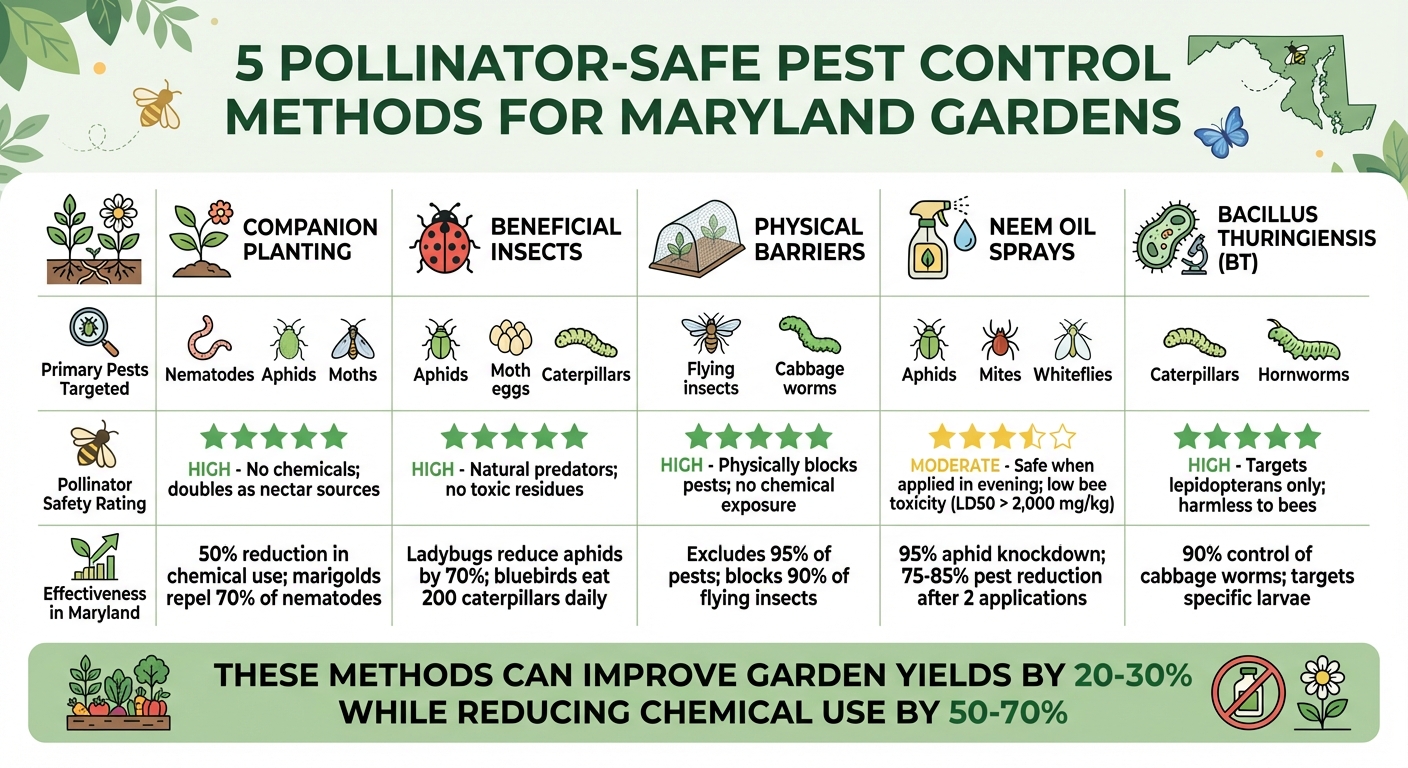
5 Pollinator-Safe Pest Control Methods: Effectiveness and Safety Comparison
The following table outlines five pest control methods that are both effective and safe for pollinators in Maryland gardens:
| Pest Control Method | Primary Pests Targeted | Pollinator Safety | Effectiveness in Maryland Gardens |
|---|---|---|---|
| Companion Planting | Nematodes, aphids, moths | High: No chemicals; doubles as nectar sources. | High: Reduces chemical use by 50%; marigolds repel 70% of nematodes [5]. |
| Beneficial Insects | Aphids, moth eggs, caterpillars | High: Relies on natural predators; no toxic residues. | High: Ladybugs reduce aphid populations by 70%; bluebirds eat 200 caterpillars daily [5]. |
| Physical Barriers | Flying insects, cabbage worms | High: Physically blocks pests; no chemical exposure. | High: Excludes 95% of pests; effective for brassicas in Maryland gardens [5]. |
| Neem Oil Sprays | Aphids, mites, whiteflies | Moderate: Safe when applied in the evening; low bee toxicity (LD50 > 2,000 mg/kg) [5]. | High: Achieves 95% aphid knockdown; works well in Maryland’s humid conditions [5]. |
| Bacillus Thuringiensis (Bt) | Caterpillars, hornworms | High: Targets lepidopterans only; harmless to bees [5]. | High: Provides 90% control of cabbage worms; effective against specific larvae [5]. |
These approaches are tailored to Maryland’s humid climate, which naturally supports beneficial microbes and enhances pest control efforts.
Conclusion
Using pollinator-safe pest control methods can transform your Maryland garden into a haven that works in harmony with nature. Techniques like companion planting, introducing beneficial insects, using physical barriers, applying neem oil, and incorporating Bt not only protect essential pollinators but also improve garden yields by 20% to 30% while cutting chemical use by 50% to 70% during the growing season[5].
"When we take care of the pollinators in our backyard, we also help support regional food production." – Meghan Snow, U.S. Fish & Wildlife Service[2]
By steering clear of broad-spectrum synthetic pesticides, you’re not just protecting pollinators – you’re also preventing chemical runoff into Maryland’s soil and waterways and aiding species like Monarch butterflies during their migration. Simple actions, such as planting 10–15 native flower varieties and applying neem oil in the evening, can reduce pollinator exposure by 80% while still keeping pests in check[5].
Start small this spring by trying one or two methods, like companion planting or using row covers. Over time, these steps create a self-sustaining garden where natural predators handle pests, resulting in healthier plants and larger harvests while benefiting the surrounding ecosystem.
For personalized advice on building a pollinator-friendly garden in Maryland, reach out to Pro Landscapes MD.
FAQs
What is the safest pest control method during peak bee activity?
During peak bee activity, the safest pest control methods focus on natural solutions that protect pollinators. Using organic pesticides and biological controls can effectively manage pests without posing significant risks to bees and butterflies. Beneficial insects like ladybugs, predatory wasps, and hoverflies are excellent choices for keeping pests in check while ensuring pollinators remain safe. These methods strike a balance between responsible pest management and pollinator conservation.
How do I time row cover removal for pollination?
To figure out the best time to remove row covers, watch for when your plants are in full bloom and pollinators – like bees and butterflies – are actively visiting. Take off the covers once you’re sure pollination has occurred, which you can confirm by noticing fading flowers or the start of fruit development. Be careful not to remove them too early, as this might disrupt pollination, or too late, which could trap pollinators underneath. Paying attention to local pollinator activity will help you get the timing just right.
How do I choose the right Bt strain for my pest?
To pick the right Bt strain, focus on one that targets the specific pest you’re dealing with while sparing pollinators and other beneficial insects. Take into account the pest’s life cycle and your crop’s requirements, as various strains work best against different types of insect larvae. Choosing the right strain for your particular pest ensures the most effective results.
Chat with Us