









- bhavya gada
- No Comments
Rain gardens are designed to manage stormwater runoff while filtering pollutants and supporting local ecosystems. To ensure success, you need plants that can handle fluctuating moisture levels and resist common plant diseases.
Here’s the key: Choose disease-resistant plants that thrive in Maryland’s climate. These plants require less maintenance, reduce the need for chemical treatments, and stay healthy in wet conditions.
Top Plant Picks for Rain Gardens
- Black-Eyed Susan: Bright yellow flowers, 2–3 feet tall, attracts pollinators.
- Cutleaf Coneflower: Tall (6–10 feet), handles wet soil, and provides seeds for birds.
- Sensitive Fern: Grows in the wettest areas, offers cover for amphibians.
- Bee Balm: Vibrant blooms, loved by bees and butterflies, resists moisture-related diseases.
- Inkberry Holly: Evergreen shrub, tolerates wet soil, produces berries for birds.
Quick Tips for Success
- Soil Prep: Grade the area to create wet and dry zones.
- Choose Native Plants: They’re better suited to local conditions.
- Seasonal Care: Water during dry spells and prune as needed.
By selecting the right plants and maintaining proper drainage, you can create a rain garden that looks great, supports wildlife, and manages stormwater effectively.
Rain Garden Plants: Low-Maintenance Picks for Managing Stormwater | Let Cat Show You How!
sbb-itb-843f8be
Disease-Resistant Plants for Rain Gardens
The plants listed below are not just visually appealing and well-suited to rain gardens – they also naturally resist common plant diseases, making them a dependable choice for your garden.
Black-Eyed Susan (Rudbeckia hirta and varieties)
Black-Eyed Susans light up rain gardens with their bright yellow petals and dark centers, blooming from mid-summer through fall. These sturdy perennials grow 2 to 3 feet tall, providing vibrant color and dense foliage that helps prevent soil erosion. Their adaptability to varying moisture levels makes them a reliable choice. Similarly, the Cutleaf Coneflower offers complementary benefits with its taller stature and similar adaptability.
Cutleaf Coneflower (Rudbeckia laciniata)
Reaching an impressive height of 6 to 10 feet, the Cutleaf Coneflower adds a striking vertical element to rain gardens. Its drooping yellow petals thrive in areas with fluctuating moisture, making it an excellent companion to other rain garden plants.
Sensitive Fern (Onoclea sensibilis)
Sensitive Fern is perfect for the wettest spots in a rain garden. Its light green, textured fronds create a lush, natural look as the plant spreads through underground rhizomes to form thick colonies. Typically growing 1 to 2 feet tall, it turns bronze in the fall before dying back in winter, adding seasonal interest to your garden.
Bee Balm (Monarda varieties)
Bee Balm is a natural fit for rain gardens, as it thrives near streams and ponds and handles fluctuating water levels with ease [1]. This plant resists moisture-related diseases and offers vibrant tubular flowers in red, pink, purple, and white from June through August. It’s a magnet for hummingbirds, bees, and butterflies, bringing life and color to your garden during the summer months.
Inkberry Holly (Ilex glabra)
Inkberry Holly is a native evergreen shrub that stands out for its ability to tolerate wet soils while maintaining year-round dark green foliage. Growing 5 to 8 feet tall, it produces small white flowers in spring and black berries in winter, which attract birds. Its dense branches are perfect for privacy screens or defining garden borders, making it a versatile addition to any rain garden.
These plants combine durability, beauty, and low maintenance, creating a thriving rain garden that enhances both the environment and your outdoor space.
Plant Comparison Table
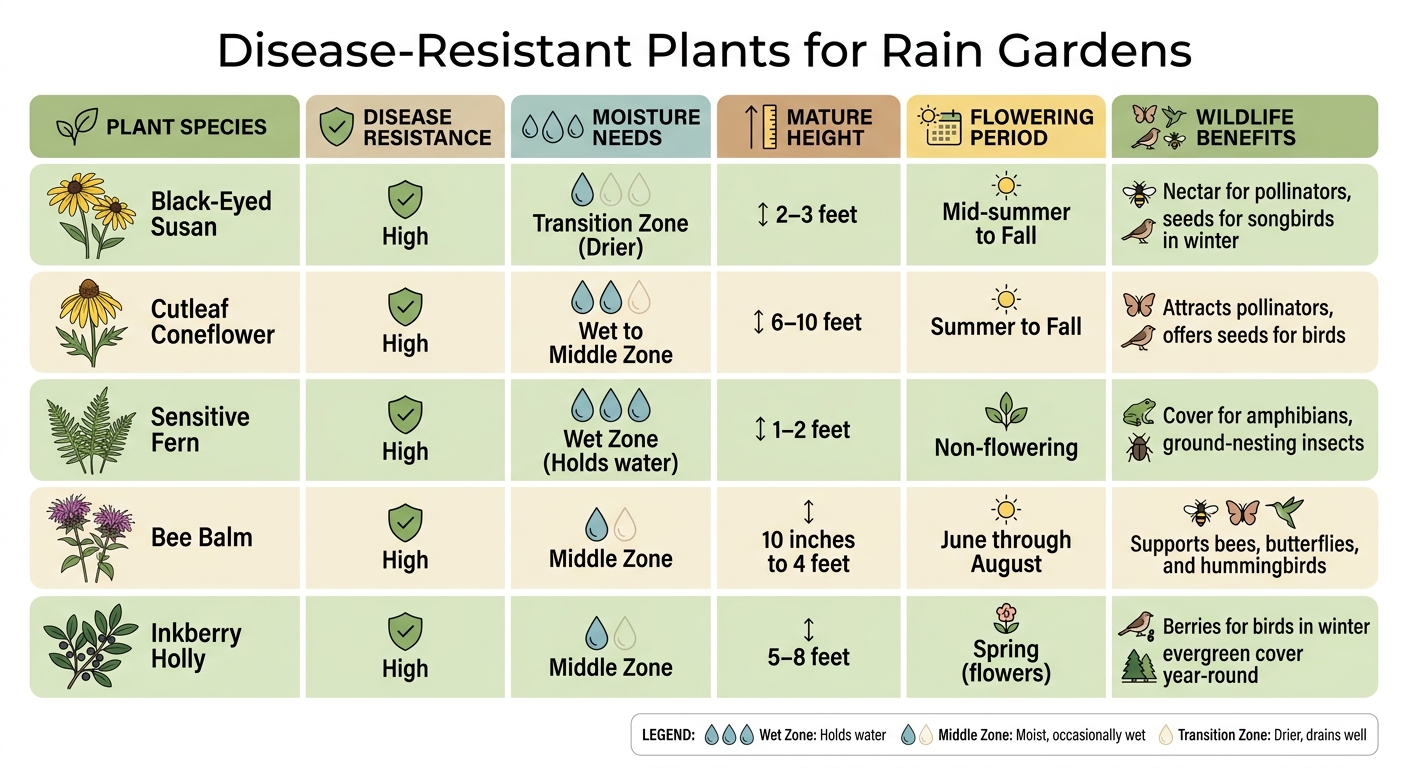
Disease-Resistant Rain Garden Plants Comparison Chart
The table below outlines five disease-resistant plants ideal for rain gardens, highlighting their disease resistance, moisture preferences, mature height, flowering periods, and benefits for wildlife.
| Plant Species | Disease Resistance | Moisture Needs | Mature Height | Flowering Period | Wildlife Benefits |
|---|---|---|---|---|---|
| Black-Eyed Susan | High | Transition Zone (Drier) | 2–3 feet | Mid-summer to Fall | Provides nectar for pollinators and seeds for songbirds in winter |
| Cutleaf Coneflower | High | Wet to Middle Zone | 6–10 feet | Summer to Fall | Attracts pollinators and offers seeds for birds |
| Sensitive Fern | High | Wet Zone (Holds water) | 1–2 feet | Non-flowering | Offers cover for amphibians and ground-nesting insects |
| Bee Balm | High | Middle Zone | 10 inches to 4 feet | June through August | Supports bees, butterflies, and hummingbirds |
| Inkberry Holly | High | Middle Zone | 5–8 feet | Spring (flowers) | Produces berries for birds in winter and provides evergreen cover year-round |
This comparison showcases how each plant brings something special to the table, whether it’s feeding pollinators, offering shelter, or thriving in specific moisture levels. Together, these plants can create a thriving rain garden ecosystem. According to Penn State Extension, a thoughtfully designed rain garden ensures a year-round supply of fruits, seeds, and nectar as vital food sources for wildlife [2]. Understanding these distinctions helps gardeners create a robust, low-maintenance rain garden tailored to their needs.
Planting and Care Guidelines
Soil Preparation and Drainage
Getting the soil and drainage right is the first step to a thriving rain garden. Start by grading the area to create a wet center for flood-tolerant plants and drier edges for species that prefer well-drained soil [1]. For soil stabilization, deep-rooted plants like Dogwoods (Cornus stolonifera) and Switch Grass (Panicum virgatum) are excellent choices. Switch Grass, a native plant, grows between 3 and 6 feet tall and is particularly effective for this purpose.
In the wettest spots, opt for water-loving plants like Papyrus or Fiber Optic Grass, and use transitional species such as Phlox to bridge the wet and dry zones. For areas prone to erosion, consider planting Virginia Sweetspire (Itea virginica) – it not only controls erosion but also adds visual appeal. Selecting plants that can withstand occasional flooding will ensure your garden thrives even during heavy rain.
Seasonal Maintenance
Once your rain garden is planted, regular care is key. During dry periods, provide extra watering for moisture-sensitive plants like Lungwort and Jacob’s Ladder, even though rain gardens are designed to manage runoff. These species may struggle without additional water during prolonged droughts. For Winterberry (Ilex verticillata), ensure proper pollination by planting both male (e.g., "Mr. Poppins") and female (e.g., "Berry Poppins") varieties for vibrant berry production [1].
Position moisture-tolerant plants like Canna Lilies along the garden’s edges – they thrive in both wet and slightly drier conditions. To reduce maintenance, choose naturally pest-resistant plants. For example, the Japanese Painted Fern is hardy and requires little intervention. In shady areas, clumping perennials like Foamflower ("Cutting Edge") are a great option – they soak up extra water during storms and require minimal care.
Professional Rain Garden Services
If you’re looking for expert help, Pro Landscapes MD specializes in stormwater management and rain garden installation in central Maryland. Their team carefully zones moisture levels, planting species like Dogwoods and Switch Grass in high-flow areas and ensuring proper pollination for ornamental shrubs. They also offer drainage solutions such as French drains, dry riverbeds, and precise grading to keep your rain garden functional and attractive throughout the year. From Virginia Sweetspire’s fall foliage to Dogwood’s striking winter stems and Bee Balm’s vibrant summer blooms, their services ensure your garden looks stunning in every season.
Conclusion
When designing a rain garden, selecting plants that naturally resist disease can make a world of difference. These resilient species handle fluctuating moisture conditions – whether it’s heavy flooding or extended dry periods – while staying healthy. Their natural resistance means fewer chemicals are needed, which is crucial for keeping harmful substances out of the water supply. After all, rain gardens play a key role in filtering pollutants from stormwater runoff [4].
Beyond reducing maintenance, disease-resistant plants also help stabilize soil, cutting down on erosion during intense storms [3]. A thoughtfully designed rain garden can filter out up to 90% of pollutants and trap 80% of sediments, all while increasing water infiltration by about 30% [4]. But achieving these results hinges on maintaining plant health over time.
To build a rain garden that thrives with minimal upkeep, start by conducting infiltration tests and pairing plants with the right moisture zones [4][5]. Dense planting creates a "living mulch", which not only suppresses weeds but also boosts soil quality [3].
The outcome? A vibrant, low-maintenance landscape that supports pollinators, manages stormwater efficiently, and stays beautiful year-round. Choosing the right plants from the start ensures your rain garden remains a lasting investment – one that enhances both its visual appeal and its role in promoting a healthier ecosystem.
FAQs
How do I test if my yard drains well enough for a rain garden?
To see if your yard is a good spot for a rain garden, you can do a simple percolation (or "perk") test. Here’s how:
- Dig a hole about 12 inches deep and 12 inches wide.
- Fill the hole with water and let it drain completely.
- Refill the hole with water and track how long it takes to drain.
If the water drains within 24 to 36 hours, the site is good for a rain garden. If it takes longer, you might need to improve the drainage or pick another spot.
Which plants go in the wet center vs the drier edges?
Plants such as swamp milkweed are perfect for consistently wet or flooded spots, making them a great choice for the center of a rain garden. On the other hand, for the drier edges, opt for plants that can handle less moisture and occasional dry periods. This balance helps ensure that every section of your rain garden thrives with healthy, resilient growth.
How can I prevent disease in a rain garden without using chemicals?
To keep your garden thriving without chemicals, opt for disease-resistant native plants that thrive in wet conditions. These plants are naturally tougher and better equipped to handle local challenges. Start with healthy soil – prepare it well and use mulch to retain moisture and nutrients. Good drainage is key, so avoid overwatering, which can invite fungal and bacterial issues.
Stay proactive by removing dead or diseased plant material regularly. This reduces the chance of infections spreading. Also, ensure there’s enough space between plants to improve air circulation, which helps keep diseases at bay. These simple, natural steps can make a big difference in maintaining a healthy, chemical-free garden.
Chat with Us