









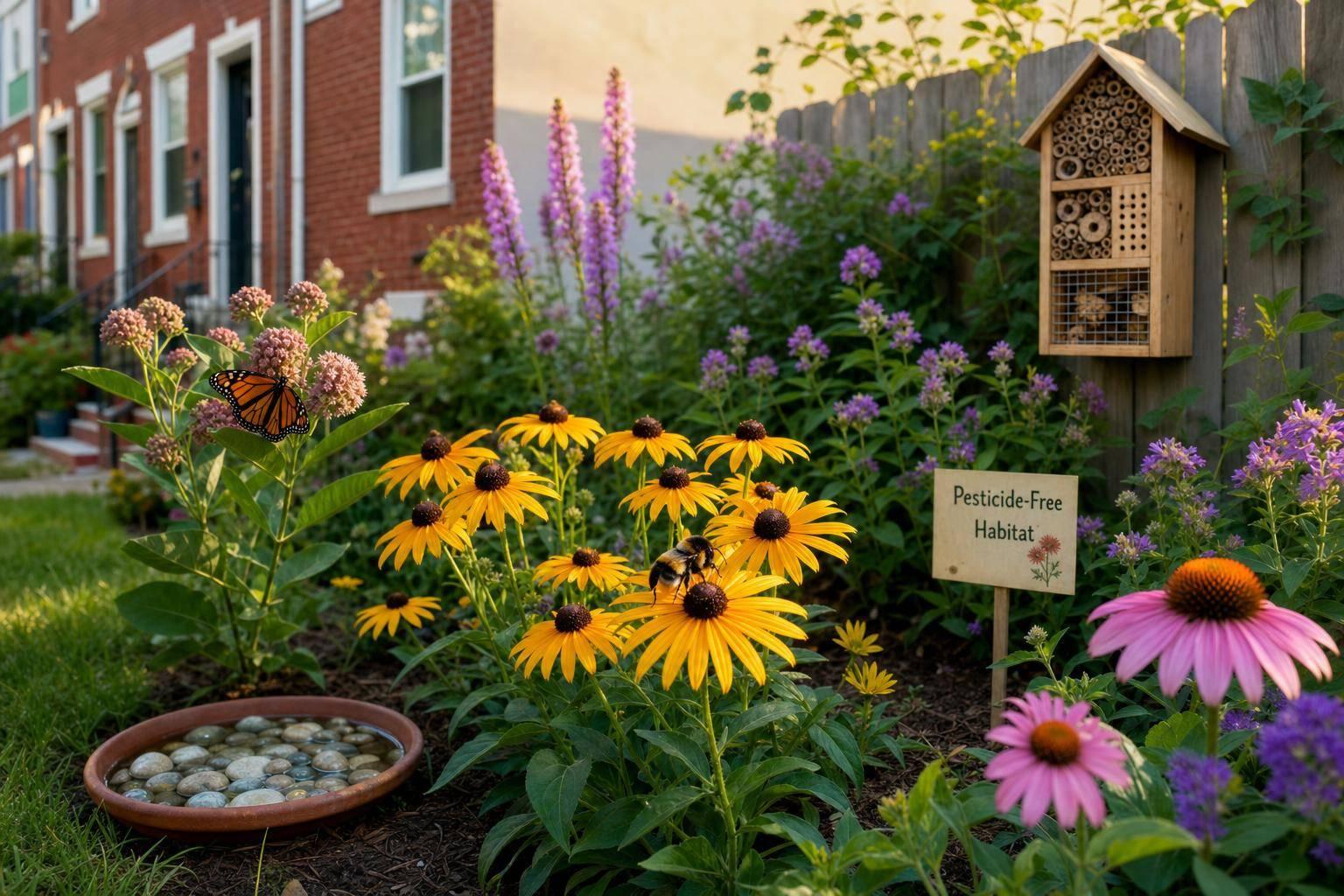
- bhavya gada
- No Comments
If I want to help pollinators in Maryland, I need to do seven things: plant natives, keep flowers blooming from spring to fall, build layers, leave stems and leaf litter in place, add shallow water, avoid pesticides, and shrink lawn space.
Maryland yards can support a lot of pollinators, but the setup has to fit local soil, sun, and moisture. About 70% of native bees nest in the ground, so flowers alone are not enough. I also need bare soil, host plants like milkweed, and shelter through winter.
Here’s the full checklist in plain terms:
- Plant Maryland natives that match the site
- Cover bloom gaps from early spring to late fall
- Use layers with trees, shrubs, flowers, grasses, and sedges
- Leave habitat standing through winter
- Set out shallow water and damp soil for butterflies
- Cut pesticide use and treat only when needed
- Replace parts of the lawn with low-mow or naturalized areas
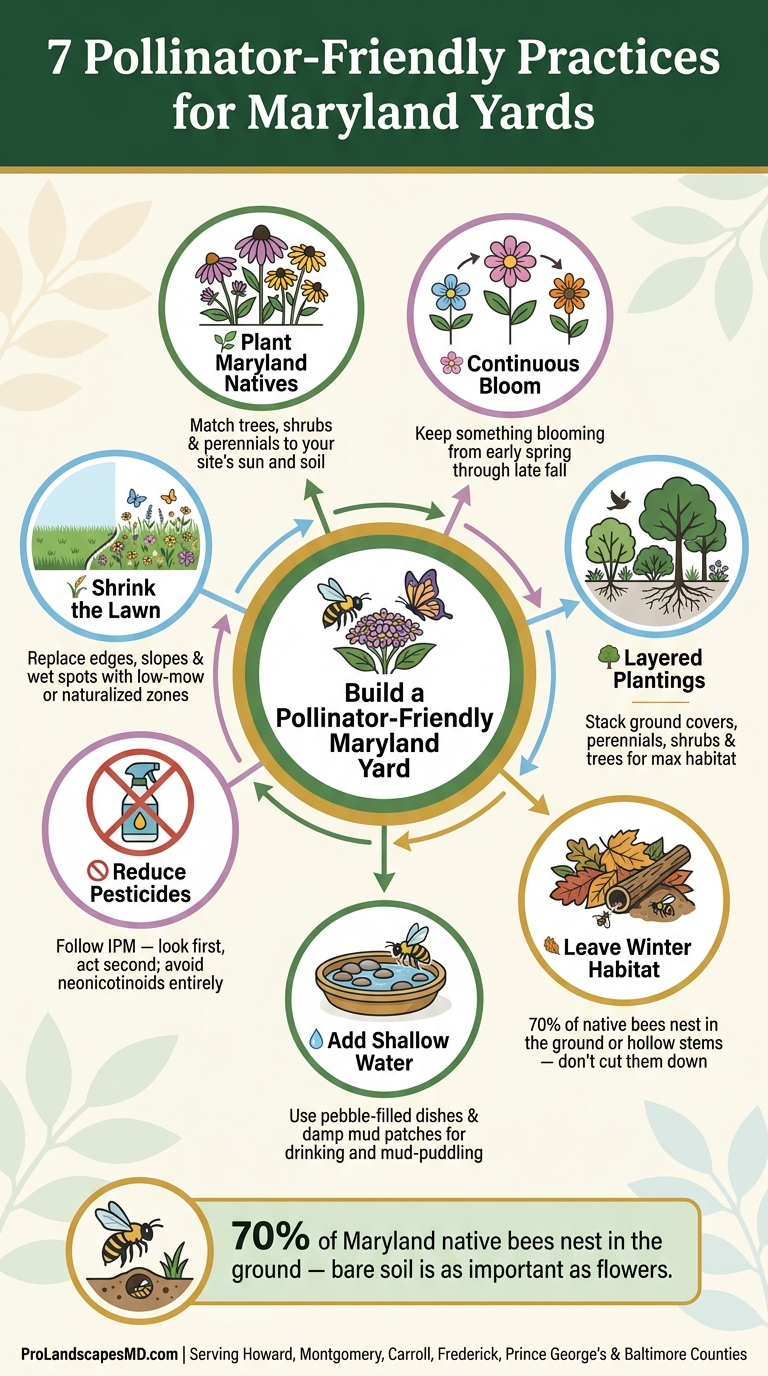
7 Pollinator-Friendly Practices for Maryland Yards
Butterfly Gardens and Pollinator Paths: Beautiful and Beneficial
sbb-itb-843f8be
Quick Comparison
| Practice | What I focus on | Why it matters |
|---|---|---|
| Native plants | Trees, shrubs, and perennials from Maryland or the region | Better food and host plant support |
| Continuous bloom | At least a few bloomers in spring, summer, and fall | Food stays available across the season |
| Layered planting | Ground layer, mid-height flowers, taller plants, and shrubs/trees | More food, cover, and nesting space |
| Winter habitat | Stems, leaf litter, logs, and brush piles | Shelter for insects in cold months |
| Water sources | Shallow water with stones and damp mud | Safe drinking spots and mud-puddling |
| Low-impact care | Fewer sprays, close monitoring, and sheet mulching | Less harm to bees and butterflies |
| Less lawn | Convert edges, slopes, wet spots, and shady areas | More habitat and less mowing |
Bottom line: if I make even one of these changes this season, I can start building a yard that supports bees, butterflies, hummingbirds, and other pollinators in Maryland.
What Makes a Maryland Landscape Pollinator-Friendly?
A pollinator-friendly landscape in Maryland comes down to four needs: food, shelter, water, and nesting sites and host plants [1].
In Maryland, that also means paying close attention to where you are planting. The state has three distinct regions – the western mountains, the central Piedmont plateau, and the coastal plain – and each one has its own soil and climate conditions [1]. A plant that does well in one part of the state may struggle in another. When plants match local conditions, they do a better job of making it through Maryland’s hot summers, wet spells, and dry stretches.
Nesting space matters too, and it’s easy to miss. About 70% of Maryland’s native bees nest in the ground [3]. That means heavy mulch and frequent tilling can get in the way. A few patches of bare or undisturbed soil can be just as important as the flowers growing nearby.
Once those basics are covered, native plant selection is the best place to start.
1. Plant Maryland Native Trees, Shrubs, and Perennials
Start with plants that belong in Maryland and fit your site. Native species evolved alongside local pollinators, so they work as reliable food sources. In some cases, specialist insects depend on them as their only food source during key parts of their life cycle [4][1]. By contrast, showy cultivars are often bred for looks first and may provide little to no nectar or pollen compared with native species [4].
It also helps to match plants to your yard’s sun and soil moisture. That simple step usually cuts down on extra watering and fertilizer [1].
Native plants do more than put on a nice bloom display. Tulip Poplar supports caterpillars that birds need when feeding their young, and Milkweed (Asclepias) is essential for Monarch butterflies as a host plant [4]. That’s the bigger picture: a yard with native trees, shrubs, and perennials supports the whole food web, not just adult pollinators stopping by for nectar.
Once these plants are established, upkeep is fairly low. Group each species in drifts of three or more so pollinators can spot them more easily [4][3]. And if you’re still growing butterfly bush, swap it for native options like Blazing Star (Liatris spicata) or New York Ironweed [1]. After you’ve chosen your plant palette, the next step is to stretch bloom time across the season.
2. Plan for Continuous Bloom from Early Spring to Late Fall
Once your native plant list is set, the next move is simple: make sure something is blooming all season long.
Pollinators need food from early spring through late fall. In Maryland, summer heat and dry spells often create bloom gaps in the middle or back half of the season. And when that happens, it can hit hard. Specialist bees may lose a food source. Migrating species like Monarchs may come up short when they need nectar most. The upside is that native plants usually need less water and fertilizer once they’re established.
A simple way to think about it is in three phases. In early spring, plants like Eastern Redbud and Serviceberry give emerging queen bees and hoverflies a place to feed. In summer, Butterfly Weed and Wild Bergamot help carry bees and butterflies through the hottest stretch of the year. Then comes fall, where many gardens run out of steam. That’s when Goldenrod and New England Aster do heavy lifting for migrating Monarchs and bees getting ready for winter.
| Season | Recommended Maryland Natives | Main Benefit |
|---|---|---|
| Early Spring | Serviceberry, Redbud, Highbush Blueberry | Early nectar and pollen for emerging bees and flies |
| Summer | Butterfly Weed, Joe Pye Weed, Wild Bergamot, Black-Eyed Susan | High nectar value for butterflies and bees |
| Fall | Goldenrod, New England Aster, Blue Mistflower, Ironweed | Late-season food for migrating Monarchs and bees |
Try to include at least three species per season. That way, if one plant blooms early or gets knocked back by a dry spell, others can pick up the slack. In practice, overlapping bloom times matter more than the total number of plants.
It also helps to stick with straight native species instead of ornamental cultivars. Many hybrids produce less nectar and pollen. Once bloom timing is mapped out, the next piece is adding layers that also give pollinators food and shelter.
3. Build Layered Plantings for Food, Shelter, and Diversity
The shape of your planting matters just as much as the plant list. When you mix heights and forms, you help pollinators move from one bloom period to the next. You also make the space do more at once: feed insects, give them cover, and offer places to nest.
Think of it as stacking the garden in layers. Each one plays a different role:
- Ground layer (0–6 inches): Native sedges and low wildflowers like Woodland Phlox help hold moisture and crowd out weeds. Leave a few small patches of bare soil for ground-nesting bees.
- Mid layer (6–24 inches): Plants like Butterfly Weed and Black-Eyed Susan produce heavy nectar and pollen.
- Upper layer (24–60 inches): Taller perennials and shrubs like Joe Pye Weed add cover and late-season forage.
- Anchor plants: Small trees and large shrubs like Serviceberry, Winterberry, and Redbud bring early spring pollen, winter fruit, and a buffer from wind.
It also helps to match each layer to the conditions in your yard. A sunny, dry spot is a good fit for Butterfly Weed and Blazing Star. A wet or rain garden area works better with Buttonbush, Swamp Milkweed, and Cardinal Flower.
Maintenance gets simpler as these plantings settle in. Most native plants need much less extra water or fertilizer once established. In the first growing season, give new plants about 1 in. per week of water. After that, many of these layers need only light care. Go easy on mulch in the ground layer, keep a few bare-soil patches open for ground-nesting bees, and leave some plant structure standing so pollinators can keep using the space through winter.
4. Leave Nesting and Overwintering Habitat in Place
The layered planting from the previous section only does its job if some of it stays standing through winter.
That matters because fall cleanup can strip away pollinator shelter. Many solitary bees and butterflies spend winter inside hollow or pithy stems. Cut those stems down, bag the leaf litter, and those insects may lose the cover they need.
Pollinator habitat needs to stay in place through winter, not just during bloom season.
Hold off on cleanup until late winter or early spring. If you need to prune sooner, stack the stems in a sheltered pile so nesting bees can still use them.
A brush pile behind a shrub or a log tucked into a garden bed isn’t a mistake. It’s a habitat choice. Those small features give overwintering insects cover and help the space look planned, not messy.
Once shelter is set, the next need is water.
5. Add Shallow Water and Mud Sources for Hot-Weather Pollinators
Maryland summers get hot, so shallow water matters for pollinators.
Skip deep water features or containers with steep sides. Bees and butterflies can’t use them well. A shallow dish or birdbath works much better. Add pebbles or small stones that stick above the water line so pollinators have a safe landing spot.
Butterflies need more than flowers, too. They often use damp soil for mud-puddling, where they draw salts and minerals from moist ground. In practice, that can be as simple as a small patch of bare, slightly damp soil or a shallow tray of wet mud in a sunny part of the garden.
Change the water every other day to stop stagnant water from turning into a mosquito breeding site [1]. Also keep water sources away from pesticide-treated areas. Even organic sprays can taint the water. Clean, spray-free water stays useful through the season.
6. Switch to Pesticide-Free or Low-Impact Garden Care
Pesticides hurt pollinators, and even organic products can harm bees and butterflies [4]. So instead of spraying on autopilot, start with prevention and close observation.
The most useful change is to follow Integrated Pest Management (IPM). The idea is simple: look first, act second. Before treating a plant, check whether the insect is actually a pest or one of the garden’s helpers. A bit of leaf damage is normal in a healthy yard, and natural predators can help keep aphid numbers under control [1][2].
If you do need to treat, timing matters. Spray in the early morning or late evening, when pollinators are less active [4]. Skip neonicotinoids and broad-spectrum insecticides entirely, since they are especially hard on pollinators [2]. When you cut out chemicals, weed control and garden cleanup need to carry more of the load.
It also helps to leave some useful "weeds" alone when they feed pollinators. Dandelions, clover, and milkweed can help fill bloom gaps [4]. For weeds that are causing trouble, try sheet mulching instead. Lay overlapping cardboard or newspaper over the area, then add 4–6 inches of compost or mulch on top. This helps block weeds without chemicals and lowers runoff risk [2][3].
7. Cut Back Lawn Area with Low-Mow and Naturalized Zones
Traditional turf doesn’t offer much food or shelter for pollinators. And in many yards, it gets mowed before flowers even have a chance to bloom. Cutting back lawn space, even bit by bit, opens room for habitat.
If you want to start small, begin at the lawn’s edges. Focus on spots that are already a pain to mow: slopes, shady tree bases, wet low areas, and narrow strips along the edge. These places often work well for native groundcovers, sedges, or a naturalized border. Even swapping out a 3- to 6-foot strip along a property line can cut mowing and add more space for pollinators to forage [2].
A few details matter here. Leave some bare-soil patches for ground-nesting bees, and don’t smother converted areas with too much mulch, especially dyed mulch [4].
You also want the space to look planned, not messy. Curved bed lines and plants grouped in drifts can make a big difference. They help the area read as a clear design move instead of a random weedy patch [2][4]. Unpruned stems, leaves, and grasses also give overwintering insects a place to stay.
Not every part of the yard should be handled the same way. A dry edge needs one kind of fix. A shady bank needs another. Wet low spots are their own case. The snapshot below shows which type of conversion fits each yard condition.
Maryland Pollinator Planting Snapshot
This snapshot pairs Maryland native plants with bloom timing and the jobs they do in the landscape.
| Plant Category | Bloom Window | Key Maryland Species | Habitat Role |
|---|---|---|---|
| Small Trees | Early Spring (Mar–Apr) | Eastern Redbud, Serviceberry, Tulip Poplar | Critical early pollen; larval host for moths and butterflies |
| Spring Natives | Mar–June | Virginia Bluebells, Wild Geranium, Columbine, Phlox | Critical early-season energy for bees emerging after winter |
| Native Shrubs | Spring–Summer | Highbush Blueberry, Buttonbush, Summersweet | Nesting structure; spring nectar; late-season berries |
| Summer Perennials | July–Aug | Butterfly Weed, Bee Balm, Purple Coneflower, Joe Pye Weed | Peak nectar production; supports butterflies and other pollinators |
| Fall Bloomers | Sept–Nov | Goldenrod, New England Aster, Ironweed, Blazing Star | Vital fuel for migrating Monarchs and overwintering queen bees |
| Grasses & Sedges | Late Summer–Winter | Little Bluestem, Switchgrass, Pennsylvania Sedge | Overwintering shelter; nesting material for ground-nesting bees |
Use this table as a quick planning check. The goal is simple: cover bloom gaps from early spring through fall, then keep shelter in place through winter.
That means leaving stems, seed heads, and patches of bare soil alone during winter. Those spots help overwintering insects and ground-nesting bees make it through the cold months.
It also helps to choose straight plants instead of heavily bred cultivars. Many cultivars offer less nectar and pollen, so they may look good in a yard but do less for pollinators.
Think in layers as you plant: trees, shrubs, perennials, and grasses. That mix helps keep food on the calendar and habitat in place when pollinators need it most.
Conclusion
These seven practices work best when you treat them as one system. The easiest way to start is simple: make one small change.
Pollinators need food, shelter, water, and places to nest. Even a small shift can help fast.
This season, pick one practical step and do that first. Add a shallow water source, plant a cluster of natives, or leave one garden bed standing through winter.
Then keep building year by year. Fill bloom gaps, add another planting layer, and turn a small strip of lawn into native planting. Over time, those changes add up to a resilient landscape that supports bees, butterflies, and the broader food web.
If you want help turning those steps into a landscape plan, Pro Landscapes MD can help. For native planting, restoration, drainage, and pollinator-friendly landscape design in central Maryland, Pro Landscapes MD serves Howard, Montgomery, Carroll, Frederick, Prince George’s, and Baltimore counties.
FAQs
Which native plants are best for my Maryland yard?
For a lively, pollinator-friendly Maryland yard, go with native plants that help local wildlife and fit the region well.
- Spring: Eastern Redbud, Pussy Willow
- Mid-season: Swamp Milkweed, Sweet Pepperbush, Joe Pye Weed
- Late season: Asters, Goldenrod
- Flowers: Black-Eyed Susan, Purple Coneflower, Bee Balm
How can I help pollinators if I only have a small yard?
You don’t need a big yard to help pollinators. Even a few container plants can give them food and shelter.
Pick native plants that grow well in Maryland, and place them in groups so pollinators can spot them with less effort. Try to have something blooming from early spring through late fall, not just during one short stretch.
A few small choices also help:
- Use fewer pesticides
- Set out a shallow water dish with stones so insects can land and drink
That’s often enough to turn a patio, porch, or balcony into a useful stop for bees, butterflies, and other pollinators.
What should I avoid doing that harms pollinators?
Avoid pesticides altogether, even if the label says organic or the product contains neonicotinoids. They can still harm pollinators. Skip invasive plants too, including butterfly bush. Native plants are usually the better pick, especially over hybrids or ornamental cultivars that offer little food.
Go easy on mulch, and skip dyed mulch if you can. It also helps to leave the garden a little messy. Dead stalks, leaf litter, and patches of bare soil give bees and other insects places to nest and make it through winter.
Chat with Us