









- bhavya gada
- No Comments
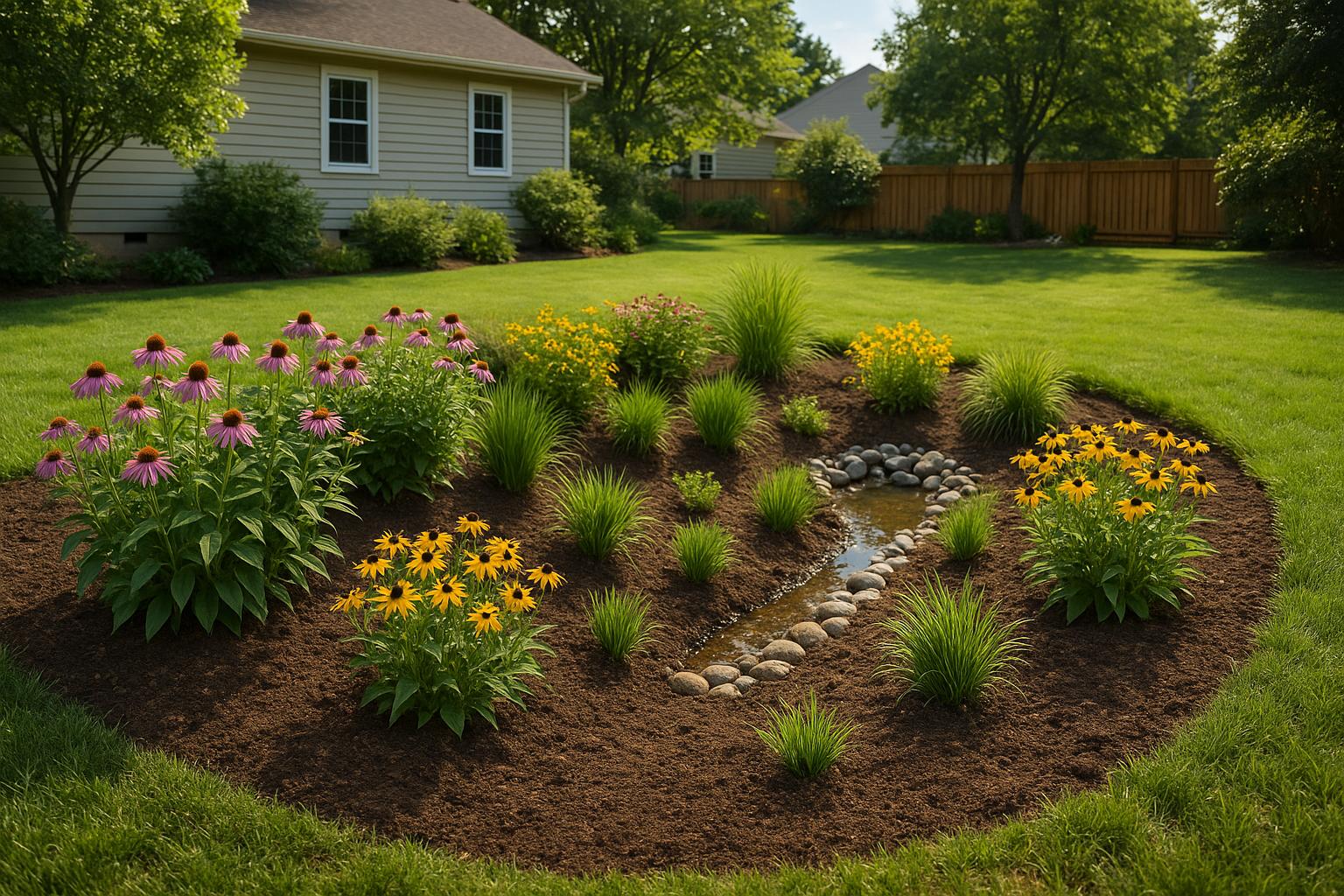
Rain gardens are a practical way to manage stormwater runoff while improving your yard’s appearance. In Maryland, where heavy rains and soil erosion are common, these gardens help protect waterways, reduce flooding, and meet local stormwater regulations. Here’s what you need to know:
- Purpose: Rain gardens collect and absorb runoff from roofs, driveways, and sidewalks, filtering pollutants and reducing stormwater volume.
- Key Benefits: Prevent flooding, improve water quality, and create habitats for pollinators while boosting property value.
- Site Selection: Choose areas that naturally collect water but are safely distanced from foundations, septic fields, and wells.
- Soil Preparation: Maryland’s clay-heavy soils often require amendments like sand and compost to improve drainage.
- Plant Selection: Use native plants like black-eyed Susans, swamp milkweed, and sedges for durability and minimal maintenance.
- Maintenance: Regular weeding, mulching, and post-storm inspections keep the garden functional and attractive.
Maryland also offers rebate programs to offset installation costs, making rain gardens a smart and cost-effective choice for homeowners.
How to Build a Native Plant Rain Garden – A Step-by-Step Tutorial
Site Selection and Planning
Picking the right spot for your rain garden is crucial – it can mean the difference between a highly effective water management system and a frustrating, costly problem. In Maryland, where soil conditions and drainage patterns vary widely, taking the time to evaluate your site before digging is a must.
Finding the Best Location
Start by watching your property during and after rainfall to see where water naturally flows and collects [3]. Pay attention to areas near downspouts, driveways, and other hard surfaces that generate runoff. The best location for a rain garden is one that intercepts this runoff while staying at least 10 feet away from building foundations [3][2]. For safety, keep it at least 25 feet from septic drain fields and 50 feet from wells to avoid contamination risks [2][3].
Sunlight exposure is another key factor. The amount of sun or shade your chosen spot gets throughout the day will influence the types of plants you can use and how well your garden performs over time [1].
To assess the slope and water flow direction, use simple tools like stakes, string, or a level. As a rule of thumb, the rain garden’s surface area should be about 80 square feet for every 1,000 square feet of impervious surface draining into it. This assumes a 2-foot soil filter bed and 6 inches of ponding depth [4]. Following these sizing guidelines ensures your rain garden can handle the runoff volume effectively. With the location chosen, the next step is addressing any soil challenges.
Working with Maryland Soil Types
Maryland’s soils, often heavy with clay and compacted, can pose challenges for rain gardens [2][3]. These dense soils tend to drain poorly, leading to water pooling for longer than the recommended 48-hour limit [5].
Before finalizing your site, conduct a 12-inch deep infiltration test. Fill the hole with water and see if it drains within 24 hours. If it doesn’t, you’ll need to amend the soil significantly or replace it altogether. An infiltration rate of at least 0.5 inches per hour is ideal [2][3].
For clay-heavy soils, consider mixing in sand and organic matter or replacing the existing soil with a specialized rain garden mix. If water still lingers beyond 48 hours, replacing the topsoil may be necessary to ensure proper drainage [5].
One homeowner in Montgomery County tackled clay soil issues by choosing a low-lying area downslope from their driveway. They improved the soil by adding compost and sand, creating a rain garden that now efficiently handles runoff from both their driveway and roof while supporting healthy native plants [2][1].
Checking for Underground Utilities
Before you start digging, contact Miss Utility [3]. This isn’t just a helpful tip – it’s the law in Maryland. Skipping this step could lead to dangerous and costly accidents.
The utility marking service is free and will identify the location of underground pipes, cables, and gas lines. Be sure to schedule this at least a few days before construction begins to give utility companies time to mark their lines.
Even after the markings are complete, dig carefully around them. If necessary, adjust your rain garden’s placement to avoid interfering with underground utilities. Damaging these lines can disrupt services, create safety hazards, and result in expensive repairs – far more costly than simply relocating your garden a few feet.
For a hassle-free process, Pro Landscapes MD offers expert site evaluations and drainage analysis, ensuring your rain garden design meets Maryland’s stormwater regulations.
Design and Construction Methods
Once you’ve chosen the right site and analyzed the soil, the next step is designing and constructing your rain garden for maximum efficiency and visual appeal. A well-thought-out design ensures effective water management while enhancing your landscape.
Calculating Size and Shape
Sizing your rain garden correctly is key to managing runoff effectively. Rain gardens should capture 10-30% of the total drainage area they serve [2]. For most residential properties, aim for about 80 square feet of rain garden per 1,000 square feet of impervious surfaces like rooftops, driveways, and sidewalks [4].
To figure out the size you need, start by measuring all the hard surfaces that will drain into your garden. For example, if your property has 1,600 square feet of impervious surface, you’ll need a rain garden of about 128 square feet.
The shape of your garden also plays a big role in how well it works. Round, oval, or kidney-shaped designs are ideal because they allow water to spread out evenly and soak into the ground efficiently [3]. Avoid long, narrow shapes, which can lead to water channeling and reduce effectiveness [3]. When deciding on dimensions, take into account available yard space, nearby landscaping, and obstacles like trees or utilities [2]. The garden’s shape should flow naturally with your property’s contours and complement existing features.
For homeowners needing to meet Environmental Site Design (ESD) standards, the rain garden must handle runoff in a way that mimics a wooded area in good condition [2]. Keep in mind that these projects often require local approval, so include permitting time in your plans.
Setting Proper Depth and Drainage
After determining the size and shape, focus on depth and drainage. In Maryland, rain gardens typically feature a 6-inch ponding depth and an excavated soil depth of 12 to 36 inches, depending on your site’s conditions [1]. This setup provides enough temporary water storage and space for the amended soil that supports both water infiltration and plant growth.
Before adding your amended soil, loosen the native soil at the bottom of the excavation [1]. This step is critical to prevent a barrier from forming between the new soil and the native layer, which could hinder drainage.
Your rain garden should be able to drain completely within 24 to 48 hours after a storm [5]. If water lingers longer, you may need to adjust the soil mix or install an underdrain system. For properties with heavy clay soils, install perforated underdrains at the base of the garden to direct excess water to a safe outlet.
Test drainage after initial storms to ensure proper performance. If pooling persists beyond 48 hours, tweaking the soil composition or adding more drainage features might be necessary.
Building Berms and Overflow Systems
To further manage runoff, incorporate berms and overflow systems. Berms help contain water and guide overflow during heavy rains. Construct berms with inside slopes no steeper than 2:1 (3:1 is preferred for added stability) and outside slopes no steeper than 3:1 to prevent erosion [1].
Protect overflow areas by covering them with 2-3 inches of river cobble [1]. Place splash pads where runoff enters the garden to dissipate the energy of flowing water and prevent soil erosion. This simple step can significantly extend the life of your rain garden.
If your property has steep slopes, consider a multi-level rain garden design with several cells [1]. This approach uses berms to create access paths and efficiently manages water flow between levels.
The overflow system should direct excess water away from buildings and into stable, vegetated areas, keeping it away from your home’s foundation or neighboring properties. To maintain the garden, apply a 3-inch layer of mulch across the surface. Mulch helps retain moisture, suppress weeds, and regulate soil temperature [1][3]. It also provides natural pathways for maintenance without compacting the soil.
Pro Landscapes MD offers expertise in rain garden construction, handling everything from drainage solutions to regulatory compliance, ensuring your system is both effective and up to code in Maryland.
Soil Preparation and Plant Selection
Creating a successful rain garden in Maryland starts with proper soil preparation and smart plant choices. Maryland’s clay-heavy soils and unpredictable weather demand careful attention to soil improvement, the use of native plants, and taking advantage of rebate programs to ensure your rain garden thrives.
Improving Soil for Better Drainage
Start by testing your soil’s drainage. Dig a hole 6–12 inches deep, fill it with water, and check back after 24 hours. If water is still sitting there, it’s time to amend the soil. A good mix for Maryland rain gardens includes 50–60% sand, 20–30% compost, and 20–30% topsoil. This combination improves drainage while adding essential nutrients. Before adding the mix, loosen the bottom of the hole to encourage water infiltration. Fill the area with this soil blend to a depth of 12–36 inches, depending on your garden design. Monitor drainage during the first few storms – water should soak in within 24–48 hours. Once the soil drains properly, you’re ready to select plants that thrive in these conditions.
Selecting Native Maryland Plants
Native plants are a perfect fit for rain gardens because they’ve adapted to Maryland’s unique climate and soil. Options like black-eyed Susans (Rudbeckia hirta), ferns, sedges (Carex spp.), and swamp milkweed (Asclepias incarnata) handle both wet and dry conditions with ease. To design your garden, create distinct moisture zones:
- Wet center: Sedges and rushes thrive here.
- Inner slopes: Moisture-loving ferns and grasses are ideal.
- Berms and edges: Drought-tolerant plants like little bluestem work well.
For a polished look and easier upkeep, group perennials in clusters of three to five and plant them closer than usual – this encourages their canopies to merge, suppressing weeds and slowing water flow. A great combination might include black-eyed Susans paired with swamp milkweed and blue flag iris (Iris versicolor) in the center, with ferns and sedges on the slopes, and little bluestem or switchgrass (Panicum virgatum) along the berm. Avoid large trees in the rain garden itself; instead, plant smaller trees around the edges to prevent interference with water flow and simplify maintenance.
Using Maryland Rebate Programs
Once your rain garden is ready, take advantage of Maryland’s rebate programs to offset costs. Programs like Montgomery County’s RainScapes Rewards offer financial incentives for rain gardens that include native plants. These programs often require adherence to specific guidelines and approved plant lists, so be sure to follow the rules. Additionally, the Chesapeake Bay Trust provides funding for projects that reduce stormwater runoff and improve water quality in the region.
To qualify, apply early and keep detailed records of your purchases. Data shows that gardens with well-prepared soils and carefully chosen native plants not only absorb more stormwater but also require less maintenance and have higher plant survival rates. For expert guidance, Pro Landscapes MD can help you navigate these programs, ensuring your rain garden meets all requirements and maximizes available incentives. Whether you’re new to rain gardens or looking to enhance an existing one, these resources can make a big difference.
sbb-itb-843f8be
Maintenance and Performance Monitoring
Keeping your rain garden in good shape isn’t just about looks – it’s about ensuring it works effectively. Regular upkeep and monitoring soil health can help catch small issues before they turn into bigger problems.
Regular Maintenance Tasks
Weeding and inspections should be done monthly from April through October. Focus on removing invasive plants and checking for signs of erosion, plant damage, or stress.
Annual mulching in the spring is a good practice. Apply a 3-inch layer of shredded hardwood mulch to suppress weeds and retain moisture. Be careful to keep the mulch away from plant stems to avoid rot or disease. This can cut down on weeding throughout the season.
Inspect after storms, especially after heavy rains. Make sure runoff flows into the garden properly, water drains as it should, and there’s no new erosion. Remove any sediment buildup and check how well plants are holding up.
Spring pruning is better than fall cutting for Maryland rain gardens. Trimming dead growth in the spring provides a protective cover during winter, helping with erosion control and offering a habitat for beneficial insects. It’s also a good time to ensure the soil and water flow are functioning as expected.
Checking Soil and Water Flow
Check water infiltration after rainstorms. Water should soak into the soil within 24 to 48 hours. If it’s still pooling after two days, there’s likely a drainage issue that needs fixing [5].
Test for soil compaction. Over time, soil can become compacted, especially in areas with a lot of foot traffic. Use a garden fork to check – if it’s hard to penetrate, the soil is compacted. Loosen the top few inches and mix in organic matter to improve its structure.
If pooling water remains an issue, consider removing the top layer of soil and replacing it with well-draining material. Also, clear out any silt or sediment that might be blocking infiltration. Look for signs like crusting on the soil surface, which indicates poor drainage and needs gentle breaking up.
If runoff bypasses the garden altogether, it could mean the inlet needs adjusting or the grading has shifted, possibly due to sediment buildup.
Plant Replacement and Updates
Replace plants that are dead or unhealthy as soon as possible to avoid bare spots and disrupted water flow.
Water new plants during dry spells for the first two to three months after planting. Even drought-tolerant native plants need consistent moisture while their roots are establishing. Keep a close eye on these replacements during their first growing season.
Maintain a simple log to track maintenance tasks like weeding, mulching, plant replacements, and inspections. Note any issues after major storms, such as infiltration times or other concerns, to spot patterns and guide future plant choices.
Temporary irrigation, like a soaker hose, can help new plantings during dry periods. Once the vegetation is well-established, remove any temporary erosion controls.
These efforts not only keep your rain garden working efficiently but also ensure it remains an attractive feature of your property.
If you’re looking for professional help, Pro Landscapes MD offers maintenance services tailored to rain gardens in central Maryland. Their expertise can help address the area’s specific soil and weather challenges, keeping your rain garden both functional and beautiful.
Working with Professional Rain Garden Services
Professional landscapers in Maryland are well-versed in the state’s stormwater regulations and unique soil conditions, ensuring your rain garden functions effectively. These experts take the foundational planning and design principles and turn them into fully functional rain gardens that meet Maryland’s stringent standards.
Pro Landscapes MD Services

Pro Landscapes MD specializes in stormwater management and drainage solutions, serving communities across central Maryland, from Baltimore to Washington, DC. Their team of horticulturists combines technical know-how with ecological expertise to deliver effective rain garden installations.
Their drainage solutions include everything from French drains and berms to swales and precise grading. When it comes to rain garden projects, they handle every detail – starting with site assessments and soil amendments to the careful selection of native plants. Sustainability is a priority, with eco-friendly materials and Maryland-native plants that not only manage runoff but also support the local environment.
Pro Landscapes MD ensures that all rain gardens meet Maryland’s Environmental Site Design standards and comply with local regulations.
Rain Garden Installation Services
The installation process starts with a thorough site evaluation, including soil testing, slope analysis, and identifying utility lines, to determine the best location for capturing stormwater.
They prepare the soil to improve drainage, construct berms with stable slopes (no steeper than 2:1), and install overflow systems to handle heavy rainfall. Native plant selection is a key part of their process – choosing species that thrive in Maryland’s varying moisture zones and arranging them for both functionality and visual appeal. Timing the installation is also crucial, ensuring plants establish successfully.
After installation, they monitor performance by checking water infiltration rates to ensure stormwater absorbs into the soil within 24–48 hours. If any issues arise, their team is ready to diagnose and resolve them, ensuring the rain garden transitions smoothly from design to long-term functionality.
Customer Results and Feedback
Pro Landscapes MD consistently delivers on its promises, earning praise for its comprehensive approach and ongoing maintenance services. By tailoring solutions to each property’s specific needs, they’ve successfully addressed a variety of soil and drainage challenges across Maryland. Customers value their ability to combine technical precision with eco-friendly practices, creating rain gardens that perform beautifully and sustainably.
Getting Started with Your Rain Garden Project
Rain gardens are a smart choice for Maryland homeowners looking to manage stormwater effectively while enhancing their landscaping. With Maryland averaging 42 inches of rainfall annually[2], managing stormwater isn’t just practical – it’s essential for protecting your property and the surrounding environment.
Why Invest in a Rain Garden?
Rain gardens bring a range of benefits, both for the environment and your property. They can capture and treat up to 70% of rainwater runoff each year[2], easing the burden on stormwater systems. On top of that, these gardens can filter out up to 90% of nutrients and chemicals and as much as 80% of sediments from the water before it flows into local waterways[6].
From a practical standpoint, rain gardens also help Maryland homeowners meet Environmental Site Design (ESD) requirements. Many counties, such as Montgomery and Prince George’s, even offer rebate programs to encourage residents to install rain gardens, making the investment more affordable. Plus, by incorporating native plants, these gardens typically require less water and fertilizer once established, cutting down on maintenance costs over time[2].
Another key advantage is their ability to protect your property from flooding. By managing stormwater at its source, a properly designed rain garden can reduce runoff volume by up to 90% compared to a standard lawn[6]. This added protection can help prevent foundation damage and other issues caused by heavy rains.
Planning Your Rain Garden Project
Ready to get started? The first step in creating a rain garden is evaluating your property to ensure it meets performance and regulatory standards.
Pro Landscapes MD is equipped with the expertise to guide you through the process. Their team has a deep understanding of Maryland’s stormwater regulations and soil conditions, blending technical know-how with an eye for design to create gardens that are both functional and visually appealing.
"With years of experience in landscaping, hardscaping, and drainage solutions, we bring unmatched expertise to every project. From concept to completion, we ensure that every detail is perfectly executed."
- Pro Landscapes MD
The consultation process begins with a detailed assessment of your property’s drainage needs. This includes identifying the best location for capturing stormwater, conducting soil tests, and planning necessary amendments. They’ll also help you choose native plants suited to your site and develop a maintenance plan to keep your rain garden thriving.
Reach out to Pro Landscapes MD to schedule a consultation. They’ll provide a free, customized proposal tailored to your property’s unique requirements. From design to installation, their full-service approach ensures your rain garden becomes a seamless and effective solution for managing stormwater, all while contributing to healthier waterways in Maryland.
FAQs
How can I choose the ideal spot for a rain garden on my Maryland property?
To find the ideal spot for a rain garden on your property in Maryland, start by watching how water moves and where it gathers during rainfall. Focus on low-lying areas that are at least 10 feet away from your home’s foundation to avoid any risk of water damage. Steer clear of locations with poor drainage or spots where water sits for too long, as this can lead to oversaturation.
Take note of your yard’s slope – gentle slopes work best for directing runoff into the garden. Also, choose a spot that gets partial to full sunlight, as native plants commonly used in rain gardens thrive in these light conditions. By paying attention to these details, you can design a rain garden that not only manages stormwater effectively but also enhances the beauty of your outdoor space.
What are the best soil amendments to improve drainage in Maryland’s clay-heavy soils for a rain garden?
To tackle Maryland’s clay-heavy soils when constructing a rain garden, adding organic matter such as compost or well-aged manure can make a big difference. These materials improve the soil’s structure, helping water soak in more effectively. You might also consider mixing in sand – but do so carefully. Adding sand in moderation and blending it thoroughly with the clay prevents the risk of forming compacted layers. Another option is gypsum, which can break up dense clay without affecting the soil’s pH balance.
Enhancing soil drainage this way ensures your rain garden not only manages stormwater effectively but also supports healthy plant growth.
What are the best native plants for the different moisture zones in a Maryland rain garden?
Native plants are an excellent option for Maryland rain gardens because they’re well-suited to the local environment and play a key role in supporting the ecosystem. When selecting plants, it’s important to consider the moisture levels in different parts of your garden.
For the wettest spots, go with plants that can handle standing water, like blue flag iris, swamp milkweed, and cardinal flower. In the moderately moist areas, plants such as black-eyed Susan, bee balm, and New England aster perform beautifully. Along the drier edges, choose species like butterfly weed, little bluestem, or purple coneflower, which thrive in well-drained soil.
Beyond their natural beauty, native plants help manage stormwater effectively and create valuable habitats for pollinators. To keep your rain garden thriving, group plants based on their moisture preferences, ensuring each species gets the conditions it needs to flourish.
Chat with Us