









- bhavya gada
- No Comments
A Stormwater Pollution Prevention Plan (SWPPP) is essential for construction projects disturbing one acre or more. It reduces stormwater contamination, ensures compliance with Maryland’s regulations, and avoids costly fines. Here’s a quick breakdown:
- Regulations: Maryland enforces SWPPP under the Clean Water Act through the National Pollutant Discharge Elimination System (NPDES) program. Local jurisdictions (e.g., Howard, Montgomery, and Baltimore counties) may have additional requirements.
- Core Components: Site assessment, erosion controls (e.g., silt fences, sediment basins), and stormwater management practices like rain gardens or permeable pavements.
- Permitting: Submit a Notice of Intent (NOI) through MDE’s SWMPLAN portal at least 14 days prior to land disturbance.
- Inspections: Weekly and post-rainfall inspections are mandatory, with detailed reports retained for three years.
- Maintenance: Quickly address deficiencies, repair BMPs, and maintain vegetation to prevent erosion.
A well-maintained SWPPP protects water resources, avoids delays, and complies with Maryland’s strict enforcement policies.
SWPPP Requirements in Maryland
Maryland Stormwater Regulations
In Maryland, stormwater regulations are enforced by the Maryland Department of the Environment (MDE) under the National Pollutant Discharge Elimination System (NPDES) program, established by the Clean Water Act. If your project meets the required acreage threshold, you’ll need to develop a Stormwater Pollution Prevention Plan (SWPPP) and secure coverage under MDE’s Construction General Permit (CGP) [3][4].
The Maryland Stormwater Design Manual provides key performance standards, including a 0.9-inch average recharge volume and a 0.4-inch minimum water quality volume. The manual strongly encourages Environmental Site Design (ESD) as the primary method for managing stormwater. This approach focuses on natural infiltration and stormwater management methods before turning to engineered structural solutions [3][4].
Local jurisdictions in Maryland often add their own requirements. For example:
- Howard County emphasizes grading approvals that prioritize ESD and sediment controls.
- Montgomery County requires site plans to incorporate low-impact development techniques.
- Baltimore County enforces permits that address impervious surface limitations and water quality volume requirements [3].
Non-compliance with these regulations can result in steep penalties, with fines exceeding $10,000 per day [3]. Given that construction stormwater discharges contribute to over 50% of sediment pollution in U.S. waterways, Maryland takes enforcement seriously [4]. Understanding these rules is essential before starting the permitting process.
Permitting and Approval Process
Once you understand the regulatory framework, the next step is navigating the permitting process to secure SWPPP approval. Start with a site assessment and create a detailed SWPPP that includes maps, best management practices (BMPs), and erosion control measures. Then, submit a Notice of Intent (NOI) through MDE’s online SWMPLAN portal at least 14 days before beginning any land disturbance. In most cases, MDE reviews NOIs within 14 days, and approval is granted automatically unless you’re notified otherwise [3][4].
In addition to state requirements, local permits are mandatory. For instance, Howard County reviews sediment control plans within 30 days. Your SWPPP must include key components such as:
- Project descriptions
- Total disturbance areas
- Soil types and slopes
- Drainage patterns
- Assigned responsible personnel
- BMP implementation schedules
- Spill response plans
- Inspection and maintenance logs [3][4]
After receiving approval, you must stabilize disturbed areas within 14 days of final grading. Weekly inspections are required, as well as inspections after rainfall events exceeding 0.5 inches. Records of these inspections must be retained for at least three years [5][6].
Common mistakes during this process include incomplete site maps or failing to address unique site conditions, such as steep slopes. To avoid delays or permit denials, consider consulting MDE officials or local stormwater experts early in your project planning. This helps ensure your BMPs align with the guidelines outlined in the Maryland Stormwater Design Manual [2][3].
Core Components of a SWPPP
Site Assessment and Planning
Start by thoroughly evaluating your construction site to identify where pollutants might enter stormwater runoff. Pay close attention to high-risk areas like soil piles, fuel storage zones, and concrete washout areas. As iSTORMWATER explains, "Construction sites are particularly vulnerable to stormwater runoff due to soil disturbance, exposed materials, and altered drainage patterns" [7].
Consider how construction activities will alter drainage patterns and use the site’s natural topography to plan erosion and sediment controls. For example, hydroseeding can stabilize moderate slopes, while steeper grades may need mulching. Place designated washout areas far from storm drains, and store hazardous materials or construction waste in covered containers to shield them from rain. It’s also a good idea to install stabilized construction entrances early on to minimize soil tracking onto nearby roads.
Once you’ve identified risks, focus on implementing measures to keep sediment and pollutants contained.
Erosion and Sediment Control Measures
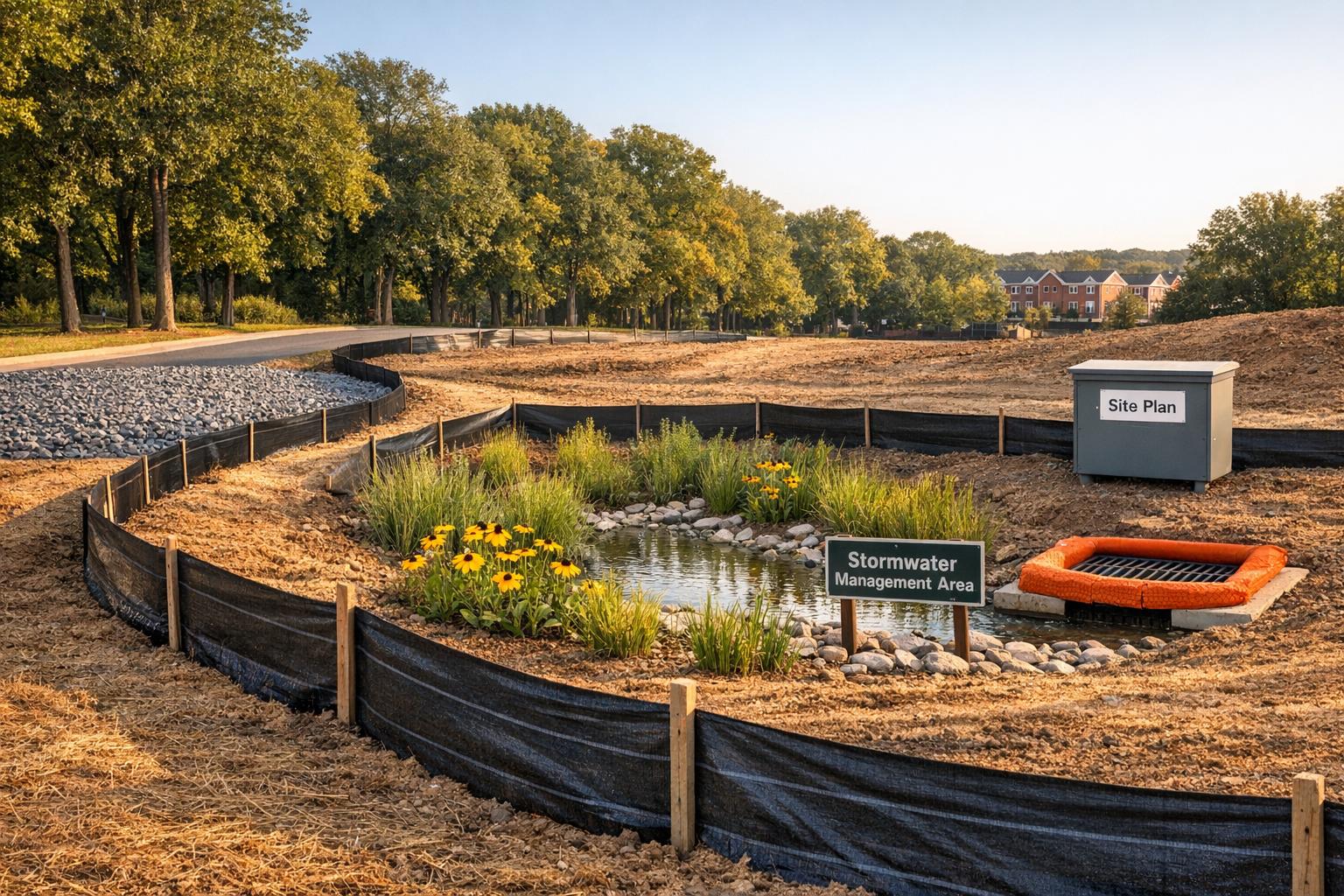
Silt fences are a common tool for trapping sediment along downslope boundaries, while sediment basins can capture and settle particles before runoff exits larger disturbed areas. For immediate slope protection, consider temporary seeding, mulching, or rolled erosion control products like straw blankets or mats. These methods work best when used together as part of a comprehensive plan.
Regular inspections – weekly and after heavy rainfall – are essential to ensure these controls remain effective. As iSTORMWATER highlights, "A well-documented SWPPP not only ensures compliance but also provides clear guidance for all personnel on-site" [7].
Physical controls are only part of the equation. Effective stormwater management also requires proactive operational practices.
Stormwater Management Practices
Your SWPPP should address both the volume and quality of stormwater leaving the site. Structural solutions, such as rain gardens, bio-retention areas, and permeable pavements, can promote natural water infiltration and treatment.
On the operational side, focus on practices like covering stockpiles, sweeping paved areas regularly, maintaining equipment to prevent leaks, and scheduling construction to limit soil exposure during rainy periods. Additionally, store chemicals and fuels in secondary containment systems to prevent spills. By emphasizing infiltration and natural treatment methods, you can reduce ongoing maintenance expenses while safeguarding local water resources.
Preparing a Storm Water Pollution Prevention Plan
Selecting and Designing Stormwater Controls
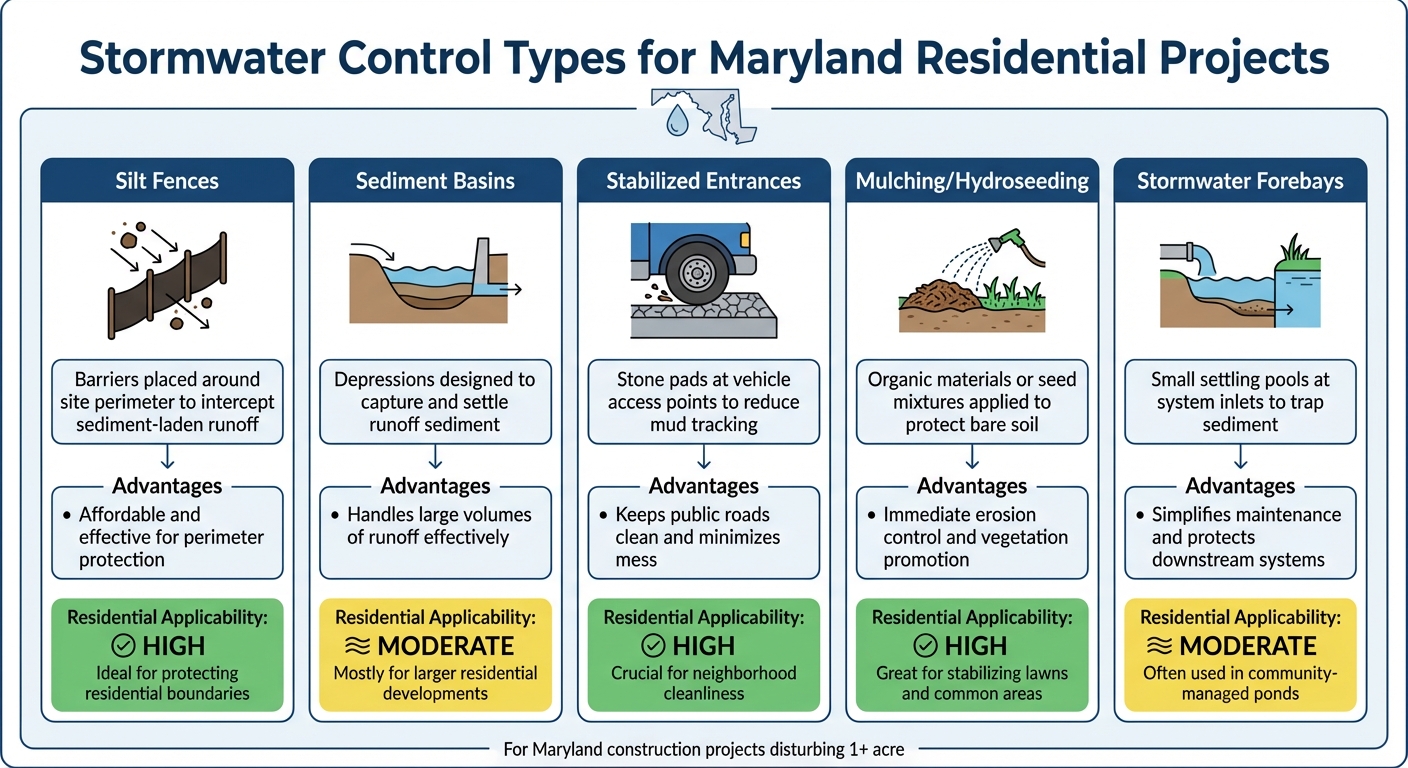
Maryland SWPPP Stormwater Control Types Comparison for Residential Projects
Comparison of Control Types
Once you’ve assessed site risks and planned erosion controls, the next step is choosing stormwater controls that align with your site’s conditions, project scale, and any regulations for sites disturbing at least one acre [7].
The level of soil disturbance and changes to drainage patterns often dictate the most effective controls. For instance, silt fences and stabilized entrances are well-suited for residential lots, while larger developments may require more robust options like sediment basins or stormwater forebays to handle the greater volume of runoff [7].
| Control Type | Description | Advantages | Applicability to Residential Projects |
|---|---|---|---|
| Silt Fences | Barriers placed around the site perimeter to intercept sediment-laden runoff | Affordable and effective for perimeter protection | High; ideal for protecting residential boundaries |
| Sediment Basins | Depressions designed to capture and settle runoff sediment | Handles large volumes of runoff effectively | Moderate; mostly for larger residential developments |
| Stabilized Entrances | Stone pads at vehicle access points to reduce mud tracking | Keeps public roads clean and minimizes mess | High; crucial for neighborhood cleanliness |
| Mulching/Hydroseeding | Organic materials or seed mixtures applied to protect bare soil | Immediate erosion control and vegetation promotion | High; great for stabilizing lawns and common areas |
| Stormwater Forebays | Small settling pools at system inlets to trap sediment | Simplifies maintenance and protects downstream systems | Moderate; often used in community-managed ponds |
One example of effective stormwater control is the Lyonswood Homeowners Association project, which successfully implemented these strategies [7].
Building on these options, Low-Impact Development (LID) practices take stormwater management a step further by leveraging natural processes.
Low-Impact Development (LID) Practices
LID techniques work to naturally manage stormwater through infiltration, filtration, and groundwater recharge. They complement traditional methods, offering solutions that integrate better with the environment. For instance, permeable pavements can absorb stormwater at rates between 120 and 1,200 inches per hour, depending on their design and porosity [8]. These are most effective on gentle slopes (less than 5%) and in soils classified as Hydrologic Soil Group A or B [8][11].
Other options like bioswales and vegetated swales are excellent for slowing runoff and filtering out pollutants. Bioswales are particularly good at removing phosphorus and bacteria, while wet swales are better suited for nitrogen removal [9][10]. A case study in King City, Ontario, demonstrated that permeable interlocking concrete pavement (PICP) in a college parking lot reduced runoff volume by 99% [11]. Similarly, monitoring in Vaughan, Ontario, showed an 88–89% reduction in Total Suspended Solids (TSS) concentrations over five years [11].
For smaller residential projects, rain gardens and rain barrels offer simple, space-efficient solutions. On the commercial side, vegetated roofs and permeable parking lots help reduce urban heat while managing stormwater. A standout example is the Elmer Avenue Retrofit Project in Los Angeles (2014), where permeable pavements, bioswales, and underground infiltration trenches reduced neighborhood flooding and increased groundwater recharge by over 50 acre-feet annually [8].
To keep permeable surfaces functioning properly, clean them twice a year to avoid clogging [8]. When re-vegetating, opt for native plants – they require less fertilizer and have better survival rates [10]. Companies like Pro Landscapes MD specialize in eco-friendly drainage solutions, offering services such as French drains, dry riverbeds, and stormwater management systems that meet regulations while enhancing the aesthetics of outdoor spaces.
sbb-itb-843f8be
Implementation, Inspection, and Maintenance
Project Implementation
To implement the SWPPP effectively, begin by installing erosion controls – such as silt fences, sediment basins, and stabilized construction entrances – before any soil is disturbed. In Maryland, projects disturbing one acre or more require an NPDES Construction Permit from the Maryland Department of the Environment (MDE) [7].
Set up concrete washout areas far from storm drains, store hazardous materials in covered containers, and stabilize exposed soil quickly using methods like hydroseeding or mulching. Train your crew on proper installation techniques and reporting procedures to ensure compliance. Once these measures are in place, establish a strict inspection routine.
Inspection and Monitoring Protocols
Maryland regulations require weekly site inspections, with additional checks following heavy rainfall [7]. These inspections must include detailed evaluations of BMPs such as silt fences, sediment basins, and inlet protections, as well as assessments of material storage and waste containers.
"Preventing NOVs requires consistent oversight, proactive maintenance, and thorough documentation throughout the project lifecycle." – iSTORMWATER
Detailed, written inspection reports are essential for avoiding Notices of Violation (NOVs) and stop-work orders. In the Mid-Atlantic region, common violations often stem from neglected BMPs, incomplete inspection records, or unauthorized discharges into storm drains.
Maintenance and Repairs
After inspections, address any deficiencies immediately to maintain system effectiveness. For instance, repair torn silt fences, clear clogged inlets, and clean catch basins regularly. Make sure sediment basins are emptied before reaching capacity, maintain vegetation to prevent blockages, and inspect system outlets to avoid upstream ponding or erosion.
Develop a written operations and maintenance (O&M) plan that outlines tasks and schedules. During rain events, ensure stockpiles are covered, and direct equipment rinse water into a sanitary sewer instead of onto pavement or into storm drains. Prompt maintenance keeps systems functioning properly and prevents small issues from escalating into major problems.
Environmental Site Design (ESD) Practices
Eco-Friendly Drainage Solutions
A well-rounded SWPPP (Stormwater Pollution Prevention Plan) relies on Environmental Site Design (ESD) practices to promote natural drainage. Maryland’s 2015 Stormwater Management Regulations emphasize ESD as the top priority for both new and redevelopment projects. The focus is on managing the first 1-2 inches of rainfall directly on-site, using infiltration and natural processes [4].
Take French drains, for example. These systems channel subsurface water through perforated pipes surrounded by gravel, encouraging infiltration and preventing surface pooling. In Maryland’s loamy soils, French drains boast an impressive 80% infiltration rate, effectively managing groundwater before it turns into surface runoff [13]. Then there are dry riverbeds (or dry swales), which guide stormwater through vegetated, rock-lined pathways. These not only slow water flow and filter sediments but also cut erosion by 50-70% while adding an aesthetically pleasing touch to your landscape [13].
Regrading and land leveling offer another layer of control by shaping slopes (typically 2-5%) to direct water toward permeable areas. This reduces concentrated flows that can lead to erosion. When paired with other ESD strategies, regrading can lower runoff volumes by 50-90% compared to traditional drainage systems [4]. Beyond meeting MDE (Maryland Department of the Environment) standards, these methods can slash erosion repair costs by up to 30% and even increase property value [12][13]. Together, these ESD approaches form a sustainable base for effective stormwater management.
Working with Local Experts
Successfully implementing ESD practices isn’t a one-size-fits-all process – it demands a tailored approach that considers Maryland’s diverse soil types, varying slopes, and detailed permitting requirements. Local professionals play a crucial role by conducting site assessments, mapping drainage patterns, testing soil permeability, and designing systems that adhere to MDE regulations while aligning with your landscaping goals. Their expertise can help you avoid costly mistakes, including non-compliance penalties that can reach $10,000 per violation [5].
For homeowners and developers in Maryland, working with experienced local partners is key. Pro Landscapes MD specializes in ESD-friendly drainage solutions across central Maryland, including Howard and Montgomery counties. Their services range from French drain installations and dry riverbeds to stormwater management, grading, yard leveling, and environmental paver setups. Clients often highlight their stacked stone installations, which not only improve drainage but also enhance outdoor aesthetics. By collaborating with experts familiar with Maryland’s specific regulatory and environmental conditions, you can ensure your SWPPP is both effective and compliant – protecting your property while creating a functional, visually appealing outdoor space.
Conclusion
Creating an effective Maryland SWPPP begins well before construction starts. The key is identifying potential pollutant sources – like fuel storage, soil piles, and construction debris – and implementing proven Best Management Practices (BMPs) such as silt fences and sediment basins. Equally important is establishing clear emergency response protocols. With oversight from the Maryland Department of the Environment, compliance is non-negotiable. Ignoring these controls could lead to Notices of Violation, stop-work orders, or hefty penalties. A proactive approach here sets the stage for ongoing maintenance and inspections.
Regular upkeep is where many property owners either excel or fall short. Weekly inspections and checks after rainfall are critical for catching BMP issues before they escalate into environmental damage or regulatory trouble. Keeping detailed records not only supports compliance during audits but also helps avoid expensive remediation later. Adapting to changing site conditions ensures the SWPPP remains effective over time.
Take property manager Kelly E., for example. By following expert-recommended updates, she achieved full EPA compliance and avoided thousands of dollars in potential environmental fees [7]. Stories like hers highlight the importance of continuous training and expert input.
To get the most out of your SWPPP, train your team and work with local professionals who understand Maryland’s unique soil and permitting challenges. Pro Landscapes MD, for instance, has extensive experience with Environmental Site Design-friendly drainage solutions throughout central Maryland. The right partner can help you navigate tricky regulations while creating functional, visually appealing outdoor spaces.
"By addressing stormwater runoff proactively, you help preserve vital natural resources, safeguard local ecosystems, and contribute to sustainable development that benefits both current and future generations" [1].
FAQs
Do I need a SWPPP for my project?
Yes, you need a SWPPP if your project disturbs one acre or more of land or is part of a larger development plan that does. It also has to meet Maryland’s updated rules, which require detailed documentation, regular inspections, and record retention throughout the project.
What BMPs work best for steep slopes and heavy rains?
When dealing with steep slopes and heavy rains, the best practices for managing erosion and runoff focus on a mix of preventive and control measures. These include using sediment fences, siltation basins, and slope stabilization techniques that are adapted to the specific soil and site conditions.
In some cases, infiltration methods like rain gardens or permeable pavements can also play a role, provided they’re suitable for the location. Alongside these measures, thoughtful site design and consistent maintenance are key to keeping erosion in check and ensuring runoff is managed effectively.
What records should I keep for SWPPP inspections?
Keeping thorough records is a must. This includes contact details, site maps, inspection protocols, training logs, and maintenance and inspection reports. These documents play a critical role in meeting SWPPP requirements, both during the project and after its completion.
Chat with Us