









- bhavya gada
- No Comments
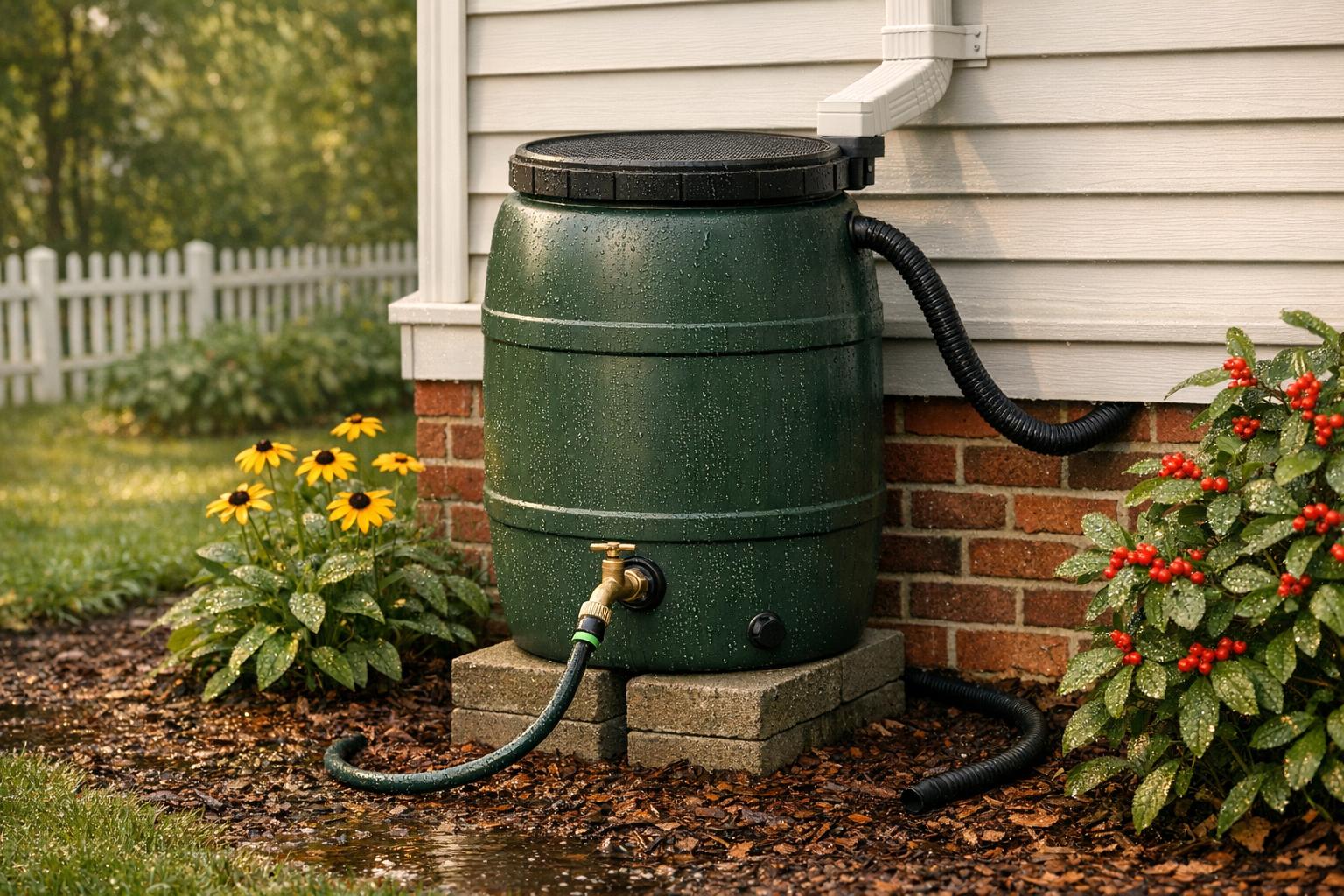
Rain barrels are a simple, effective way for Maryland homeowners to manage stormwater runoff and collect free water for gardens. With Maryland’s frequent rain and clay-heavy soils, choosing the right rain barrel involves considering size, placement, overflow management, and materials that can withstand the state’s climate. Here’s a quick breakdown:
- Capacity: A 1,000-square-foot roof can collect 600 gallons of water from 1 inch of rain. A standard 55-gallon barrel fills quickly, so larger homes may need multiple barrels or linked systems.
- Placement: Position barrels on stable, elevated stands to improve water pressure and direct overflow away from foundations, lawns, or rain gardens.
- Materials: UV-stabilized HDPE plastic is durable for Maryland’s humid summers and freeze-thaw winters. Opaque barrels reduce algae and mosquito risks.
- Features: Look for screened inlets to block debris and mosquitoes, overflow outlets to manage excess water, and brass spigots for durability.
Proper installation and maintenance, like winterizing before freezes and cleaning screens after storms, ensure long-term performance. For advanced setups, integrating rain barrels with drainage systems like French drains or rain gardens can maximize benefits.
Sizing Your Rain Barrel for Maryland’s Climate
Barrel Capacity and Roof Catchment Area
Here’s a simple formula: a roof collects about 0.6 gallons of water per square foot for every inch of rain. For example, if you have a 1,000-square-foot roof connected to a single downspout, a 1-inch storm could produce around 600 gallons of water. A standard 55-gallon rain barrel, however, holds less than 10% of that amount, which means it can fill up very quickly during a heavy downpour.
Maryland receives an average of 40–50 inches of rain annually, and sudden summer storms can bring 0.5–1 inch of rain in just an hour. This makes proper planning essential. While a smaller 50–60 gallon barrel might work for a townhouse with a modest garden, larger homes with roof areas of 1,500–2,000 square feet will need either multiple barrels or a strategy to handle overflow.
How Many Barrels You Need and Where to Put Them
The number of barrels you’ll need depends on your garden’s water requirements. For instance, vegetable gardens need about 0.62 gallons of water per square foot each week (equivalent to 1 inch of rainfall). A 200-square-foot garden would require roughly 125 gallons weekly during the summer – more than two standard 55-gallon barrels can hold. In this case, linking two or three barrels together (providing 100–180 gallons of storage) can help ensure a steady water supply between storms.
Placement is just as important as capacity. Maryland’s clay-heavy soils drain slowly, so it’s crucial to direct rain barrel overflow away from your home’s foundation. Position overflow outlets several feet away, ideally toward lawns, rain gardens, or areas equipped with French drains. On sloped properties or areas prone to drainage issues, this setup helps prevent pooling and safely channels excess water across your landscape.
Once you’ve sorted capacity and placement, consider elevating your barrel to improve its functionality.
Elevated Stands and Water Pressure
Raising your rain barrel has a practical benefit: every foot of elevation increases water pressure by about 0.43 psi. Elevating a barrel 12–24 inches is usually enough to fit a watering can under the spigot and improve the flow for drip irrigation or soaker hoses. However, tall stands can become unstable, so balance is key.
A full 55-gallon barrel weighs over 450 pounds, and a 100-gallon barrel can exceed 830 pounds. To ensure safety, use sturdy materials like concrete blocks, compacted gravel, or pavers for the stand. The base should be wider than the barrel’s footprint and perfectly level to prevent tilting. Uneven terrain, common in many Maryland neighborhoods, can cause stands to shift during heavy rain or freeze-thaw cycles. For example, Pro Landscapes MD often integrates barrel bases into paver or retaining wall designs, creating a stable and visually appealing foundation that blends seamlessly with the surrounding landscape.
sbb-itb-843f8be
The BEST DIY RAIN BARREL Install [Complete Guide]
Rain Barrel Materials for Maryland’s Weather
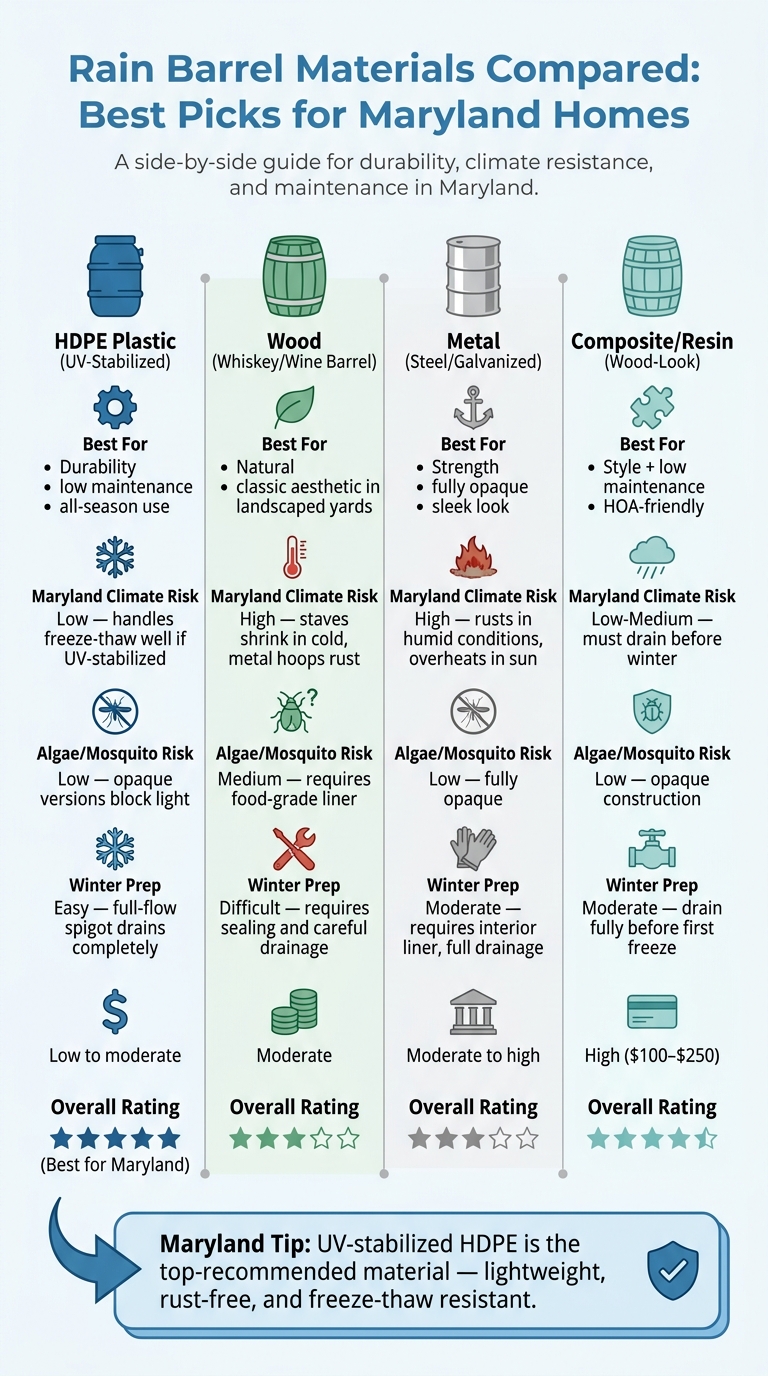
Rain Barrel Materials Compared: Best Picks for Maryland Homes
Maryland’s climate can be tough on outdoor equipment. With humid summers, strong sunlight, and winters that bring repeated freeze–thaw cycles, the material of your rain barrel plays a key role in its performance and longevity. Choosing the right material is just as important as picking the right size.
Plastic (HDPE) and Food-Grade Recycled Barrels
HDPE (high-density polyethylene) is a smart choice for Maryland homeowners. It’s lightweight, rust-resistant, and durable in wet conditions. To withstand Maryland’s intense summer sun, look for barrels labeled as UV-stabilized. These are less likely to become brittle or crack over time. Often, manufacturers will highlight features like "UV-protected, BPA-free, FDA-approved resin" to signal better durability.
Dark, opaque barrels are especially useful because they block light, reducing the chances of algae growth and mosquito breeding. This is critical if your barrel is exposed to sunlight for much of the day. In fact, some Mid-Atlantic municipalities require barrels to be opaque for this very reason.
Food-grade recycled HDPE barrels, often available through conservation workshops in the Baltimore and D.C. metro areas, offer an eco-friendly option. These barrels are typically thick-walled and designed to hold liquids, but they need to be thoroughly cleaned before use. It’s also worth checking if they include UV stabilizers for added protection.
Wood, Metal, and Composite Barrels
If you’re after a more decorative look, wood, metal, or composite barrels might be worth considering. Each material, however, comes with its own set of challenges in Maryland’s climate.
| Material | Best For | Main Risk in Maryland |
|---|---|---|
| Wood (whiskey/wine barrel) | Natural, classic appearance for landscaped spaces | Staves may shrink in cold weather, leading to leaks; metal hoops can rust |
| Metal (steel, galvanized) | Strong, fully opaque, and sleek | Susceptible to rust in humid conditions; can become very hot in the sun; often requires an interior liner |
| Composite / Resin "wood-look" | Combines style with low maintenance | Higher upfront cost; still needs to be drained before winter |
Composite or resin barrels designed to mimic the look of oak or whiskey barrels are becoming increasingly popular in the Mid-Atlantic. They provide the charm of wood without the upkeep. If you do opt for a wooden barrel, make sure it includes a food-grade liner or internal coating, and be prepared for regular sealing. This helps prevent leaks caused by Maryland’s wet summers and colder, drier winters.
Handling Winter and Freeze–Thaw Cycles
Choosing the right material is just part of the equation – preparing your rain barrel for Maryland’s seasonal extremes is equally important. When water freezes, it expands by about 9%, which can crack your barrel. Winterizing is a must.
Look for barrels with full-flow spigots located at the lowest point to allow complete drainage. Removable hoses and easily accessible fittings are also helpful, as any trapped water can freeze and cause damage. HDPE and well-sealed composite barrels generally handle temperature swings better than thin plastic or uncoated metal.
Before the first hard freeze, make sure to fully drain your barrel, disconnect any downspout diverters, and either store it indoors or leave it outside with openings uncovered. This prevents ice from building up and causing pressure inside. If your barrel is part of a larger drainage system – like a French drain or grading setup – consulting a local drainage expert, such as Pro Landscapes MD, can help ensure water doesn’t pool near the base during winter thaws.
Functional Features That Support Stormwater Management
The design and features of a rain barrel play a big role in how effectively it handles Maryland’s weather while addressing challenges like mosquito control and foundation flooding.
Inlet Screens and Mosquito Protection
Maryland’s warm and humid summers make it a prime spot for mosquitoes. Without proper screening, a rain barrel can quickly become a breeding ground. To prevent this, all openings should be covered with fine-mesh screens – around 1/16 inch or smaller – to block mosquitoes as well as debris like leaves or roof grit. A tightly sealed lid is also crucial since mosquitoes can thrive in even small amounts of standing water.
For durability, choose corrosion-resistant metal mesh, such as stainless steel or aluminum, which can withstand Maryland’s freeze-thaw cycles and UV exposure. Recessed or domed screen designs are practical options: recessed screens stay put in windy conditions, while domed ones help shed leaves instead of letting them collect. Regular maintenance is key – inspect and clean screens at least once a month during spring and fall, and always check after heavy storms. Many Maryland counties offer stormwater rebate programs that require mosquito-proof lids and screened inlets, so make sure your barrel meets the criteria before buying.
Overflow Outlets and Downspout Diverters
Once mosquito protection is in place, managing excess water becomes the next priority. Every rain barrel should include an overflow outlet near the top, sized at least as large as the inlet pipe (typically 1.5–2 inches in diameter). This ensures that heavy rain doesn’t lead to uncontrolled spillage near your foundation.
Where the overflow is directed is just as important. Aim to channel it 5–10 feet away from the foundation using a splash block, lawn, rain garden, or dry riverbed. Avoid areas like driveways or compacted soil where water might flow back toward the house. Maryland’s clay-heavy soils drain slowly, so directing overflow to a well-graded infiltration area can make a big difference. Downspout diverter kits are a smart addition, automatically routing water into the barrel until it’s full, then redirecting the excess back through the downspout. These kits also simplify winter maintenance by allowing you to bypass the barrel entirely. For larger roofs or more complex setups, a drainage specialist, such as Pro Landscapes MD, can help create a seamless overflow system in areas like Howard, Montgomery, and Baltimore counties.
Spigots, Valves, and Hose Connections
After addressing mosquito control and overflow, the quality of spigots and valves is another critical factor in your rain barrel’s performance. Brass spigots are more durable than plastic ones, as they resist UV damage, handle temperature changes without cracking, and maintain their threading even after repeated hose connections. If you opt for plastic, make sure it’s UV-stabilized, though it may still be more prone to cracking in freeze-thaw conditions or under strain.
Go with a ¾-inch threaded spigot (the U.S. standard size) to easily connect garden hoses or drip irrigation systems without needing adapters. A ball-valve design is preferable to gate or petcock valves because it opens fully with just a quarter turn, providing better water flow even at low pressure. Position the spigot a few inches above the barrel’s base to allow sediment to settle below the outlet, and use rubber washers and thread seal tape to prevent leaks. Before winter, disconnect hoses, fully open the spigot, and drain the barrel completely to protect the fittings. These features ensure your rain barrel can handle Maryland’s frequent storms and changing seasons effectively.
Rain Barrel Design and Placement for Maryland Yards
Barrel Style Options
Rain barrels have come a long way from the simple plastic drums of the past. Today, homeowners in Maryland can choose from a variety of designs that complement their home’s aesthetic. Urn-style barrels, wood-look finishes, and planter-top models are particularly popular. These options blend beautifully with different architectural styles – urn-style barrels pair nicely with brick colonial homes, while wood-look designs are a natural fit for craftsman or farmhouse exteriors. For narrow spaces like side yards or townhomes, slimline, wall-hugging tanks are a practical solution.
When it comes to cost, decorative barrels generally range from $100 to $250 for capacities of 50–80 gallons. On the other hand, basic repurposed drums are more affordable but require additional fittings, screens, and base materials to function effectively. Here’s a quick comparison:
| Feature | Basic Utility Barrel | Decorative Urn / Wood-Look Barrel |
|---|---|---|
| Visual fit in visible yard areas | Industrial look; best hidden from view | Designed to complement landscaping |
| Integrated planter on top | Rare | Common on planter-top models |
| HOA acceptance | Often needs screening | More likely acceptable in visible spots |
| Typical cost | Lower, especially DIY | $100–$250 |
For a polished look, consider matching the barrel’s color to nearby trim, fencing, or hardscape. Darker colors are especially practical, as they help conceal algae stains over time. Beyond aesthetics, a well-chosen decorative barrel encourages proper placement, ensuring efficient water collection and management.
Creating a Stable and Safe Barrel Base
Did you know that a full 55-gallon barrel can weigh around 460 pounds? That’s why a stable base is non-negotiable. Without proper support, the barrel might sink into soft ground or tip over on uneven surfaces. To avoid this, create a flat, compacted base using materials like concrete pavers, stacked cinder blocks, or a pressure-treated wood platform set on compacted gravel.
Position the barrel 12–18 inches above ground level. This elevation not only makes it easier to fit a watering can under the spigot but also uses gravity to help water flow to your garden. If your yard has slopes or poor drainage, widen the base and add extra gravel beneath the pavers to prevent settling. And if the barrel is near high-traffic areas like decks or play spaces, consider securing it with straps or anchors for added safety.
Once your base is ready, you’re set to connect the barrel to your garden and drainage system.
Connecting Rain Barrels to Gardens and Drainage Systems
Rain barrels work best when integrated into a broader water management plan. For instance, attaching a soaker hose or drip line allows you to direct water to vegetable gardens, raised beds, or foundation plantings. Just make sure the hose runs slightly downhill so gravity can do the work – no pump needed.
Overflow management is equally important. A single inch of rain on a 1,000-square-foot roof can produce over 600 gallons of water, according to Howard County. This means your barrel can fill up fast during Maryland’s intense summer storms. To handle the excess, route the overflow to a rain garden positioned slightly downhill. Rain gardens, filled with native plants, absorb water gradually, reducing runoff and erosion. Other options include connecting the overflow to a French drain, dry riverbed, or shallow swale to direct water away from your foundation and into areas designed to handle it.
If your property struggles with persistent ponding, erosion, or poor grading, Pro Landscapes MD offers solutions like French drains, swales, and yard leveling. They serve Howard, Montgomery, Baltimore, and other Maryland counties, providing comprehensive drainage strategies tailored to your yard’s needs.
Installation and Maintenance Tips for Maryland Homeowners
Local Programs and County Guidelines
Before purchasing a rain barrel, it’s a good idea to check with your county’s department of the environment or watershed protection office. Counties like Howard, Montgomery, Carroll, Frederick, Prince George’s, and Baltimore have their own stormwater guidelines. Some even offer rebates or discounted barrels through special county-sponsored sales events. To qualify for most of these programs, your setup will generally need to meet specific requirements, such as:
- A minimum capacity of 50–60 gallons
- A child-safe lid or screened inlet
- A proper overflow outlet
- Proof of correct installation (photos or a simple sketch often suffice)
If you’re part of a homeowner’s association (HOA), make sure to review their guidelines as well. They may have rules regarding placement and overflow management. Once you’ve ensured compliance with all local and HOA regulations, you can start prepping your system for Maryland’s changing seasons.
Seasonal Use and Winterizing Your Barrel
Maryland’s freeze–thaw cycles can wreak havoc on rain barrels, causing cracks, split fittings, and burst hoses if they aren’t properly winterized. To protect your system, shut it down by mid-November, before temperatures drop below freezing, and restart it in early April.
Winterizing is pretty simple. Here’s what to do:
- Switch the downspout diverter to bypass the barrel.
- Completely drain the barrel using the spigot.
- Tip the barrel to remove any lingering water and leave the lower valves open.
- Disconnect and store all hoses indoors.
- If moving the barrel to a garage or shed isn’t an option, turn it upside down and secure it to prevent it from being blown away.
Rain barrels with quick-connect diverters and large removable lids make this process much easier, which is especially helpful for homeowners in townhomes or areas like Silver Spring or Towson where storage space might be tight.
Once spring arrives, regular maintenance will keep your rain barrel running smoothly through the warmer months.
Keeping Water Clean and Maintaining Your Barrel
After significant storms, it’s important to check the inlet screen and clear away any debris like leaves, seeds, or pollen. This is especially crucial in wooded areas such as Sykesville, Damascus, or Brookeville during pollen-heavy seasons or autumn leaf drop. Installing a first-flush diverter can also help by redirecting the dirtiest runoff – containing roof grit and bird droppings – away from the barrel before cleaner water flows in.
To keep your barrel in great shape, follow these tips:
- Regularly clean the inlet screen and spigot to ensure proper water flow.
- Periodically drain and rinse the interior to remove sediment buildup.
- Inspect fittings for leaks and tighten any loose connections.
- Keep the lid securely in place and position the barrel in partial shade to minimize algae growth.
If you’re using the water for edible gardens, it’s best to avoid applying it directly to produce you plan to eat raw, especially if your roof is made of asphalt shingles. Instead, use it for ornamental plants, lawns, or soil around shrubs.
Conclusion: Picking the Right Rain Barrel Features for Maryland Homes
Choosing the right rain barrel for Maryland means finding one that can handle both heavy storms and the freeze–thaw cycles of winter. This isn’t just about collecting water – it’s about managing it effectively. The best barrels match their capacity to your roof’s catchment area, are made from materials that can withstand Maryland’s climate, and come with key features like a screened inlet, a reliable overflow outlet, and a spigot that fits standard garden hoses. These elements ensure your rain barrel can do its job efficiently, no matter the weather.
In Maryland, where a single storm can quickly fill a 50–80 gallon barrel, managing overflow is just as crucial as the barrel itself. Without a proper overflow system – like a rain garden, vegetated swale, or dry riverbed – excess water can create new problems instead of solving them.
For most homeowners, UV-stable HDPE plastic is the go-to material. It’s durable, resists rust and rot, and is easy to drain before winter sets in. While wood and metal barrels might offer a certain aesthetic appeal, they demand more maintenance and aren’t as practical for Maryland’s climate.
Positioning your rain barrel correctly is just as important as choosing the right one. When placed on a stable, level base near a downspout and integrated into your landscape, it can significantly reduce runoff, ease the strain on storm drains, and cut down on outdoor water use during dry spells. For a seamless setup, Pro Landscapes MD offers expert services to help homeowners across Howard, Montgomery, Carroll, Frederick, Prince George’s, and Baltimore Counties. They specialize in integrating rain barrels into broader drainage systems, like grading, French drains, and dry riverbeds, ensuring the water you collect benefits your yard instead of causing issues near your foundation.
With the right size, material, and setup, you can create a rain barrel system that not only manages water effectively but also enhances your overall yard drainage plan. Maryland’s weather can be unpredictable, but with thoughtful planning and professional guidance, your rain barrel can make a real difference. For more information, visit Pro Landscapes MD.
FAQs
Do I need a pump for drip irrigation?
Whether or not you need a pump for your drip irrigation system depends on how your setup is configured and the water pressure available. For example, gravity-fed systems, such as those using rain barrels, typically need a pump to provide sufficient pressure for the drip emitters to work effectively.
If you’re in Maryland, Pro Landscapes MD specializes in drainage and stormwater management solutions. They can design systems that improve water flow and filtration. Reach out to their team for personalized advice on your irrigation setup.
Where should I send overflow in a clay yard?
In yards with heavy clay soil, managing water overflow can be a challenge, but there are effective ways to improve drainage and encourage better water absorption. One option is to guide runoff into features like rain gardens or dry riverbeds, which are designed to naturally collect and hold water.
You can also use swales – shallow, vegetated channels – to slow down and direct the flow of water where it can be absorbed more gradually. French drains, which combine perforated pipes with gravel, are another practical solution for redirecting water away from problem areas.
If you’re dealing with larger volumes of water, consider installing box and pipe drain systems to handle the excess. Additionally, permeable pavers are an excellent choice for allowing water to seep into the ground, helping to prevent pooling and standing water.
How do I winterize a rain barrel in Maryland?
To prepare your rain barrel for winter in Maryland, it’s important to disconnect it before the first hard freeze to avoid ice damage. Here’s what to do:
- Drain the barrel completely to prevent cracking caused by freezing water.
- Switch out the downspout diverter with a standard extension to ensure runoff is properly redirected.
- Store the barrel safely in a shed, garage, or another covered area to protect it from the elements.
If you need assistance with stormwater management or drainage solutions, Pro Landscapes MD provides expert services throughout central Maryland.
Chat with Us