









- bhavya gada
- No Comments
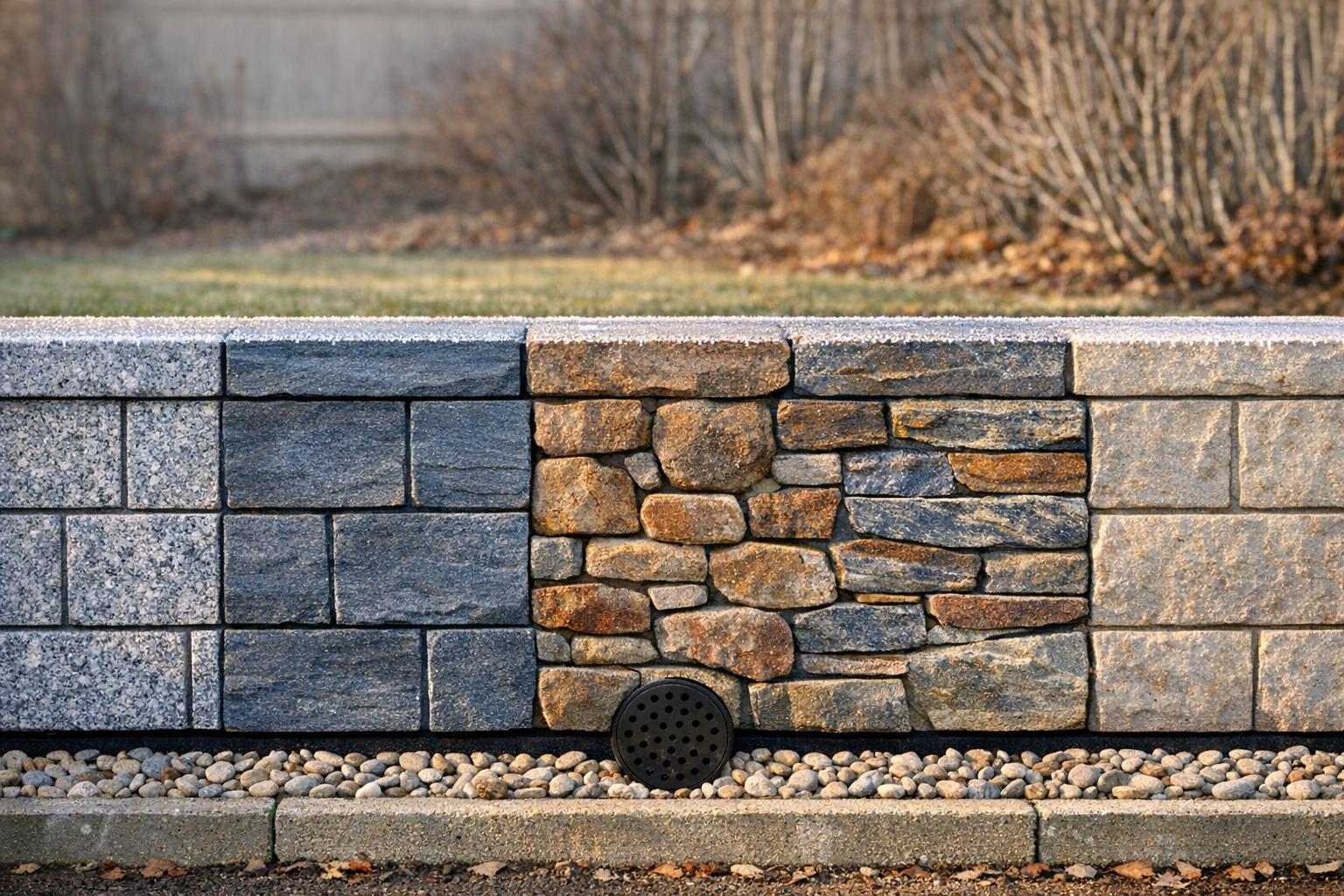
Maryland’s weather can wreak havoc on retaining walls if the right materials aren’t used. From heavy rainfall to freeze-thaw cycles, the climate demands durable, low-absorption stones that resist cracking and shifting. Pairing these materials with proper drainage is critical to prevent hydrostatic pressure and ensure long-term stability.
Here are the top retaining wall stones suited for Maryland’s conditions:
- Granite: Extremely durable, with very low water absorption (<0.5%). Ideal for freeze-thaw resistance and heavy loads. Minimal maintenance required.
- Bluestone & Sandstone: Bluestone performs better in Maryland winters due to lower absorption rates (1–3%). Sandstone is viable only in denser grades with proper sealing and drainage.
- Fieldstone: Offers a rustic, natural look. Hard metamorphic varieties like granite or quartzite are best for durability.
- Carderock Stone: A local favorite, this mica schist resists freeze-thaw cycles and blends well with Maryland’s landscapes.
- Limestone: Requires dense grades and excellent drainage to withstand freeze-thaw damage. Regular maintenance is necessary.
Key Takeaway: Choose stones with low porosity and high strength, and prioritize drainage solutions like gravel backfill and drain pipes. This combination ensures your retaining wall can endure Maryland’s challenging weather.
Ellicott City MD 100+ Historic Dry Laid Stone Retaining Wall Rebuild 12/2019
Maryland’s Climate and What It Means for Retaining Walls
Maryland’s four-season climate creates tough conditions for retaining walls, with water being the primary culprit. During heavy rains, soil behind a retaining wall becomes saturated. When winter rolls in, freezing temperatures cause this moisture to expand within cracks or pores in the stone. Over time, repeated freeze–thaw cycles weaken the stone, leading to spalling and cracking. This makes proper drainage an absolute must for maintaining the wall’s strength.
Excessive rain also adds stress to retaining walls. Without efficient drainage, water builds up behind the structure, creating hydrostatic pressure. This pressure can force stones out of alignment, making drainage design just as important as choosing durable materials.
In areas with clay-heavy soils, like Howard, Montgomery, and Frederick counties, the problem is even more pronounced. Clay tends to hold moisture, amplifying the challenges posed by water.
When it comes to materials, certain stone properties are critical. Dense stones with low porosity resist moisture penetration, reducing the risk of freeze–thaw damage. Additionally, high compressive strength ensures the stone can handle the lateral pressure from the soil. Choosing stones with these characteristics is key to ensuring the wall stands up to Maryland’s challenging weather.
"When built properly using quality materials, retaining walls can last for several decades. Our walls are designed for durability and built to withstand Maryland’s varying weather conditions." – Pro Landscapes MD [1]
Pro Landscapes MD emphasizes the importance of combining top-notch materials with effective drainage solutions. Their approach includes incorporating features like French drains, gravel backfill, well-placed drain pipes, and proper site grading to direct water away from the wall. As they note, "Retaining walls help direct and manage water flow, preventing pooling and water damage." [1]
1. Granite
Granite stands out as a top choice for retaining walls in Maryland. This dense igneous rock, made up of quartz, feldspar, and mica, has a water absorption rate under 0.5%, making it highly resistant to the region’s challenging freeze–thaw cycles. These qualities make granite a reliable option for addressing the moisture and temperature fluctuations common in Maryland.
With a compressive strength ranging from 19,000 to over 30,000 psi, granite can easily support the weight of heavy, waterlogged soil – especially on clay-heavy slopes found in areas like Howard, Montgomery, and Frederick counties. It’s particularly well-suited for walls supporting patios, driveways, or parking spaces, where it can handle substantial loads without deteriorating over time.
Granite also offers a variety of aesthetic options. Its finishes range from rugged split-face to sleek ashlar-cut, making it adaptable to different architectural styles. For instance, split-face granite provides a natural, textured look that’s perfect for homes in wooded areas, while ashlar-cut blocks create clean, modern lines that work well near formal entrances or contemporary outdoor spaces.
A notable example of granite’s durability and appeal is the "Laurel Cornerstone Granite" project completed by Pro Landscapes MD in July 2020. Located in Laurel, Maryland, this granite retaining wall was engineered for long-term strength and effective erosion control. [2][4]
Maintaining granite is straightforward. Regular tasks include clearing debris, checking drainage outlets, and occasionally rinsing to remove algae. While sealing isn’t usually necessary, it can be helpful in areas exposed to de-icing salts or oil. In such cases, a breathable, penetrating sealer is recommended to minimize stains – avoid film-forming sealers, as they can trap moisture and worsen freeze–thaw damage.
2. Bluestone and Sandstone
Bluestone and sandstone are two well-known natural stones, often chosen for their durability and aesthetic qualities. However, their performance can vary significantly in Maryland’s freeze–thaw climate. Bluestone, particularly Pennsylvania bluestone, is a dense, fine-grained sandstone formed from ancient river sediments. It typically has a water absorption rate of 1–3%, making it resistant to the freeze–thaw cycles that can cause damage. On the other hand, standard sandstone can have an absorption rate of 1–6%, depending on how tightly it’s cemented at the quarry. Higher porosity means more moisture gets trapped, which expands when frozen, leading to flaking, cracking, or edge loss. This makes understanding the properties of each stone crucial for Maryland’s weather.
In general, bluestone is better suited for Maryland winters, while only low-absorption sandstone can match its durability. Industry data highlights that unsealed, porous sandstone may show surface damage like scaling and cracking within 3–5 winters, whereas sealed and well-drained sandstone can last over a decade. Proper drainage is essential for both stones to prevent hydrostatic pressure from causing issues. [1]
From a design perspective, these stones offer distinct aesthetics. Bluestone, with its gray-blue tones and subtle variations, is ideal for formal or contemporary landscapes. It works beautifully in structured garden walls, terraced patios, or areas where continuity with bluestone walkways or patios is important. Sandstone, on the other hand, brings an organic feel with its tan, buff, gold, red, and earthy multicolor tones, making it a great choice for naturalistic settings, wooded areas, or rustic designs. Bluestone fits more formal designs, while sandstone leans toward a softer, more relaxed look. [1]
Maintenance also sets these stones apart. Bluestone’s density means it requires less upkeep – an annual inspection for joint movement or shifting, along with occasional cleaning, is usually sufficient. Sandstone, however, needs a breathable sealer applied every 2–5 years, and both stones should be checked annually for freeze–thaw damage. Addressing issues early can prevent more significant problems down the line.
Cost is another factor to consider. Bluestone for walls typically costs $6–$12 per square foot for materials, while sandstone ranges from $5–$15 per square foot, with premium colors or sawn finishes increasing the price. Installed costs, which include labor, base preparation, and drainage, often fall between $25–$75+ per square foot for either stone. A bonus for Maryland homeowners is that Pennsylvania bluestone and regional sandstone are locally sourced, which can lower transportation costs and ensures the stone is well-suited for Mid-Atlantic conditions. [3]
3. Fieldstone
Fieldstone is a durable and natural option for Maryland retaining walls. Formed through extended weathering and natural stress, denser types like granite, gneiss, and quartzite are particularly tough. These stones often have water absorption rates below 1–2% [5], making them highly resistant to freeze-thaw cycles. This means less expansion during freezing, reducing the chances of cracking, spalling, or surface flaking. That said, not all fieldstones are created equal – durability depends on the type.
Softer sedimentary stones, such as some sandstones and limestones, tend to absorb more water, making them more susceptible to freeze-thaw damage. For Maryland’s climate, denser igneous or metamorphic fieldstones are a safer bet, especially when building taller or more demanding retaining walls.
Fieldstone also stands out for its aesthetic appeal. Its irregular, weathered look blends beautifully with natural landscapes. Each piece is unique, often developing a patina from exposure to soil, lichen, and minerals, which creates a "built-into-the-landscape" feel. In central Maryland, common colors include gray and blue-gray from granite or gneiss, warm browns and tans from sandstone, and even mixed tones with rust and gold accents. Installers frequently mix these colors on-site to create a balanced, organic look without visible banding.
"Natural Stone: Perfect for a timeless, organic look that blends seamlessly into natural surroundings." – Pro Landscapes MD [1]
Even though fieldstone is tough, regular maintenance is key. Inspect walls annually for bulges or shifts, especially after harsh winters, to catch potential issues early. Moss or algae buildup can usually be cleaned with water and a soft brush, though many homeowners enjoy the aged character it adds. For mortared walls, repointing cracked joints every few years helps keep moisture out. Proper drainage behind and beneath the wall is also critical for ensuring its long-term stability.
sbb-itb-843f8be
4. Carderock Stone
Carderock stone, a mica schist quarried locally in the Carderock, Maryland area, is a popular choice for retaining walls in central Maryland. Its local availability keeps material and transport costs manageable compared to imported stone, and it’s well-suited for the Mid-Atlantic’s climate.
One of its key strengths is durability. Its dense structure makes it resistant to Maryland’s freeze–thaw cycles, as it absorbs less water than softer stones like limestone or sandstone. This lower water absorption reduces the risk of internal cracking during colder months. While minor fissures exist in its bedding planes, ensuring proper drainage during installation is crucial to maintaining its integrity.
Aesthetically, Carderock stone stands out with its natural mix of blue-gray, gray, and tan tones, sometimes accented by streaks of brown, buff, rust, or green from mineral veining. Its split-face texture and shimmering mica flecks give it a rich, organic look that pairs beautifully with Maryland’s wooded settings, red brick homes, and colonial or farmhouse architecture. Landscaping professionals, such as Pro Landscapes MD, frequently recommend it for its timeless appearance that blends effortlessly with its surroundings.
Maintenance is simple and straightforward. A yearly inspection after winter helps identify and address any small shifts early. Removing weeds or saplings that grow between stones prevents root pressure from causing damage. Dirt or organic buildup can typically be handled with a quick rinse or low-pressure wash. Sealing is optional and usually done for aesthetic reasons. If used, a breathable, natural-stone-rated sealer should be applied following the manufacturer’s guidelines.
Proper installation is critical for longevity. Skilled masons align the stone so that the bedding planes run horizontally into the wall rather than facing outward. This technique minimizes surface flaking and delamination, ensuring the wall remains structurally sound for years to come.
5. Limestone
Limestone, made primarily of calcium carbonate, brings a timeless charm to retaining walls in Maryland. Its warm, natural tones – ranging from cream and buff to tan, light gray, and beige – blend beautifully with colonial-style homes, suburban gardens, and formal landscapes often seen in the area. But while its aesthetic appeal is undeniable, its performance in Maryland’s climate requires thoughtful consideration.
One key factor is moisture management. Maryland’s freeze-thaw cycles can be tough on materials, and limestone is no exception. Dense limestone absorbs only 2–4% water, while softer types can soak up over 10%. When water penetrates the stone and freezes, it expands, causing surface spalling and scaling over time. To avoid this, it’s essential to use dense, low-absorption limestone grades for walls exposed to winter conditions.
With a Mohs hardness of about 3–4, limestone is easier to cut than granite, which makes it ideal for custom designs. However, this softness also makes it more susceptible to damage from acid rain and de-icing salts, which can erode the surface over time.
The finish you choose can also impact durability and appearance. Split-face or rough-cut finishes provide a rustic look and are great at hiding minor stains, while ashlar or cut finishes offer a more polished, formal style. The choice of finish not only enhances the wall’s aesthetic but also contributes to its ability to endure harsh weather.
To keep limestone looking and performing its best, regular maintenance is a must. Annual post-winter inspections can help detect early signs of cracking or scaling. Cleaning with a pH-neutral cleaner and applying a breathable water-repellent sealer in exposed areas can extend the stone’s lifespan. As Pro Landscapes MD explains, "Retaining walls help direct and manage water flow, preventing pooling and water damage" [1].
Stone Comparison Table
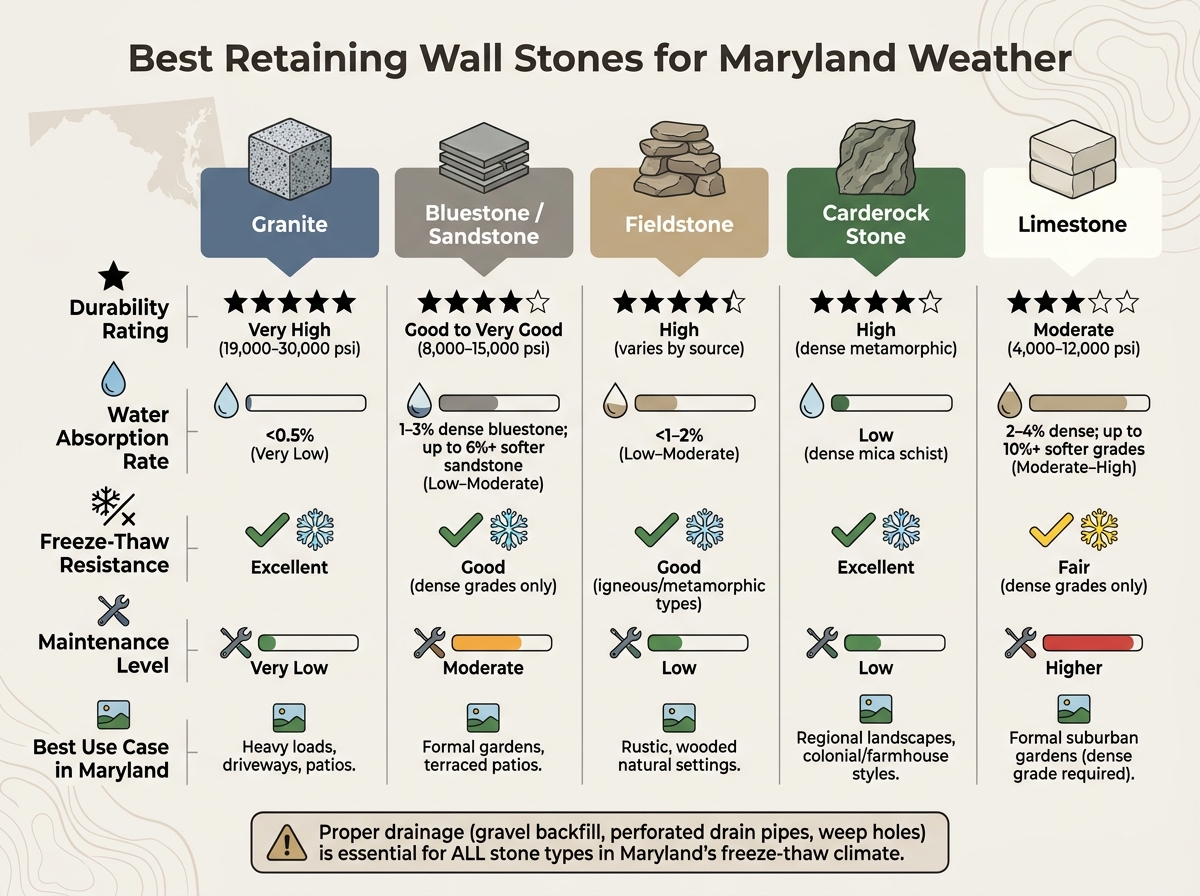
Best Retaining Wall Stones for Maryland Weather: Side-by-Side Comparison
This table provides a quick overview of how different stones perform in Maryland’s unique climate. With wet summers, hard freezes, and the constant cycle of freezing and thawing, the right stone choice depends on how well each material handles these conditions. Here’s a breakdown of key factors for each type of stone:
| Stone | Durability | Absorption (%) | Aesthetic Style | Maintenance Needs | Best for Maryland |
|---|---|---|---|---|---|
| Granite | Very high; compressive strength of 19,000–30,000 psi | Very low (<1%) | Formal and uniform; gray or pink tones | Very low; occasional joint repair | Excellent for freeze–thaw conditions and structural support |
| Bluestone/Sandstone | Good to very good; ~8,000–15,000 psi for dense bluestone | Low to moderate (≈1–3% for dense bluestone; up to 6%+ for softer sandstone) | Stratified and planar; grays, blues, and browns | Moderate; monitor for surface flaking and consider sealing in exposed areas | Performs well with proper drainage; denser grades last longer |
| Fieldstone | High; durability varies by source, with many Mid-Atlantic fieldstones being hard metamorphic rock | Low to moderate | Irregular and rustic; mixed natural colors | Low; mainly drainage upkeep and occasional repointing | Perfect for a natural, rustic look in wooded settings |
| Carderock Stone | High; a dense metamorphic stone known for excellent freeze–thaw resistance | Low | Layered appearance in blue-gray to tan/brown; distinctly regional | Low; proven performance in the local DC/Maryland region | Tailored for Maryland’s climate and landscapes |
| Limestone | Moderate; compressive strengths range from approximately 4,000–12,000 psi depending on density | Moderate to high (≈3–12%) | Warm cream, buff, or tan; classic and formal | Higher; may require sealing and regular inspection in wet/freezing conditions | Use cautiously; opt for dense grades and ensure proper drainage |
This table emphasizes how each stone’s water absorption and durability play a critical role in withstanding Maryland’s weather. Stones with lower absorption rates generally perform better in freeze–thaw cycles, making them more suitable for long-term use.
Another essential factor is drainage. Using granular backfill, perforated drain pipes, and clear weep holes is crucial, especially for walls over 3–4 feet tall. These measures help manage water flow and prevent damage, ensuring the longevity of your stonework.
Conclusion
As shown in the stone comparison table, each material comes with its own set of advantages and challenges. The best choice for your Maryland yard depends on factors like wall height, drainage requirements, and maintenance preferences. For example, granite is incredibly durable and requires little maintenance, making it ideal for Maryland’s harsh weather. Bluestone and fieldstone provide a natural Mid-Atlantic aesthetic when paired with proper drainage, while Carderock remains a trusted local option that can handle the region’s freeze–thaw cycles. Limestone is another possibility but requires careful water management and a dense grade to perform effectively.
However, even the strongest stone won’t hold up if water isn’t managed properly behind the wall. This makes drainage just as important as selecting the right stone.
Scheduling a site assessment is the smartest next step. Pro Landscapes MD offers services across central Maryland counties, handling hardscaping and drainage projects together. Their comprehensive approach – covering everything from stone selection to wall construction and water management – ensures your retaining wall can handle Maryland’s unpredictable winters and heavy summer rains.
Get the right material and expert installation. Reach out to Pro Landscapes MD for a site assessment and a retaining wall designed to stand the test of Maryland’s weather.
FAQs
What drainage does my retaining wall need in Maryland?
Proper drainage is a must for retaining walls in Maryland to avoid water pooling and potential structural issues. At Pro Landscapes MD, they tackle water management head-on with solutions like drain pipes, French drains, dry riverbeds, and grading techniques. These strategies work together to channel water away from the wall, minimizing soil erosion and moisture problems. The result? A stable, long-lasting retaining wall that keeps your landscape in great shape.
How do I choose stone for a wall over 4 feet tall?
For walls exceeding 4 feet in height, it’s crucial to focus on materials that offer excellent durability and strength. Engineered concrete blocks, such as those from Allen Block or Techo-Bloc, are specifically designed to withstand the weight and pressure associated with larger structures. If you’re leaning toward the timeless charm of natural stone, be aware that proper construction techniques are key to ensuring stability. Companies like Pro Landscapes MD can assist in selecting materials that balance functionality with aesthetic appeal.
Do I need to seal natural stone retaining wall blocks?
Sealing natural stone retaining wall blocks largely depends on the type of stone and the finish you’re aiming for. While many stones hold up well in Maryland’s climate, factors like porosity and exposure to the elements can influence whether sealing is needed. For specific guidance, it’s worth reaching out to Pro Landscapes MD. Their team specializes in custom retaining walls and can help determine if a sealer is required to preserve both the look and functionality of your wall over time.
Chat with Us