









- bhavya gada
- No Comments
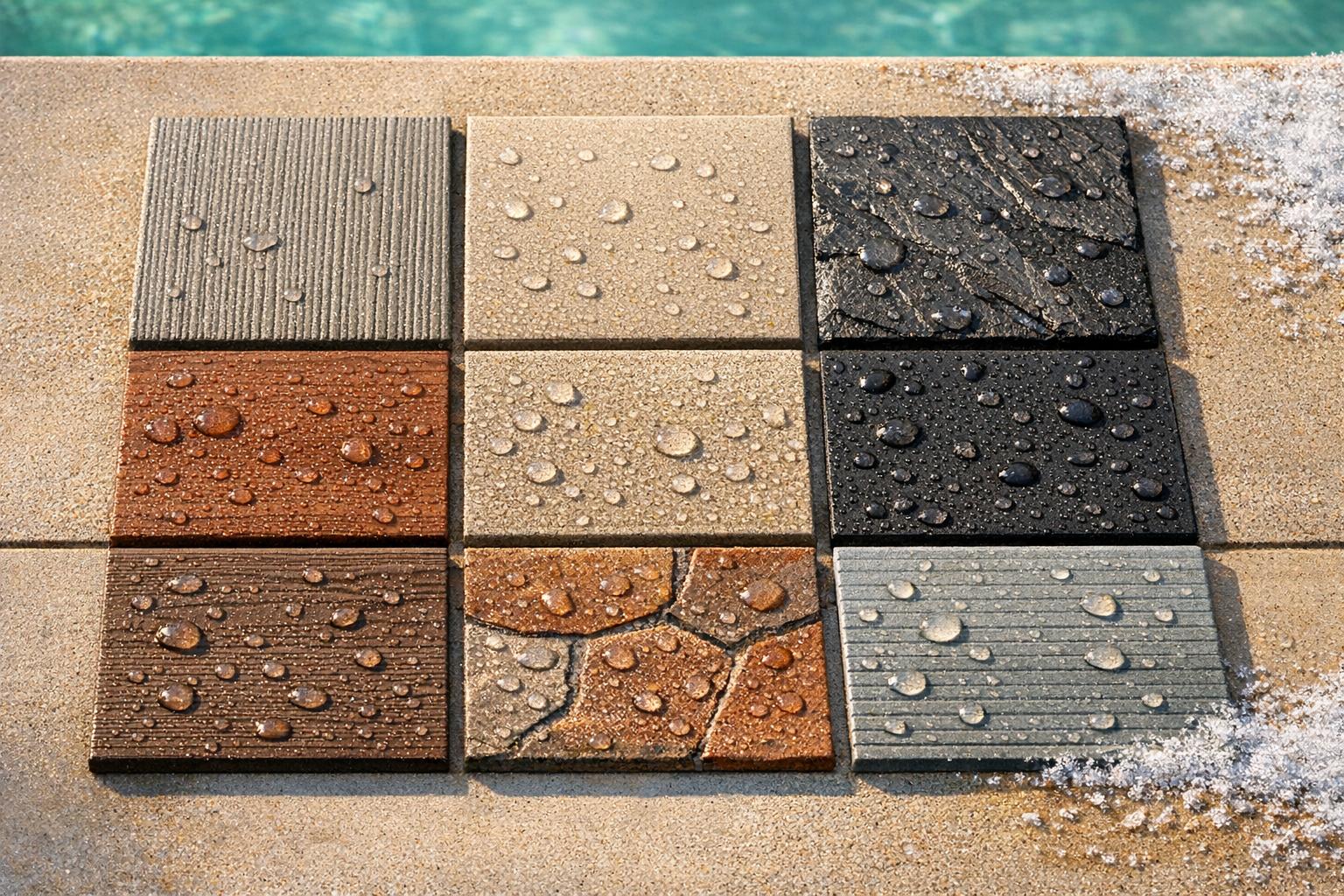
When it comes to outdoor flooring, safety is key – especially in areas prone to wet conditions or freeze-thaw cycles. Slip-resistant materials can significantly reduce the risk of falls, and choosing the right option depends on factors like durability, maintenance, and cost. Here’s a quick rundown of the top 8 slip-resistant outdoor flooring options:
- Textured Concrete Pavers: Durable, flexible, and long-lasting with proper installation. Costs $12–$25 per sq. ft. installed.
- Flagstone and Slate: Natural texture provides excellent grip. Best for patios and steps. Costs $15–$35 per sq. ft. installed.
- Travertine and Tumbled Stones: Great for pool decks with natural grip. Requires regular sealing. Costs $15–$35+ per sq. ft. installed.
- Textured Porcelain Pavers: Low maintenance and freeze-thaw resistant. Costs $12–$25 per sq. ft. installed.
- Anti-Slip Ceramic and Stone-Look Tiles: Stylish and safe for wet areas. Costs $12–$30 per sq. ft. installed.
- Rubber Pavers and Tiles: Soft, durable, and ideal for play areas or pool surrounds. Costs $8–$20 per sq. ft. installed.
- Composite Decking with Textured Boards: Long-lasting and easy to maintain. Costs $20–$38 per sq. ft. installed.
- Gravel, Stone Dust, and Stabilized Aggregate: Affordable and permeable, but requires upkeep. Costs $1–$15 per sq. ft. installed.
Quick Tip: Choose materials with a wet dynamic coefficient of friction (DCOF) of 0.6 or higher for maximum traction. Proper drainage and grading are equally important to prevent water pooling and ice buildup.
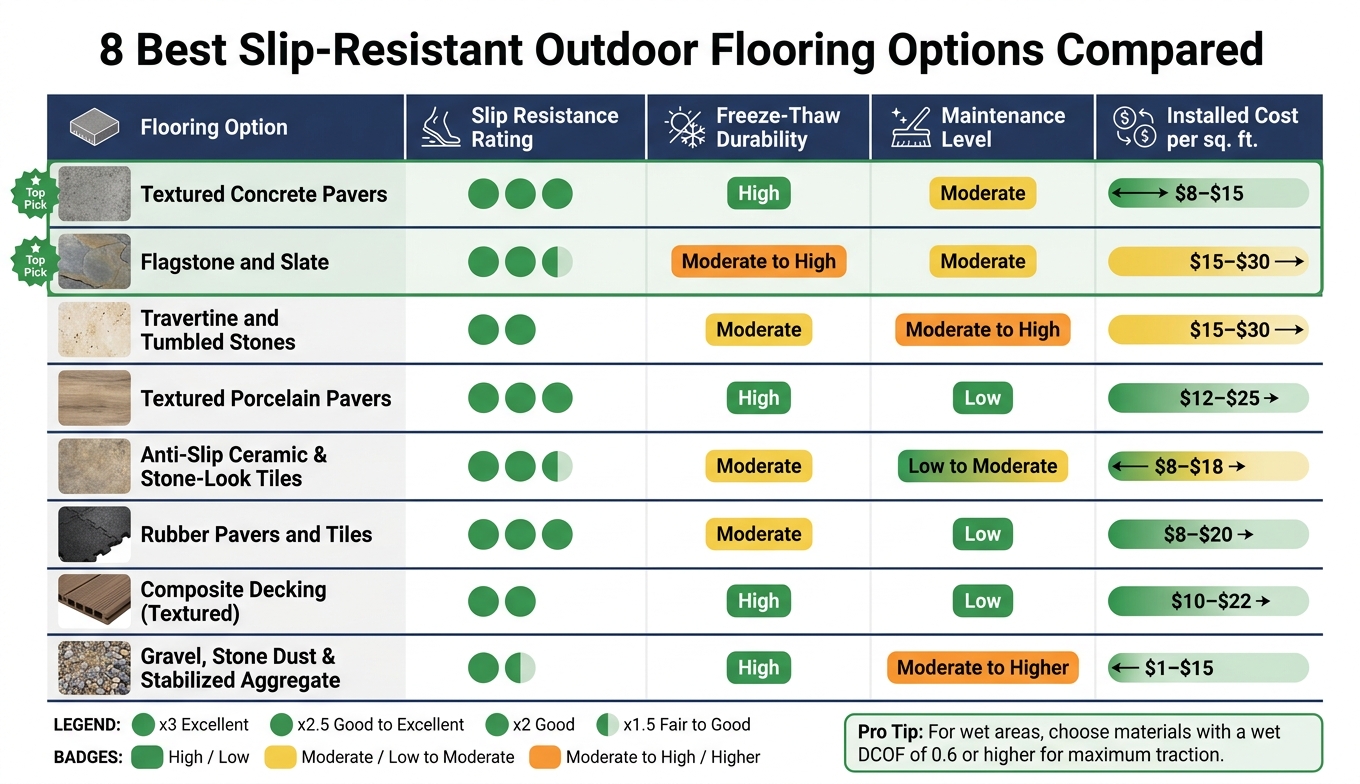
Here’s a comparison table to simplify your decision:
| Flooring Option | Slip Resistance | Best Uses | Maintenance | Installed Cost (per sq. ft.) |
|---|---|---|---|---|
| Textured Concrete Pavers | High | Patios, walkways, pool decks | Moderate | $12–$25 |
| Flagstone and Slate | High | Patios, garden paths, steps | Moderate | $15–$35 |
| Travertine and Tumbled Stones | High | Pool decks, upscale patios | High | $15–$35+ |
| Textured Porcelain Pavers | High | Modern patios, walkways | Low | $12–$25 |
| Anti-Slip Ceramic & Stone-Look Tiles | High | Porches, outdoor kitchens | Moderate | $12–$30 |
| Rubber Pavers and Tiles | High | Play areas, pool surrounds | Low | $8–$20 |
| Composite Decking (Textured) | High | Decks, stairs, walkways | Low | $20–$38 |
| Gravel, Stone Dust, Aggregate | Moderate | Paths, fire pit areas | Moderate | $1–$15 |
For Maryland’s climate, materials that resist freeze-thaw damage, like porcelain or textured pavers, often perform best. Proper installation, including drainage and grading, ensures safety and longevity.
8 Best Slip-Resistant Outdoor Flooring Options Compared
Slip Resistance Testing After Applying GlazeGuard® Plus Anti Slip Coating To Tile – Covertec
sbb-itb-843f8be
1. Textured Concrete Pavers
Textured concrete pavers are a dependable choice for outdoor flooring, offering reliable slip resistance. Their molded textures, exposed aggregates, and beveled edges create tiny channels that help disperse water, making surfaces safer to walk on. In wet conditions, high-quality outdoor pavers typically meet or exceed a wet dynamic coefficient of friction (DCOF) of 0.42, which is the standard minimum for pedestrian areas. However, areas like pool decks or sloped pathways often require a higher DCOF for added safety. This makes these pavers ideal for patios, front walkways, pool decks, and entry steps.
These pavers also hold up well under Maryland’s challenging freeze–thaw cycles. Unlike poured concrete slabs, which can crack when the ground shifts, textured concrete pavers function as a flexible, interlocking system. They can move slightly to accommodate seasonal soil changes without breaking. If frost heave causes displacement, only the affected pavers need to be removed and reinstalled, avoiding the need to replace the entire surface. With proper installation and routine maintenance, concrete paver systems can last anywhere from 25 to 50 years or more [1].
The quality of installation is crucial. A solid base of 4–6 inches of compacted crushed stone topped with a 1-inch layer of sand is essential. Additionally, the surface should slope ⅛ to ¼ inch per foot away from structures to ensure proper drainage and prevent ice buildup. Poor base preparation or inadequate grading can lead to premature failure. In central Maryland, local professionals like Pro Landscapes MD stress the importance of proper base work and drainage to ensure both durability and safety. A well-installed base sets the foundation for easier maintenance over time.
To keep these pavers in good condition, regular sweeping of leaves and debris is important to prevent slippery buildup. Inspect the joints every 1 to 2 years, and refill them with polymeric sand if erosion has caused material loss. Properly filled joints are key for maintaining both drainage and interlocking stability [1]. If sealing the surface, choose a penetrating or matte sealer every 3 to 5 years. Avoid high-gloss sealers, as they can reduce traction when wet.
In terms of cost, most U.S. homeowners spend around $12 to $25 per square foot for professionally installed textured concrete pavers. Material costs alone typically range from $3 to $7 per square foot, depending on the brand, thickness, and finish. Premium options, like tumbled or color-through products, are on the higher end of the spectrum. Larger, simpler projects with easy access tend to lower the overall cost per square foot, while intricate designs, tight site access, or additional drainage requirements can increase expenses.
2. Flagstone and Slate
Flagstone and slate are excellent choices for slip-resistant outdoor flooring, thanks to their naturally textured surfaces. A natural cleft finish, where the stone is split along its layers rather than smoothed out, creates a rough texture that provides solid traction – even on wet surfaces. According to industry data, textured natural stone pavers often achieve a dynamic coefficient of friction (DCOF) above 0.60 on wet surfaces, far exceeding the 0.42 safety standard for pedestrians. This makes cleft or thermally finished surfaces ideal for areas like pool decks, sloped walkways, and paths that frequently get wet. However, polished or honed finishes, while visually appealing, can become dangerously slippery when wet and are best avoided in such locations.
When it comes to freeze-thaw durability, flagstone and slate differ. Flagstone, which includes varieties like quartzite, sandstone, and bluestone, performs well in areas with freeze-thaw cycles if you choose a dense type with low water absorption. Slate, on the other hand, varies in quality. Dense, exterior-rated slate with water absorption below 1.0% can handle freeze-thaw conditions, but lower-grade slate tends to flake and delaminate after a few winters. In regions like central Maryland, where winter brings frequent temperature swings, selecting the right stone is critical. Local experts like Pro Landscapes MD recommend using stone that’s 1.5 to 2 inches thick to ensure durability. Proper installation is equally important to maintain the stone’s integrity over time.
For installation, the process mirrors the base preparation used for concrete pavers. A compacted gravel base with a slope of ⅛ to ¼ inch per foot directs water away from the surface, preventing pooling. For informal garden paths, dry-laid flagstone on compacted gravel with sand or stone dust joints works well. For more formal spaces like patios or pool decks, a mortared installation over a concrete slab is better. Tight, even joints not only improve drainage but also reduce tripping hazards.
Maintenance is relatively simple. Regular sweeping and an occasional rinse keep the surface clean. For algae or mildew, use a pH-neutral stone cleaner and a stiff brush to clean without causing damage. If pressure washing is needed, stick to low or moderate settings to avoid eroding softer stones or loosening joint materials. Applying a penetrating, non-film-forming sealer every 2 to 5 years helps prevent stains and limits moisture absorption. Be cautious with glossy, film-forming sealers, as they can reduce traction. During winter, use a plastic shovel for snow removal and opt for calcium magnesium acetate instead of rock salt, which can harm porous stone.
While balancing cost and performance, flagstone and slate fall into the mid- to upper price range for outdoor flooring. Material prices range from $3–$15 per square foot, depending on the stone’s type and origin. Professionally installed projects typically cost between $15 and $35 per square foot, with intricate layouts or premium materials driving costs higher. Though more expensive than basic textured concrete pavers, the natural look, durability, and UV stability – colors won’t fade like some manufactured options – make flagstone and slate a worthwhile investment for patios, walkways, and stone steps.
3. Travertine and Tumbled Stones
Travertine is a standout option when it comes to slip-resistant surfaces, thanks to its natural texture and durability. This type of limestone features a micro-porous, slightly pitted surface, which naturally offers better grip than smoother stones. When paired with tumbled or brushed finishes, it becomes even more slip-resistant, making it a favorite for pool decks, patios, and walkways. The tumbling process softens the edges and lightly distresses the stone, helping to disrupt water films on the surface and reduce the risk of slipping. However, polished or high-gloss finishes should be avoided outdoors, as they lower the DCOF (Dynamic Coefficient of Friction) below the safe threshold of 0.42.
In regions with freeze-thaw cycles, like central Maryland and the Mid-Atlantic, travertine can hold up well – if the right materials are chosen and installed correctly. For outdoor use, opt for exterior-rated travertine pavers with low water absorption (below 3–4%) and a minimum thickness of 1¼ inches. These should be installed dry-set on a compacted gravel base to allow for ground movement, ensuring both safety and longevity.
Another bonus? Light-colored travertine reflects sunlight and stays cooler underfoot, making it a comfortable choice for poolside areas during hot summer days.
To maintain travertine’s natural texture and slip resistance, regular upkeep is essential. Sweep frequently to remove debris, rinse with water, and clean with a pH-neutral stone cleaner. Avoid acidic cleaners like vinegar or citrus-based products, as these can etch the stone and damage its seal. Re-sealing is also important – plan to reseal every 1 to 3 years with a penetrating, non-film-forming sealer. High-traffic areas and pool decks may require resealing closer to the one-year mark. For shaded areas prone to algae or mildew, use a stone-safe mildew cleaner followed by a thorough rinse.
When it comes to cost, travertine materials typically range from $5 to $12 per square foot, with premium options at the higher end. Professional installation, which includes preparation, cutting, setting, and sealing, adds another $10 to $25 per square foot. This brings the total project cost to about $15 to $35+ per square foot. While this is comparable to high-end flagstone, it is generally more expensive than standard concrete pavers, which average between $10 and $20 per square foot for installation.
4. Textured Porcelain Pavers
Textured porcelain pavers are a dependable slip-resistant option for outdoor spaces. Unlike polished or smooth surfaces, these pavers feature micro-textured or grip-enhanced finishes that provide traction even when wet. Many outdoor-rated porcelain products boast DCOF values between 0.60 and 0.70, exceeding the 0.42 minimum recommended for interior floors and meeting ANSI A326.3 standards for outdoor areas like walkways, patios, and pool decks. To ensure you’re choosing the right product for wet conditions, look for labels such as "R11", "R12", "grip finish," or "pool-rated." This texturing ensures reliable performance in both wet weather and high-traffic areas.
Porcelain is also a great option for cold climates. With a water absorption rate of ≤0.5%, these pavers are classified as impervious under ANSI A137.1. That means they resist moisture absorption, preventing problems like cracking, flaking, or surface spalling caused by freeze-thaw cycles. In contrast, materials like natural stone or concrete, which often have absorption rates above 3%, are more prone to damage in freezing weather. For homeowners in regions like Maryland or Pennsylvania, where winters can be harsh, textured porcelain is a smart, durable choice for patios and walkways.
Maintenance is simple and hassle-free. A quick sweep and rinse with a mild, pH-neutral detergent are usually all that’s needed. For deeper cleaning, a soft-bristle brush can help remove dirt from the micro-grooves. Unlike materials like travertine or flagstone, porcelain doesn’t require resealing, saving you time and money on upkeep.
Porcelain pavers also offer a good balance of durability and affordability. Material costs range from $5 to $15 per square foot, with most options falling between $7 and $10. Installation typically costs $10 to $25+ per square foot. Proper installation is key to ensuring longevity – this includes a well-compacted, drained base and a slope of about 1/8 inch per foot to prevent water pooling. Thanks to porcelain’s low absorption rate, freeze-thaw damage is minimal, but achieving a level, well-drained surface is still crucial. For homeowners in central Maryland, partnering with an experienced contractor like Pro Landscapes MD ensures the right product is chosen and that important details like drainage are handled correctly from the start.
5. Anti-Slip Ceramic and Stone-Look Tiles
Anti-slip ceramic and stone-look tiles have become a popular choice for combining design and safety. These tiles feature matte, ribbed, or textured finishes that help channel water and improve traction, making them a safer option for wet areas compared to glossy or polished tiles. For outdoor projects, look for tiles labeled "outdoor-rated", "pool-safe", or "R11/R12 grip" and ensure they meet the Tile Council of North America‘s (TCNA) wet DCOF standard of 0.42 or higher – a critical measure for slip resistance when wet.
If you live in areas prone to freeze–thaw cycles, like Maryland, porcelain tiles are a better option than standard ceramic. Porcelain’s low water absorption rate (≤0.5%) prevents moisture from freezing and expanding within the tile, reducing the risk of cracking during winter. However, even frost-rated porcelain requires careful installation. A well-prepared, drained base with exterior-grade thinset, flexible grout, and expansion joints is essential to accommodate natural ground movement.
One standout feature of stone-look porcelain is its ability to create a seamless indoor-to-outdoor design. Many manufacturers offer matching indoor smooth finishes and outdoor grip textures, allowing for cohesive transitions. These tiles mimic natural materials like slate, travertine, and bluestone using advanced inkjet printing technology. Unlike natural stone, these tiles don’t require sealing – only the grout may need a penetrating sealer to prevent stains.
Maintenance is simple: Regular sweeping removes debris, while occasional cleaning with a pH-neutral cleaner and a soft brush keeps the tiles looking fresh. In damp or shaded areas, algae or mildew may appear. A diluted, manufacturer-approved outdoor cleaner can handle this without harming the surface. Annually inspect grout lines for cracks or gaps, and re-grout as needed to prevent water from seeping beneath the tiles.
When it comes to cost, stone-look porcelain with anti-slip textures typically ranges from $4–$8 per square foot, with premium large-format tiles reaching $8–$15+ per square foot. Professional installation adds about $8–$20 per square foot, depending on the complexity of the site, patterns, and local labor rates. Most projects fall between $12–$30+ per square foot for materials and installation. To ensure your project is done right, consider working with Pro Landscapes MD for expert tile selection, base preparation, and drainage solutions.
6. Rubber Pavers and Tiles
Rubber pavers and tiles bring a practical edge to slip-resistant surfaces. Their textured and flexible design keeps traction even when wet, making them a great choice for pool decks, outdoor showers, and play areas. Plus, they offer a softer feel underfoot, which can help reduce the impact of falls – something smooth stone or polished tile just can’t match.
For regions with colder weather, like Maryland, rubber has another advantage: it handles freeze-thaw cycles better than rigid materials like concrete or stone. While those might crack under freezing conditions, rubber flexes, maintaining its durability. However, proper installation is key. A well-compacted base of gravel or stone dust ensures stability, and it’s important to select tiles specifically labeled for outdoor use, with UV resistance and the ability to handle temperature changes.
Maintenance is straightforward. A broom, a hose, and some mild dish soap are all you need to keep them clean. Unlike natural stone or concrete, rubber doesn’t need sealing and resists chipping or spalling. Regular cleaning prevents stains from things like oils, leaf tannins, or chemical spills. Just steer clear of harsh solvents or high-pressure washing at close range to avoid damaging the surface.
When it comes to looks, rubber prioritizes practicality. While some products mimic brick or stone, the rubber texture becomes obvious up close. This makes them a better fit for casual spaces like side yards, rooftop terraces, utility paths, or family-friendly patios, rather than more formal or upscale landscapes.
As for cost, standard interlocking recycled-rubber pavers typically range from $5–$8 per square foot, while thicker, heavy-duty tiles can go for $8–$12+ per square foot. Installation costs are comparable to textured concrete and less expensive than high-end natural stone. To ensure stability, use edge restraints or a solid border, especially for open patios or walkways.
If you’re in Maryland and need expert advice or installation services for rubber pavers, reach out to Pro Landscapes MD.
7. Composite Decking with Textured Boards
Composite decking has become a popular choice for those seeking durable and slip-resistant surfaces. Made from a mix of wood fibers and recycled plastic, these boards are crafted with finishes like embossed, ribbed, or brushed textures. These finishes aren’t just for looks – they help break up water films, increasing traction by over 34%, according to internal testing [2].
In areas with freeze–thaw cycles, high-quality capped composite boards perform exceptionally well. They absorb minimal moisture, reducing the risk of swelling, cracking, or splintering, even in extreme temperature ranges from -40°F to 140°F – provided they are installed with proper spacing [3].
Maintaining composite decking is straightforward. A quick rinse, an occasional scrub with a soft brush and mild detergent, and periodic light cleaning are usually all it takes. While the textured surface can collect debris over time, cleaning it a couple of times a year is enough to keep its slip resistance intact.
When it comes to cost, composite decking materials typically range from $4 to $12 per linear foot, depending on the brand and whether the boards are fully capped. For a professionally installed deck – including framing, fasteners, and labor – homeowners in the U.S. can expect to spend between $20 and $38 per square foot. While this is a higher upfront cost compared to pressure-treated wood, composite decking often lasts 25–30 years or more, far outlasting wood, which may need significant repairs after 10–15 years [4].
For a seamless outdoor design that combines composite decking with features like paver patios or outdoor kitchens, reach out to Pro Landscapes MD for expert design and installation services.
8. Gravel, Stone Dust, and Stabilized Aggregate Paths
When considering slip-resistant surfaces, natural and permeable materials like gravel, stone dust, and stabilized aggregate paths are worth exploring. These surfaces allow water to drain directly through, preventing puddles and minimizing the risk of hydroplaning, even in wet conditions. The type of material you choose plays a big role in safety – angular crushed stone (typically 3/8 in. or 1/2 in.) provides better traction compared to round pea gravel, which can roll underfoot and feel unstable, particularly on slopes or for older adults and children.
In areas with freeze-thaw cycles, such as Maryland and the Mid-Atlantic, proper drainage is crucial to avoid issues like ruts and heaving. A professional installation typically involves layering a 4–6 in. compacted crushed stone base over geotextile fabric, followed by a 2–3 in. surface layer. A slight cross-slope of 1–2% is added to help shed water effectively. Skipping these steps can lead to long-term maintenance headaches.
Among these options, stabilized aggregate stands out for its strength and durability. Made from decomposed granite or similar fines mixed with a resin or organic binder, it holds up well in rain, resists washouts, and can even meet ADA standards for firmness and stability when installed correctly. While loose gravel and stone dust are great for garden paths or informal areas, stabilized aggregate is a better choice for main walkways, slopes, or high-traffic routes.
Maintenance varies depending on the material:
- Gravel paths: Require raking and occasional top-ups every 1–3 years.
- Stone dust paths: May need filling in low spots over time.
- Stabilized aggregate: Minimal upkeep; typically limited to spot repairs and debris removal. Use a plastic shovel for snow to avoid damaging the surface.
Costs for these paths depend on the material and installation. Professionally installed loose gravel paths cost about $1–$3 per square foot, while stone dust paths average $2–$5 per square foot. Stabilized aggregate systems are pricier, ranging from $5–$15 per square foot, depending on site preparation and materials. For challenging grading or clay-heavy soils in central Maryland, Pro Landscapes MD can incorporate drainage solutions to improve safety and functionality.
Comparison Table
Let’s take a closer look at eight slip-resistant flooring options side by side. This table breaks down their performance, maintenance needs, and costs. The ratings are based on real-world conditions, not just lab tests, so things like installation quality, base preparation, and finish choice can influence results. For areas like central Maryland, where freeze-thaw cycles are a winter norm, pay special attention to the durability column.
| Flooring Option | Slip Resistance | Best Uses | Freeze-Thaw Durability | Maintenance | Installed Cost (per sq. ft.) |
|---|---|---|---|---|---|
| Textured Concrete Pavers | Excellent | Driveways, patios, pool decks, walkways, steps | High | Moderate – re-sand joints, occasional sealing | ~$8–$15 |
| Flagstone and Slate | Good to Excellent (textured/thermal finish) | Patios, garden paths, front entries, steps, fire pit areas | Moderate to High | Moderate – cleaning, re-leveling, occasional sealing | ~$15–$30 |
| Travertine and Tumbled Stones | Good (tumbled finish) | Pool decks, upscale patios, courtyards | Moderate | Moderate to High – regular sealing and inspection | ~$15–$30 |
| Textured Porcelain Pavers | Excellent | Modern patios, pool decks, rooftop terraces, walkways | High | Low – sweep and rinse; no sealing needed | ~$12–$25 |
| Anti-Slip Ceramic & Stone-Look Tiles | Good to Excellent (outdoor-rated only) | Covered porches, outdoor kitchens, entry landings, balconies | Moderate (frost-rated tiles only) | Low to Moderate – routine cleaning, grout upkeep | ~$8–$18 |
| Rubber Pavers and Tiles | Excellent | Play areas, pool surrounds, rooftop spaces, accessible paths | Moderate | Low – occasional rinsing; monitor for shifting | ~$8–$20 |
| Composite Decking (Textured Boards) | Good | Elevated decks, stairs, lake or dock walkways, roof decks | High | Low – no staining or sanding; follow spacing specs | ~$10–$22 |
| Gravel, Stone Dust & Stabilized Aggregate | Fair to Good (depends on compaction) | Garden paths, fire pit circles, side-yard access, drainage areas | High (surface may need regrading after heave) | Moderate to Higher – raking, top-ups, weed control | ~$1–$15 |
Key takeaways: If you’re looking for low maintenance with a sleek appearance, porcelain pavers are a great choice, though they come with a higher upfront cost. Rubber pavers are excellent for safety-focused areas like pool surrounds or playgrounds, thanks to their consistent grip. On the budget-friendly side, gravel and stabilized aggregate provide excellent drainage but need more regular upkeep. These comparisons can help you decide which material fits your outdoor safety and style goals. For central Maryland projects, Pro Landscapes MD can recommend the best materials tailored to your site’s traction and drainage needs.
Conclusion
Choosing slip-resistant flooring means tailoring it to the specific needs of the space. A pool deck, for instance, has entirely different requirements compared to a front walkway or a fire pit patio. Factors like traction, drainage, durability, and maintenance should all play a role in making the right decision.
It’s important to remember that no flooring is completely slip-proof. According to the National Floor Safety Institute (NFSI), wet surfaces are responsible for over 8 million emergency room visits annually. Even materials designed for high traction can become dangerous if water is allowed to pool on their surface.
In Maryland, the challenges posed by freeze-thaw cycles, clay-rich soils, and seasonal rain make durability a top priority. Outdoor flooring here must handle winter ground shifts and summer heat alike. Proper base preparation, grading, and jointing are essential to ensure both safety and longevity.
Pro Landscapes MD takes a comprehensive approach to hardscaping projects throughout central Maryland and Washington, DC. Their expertise includes paver and flagstone patios, natural stone steps, walkways, driveways, and outdoor kitchens, as well as integrated drainage solutions like French drains, grading, and stormwater management. These elements work together to create outdoor surfaces that are not only visually appealing but also safe and long-lasting.
FAQs
What DCOF rating should outdoor flooring have for wet areas?
The text does not mention a specific recommended Dynamic Coefficient of Friction (DCOF) rating for outdoor flooring. For expert advice on choosing slip-resistant materials suited to your outdoor area, reach out to Pro Landscapes MD. They are experts in installing durable, high-quality hardscaping options, including pavers and natural stone, for patios and walkways in Maryland and Washington, DC.
What outdoor flooring is best for Maryland’s freeze-thaw weather?
Pavers are a great choice for Maryland’s freeze-thaw climate because they hold up well against harsh weather conditions. Permeable pavers, in particular, stand out for their ability to let water pass through the joints and soak into the ground. This design helps manage stormwater effectively, addressing problems like standing water, flooding, and erosion – issues that are especially common in Maryland’s clay-heavy soils during freeze-thaw cycles.
How can I improve traction if my outdoor surface gets slippery?
If standing water is making your outdoor surfaces slippery, it’s time to tackle the drainage problems causing the pooling. One smart fix is installing permeable pavers, which allow rainwater to soak into the ground rather than accumulate on the surface. Companies like Pro Landscapes MD offer expertise in hardscaping and drainage solutions, including permeable paver systems and proper grading, ensuring your outdoor areas stay safe and usable throughout the year.
Chat with Us