









- bhavya gada
- No Comments
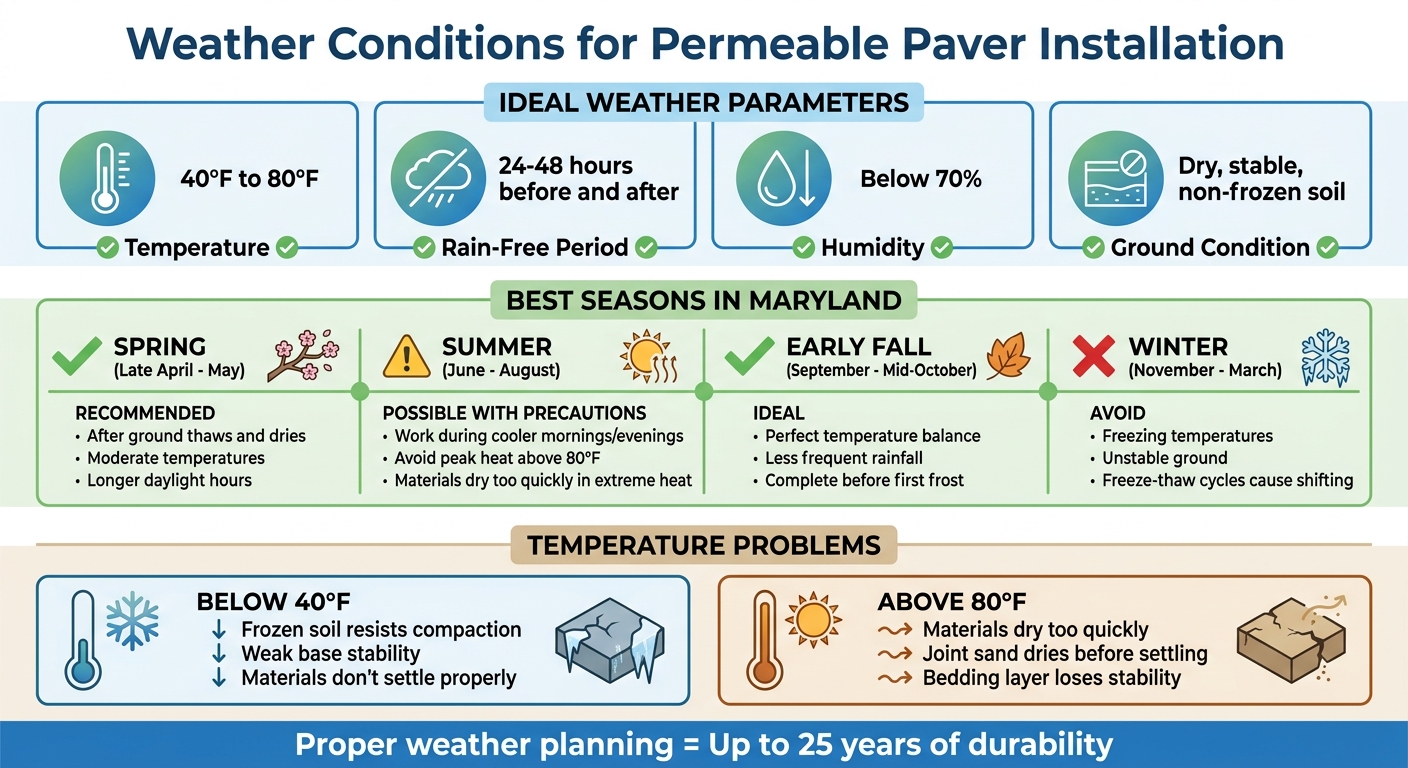
When installing permeable pavers, the weather matters more than you might think. The ideal conditions include:
- Temperature: Between 40°F and 80°F for proper compaction and curing.
- Rain-Free Period: At least 24–48 hours of dry weather before and after installation.
- Humidity: Below 70% to ensure joint materials cure correctly.
- Ground Condition: Dry, stable, and non-frozen soil for a solid foundation.
Best Seasons in Maryland:
- Spring: Late April to May, after the ground thaws and dries.
- Early Fall: September to mid-October, before the first frost.
- Summer: Possible, but avoid peak heat by working in cooler mornings or evenings.
- Winter: Avoid entirely due to freezing temperatures and unstable ground.
Proper weather planning ensures a durable, efficient drainage system and helps pavers last up to 25 years.
Optimal Weather Conditions for Permeable Paver Installation Guide
Best Temperature Ranges for Installation
40°F to 80°F: The Recommended Temperature Range
The ideal temperature range for installing permeable pavers is between 40°F and 80°F. Within this range, bedding compounds compact smoothly, joint sand settles as it should, and materials bond effectively without being impacted by extreme weather conditions.
When the temperature drops below 40°F, frozen soil resists compaction, which can weaken the stability of the paver base. Additionally, bedding materials may not settle properly, leading to potential shifting once the ground thaws.
On the flip side, temperatures above 80°F present their own set of challenges. Excessive heat can cause installation materials to dry out too quickly [1], disrupting the bonding process. For example, joint sand may dry before it fully settles, and the bedding layer could lose its stability. If installation must occur during the summer, working during cooler parts of the day can help reduce these heat-related issues [2]. While the 40°F to 80°F range supports proper material setting, extreme heat or cold introduces unique complications that require careful planning.
Problems with Extreme Hot and Cold Temperatures
Straying from the optimal temperature range can lead to significant installation issues. In hot weather, materials dry too fast, shortening the time available for proper compaction and leveling. This rushed process can result in uneven surfaces and may compromise the durability of the installation.
Cold weather brings its own hurdles, such as freeze-thaw cycles and frost heave. As moisture in the ground freezes and expands, it can push pavers out of alignment. Additionally, securing edge restraints – a critical step for maintaining the structure’s integrity – becomes much harder when dealing with frozen ground [4].
Temperature extremes also amplify problems related to material expansion and contraction. Pavers installed in very hot conditions may expand slightly, only to contract when temperatures cool, potentially creating gaps in the joints. Conversely, pavers laid during cold conditions might expand as the weather warms, increasing the risk of buckling or misalignment. These temperature-induced shifts highlight the importance of sticking to the recommended range for installation.
sbb-itb-843f8be
Dry Conditions and Rain Forecasts
Dry Ground and a Sufficient Rain-Free Period
After ensuring the right temperature conditions, keeping the ground dry becomes the next critical step for a successful paver installation. Why is this so important? Wet bedding material doesn’t compact properly, and pavers placed on damp surfaces can shift or settle unevenly over time. To achieve the necessary uniform density for a stable base, the underlying layers must be completely dry [1].
To avoid complications, plan the installation for a period when no rain is expected both before and after the work. This allows for proper compaction and ensures the joint sand sets correctly, minimizing risks like erosion or shifting [2].
If you’re working with clay soil, be extra cautious. Unlike loam or sand, clay retains moisture for much longer, which means it requires more time to dry out. Starting the installation on clay soil that’s still damp can lead to settlement problems down the road [4]. If unexpected rain happens during the process, it’s crucial to act quickly to prevent further issues.
Protecting Materials from Unexpected Rain
Even with the best planning, rain can sometimes catch you off guard. If it starts raining during the installation, stop immediately and wait for the ground to dry before resuming. Rainwater can cause fines to migrate or clump, potentially affecting the system’s permeability and overall stability.
To avoid these problems, always work with clean, washed aggregate that’s free of fines [4]. If rain disrupts the process, wet materials can clump together, compromising the system’s performance. Additionally, water infiltration into partially compacted layers may require repairs, which can delay the project further. Whenever rain is in the forecast, having a contingency plan can save time and effort.
Permeable Pavers Installation Guide + PRO Tips
Humidity and Wind Levels
When working with permeable pavers, it’s not just about temperature and rainfall – humidity and wind also play a big role in ensuring proper curing and stability.
Recommended Humidity Levels
Humidity directly impacts how permeable pavers cure. If it’s too high, drying slows down, the bedding may not set correctly, and compaction becomes less effective. For the best results, aim to keep humidity levels below 70%. Always check the weather forecast before starting your project to make sure the materials have the right conditions for curing properly [1].
How Wind Affects Installation
Wind can be tricky during installation. Permeable pavers rely on No. 8 crushed stone for bedding and joint fill [5]. While light winds help with gradual drying, strong winds can blow away fine aggregates, leading to uneven bedding. On top of that, when strong winds combine with heat and direct sunlight, drying can happen too quickly, potentially causing defects in the installation [1]. To avoid these issues, plan your work for calm or mildly breezy days, and stop if the wind picks up – especially when you’re working with uncompacted bedding stone.
Best Seasons for Installation in Maryland
Maryland’s changing seasons create specific windows of opportunity for installing permeable pavers. By aligning your project with the right weather conditions – considering temperature, humidity, and precipitation – you can ensure a smoother installation process and better long-term results. Let’s break down the pros and cons of each season.
Spring: After the Ground Has Thawed
Spring is a great time to start your project, but timing is everything. Wait until mid-to-late spring, after the ground has fully thawed and dried out. This typically means starting in late April or May. Moderate temperatures and longer daylight hours make it easier to prepare the base and compact it properly. Avoid starting too early, as frozen or waterlogged ground can lead to unstable foundations that may require expensive fixes later.
Summer: Dry Weather with a Few Precautions
Summer’s dry conditions and warm weather are ideal for handling materials and achieving solid compaction. However, when temperatures climb above 80°F, there’s a risk of materials drying out too quickly. To avoid issues, plan your work during cooler parts of the day – early mornings or late afternoons. This ensures both the quality of the installation and a more comfortable working environment.
Early Fall: Perfect Balance of Temperature and Rainfall
Early fall, particularly from September to mid-October, offers some of the best conditions for installation. Temperatures are cooler, rainfall is generally less frequent, and the ground remains stable. This gives you plenty of time to complete the project before Maryland’s first frost, which usually hits in late October or early November. Completing the work before freezing temperatures arrive allows the system to settle and stabilize properly.
Winter: A Season to Avoid
Winter is not the time for permeable paver installation. Freezing temperatures make excavation challenging and prevent proper compaction of materials. The constant freeze-thaw cycles during winter can cause shifting and uneven settling, jeopardizing the durability of your project. Postponing installation until spring ensures that your pavers maintain their structural strength and functionality.
If you’re considering a project and want expert guidance, Pro Landscapes MD can help. Their team specializes in landscaping and hardscaping projects tailored to Maryland’s unique weather patterns, ensuring your installation is done at the right time and with precision.
Pre-Installation Weather Checklist
Before starting any installation, it’s crucial to evaluate weather conditions. This step ensures your project aligns with performance standards and avoids unnecessary setbacks.
Temperature, Precipitation, Humidity, and Wind Parameters
Start by checking the temperature forecast. The ideal range is 40°F to 80°F[1], as this provides the best conditions for compaction and curing.
Plan for a 24–48-hour rain-free window. Excess moisture can weaken the soil, making compaction difficult and increasing the risk of washouts[2][3]. Always confirm that the subgrade is firm and stable before adding gravel[4].
Humidity is another key factor. Keep levels below 70% to allow proper curing of joint materials. While moderate breezes are manageable, strong winds can scatter materials and disrupt your work.
Here’s a quick reference table to help you confirm weather conditions meet the required standards:
| Weather Parameter | Ideal Range / Condition | Potential Problems | Mitigation Strategy |
|---|---|---|---|
| Temperature | 40°F to 80°F[1] | Freezing limits compaction; high heat accelerates drying[1][2] | Schedule work during cooler parts of the day in summer; avoid winter installation[2] |
| Precipitation | Dry or Minimal Rain[1] | Wet soil hampers compaction and may cause washouts[2][3] | Ensure a rain-free window; consider using geotextile to reduce fine migration[4] |
| Ground Condition | Firm and Non-yielding[4] | Unstable subgrade results in shifting or erosion[2] | Compact the subgrade thoroughly until it shows no movement[4] |
| Humidity | Below 70% | High humidity disrupts joint material curing | Monitor local forecasts and adjust timing for joint filling |
If any of these conditions are not met, it’s better to delay the installation. Taking the time to work under the right weather conditions can help your permeable paver system last for up to 25 years[2].
Conclusion
Installing pavers successfully depends on hitting the sweet spot with weather conditions: moderate temperatures between 40°F and 80°F, no rain, less than 70% humidity, and light winds. These factors are key for proper compaction, curing, and ensuring your pavers last up to 25 years[2]. Timing your project to match these conditions will help your permeable pavers perform well for decades.
In Maryland, the best times for installation are during spring, once the ground has thawed, or early fall, before frost sets in. Summer can work too, but only if you plan for cooler days. Winter, however, is a no-go due to freezing temperatures and snow[1].
For expert help navigating Maryland’s specific climate challenges, Pro Landscapes MD has you covered. They specialize in installations tailored to local conditions and can even assist homeowners in taking advantage of local tax incentives. In some areas, you could qualify for up to $5,000 in stormwater management credits[3].
FAQs
What should I do if it rains mid-installation?
If rain begins during the installation of permeable pavers, it’s best to pause the work until the weather improves. Rain can disrupt the process and affect how well the pavers function over time. Before resuming, make sure the ground is completely dry. For the best results, aim to install during dry weather, with no rain expected for the next 24–48 hours.
How can I tell if the ground is dry enough to start?
To figure out if the ground is ready for installing permeable pavers, look for firm, dry soil conditions. The soil should be stable and crumbly to the touch – not muddy or overly wet. If there’s been heavy rain within the last 24 to 48 hours, it’s best to hold off. Wet or saturated ground can weaken the pavers’ stability and affect their durability over time. Make sure to give the soil enough time to dry properly after any rainfall.
Can permeable pavers be installed in summer heat?
Yes, you can install permeable pavers during the summer, but you need to account for high temperatures and direct sunlight. These conditions can cause materials to dry out faster than usual, which might impact the quality of the installation. To get the best results, plan your work for the cooler parts of the day and take steps to manage the heat effectively.
Chat with Us