









- bhavya gada
- No Comments
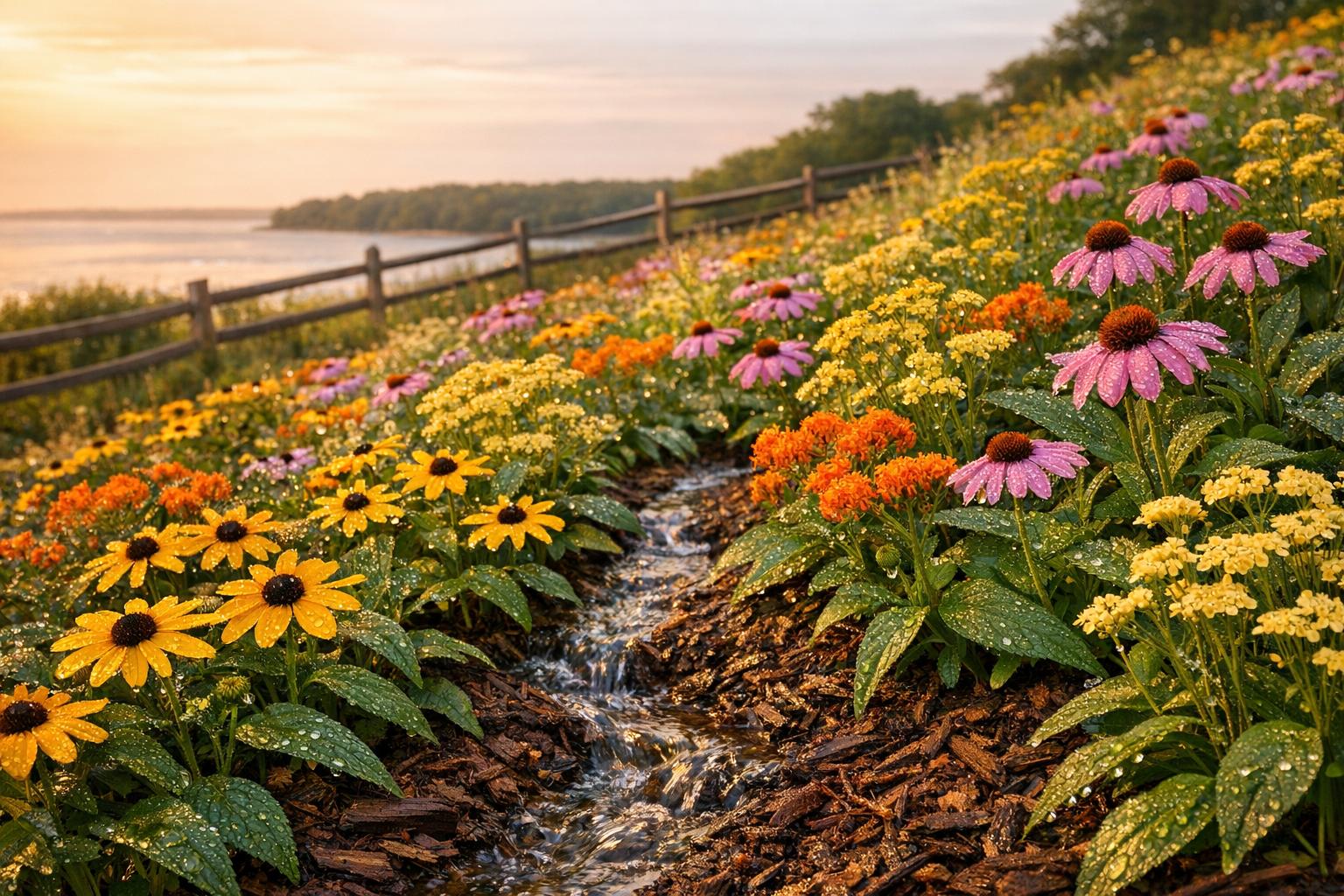
Native wildflowers are a practical solution for controlling soil erosion in Maryland. They stabilize slopes, reduce runoff, and withstand local conditions like clay-heavy or sandy soils. With deep roots and dense foliage, these plants protect against heavy rain, freeze-thaw cycles, and runoff on steep or shaded areas. Plus, they add vibrant colors to landscapes.
Key Wildflowers for Erosion Control:
- Creeping Phlox: Ideal for sunny, sandy slopes; forms a dense, year-round mat.
- Butterfly Milkweed: Thrives on dry, sunny slopes with a deep taproot for stability.
- Partridge Pea: Quick-growing annual for disturbed soil; supports long-term perennials.
- Mistflower: Perfect for moist, shaded areas; spreads to slow runoff.
- Golden Groundsel: Great for shaded slopes; provides soil cover and weed suppression.
Planting Tips:
- Use plugs for steep slopes; stagger planting for better water retention.
- Sow seeds in fall or plant plugs in early spring/fall for strong root establishment.
- Add mulch or erosion blankets to protect seedlings during early growth.
For steep slopes or severe erosion, professional help may be needed to combine drainage solutions with planting.
Maryland Erosion Control: What You Need to Know
Maryland experiences around 42–48 inches of rain annually, and in recent years, heavy rainfall has become more common, with large amounts of water falling in shorter periods. This type of intense rain can wreak havoc on bare slopes, causing water to rush downhill and carry soil away before it can soak into the ground. These conditions make native wildflowers an important resource for stabilizing soil and protecting vulnerable areas.
The problem doesn’t stop with rain. During late winter and early spring, freeze–thaw cycles loosen the soil, making it even more prone to erosion when rain follows. Add in the effects of Nor’easters, tropical storms, and these freeze–thaw cycles, and Maryland soils face erosion risks all year long.
Soil type also plays a big role in erosion. For instance, sandy soils in Maryland’s eastern Coastal Plain drain quickly but lack the cohesion to hold particles together, making them easy to dislodge. On the other hand, the clay-heavy soils found in the Piedmont region don’t absorb water well, leading to strong surface runoff that can carve into slopes and channels. According to the USDA and NRCS, areas in the Piedmont and Ridge-and-Valley regions with slopes steeper than 8–12%, especially those with silt- or clay-rich soils, are particularly vulnerable. These challenges highlight the many ways native wildflowers can help protect Maryland’s diverse soils.
How Native Wildflowers Stabilize Soil
Native wildflowers are more than just beautiful – they’re a powerful tool for soil stabilization. They protect the surface while also reinforcing the deeper layers of soil. Many of these plants spread through rhizomes or stolons, forming a natural web that resists erosion from both sheet flow and small channels during heavy rains. Species with deep taproots anchor into the lower soil layers, preventing slumping on steep slopes, while those with fibrous root systems create dense mats that bind soil particles together.
Above the ground, the leaves and stems of wildflowers act as a shield, absorbing the impact of raindrops and preventing them from breaking apart soil aggregates. Their foliage, combined with fallen plant material, slows down water flow and gives it more time to soak into the ground. Over time, this organic matter builds up into a mulch layer, which not only cushions the soil but also reduces surface crusting.
Site Factors That Affect Plant Selection
Choosing the right wildflowers for erosion control depends on understanding the specific conditions of your site. Here are five key factors to consider:
| Site Factor | Key Characteristics | Why It Matters |
|---|---|---|
| Soil type | Sandy, loamy, or clay-heavy | Determines how quickly water drains and which types of roots will thrive. |
| Sun exposure | Full sun (6+ hrs), part shade, or full shade | Many erosion-control wildflowers need full sun, especially on open slopes. |
| Slope grade | Gentle, moderate, or steep (above ~3:1) | Steeper slopes often need denser plantings and sometimes erosion blankets to help plants establish. |
| Moisture level | Dry, moist, periodically saturated, or flood-prone | Plants with mismatched moisture tolerances often fail, so it’s critical to match the plant to the site’s conditions. |
| Runoff intensity | Diffuse sheet flow vs. concentrated flow | Concentrated runoff, such as from driveways or downspouts, may require structural solutions in addition to plants. |
For example, if you’re dealing with a steep, sunny, sandy slope, go for drought-tolerant species with strong, fibrous roots that form mats. On the other hand, a gentle, shaded, clay-heavy slope would benefit from plants that tolerate slower drainage and lower light levels. Matching your wildflower selection to the site’s conditions is crucial for creating a planting that can withstand heavy storms and thrive over time.
sbb-itb-843f8be
Top Native Wildflowers for Erosion Control in Maryland
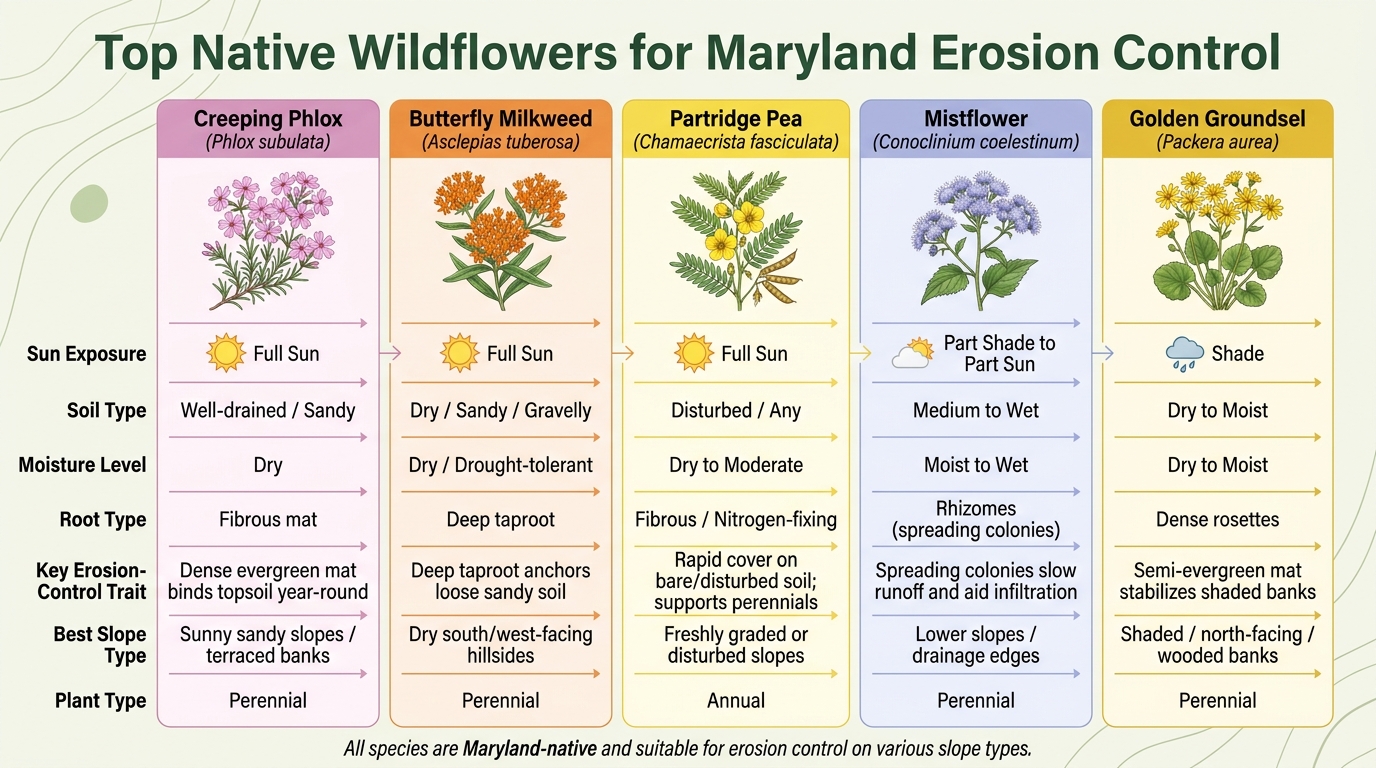
Top Native Wildflowers for Maryland Erosion Control: Quick Comparison Guide
If you’re looking to stabilize soil in Maryland, native wildflowers are a fantastic option. By assessing your site conditions, you can choose plants that thrive in your specific environment while also preventing erosion. Here are five standout wildflowers, each with distinct qualities that make them ideal for various types of terrain.
Creeping Phlox
Creeping Phlox (Phlox subulata) is a low-growing perennial that forms a dense, evergreen mat, reaching only 4–6 inches in height. It’s perfect for sunny slopes with well-drained or sandy soil, such as street-facing banks or terraced areas. Its fibrous roots help hold the topsoil in place, minimizing erosion caused by rain or wind. Since it stays green throughout the year, it provides protection even during late winter when freeze-thaw cycles can destabilize soil.
Butterfly Milkweed
Unlike Creeping Phlox, Butterfly Milkweed (Asclepias tuberosa) relies on a deep taproot to stabilize soil. This makes it a great choice for dry, sandy, or gravelly slopes commonly found on south- and west-facing hillsides. It thrives in full sun and is drought-tolerant once established. For the best results, plant it in clusters to create overlapping roots that provide even more stability. As a bonus, this plant is a host for monarch butterflies, adding ecological value to your erosion-control efforts.
Partridge Pea
If you’re dealing with freshly disturbed or bare soil, Partridge Pea (Chamaecrista fasciculata) is a quick solution. This annual germinates rapidly in sunny, disturbed areas, such as driveway cuts or regraded slopes. It provides immediate cover while improving soil health through nitrogen fixation. For long-term stabilization, pair it with slower-growing perennials like Butterfly Milkweed. Partridge Pea acts as a temporary shield, giving other plants time to develop deeper, more permanent roots.
Mistflower
For moist, lower-slope areas or drainage edges, Mistflower (Conoclinium coelestinum) is a top pick. Also known as Blue Mistflower, it spreads via rhizomes to form colonies that slow down water runoff and encourage infiltration. It grows best in part shade to part sun and thrives in medium to wet soils, making it ideal for rain garden edges, shaded drainage paths, or low-lying backyards. Just be sure to give it space to spread, as it can quickly form dense patches.
Golden Groundsel
Golden Groundsel (Packera aurea) is one of the few native groundcovers that excels on shaded slopes. Its dense rosettes protect soil and suppress weeds, making it a great alternative to invasive groundcovers like English ivy. Growing 6–12 inches tall, it tolerates a wide range of moisture levels, from dry to consistently moist conditions. This versatility makes it ideal for wooded banks, north-facing slopes, or areas under deciduous trees.
Together, these wildflowers cover a variety of site conditions, each offering unique root systems and growth patterns that contribute to effective erosion control.
| Wildflower | Best Site Conditions | Key Erosion-Control Trait |
|---|---|---|
| Creeping Phlox | Full sun, well-drained soil | Dense mat; fibrous roots bind topsoil |
| Butterfly Milkweed | Full sun, dry sandy soil | Deep taproot anchors loose soil |
| Partridge Pea | Full sun, disturbed soil | Rapid cover; nitrogen-fixing; supports perennials |
| Mistflower | Part shade to moist soil | Spreading colonies slow runoff |
| Golden Groundsel | Shade, dry to moist soil | Semi-evergreen mat stabilizes shaded banks |
Planting and Maintenance Tips
How to Plant Wildflowers for Erosion Control
Timing matters when planting wildflowers for erosion control. Sow seeds in the fall (late October–November) after the first hard frost. This allows the seeds to undergo cold stratification over winter, breaking dormancy naturally. By spring, they’ll germinate and develop stronger root systems by summer. For plugs, aim to plant in early fall (September–October) or early spring (March–April). These seasons offer mild temperatures and rainfall, giving roots a chance to establish before extreme weather hits.
If you’re working on slopes, plugs are often a better choice than seeds alone. Plugs come with established root systems, which immediately help anchor the soil. Plant them in a staggered grid (12–18 inches apart) and overseed the spaces between them in the fall to create denser coverage. Staggered rows are especially effective on slopes, as they slow water flow and trap sediment around plants. For steeper banks, use a biodegradable erosion blanket made of jute or coir. Cut X-shaped slits into the blanket and plant plugs through it. The blanket stabilizes the soil as the roots grow and naturally decomposes within 1–2 seasons.
When seeding, mix smaller seeds with clean sand or fine compost to ensure even distribution. Press the mixture lightly into the soil and cover it with a thin layer of straw – about 1 bale per 1,000 square feet. This reduces erosion, retains moisture, and protects seedlings without smothering them.
Once your wildflowers are in the ground, consistent care is key to helping them establish strong roots and stabilize the soil effectively.
Keeping Your Wildflowers Healthy
For the first 4–6 weeks, water deeply, aiming for about 1 inch of water per week. A soaker hose or drip irrigation system works best on slopes, as overhead sprinklers can wash away soil and seedlings. After the first growing season, most native wildflowers become drought-tolerant, needing extra water only during prolonged dry periods.
Weeding is crucial during the first three years. Check the area every two to four weeks during the growing season and remove invasive species before they can spread. To help suppress weeds and retain moisture, apply 1–2 inches of shredded hardwood mulch or leaf mold around the plugs. Make sure to keep the mulch an inch or two away from plant crowns to prevent rot.
"Once established, berms and swales require minimal maintenance. Regular checks for plant health and occasional trimming or replanting may be needed to keep the vegetation thriving and ensure water continues to flow properly." – Pro Landscapes MD [1]
Plan for an annual cutback in late winter or early spring. Trim stems down to 6–8 inches to remove dead material and make room for new growth. Every few years, overseed any thinning areas or add plugs where erosion persists, especially at the crest or base of slopes. These consistent maintenance efforts will ensure your wildflowers continue to stabilize the soil and protect the landscape year after year.
When to Call a Professional
Native wildflowers are great for stabilizing soil, but they can’t solve every issue. If you’re noticing consistent water pooling, visible drainage channels, or ongoing soil erosion – even after seeding and mulching – it’s a sign of a deeper problem that plants alone can’t fix.
Other red flags include steep slopes (greater than 3:1) that make access unsafe, exposed roots, undercut patios or walkways, water flowing toward your home’s foundation, or sediment washing into storm drains or neighboring yards. In central Maryland, where heavy clay soils are common – especially in areas like Howard, Montgomery, and Baltimore counties – these problems can worsen quickly with each storm if left unresolved. It’s important to differentiate between planting issues, which might just require better plant choices or timing, and drainage problems, which call for a more comprehensive approach to managing water flow. Professionals can tackle these challenges by combining drainage repairs with strategic planting to create lasting solutions.
Pro Landscapes MD: Erosion Control Services

To complement the use of native wildflowers, Pro Landscapes MD focuses on solving underlying drainage and grading issues throughout central Maryland. They don’t treat drainage and planting as separate concerns. Instead, they start with a thorough on-site evaluation of your property’s grading, soil type, and water flow patterns to create a tailored plan addressing all aspects together.
Their services cover a wide range of drainage solutions, including French drains, drain pipes, dry riverbeds, stormwater management, grading, and yard leveling. These systems are designed to handle the intense rainstorms that central Maryland often experiences. For properties with steep slopes, they can install retaining walls, stone steps, or terraced planting areas to slow water runoff and create stable zones where native wildflowers can thrive. Once the structural work is complete, their horticulture team selects and plants native species that match the site’s specific conditions, whether it’s sunny or shaded, wet or dry. This integrated approach ensures that the plants and drainage system work together over time. Pro Landscapes MD serves a wide area, including Columbia, Ellicott City, Silver Spring, Bethesda, Towson, Gaithersburg, and other communities in Howard, Montgomery, Carroll, Frederick, Prince George’s, and Baltimore counties.
"They came through with everything promised. I love the stacked stones we placed around our trees and flowerbed." – Pro Landscapes MD customer
Conclusion
Native wildflowers offer Maryland homeowners an effective way to tackle erosion issues. With careful selection and proper planting, species like butterfly milkweed, golden groundsel, and partridge pea develop deep, fibrous root systems that stabilize soil, slow water runoff, and reduce washouts over time. Unlike options like bare riprap or turf-only solutions, these living root systems continue to enhance soil structure and improve stormwater absorption year after year.
The key to success lies in matching the right wildflowers to the specific conditions of your site. Proper plant-site pairing is crucial to ensure long-term erosion control.
The first 1–3 years after planting are the most critical. Studies show that well-vegetated slopes can cut soil loss by over 50% compared to bare or sparsely vegetated areas. However, this benefit only materializes when plantings are established and maintained properly. Patience is essential, as seeded areas may take an entire growing season – or longer – to fully develop. As root systems grow and plant coverage increases, erosion control becomes more effective.
For sites that are currently unstable, combining short-term solutions like straw wattles or jute netting with wildflower planting can protect the soil while vegetation takes hold. This layered approach helps prevent erosion during the critical establishment phase.
For simpler slopes or yard edges, a DIY effort may be sufficient. However, for steep grades, ongoing drainage challenges, or erosion near structures, professional help – such as services provided by Pro Landscapes MD – can ensure that grading, drainage, and native plantings are integrated effectively. By combining native wildflowers with thoughtful site management, Maryland homeowners can achieve erosion control that lasts.
FAQs
How do I choose the right wildflowers for my slope?
When choosing wildflowers for your slope, think about your property’s sunlight exposure, soil type, and moisture levels. Local Maryland favorites like Black-eyed Susans, Butterfly Weed, New England Aster, and Coneflowers are well-suited to the area’s conditions. These native plants not only need less upkeep but also help sustain the local ecosystem. For a professional touch, Pro Landscapes MD offers design and installation services to blend these wildflowers beautifully into your landscape.
Seeds or plugs – which works better for erosion control?
Native plants play a key role in preventing erosion and managing stormwater effectively, though the information doesn’t clarify whether seeds or plugs work better for erosion control. For guidance tailored to your specific soil type and slope conditions, you might want to reach out to Pro Landscapes MD. They specialize in drainage solutions, erosion control, and sustainable landscape design across Maryland and Washington, DC.
When is erosion bad enough to call a pro?
When you notice erosion caused by improper water flow – like soil washing away, bare patches appearing, or visible damage during heavy rain – it’s time to call in a professional. You should also seek expert help if runoff is pooling, causing flooding, or posing a risk to structures like your home’s foundation. Addressing these problems often involves tailored solutions, such as grading the land, installing berms, creating swales, or setting up drainage systems.
Chat with Us