









- bhavya gada
- No Comments
Bioretention systems are engineered to manage stormwater runoff from surfaces like roads and rooftops. In Maryland, these systems are central to meeting state and county stormwater regulations, protecting local waterways, and reducing pollution in areas like the Chesapeake Bay. Here’s what you need to know:
- Key Components: Soil mix (sand, compost, topsoil), underdrain systems, and water control structures (inlets, outlets, overflow).
- Sizing: Systems are designed based on Environmental Site Design (ESD) principles to manage runoff and mimic natural water absorption.
- County Variations: Standards differ by county, addressing local watershed needs.
- Maintenance: Regular inspections, plant care, and sediment control are required for long-term functionality.
For developers and property owners, understanding these standards ensures compliance and effective stormwater management.
Maryland Regulations for Bioretention Systems
Maryland’s Stormwater Management Act
Maryland enforces strict stormwater management policies for development projects. While state guidelines address general principles, they provide limited specifics on bioretention system design. Developers are encouraged to focus on approaches that enhance natural infiltration and minimize runoff.
This overarching state policy serves as a foundation for more detailed regulations at the local level.
County-Level Requirements
Counties across Maryland have the authority to set their own standards for bioretention systems. These requirements can differ significantly, so it’s essential to check with local permitting agencies to ensure compliance with the latest rules.
If you’re looking for expert advice on incorporating bioretention systems into your project while meeting Maryland’s regulations, the team at Pro Landscapes MD can provide tailored guidance to fit your needs.
sbb-itb-843f8be
Maryland – Micro-bioretention Facility Demonstration
Bioretention System Components
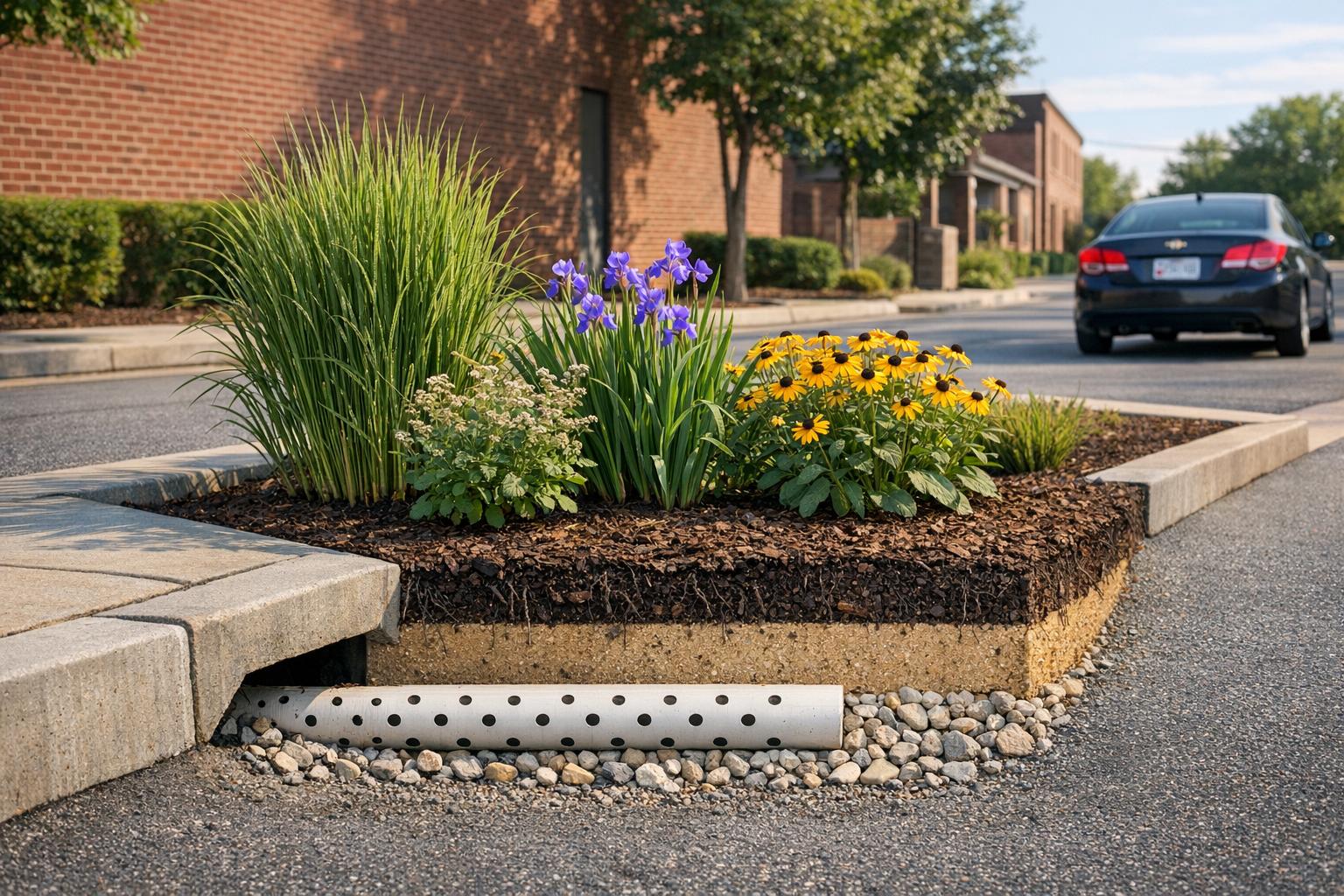
A bioretention system relies on several key elements to filter stormwater and manage runoff effectively. Below, we’ll break down the essential components: soil media, underdrain systems, and water control structures.
Soil Mix and Planting Media
The soil media is the backbone of any bioretention system. Maryland guidelines recommend a mix of 50–60% sand, 20–30% compost, and 10–20% topsoil for optimal performance. This blend ensures proper filtration, supports vegetation, and promotes water infiltration.
- Sand: Provides high permeability, allowing water to drain quickly.
- Compost: Adds organic material, which supports plant growth and helps break down pollutants.
- Topsoil: Offers nutrients but must be used sparingly to avoid drainage issues.
The balance is critical. Too much clay or topsoil can cause poor drainage and lead to ponding, while an overly sandy mix may not hold enough moisture for plants during dry spells.
Underdrain Systems
The underdrain is a perforated pipe – typically 4–6 inch PVC – installed within a stone bed beneath the soil media. Its job? To collect water that filters through the soil and direct it to a storm drain or discharge point. The surrounding stone bed usually consists of No. 57 stone.
Underdrains also play a role in aerating plant roots and maintaining consistent water flow. For easier maintenance, cleanout access points are added during construction, allowing blockages to be cleared without digging up the system. Once water is collected, it moves through water control structures for safe discharge.
Water Control Structures
Inlets, outlets, and overflow structures manage how water enters and exits the system.
- Inlets: Slow down incoming stormwater and distribute it evenly across the system.
- Outlets: Regulate the flow of water leaving the system, particularly during heavy rainfall.
- Overflow structures: Serve as a safety measure, preventing flooding by redirecting excess water when the system reaches its capacity. These are strategically placed to protect nearby buildings and infrastructure.
Each of these components works together to ensure the bioretention system functions efficiently and safely, even during extreme weather events.
Sizing and Construction Requirements
Getting the size right is key. Maryland follows Environmental Site Design (ESD) standards, which aim to manage stormwater runoff using natural, non-structural methods to the Maximum Extent Practicable (MEP). The idea is to mimic how rainfall would be absorbed and dispersed in a natural, wooded environment.
How to Calculate System Size
To figure out the required system size, you need to calculate the ESD Volume (Vₑ), which represents the runoff volume that must be captured and treated. This calculation is based on a target rainfall depth (Pₑ) that simulates "woods in good condition." In Maryland, Pₑ typically falls between 1.0 inch and 2.6 inches, depending on the county and specific site conditions.
Here’s a simplified example: If you’re managing runoff from a 5,000-square-foot paved area with a Pₑ of 1.5 inches, you’d calculate the runoff volume to size the system accordingly. Detailed formulas and worksheets for these calculations can be found in the Maryland Department of the Environment‘s 2000 Maryland Stormwater Design Manual and its ESD supplements.
Once the system size is determined, the next step is to focus on precise construction to ensure the system performs as intended.
Construction Guidelines
Adhering to the design plans is crucial for proper system performance and meeting regulatory standards. Start by excavating to the specified depth, ensuring the base is level for even drainage. Then, install the stone bed for the underdrain, followed by the perforated pipe and the soil media mix.
When compacting the soil, do it lightly and in thin layers to maintain its permeability. Protect the site from sediment runoff during construction using erosion control measures like silt fencing. Sediment intrusion can clog the soil media, reducing the system’s effectiveness over time.
Finally, install all inlets, outlets, and overflow structures exactly as outlined in the approved design. Before establishing vegetation, conduct a thorough inspection to confirm that all components are functioning as they should.
For expert assistance in meeting Maryland’s design standards, reach out to Pro Landscapes MD.
Maintenance Requirements
Once built, these systems need consistent care to keep them functioning as intended. Regular maintenance helps avoid problems and ensures everything runs smoothly.
Inspections and Repairs
Frequent inspections can help identify problems early on. Check areas like inlets, underdrains, and overflow weirs to ensure water flows correctly. If you notice water bypassing or backing up, it could mean there are structural issues that need fixing.
Pay close attention to the pretreatment area, such as a stone diaphragm or grass filter strip, to ensure sediment doesn’t clog the system. Keeping this area clean is essential for proper functionality. Additionally, if you see standing water lingering after storms, it could point to issues with the soil media or drainage system.
Plant Care and Landscaping
Healthy vegetation is crucial for both the system’s performance and its appearance. Maryland standards recommend maintaining at least 85% healthy plant cover. If you notice bare spots, replant them quickly to prevent erosion.
Apply a 2- to 3-inch layer of shredded hardwood mulch to help the soil retain moisture, reduce weed growth, and filter out pollutants. Refresh the mulch every year, but make sure it doesn’t build up beyond 4 inches.
For expert landscaping and planting services that align with Maryland’s bioretention standards, Pro Landscapes MD offers specialized care throughout central Maryland.
Micro-Bioretention Standards
Micro-bioretention systems are designed to handle drainage for areas smaller than 0.5 acre. These systems use specialized filter media to remove pollutants through processes like adsorption, filtration, and plant uptake.
Both Montgomery County and Prince George’s County adhere to the Maryland Stormwater Management Act of 2007. This legislation emphasizes Environmental Site Design (ESD) to the Maximum Extent Practicable (MEP), and micro-bioretention, as outlined in Design Specification M-6, is a key method for meeting these requirements. Below are the specific standards for each county.
Montgomery County Standards
In Montgomery County, the Department of Environmental Protection (DEP) has set specific criteria for micro-bioretention systems. These include a minimum soil media depth of 2 feet, with a preferred range of 3–4 feet. This depth ensures efficient filtration and supports healthy plant growth.
Prince George’s County Standards

Prince George’s County also adheres to Design Specification M-6, maintaining similar soil media depth requirements and the use of specialized filter media. For residential and small commercial properties, Pro Landscapes MD provides professional design and installation services that align with these county-specific standards for micro-bioretention systems.
County Standards Comparison
Maryland Bioretention System Components and Standards by County
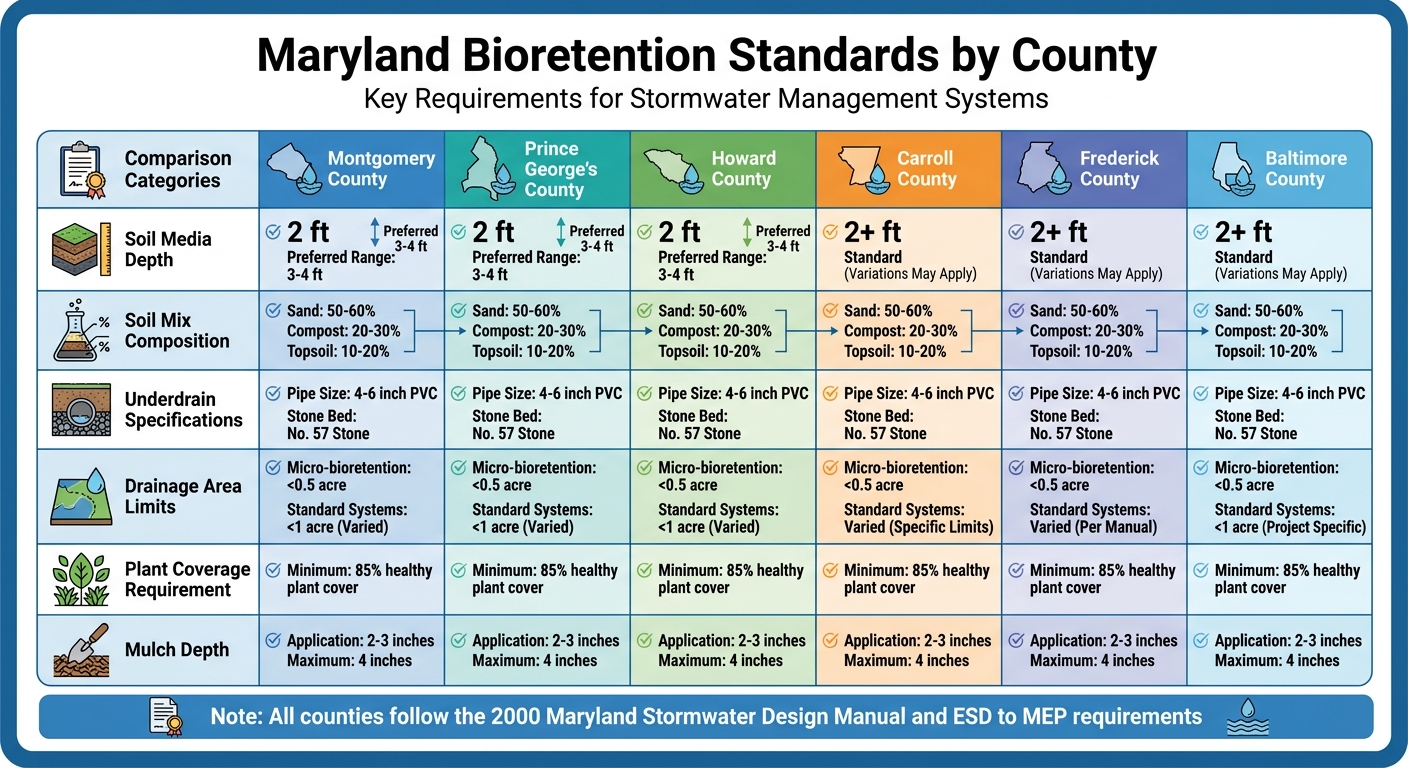
This section takes a closer look at how various Maryland counties tailor their standard requirements, building on earlier county-specific guidelines. All Maryland counties are required to follow the 2000 Maryland Stormwater Design Manual, as mandated by the Stormwater Management Act of 2007. However, local authorities often set stricter specifications to address unique regional needs.
For example, counties may differ in their guidelines for soil media depth, drainage limits, underdrain configurations, and maintenance practices. These variations are influenced by factors such as local watershed characteristics, patterns of development, and environmental priorities.
Adhering to these localized standards is essential for ensuring system efficiency and protecting the environment. Pro Landscapes MD specializes in designing and installing systems that meet these county-specific regulations across central Maryland, including Montgomery, Prince George’s, Howard, Carroll, Frederick, and Baltimore counties. The key differences between county standards are summarized in the Standards Comparison Table below.
Conclusion
Bioretention systems in Maryland must adhere to both state and county regulations. At the core of these projects is the 2000 Maryland Stormwater Design Manual, which outlines the Environmental Site Design (ESD) approach. This approach requires developers to use small-scale stormwater practices that replicate natural hydrology to the "Maximum Extent Practicable" (MEP). This manual serves as the guiding framework for every stage of design and installation.
Counties such as Montgomery, Prince George’s, Howard, Carroll, Frederick, and Baltimore enforce specific requirements tailored to their local watershed needs. These include standards for soil media depth, underdrain configurations, drainage areas, and maintenance routines. Understanding these localized rules is key to ensuring compliance and addressing environmental priorities specific to each jurisdiction.
"The Maryland Stormwater Design Manual is the official guide for stormwater management principles, methods, and practices in Maryland." – Maryland Department of the Environment
Successfully navigating these regulations requires expertise. Professionals well-versed in the Maryland Department of the Environment’s guidelines can streamline the permitting process, design systems that align with county-specific rules, and implement construction techniques that avoid costly errors.
Pro Landscapes MD offers stormwater management solutions throughout central Maryland, specializing in bioretention system design and installation. Their experience in drainage, grading, and environmental landscaping ensures compliance with both state and local requirements, while also creating effective, durable outdoor spaces that protect water quality and maintain your property’s value.
FAQs
Which Maryland county rules apply to my bioretention project?
The guidelines for your bioretention project in Maryland vary depending on the county and the unique conditions of your site, including factors like watershed characteristics, terrain, and physical feasibility. For precise requirements tailored to your location and project details, consult the Maryland Stormwater Management Program guidelines.
Do I need an underdrain, or can my system infiltrate without one?
A bioretention system can handle runoff infiltration without needing an underdrain if the soil infiltration rate exceeds 1 inch per hour and the site conditions – like soil permeability and groundwater levels – are suitable. It’s crucial to assess these factors carefully to decide whether an underdrain is required for your project.
How long should bioretention drain after a storm?
Bioretention systems are designed to handle stormwater efficiently. During a storm, water collects on the surface, creating a ponding layer about 6 to 12 inches deep above the mulch. From there, the runoff is filtered through the bioretention bed and directed into an underdrain. This underdrain channels the water back into the stormwater system, helping to minimize surface flooding and manage water flow effectively.
Chat with Us