









- bhavya gada
- No Comments
If I want a birdhouse in Maryland to last, I’d start with untreated 3/4-inch wood, good drainage, top vents, and rust-resistant hardware. Maryland’s mix of humidity, summer heat, winter freezes, and coastal salt air can wear out the wrong box fast, making it a key part of your landscape projects in Maryland.
Here’s the short version:
- Best all-around material: Untreated cedar
- Low-cost wood option: Pine, but often only 3–5 years in exposed spots
- Good for damp areas: Cypress
- Long-lasting but harder to find: Redwood
- Works if built well: Light-colored plastic/PVC with airflow and drain holes
- Good for long-term use: Woodcrete, but it’s heavy
- Usually not my first pick: Metal, concrete, and ceramic due to heat or freeze damage risk
I’d also keep these build points in mind right away:
- Use at least four 3/8-inch floor drain holes
- Add vent openings near the roof
- Use a 1–2 inch roof overhang
- Keep the inside bare
- Use galvanized or stainless steel screws and hinges
- Put the box where it gets morning sun and afternoon shade
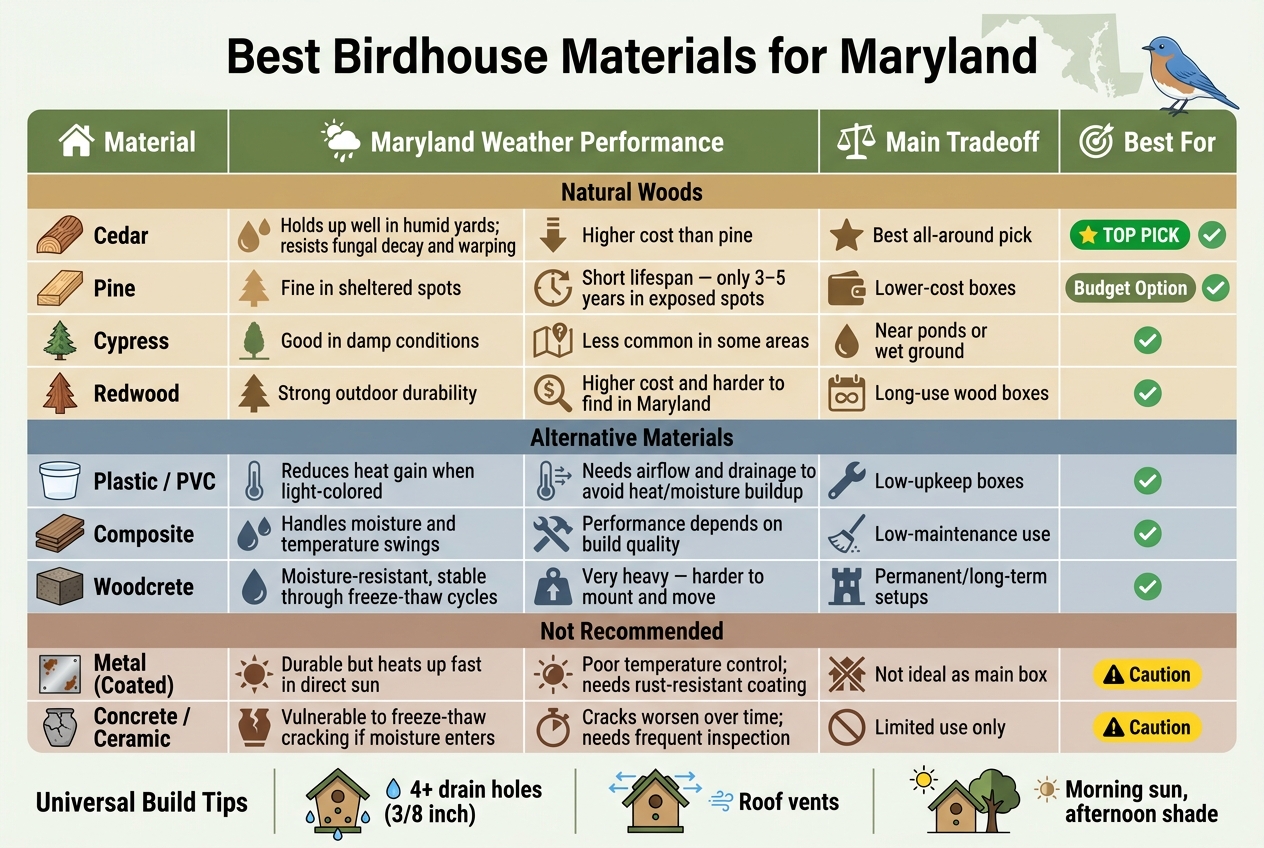
Birdhouse Materials for Maryland: Quick Comparison Guide
Avoid 7 Common Mistakes When Building A Bird House
sbb-itb-843f8be
Quick Comparison
| Material | How it handles Maryland weather | Main tradeoff | Best fit |
|---|---|---|---|
| Cedar | Holds up well in humid yards | Higher cost than pine | Best all-around pick |
| Pine | Fine in sheltered spots | Shorter life, often 3–5 years | Lower-cost boxes |
| Cypress | Good in damp conditions | Less common in some areas | Near ponds or wet ground |
| Redwood | Strong outdoor life | Cost and availability | Long-use wood boxes |
| Plastic / PVC | Can stay cooler if light-colored | Needs airflow to avoid heat and trapped moisture | Low-upkeep boxes |
| Composite | Can handle wet and temperature swings | Performance depends on build quality | Low-upkeep use |
| Woodcrete | Handles moisture and freeze-thaw well | Heavy | Permanent setups |
| Metal | Lasts, but heats fast | Poor temperature control | Not ideal for main box |
| Concrete / Ceramic | Can crack if water freezes inside | Needs close inspection | Limited use only |
Bottom line: I’d match the material to the yard, not just the bird. In Maryland, the box lasts longer when the material, placement, drainage, and yearly cleaning all work together.
Best Birdhouse Materials for Maryland Homes
For most Maryland yards, untreated wood is the best pick for a birdhouse. It insulates well, lets moisture escape, and avoids chemical exposure. That matters for cavity nesters like chickadees, bluebirds, and wrens. Skip pressure-treated lumber, and keep the inside unpainted and untreated.
Untreated Cedar, Pine, Cypress, and Redwood
The right wood depends on where the birdhouse will sit.
- Cedar holds up well against fungal growth and decay, which makes it a strong fit for Maryland’s humid, shaded yards. It’s also less likely to warp or split as the weather shifts. The Maryland Bluebird Society recommends cedar and redwood nest boxes with good ventilation and drainage for Mid-Atlantic conditions.[3]
- Pine is a budget-friendly option that’s easy to find in Maryland. The tradeoff is lifespan: in exposed spots, it usually lasts about 3–5 years, so it does better with some shelter and airflow.[4]
- Cypress works well in damp areas and for birdhouses placed near water.
- Redwood also does well outdoors, but it costs more and can be harder to find in Maryland.
For thickness, most birdhouse plans call for 3/4-inch lumber. Thicker boards do a better job of softening temperature swings than thinner ones.[1]
Even good wood can fall short if the box traps water or heat. Build details make a big difference.
Wood Construction Details That Improve Birdhouse Performance
The material sets the base, but the small choices in construction often decide how well a birdhouse handles Maryland weather. Leave the interior wall below the entrance rough so fledglings can climb out. Keep the nesting cavity bare, with no paint, stain, or sealant inside. If you want to protect the outside, use a cured, water-based, non-toxic finish on the exterior only.
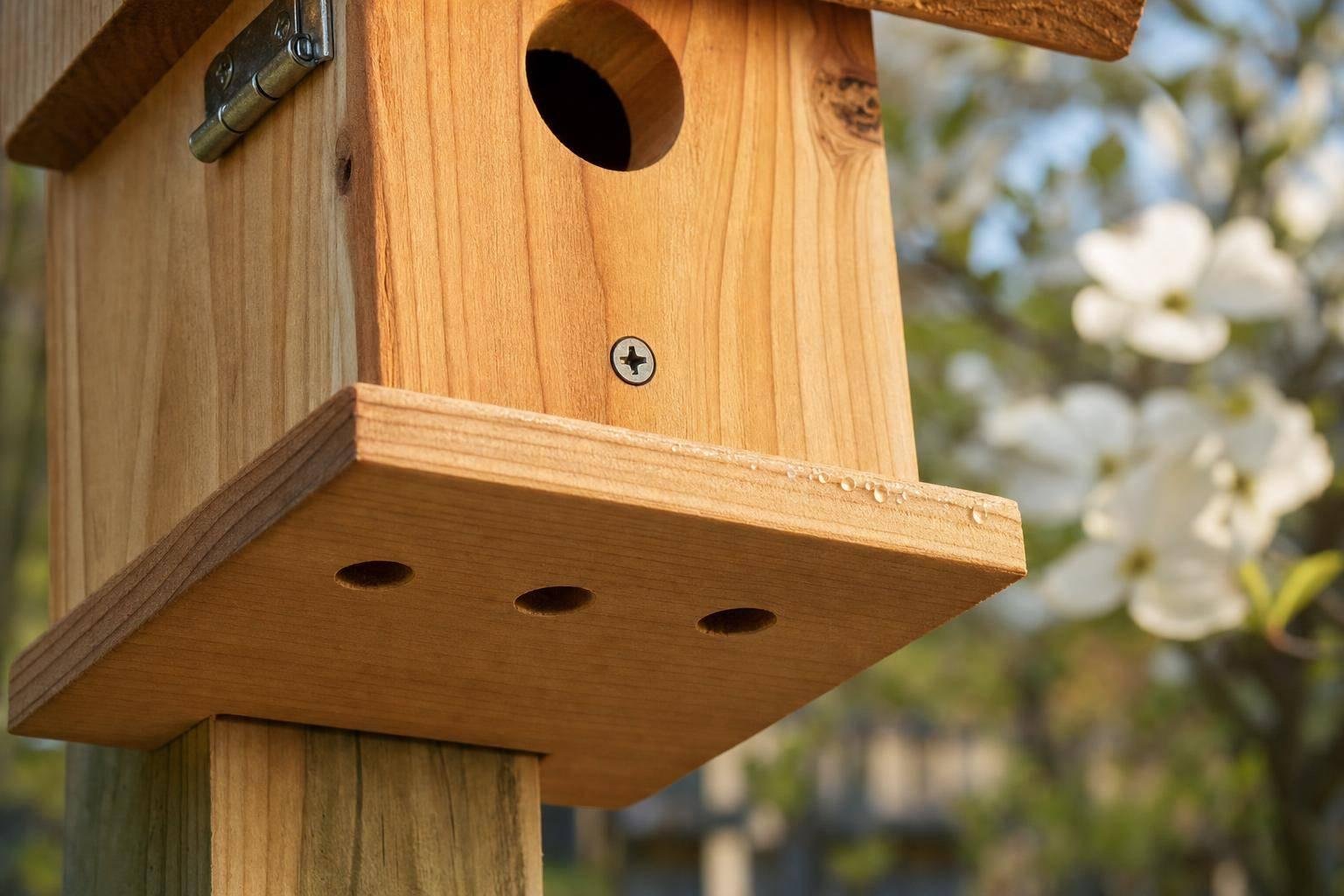
Add at least four 3/8-inch drainage holes in the floor, plus ventilation openings near the top.[2] A roof overhang of 1 to 2 inches helps shed rain and shields the entrance. Use exterior-grade screws so the box stays secure and still opens without a struggle for yearly cleaning.
When wood isn’t the right fit, the next step is looking at how other materials deal with Maryland’s rain, summer heat, and freeze-thaw cycles.
How Other Materials Hold Up to Maryland Rain, Heat, and Freeze-Thaw Cycles
When untreated wood isn’t a good fit, look at three things first: heat, moisture, and how the material handles freeze-thaw cycles. In Maryland, that matters a lot. A birdhouse can look fine in spring, then take a beating from humid summer air, heavy rain, and winter freezing.
Plastic, PVC, Composite, and Woodcrete Boxes
Light-colored plastic or PVC can help cut heat buildup. But color alone won’t solve the problem. The box still needs good ventilation and drainage, and it’s smart to avoid designs that hold water inside.
Composite materials can be a solid middle-ground option when they’re made to handle moisture and repeated temperature swings. Site conditions matter here. A shaded, sheltered spot can hold more heat than an open area, so the box material should match the place where it’ll sit.
Woodcrete – a mix of wood fiber and concrete – handles moisture well and stays stable through temperature swings. That makes it a strong pick for Maryland’s humid summers and freeze-thaw winters. The downside is simple: it’s heavy. That extra weight can make mounting harder and seasonal removal more of a chore.
Metal, Concrete, and Ceramic Materials
Metal lasts a long time, but it’s usually a poor pick for the main birdhouse box. It heats up fast in direct sun, and in Maryland’s damp air, it also needs a rust-resistant coating.
Concrete and ceramic have another weak spot: trapped water. When water gets into small cracks and then freezes, it expands and makes those cracks worse. Over time, that damage adds up. These materials need excellent drainage and regular checks after winter to spot new cracks.
| Material | Maryland Weather Performance | Best Use Case |
|---|---|---|
| Plastic / PVC | Reduces heat gain when light-colored; needs ventilation and drainage | Birdhouses with good drainage and temperature control |
| Composite Materials | Practical when engineered for moisture resistance and temperature swings | Low-maintenance boxes |
| Woodcrete | Moisture-resistant and stable in temperature swings, but heavy | Durable long-term use where weight is manageable |
| Coated Metal | Durable, but heats up fast and needs rust protection in humid weather | Not ideal for the main box |
| Concrete / Ceramic | Vulnerable to freeze-thaw cracking if moisture gets in | Only where drainage is excellent and cracks can be checked |
Material choice also affects cleaning, repairs, and predator guards.
Materials for Cleaning, Repairs, and Predator Protection
The material of a birdhouse affects more than looks. It changes how easy the box is to clean, how well repairs hold up, and how well the box keeps predators out year after year. In Maryland, humidity, freeze-thaw cycles, and salt air can also wear down hinges, fasteners, and entrance hardware.
Cleaning Access, Drying, and Annual Upkeep
A hinged roof or side panel that swings all the way open makes cleaning far easier. You can reach every corner without taking the whole box apart. That matters in Maryland’s humid climate, where skipped cleanings can lead to mold, mites, and blowfly larvae building up.
Clean birdhouses in late summer or early fall, after the last brood has fledged. Maryland DNR recommends removing old nesting material, scrubbing the interior with a 10% bleach solution, rinsing well, and letting the box dry fully before rehanging it.[7]
The box material plays a big part in how smooth that job goes. Unfinished wood handles a stiff brush and diluted bleach well, as long as you don’t soak it. Let it air-dry in a shaded, breezy spot, not in direct sun, since wet wood can crack. Plastic and PVC can be scrubbed with a brush and diluted cleaner without swelling.
While you’re cleaning, give the box a quick once-over:
- Check drainage holes for clogs.
- Look at hinges, latches, and screws.
- Swap out rusting fasteners so the box opens without a fight next season.
Predator Guards, Fasteners, and Entrance Protection
For hardware that stays outside all year in Maryland’s wet, freeze-thaw weather, galvanized steel and stainless steel are the best picks for screws, hinges, and latches. Use stainless steel near the Chesapeake Bay or tidal rivers, where salt air speeds up corrosion. Brass also works well for small latches and hook-and-eye closures. It resists rust and moves smoothly, but it’s softer than steel, so it’s better for low-stress parts.
Use three types of protection: entrance-hole reinforcement plates, hardware-cloth entrance tunnels, and galvanized pole baffles.
Entrance-hole reinforcement plates made from galvanized or stainless steel screw flat over the opening. They stop squirrels, raccoons, or woodpeckers from enlarging the hole. Hardware-cloth entrance tunnels are short extensions made from 1/2-inch galvanized hardware cloth. They attach around the entrance and block a raccoon’s arm from reaching inside while still letting birds enter and leave.[5][6] Galvanized pole baffles are tougher for raccoons to grip and chew than plastic ones, which makes them a strong pick in yards with heavy predator pressure.
Install all three with rust-resistant screws, and inspect them once a year for sharp edges, loose mesh, or corrosion.
Where the box sits in the yard also changes how long these materials last.
Choosing Materials That Work With a Maryland Landscape Plan
Even tough birdhouse materials wear out sooner in the wrong spot. A cedar box, for example, can still fail early if it sits in a soggy corner or bakes in full afternoon sun.
Placement Near Native Plantings, Shade, and Water
Maryland yards often have small warm and cool pockets. Because of that, it helps to place birdhouses where they get morning sun and afternoon shade. Shrubs or a bit of overhead cover can cut heat stress on wood, plastic, and composite boxes, but the entrance should stay clear of dense branches. That setup also helps limit moisture damage.
Drainage and Site Conditions That Protect Birdhouse Materials
Poor drainage can shorten a birdhouse’s life fast. Skip low spots, and place the post base on well-drained ground to help reduce rot, warping, and cracking from freeze-thaw cycles. It’s smart to fix grading and drainage before installing birdhouses so the post base stays dry.
Conclusion: The Best Material Choices for Long-Term Use
In Maryland, a birdhouse’s lifespan comes down to three things working together: material, placement, and upkeep.
Humidity, sun, and freeze-thaw cycles don’t hit every yard the same way. A birdhouse near the coast may deal with damp air day after day, while one in a more sheltered spot may hold up much better. So even the same material can age in different ways depending on where it’s placed and how it’s used.
That’s why site choice matters just as much as the box itself. The best setups combine the right material with smart placement, good drainage, easy cleaning access, and predator protection. In humid coastal parts of Maryland, drainage is a big deal. In more exposed spots, shelter can help cut down on wind and temperature strain. It also helps to clean out damp nesting debris before winter, since trapped moisture can lead to rot and freeze damage.
Choose the material that fits Maryland’s climate and the conditions in your yard.
FAQs
Which birdhouse material lasts longest in Maryland?
The available sources do not say which birdhouse material lasts the longest in Maryland.
What they do say is a bit more limited: natural stone and high-quality concrete tend to hold up well in Maryland’s freeze-thaw cycles for landscape structures. That matters for things like patios, walls, and other outdoor builds.
But here’s the catch: those sources do not compare birdhouse materials directly. So based on the source material alone, there isn’t enough information to name one birdhouse material as the longest-lasting option in Maryland.
Can I use painted or treated wood for a birdhouse?
Yes – painted or treated wood can work for a birdhouse if the coating is safe for wildlife and can handle Maryland’s wet weather and freeze-thaw cycles.
The big thing is material choice. You want wood and finishes that stand up to moisture and sun, so the birdhouse holds up through regular cleaning. For a wildlife-friendly setup, it also helps to place the birdhouse inside a habitat plan that includes shelter and water.
Where should I place a birdhouse in my yard?
Place birdhouses in quiet spots away from bright lights and heavy foot traffic. Birds do better when they have some peace, and nearby shrubs or other cover give them a place to hide and a safe way out if danger shows up.
Make sure each birdhouse is mounted securely so it can handle Maryland’s changing seasons. It also helps to place birdhouses within a layered landscape that includes native plants, trees, and water features like bird baths. That setup gives birds shelter, nesting support, and a steady place to return throughout the year.
Chat with Us