









- bhavya gada
- No Comments
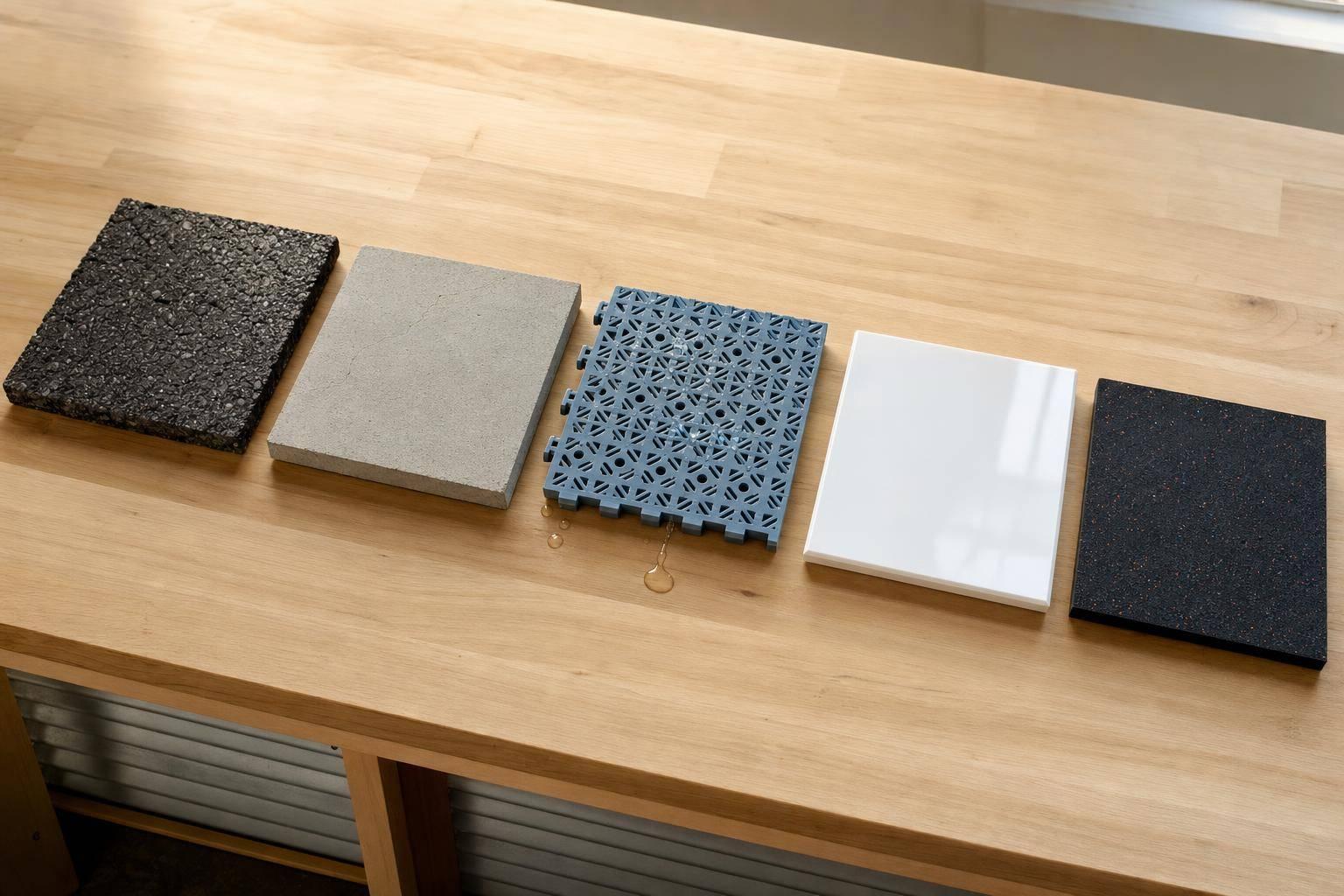
If I want the lowest starting cost, I’d look at asphalt first. If I want the best long-term return, I’d lean toward coated concrete. If I want easy repairs and a multi-use setup, I’d look at modular tiles.
For a 20 x 30-foot backyard rink, even a $2.00 per sq. ft. price gap can change the project total by $1,200. That’s why I wouldn’t look at flooring price alone. I’d also check the base, drainage, maintenance, and how the surface handles Maryland’s freeze-thaw weather.
Here’s the short version:
- Asphalt: lowest upfront cost, about $2.00 to $5.00 per sq. ft.
- Concrete: longer life, about $4.00 to $10.00+ per sq. ft.
- Modular tiles: mid-range cost, easy section repairs, about $4.00 to $7.00 installed
- HDPE/synthetic: highest price here, about $8.00 per sq. ft., but long service life
- Rubber/synthetic edge zones: better for grip and safety than for fast skating
My main takeaway: the surface matters, but the base and drainage can make or break the whole project. A poor slope or standing water can lead to cracks, shifting, and more repair costs.
Backyard Skating Rink Flooring: Cost, Lifespan & Maintenance Compared
BUILDING A RINK WITH SKATEABLE TILES
sbb-itb-843f8be
Quick Comparison
| Surface | Upfront Cost | Lifespan | Upkeep | Best Fit |
|---|---|---|---|---|
| Asphalt | Low | About 10 years | About 2 times per year | Lowest starting price |
| Concrete | Mid to high | 20–30+ years | About 1 time per year | Long-term backyard rink |
| Modular tiles | Mid | 15–20 years | About 3 times per year | Multi-use spaces and easy patching |
| HDPE/synthetic | High | About 25 years | About 1 time per year | Year-round use |
| Rubber/synthetic zones | Varies | Varies | Low | Entries, edges, safety areas |
If I were choosing on a tight budget, I’d compare asphalt vs. concrete vs. modular tiles first, then factor in grading and drainage before making a final call.
Hard Surface Options With the Lowest Cost per Square Foot
For Maryland backyards, hard surfaces usually give you the lowest cost per square foot when the base is already stable and drains well.
Plain, Sealed, and Coated Concrete Slabs
Concrete is a durable, budget-friendly base for skating. A plain slab usually costs about $4–$7 per sq. ft. installed. If you want stamped or epoxy-coated concrete, expect about $6–$15 per sq. ft.
A smooth, sealed finish helps you get a clean roll. And if the surface gets wet, a slip-resistant coating can make a big difference. UV-stable acrylic or epoxy coatings help the slab hold up against moisture and freeze-thaw wear. Plan to inspect the surface every 6–12 months and recoat it every 2–3 years [5][3].
| Concrete Type | Cost per Sq. Ft. | Maintenance | Best Use |
|---|---|---|---|
| Plain slab | $4–$7 | Annual maintenance | Durable skating base |
| Stamped or epoxy-coated | $6–$15 | Inspect every 6–12 months; recoat every 2–3 years [5][3] | Better grip and multi-use spaces |
If upfront price is the main thing you care about, asphalt is the next one to look at.
Asphalt Pads for Lower Upfront Cost
Asphalt costs less at the start, but there’s a tradeoff: it doesn’t last as long and usually gives you less over time. Installed asphalt runs about $2–$5 per sq. ft., which makes it the lowest-cost hard-surface pick upfront for casual skating. It needs sealcoating and crack checks about twice a year and lasts around 10 years [4].
| Feature | Concrete | Asphalt |
|---|---|---|
| Initial cost (per sq. ft.) | $4–$15 | $2–$5 |
| Lifespan | 20–30+ years | About 10 years |
| Maintenance | Annual | About twice per year |
| Ride quality | Smooth, consistent | Good for casual skating |
| Weather performance | Better with proper sealant or coating | More prone to weathering |
Choose asphalt if you want the lowest initial cost. Choose concrete if you want a surface that lasts longer and needs less upkeep.
Modular and Rubber Flooring for Comfort, Drainage, and Multi-Use Spaces
If concrete or asphalt feels too hard or rough, modular and rubber surfaces can make a backyard rink much more comfortable. They’re easier to repair too. These surfaces also help with drainage, which matters a lot when the rink needs to do more than sit on a plain hard slab. The tradeoff is simple: they cost more than basic concrete or asphalt, but they can be easier on the body and easier to reuse.
Modular Sport Tiles Over Concrete or Asphalt
Vinyl or polypropylene interlocking tiles are a modular option for backyard skating areas. You can install them directly over an existing concrete or asphalt base, as long as that base is level, clean, and stable. And if one section gets damaged, you can swap out that piece instead of redoing the whole surface [3][7][8].
Within this group, vinyl interlocking tiles are the easiest to install and replace. Synthetic acrylic flooring stands up well to weather and offers slip resistance. Polyurethane flooring has more flex and handles impact better [3].
For outdoor use in Maryland, it helps to pick UV-resistant materials and make sure drainage is set up well enough to deal with freeze-thaw cycles [7][8]. Modular plastic tiles have an estimated lifespan of about 15 years with routine care [4]. As for cost, materials for modular interlocking tiles usually land around $3 to $8 per square foot, while professional installation often adds about $1.25 to $3.50 per square foot [6].
| Feature | Vinyl Interlocking Tiles | Synthetic Acrylic Flooring | Polyurethane Flooring |
|---|---|---|---|
| Best use case | Quick installs, multi-purpose spaces | Outdoor installations | High-impact, flexible use |
| Key benefits | Easy to install and replace | Weather-resistant and slip-resistant | More flexible and impact-resistant |
Put plainly, vinyl tiles go down fast, acrylic holds up well outside and adds grip, and polyurethane gives you more cushion against impact.
After modular tiles, the next lower-cost path is softer synthetic surfacing for edges and shared-use areas.
Rubber and Synthetic Transition Surfaces
Rubber and synthetic surfaces work best where traction and safety matter more than glide speed. They’re grippier and slower, so they make the most sense for entry paths, safety zones, and rink edges [6]. That slower feel can be a plus in the right spot. You probably don’t want a fast skating lane where people step on and off.
They also resist moisture well and hold up nicely outdoors, which makes them a good match for backyard setups [6].
If you go with a synthetic surface like poured polyurethane or rolled vinyl, the base needs to be level, and drainage needs to be done right. Maintenance is pretty simple: sweep debris, damp mop when needed, and do seasonal checks to catch wear or drainage issues early [6][7][8].
| Feature | Rubber and Synthetic Surfaces |
|---|---|
| Skating feel | Grippier and slower |
| Traction | High |
| Moisture resistance | High |
| Maintenance | Low |
Cost and Maintenance Comparison for Maryland Backyards
Side-by-Side Cost, Upkeep, and Skating Performance
The biggest price difference usually doesn’t come from the surface alone. It comes from the base prep, drainage, and long-term upkeep.
| Surface | Installed Cost per sq. ft. | Lifespan | Maintenance | Best Use Case |
|---|---|---|---|---|
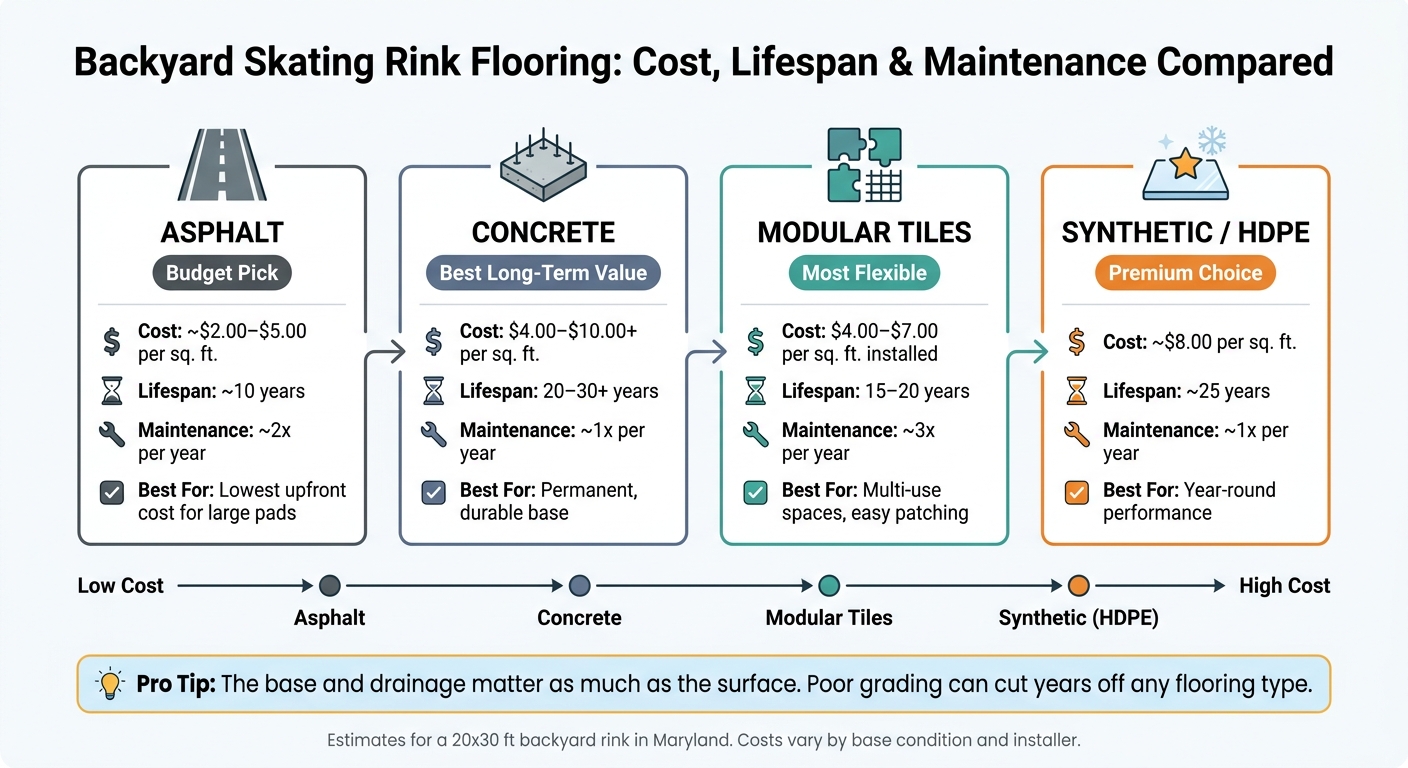
| Asphalt | ~$3.50 | 10 years | 2 times per year | Lowest upfront cost for large pads [4] |
| Modular Tiles | $4.00–$7.00 | 15–20 years | 3 times per year | Multi-use or drainage-friendly setups [5][4][7] |
| Concrete | $5.00–$10.00 | 20–30+ years | 1 time per year | Permanent, durable base [4] |
| Synthetic (HDPE) | ~$8.00 | 25 years | 1 time per year | Year-round performance [4][2] |
Think of this table as a simple tradeoff chart. A lower upfront price often means a shorter lifespan, more upkeep, or both.
If you’re trying to stretch your budget, asphalt costs less at the start, especially for larger pads [4]. But it also has a shorter service life and needs more attention over time. Concrete costs more to install, yet it tends to last much longer and needs less upkeep [4].
Modular tiles sit in the middle. They work well for multi-use spaces and setups where drainage matters, but the base has to be done right [5][4][7]. Synthetic (HDPE) comes in at the high end on price, but it offers strong year-round performance and a long lifespan [4][2].
Maryland weather changes the math a bit. Concrete and asphalt can be hit by freeze-thaw cracking, while modular tiles can shift if drainage is poor or the base isn’t prepared with care [4][7].
How Drainage and Grading Affect the Real Project Cost
A cheap surface on a bad base can turn into an expensive problem fast.
If your yard has poor drainage or uneven slope, standing water can get under modular tiles, cause movement, and cut down the life of a concrete slab [7]. That’s why grading matters so much. Keeping the slope to less than 1 inch of drop per 10 feet helps the base stay dry and lowers the risk of early wear and repair costs [1][7].
Good grading and drainage do three things at once:
- Keep the surface safer
- Help it stay level
- Cut maintenance costs over time
If your yard needs grading or drainage work before installation, Pro Landscapes MD handles site prep across central Maryland.
Conclusion: Choosing the Right Budget-Friendly Flooring for Your Backyard Rink
The right low-cost pick comes down to what matters most to you: the lowest starting price, the longest lifespan, or the simplest fix if something gets damaged.
If you’re building a permanent backyard rink, concrete with a protective coating usually gives you the best long-term value. If you want a setup that’s easier to patch and can serve more than one purpose, modular tiles are a smart fit. And if your main goal is safer footing in high-risk spots, rubber makes the most sense for safety zones.
One thing doesn’t change, no matter which surface you pick: the base does a lot of the heavy lifting. Bad grading or poor drainage can cut years off the life of your flooring and lead to added repair bills. That’s why site prep matters just as much as the surface you install.
If your Maryland yard needs grading, leveling, drainage, or hardscape prep before installation, Pro Landscapes MD can help.
FAQs
Which rink flooring is best for Maryland weather?
For Maryland’s freeze-thaw climate, the best options are concrete slabs with proper drainage or modular sport tiles over a stable base.
Air-entrained concrete helps handle the pressure that builds when water freezes and expands. Pair that with a well-drained granular subbase, and you lower the risk of cracking and surface damage.
Modular sport tiles are another strong pick. They’re weather-resistant and made to deal with temperature swings without wearing down fast.
And while the material matters, installation matters too. Professional installation helps support safety and long-term performance.
Do I need drainage before installing rink flooring?
Yes. Proper drainage helps stop water from pooling. That matters because standing water can weaken the flooring, create unsafe skating conditions, and lead to surface damage.
For outdoor rinks, this is even more important in Maryland’s freeze-thaw climate. A well-drained granular subbase or a slight 1–2% perimeter slope helps protect the rink and keep the surface in better shape over time. Pro Landscapes MD can help prep the site with drainage installation and land leveling.
Can modular tiles go over existing concrete or asphalt?
Yes. Modular sport tiles can go right over existing concrete or asphalt, which is one reason people like them for a weather-resistant skating surface.
The main thing is the base. It needs to be stable and level so the rink performs well and lasts longer. Pro Landscapes MD can assess your property and confirm that the foundation is suitable before installation.
Chat with Us