









- bhavya gada
- No Comments
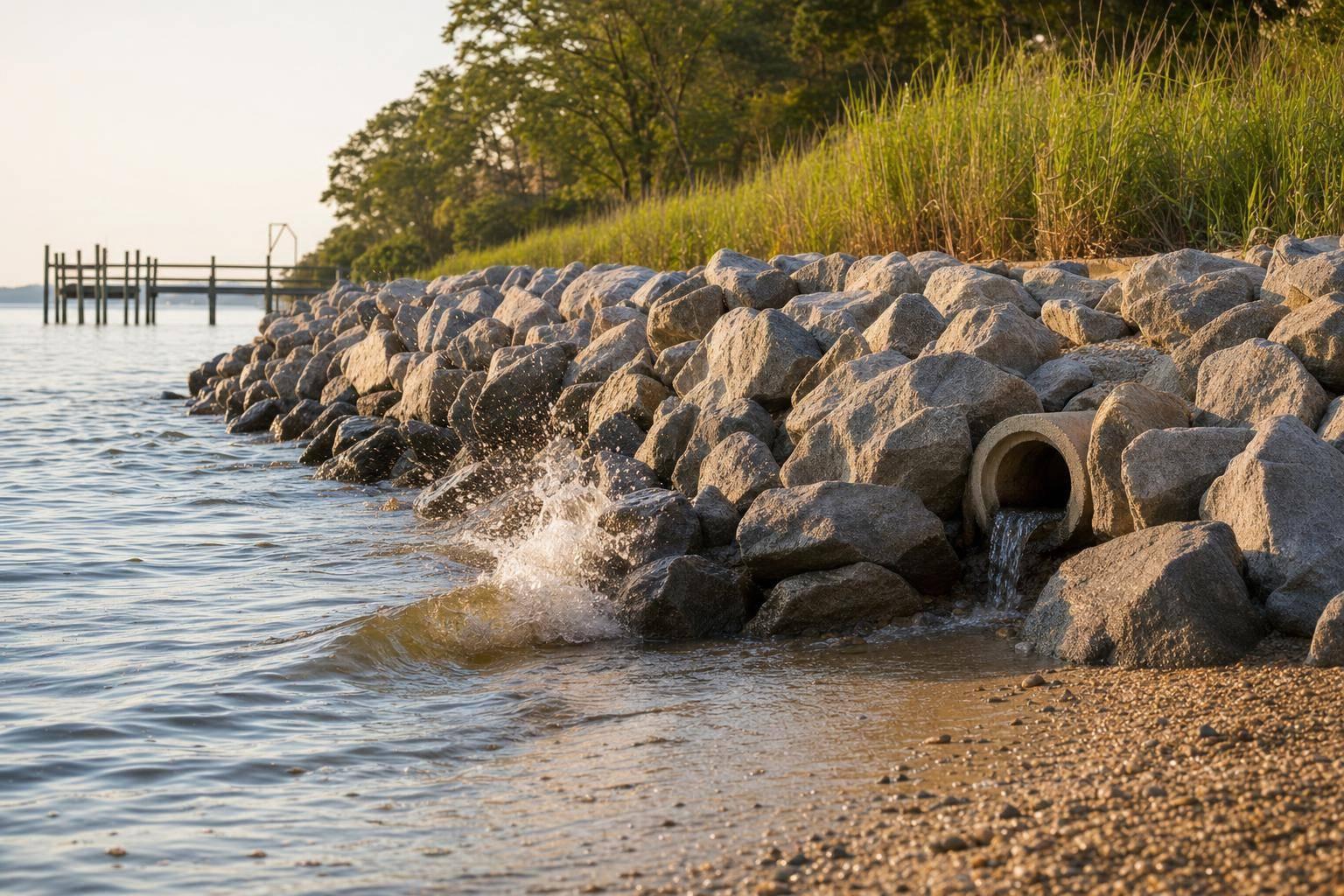
Riprap helps stop erosion by taking the hit from water before your soil does. If you have waves, fast runoff, a failing bank, or washouts near a culvert, a layer of large stone can cut scour, slow water, and hold the ground in place.
Here’s the short version:
- Riprap works best in high-flow spots like shorelines, streambanks, outlet aprons, and steep slopes.
- It protects soil in two main ways: it breaks up water force and covers weak ground.
- It is often a fit when plants alone can’t keep up with tides, stormwater, or steep-grade runoff.
- Good results depend on design, not just rock. Stone size, slope, toe support, and geotextile fabric all matter.
- Maryland permits may apply near tidal waters, streams, wetlands, and Critical Area sites.
If I were sizing up a property on 7/3/2026, I’d first look for three signs: undercutting, channels near pipes, and bare soil after storms. Those clues usually tell me whether the problem is wave action, concentrated runoff, or slope failure.
A few field facts from the article stand out:
- Residential drainage jobs often use 5–8 inch stone
- Gap-filling rock may be 1–3 inches
- A common target slope is 2:1
- Shorelines and outlets usually need larger toe stone at the base
| Site condition | What riprap does | Common Maryland use |
|---|---|---|
| Wave or wake impact | Breaks and spreads water force | Bay shoreline |
| Fast pipe discharge | Slows outlet flow | Culvert apron |
| Bank undercutting | Shields the toe from scour | Streambank |
| Steep loose slope | Adds weight over weak soil | Sloped yard |
Put simply: riprap is not just dumped rock. It’s a planned stone layer built to match the water, the slope, and the soil. That’s what makes it work.
How We Stabilized an Eroding Creek Bank | Rip Rap Installation & Culvert Protection
sbb-itb-843f8be
How Riprap Prevents Erosion
On Maryland shorelines, streambanks, and drainage outlets, riprap helps stop erosion by slowing water before it can strip away soil. When water reaches a weak slope or bank, riprap does two jobs at once: it cuts flow energy and covers the soil.
How Riprap Absorbs and Spreads Water Energy
The main reason it works comes down to the stone itself. Riprap uses large, angular rock, so waves, boat wakes, storm surge, and fast-moving runoff hit a rough surface that spreads out the force before it reaches the soil [1].
Instead of letting water slam straight into the bank, the uneven stone surface breaks waves and runoff into smaller, weaker flows. That drop in force is what helps keep the bottom of the slope from washing out.
How Riprap Shields Soil and Prevents Scour
Riprap also acts like a tough outer layer. Its weight helps keep soil in place, and the stone layer helps stop undercutting and scour [1][4]. Because the rocks are heavy and lock together, they tend to stay put and protect the soil underneath.
That matters even more in Maryland, where clay-heavy soils can produce runoff fast, making bank protection a bigger deal [7].
The same idea plays out a little differently depending on the site.
Comparison Table: How Riprap Works in Maryland Settings
| Mechanism | How It Prevents Erosion | Typical Maryland Residential Use |
|---|---|---|
| Energy Dissipation | Irregular stones break the force of waves and boat wakes before they hit the soil. | Shoreline [1][2] |
| Scour Prevention | Stones at the base of a bank help prevent water from undercutting and collapsing the slope. | Riverbank [1][4] |
| Runoff Slowing | Slows high-velocity water exiting pipes or swales to non-erosive levels. | Outlet apron [4][6] |
| Structural Armoring | Heavy stone mass secures loose soil against gravity and heavy rainfall. | Steep yard [4][2] |
Next, check whether your site’s slope, soil, and water flow make riprap the right fit.
How to Assess Whether Riprap Fits Your Site
Once you know how riprap works, the next step is simple: make sure your site can actually support it. Before you put down stone, figure out what’s causing the erosion and whether the ground, slope, and water flow make riprap a good match.
How to Identify the Source and Severity of Erosion
The kind of erosion on your property affects everything, from stone size to placement to whether riprap makes sense at all. A good time to inspect is right after heavy rain, when the problem is easiest to spot.
Undercutting is one of the clearest warning signs. If the bottom of a bank has been worn away and the top is left hanging over the edge, wave action or stream current is often the cause. Along tidal shorelines, undercutting usually points to damage from waves or currents [1][4].
Channels near pipes or driveways usually mean concentrated runoff. When water shoots out of a culvert or runs off pavement at high speed, it can cut a narrow path into the soil [4][6].
| Erosion Type | Primary Signs | Common Maryland Locations |
|---|---|---|
| Shoreline | Undercutting, land loss from tides | Chesapeake Bay, Patuxent River [1][2] |
| Runoff | Channels, washouts near culverts | Driveways and drainage outlets [4][6] |
| Hillside | Sliding soil, bare spots on slopes | Sloped residential lots [4][2] |
| Streambank | Scouring, bank collapse | Creeks and streambanks [1][5] |
If you see muddy buildup downhill or near drains, that’s another sign soil is on the move.
How Slope, Soil, and Water Flow Affect Your Decision
Slope, soil, and water speed all help decide whether riprap will stay in place.
Steep slopes put more pressure on erosion-control material. Riprap can help hold these areas in place against gravity and hard rain [4].
Soil type matters too. Loose or unstable soil can shift under the stone over time. Sandy or loose soils usually need a geotextile underlayment beneath the rock to help stop the stone from sinking [4].
Water velocity also affects stone size. Fast flow from a drainage outlet or a moving stream calls for larger, heavier rock that won’t get pushed out of place during peak storm events [1][2].
Maryland Permits and Local Rules to Know Before You Start
Riprap placed near tidal waters, streams, or wetlands often needs state or local approval [1].
If your property is in a Critical Area near tidal waters, expect extra review before work can start [1]. Work near non-tidal streams or drainage swales may also need local stormwater approval, especially if the job includes drainage changes or major regrading [6].
It’s smart to talk with a licensed Maryland contractor who has experience with shoreline work and local permits [1]. The paperwork matters. Poorly placed riprap can push erosion farther downstream [1][4]. Permit rules can also shape what design you can build, so legal review is part of the process from the start.
Once the site checks out, the next move is matching stone size, slope, and base prep to the flow.
Riprap Design and Installation Basics for Maryland Properties
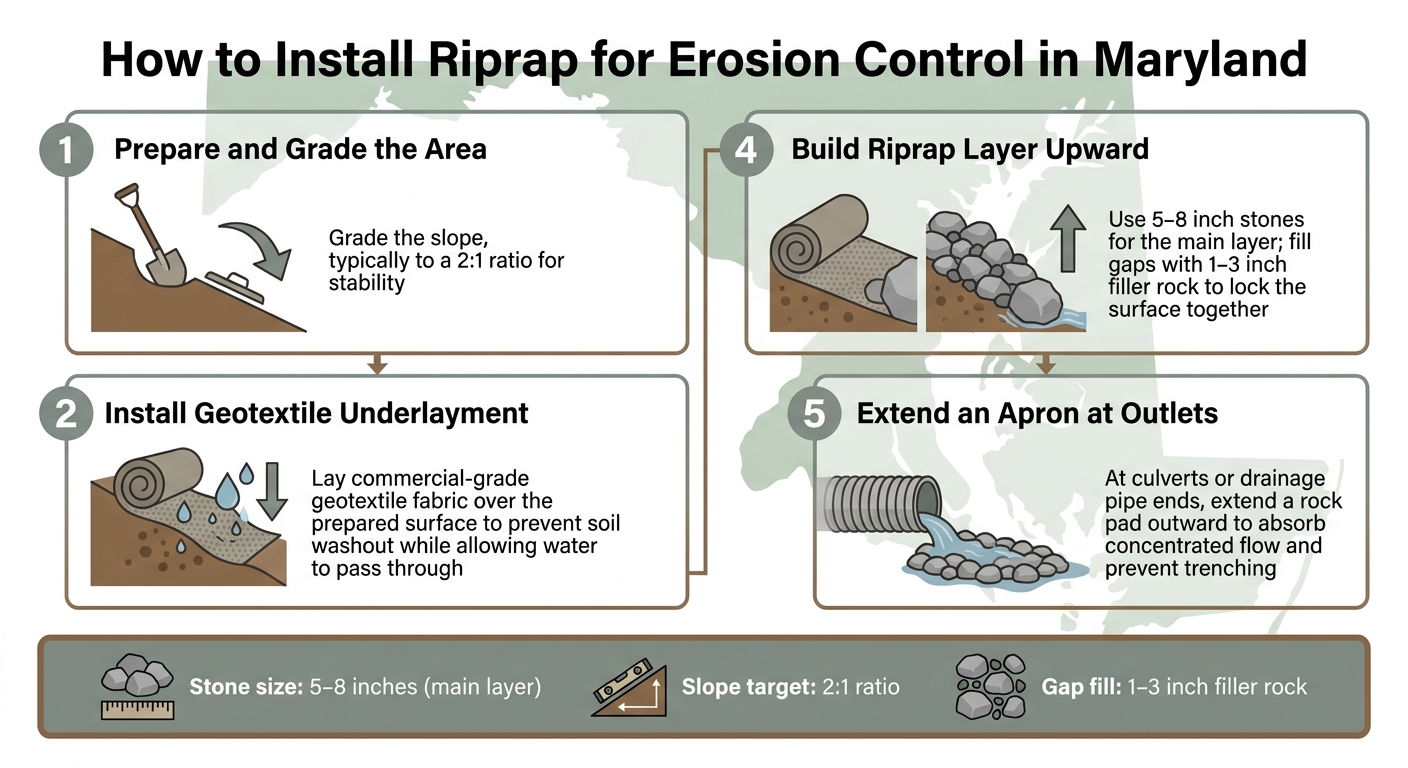
How to Install Riprap for Erosion Control in Maryland
Once the site checks out, the next part is the build itself. Riprap stays put when the stone size, slope, and underlayment all match the water pressure on the site. Get one part wrong, and a hard storm can leave the bank shifted, sunken, or washed out.
Stone Size, Slope, and Underlayment Requirements
Stone size should match the force of the flow. In many residential drainage areas, 5–8-inch rock does the job well. On high-energy shorelines, larger stone may be needed. A 2:1 slope gives the rock a steadier base, while steeper slopes are more likely to slide.
Under the stone, commercial-grade geotextile fabric is a must. It keeps the soil in place while still letting water pass through. Without that layer, soil can slip out through the gaps, and the stone on top can start to sink [5][8].
Step-by-Step Installation Order for Residential Projects
Follow this sequence to cut down the chance of failure at the base:
- Prepare and grade the area.
- Install underlayment: Lay commercial-grade geotextile fabric over the prepared surface before placing any stone [8].
- Place the largest stones at the toe first: This anchors the structure and helps stop undercutting [1][3].
- Build the riprap layer upward from the toe: Use 5–8-inch stones for the main layer, then fill gaps with 1–3-inch filler rock so the surface locks together tightly [8].
- Extend an apron at outlets: At culverts or drainage pipe ends, carry the rock pad outward to absorb concentrated flow and help stop trenching [4].
A rock-lined swale can catch downspout runoff before it carves out a gully.
Design and Installation Table: Factors That Affect Performance
| Design Element | Purpose | Typical Maryland Application |
|---|---|---|
| Stone Size | Resists displacement under flow force | 5–8-inch stones for drainage; larger boulders for Chesapeake Bay shorelines [2][8] |
| Underlayment | Prevents soil washout beneath the stone | Commercial-grade geotextile fabric [8] |
| Toe Protection | Anchors the base and prevents undercutting | Largest stones placed at the bottom of slopes, riverbanks, or shorelines [1][3] |
| Slope Grading | Ensures stability across the structure | Often graded to a 2:1 ratio before stone placement [4][5] |
| Apron Length | Absorbs concentrated flow at pipe or culvert ends | Extended rock pad at drainage outlets to prevent trenching [4] |
After the stone is set, the next step is tying it into plantings and drainage features so the site looks finished and works as one system.
Fitting Riprap Into a Maryland Landscape
After installation, riprap tends to work best when the landscape around it helps cut runoff before water reaches the stone.
Pairing Riprap With Plantings and Drainage Features
Riprap usually works better when you pair it with native plantings and drainage features. Plants soften the edge and help filter runoff. French drains, swales, and dry riverbeds can reduce how much water reaches the stone. Native plants also help slow runoff while making the stone line look less harsh.
If the site has steep grades, concentrated runoff, or tidal exposure, review the design before work begins.
When to Hire a Professional for Erosion Control Work
Minor repairs, like topping off an existing barrier or reinforcing an outlet, can work for experienced DIYers. But for steep slopes, shoreline work, or any project that may need Maryland permits, it makes sense to hire a professional. Pro Landscapes MD provides drainage, grading, and hardscaping services that support riprap-based erosion control across central Maryland.
Conclusion: Why Riprap Works and What to Keep in Mind
Once the site and drainage plan are set, the last step is matching the design to the source of the erosion.
Riprap helps prevent erosion by spreading water energy and shielding soil. But it only works well when the stone size, slope, underlayment, and drainage fit the site.
FAQs
How do I know if riprap is right for my property?
Riprap can be a good fit for your property if you’re dealing with active soil erosion, unstable banks, or water damage along a shoreline, riverbank, or steep slope. It helps hold the ground in place and protect your landscape or foundation from waves, tides, and heavy runoff.
Every property is different. Drainage patterns, soil type, and grading can all change what will work best. A professional at Pro Landscapes MD can assess your site, inspect the grading, and figure out whether riprap makes sense for your situation.
What size stone does a residential riprap project need?
There’s no one-size-fits-all stone size for residential riprap projects. The right choice depends on what’s happening on your property, especially water speed, slope, and wave action.
The stone needs to be heavy enough to stay put when water moves through the area. That’s why a professional review of the drainage, slope, and soil type matters if you want a fix that lasts.
Do I need a permit for riprap in Maryland?
Yes, you may need a permit for riprap installation in Maryland.
Work along shorelines, riverbanks, and waterways often falls under state and local rules tied to stormwater management and site protection. That means permit needs can vary based on where the property is and how close the project is to the water.
It’s smart to check the rules for your exact location before work starts. A professional installer can often help you sort through local guidelines and handle any permit steps needed to keep the project compliant.
Chat with Us