









- bhavya gada
- No Comments
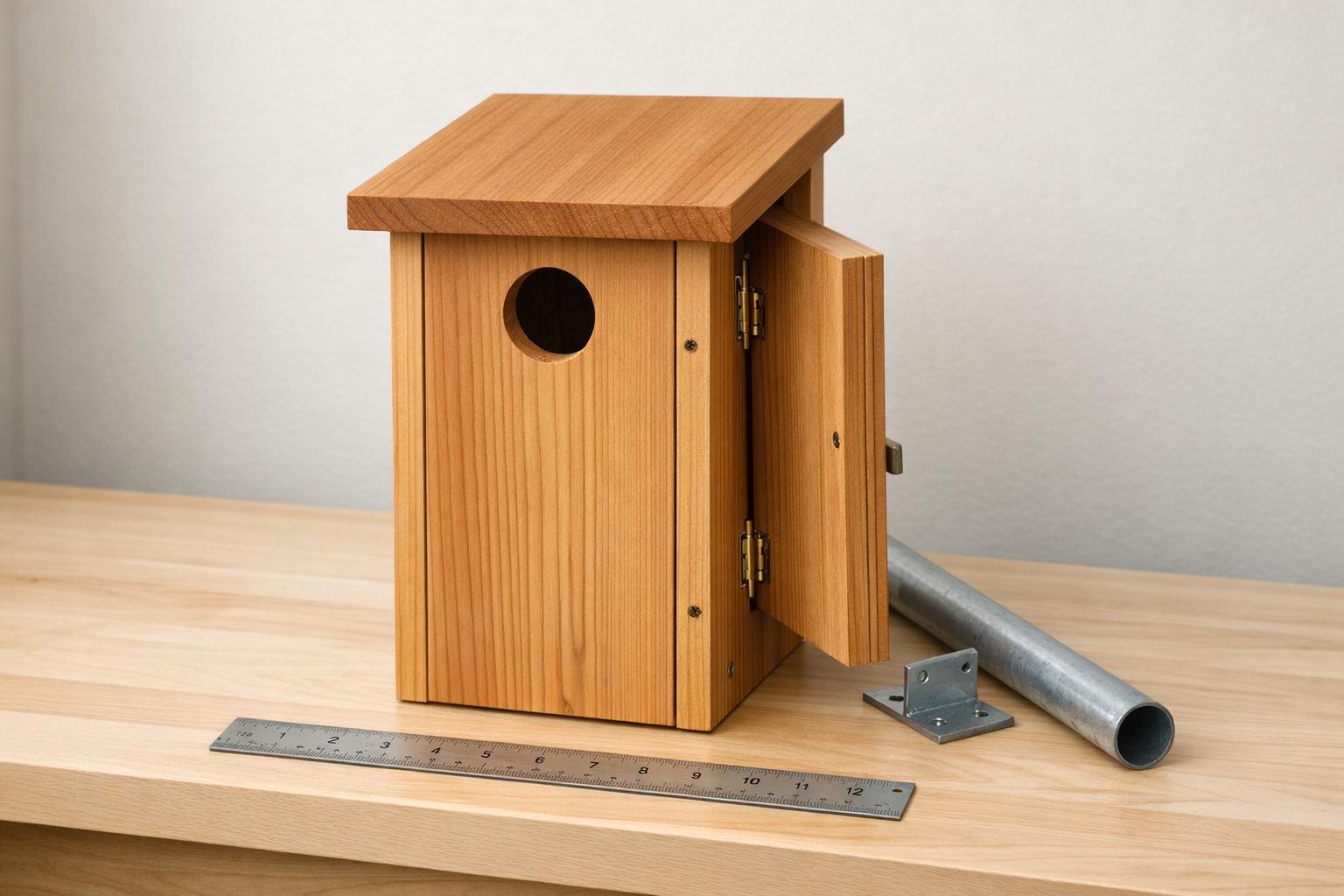
Building a bluebird house is a simple way to help Eastern Bluebirds thrive, especially as their natural nesting sites disappear. Follow these steps to create a safe and functional nest box:
- Key Features: Use a 1.5-inch entrance hole to keep out larger birds, a 4×4 to 5×5-inch floor for space, and ensure the entrance is 6-10 inches above the floor for predator protection. Avoid adding exterior perches.
- Materials: Opt for untreated wood like cedar or cypress, ¾-inch thick for insulation. Use screws instead of nails for durability.
- Assembly: Cut wood to specified dimensions, drill ventilation and drainage holes, and include a hinged panel for cleaning.
- Placement: Mount the house on a smooth metal pole with a predator baffle, 4-6 feet above the ground. Place it in an open area with short grass, away from bird feeders and dense shrubs.
- Maintenance: Clean the box after each brood and in the fall to prevent parasites. Inspect for damage before spring.
Pair the house with native plants like oaks and dogwoods to attract insects and provide berries for winter food. This guide ensures your yard becomes a welcoming space for bluebirds.
DIY Bluebird House from One Fence Picket (Simple, Proven Design)
sbb-itb-843f8be
Bluebird House Basics
Before you start cutting wood, it’s important to understand what makes a bluebird house suitable for its feathered residents. Bluebirds are cavity nesters, meaning they naturally raise their young in hollow trees. With fewer natural nesting sites available, they increasingly rely on nest boxes made by people. Here’s what you need to know to get started.
Key Design Features for Bluebird Houses
Every detail in a bluebird house serves a specific purpose. The most important feature is the entrance hole, which must be exactly 1½ inches in diameter to allow Eastern Bluebirds to enter while keeping out larger, more aggressive species like European starlings [1][4].
The interior floor should measure between 4" × 4" and 5" × 5", offering enough room for a brood of 3 to 8 chicks without inviting intrusions from other birds [1][4]. Additionally, the entrance hole should be positioned 6 to 10 inches above the floor, helping to protect the nestlings from predators [1][4].
Other essential design elements include:
- No exterior perch. According to Qing Lana Luo of Oklahoma State University: "There should never be a perch on the front wall as the birds do not need it, and it only helps predators climb inside the birdhouse." [1]
- Rough interior wall. Horizontal grooves (also called kerfs) just below the entrance help fledglings grip the surface as they leave the nest [1][3].
- Ventilation and drainage. Include ¾- to 1-inch gaps near the roof to prevent overheating and drill ¼- to ½-inch holes in the floor to allow rainwater to drain [1][4].
- ¾-inch thick wood. This thickness provides insulation, keeping the nest warm on chilly spring nights and cool during hot summer days [1][4].
| Feature | Specification | Why It Matters |
|---|---|---|
| Entrance hole | 1½ inches diameter | Allows bluebirds in; keeps starlings out [1][4] |
| Floor size | 4" × 4" to 5" × 5" | Provides enough space for a full brood [1][4] |
| Hole height above floor | 6–10 inches | Protects nestlings from predators [1][4] |
| Roof overhang | 2+ inches | Shields from rain and predators [1][4] |
| Wood thickness | ¾ inch | Insulates against temperature changes [1][4] |
Why Bluebird Houses Matter in Maryland
Bluebirds faced steep population declines during the 20th century, largely because land clearing and urban development removed the dead trees they rely on for nesting. As the Michigan Bluebird Society explains:
"Landscaping methods today tend to favor removal of dead or dying trees rather than leaving them as a home for wildlife… This has created a shortage of bluebird nesting sites." [4]
This issue is especially apparent in central Maryland, where development in Howard, Montgomery, and Carroll counties has reduced the open fields and woodland edges bluebirds need. A well-made nest box can serve as an artificial cavity, replacing the hollow trees that have disappeared. However, bluebird pairs also require 1½ to 2 acres of suitable habitat around their nest box to find enough insects to feed their young [4]. Pairing a thoughtfully constructed house with a wildlife-friendly yard can make a meaningful difference for these birds. With these design essentials in mind, you’re ready to gather materials and start building.
Planning and Gathering Materials
Once your design is finalized, it’s time to collect everything you need to start building. Having all materials and tools ready before you begin ensures a smooth process without interruptions.
Recommended Materials
For the best results, choose rot-resistant, untreated woods such as Western Red Cedar, White Cedar, or Cypress. If these aren’t available, exterior-grade fir plywood is an acceptable alternative. As highlighted by Oklahoma State University:
"Unstained and untreated natural wood materials are preferred." [1]
The Mountain Bluebird Trails Conservation Society also advises, “Exterior-grade fir or cedar plywood is best, pine is not recommended.” [2] Whatever wood you select, make sure it’s ¾ inch thick for durability.
When it comes to fasteners, avoid nails. Instead, opt for exterior-grade wood screws (1¾-inch, size #8), which provide better hold as the wood naturally expands and contracts with seasonal changes. If you plan to paint, stick to light, neutral colors like light gray, tan, or sage green, and apply paint to the exterior only. Dark colors can absorb too much heat, potentially harming eggs and nestlings.
Tools You Will Need
You won’t need anything fancy – just a basic toolkit will do. Here’s what you’ll need:
- Circular saw or handsaw
- Drill with bits, including a 1½-inch spade or hole saw bit for the entrance
- Measuring tape and pencil
- Sandpaper for smoothing edges
- Square to keep cuts precise
- Clamps for easier assembly
Don’t forget safety gear: always wear safety glasses and hearing protection when cutting or drilling. Before starting, double-check your wood dimensions and cut list to ensure you’ve got everything ready to go.
Wood Dimensions and Cut List
You can build the entire house from a single 8-foot-long board that’s 5½ inches wide and ¾ inch thick (standard 1×6 lumber) [1]. Here’s the breakdown:
| Piece | Quantity | Dimensions | Notes |
|---|---|---|---|
| Back | 1 | 5½" × 14"–16" | Extra length makes pole mounting easier |
| Front | 1 | 5½" × 10" | Drill the 1½" entrance hole here |
| Sides | 2 | 5½" × 10"–12" | Cut the top edge at a slight angle (~8°) for roof slope |
| Floor | 1 | 4" × 4" | Clip corners slightly to aid drainage |
| Roof | 1 | 5½" × 10"–12" | Should overhang front and sides for rain protection [4] |
An 8-foot board provides all six pieces with minimal waste. With your materials prepped and measurements verified, you’re ready to start building your bluebird house.
Step-by-Step Construction
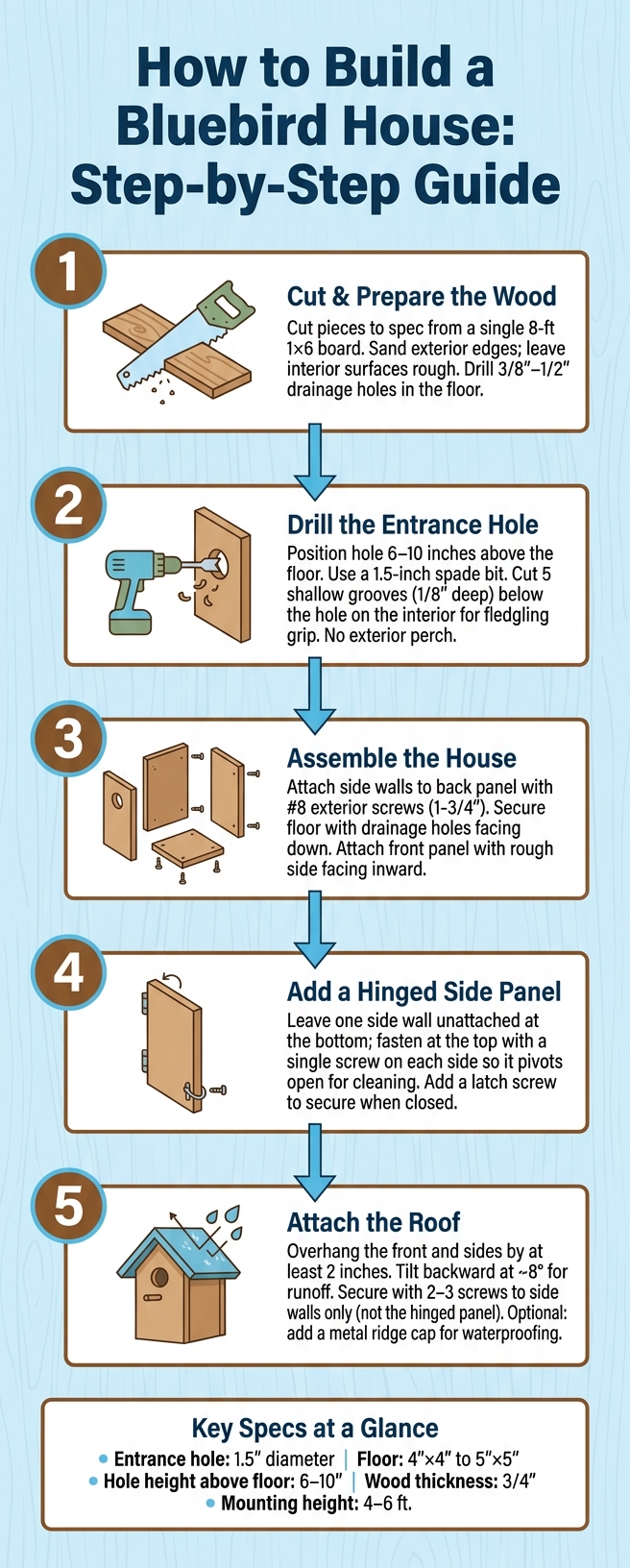
How to Build a Bluebird House: Step-by-Step Guide
With your wood pieces cut and tools ready, it’s time to assemble your bluebird house. Follow these steps to turn your materials into a sturdy and functional home for bluebirds.
Step 1: Cut and Prepare the Wood Pieces
Start by measuring and marking each piece according to your cut list. Sand the exterior edges for a smooth finish, but leave the interior surfaces rough – especially the front panel. This detail is crucial, as noted by Oklahoma State University Extension:
"The inside wall facade should be rough in texture rather than sanded too smooth. This allows the fledglings to climb out once they are ready." [1]
After cutting, drill four or five drainage holes (³⁄₈ to ½ inch in diameter) into the floor or clip its corners to allow water to escape. If your roof design sits flush against the walls without any gaps, drill additional ³⁄₈-inch ventilation holes near the top of each side wall to ensure proper airflow.
Step 2: Drill the Entrance Hole
Mark the center point for the entrance hole on the front panel, positioning it 6 to 10 inches above the floor. Use a 1½-inch spade bit or hole saw to create a clean, round opening, as specified in the design. Sand the edges of the hole to prevent injury to the birds. On the interior side of the front panel, cut five shallow grooves (⅛ inch deep and spaced ¾ inch apart) below the entrance. These grooves act as a ladder for fledglings to climb out of the nest [2].
Important: Avoid adding a perch outside the entrance. According to Professor Qing Lana Luo of Oklahoma State University:
"There should never be a perch on the front wall as the birds do not need it, and it only helps predators climb inside the birdhouse." [1]
Step 3: Assemble the House
Begin assembly by attaching the two side walls to the back panel using exterior-grade wood screws (#8, 1¾ inches). Pre-drill each screw hole to prevent the wood from splitting. Next, secure the floor between the side walls, ensuring that the drainage holes or clipped corners are unobstructed and face downward.
Finally, attach the front panel, keeping its rough side facing inward. Double-check that the entrance hole is centered and positioned at the correct height.
Step 4: Add a Hinged Panel for Cleaning
Incorporate a hinged side panel for easy nest cleaning. Leave one side wall unattached at the bottom and fasten it at the top with a single screw on each side. This allows the panel to pivot outward from the bottom. Use a latch screw to secure the panel when closed [1]. This feature ensures the house remains sturdy during nesting while allowing for convenient cleaning in the fall or early spring.
Step 5: Attach the Roof
Position the roof so it overhangs the front and both sides by at least 2 inches. This overhang helps shield the entrance from rain and makes it harder for predators to access the opening. If your side walls were cut with an 8-degree slope, the roof will naturally tilt backward, directing water runoff away from the entrance.
Secure the roof with two or three screws, attaching it to the side walls but not the hinged panel. For extra durability, the Mountain Bluebird Trails Conservation Society suggests adding a metal ridge cap along the roof peak to improve waterproofing and extend the lifespan of the birdhouse [2].
Mounting and Placement Tips
Best Mounting Methods
Getting the mounting right is just as important as the construction of the box itself. A smooth metal pole is your best bet – avoid using a tree, fence post, or wooden stake. Chris Briggs from JCS Wildlife emphasizes this point:
"Mounting your bluebird box on a pole is the best option… this provides much better protection from predators, especially when a baffle is used." [6]
To keep predators like raccoons, snakes, and squirrels at bay, pair the pole with a domed predator baffle installed below the box. Make sure the entrance hole is positioned 4 to 6 feet above the ground – this height deters predators while still allowing easy access for maintenance.
If your yard has tough, compacted, or rocky soil, consider using a ground screw or ground twister anchor instead of trying to force a standard pole into the ground. Avoid setting the pole in cement; while it might seem sturdy, it makes relocating the box difficult and can negatively impact the soil over time [5].
Where to Place the House
Once the mounting is secure, location is everything. Bluebirds thrive in open areas with short grass and clear sightlines, where they can easily spot insects on the ground. According to the Baltimore Bird Club:
"If you put up a bluebird house near an old field, orchard, park, cemetery, or golf course, you’ll have a good chance of attracting a pair of bluebirds." [7]
For the best results, face the entrance east or northeast. This orientation provides morning warmth while protecting the interior from the hot afternoon sun and strong winds. This is especially important in regions with humid summers, like Maryland. Keep the house at least 100 yards away from other bluebird boxes to prevent territorial conflicts, and avoid placing it near bird feeders [7].
Choosing the right location doesn’t just protect the nest – it also makes seasonal upkeep much easier.
Seasonal Maintenance and Care
Eastern Bluebirds can raise two to three broods per season [6], so regular cleaning between broods is critical. Old nesting material can house blowfly larvae, mites, and bacteria, which pose a risk to the next family. After the fledglings leave, remove the used nest, clean the interior with a 1:9 bleach solution, and let it air-dry completely before closing it up [8].
In the fall, once nesting activity has ceased (usually by September in Maryland), give the box a thorough cleaning. Check for loose screws, cracks, or clogged drainage holes. Curtis Goodman from Mountain Bluebird Trails Conservation Society advises:
"Simple repairs now will extend the lifespan of each box." [8]
Before spring arrives, inspect the box for any winter damage, such as debris in drainage holes or ice-related cracks, to ensure it’s ready for the new season.
During the summer nesting months, check the box every one to two weeks for wasp nests or signs of invasive house sparrows, which can displace bluebirds if not managed [7].
Adding Bluebird Houses to Your Maryland Yard
Pairing Bluebird Houses with Native Plants
Adding a bluebird house to your yard works best when paired with native plants. These plants play a critical role in creating a supportive habitat for bluebirds.
Trees like oaks (Quercus), cherries (Prunus), and birches (Betula) are particularly beneficial because they host hundreds of caterpillar species – the primary food source for bluebird chicks. Research conducted in the Washington, D.C., area revealed that yards with more than 30% non-native plants had lower fledgling success rates. Desiree Narango, a postdoctoral researcher, highlighted this connection:
"Backyards that had less than 30 percent non-native plant biomass were able to sustain Carolina chickadee populations, while areas with greater than 30 percent non-native plant biomass sometimes would forgo breeding or had lower fledgling success." [9]
For bluebirds, winter food is just as important. Shrubs like gray dogwood, southern arrowwood, and Virginia creeper produce berries that provide essential nutrients when insects are scarce [9]. To find these plants, Maryland homeowners can check resources like the Maryland Native Plant Society or the Maryland Biodiversity Project to identify species native to their specific county [9][10].
The next step is to think about how your yard’s layout and features can further support bluebird activity.
Working with Hardscape and Drainage Features
The design of your yard plays a big role in attracting bluebirds. Since they prefer open spaces with short grass for hunting insects, it’s best to avoid placing their house near dense shrubs or shaded patios. Ideally, the birdhouse should be 20 to 50 feet from wooded or bushy areas – close enough for cover but open enough for foraging [1][2].
Hardscape features like walkways and patios can actually help. Positioning a bluebird house near a paved path makes it easier to monitor the nest during the breeding season, even in wet weather. Proper yard grading is also essential: standing water near the pole can attract predators and destabilize the house. Good drainage keeps the area safe and stable for bluebirds [1].
One crucial detail: avoid placing the house in areas treated with pesticides or herbicides. These chemicals can harm the insects bluebirds rely on and may directly endanger the birds themselves [2].
How Pro Landscapes MD Can Help
Blending native plants with practical hardscape features can be tricky, but that’s where Pro Landscapes MD comes in. They specialize in creating outdoor spaces that support both your lifestyle and local wildlife across central Maryland, including Howard County, Montgomery County, and Baltimore County.
Their team handles everything from grading and drainage to native plant selection, ensuring your yard is ideal for bluebirds. They also design and install walkways, patios, and other hardscape features that make it easier to maintain birdhouses. Whether you’re starting fresh or improving your current yard, Pro Landscapes MD tailors their plant choices to your soil and location, rather than relying on a one-size-fits-all approach.
"We can help cavity-nesting species like Eastern Bluebirds… by providing the right kind of nest box in the right habitat." – Maryland Bird Conservation Partnership [10]
A thoughtfully designed yard doesn’t just look good – it becomes a true haven for bluebirds.
Conclusion
Building a bluebird house plays a crucial role in supporting Maryland’s wildlife. Eastern Bluebirds face challenges due to urban development, land clearing, and the removal of natural nesting sites like dead trees. Nest boxes have become essential for helping these birds thrive [2][4].
By constructing and maintaining a bluebird house with the right specifications, you provide a secure nesting space while enhancing your yard’s natural appeal. Important features include a 1.5-inch entrance hole, a floor size of 4″ × 4″ or 5″ × 5″, and a mounting height of 4 to 6 feet. Using a metal pole with a predator guard adds an extra layer of safety [11]. Regular upkeep, such as cleaning the box and using a 10% bleach solution between broods, helps keep parasites at bay and ensures the box remains a welcoming home [4][11].
"It is a rare treat to be on hand when the young birds leave the nest for the first time." – Michigan Bluebird Society [4]
To take it a step further, consider pairing your birdhouse with native plants and creating well-drained, thoughtfully designed outdoor spaces. These additions can make your yard even more inviting for bluebirds. For expert help in creating a wildlife-friendly landscape that blends seamlessly with your lifestyle, check out Pro Landscapes MD.
FAQs
How do I keep predators off a bluebird house?
To keep predators away from a bluebird house, adding a cedar predator guard around the entrance hole is a smart move. These guards act as a barrier, keeping out larger birds, squirrels, and other potential threats.
For installation, secure the guard firmly with screws to ensure it stays in place. You can also explore using copper portals for an extra layer of protection. Don’t forget to check the guard regularly and make any necessary adjustments or repairs to keep it working effectively.
How can I stop house sparrows from taking the box?
To keep house sparrows from invading your bluebird house, you can use a few effective deterrents. One option is the Sparrow Shield, which features weighted, moving lines that sparrows tend to avoid. Another method is a sparrow spooker, which uses shiny Mylar strips to scare them away.
For best results, position your bluebird boxes 3 to 5 feet off the ground and at a distance from buildings, as this setup can discourage sparrows from taking over. Remember to keep an eye on the situation and remove any deterrents once native birds have fledged – this helps ensure sparrows don’t get used to them over time.
What native plants best attract bluebirds to my yard?
Native shrubs and trees that bear berries are perfect for drawing bluebirds to your yard. These plants not only supply essential food but also create natural shelter. Additionally, dense hedges and conifers can help protect bluebirds from predators. Choosing plants native to your area is key – they’re more likely to flourish and will better support local wildlife.
Chat with Us