









- bhavya gada
- No Comments
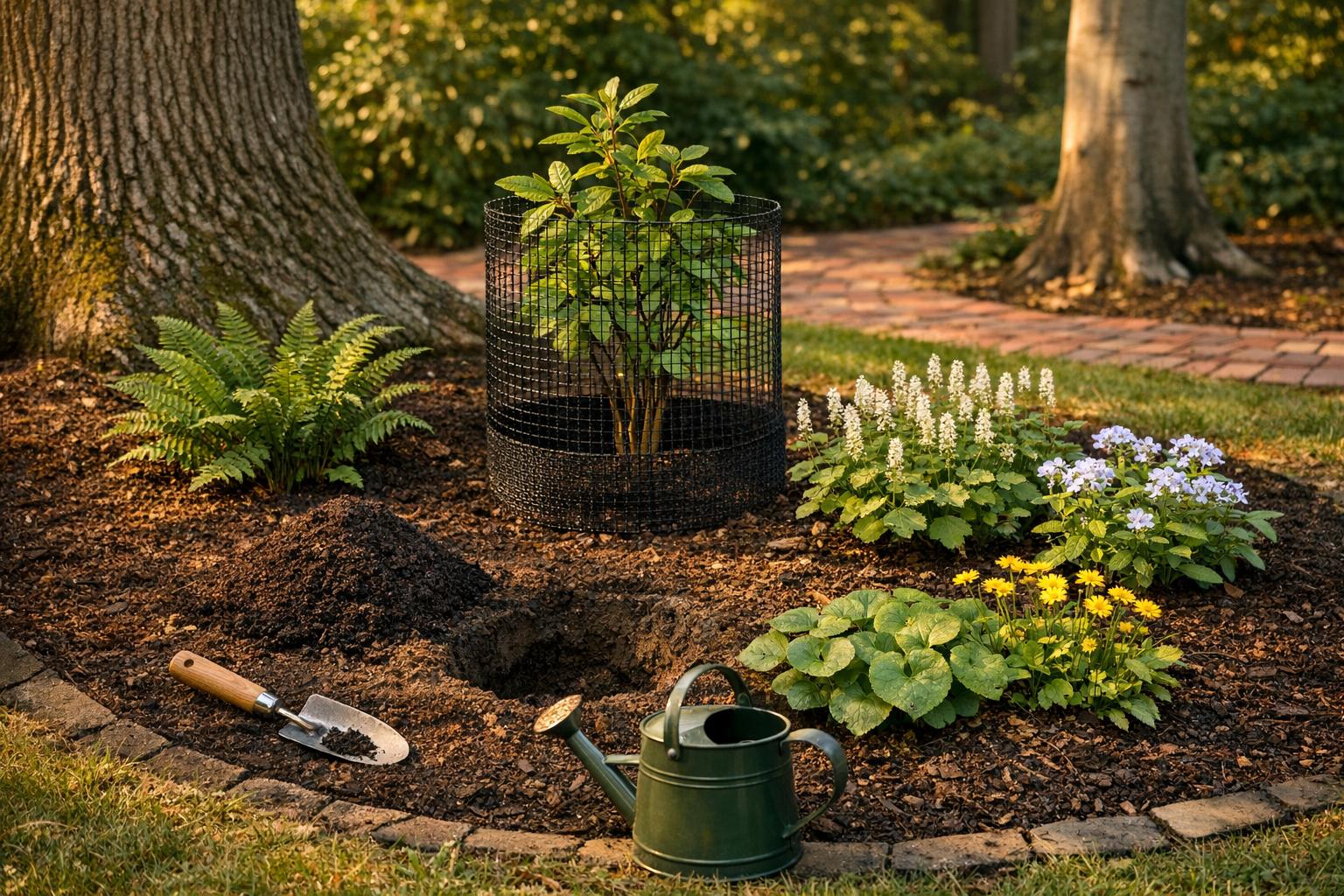
Native shade gardens in Maryland are an eco-friendly way to beautify your outdoor space while supporting local wildlife. These gardens use plants naturally suited to Maryland’s shaded environments, such as foamflower, spicebush, and Christmas fern. Here’s a quick guide to get started:
Key Steps:
- Site Assessment: Evaluate light, soil, and wildlife activity.
- Bed Preparation: Remove unwanted plants, protect tree roots, and improve soil.
- Plant Selection: Choose native species for groundcovers, shrubs, and trees.
- Planting & Aftercare: Use proper techniques, water deeply, and mulch appropriately.
Benefits:
- Reduced need for watering and chemicals.
- Support for pollinators, birds, and beneficial insects.
- Seasonal visual interest with minimal maintenance.
Pro Tip: Spring and fall are the best planting seasons for Maryland gardens. For areas with deer pressure, opt for deer-resistant plants like wild ginger and Pennsylvania sedge.
Follow these steps to create a thriving shade garden that’s both functional and beautiful.
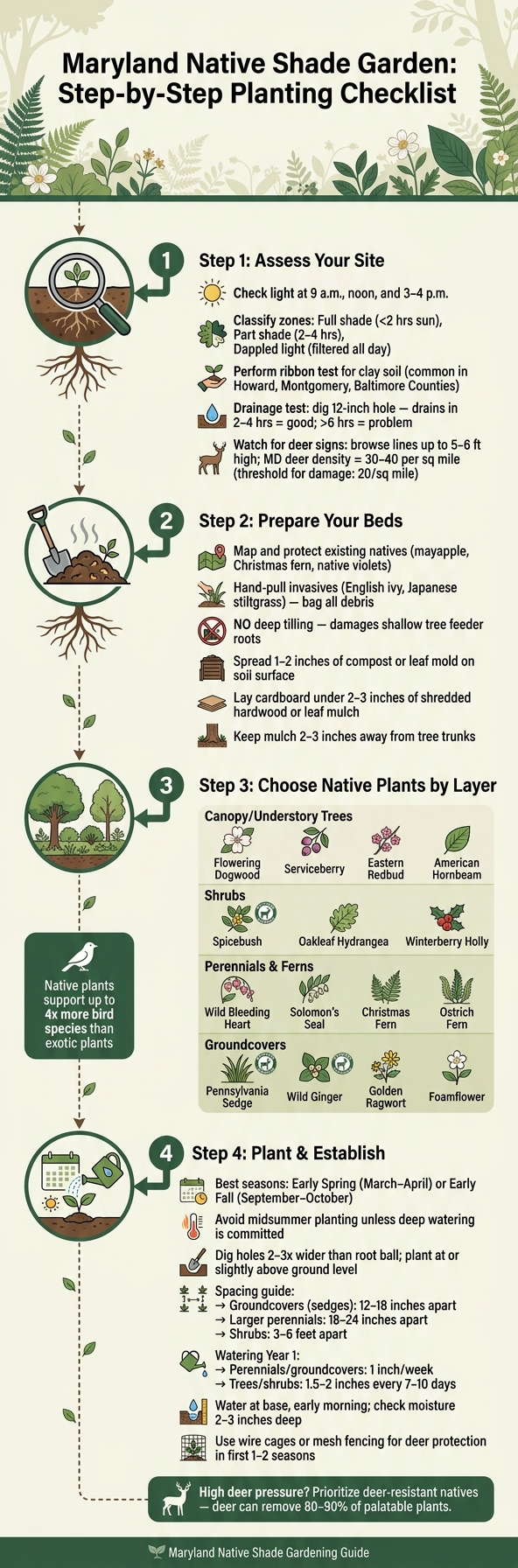
Maryland Native Shade Garden: Step-by-Step Planting Checklist
Understory Native Plant Design Tutorial | Shade Garden Layout + Plant Selection
sbb-itb-843f8be
Site Assessment Checklist for Maryland Shade Gardens
Building a thriving Maryland native shade garden starts with understanding your site. A thorough assessment helps you avoid costly errors and ensures your garden will flourish for years to come.
Light and Shade Analysis
To figure out how light moves through your yard, check it at three key times on a clear day: 9 a.m., noon, and between 3–4 p.m. Take notes on which areas are sunny, partially lit, or fully shaded during each time frame. Use the following categories to classify each zone:
| Shade Type | Direct Sun Per Day | Typical Location |
|---|---|---|
| Full shade | Less than 2 hours | North side of buildings, under dense oak or maple trees |
| Part shade | 2–4 hours | Woodland edges, open-canopy understory areas |
| Dappled light | Filtered all day | Beneath tall, high-branched trees like mature oaks |
Keep in mind that Maryland’s deciduous trees create shifting light conditions. For example, a spot in deep shade during summer may get direct sunlight in early spring, making it perfect for spring ephemerals but unsuitable for summer bloomers. These observations are critical for planning soil and drainage evaluations, as well as selecting plants that thrive in your garden’s unique conditions.
Soil and Drainage Evaluation
Start by performing a ribbon test on moist soil. If the soil forms a long, sticky ribbon, it likely contains a lot of clay – common in areas like Howard, Montgomery, and Baltimore Counties. This influences which plants will thrive. For a deeper understanding, consider sending a soil sample to a University of Maryland Extension–recommended lab. They can provide detailed information on pH, organic matter, and nutrient levels, helping you make informed decisions about amendments and plant choices.
To test drainage, dig a 12-inch hole, fill it with water, let it drain, then refill it and time how long it takes to empty. If it drains within 2–4 hours, the site has adequate drainage. If it takes more than 6 hours, there’s an issue. Also, after a heavy rain, check for areas with standing water that linger for more than 24 hours. These spots may require moisture-tolerant native plants or drainage solutions. If you’re dealing with chronic drainage problems near structures or hardscapes, consider professional help. Pro Landscapes MD (prolandscapesmd.com) offers stormwater management, French drains, and grading services throughout central Maryland, which can prevent water issues from damaging your garden.
Once you’ve assessed soil and drainage, it’s time to evaluate wildlife pressures that could impact your garden.
Deer and Wildlife Considerations
In many Maryland counties, white-tailed deer populations exceed 30–40 deer per square mile, far beyond the 20 deer per square mile threshold where forest understory diversity begins to decline. According to research from the University of Maryland Extension, this level of deer activity can quickly destroy a new shade garden if you don’t plan accordingly.
Look for signs of deer activity like browse lines (where foliage is eaten up to 5–6 feet high), hoof prints, droppings, or well-worn paths near fence lines or wooded edges. If your neighbors’ plants show significant damage, your site likely experiences high deer pressure, and you should prioritize deer-resistant native plants.
Additionally, watch for smaller wildlife. Rabbits leave clipped stems near the ground, while voles create surface runways and tiny holes in mulched areas. These observations can help you decide if protective measures like temporary netting or wire baskets around young plants are necessary to ensure your garden thrives.
Preparation Checklist for Planting
Now that you’ve assessed your site, it’s time to get your garden beds ready for planting. Putting in the effort now will save you time and energy later, reducing the need for constant weeding, watering, and replanting. A well-prepared bed is the key to a thriving native shade garden.
Remove Unwanted Vegetation
Start by creating a site map to pinpoint any valuable native plants you want to keep. It’s easy to miss plants like mayapple, Christmas fern, or native violets, so take your time to identify them and mark their locations.
Next, tackle the problem plants. For ground-level English ivy, hand-pull it when the soil is moist, using a hand fork to carefully loosen the roots. Avoid pulling too hard, as this can damage nearby tree roots. If ivy has climbed tree trunks, cut the vines at chest height and at the base. Let the upper sections die off naturally – never rip them from the bark, as this can harm the tree. For Japanese stiltgrass, pull or trim it with a string trimmer just before it flowers in late summer to stop it from setting seed. Be sure to bag all plant debris, as stiltgrass seeds can linger in the soil for years.
Avoid using broad-spectrum herbicides near tree roots or desirable plants. If necessary, spot-treat stubborn patches by applying herbicide directly to the cut stems or leaves with a small applicator rather than spraying.
Once you’ve cleared out unwanted plants, shift your focus to protecting tree roots and improving the soil.
Improve Soil and Protect Tree Roots
One of the biggest mistakes people make when preparing a shade garden is deep tilling, which can seriously harm mature tree roots. These feeder roots are shallow and spread far beyond the canopy, so even light digging can damage them. Instead of tilling, spread 1–2 inches of compost or leaf mold over the soil surface once or twice a year. Let earthworms do the work of incorporating it into the soil.
When you’re ready to plant, use a hand trowel to dig small, individual holes between visible roots. If you hit a large root, adjust the planting spot rather than cutting into it. Never add more than 2–3 inches of soil or mulch at a time over existing roots, as thicker layers can suffocate them. Keep mulch and compost pulled back a few inches from tree trunks to avoid moisture buildup, which can lead to rot or attract pests. If your site has significant grading or compaction issues near mature trees, consider consulting a professional like Pro Landscapes MD to avoid long-term tree damage while achieving your desired layout.
Once your soil is in good shape, you can move on to designing and mulching your beds.
Plan Bed Layout and Mulching
With your site cleared and the soil improved, it’s time to design your beds. Aim for wide, flowing curves that follow the natural contours of the tree canopy. Larger beds are easier to maintain, with fewer edges to trim and more space for plants to establish, which naturally helps suppress weeds. For deeper beds, include mulched or stepping-stone paths so you can access the center without compacting the soil or trampling plants.
Apply 2–3 inches of shredded hardwood or leaf mulch, but keep it a few inches away from tree trunks. After removing invasive plants, lay plain cardboard sheets directly on the soil before adding mulch. This biodegradable layer helps suppress regrowth without disturbing the soil and will break down within a season or two as your plants take root.
Native Shade Plant Selection Checklist
This checklist helps you match plants to Maryland’s specific shade conditions, building on your site profile and bed preparation. Start by noting your shade type, soil moisture, and deer pressure. If deer pressure is high (they can remove up to 80–90% of palatable plants), focus on deer-tolerant groundcovers like Pennsylvania sedge or wild ginger. Use these tips to make sure each garden layer thrives in your space.
Groundcovers for Shade
Soil moisture is a key factor when choosing groundcovers. For dry shade under mature trees like oaks or maples, consider Pennsylvania sedge (Carex pensylvanica). It handles root competition well, requires little irrigation, and can even serve as a soft, meadow-like alternative to traditional lawns in tough areas. Wild ginger (Asarum canadense) is another great option, forming dense, heart-shaped foliage that spreads gradually through rhizomes. Both are less appealing to deer, which is a big plus in many Maryland neighborhoods.
For moist or average shade, like areas near downspouts or in low-lying spots, golden ragwort (Packera aurea) is a standout choice. This plant offers year-round soil coverage with its dense rosettes, bright yellow flowers in spring that attract pollinators, and excellent weed suppression. Pair it with foamflower (Tiarella cordifolia), which spreads through short runners and features delicate white blooms in spring. To establish these groundcovers, plant them on a 12–18 inch grid and let them fill in over one or two growing seasons.
Once your groundcover is established, you can add layers of interest and structure with native perennials, ferns, and shrubs.
Perennials, Ferns, and Shrubs for Structure
Native ferns are workhorses in Maryland shade gardens. Christmas fern (Polystichum acrostichoides) stays green year-round, providing structure even in winter. For wetter areas, ostrich fern (Matteuccia struthiopteris) and sensitive fern (Onoclea sensibilis) add bold textures.
To bring in color and wildlife, wild bleeding heart (Dicentra eximia) offers pink blooms from spring to early summer and attracts hummingbirds. Solomon’s seal (Polygonatum biflorum) adds elegance with its arching stems, white flowers, and blue-black berries that birds love.
On the shrub side, spicebush (Lindera benzoin) is a must-have. It’s a host plant for spicebush swallowtail butterflies, tolerates both wet and average shade, and resists deer. Oakleaf hydrangea (Hydrangea quercifolia) provides seasonal interest with large white flower clusters and peeling bark in winter. For wetter spots, winterberry holly (Ilex verticillata) offers vibrant red berries that are a vital food source for birds in fall and winter. Studies show that yards with native plants can support up to four times more bird species compared to those dominated by exotic plants, making shrubs like these a valuable addition.
Layering With Trees and Shrubs
To mimic the structure of a Maryland woodland, layer your garden with canopy trees, understory trees, mid-story shrubs, and a groundcover or perennial layer. For the understory, flowering dogwood (Cornus florida) and serviceberry (Amelanchier canadensis) are excellent picks. These trees bloom early in spring, provide fruit for birds, and stay compact. Eastern redbud (Cercis canadensis) adds a stunning magenta-pink display in April and thrives in dappled light. For shadier, wetter areas, American hornbeam (Carpinus caroliniana) is a reliable choice.
Combining these trees with the shrubs, ferns, and perennials mentioned above creates a layered, self-sustaining system that reduces maintenance over time.
Planting and Establishment Checklist
Best Planting Seasons
Timing matters when it comes to planting. In Maryland, the ideal windows are early spring (March–April) and early to mid-fall (September–October). Spring is particularly suited for container-grown perennials and groundcovers, giving them a full growing season to establish. Fall, on the other hand, is often better for woody plants like shrubs and understory trees. Cooler air combined with warm soil encourages root growth even after top growth slows, helping plants get a solid start for spring.
According to the University of Maryland Extension, perennials planted in fall often perform better than those planted in spring, as roots continue to grow in Maryland’s mild fall soils even when top growth slows.
It’s best to avoid planting during midsummer heat unless you’re ready to commit to consistent, deep watering. If you’re dealing with heavy clay or poorly drained soil, spring planting is safer, as it prevents roots from sitting in cold, wet soil through winter.
Proper Planting Techniques
When planting under mature trees, aim for minimal soil disturbance. Avoid using a rototiller since most fine feeder roots are within the top 12–18 inches of soil and often extend 2–3 times beyond the tree’s canopy. Instead, use a hand trowel or narrow spade to create small planting pockets between visible roots. If you encounter a large root, adjust the hole slightly instead of cutting through it.
For each planting hole, make it 2–3 times as wide as the root ball, ensuring the plant sits at or slightly above ground level. If you’re working with container plants, gently loosen any circling roots before planting. Use your existing native soil for backfilling rather than adding rich compost, which can trap water in clay-heavy soils and create a "bathtub" effect. Firm the soil gently to remove air pockets, and water the area slowly.
Spacing is key for healthy growth. Use the plant’s mature spread as your guide:
- Shade groundcovers like sedges: 12–18 inches apart
- Larger perennials: 18–24 inches apart
- Shrubs: 3–6 feet apart, depending on the species
Stagger plants in offset rows for quicker coverage and a more natural look. Once planted, focus on consistent watering and mulching to support establishment.
Watering and Aftercare
Proper watering and care after planting are crucial for strong root development. Right after planting, water deeply and slowly to moisten the soil 6–9 inches below the surface. For the first growing season:
- Perennials and groundcovers need about 1 inch of water per week from rain or irrigation.
- Trees and shrubs require 1.5–2 inches over the root zone every 7–10 days if rainfall is insufficient.
Deep, infrequent watering encourages roots to grow downward, which is better than daily light sprinkling. To check soil moisture, press your finger 2–3 inches into the soil; water if it feels dry at that depth. Always water at the base of plants in the early morning to reduce the risk of foliar diseases.
After watering, apply a 2–3 inch layer of mulch (shredded leaves, bark, or wood chips) across the planting bed. Keep mulch 2–3 inches away from stems and tree trunks to avoid rot and pest issues. If deer are a concern, consider temporary wire cages or mesh fencing around young shrubs and vulnerable perennials for the first one to two growing seasons. Rotate deer repellents and reapply after heavy rain to maintain their effectiveness.
For larger or more complex planting projects, such as native shade installations under mature trees, working with professionals like Pro Landscapes MD can help manage planting, mulching, and deer protection effectively across Maryland communities.
Conclusion and Professional Support
By following the step-by-step checklist, creating a thriving Maryland native shade garden becomes an achievable goal. Start by evaluating your site conditions, preparing the soil and beds, choosing plants suited to those conditions, and ensuring consistent watering and mulching during the first 1–2 growing seasons. Sticking to this sequence helps avoid common pitfalls. For more complex situations, seeking professional assistance can make a big difference in achieving the best results.
Even small changes, like replacing a struggling patch of lawn with native groundcovers, can boost ecosystem benefits while cutting down on maintenance. Starting with one well-prepared garden bed and expanding gradually is a practical, low-risk way to build your shade garden.
If your project involves challenges like poor drainage, steep slopes, or mature tree roots, professional expertise ensures these elements are handled effectively. This is especially important when integrating your shade garden with existing or planned hardscaping for a seamless, functional design.
Why Work With Pro Landscapes MD?

When you’re unsure or dealing with tough site conditions, turning to experts can save time and effort. Pro Landscapes MD specializes in projects that combine planting, drainage, and hardscaping, offering a team with deep regional knowledge. Their staff includes college-educated horticulturists, a professional landscape designer, and a licensed Maryland forester, ensuring site planning and plant selection are tailored to local conditions.
"As a college educated horticulturalist, professional landscape designer and a licensed Maryland forester, landscape design and landscape restoration are specialty services offered by our company." – Pro Landscapes MD [1]
Pro Landscapes MD provides solutions like French drains, dry riverbeds, and grading to tackle water management issues before they harm plant roots or your home’s foundation. They also design and construct features such as flagstone patios, retaining walls, natural stone steps, and garden walls that integrate beautifully with native shade plantings. This approach creates a cohesive and functional outdoor space rather than disconnected elements.
For homeowners in Howard County, Montgomery County, Baltimore County, and nearby areas, they also offer ongoing maintenance services, ensuring your garden thrives long after the initial planting season.
FAQs
How do I know if my shade is full, part, or dappled?
Understanding your garden’s shade type is an important step in planning. Take note of how much direct sunlight hits the ground each day: full shade means less than 3 hours of sunlight, part shade gets 3 to 6 hours, and dappled shade happens when sunlight filters through tree canopies, creating moving light patterns. If you’re unsure, Pro Landscapes MD can evaluate your garden’s conditions to help your native plants flourish.
What native plants are best for dry shade under large trees?
Choosing plants for dry, shady areas under large trees can be tricky. These spots often have limited sunlight and competition for water. Pro Landscapes MD specializes in identifying plants that thrive in Maryland’s climate, even in these challenging conditions. They assess factors like soil quality, light availability, and garden size to recommend the best options for your space. For expert advice and a customized planting plan, call 410-940-9664 to schedule a site visit.
How can I protect new plants from deer in Maryland?
If you’re looking to shield your new plants from deer in Maryland, one effective approach is to choose native plant species. These plants are naturally more resistant to deer damage and thrive in the local environment. For expert help, Pro Landscapes MD offers professional garden design and plant selection services tailored to creating resilient landscapes. Get in touch with their team at (410) 940-9664 to arrange a site visit and receive a personalized assessment for your garden.
Chat with Us