









- bhavya gada
- No Comments
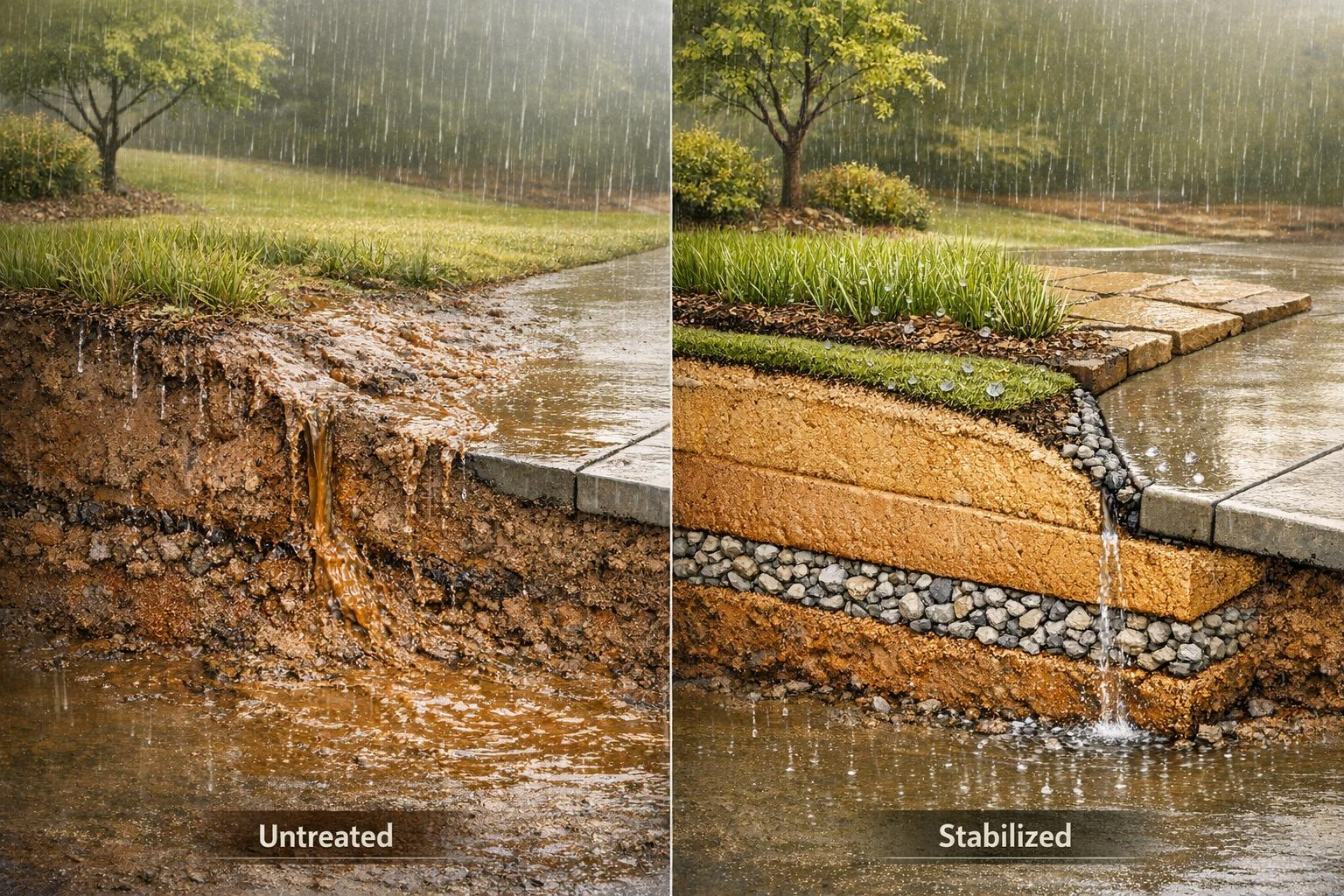
Chemical soil stabilization is a fast and effective way to combat soil erosion. By using chemical agents like polymers, binders, or lime, this method strengthens soil, reduces runoff, and prevents damage caused by rain, freeze-thaw cycles, and water pooling. It’s particularly useful in areas with clay-heavy soils, such as Maryland, where erosion can undermine foundations and create costly repairs.
Key highlights:
- How it works: Chemicals bond soil particles, forming a stable layer that resists erosion.
- Common stabilizers: Polymers, organic binders, salts, and cement-based agents.
- Applications: Protects slopes, gardens, driveways, and hardscapes like patios.
- Benefits: Improves soil strength, reduces water runoff, and supports plant growth.
How Soil Stabilization Ensures Strong Foundations
sbb-itb-843f8be
Types of Chemical Stabilizers for Erosion Prevention
Chemical Soil Stabilizers for Erosion Control: Types, Uses & Benefits
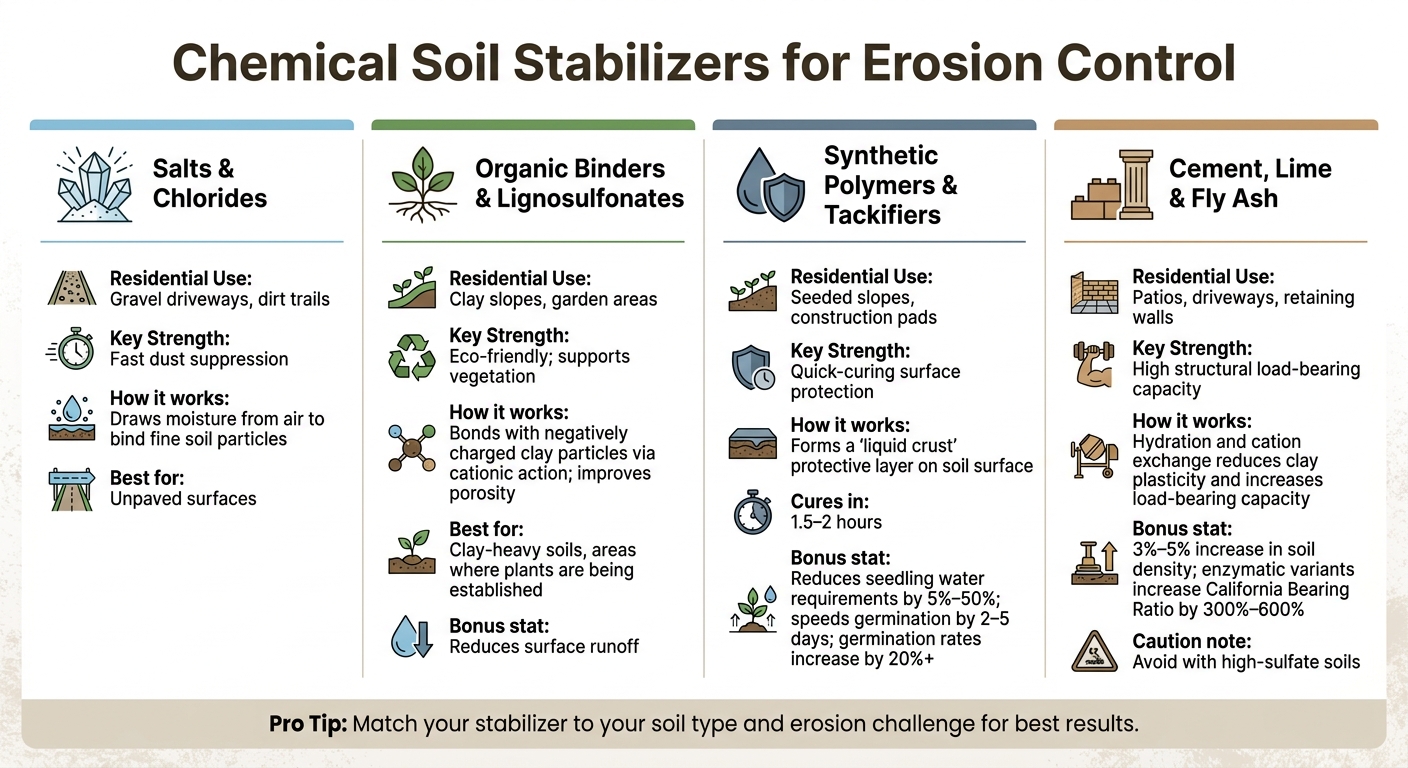
The performance of chemical stabilizers depends largely on the type of soil and the specific conditions of the site. Below are four categories commonly used for residential erosion control, each with its own advantages tailored to different applications.
Salts and Chlorides
Calcium chloride and sodium chloride are commonly used to bind fine soil particles by drawing moisture from the air. These stabilizers are particularly effective for controlling dust on unpaved surfaces like gravel driveways, dirt trails, and other similar areas.
Organic Binders and Lignosulfonates
Organic binders, including lignosulfonates, plant-based rosins, and enzyme products, work by bonding with negatively charged clay particles through cationic action. This method is especially effective in clay-heavy soils, such as those found in Maryland. It enhances soil porosity, reduces surface runoff, and creates a stable layer that encourages plant growth. Because these binders are derived from natural sources, they are an environmentally friendly choice for areas like gardens or slopes where vegetation is being established.
Synthetic Polymers and Tackifiers
Polymer-based stabilizers, such as vinyl/acrylic emulsions and polyvinyl acetate formulations, form a protective layer often referred to as a "liquid crust" on the soil surface.
"Surface polymer treatments form a protective shield that resists wind erosion, rainfall impact and sheet flow." – Mike Cohn, Vice President, Rock Solid Stabilization & Reclamation, Inc. [2]
These stabilizers are ideal for newly seeded slopes or bare soil areas around construction zones. Products like Terra-Control offer quick protection to exposed soil while also reducing water requirements for seedlings by 5% to 50%, supporting healthy plant growth [3].
Cement, Lime, and Fly Ash
For areas that need to withstand structural loads, such as patio sub-bases, driveway subgrades, and retaining wall backfills, calcium-based stabilizers like cement, lime, and fly ash are often used. These materials work by hydration and cation exchange, which reduces the plasticity of clay soil and increases its load-bearing capacity. Using cement or lime can result in a 3% to 5% increase in soil density [3]. However, caution is needed when working with soils high in sulfate content, as these can react poorly with calcium-based additives, leading to expansion and structural issues [1]. In such cases, polymer-based or enzyme alternatives may be safer options.
| Stabilizer Type | Residential Use | Key Strength |
|---|---|---|
| Salts & Chlorides | Gravel driveways, dirt trails | Fast dust suppression |
| Organic Binders | Clay slopes, garden areas | Eco-friendly; supports vegetation |
| Synthetic Polymers | Seeded slopes, construction pads | Quick-curing surface protection |
| Cement, Lime & Fly Ash | Patios, driveways, retaining walls | High structural load-bearing capacity |
How to Apply Chemical Stabilization for Erosion Control
Identify Erosion-Prone Areas
After heavy rainfall, take a walk around your property to spot areas where water collects and erosion occurs. Pay extra attention to spots where gutters and downspouts empty, as these often create localized washouts.
Look for signs like rill erosion (small, parallel channels in bare soil), exposed tree roots, or thinning topsoil on slopes. More serious indicators include cracks near foundations, leaning retaining walls, or voids forming under patios. If you see gullies – deep, wide washouts – this could mean structural issues that need immediate attention.
In areas like Maryland with heavy clay soils, this inspection is even more critical. Clay tends to repel water rather than absorb it, concentrating erosion in predictable low spots. Additionally, late-winter freeze-thaw cycles can loosen soil, making it more prone to spring washouts.
Once you’ve mapped out problem areas, you can move on to selecting the right chemical stabilizer for the job.
Choose the Right Stabilizer
The type of stabilizer you choose should address the specific erosion challenges you’ve identified:
- Clay-heavy slopes or garden beds: Organic binders like lignosulfonates work well to bond soil particles and support plant growth.
- Newly seeded or bare slopes: Liquid polymer tackifiers offer quick surface protection and reduce the water needs of seedlings.
- Gravel paths or unpaved driveways: Acrylic emulsions or chloride-based products provide durable dust and runoff control.
- Patio sub-bases or retaining wall backfills: Lime or cement stabilization is the best choice for long-term strength.
Andrew Earles, Vice President of Wright Water Engineers Inc., explains:
"If you have really poor quality soils and you choose a soil stabilization strategy that relies on having to have vegetation grow, you may be waiting a long time for soil stabilization…" [4]
If vegetation isn’t likely to thrive, polymer or cement-based stabilizers might be more reliable.
Application and Maintenance
Once you’ve chosen the right stabilizer, follow these steps to ensure effective application:
For slopes or garden areas:
- Clear away any loose debris.
- Dilute the polymer or tackifier (typically between 4:1 and 12:1 ratios) and spray it evenly over the surface.
- If you’re seeding at the same time, the stabilizer will help hold the seeds in place and retain moisture for germination. Some polymer stabilizers cure in as little as 1.5 to 2 hours [3].
For paths or driveways needing deeper stabilization:
- Scarify the surface to a depth of 3 to 10 inches.
- Apply the stabilizer evenly and mix it thoroughly into the soil.
- Grade the area to maintain a slight slope (at least 2%) to direct water away from structures.
- Compact the area while it’s still wet to remove air pockets and create a strong bond.
As Chris Rider, Owner of DirtGlue Enterprises, emphasizes:
"The last step is very important: Compact it, probably with a vibratory compactor, when it’s wet. The less air, the stronger the bond." [3]
After curing for 5 to 7 days, treated areas should be stable under normal conditions. For ongoing durability, apply a maintenance coat annually to surface-treated areas. Also, check drainage systems twice a year to ensure they’re free of debris and functioning properly.
Benefits of Chemical Stabilization for Maryland Landscapes
Protecting Landscapes from Soil Loss
Maryland’s heavy clay soil has a natural tendency to shed water rather than absorb it, making it highly susceptible to erosion. Polymer-based stabilizers address this issue by creating a protective surface layer that acts like a "liquid crust." This layer resists damage from rainfall, wind, and sheet flow, shielding vulnerable areas like bare slopes, garden beds, and newly seeded spots. It provides critical protection during the early stages before vegetation can fully establish. Additionally, polyvinyl acetate-based stabilizers improve water absorption, reducing runoff and speeding up seed germination by two to five days, with germination rates increasing by over 20% [3].
This layer not only safeguards soil but also strengthens the foundation for nearby hardscape features.
Improving Hardscape Durability
Chemical stabilization also enhances the durability of patios, walkways, retaining walls, and driveways by reinforcing the soil beneath them. Unstable subgrade soil can jeopardize the stability of these structures. Stabilizers mitigate this risk by reducing the swelling and shrinking of expansive clay soils and decreasing soil permeability. This, in turn, minimizes hydrostatic pressure behind retaining walls. Enzymatic stabilizers, for example, can increase a soil’s California Bearing Ratio by 300% to 600% [3], resulting in less settling under patios and fewer costly repairs.
"Water undermining retaining walls, saturates foundation soil, creating settlement under patios and walkways… This is where repair costs jump from hundreds to tens of thousands of dollars." – Sam Forline, Owner, Blue Collar Scholars [5]
Working with professionals like Pro Landscapes MD ensures that stabilized subgrades are paired with expertly installed retaining walls or paver patios, creating a more resilient and long-lasting landscape.
But stabilization works even better when combined with effective drainage systems.
Combining Stabilization with Drainage Solutions
While chemical stabilization strengthens and protects soil, pairing it with drainage solutions takes erosion control to the next level. Stabilizers alone can’t handle large volumes of fast-moving water. By integrating features like French drains, swales, or catch basins, you can redirect runoff before it gains enough momentum to cause damage. Mike Cohn, Vice President of Rock Solid Stabilization & Reclamation, Inc., highlights the importance of this combined approach:
"Effective stabilization strategies combine engineered materials with natural systems to create multi-layered erosion control." [2]
This strategy is especially important in Maryland, where freeze-thaw cycles and heavy spring storms can accelerate soil erosion. Grading the land to maintain proper slopes, installing drainage systems, and treating the soil with the right stabilizer work together to create a robust system. Each element supports the others, ensuring your landscape can withstand Maryland’s challenging weather conditions.
Safety and Environmental Considerations
Safe Handling of Stabilizers
When it comes to chemical stabilizers used in residential projects, most are generally safe if handled properly. Controlling dust during application is a top priority. Using water-based emulsions with spreader trucks can significantly reduce airborne particles. As Sante Tulli, Superintendent at Stavola Construction in Tinton Falls, NJ, explains:
"You get a little film atop the soil, which keeps dust to a minimum." [3]
It’s also crucial to respect the curing time of the product. Many polymer-based stabilizers need about 1.5 to 2 hours to set fully and become water-resistant. Applying them too close to rainfall can wash the product away before it properly bonds, which diminishes its effectiveness.
Reducing Environmental Impact
Minimizing environmental impact starts with selecting the right stabilizer. Waterborne stabilizers are a better choice than water-soluble ones because they form a stable film after curing. This film resists re-dissolving or leaching into the soil. John Vermillion, President of Environmental Products and Applications, compares it to paint:
"Envirotac II is like a water-based paint – it won’t leach and is cured within 1½ to 2 hours. Eventually UV light breaks it down, and it dissipates into the soil, but by then the vegetation will have grown up." [3]
Many synthetic stabilizers today are designed to degrade under UV light over one to three growing seasons. This allows them to naturally disappear as vegetation takes hold. For clay-heavy soils, such as those in Maryland, timing is critical. Applying stabilizers during dry weather prevents uncured material from running off into storm drains or streams. Pairing stabilizers with native, deep-rooting grasses can also reduce long-term water needs and encourage natural soil recovery.
Local Regulations and Permits in Maryland
Before applying any chemical stabilizer, it’s essential to check local rules. In Maryland, many erosion control projects require permits, especially near waterways. Federal NPDES guidelines and county-specific stormwater regulations also play a role [3][5]. Dust control projects may need to comply with PM10 air-quality standards [3]. To ensure compliance, look for products with DOT approvals [6] and consult a local soil erosion inspector early in the process. This can help you avoid expensive corrections later.
Conclusion
Chemical soil stabilization offers a reliable way to protect Maryland’s landscapes from erosion. Whether dealing with heavy clay soils or the challenges of freeze-thaw cycles, the right stabilizer can create a strong matrix that keeps soil in place. This ensures the stability of everything from patios and retaining walls to driveways and garden beds.
As Mike Cohn, Vice President of Rock Solid Stabilization & Reclamation, Inc., explains:
"Soil stabilization is a key component of long-term erosion prevention, especially as extreme weather, site disturbance and regulatory pressures continue to escalate." [2]
This highlights the importance of a well-rounded approach. Combining chemical stabilizers with native vegetation, proper drainage systems, and adherence to Maryland’s stormwater and NPDES regulations is often the most effective strategy. There’s no one-size-fits-all solution – the best results depend on factors like soil type, slope, and water flow patterns on your property.
Professional expertise is essential for success. Effective stabilization requires identifying areas where water accelerates, testing soil composition, and selecting the right stabilizer for the site’s specific needs. Missteps in application can lead to wasted effort, regulatory issues, or ongoing erosion problems.
For tailored erosion control solutions, Pro Landscapes MD specializes in drainage, grading, and landscape restoration services across Howard County, Montgomery County, and surrounding areas. Their expertise ensures your property is protected with precise chemical soil stabilization designed for long-term results.
FAQs
How long does chemical soil stabilization last?
Chemical soil stabilization offers a short-term fix for erosion control. Its durability hinges on factors such as weather conditions, the specific chemical used, and how much the site is trafficked. For example, surface-applied polymer products typically last about 8 months to a year if there’s no heavy traffic. Other treatments might hold up for 1 to 3 seasons, depending on the amount of rainfall. However, over time, exposure to UV light and moisture gradually breaks these stabilizers down, allowing them to integrate into the soil.
Will stabilized soil harm my plants, pets, or groundwater?
The impact of soil stabilization largely hinges on the type of product applied. Some eco-friendly choices, like synthetic polymer emulsions, are safe and even encourage seed growth. On the other hand, traditional additives – such as petroleum-based stabilizers or chloride compounds – can pose risks to plants, pets, and water sources. Pro Landscapes MD opts for biodegradable, plant-based solutions to avoid leaving harmful residues and to support the long-term health of the soil.
Do I need a permit in Maryland to use soil stabilizers?
Yes, you might need a permit. Soil stabilization rules differ depending on the location to ensure proper sediment control and environmental protection. It’s best to consult your local permitting office to verify what’s required for your specific project. Partnering with experienced professionals can help you navigate Maryland’s regulations and tackle the state’s distinct soil and drainage challenges efficiently.
Chat with Us