









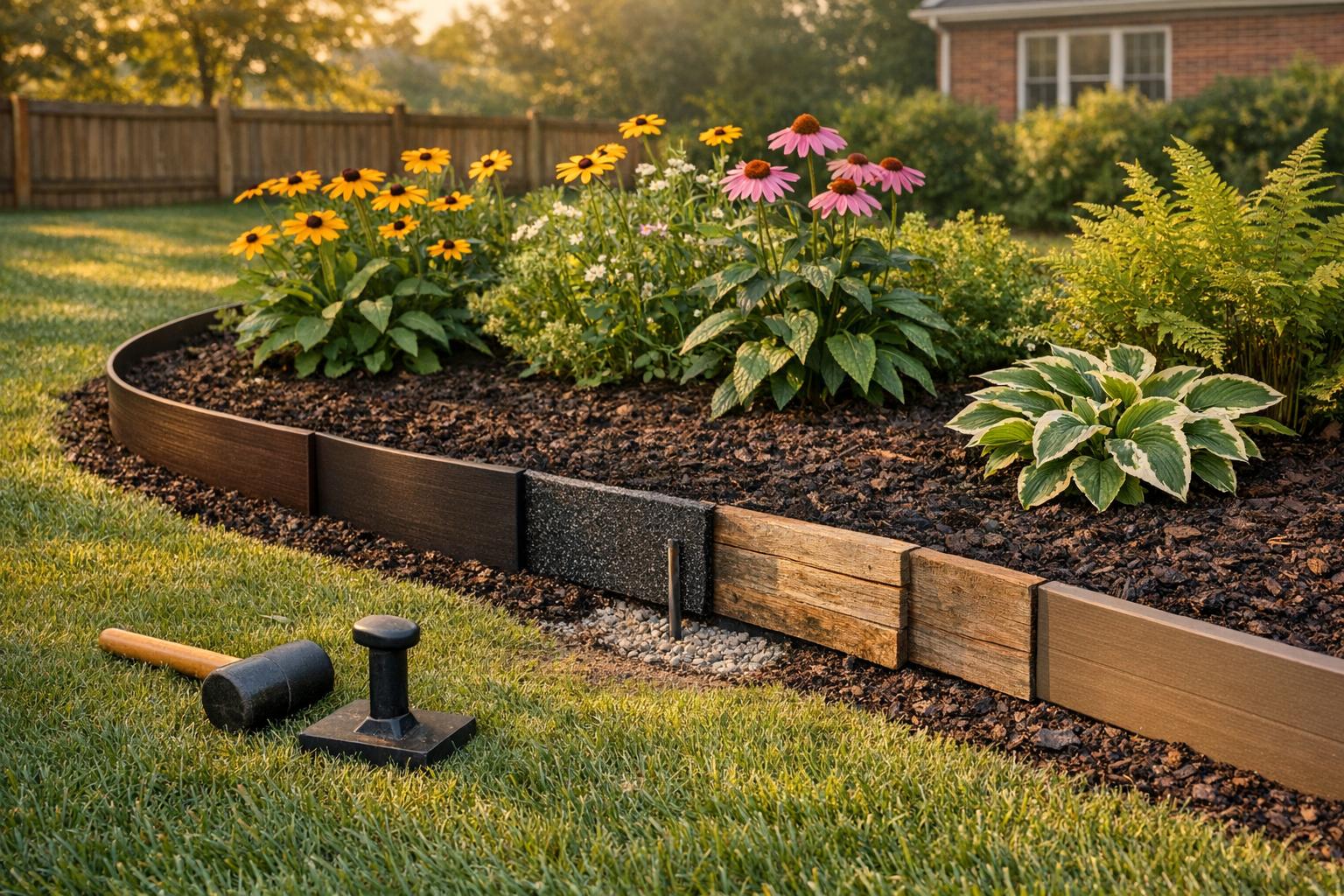
- bhavya gada
- No Comments
Eco-friendly garden edging offers a smart way to create clean borders while using recycled or sustainable materials like plastic, rubber, wood, or stone. These materials not only last longer but also reduce waste. For example, recycled plastic can last up to 30 years, far outpacing wood options that often break down in 5–7 years. Here’s what you need to know:
- Best Materials: Recycled plastic, rubber, reclaimed wood, and composite materials work well in gardens, especially in areas with extreme weather like Maryland.
- Durability: Recycled plastic and composite materials are the most durable, lasting decades with minimal upkeep.
- Cost Considerations: Rubber edging is budget-friendly ($2–$4 per linear foot), while recycled plastic has a higher upfront cost but saves money long-term.
- Maryland-Specific Tips: Use materials like rubber or composite that resist freeze-thaw cycles and heavy rain. Avoid untreated wood, which rots easily in humid conditions.
- Installation Basics: Dig trenches 4–6 inches deep, secure edging with stakes, and backfill for stability.
Whether you’re aiming for long-lasting solutions or budget-friendly choices, selecting the right material and proper installation ensures your garden edging stays in place and looks great for years.
15 Natural Garden Edging Ideas: Beautiful & Eco-Friendly Borders
sbb-itb-843f8be
Evaluating Your Garden’s Needs
Before you buy any edging material, start by mapping out your garden’s shape. Use a garden hose to outline the borders – it’s a simple but effective way to visualize both straight lines and curves [2][4]. As EOS Outdoor Services explains:
"Curved bed edging should be designed to allow a mower to easily mow right up to the edge (too-tight curves are more challenging to install and make mowing more complex than needed)." [4]
Analyzing Your Garden’s Layout
The layout of your garden plays a big role in determining the type of edging you’ll need. Straight lines work best with sturdy materials like reclaimed wood or steel, while flexible materials such as recycled plastic or rubber are better suited for curved designs [5][6].
When preparing for installation, measure your chosen edging material carefully and dig a trench that’s 2 inches deeper and 1 inch wider than the material for added stability [6]. Most edging should be installed 4–6 inches deep to block grass roots from spreading underneath [3][2]. And don’t forget to factor in Maryland’s unique weather and soil conditions when making your choice.
Accounting for Maryland Weather and Soil Conditions
Maryland’s climate and soil can be tough on garden edging, so durability is key. The heavy Piedmont clay in central Maryland doesn’t drain well and tends to pool water, which can lead to "frost heave" – a process where the soil shifts and pushes poorly anchored edging out of place [1][4].
For Maryland’s temperature extremes, recycled rubber edging is a great option. It stays flexible in temperatures ranging from -40°F to 160°F, making it ideal for the region’s freeze-thaw cycles [1]. If you’re working with clay-heavy soil, consider laying a gravel or sand base under stone or brick edging to prevent shifting [3][6]. Avoid using standard sapwood, which absorbs moisture and rots easily in Maryland’s humid summers. Instead, choose rot-resistant reclaimed hardwoods like cedar or oak, or go for recycled plastic materials that won’t absorb water [1][4].
Planning Your Edging Budget
Budgeting for garden edging involves more than just the initial cost – long-term maintenance matters too. For example, recycled plastic lumber may cost 40–60% more upfront compared to pressure-treated wood, but it can save you around $3–$5 per linear foot over 20 years because it requires no maintenance [1].
Here’s a quick look at typical costs:
- Recycled rubber edging: $2–$4 per linear foot
- Reclaimed steel strips: 30–50% cheaper than new steel
- Recycled plastic lumber: Higher upfront cost, but zero maintenance [1]
Keep in mind that some materials need ongoing care. Reclaimed wood, for instance, requires annual applications of boiled linseed oil, while steel needs rust-prevention coatings, which can cost $2–$3 per linear foot [1].
For front yards where appearance matters most, invest in durable materials like stone or metal. For less visible areas, like backyard vegetable gardens, you can save money by using simpler options like natural trenches [3].
Best Eco-Friendly Edging Materials
When designing a garden in Maryland, choosing the right eco-friendly edging can make all the difference. These options not only help the environment but also stand up to the state’s unique climate. Recycled plastic lumber is often considered the top choice. As noted by Epic Plastics:
"For professional landscapers and homeowners alike, plastic landscape edging provides the best balance between affordability, functionality, and sustainability." [2]
With a lifespan of 20–30 years – compared to just 5–7 years for traditional wood – recycled plastic edging is a durable and sustainable solution. It also helps reduce landfill waste while resisting rot, insects, and UV damage [1]. Below are some of the best eco-friendly edging materials for Maryland gardens.
Recycled Plastic Edging
Recycled plastic edging, made from post-consumer waste, is a standout for Maryland’s variable climate. Because it doesn’t absorb moisture, it performs well during freeze-thaw cycles, avoiding cracking or warping. High-density polyethylene (HDPE) versions are especially strong and UV-resistant [7]. While its upfront cost is 40–60% higher than pressure-treated lumber, the long-term savings and 20–30 year lifespan make it a smart investment [1]. Plus, it’s often recyclable at the end of its life, adding another layer of environmental benefit [1].
Recycled Rubber Edging
This edging repurposes old tires, giving new life to materials that would otherwise clog landfills. Recycled rubber edging is highly flexible, adapting well to ground movement and extreme temperatures, from -40°F to 160°F [1]. At $2–$4 per linear foot, it’s a budget-friendly choice. The flexibility also makes it lawn mower-friendly, but it’s best to keep it at least 3 feet from vegetable beds to avoid potential chemical leaching [1].
Natural Wood or Log Edging
Reclaimed wood offers a rustic, eco-conscious option. Using salvaged materials like barn siding, fence boards, or fallen logs reduces the need for new timber and creates biodegradable borders. Opt for naturally decay-resistant species such as oak or cedar, and treat the wood annually to prolong its life [1]. Be cautious of wood painted before 1978 to avoid lead exposure [1]. While reclaimed wood typically lasts 5–10 years, it’s often free or low-cost, making replacements manageable [1].
Composite Edging
Composite edging combines recycled plastic with wood fibers, offering the look of natural timber alongside the durability of plastic. This hybrid material resists rot and doesn’t require chemical treatments [1]. It’s also more stable than concrete or traditional wood in Maryland’s fluctuating temperatures [1][2]. Though installation costs can be 15–20% higher due to its weight and the need for specialized tools, the 15–20 year lifespan and minimal upkeep make it a worthwhile choice [1].
Comparing Eco-Friendly Edging Options
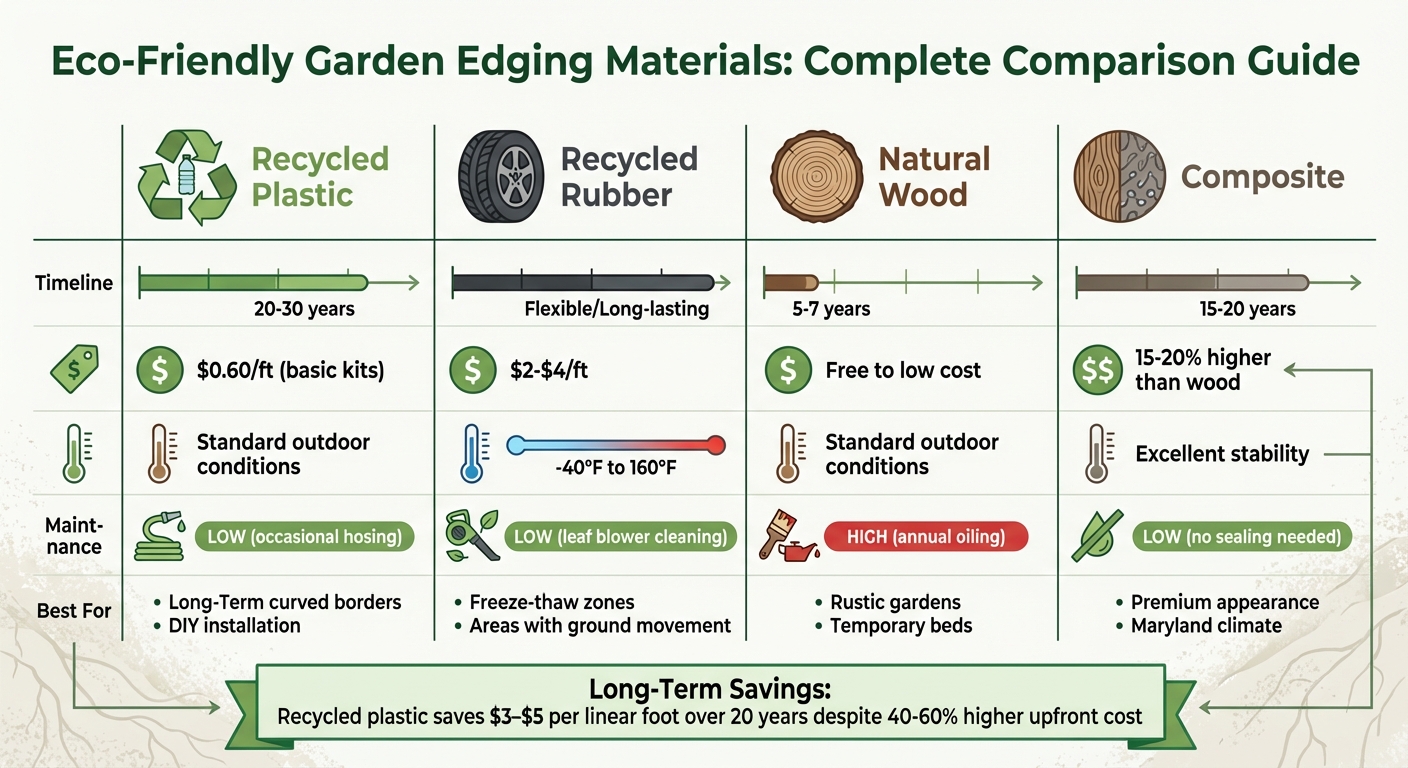
Eco-Friendly Garden Edging Materials Comparison: Cost, Durability & Maintenance
Let’s break down the eco-friendly edging materials to see how they stack up in terms of durability, cost, and environmental impact. Your choice will depend on your garden’s specific needs and conditions.
Durability varies significantly among materials. Recycled plastic can last an impressive 20–30 years, while natural wood typically holds up for only 5–7 years. Composite edging offers a middle ground, with a lifespan of 15–20 years [1].
In climates like Maryland, where temperatures fluctuate greatly, material tolerance is a key factor. Recycled rubber remains flexible in extreme conditions, from -40°F to 160°F. Composite edging is also a reliable choice, resisting warping and maintaining stability. However, if you’re planning to use recycled rubber, keep it at least 3 feet away from vegetable gardens to avoid any potential leaching of petroleum compounds [1].
Cost is another crucial consideration. Recycled plastic has a higher upfront cost – 40–60% more than alternatives – but saves money over time, reducing costs by $3–$5 per linear foot over 20 years. Recycled rubber is often the most budget-friendly, priced at $2–$4 per linear foot. Natural wood can sometimes be sourced at little to no cost from demolition sites or municipal arborists, making it an affordable option for rustic or temporary projects [1].
Here’s a quick comparison to help you decide:
Edging Materials Comparison Table
| Material | Lifespan | Cost Range | Temperature Range | Maintenance Level | Best For |
|---|---|---|---|---|---|
| Recycled Plastic | 20–30 years | $0.60/ft (basic kits) | Typical outdoor conditions | Low (occasional hosing) | Long-term curved borders; DIY installation |
| Recycled Rubber | Flexible | $2–$4/ft | -40°F to 160°F | Low (leaf blower cleaning) | Freeze-thaw zones; areas with ground movement |
| Natural Wood | 5–7 years | Free to low cost | Typical outdoor conditions | High (annual oiling) | Rustic gardens; temporary beds |
| Composite | 15–20 years | 15–20% higher than wood | Excellent stability | Low (no sealing needed) | Premium appearance; Maryland climate |
Pro Tip: When cutting composite edging, go for carbide-tipped blades. Standard tools may dull quickly when working with this material [1].
This table simplifies the decision-making process, helping you weigh the pros and cons of each material based on your priorities. Whether you’re aiming for long-term durability, budget-friendly solutions, or a specific aesthetic, there’s an option to match your garden’s needs.
How to Install Eco-Friendly Garden Edging
Installation Steps
Getting your eco-friendly garden edging installed correctly is essential, especially in Maryland’s unique climate. Start by outlining the shape of your garden bed. A garden hose or rope works well for this step, helping you visualize and confirm your layout before digging [2].
Once the shape is set, grab a spade or flat-bottomed shovel to dig a trench about 4 to 6 inches deep along the marked line [2][3][4]. This depth is crucial – it keeps grass roots from sneaking underneath and ensures your edging material stays stable. Clear out any vegetation and debris from the trench to create a clean surface for installation [9]. For added stability, spread about 2 inches of masonry sand along the bottom of the trench. If you’re using flexible materials like recycled plastic or composite edging, leave them in the sun for an hour or two before installation to make them easier to shape around curves [6][10].
When placing the edging, make sure it sits flush with or slightly below ground level. This prevents tripping and protects the edging from lawn mower damage [5]. Secure it with landscape spikes or heavy-duty ground anchors, spacing them every 3 to 5 feet for straight sections and more frequently around curves. Use a mallet to drive the stakes in gently, avoiding damage to the edging material [1][2][10].
After securing the edging, backfill the trench by packing soil firmly against both sides using a tamping tool [6][9]. If you’re working with materials like brick or stone, fill any gaps with polymeric or coarse sand to block weed growth [6]. For cutting materials to fit, make sure to use the right tools for each type of material [5].
Following these steps ensures your garden edging is ready to handle Maryland’s freeze-thaw cycles.
Adjusting for Maryland’s Freeze-Thaw Cycles
Maryland’s weather can be tough on garden edging. The state experiences dramatic temperature swings, from freezing winters to scorching summers, which can lead to "frost heave." This happens when the ground freezes and pushes edging materials upward, throwing them out of alignment [3][4]. Basic plastic edging is especially prone to this issue, so many professionals in central Maryland recommend avoiding it [4]. Instead, opt for metal or composite materials, as they hold up much better against these conditions [1][4]. Composite materials, in particular, maintain their shape better through freeze-thaw cycles compared to solid wood or pure plastic [1].
To minimize the effects of frost heave, compact the soil tightly against both sides of the edging and use soil-gripping stakes spaced every 2 to 3 feet. For curves, closer spacing provides extra stability [9][10]. If you’re using stone edging, set it below the frost line to keep it from shifting [11]. With Maryland experiencing heavy rainfall – 73 inches in 2018 alone [8] – choosing durable, stable edging is key to preventing erosion and keeping mulch where it belongs during storms [4].
Professional Installation by Pro Landscapes MD

If you’d rather leave the hard work to the experts, Pro Landscapes MD offers professional installation services tailored to Maryland’s challenging climate. Serving areas like Howard, Montgomery, Carroll, Frederick, Prince George’s, and Baltimore Counties, their team specializes in eco-friendly landscaping solutions. They understand how to handle the state’s freeze-thaw cycles and heavy rainfall, using sustainable materials that perform well in these conditions while enhancing your garden’s appearance.
For a long-lasting, expertly installed edging solution, Pro Landscapes MD provides free consultations. They can assess your garden’s specific needs and recommend eco-friendly materials that suit both your property and Maryland’s weather.
Maintaining Your Garden Edging
Taking care of your garden edging is key to ensuring it lasts and performs well, especially in Maryland’s ever-changing climate.
Regular Inspections and Repairs
Check your garden edging at least once a year and after harsh weather conditions. Maryland’s mix of heavy rains, dry periods, and freeze-thaw cycles can shift the soil, leading to cracks or displacement. Pay close attention to connection points where sections join, as these areas are more likely to separate, which could expose sharp edges that might damage your lawnmower.
If you notice any sections of edging that have popped out of the soil – something lightweight plastic edging is prone to in freeze-thaw conditions – gently push them back into place. Secure any loose or broken stakes by tapping them deeper into the ground, especially at curves and corners. In spring, clear away winter debris and trim any overgrown grass to prevent moisture from accumulating and causing rot. These simple steps can help maintain the durability established during installation.
"Gently push any raised edging back into place and replace any broken stakes to ensure stability."
– Epic Plastics
Once repairs are done, follow these cleaning and protection techniques to keep your edging looking and functioning its best.
Cleaning and Damage Prevention
Most eco-friendly edging materials don’t need much cleaning. For recycled plastic edging, use a soft brush with a solution of 1/4 cup mild dish soap mixed into 2 gallons of warm water. For tougher stains, try a paste of baking soda and water or a vinegar solution. If you opt for a pressure washer, keep it at a safe distance to avoid damaging the surface.
Natural wood edging benefits from yearly treatment with boiled linseed oil or tung oil, which helps prevent decay without harmful chemicals. Metal edging can be protected from rust by applying a sealant or rust-converter base coat before winter. For recycled plastic edging exposed to direct sunlight, an annual application of UV protectant spray will help maintain its color and flexibility.
"One of the top reasons for edging damage is contact with lawn mowers, string trimmers, or edgers."
– Epic Plastics
To avoid mechanical damage, consider adding trimmer guards or a thin layer of mulch as a buffer. With proper care, recycled plastic edging can last 20 to 30 years, while reclaimed hardwood, when treated annually, can remain functional for 10 to 15 years or more [1].
Conclusion
Choosing eco-friendly edging not only improves your garden’s resilience but also contributes to a greener planet. Options like recycled plastic and rubber stand out for their durability. Recycled rubber stays flexible even in extreme temperatures, while recycled plastic can last for decades with very little upkeep[1].
In Maryland, the local climate plays a big role in material selection. Freeze-thaw cycles and heavy rainfall mean you need edging that works well with your garden’s layout, soil type, and sun exposure. Whether you’re drawn to composite edging for its style or recycled materials for their performance, aligning your choice with the area’s conditions is key to long-lasting results. Proper installation becomes even more important to ensure everything holds up over time.
Professional installation is especially useful for tackling challenges like frost heave, which can disrupt edging stability. Experts use proven techniques to keep your garden looking great year-round. And with regular maintenance – like annual checkups and applying natural oils or UV protectants – you can extend the life of your edging while keeping your outdoor space looking polished.
Homeowners in Howard County, Montgomery County, and nearby Maryland communities can rely on Pro Landscapes MD for top-notch eco-friendly edging services. Their landscaping and hardscaping expertise ensures sustainable, weather-resistant outdoor spaces tailored to local conditions.
FAQs
Which edging is safest for vegetable gardens?
Recycled plastic edging, crafted from tough, weather-resistant materials like high-density polyethylene (HDPE), is an excellent option for vegetable gardens. It stands up to rot, splintering, and cracking, ensuring durability. Plus, it avoids harmful chemicals that might seep into the soil, making it a safe and eco-conscious choice for growing food.
How do I prevent edging from heaving in Maryland winters?
To keep edging stable during Maryland winters, it’s important to protect the soil and manage water effectively to reduce freeze-thaw damage. Start by insulating the soil with 4–6 inches of mulch or organic materials like pine bark or straw. This helps maintain a steady soil temperature.
Next, focus on drainage. Grade the area to prevent water from pooling, as standing water can worsen freezing issues. For the edging itself, opt for frost-resistant materials such as recycled plastic. If you notice any heaving, stabilize it by adding soil and reapplying mulch around the affected edges. These steps can help your edging withstand the challenges of winter weather.
Can I install eco-friendly edging myself, or hire Pro Landscapes MD?
Yes, you can install eco-friendly edging on your own, particularly if you opt for straightforward materials like rubber or recycled options that are simple to handle. That said, for sturdier or more intricate materials like recycled plastic lumber, it’s often best to rely on professional installation. Companies like Pro Landscapes MD provide expert services to ensure your garden edging is not only sustainable but also built to last – saving you time and hassle for bigger or more detailed projects.
Chat with Us