









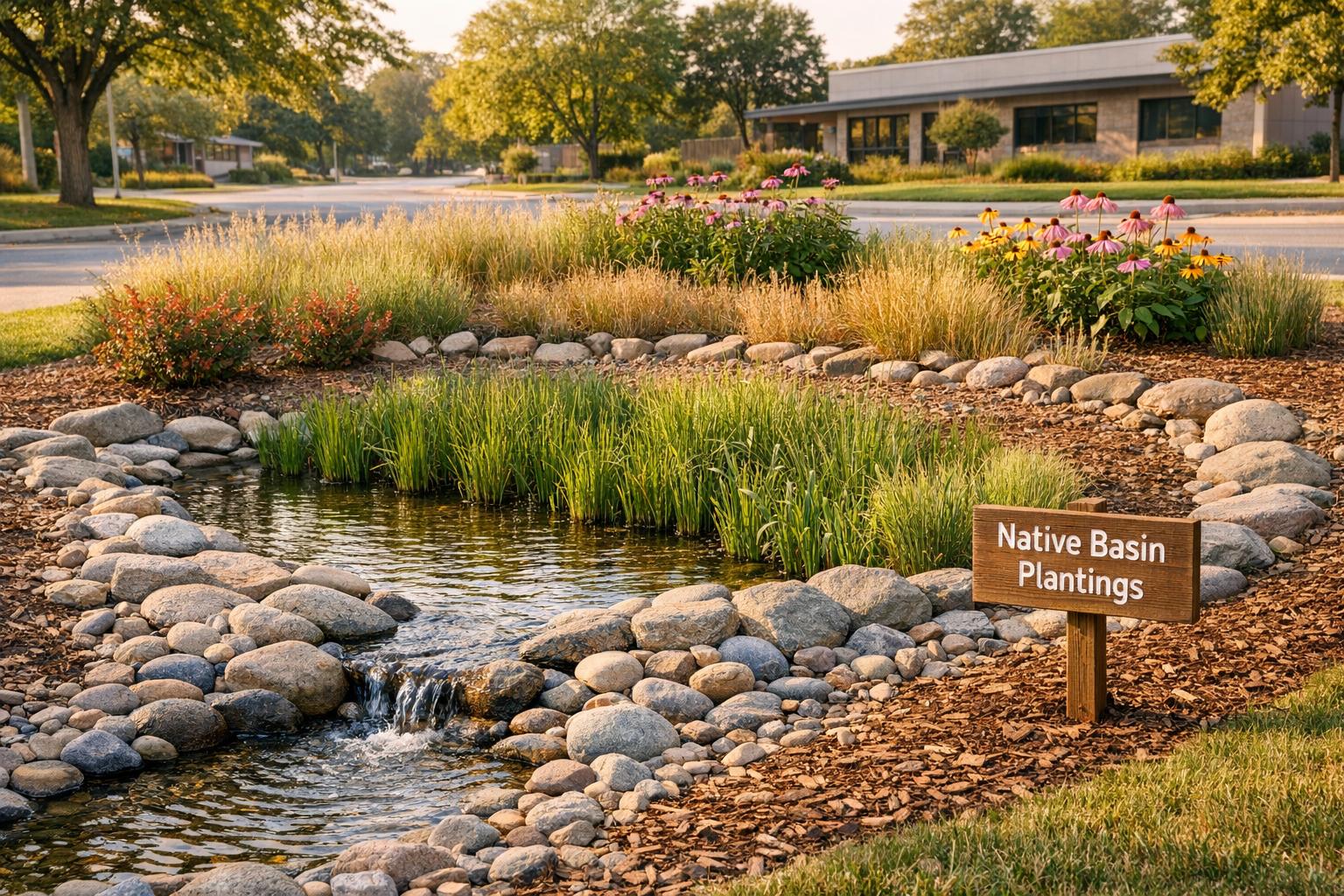
- bhavya gada
- No Comments
Native plants are the best choice for stormwater basins because they stabilize soil, manage water flow, and reduce maintenance needs. Whether you have a retention basin (wet year-round) or a detention basin (drains within 1–3 days), selecting plants suited to each zone – bottom, slopes, and rim – is essential for success. Here’s how to get started:
- Retention vs. Detention Basins: Match plants to your basin type. Retention basins need water-tolerant species, while detention basins require plants that handle both wet and dry conditions.
- Map Zones: Divide your basin into bottom (wettest), slopes (alternating wet/dry), and rim (driest).
- Assess Conditions: Test for sunlight, soil texture, and drainage in each zone to guide plant choices.
- Set Goals: Decide if your focus is runoff control, erosion prevention, or pollutant filtration.
- Plant Selection: Use native species suited for each zone. For example, sedges and rushes work well in wet areas, while grasses and shrubs thrive on slopes and rims.
- Maintenance: Water weekly during the first year, remove weeds, and inspect after storms.
Native plants not only improve stormwater management but also create habitat and reduce irrigation needs long-term. For Maryland residents, local experts like Pro Landscapes MD can provide tailored advice and services.
Understand Your Basin Type and Site Conditions
Retention vs. Detention Basins
The way water behaves in your basin is crucial. A retention basin holds a permanent pool of water throughout the year, which means the soil at the bottom stays waterlogged or submerged most of the time. Plants in this area need to handle long periods of low-oxygen, saturated conditions. On the other hand, a detention basin is designed to empty out within 24–72 hours after a storm, leaving it completely dry in between rain events. Plants here must thrive in two extremes: brief flooding followed by extended dry periods.
One common mistake is planting species unsuited to the basin type. For instance, a flood-tolerant native plant placed in a detention basin may not survive the dry summer months. Similarly, a drought-tolerant grass planted near the edge of a retention pond might not make it past the establishment phase because of excessive moisture. Matching plants to the basin’s hydrology is critical to ensure they thrive.
Map Your Basin Zones
Basin environments aren’t uniform; conditions vary significantly from the bottom to the upper edges. Dividing the basin into three functional zones before selecting plants is a smart way to account for these differences.
| Zone | Typical Conditions | Plant Focus |
|---|---|---|
| Bottom | Stays wet the longest; may remain saturated | Flood-tolerant plants like sedges, rushes, and wetland perennials |
| Slopes | Alternates between wet and dry; prone to erosion | Deep-rooted grasses, forbs, and low shrubs |
| Rim/Upland Edge | Drains quickly; driest and most stable | Upland natives, meadow grasses, and woody shrubs |
To map these zones accurately, observe your basin after two or three rain events. Look for areas where water pools, drains quickly, or leaves bare soil exposed. These observations will give you a clearer picture of your basin’s unique hydrology than any general description.
Test Sunlight, Soil, and Drainage
Once you’ve mapped the zones, it’s time to assess the specific conditions within each one. These quick tests can help you understand what plants will thrive.
- Sunlight: Track sunlight in each zone during the growing season. Classify areas as full sun (6+ hours), partial sun (3–6 hours), or shade (less than 3 hours). Basin bottoms, even in open areas, can be shaded by nearby slopes, trees, or structures.
- Soil Texture: Use a simple hand test to determine soil type. Pinch moist soil and feel its texture. Sandy soil feels gritty and crumbles easily, while clay soil feels smooth and forms a long ribbon. Clay-heavy soils retain water longer, which suits wet-tolerant plants, whereas sandy or loamy soils drain faster and support a wider variety of species.
- Drainage: Test how quickly water drains in each zone. Dig a hole 6–12 inches deep, fill it with water, let it absorb, then refill and time how long it takes to drain. If the infiltration rate is more than 1 inch per hour, the area can support a broader range of plants. If water sits in the hole for 24–48 hours in a detention basin, you’ll need near-wetland species – or consider soil amendments to improve drainage.
Pay attention to what’s already growing in the basin. Moisture-loving plants like rushes in low spots suggest persistent wetness, while sparse or stressed vegetation on slopes often indicates erosion or drought. These natural clues can confirm your observations and help refine your planting plan.
How to Build a Native Plant Rain Garden – A Step-by-Step Tutorial
Set Goals for Your Basin Planting
Before diving into plant selection, take a moment to define what you want your basin to achieve. Without clear objectives, it’s easy to get distracted by plants that look great but can’t handle the basin’s wet-dry cycles.
Stormwater Management Goals
Start by focusing on functionality. Is your basin’s main purpose to slow peak runoff, enhance water infiltration, filter polluted water, or a mix of these? For example, a residential retention basin might aim to absorb water into the ground to prevent soggy lawns or basement leaks. On the other hand, a commercial detention basin may prioritize slowing water discharge to meet local stormwater regulations.
The right plants can make a huge difference here. Species with deep, fibrous roots are especially effective – they break up compacted soil, create channels for water, and stabilize slopes against erosion. Their dense growth at ground level also slows runoff, allowing sediments and pollutants like fertilizer or road salt to settle before water leaves the basin. Shallow-rooted turf grass just can’t compete in soils that are periodically wet and compacted.
Set specific, measurable goals to track your progress. For instance, you could aim to "reduce slope erosion within one year" or "ensure standing water drains within 48 hours after a 1-inch storm." These clear benchmarks will help you evaluate whether your plant choices are delivering the results you need.
Once your stormwater goals are in place, you can shift your attention to creating a visually appealing design.
Balance Function and Appearance
With your functional goals defined, it’s time to think about aesthetics. If your basin is visible from the street or a front yard, consider a structured edge and consistent plant groupings to make it look intentional and well-maintained. For basins tucked away out of sight, you can go for a looser, more natural look with a variety of species.
A hybrid approach works well for many homeowners: keep the edges neat with low-growing plants near sidewalks or lawn borders, while allowing the interior to have a more naturalized, diverse appearance. If you live in an HOA community, a small sign like "Native Stormwater Planting Area" can help neighbors understand its purpose and reduce potential concerns.
For year-round interest, choose plants that offer something in every season. Look for early spring bloomers, vibrant summer flowers, fall seed heads, and grasses or rushes that provide winter structure. This ensures your basin looks intentional and attractive even during times when nothing is blooming.
sbb-itb-843f8be
Choose Native Plants by Basin Zone
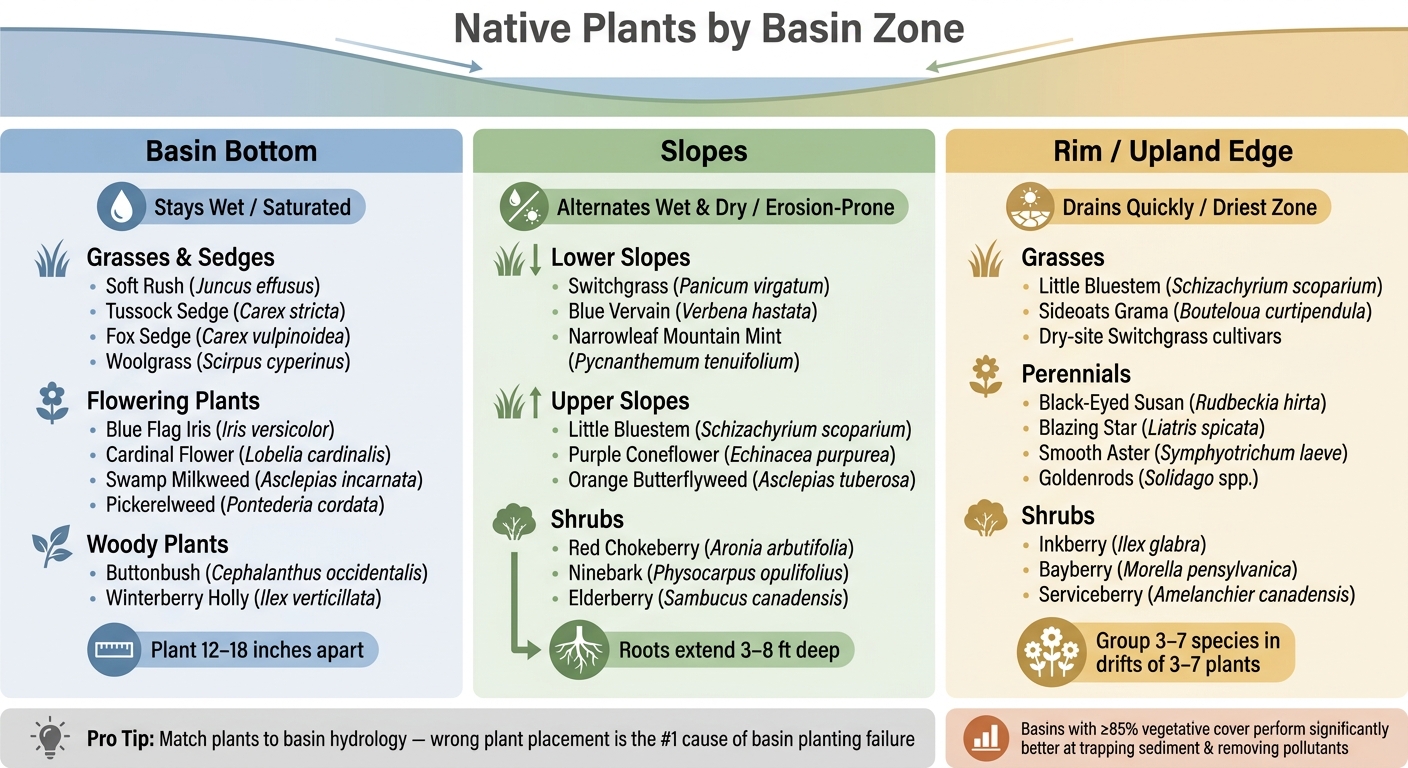
Native Plants by Basin Zone: Bottom, Slopes & Rim
When planting for a basin, the key is to match the plants to the specific conditions of each zone. Each area – bottom, slopes, and rim – has unique moisture levels, soil types, and sunlight exposure. Choosing plants that thrive in these conditions ensures they’ll work with the environment rather than against it. Let’s break down the best native plants for each zone.
Plants for Basin Bottoms
The basin bottom is the trickiest spot to plant. These areas stay wet most of the time, with low oxygen levels in the soil. Only species built to handle these conditions will thrive here.
Some of the best native plants for this zone include soft rush (Juncus effusus), tussock sedge (Carex stricta), fox sedge (Carex vulpinoidea), and woolgrass (Scirpus cyperinus). These grasses and sedges are excellent for stabilizing wet soils with their dense, fibrous root systems. If you want to add color and attract pollinators, consider flowering plants like blue flag iris (Iris versicolor), cardinal flower (Lobelia cardinalis), swamp milkweed (Asclepias incarnata), and pickerelweed (Pontederia cordata). For larger basins, buttonbush (Cephalanthus occidentalis) and winterberry holly (Ilex verticillata) provide woody structure and visual interest.
Plant these species as plugs or in small containers, spacing them 12–18 inches apart. In areas where water enters the basin with force, cluster taller plants like bulrushes to help slow the flow of water before it spreads across the bottom.
"Native plants, grasses, and water-tolerant shrubs are ideal for swales. These plants absorb water, filter pollutants, and provide habitat for local wildlife." – Pro Landscapes MD [1]
Plants for Slopes
Slopes come with their own set of challenges. The moisture levels can vary drastically – wet during rain and dry between storms – and erosion is a constant concern. Plants with deep, stabilizing roots are essential here.
For lower slopes, closer to the basin bottom, try switchgrass (Panicum virgatum), blue vervain (Verbena hastata), and narrowleaf mountain mint (Pycnanthemum tenuifolium), which can handle occasional saturation. On upper slopes, which dry out more quickly, shift to drought-tolerant plants like little bluestem (Schizachyrium scoparium), purple coneflower (Echinacea purpurea), and orange butterflyweed (Asclepias tuberosa). Warm-season grasses like switchgrass and little bluestem are particularly effective, with roots that can extend 3–8 feet deep, anchoring the soil and preventing erosion.
Adding shrubs such as red chokeberry (Aronia arbutifolia), ninebark (Physocarpus opulifolius), or elderberry (Sambucus canadensis) to mid-slopes offers even more stability and visual appeal. For steeper areas, using biodegradable erosion-control blankets can help hold the soil in place while plants establish their roots.
Plants for the Rim and Surrounding Area
The rim of the basin is where functionality meets aesthetics. This area behaves more like a traditional landscape bed, with well-drained soil that dries out between rain events. It’s also often exposed to full sun, so plants here need to tolerate drier conditions.
Grasses like little bluestem (Schizachyrium scoparium), sideoats grama (Bouteloua curtipendula), and dry-site switchgrass cultivars work well as groundcover. For vibrant, season-long color, consider perennials like black-eyed Susan (Rudbeckia hirta), blazing star (Liatris spicata), smooth aster (Symphyotrichum laeve), and goldenrods (Solidago spp.). Shrubs such as inkberry (Ilex glabra), bayberry (Morella pensylvanica), and serviceberry (Amelanchier canadensis) provide year-round structure and attract birds.
To create a natural look and support pollinators, aim to plant 3–7 species per zone, grouping them in drifts of 3–7 plants. This approach not only enhances resilience – ensuring the planting can adapt if one species struggles – but also creates a more cohesive and visually appealing design. If you’re unsure which plants will work best for your specific location, consult a local stormwater landscaping expert like Pro Landscapes MD for guidance.
Source, Plant, and Maintain Native Plants
Once you’ve chosen native plant species suited to your basin zone, the next steps are sourcing quality plants, planting them correctly, and ensuring proper maintenance. These steps are crucial to achieving the stormwater benefits discussed throughout this guide, such as controlling erosion, filtering pollutants, and improving water infiltration.
Source Plants from Local Nurseries
When buying plants, stick to nurseries that specialize in Mid-Atlantic or Maryland native species. Avoid plants labeled only as "adapted" or "wildlife-friendly", as they may not be true natives. Reputable nurseries should provide the scientific name, disclose where the plant stock originated, and ideally offer local ecotypes. These are plants grown from seeds sourced regionally, making them better suited to Maryland’s specific climate, including its rainfall patterns and temperature fluctuations.
Make sure to request nursery-grown plants. Collecting plants from the wild not only harms natural ecosystems but often results in lower survival rates. It may even break state or local regulations, especially near stormwater facilities or conservation areas. Nursery-grown plants, on the other hand, are disease-checked, hardened off, and sized appropriately for quicker establishment in engineered basins. For planting, use plugs or small containers (1–3 gallons) for basin bottoms and slopes, and larger container stock for shrubs and small trees along the rims to add structure. If you’re unsure where to find certified native plant nurseries, your county extension office can help.
Planting Steps and Timing
In Maryland, the best times to plant are mid-April through early June and mid-September through late October. Spring planting allows perennials and grasses to establish roots during the growing season, while fall planting is ideal for woody shrubs and trees, as the cooler weather and autumn rains reduce transplant stress. Avoid planting during July and August unless you can commit to frequent watering.
Before planting, inspect the basin to ensure inlets and outlets are clear and that the ponding depth is correct. Loosen compacted soil to a depth of 6–12 inches, and mix in 2–3 inches of compost on poor upper slopes and rims. On planting day, dig holes as deep as the root ball and two to three times wider. Position the plant at the same depth as it was in its pot, backfill the hole firmly to eliminate air pockets, and water thoroughly. Finish by adding 2–3 inches of shredded hardwood mulch, but keep it a few inches away from stems and trunks to prevent rot.
Long-Term Care and Maintenance
The success of your stormwater basin depends heavily on consistent maintenance. During the first growing season, water weekly – or twice a week if rainfall is less than 1 inch. Inspect the basin every two to four weeks to remove invasive species like Japanese stiltgrass, Canada thistle, and tree-of-heaven before they have a chance to spread. By the second year, once the plants are established, supplemental watering will only be needed during extended dry spells.
Avoid using blanket herbicides, as they can harm your native plants and degrade water quality downstream. Refresh the mulch layer to maintain a depth of 2–3 inches every year or two. After major storms, clear out sediment, trash, and leaf litter from inlets and basin bottoms to maintain proper storage capacity. Each spring, check for dead plants and replace them promptly – studies show that basins with ≥85% vegetative cover perform much better in trapping sediment and removing pollutants [1].
For larger or more complex basins, consider hiring a contractor experienced in stormwater management and native planting. Companies like Pro Landscapes MD can ensure your basin stays healthy while meeting local drainage compliance standards over the long term.
Conclusion
Selecting native plants for a basin involves a straightforward, repeatable process: evaluate your site, define achievable goals, choose plants suited to each zone, source plants locally, and stick to a maintenance plan. Each basin has its own unique characteristics – soil type, slope, sun exposure, and water retention after storms – so use the plant lists and tips in this article as a helpful guide rather than a rigid formula. By following this process, you can achieve noticeable improvements in stormwater management and environmental health.
A thoughtfully planted native basin does more than handle runoff. It helps filter pollutants, stabilize soil, attract pollinators, and enhances the overall design of the space. Once established, native plants can also cut irrigation demands by 50–75% compared to traditional water-intensive landscapes, making them a smart long-term investment [2].
For basins connected to larger drainage systems, located in HOA communities, or requiring significant grading, consulting a professional can make a big difference. Proper planning from the outset avoids costly mistakes, like replacing plants due to poor hydrology. Homeowners in central Maryland – including Howard, Montgomery, and Baltimore Counties – can turn to Pro Landscapes MD for expertise in native planting and integrated drainage solutions. Their services, including grading, dry riverbeds, and retaining walls, ensure your landscape functions as a unified stormwater system rather than a collection of temporary fixes.
FAQs
How do I know if my basin is retention or detention?
Retention and detention basins each serve different purposes when it comes to managing water. Retention basins are designed to hold stormwater permanently, giving water time to infiltrate the ground naturally while filtering out pollutants. Detention basins, however, temporarily store excess water, slowing its flow before gradually releasing it. If you’re unsure about your basin’s performance or need help assessing its condition, Pro Landscapes MD specializes in drainage and stormwater management solutions.
What should I do if water stands too long in my basin?
Standing water in your yard can lead to all kinds of headaches – flooding, erosion, damage to your foundation, and even attracting pests. That’s where Pro Landscapes MD comes in. They specialize in drainage solutions designed specifically for your property. Whether it’s installing French drains, berms and swales, or pipe systems, they’ve got you covered. They also offer grading and regrading services to make sure water flows the way it should. Reach out to Pro Landscapes MD for a professional evaluation and a solution that lasts.
How many plants do I need per basin zone?
When it comes to determining the number of plants needed for a basin zone, there’s no universal formula – it all depends on the specific characteristics of the site. Pro Landscapes MD takes into account crucial factors like the size of the area, the amount of sunlight it receives, and the soil type. Their team of expert horticulturists works with you to craft a garden plan that’s tailored to the unique requirements of your basin’s zones.
Chat with Us