









- bhavya gada
- No Comments
Pollinators are struggling with changing weather patterns, but planting native, climate-resilient species can help. These plants thrive in Maryland’s diverse regions and provide nectar, pollen, and shelter year-round. Here are 10 plants that support pollinators while requiring less water, fertilizer, and maintenance:
- Butterfly Milkweed: Summer blooms, drought-tolerant, supports monarch butterflies.
- Purple Coneflower: Mid-summer to fall blooms, attracts bees and butterflies.
- Black-Eyed Susan: Summer blooms, low-maintenance, bird-friendly seeds.
- Wild Bergamot: Summer to fall blooms, drought-resistant, bee-friendly.
- New England Aster: Late-season blooms, critical for monarch migration.
- Blazing Star: Long bloom periods, supports bees and hummingbirds.
- Joe-Pye Weed: Mid-to-late season blooms, attracts pollinators and birds.
- New York Ironweed: Late-summer blooms, supports bees and butterflies.
- Lanceleaf Tickseed: Early spring blooms, drought-tolerant, supports biodiversity.
- Seaside Goldenrod: Fall blooms, thrives in sandy soils, late-season nectar.
These plants not only help pollinators but also improve soil health, manage stormwater, and reduce garden upkeep. A well-planned garden with overlapping bloom periods ensures pollinators have resources all year.
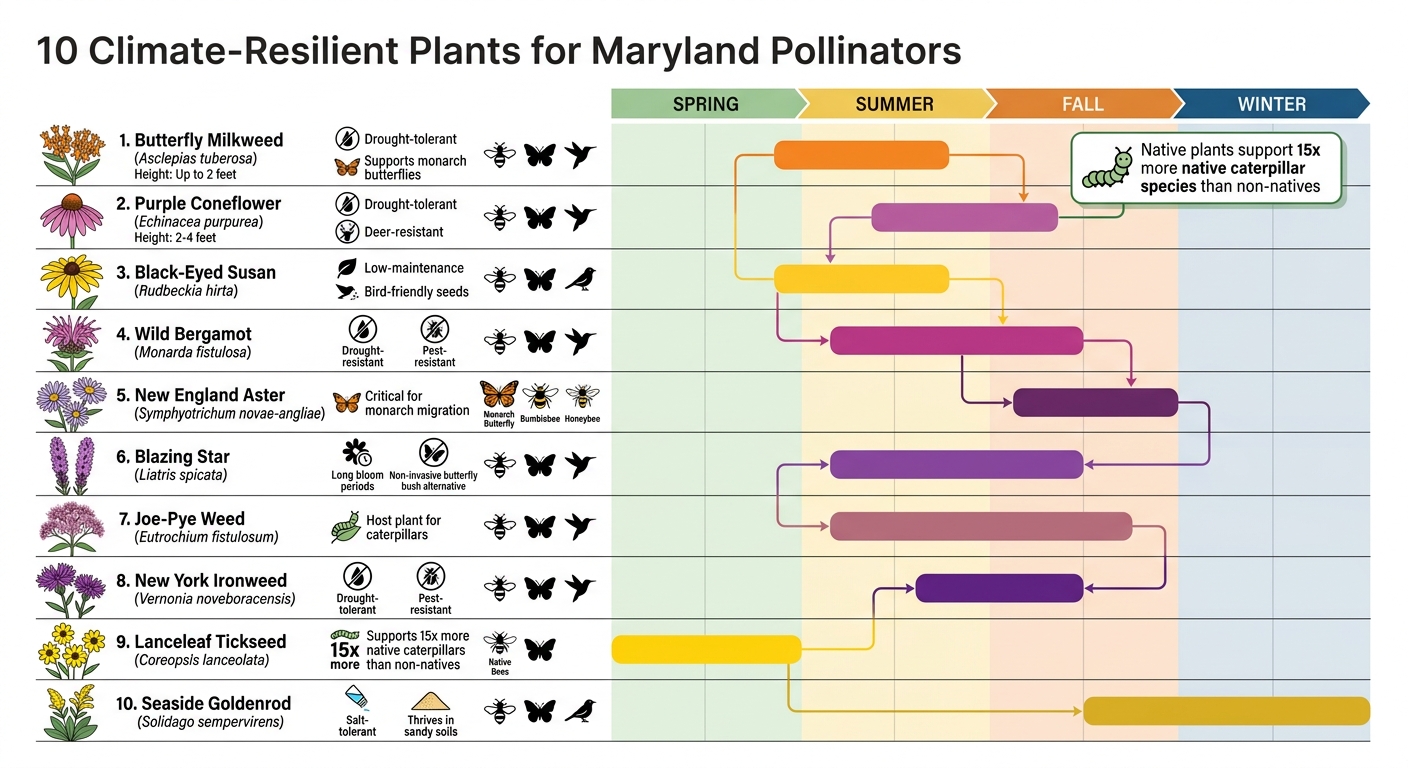
10 Climate-Resilient Native Plants for Maryland Pollinators: Bloom Times and Benefits
5 Favorite Native Garden Plants for Pollinators in the Eastern U.S. 🐝🌼
sbb-itb-843f8be
1. Butterfly Milkweed (Asclepias tuberosa)
Butterfly Milkweed is a standout native perennial in Maryland, known for its vibrant orange flowers and ability to support pollinators even in challenging weather. Typically growing up to 2 feet tall, it provides a reliable nectar source during Maryland’s hottest months.
Thriving in Dry Conditions
Once established, Butterfly Milkweed is incredibly water-efficient, making it a perfect match for Maryland’s hot, dry summers. Its deep root system enables it to withstand long stretches without additional watering. That said, it does need consistent watering during its early growth phase to get properly established. Its ability to adapt to the local environment also reduces the need for extra care, making it a low-maintenance yet effective pollinator plant.
A Magnet for Pollinators
Butterfly Milkweed’s tubular flowers are irresistible to bees, butterflies, and hummingbirds. Monarch butterflies, in particular, depend on milkweed plants for survival – they lay their eggs exclusively on milkweed, and their caterpillars feed on its leaves. Planting Butterfly Milkweed in clusters can make it easier for these pollinators to locate and benefit from this vital resource.
Ideal Growing Conditions for Maryland
This plant is well-suited to Maryland gardens thanks to its straightforward growing requirements and natural resilience. It thrives in full sun, and for best results, seeds should be sown in the fall or late winter in areas that receive plenty of sunlight during the summer months. Butterfly Milkweed is also deer-resistant, which is a huge plus for local gardeners. Additionally, leaving dead stalks in place over the winter provides critical nesting habitats for stem-nesting bees. Be sure to water at the base of the plant as needed and avoid using neonicotinoids to protect beneficial insects.
Filling a Seasonal Nectar Gap
Butterfly Milkweed’s summer bloom is essential for supporting pollinators during a critical time of year. By flowering at the height of summer, it bridges the gap between spring and fall bloomers, ensuring pollinators have a steady nectar supply throughout the growing season. This extended bloom period is especially important as shifting climate patterns continue to disrupt traditional blooming cycles.
2. Purple Coneflower (Echinacea purpurea)
Purple Coneflower is a resilient perennial known for its striking pink-purple petals and prominent cone-shaped center. Growing between 2–4 feet tall, it thrives even as weather patterns shift.
Drought Tolerance and Resilience
Once established, Purple Coneflower handles drought conditions well, thanks to its deep root system that taps into moisture during Maryland’s driest summer months. During its initial growth phase, regular watering and the addition of organic matter can help retain soil moisture. This makes it a practical choice for conserving water while also serving as a haven for pollinators.
A Magnet for Pollinators
The plant’s large, tubular flowers are a favorite of bees, butterflies, and hummingbirds, offering plenty of nectar and pollen. Its dead, hollow stems even provide nesting spots for cavity-nesting insects. Planting these flowers in clusters can enhance pollinator activity while improving the plants’ overall survival.
Ideal Growing Conditions in Maryland
Purple Coneflower thrives in full sun and adapts well across Maryland’s diverse landscapes. It’s naturally resistant to pests and deer, making it low-maintenance. Before planting, ensure the site gets ample sunlight and has the right soil moisture levels. Water directly at the base of the plant and steer clear of pesticides, especially neonicotinoids, to protect pollinators.
Blooming Season and Pollinator Support
This plant blooms from mid-summer to early fall, providing a crucial nectar source after many spring flowers have faded. Pair it with spring and late-fall bloomers to create a continuous food supply for pollinators. Leave dead stalks standing through the winter to offer shelter for overwintering bees.
3. Black-Eyed Susan (Rudbeckia hirta)
Black-Eyed Susan is a standout perennial in Maryland, offering consistent support for pollinators year-round. With its vibrant yellow petals and dark center, this plant thrives across the state’s varied landscapes, from the mountains in the west to the coastal plain in the east. Its adaptability makes it a reliable choice for supporting pollinators throughout the year.
Drought Tolerance and Climate Adaptability
Once established, Black-Eyed Susan handles Maryland’s hot summers with ease, requiring little watering or fertilization. It grows well in various soil types and light conditions, whether in full sun or partial shade, and can tolerate different levels of soil moisture.
Pollinator Attraction
The bright yellow petals and dark center of Black-Eyed Susan are a magnet for bees, butterflies, and other pollinators. During the growing season, it provides nectar, and its seeds serve as a valuable winter food source for birds. For maximum pollinator activity, plant these flowers in clusters rather than spreading them out individually.
Growing Requirements for Maryland Conditions
Black-Eyed Susan thrives in sunny or partially shaded areas. To avoid water pooling, direct watering to the roots. If you’re planning for spring blooms, sow seeds in the fall or late winter. Avoid using pesticides, especially neonicotinoids, to protect pollinators. Leaving dead stalks in place over the fall and winter also creates important habitats for native bees.
Bloom Timing for Seasonal Pollinator Support
Blooming in summer, Black-Eyed Susan provides essential nectar and pollen during the growing season’s peak. Pair it with plants that bloom in early spring and late fall to ensure pollinators have food throughout the year. Let the seed heads remain over winter to support insects and feed birds. Its summer blooms help fill a critical gap in the seasonal nectar supply, making it an integral part of any pollinator-friendly garden in Maryland.
4. Wild Bergamot (Monarda fistulosa)
Wild Bergamot, also known as bee balm, flourishes in Maryland’s diverse environments. It’s recognized by the U.S. Fish and Wildlife Service as an excellent plant for creating pollinator habitats throughout the Northeast region [5].
Drought Resistance and Versatility
Once it takes root, this perennial can withstand pests and periods of drought. Its adaptability to Maryland’s varied climates makes it a dependable choice for gardeners. Beyond Maryland, its resilience makes it ideal for pollinator gardens in regions spanning the Southeast to the Mountain-Prairie [2][5].
A Magnet for Pollinators
The plant’s tubular flowers are a natural draw for bees, butterflies, and hummingbirds, offering both nectar and pollen during its blooming season. Planting Wild Bergamot in clusters enhances the availability of nectar and pollen, making it even more appealing to pollinators [1].
How to Grow Wild Bergamot in Maryland
Choose a sunny location with well-drained soil and focus on watering at the base to conserve water. Opt for organic pest control methods to protect vital pollinator species. Allowing dead stalks to remain through fall and winter provides critical shelter for cavity-nesting bees, such as mason and leaf-cutter bees [1][2].
Extended Blooming for Pollinator Support
Wild Bergamot blooms from summer into fall, offering a vital source of nectar and pollen during the peak growing season. This extended flowering period helps fill the gap between early spring and late fall bloomers. Pair it with plants that flower earlier in spring or later in fall to ensure pollinators have resources throughout the year [4][5]. Together with other species, Wild Bergamot plays a key role in creating a year-round haven for pollinators.
5. New England Aster (Symphyotrichum novae-angliae)
New England Aster is a standout plant for pollinators in Maryland, especially during the late season. While many native plants wrap up their blooming by the end of summer, this resilient perennial keeps the nectar flowing with its purple to white flowers from late August through October. This extended bloom period fills a critical gap, providing much-needed sustenance for pollinators when other flowers have faded [4] [5].
Pollinator Attraction for Late-Season Support
This plant plays a crucial role in supporting Monarch butterflies during their fall migration through the Mid-Atlantic. It also draws a variety of native bees, including bumblebees, honeybees, and solitary species, all of which depend on these late blooms to fuel up before winter [4] [6]. Recognized by the Xerces Society as a high-value plant, New England Aster supports not only pollinators but also beneficial insects that help manage garden pests [6].
Growing Requirements for Maryland Conditions
Thriving in Maryland’s climate, New England Aster is highly recommended for the Northeast region, which includes Maryland, Delaware, and the District of Columbia [5]. For best results, gardeners should consult local native plant nurseries, as conditions can vary within the region [5]. Its natural hardiness ensures vibrant blooms that extend into fall, providing continuous support for pollinators.
Bloom Timing for Seasonal Pollinator Support
The plant’s fall blooms are key to sustaining a healthy pollinator garden. Pairing New England Aster with plants that bloom in early and mid-season creates a year-round nectar supply. This approach ensures pollinators have consistent resources, especially during the critical transition from late summer into winter [4] [5].
6. Blazing Star (Liatris spicata)
Blazing Star is a perennial native to Maryland and serves as a non-invasive substitute for butterfly bush. It thrives across the state, from the cool mountain regions to the warmer coastal plains [2].
Drought Tolerance and Climate Suitability
Being a native plant, Blazing Star is naturally suited to Maryland’s soils and climate. This makes it more resistant to pests and reduces the need for additional watering or fertilization [2]. Its drought tolerance is particularly helpful during unpredictable summer weather, cutting down on maintenance while supporting local ecosystems.
A Magnet for Pollinators
With its tubular flowers and larger blooms, Blazing Star is a favorite among bees, butterflies, and even hummingbirds [2]. Plus, leaving the dead stalks intact during winter provides hollow stems that can shelter beneficial insects like mason and leaf-cutter bees [2].
Tips for Growing in Maryland
To ensure success, evaluate your garden’s sunlight and soil moisture before planting [2]. Grouping Blazing Star plants together instead of spacing them out individually improves pollinator access and increases the plants’ chances of thriving [1]. Water directly at the base as needed, but avoid letting water pool around the roots [1]. Also, steer clear of pesticides, especially neonicotinoids, as they can harm the pollinators you’re working to attract [1] [2].
Seasonal Blooming for Pollinators
Blazing Star plays a key role in supporting pollinators by contributing to overlapping bloom periods, ensuring a steady food supply from spring to fall [1] [2]. Pair it with plants like New England Aster, which bloom early or late in the season, to maintain continuous resources throughout the growing cycle. This strategy creates a thriving, year-round pollinator-friendly garden.
7. Joe-Pye Weed (Eutrochium fistulosum)
Joe-Pye Weed is a native perennial in Maryland [5], offering vital nectar and pollen to a variety of pollinators during the mid-to-late growing season. This makes it an important addition to any garden designed to thrive under changing climate conditions [4][6].
Pollinator Attraction: Bees, Butterflies, and Hummingbirds
With its large, showy flower clusters, Joe-Pye Weed is a magnet for bees and butterflies, particularly during the summer and fall [4][5]. Beyond being a food source, it also serves as a host plant for caterpillars and provides nesting materials for above-ground bees [6]. The Xerces Society highlights its value in supporting beneficial predatory and parasitoid insects [6]. While bees and butterflies are its primary visitors, the nectar-rich blooms may also draw hummingbirds to your garden.
Ideal Growing Conditions in Maryland
Joe-Pye Weed is well-suited to Maryland’s environment and typically requires minimal watering or fertilization once it’s established [2]. To ensure healthy growth, it’s important to match the plant to your garden’s specific conditions, such as sunlight, soil moisture, and soil type. For tailored advice, consider reaching out to local native plant nurseries [5]. Its ability to adapt to various conditions contributes to its long-lasting blooms.
Seasonal Blooming for Pollinator Support
Joe-Pye Weed blooms from summer into fall, filling a crucial gap when other nectar sources are dwindling [4][5]. Pair it with plants that bloom in early spring and late fall to provide pollinators with a steady food supply throughout the year [5]. This overlapping bloom schedule not only enhances garden aesthetics but also supports biodiversity across the growing season [3].
8. New York Ironweed (Vernonia noveboracensis)
New York Ironweed is a native Maryland species that the University of Maryland Extension highlights as a great alternative to invasive plants like the butterfly bush [2]. As a native plant, it’s naturally suited to Maryland’s varied landscapes – from the western mountains to the central Piedmont plateau and the warmer coastal plain. It thrives in these regions while standing up to shifting environmental conditions.
Drought Tolerance and Climate Adaptability
New York Ironweed offers impressive drought tolerance once it’s established. It needs very little supplemental watering, making it an excellent choice for Maryland’s sometimes unpredictable rainfall. Its ability to adapt to local soils, precipitation levels, and terrain means it grows well with minimal effort. Plus, it’s naturally resistant to local pests, reducing the need for chemical treatments and making it a low-maintenance option for gardeners.
A Haven for Pollinators: Bees, Butterflies, and Hummingbirds
With its large, tubular flowers, New York Ironweed is a magnet for pollinators. Bees, butterflies, and even hummingbirds flock to its blooms [2]. After the flowering season, the dead stalks left behind serve as a winter refuge for stem-nesting insects like mason and leaf-cutter bees. For the best results, plant it in clusters rather than scattering it as single specimens [1].
Ideal Conditions for Growth in Maryland
This plant thrives in sunny spots with moist to wet soil, making it perfect for areas near water features or naturally damp parts of your garden. Choose planting locations with these conditions and provide consistent watering until the plant is well established. Allow the dead stalks to remain through winter to support beneficial insects.
Late-Season Blooms for Pollinator Support
New York Ironweed blooms from late summer into fall, filling an important gap in the seasonal nectar supply. Its flowers provide vital resources during a time when other plants may have finished blooming. Pair it with earlier-blooming species to ensure that pollinators have a steady food source from spring through late fall [5].
9. Lanceleaf Tickseed (Coreopsis lanceolata)
Lanceleaf Tickseed lights up Maryland gardens with its bright yellow blooms, often called "balls of sunshine" for their cheerful presence. This perennial, native to the Mid-Atlantic, plays a key role in supporting pollinators during the critical early part of the growing season.
Drought Tolerance and Resilience
Once established, Lanceleaf Tickseed develops a deep root system that allows it to handle dry spells with ease [3]. This makes it a reliable choice for Maryland’s unpredictable rainfall. As a native species, it supports 15 times more native caterpillar species compared to non-native plants [7], making it a cornerstone for maintaining local biodiversity.
A Magnet for Bees and Butterflies
Its vivid yellow flowers are rich in nectar and pollen, attracting native bees and butterflies in greater numbers than exotic plants [7]. The flower’s structure is particularly appealing to local bee species, making it an excellent addition to any pollinator-friendly garden.
Ideal Growing Conditions in Maryland
Lanceleaf Tickseed thrives in full sun and well-drained soil, conditions commonly found in Maryland’s diverse landscapes. Aim to plant it in spots that get at least six hours of direct sunlight each day. While it needs regular watering during its initial growth phase, it requires less water once its roots are established. For best results, consult local native plant guides to determine the most suitable placement and companion plants.
Early Blooms for Pollinator Support
Blooming in spring, Lanceleaf Tickseed provides essential nourishment for pollinators just as they emerge and begin foraging. Its early flowering helps bridge the gap in seasonal food availability, creating a seamless overlap with summer and fall bloomers. This succession of blooms not only supports pollinator health but can also boost the yields of nearby fruit and vegetable crops [3]. By planting Lanceleaf Tickseed, gardeners can set the stage for a thriving, pollinator-friendly garden all year long.
10. Seaside Goldenrod (Solidago sempervirens)
Seaside Goldenrod brings a touch of elegance to gardens with its thick, waxy evergreen basal leaves and its neat clumping growth habit. These features provide texture and create well-defined borders that last throughout the year. Thanks to its salt tolerance and preference for sandy, well-drained soils, it’s an ideal choice for landscapes around the Chesapeake Bay. Beyond its aesthetic appeal, it offers vital support to pollinators and thrives in Maryland’s coastal environment.
Drought Tolerance and Climate Adaptability
As a native of Maryland’s coastal plain, Seaside Goldenrod is perfectly suited to tackle the region’s environmental challenges. Once it’s settled in, this plant requires very little watering or fertilization, making it a low-maintenance addition to your garden. Its ability to conserve water is especially handy given Maryland’s increasingly unpredictable rainfall. Plus, its natural resistance to local pests and environmental stress means it flourishes with minimal intervention.
Pollinator Attraction
Goldenrods are a lifeline for pollinators, especially bees, during the late season when other food sources start to dwindle [4]. Planting them in clusters enhances their visual impact and ensures a concentrated supply of blooms in the fall. This provides essential pollen and nectar for bees, butterflies, and even birds as they gear up for winter, filling a critical gap in their seasonal diet.
Bloom Timing for Seasonal Pollinator Support
Seaside Goldenrod is a standout within the Solidago genus for its fall blooms, extending the flowering season well into winter [4]. This late bloom period is key to supporting pollinator populations through the end of the growing season. Unlike its inland relatives, Seaside Goldenrod thrives in sandy, salt-rich soils, making it a natural fit for coastal gardens. To further support beneficial insects, leave the dead stalks standing through winter to provide nesting and overwintering sites. And remember, avoid using neonicotinoids to ensure your garden remains a safe haven for these vital pollinators.
How to Grow a Successful Pollinator Garden
Creating a thriving pollinator garden takes thoughtful planning and care. Start by picking a spot that gets at least six hours of full sun each day[8]. Then, choose plants that match Maryland’s diverse growing regions. Whether you’re working with the western mountains, central Piedmont, or the coastal plain, you’ll encounter different soil types, moisture levels, and temperature ranges[2].
Native plants are a smart choice because they’re already adapted to local conditions, needing less water and fertilizer. Plus, they play a vital role in supporting specialist bees that rely on specific pollen sources for reproduction[2][6].
To keep pollinators well-fed all year, focus on continuous blooms from early spring through late fall. The U.S. Fish and Wildlife Service puts it simply:
Be sure to include varieties that bloom from early spring through late fall to support pollinators throughout the year[5].
Aim to plant at least three species for each blooming period to avoid food shortages. For example, Golden Alexanders and Red Columbine are excellent early spring options, Milkweed and Wild Bergamot shine in summer, and Asters and Goldenrod provide essential late-season nourishment for migration and overwintering[4][5]. Adding structural diversity – combining annuals, perennials, shrubs, and trees – further enriches the habitat. Trees and shrubs, in particular, offer a lot of blooms in a small area[4].
Planting in clusters rather than scattering individual plants makes it easier for pollinators to find food sources[1]. Since about 70% of native bees nest in the ground, leaving small patches of bare, undisturbed soil is crucial[2].
Another important step is delaying your spring cleanup. Overwintering pollinators often shelter in stems and leaf litter, so leaving dead plant stalks standing through the winter provides them with vital nesting and protection[6]. Avoid using pesticides, especially neonicotinoids, as they are harmful to bees[2]. Letting beneficial "weeds" like dandelions, clover, and yarrow grow in certain areas can also provide extra forage when other food is scarce[4].
Finally, add a shallow water source, such as a birdbath with stones for landing spots. Be sure to refresh the water every other day to prevent mosquito breeding[2]. With these steps, your garden can become a sanctuary for pollinators year-round.
Pro Landscapes MD Planting Services

Pro Landscapes MD specializes in creating pollinator gardens designed to thrive in Maryland’s unique climate. With a team of skilled horticulturists serving areas like Howard, Montgomery, Carroll, Frederick, Prince George’s, and Baltimore Counties, they have a deep understanding of the Mid-Atlantic region’s challenges – from diverse soil types to fluctuating seasonal temperatures.
Leveraging their local expertise, they carefully select native plants that match your property’s specific conditions. Whether you’re dealing with clay-heavy soil in Ellicott City, sandy ground near Severna Park, or mixed conditions in Columbia, they ensure that the plants align with the site’s light, soil, and moisture requirements. This thoughtful approach minimizes the need for excess watering or fertilizers, making your garden both sustainable and low-maintenance.
Their garden designs feature blooms throughout the year, from early spring to late fall. By incorporating keystone species like native oaks, Milkweed, Coneflower, and Blazing Star, as well as host plants for butterfly and moth caterpillars, they support the entire lifecycle of pollinators.
Pro Landscapes MD takes a layered approach to habitat creation, blending flowering trees, shrubs, and perennials to maximize blooms even in compact spaces. This is especially beneficial for urban and suburban areas like Bethesda, Silver Spring, and Towson. The result is a garden that’s not only visually striking but also a year-round sanctuary for pollinators.
They also focus on building gardens that can handle hotter, drier conditions, ensuring resilience to climate changes. From preparing the soil and planting to ongoing maintenance, Pro Landscapes MD provides everything needed to keep your garden healthy and buzzing with pollinator activity.
Conclusion
Climate-resilient species do far more than just support pollinators – they help strengthen biodiversity at every level. Native plants, in particular, play a critical role in local food webs by hosting the insects that birds and other wildlife depend on. Research highlights a striking difference: native plants support an average of 15 times more native caterpillar species than non-native plants – 74 species compared to just 5 [7]. This creates ecosystems that are not only richer but also better equipped to handle Maryland’s unpredictable weather patterns. And for homeowners, these ecological benefits come with practical perks.
Once established, these hardy plants are low-maintenance. They reduce the need for watering, fertilizing, and pest control, which translates to cost savings and less time spent on garden upkeep. As the University of Maryland Extension explains:
Native plants… generally require less tending from gardeners because they are more resistant to regional pests, require less additional watering and fertilizing once established [2].
In short, these plants let you spend more time enjoying your garden and less time working on it.
On a larger scale, climate-resilient gardens offer solutions to pressing environmental challenges. Deep-rooted plants improve soil health, aid water retention, and help manage stormwater – an increasingly urgent concern as Maryland experiences more erratic rainfall [1]. These gardens also play a role in combating climate change. Nature-based solutions like pollinator gardens have the potential to provide 30% of the carbon sequestration needed to keep global warming below 2°C by the century’s end [7].
And let’s not forget the visual appeal. These gardens provide continuous seasonal blooms, ensuring a dynamic and colorful landscape from spring through fall. Imagine the vibrant orange of Butterfly Milkweed lighting up your garden in June or the rich purples of New England Aster adding a pop of color in October. Beyond their beauty, these blooms are lifelines for bees, butterflies, and other essential insects adapting to a changing climate.
Together, the ecological, practical, and aesthetic benefits of climate-resilient gardens make them a powerful tool for fostering healthier local ecosystems and creating sustainable landscapes across Maryland.
FAQs
How do I choose the right plants for my yard’s sun and soil?
Begin by taking a close look at your yard’s sunlight and soil. If you have areas that get plenty of sun, consider planting options like native perennials, shrubs, or trees that flourish in full sunlight while also supporting pollinators.
Make sure to match your plant choices to your soil type – whether it’s sandy, loamy, or clay. Native plants are often a smart pick because they’re naturally suited to the local environment. They typically require less upkeep and offer consistent benefits to pollinators throughout the year.
What should I plant so something is blooming all season?
Planting a variety of native flowers, shrubs, and trees is a great way to keep your garden blooming throughout the season. Consider adding options like zinnias, salvia, Mexican sunflower, coreopsis, black-eyed Susan, cosmos, redbud, and maple. These plants not only provide continuous nectar and pollen for pollinators all year but also bring bursts of vibrant color to your outdoor space.
How can I make my garden pollinator-safe without pesticides?
Creating a pollinator-friendly garden means steering clear of pesticides, especially harmful ones like neonicotinoids, which are toxic to pollinators. Instead, select plants that are free of chemical treatments and double-check with nurseries to ensure they haven’t been exposed to pesticides. Focus on planting native species that thrive in your local climate and provide food for pollinators throughout the year. By embracing natural gardening methods and skipping pesticides, you can create a safe haven where pollinators can flourish.
Chat with Us