









- bhavya gada
- No Comments
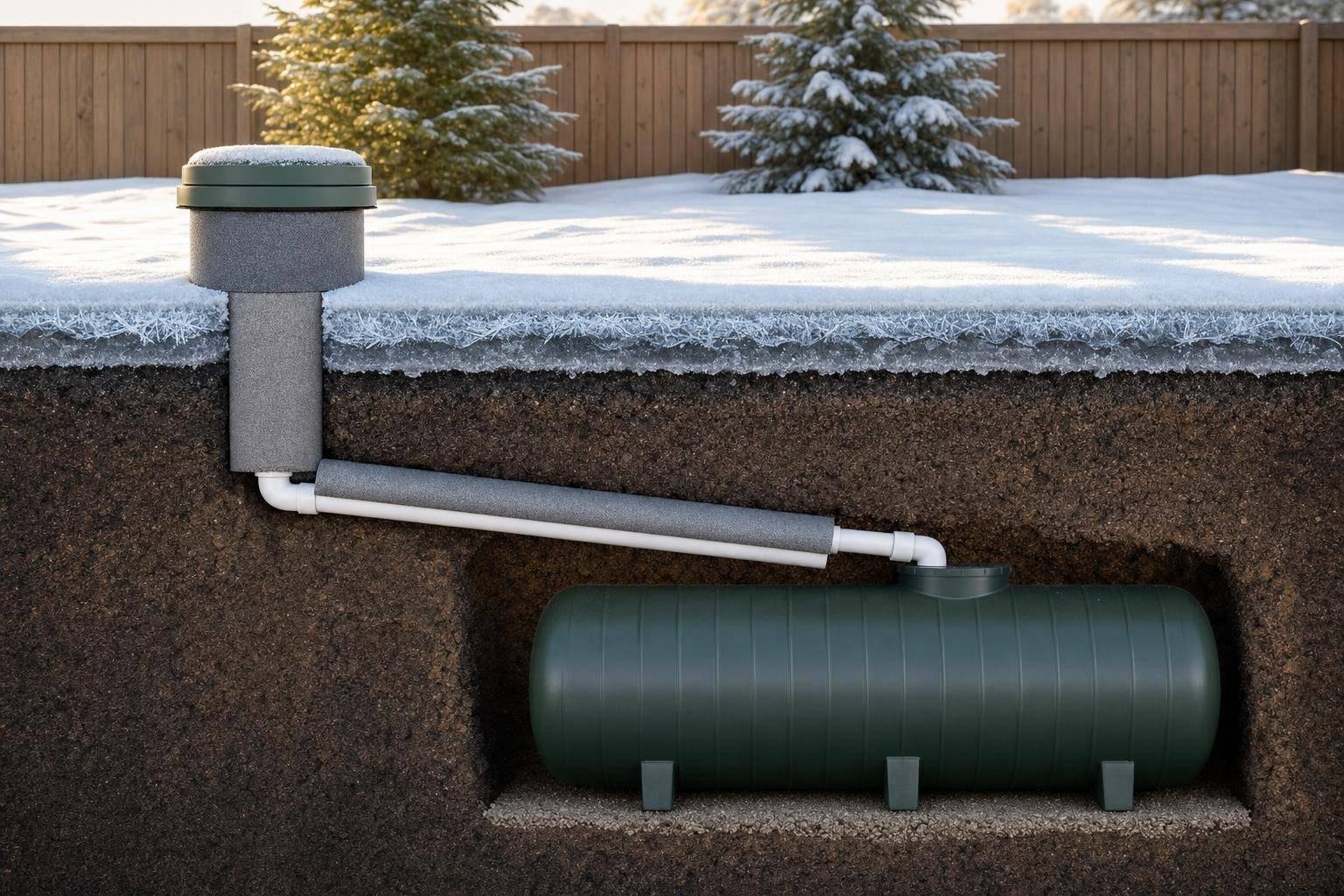
If a cistern line holds water in winter, that water can freeze, expand, and break parts of the system. In central Maryland, that usually means shallow pipes, exposed pumps, tank fittings, inlets, and overflows are the first trouble spots.
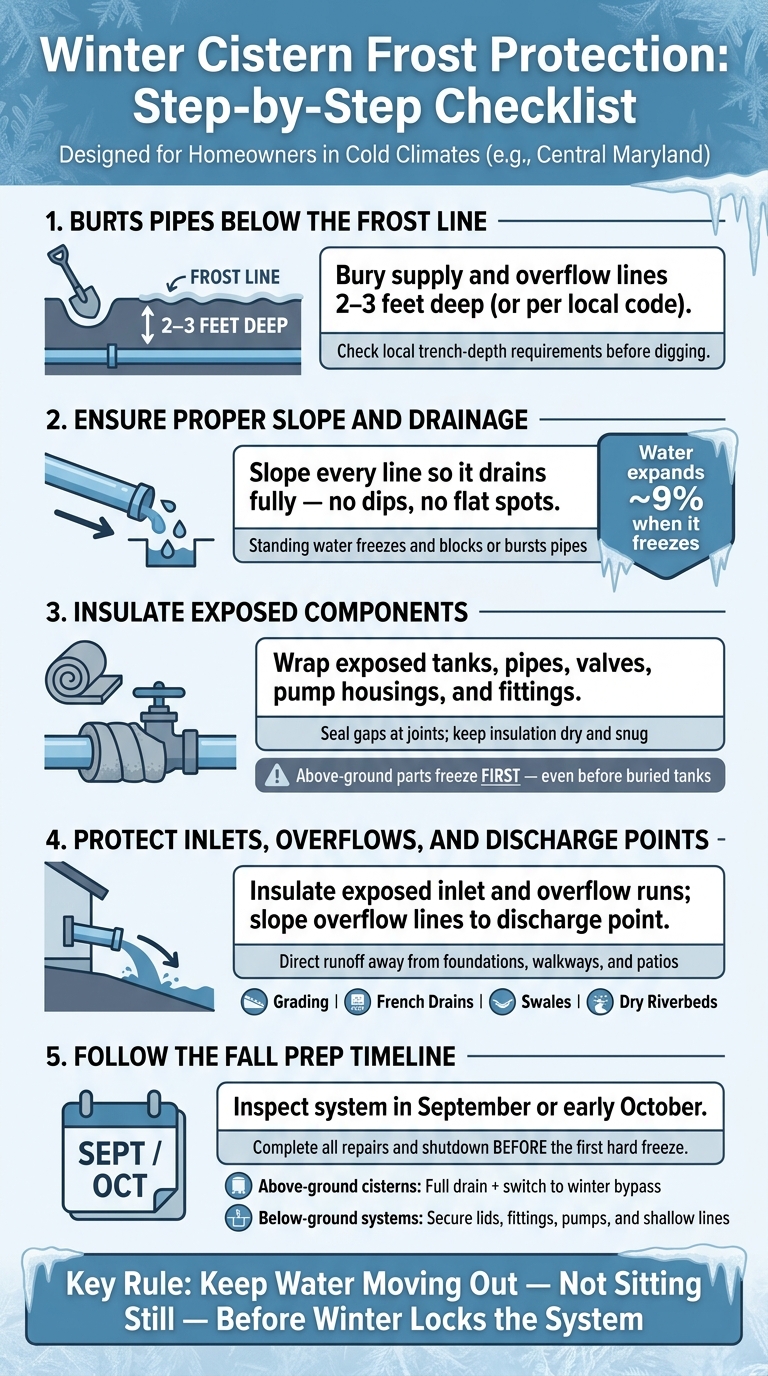
Here’s the short version: bury supply and overflow lines about 2 to 3 feet deep or deeper where local rules require it, keep every line sloped so it drains, insulate exposed parts, and finish fall prep before the first hard freeze. That one checklist helps cut the risk of cracked tanks, burst pipes, frozen pumps, and blocked drainage paths.
If I were checking a home system before winter, I’d focus on these points first:
- Pipe depth: Keep water-bearing lines below the local frost line.
- Drainage: Make sure there are no dips or flat spots that trap water.
- Insulation: Wrap exposed tanks, pipes, valves, and pump parts.
- Openings: Watch inlets and overflows, since they often freeze before buried tanks do.
- Shutdown timing: Inspect in September or early October and finish winter prep before freeze-up.
- Site runoff: Send overflow water away from the house, patios, and walkways.
A few facts stand out. Water expands by about 9% when it freezes, which is why trapped water can split pipes and fittings. And in many cold snaps, above-ground parts freeze first, even when the buried tank stays more stable.
This guide is about one simple goal: keep water moving out, not sitting still, before winter locks the system up.
Winter Cistern Frost Protection: Step-by-Step Checklist
Winterize Rainwater Harvesting Tanks & Drip Irrigation System
sbb-itb-843f8be
Set Pipe Depth and Layout Below the Frost Line
Below-ground systems can still freeze if the lines are too shallow. Pipe depth does a lot of the heavy lifting here. Get that part wrong, and winter can turn a working cistern into a headache.
How Deep Cistern Supply and Overflow Pipes Should Run
In central Maryland, cistern supply and overflow pipes are commonly buried 2 to 3 feet deep or deeper so they stay below the frost line. The exact depth depends on local trench-depth rules, soil conditions, and the job the pipe needs to do.
Before you dig, check local trench-depth requirements. Depth helps protect the line, but depth alone isn’t enough. The pipe also needs the right slope so water doesn’t sit inside it.
Use Slope and Drainage So Lines Do Not Hold Standing Water
Every water-bearing line should slope enough to drain fully before winter. The goal is simple: no standing water anywhere in the run.
Even one small dip can cause trouble. That low spot holds water, the water freezes, and the line becomes blocked or damaged.
When Professional Trenching and Drain Pipe Placement Matter
For new installs and retrofits, trenching often needs proper grading, not just a straight cut through the ground. If the trench grade is off, water can get trapped in the line and create freeze points all winter.
On sloped sites, keep the pipe grade steady and make sure the overflow discharge works with the site’s drainage pattern.
After burial depth and drainage are set, insulate the exposed tank, pipes, and equipment.
Insulate Tanks, Pipes, and Pump Equipment
Once pipe depth and drainage are set, the next job is to protect the parts that still freeze first.
Insulate exposed tanks, pipes, and fittings with weather-resistant wrap or board insulation. Seal gaps at joints and penetrations to cut down cold air exposure. Wrap pump housings, valves, and controls with insulated covers, but keep service access clear. Keep all insulation dry, snug, and in good shape through winter.
After that, protect inlets and overflows. Those openings can still ice up even when buried lines stay stable.
Protect Inlets, Overflows, and Connected Drainage Paths
Even if your tank is insulated and your main lines are buried, inlets and overflows are still common winter trouble spots. Above-ground systems need the most care, but buried cisterns can freeze at exposed openings and discharge points too. In many setups, the inlet and overflow freeze before the buried tank does. That’s why any exposed run needs insulation and full drainage.
Prevent Inlet Freeze Blockages
If you can’t bury a line below frost depth, insulate the exposed section to make freezing less likely. When water sits in the line, it expands as it freezes and can block flow.
Keep Overflow Lines Clear and Draining Through Winter
Bury overflow pipes below local frost depth. If part of the line stays exposed, insulate it. The pipe should also slope steadily downward to the discharge point, with no dips or flat sections where water can collect and freeze.
Coordinate Overflow Discharge with Site Drainage
Once the overflow line drains cleanly, make sure the discharge point sends winter runoff away from the house. Where the water ends up matters just as much as how the pipe is routed. Keep discharge away from foundations, walkways, and patios, and tie the overflow into a site drainage plan.
A few common ways to move runoff through winter include:
- Grading
- French drains
- Swales
- Dry riverbeds
Pro Landscapes MD handles drainage installation, drain pipe placement, French drains, stormwater management, and grading across central Maryland.
After the overflow path is set, move to fall shutdown before the first hard freeze.
Fall-to-Winter Prep Schedule for Central Maryland Homes
For homes in Central Maryland, winter cistern prep should start in early fall. Aim to handle inspections and repairs in September or early October, then wrap up shutdown work before the first hard freeze. In other words, timing matters just as much as the shutdown itself.
Early Fall Inspection and Repairs
Check the full system in September or early October and finish any repairs before freeze-up. That gives you time to deal with small issues before cold weather turns them into expensive ones.
Late Fall Shutdown Steps for Above-Ground and Below-Ground Systems
Once repairs are done, shut down the system based on the tank type.
- Above-ground cisterns usually need a full drain and a switch to a winter bypass.
- Below-ground systems still need exposed lids, fittings, pumps, and shallow lines secured before freeze-up.
Conclusion: Key Steps to Prevent Winter Cistern Damage
Inspect early, fix problems fast, and shut down the system before freeze-up.
FAQs
How do I know if a cistern line is below the frost line?
In Maryland, a cistern line is usually below the frost line when it’s buried at least 24 inches deep.
For underground cisterns, 30 to 36 inches is often the safer choice for better winter protection. Any pipe or non-insulated part should sit at or below 24 inches to help prevent freezing and pipe bursts.
If you’re not sure about the depth on your property, a professional can check it for you.
What insulation works best for exposed cistern parts?
Use commercial insulation or polyurethane spray foam on exposed tanks and other at-risk sections. For short-term protection or smaller spots, heavy blankets can also help limit temperature swings.
If PVC pipes show sun damage, insulation matters even more because UV exposure can make fittings brittle. Also, make sure underground pipes and connections are buried at least 24 inches deep, below Maryland’s frost line.
What should I do if my overflow line freezes?
A frozen overflow line usually means the pipe sits above Maryland’s 24-inch frost line or that ice has formed inside the pipe. Start by checking the line for blockages. Then use a plumbing snake or high-pressure water to clear out ice or debris.
To help stop it from freezing again, make sure the overflow line has no shutoff valves and that the piping is buried at least 24 inches deep or insulated the right way.
Chat with Us