









- bhavya gada
- No Comments
Bees, butterflies, and other pollinators are essential for growing fruits, vegetables, and flowers. But their populations are declining due to pesticides, habitat loss, climate change, and disease. Chemicals like neonicotinoids, pyrethroids, and glyphosate are major contributors, harming pollinators’ nervous systems, destroying food sources, and disrupting their health.
Key takeaways:
- Neonicotinoids: Found in treated plants; cause paralysis and impaired foraging.
- Pyrethroids: Used in landscaping; damage pollinators’ navigation and behavior.
- Glyphosate: Common weed killer; destroys plants pollinators rely on.
To help, avoid harmful chemicals, use manual weed removal, and choose organic pest control methods like neem oil. Small changes in your garden can protect pollinators and support healthier ecosystems.
How Pesticides Affect Pollination and What We Can Do About It
sbb-itb-843f8be
Chemicals That Harm Pollinators
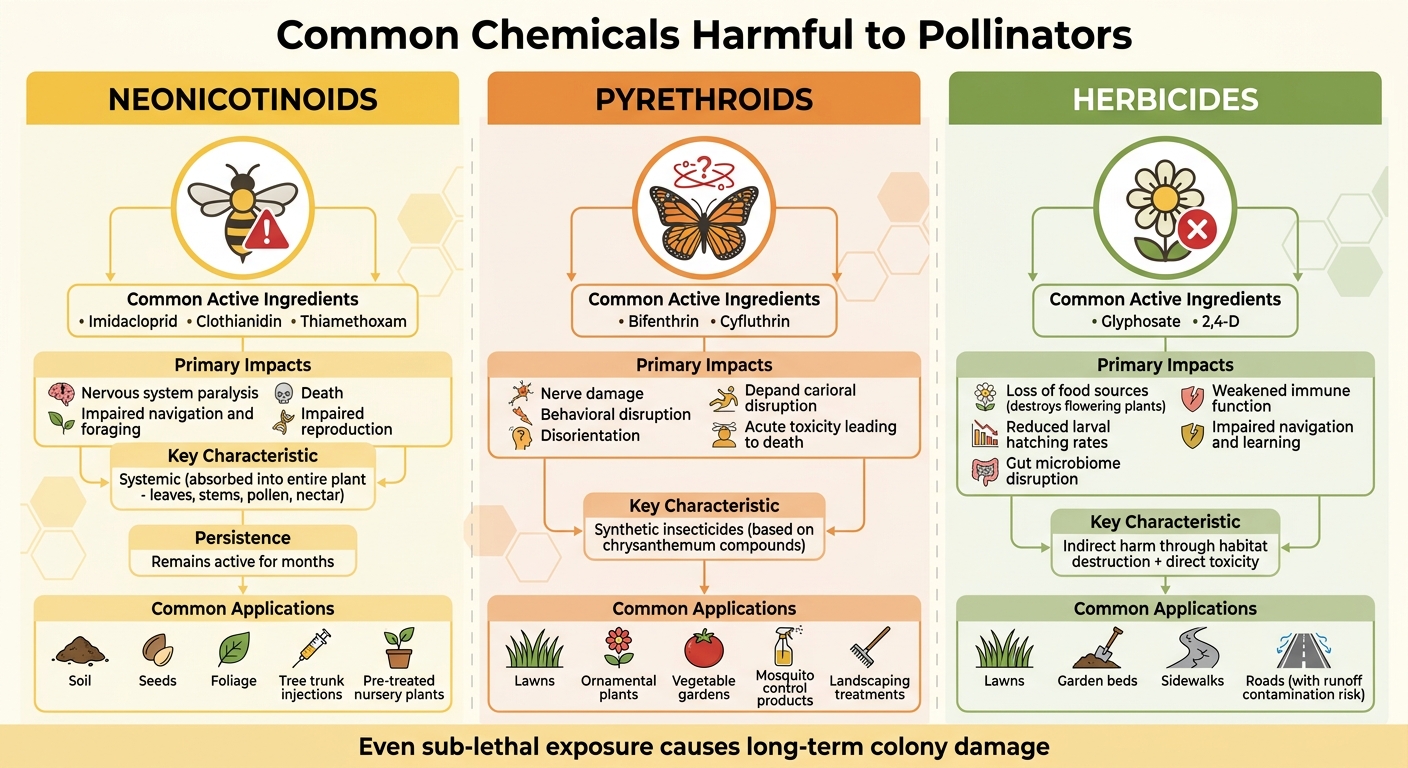
Three Major Chemical Threats to Pollinators: Impacts and Sources
Maryland’s pollinators face serious risks from three major groups of chemicals. Knowing how these chemicals operate and where they’re commonly used can help you make better choices to protect bees, butterflies, and other vital insects. Let’s break down how each group poses a unique threat.
Neonicotinoids: A Systemic Threat
Neonicotinoids, or "neonics", are systemic insecticides containing active ingredients like imidacloprid, clothianidin, and thiamethoxam. Unlike surface-level pesticides, these chemicals are absorbed into a plant’s system, spreading to its leaves, stems, pollen, and nectar – the very resources pollinators rely on for survival [1].
What makes neonics particularly dangerous is their persistence. These chemicals can remain active in plants for months, sometimes even longer, depending on the plant type and environmental factors [1]. This means that even weeks after application, a bee visiting a treated flower may still ingest harmful levels of the substance.
Neonicotinoids attack the nervous systems of insects, leading to paralysis and death. But even non-lethal exposure can cause "sub-lethal effects", such as impaired foraging and reproduction. As University of Maryland graduate student Margaret Hartman explains:
Exposure to neonicotinoids can produce sub-lethal effects such as impaired foraging, navigation, and reproduction [1].
Neonics are applied in various ways – on soil, seeds, and foliage, or even injected into tree trunks. Many nursery plants are pre-treated with these chemicals, meaning pollinators can be exposed immediately after planting. While Maryland’s Pollinator Protection Act of 2016 restricts home gardeners from using neonics outdoors, certified applicators and farmers can still apply them [1].
Pyrethroids: Neurological Damage
Pyrethroids, including bifenthrin and cyfluthrin, are synthetic insecticides based on natural compounds from chrysanthemum flowers. Despite being marketed as a "safer" option, they remain highly toxic to pollinators.
These chemicals interfere with the nervous systems of pollinators, causing disorientation, behavioral changes, and often death. Even low-level exposure can disrupt a bee’s ability to navigate back to its hive or locate food sources.
Pyrethroids are frequently used on lawns, ornamental plants, and vegetable gardens. They’re also found in many mosquito control products and general landscaping treatments. Unfortunately, their broad-spectrum nature means they harm beneficial insects as much as they do pests, creating a ripple effect that impacts entire ecosystems.
Glyphosate and Herbicides: Starving Pollinators
Glyphosate, the main ingredient in many weed killers, along with herbicides like 2,4-D, threatens pollinators in two key ways. First, these chemicals destroy flowering plants – critical food sources for pollinators. In urban and suburban settings, plants like milkweed and native thistles are often labeled as "weeds" and eliminated, even though they’re essential for bees and butterflies [2].
Second, herbicides can directly harm pollinators. According to Aaron Anderson, Pesticide Program Specialist at the Xerces Society:
The most commonly used herbicide, glyphosate, can impact honey bees’ abilities to navigate and prevent the bees from learning the signals associated with food sources [2].
Research further shows that glyphosate disrupts bees’ gut microbiomes, weakens their immune systems, and lowers the hatching success rate of butterfly eggs [2].
Herbicides are applied in many places, from lawns and garden beds to sidewalks and roads. They can easily run off into nearby soil and water, spreading their harmful effects beyond the treated areas [2].
Summary of Chemical Impacts
| Chemical Class | Common Active Ingredients | Primary Impact on Pollinators |
|---|---|---|
| Neonicotinoids | Imidacloprid, Clothianidin, Thiamethoxam | Nervous system paralysis, death, impaired navigation |
| Pyrethroids | Bifenthrin, Cyfluthrin | Nerve damage, behavioral disruption, acute toxicity |
| Herbicides | Glyphosate, 2,4-D | Loss of food sources, reduced larval hatching, gut health disruption |
These chemical dangers highlight the need to consider safer, pollinator-friendly alternatives. By understanding the risks, you can make more informed decisions to protect these essential creatures.
How Chemicals Affect Pollinator Populations
Chemical exposure weakens pollinator colonies and lingers in the environment, posing risks for months or even entire seasons. This ongoing threat is particularly concerning for Maryland’s pollinators.
Colony Collapse and Long-Term Effects
Pesticides, even at sub-lethal levels, can disrupt critical behaviors within colonies. Workers exposed to these chemicals may lose their ability to navigate or forage effectively, setting off a chain reaction that reduces the colony’s overall food supply. Glyphosate-based herbicides, for instance, have been connected to difficulties in learning new foraging patterns [2].
Emily May, a Pollinator Conservation Specialist at the Xerces Society, highlights the broader risks:
Many of the risks that herbicides pose to bees are subtle, like altered behavior, disrupted gut microbiomes, weakened immune function, slower growth, reduced reproduction, and decreased survival rates [2].
Weakened immune systems leave pollinators more susceptible to diseases and parasites, such as the varroa mite. Beyond bees, herbicides also harm other pollinators – reducing butterfly egg hatching rates and weakening honey bee larvae. For example, chemicals like 2,4-D have been shown to kill or impair larvae [2].
The University of Maryland Extension emphasizes that while no single factor fully explains colony collapse disorder, chemicals are a significant stressor:
There is no evidence that neonicotinoids solely cause colony collapse disorder… The consensus among researchers is that the interaction of multiple stressors and factors has contributed to honey bee and native bee population declines [1].
These effects ripple through ecosystems, as chemicals persist and continue to expose pollinators long after their initial application.
Chemical Persistence in Soil and Water
Stopping the use of chemicals doesn’t immediately eliminate their danger. Neonicotinoids, for example, remain in plants and soil for months or even entire seasons [1]. Because these chemicals are systemic – absorbed into a plant’s vascular system – they can reappear in pollen, nectar, and guttation droplets, which are small amounts of liquid exuded by plants [1].
Herbicides add another layer of environmental contamination. Rain can wash them off patios, driveways, and compacted lawns, allowing them to run off into nearby properties or water sources [2]. Once in the soil and water, these chemicals create ongoing exposure risks. Ground-nesting wild bees may inadvertently use contaminated soil to build their nests, exposing their larvae to pesticides from the very start. Similarly, bees drinking from puddles or streams may ingest multiple pesticides in a single exposure [3].
This persistence means that even if you’ve stopped using chemicals in your garden, pollinators visiting your property could still encounter harmful residues. The University of Minnesota Extension explains:
Exposure to pesticides can also multiply the effects of other stressors on pollinator populations, such as loss of habitat and exposure to pathogens and diseases [3].
Recognizing these long-term effects highlights the importance of adopting pollinator-safe practices in gardens and landscapes.
Safer Options for Pollinator-Friendly Gardens
Creating a garden that supports pollinators doesn’t mean you have to compromise on beauty or productivity. Integrated Pest Management (IPM) provides practical and effective ways to address pest problems by tackling their root causes instead of just dealing with the symptoms. As Beyond Pesticides puts it:
The key to a healthy lawn is healthy soil and proper mowing, watering, fertilizing and other cultural practices [4].
By prioritizing soil health, you can cultivate a yard that naturally resists diseases and outcompetes weeds – no need for chemical solutions.
Start by adopting the "right plant, right place" approach. This means choosing plants that thrive in your local soil and climate. Hand-pulling weeds when the soil is damp and using drip irrigation systems can also help suppress unwanted growth. Additionally, encourage natural pest control by attracting beneficial predators to your garden. These steps form the backbone of a sustainable and thriving garden.
When pest control becomes necessary, opt for OMRI-listed organic products like insecticidal soaps or neem oil. Experts emphasize that most plant problems arise from environmental or cultural issues – problems that chemicals alone can’t fix.
Integrated Pest Management (IPM)
IPM takes these sustainable practices a step further by combining proactive strategies with minimal intervention. This approach focuses on maintaining healthy soil and keeping a close eye on your plants. Regular inspections, hand removal of pests, dense planting arrangements, and strategic mulching all contribute to preventing infestations while boosting soil vitality.
Natural Products and Organic Methods
Organic gardening methods provide safe and effective alternatives to synthetic pesticides. Companion planting, for example, can deter pests naturally. Insecticidal soaps and neem oil can be used for targeted pest control when needed. Plants like milkweed and native thistles are essential food sources for pollinators, so incorporating them into your garden is a win-win. Adjusting soil pH can also strengthen plants, making them less vulnerable to pests and diseases. These organic techniques not only protect your garden but also help preserve the pollinators that depend on it.
Pro Landscapes MD‘s Approach to Pollinator Protection

Pro Landscapes MD champions sustainable gardening by offering expert solutions designed to protect pollinator habitats. Their landscape designs feature native plants and align with pollinator protection guidelines. By focusing on soil health, manual weed management, and thoughtful plant placement, they create gardens that are both pollinator-friendly and visually appealing.
How to Protect Pollinators in Your Garden
Safeguarding pollinators in your garden starts with a few simple tweaks to your timing and methods. The goal? Reduce direct exposure to pollinators and lean on manual techniques whenever possible.
Here’s how to make your garden a safer space for these essential creatures.
When and Where to Apply Treatments
Timing is everything. Apply treatments in the evening when pollinators are less active, minimizing the chances of contact [1]. Also, steer clear of spraying open or blooming flowers since these are prime foraging spots for pollinators [1].
When choosing products, opt for those approved by the Organic Manufacturers Research Institute (OMRI) or listed on the EPA‘s Reduced Risk list [1]. These options are designed to break down quickly after application, reducing the period during which they might cause harm [3].
Now, let’s shift gears and focus on manual methods that eliminate the need for chemicals.
Manual Weed Control Methods
Good old-fashioned hand-pulling is still one of the best ways to tackle weeds without herbicides. This approach fits perfectly into an Integrated Pest Management plan. The ideal time for manual weeding? Late winter or early spring, when the soil is moist, and the roots are easier to remove [2].
Using ergonomic tools like hoes or claw weeders can make the job easier on your body. After weeding, layer mulch over garden beds to suppress future growth and install drip irrigation for targeted watering [2]. Another tip: densely plant your garden beds. Crowded plants naturally outcompete weeds for sunlight, nutrients, and space, keeping your garden healthier and weed-free.
Conclusion
Protecting pollinators is about more than just saving bees – it’s about safeguarding our food systems and supporting the delicate balance of native ecosystems. Harmful chemicals like neonicotinoids, pyrethroids, and broad-spectrum herbicides don’t just affect individual gardens; they ripple outward, impacting soil health, water quality, and the survival of pollinator populations on a much larger scale.
Even small changes in your gardening practices can make a big difference. By avoiding these harmful substances, you help reduce the cumulative stress on pollinators already struggling with habitat loss, climate shifts, and diseases. As the Xerces Society explains:
When those effects [sub-lethal impacts] are multiplied across many bees, they can scale up and impact the health and abundance of the larger population [2].
Adopting integrated pest management, manual weeding, and soil-focused methods can help you create resilient landscapes that naturally combat pests without the need for persistent toxins. Healthy soil is key, as noted by Beyond Pesticides:
Healthy soil supports the development of healthy and resilient turf and landscapes that naturally manage weeds, insects, and fungal diseases [4].
This shift doesn’t just help pollinators – it also enhances the overall health and beauty of your outdoor spaces.
If you’re in Maryland and need help transitioning to a chemical-free garden, Pro Landscapes MD is a trusted resource. Serving communities across central Maryland – from Columbia to Bethesda to Towson – they specialize in creating pollinator-friendly, eco-conscious landscapes. Their team combines professional design, planting, and lawn care expertise to craft outdoor spaces that thrive beautifully without relying on harmful chemicals, ensuring a healthier environment for everyone.
FAQs
How can I tell if a plant was treated with neonics?
To determine if a plant has been treated with neonics, look for labels on the plant or packaging. Retailers such as Home Depot often indicate whether plants have been treated with neonics or are labeled as neonic-free. Keep in mind, you can’t rely solely on visual inspection to confirm treatment. Specialized testing is required to detect residues. However, many plants are available untreated or specifically labeled as safe for pollinators.
Do ‘organic’ sprays still harm bees if misused?
Yes, even organic sprays can pose a threat to bees if not used correctly. Certain ingredients in these sprays can harm pollinators by impacting their health or disrupting their habitat and food supply. This risk increases when sprays are overused or applied at the wrong time. To protect bees, always stick to the recommended application instructions.
How long do these chemicals linger in soil and water?
Herbicides and pesticides can stick around in soil and water for different lengths of time. Take glyphosate, for instance – it can linger long enough to negatively affect pollinators and helpful insects. This often happens when it wipes out flowering plants that these creatures rely on for food. The extent of the impact varies based on the specific chemical and the surrounding environmental conditions.
Chat with Us