









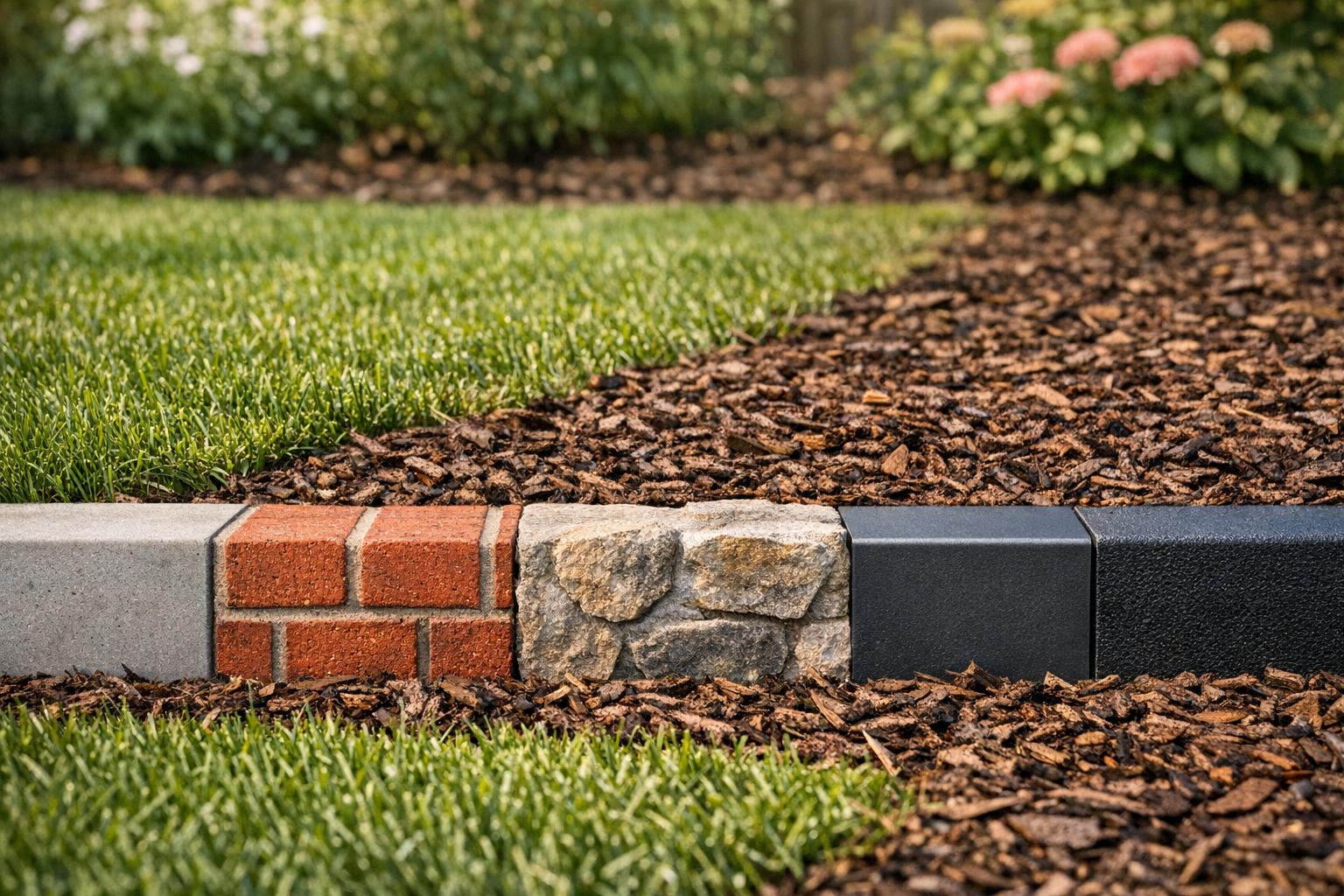
- bhavya gada
- No Comments
Concrete edging is a long-lasting, durable choice for defining garden spaces, keeping materials like mulch and soil in place, and improving yard aesthetics with hardscaping. It stands out for its strength, design options, and lifespan of 20–30 years, though it requires professional installation and periodic maintenance. Other materials like brick, natural stone, metal, and plastic offer unique benefits but vary in cost, durability, and visual appeal. Here’s a quick breakdown:
- Concrete: Durable, customizable, and permanent. Costs $3–$9 per linear foot but needs sealing every 2–3 years.
- Brick: Classic look, mid-range cost ($2.50–$6.50/ft), but shorter lifespan (10–20 years).
- Natural Stone: Luxurious and durable, but expensive ($3–$21.50/ft).
- Metal: Modern and long-lasting, priced at $5–$11/ft.
- Plastic: Affordable ($1–$3.50/ft) but prone to damage and short-lived (3–5 years).
Quick Comparison:
| Material | Lifespan | Cost (per linear foot) | Maintenance |
|---|---|---|---|
| Concrete | 20–30 years | $3–$9 | Seal every 2–3 years |
| Brick | 10–20 years | $2.50–$6.50 | Reseal every 2–3 years |
| Natural Stone | 30+ years | $3–$21.50 | Minimal |
| Metal | 30+ years | $5–$11 | Occasional rust treatment |
| Plastic | 3–5 years | $1–$3.50 | Frequent replacement |
Choose based on your budget, climate, and desired look. Concrete is a solid middle-ground option for durability and style.
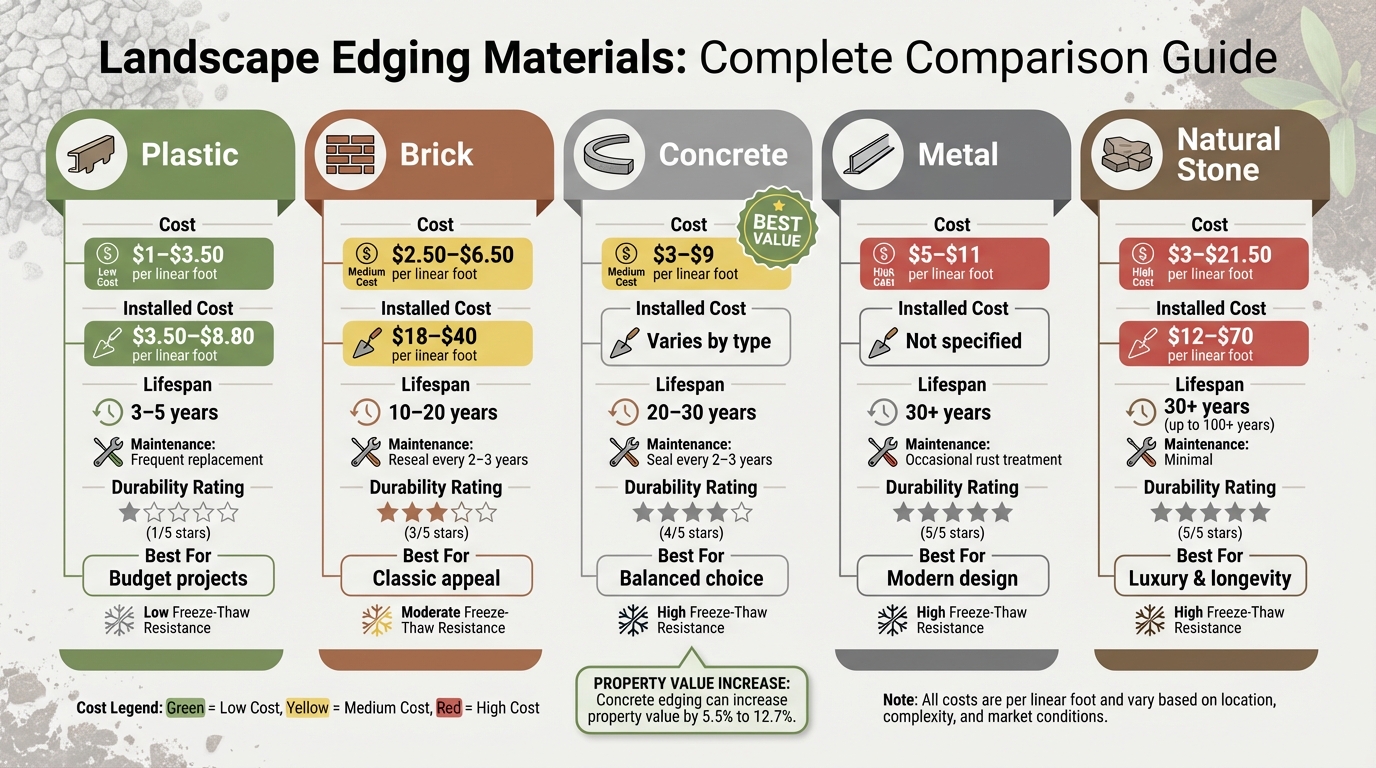
Landscape Edging Materials Comparison: Cost, Lifespan, and Maintenance
Concrete Edging: What You Need to Know
What Makes Concrete Edging Different
Concrete edging comes in two main forms: poured-in-place curbing, which creates a seamless border, and precast units, installed piece by piece. Both options provide a permanent and durable solution, making them ideal for high-traffic areas like driveways or commercial spaces [3].
What sets concrete edging apart is its solid and bold appearance, which clearly defines lawn and garden areas – unlike the more flexible options such as metal or plastic edging [3]. Plus, it’s highly customizable. Choose from a variety of colors, stamped patterns, and textures to complement your patio pavers or other hardscape features [3]. Some precast blocks even include ball-and-socket designs, allowing for smooth curves [2].
However, concrete edging is a long-term commitment. Once installed, it’s tough to remove or modify. High-quality precast units meet ASTM C936 standards, boasting compressive strengths over 8,000 psi and water absorption rates below 5% [3].
These features make concrete edging both functional and visually striking, but it’s worth considering how its permanence and durability fit into your landscaping plans.
Benefits of Concrete Edging
Concrete edging isn’t just sturdy – it’s built to last, with a lifespan of 20–30 years. It can also enhance property value by 5.5% to 12.7% [3]. Its weight and durability help keep mulch, gravel, and soil neatly contained, preventing them from spilling into unwanted areas [3].
Another key advantage is its design flexibility. Concrete can be stamped or textured to mimic materials like clay brick or aged stone, giving you plenty of aesthetic options to match your yard’s style [2][3]. It also simplifies lawn care by creating clear boundaries, making mowing and trimming easier [2].
One tip: If you’re buying tinted precast pieces, purchase the entire set at once to ensure consistent color throughout [2].
Drawbacks of Concrete Edging
While concrete edging has plenty of perks, it comes with some downsides. For starters, it’s more expensive upfront compared to materials like plastic, wood, or metal [4]. Poured-in-place curbing, in particular, requires professional installation, which adds to labor costs [4]. As Sota Enterprises LLC explains:
"Unlike plastic, concrete edging isn’t an easy DIY project. Professional installation is recommended, which can add to the overall cost." – Sota Enterprises LLC [4]
In areas with freeze-thaw cycles, concrete is prone to cracking, especially when compared to metals like aluminum or steel, which use flexible anchoring systems [3]. To maintain its appearance and durability, you’ll need to seal it every 2–3 years and avoid using deicing salts, which can cause surface damage [3]. For poured curbing, hiring professionals is crucial. They ensure proper air entrainment, reducing the risk of cracking in colder climates [3].
sbb-itb-843f8be
What Type of Paver Edging Should You Use?
How Other Materials Compare
While concrete edging stands out for its durability and design versatility, other materials bring their own advantages and limitations to the table.
Brick Edging: Timeless Appeal
Brick edging delivers a classic aesthetic that pairs well with traditional landscapes. Priced between $2.50 and $6.50 per linear foot for materials, it falls into a mid-range cost bracket [5]. However, its lifespan – 10 to 20 years – is shorter than concrete’s 20 to 30 years [5].
Installing brick edging involves moderate complexity, and it requires resealing every two to three years to guard against weather damage [5]. In regions with freeze-thaw cycles, bricks are susceptible to frost damage, which can shorten their longevity.
If you’re looking for a more natural, upscale appearance, natural stone might be the next step up.
Natural Stone Edging: Upscale and Durable
Natural stone edging, especially hand-cut granite that mimics cobblestones, offers a luxurious look [2]. This high-end material comes at a premium, with costs ranging from $3 to $21.50 per linear foot, making it the priciest option [5]. However, its longevity is unmatched, with minimal maintenance required over decades [5].
Some stones, like travertine, may need regular cleaning and sealing to prevent stains, particularly in freeze-thaw climates [1]. Installation can be labor-intensive due to the stone’s weight, which adds to overall costs. Still, once installed, stone edging provides excellent weather resistance and rarely needs replacement.
Metal Edging: Sleek and Modern
Metal edging, including aluminum and steel, is ideal for clean, contemporary designs. Material costs range from $5 to $11 per linear foot, making it more expensive than plastic or brick but comparable to concrete [5]. Steel edging often outlasts other materials, with a lifespan exceeding 30 years [5].
Aluminum edging, often made from recycled materials, is lightweight yet strong, making it easy to shape into custom curves [1]. Steel, available in rolls or interlocking segments, offers versatility for smooth or scalable designs [1][2]. To avoid flaking and rust, opt for weathering steel over lower-quality alternatives [1]. However, steel edges can be sharp, so they may not be the best choice for areas where children play [1].
Plastic Edging: Affordable and Simple
Plastic edging is the go-to choice for budget-conscious projects, with material costs between $1 and $3.50 per linear foot [5]. Many plastic options are "no-dig", requiring only stakes to secure them, which keeps labor costs low [5][6]. For example, the Suncast Border Stone plastic edging boasts a 4.4 out of 5-star rating from over 1,200 reviews on Home Depot [6].
The downside? Plastic edging lacks durability. It becomes brittle over time, especially in cold climates where frost heave can displace it. It’s also vulnerable to damage from lawn equipment. While the initial savings are attractive, frequent replacements may diminish its long-term value [5][6].
Side-by-Side Comparison: Lifespan, Cost, and Appearance
How Long Each Material Lasts and What It Needs
When it comes to durability, natural stone takes the crown, lasting anywhere from 30 to over 100 years with very little maintenance beyond the occasional removal of weeds [3]. Metal edging is another long-lasting choice – aluminum can endure for 30+ years without much upkeep, while steel (especially Corten steel) can last 20 to 100+ years. Non-weathering steel, however, might need occasional rust treatments [3]. Concrete edging has a lifespan of 20–30 years but requires resealing every 2–3 years to prevent cracking and surface scaling in areas with freeze-thaw cycles [3]. Brick edging can last between 10 and 50+ years, depending on how well it’s installed, though it does require periodic maintenance like releveling and weed control between joints [3]. On the other hand, plastic edging is the least durable, breaking down within 3–5 years due to UV exposure and frost heave, which means frequent re-staking and adjustments are common [3].
Some materials also come with added benefits. For example, aluminum edging incorporates anti-frost heave technology with its 45-degree stake pockets and is made from 100% recycled materials [3]. Meanwhile, natural stone options like granite and basalt have water absorption rates below 1%, making them highly resistant to freeze-thaw damage [3]. These factors not only affect durability but also play a role in maintenance and long-term costs.
What You’ll Pay Now and Later
In terms of upfront costs, plastic edging is the cheapest, with materials priced at $1–$3.50 per linear foot and total installed costs ranging from $3.50 to $8.80 [3]. However, its short lifespan (3–5 years) often means higher long-term costs due to repeated installations [3]. Brick edging materials cost between $2.50 and $6.50 per linear foot, but professional installation can bump the total to $18–$40 per linear foot [3]. Concrete edging varies based on type – precast options cost $2–$5.50 per linear foot, while poured and stamped versions range from $3–$9 per linear foot due to more complex installation needs [5][7]. Metal edging typically costs $5–$11 per linear foot [5], and natural stone is the priciest option, with material costs between $3 and $21.50 per linear foot and total installed costs reaching $12–$70 per linear foot [3]. Labor costs for professional installation generally add $1.50–$10 per linear foot [5][7].
While plastic might seem like the most budget-friendly choice initially, its frequent replacements can make it more expensive over time. Opting for more durable materials like metal or stone can save money in the long run [3].
Design Flexibility and Visual Appeal
For those looking to enhance their yard’s aesthetic, concrete edging is a standout thanks to its versatility. It can be made to resemble clay brick or cut stone and often includes ball-and-socket joints for smooth, gap-free curves [2]. Metal edging offers sleek, modern lines – aluminum comes in colors like bronze, black, and green, while steel provides a bold, industrial look perfect for contemporary designs [1]. Brick edging delivers classic charm with multiple layout options, such as flat, upright, or scalloped patterns [2]. Natural stone brings a rustic, earthy feel; granite can mimic old-world cobblestone, while travertine adds brightness to areas like pools or gardens [2]. On the other hand, plastic edging can be molded into custom shapes but lacks the sophistication of other materials [2].
If you’re using tinted concrete, it’s a good idea to buy all pieces at once since color variations can occur between batches [2]. Additionally, materials like porcelain tile offer rich colors and mica flecks but require specialized tools during installation to avoid cracking [1]. These design elements not only enhance the look of your yard but also impact its overall value and functionality.
How to Pick the Right Edging for Your Yard
What to Think About Before Deciding
Choosing the right edging material for your yard involves balancing several factors: cost, upkeep, installation effort, and visual appeal [8]. Start by taking your local climate into account. If you live in an area with harsh winters, frequent freeze-thaw cycles, or intense heat, materials like metal, stone, or concrete tend to hold up better over time. On the other hand, plastic edging may deteriorate faster under extreme conditions.
Think about how much time and effort you’re willing to dedicate to maintenance. For example, hand edging creates a natural, budget-friendly look but often requires a lot of physical labor and needs to be redone annually. In contrast, materials like stone and concrete are more of an upfront investment but can last for decades with little to no upkeep. However, keep in mind that heavier materials often require professional help for both transportation and installation, which could increase your overall costs. If you’re unsure or need tailored advice, reaching out to experts like Pro Landscapes MD can be a smart move.
These considerations often make concrete edging a popular choice for homeowners looking for a balance of durability and style.
Why Concrete Edging Works for Many Homeowners
Concrete edging strikes a balance between strength, cost, and versatility. Its ability to be molded into various shapes allows it to seamlessly fit into almost any landscape design. Modern concrete products even offer textures that mimic materials like cut stone or clay brick. Some designs feature ball-and-socket connections, making it easier to create smooth curves [2].
"Properly installed concrete edging can last for decades, making it a long-term investment." – Innovative Landscaping [8]
Aside from its aesthetic advantages, concrete provides a sturdy, permanent border that clearly defines garden edges, keeps mulch or gravel in place, and prevents grass from creeping into unwanted areas. While its initial cost and professional installation can be higher, the long-lasting durability and minimal upkeep make it a worthwhile investment over time.
Conclusion
Selecting the right landscape edging comes down to weighing cost, durability, and appearance. Plastic is the most affordable option upfront but often needs frequent replacement. Metal provides sleek, defined lines and long-lasting performance. Brick offers timeless charm with reliable color retention, while natural stone is the ultimate choice for beauty and longevity. Each material comes with its own set of trade-offs between initial cost and long-term value.
Concrete edging strikes a great middle ground for many homeowners. With costs ranging from $3 to $8 per linear foot, it offers a lifespan of 20 to 30 years and exceptional design versatility. Thanks to its ability to be shaped and colored, concrete can even mimic the look of brick or stone while maintaining its strength and durability.
No matter which material you choose, proper installation is key to getting the most out of your investment. Poor ground preparation can lead to issues like shifting or cracking. Professional installation ensures the correct depth, anchoring, and base preparation – especially important for heavy materials in areas with freeze-thaw cycles.
When deciding, think about your local conditions and long-term maintenance goals. Instead of focusing only on the upfront cost, consider the total cost of ownership over the next 10 to 20 years. Take into account your climate, maintenance preferences, and how the edging will fit into your overall landscape design. In fact, well-installed edging can increase your property value by 5.5% to 12.7% [3].
For those in Howard County, Montgomery County, Carroll County, Frederick County, Prince George’s County, and Baltimore County, Pro Landscapes MD offers expert advice and professional installation for all types of edging. Their team ensures every step – from material selection to base preparation – is tailored to Maryland’s specific climate. Reach out to Pro Landscapes MD to find the best edging solution for your landscape and budget.
FAQs
Which edging holds up best in Maryland’s freeze-thaw winters?
Concrete edging stands out for its durability, especially in Maryland’s challenging freeze-thaw winters. When installed and reinforced correctly, it holds up well against cracking and shifting caused by temperature fluctuations. While brick and stone can also last a long time, improper installation increases the risk of cracks or movement. Metal edging, though flexible, may face corrosion over time in harsh winter conditions. Regardless of the material, proper installation and effective drainage are essential for ensuring long-term performance.
Is concrete edging worth the higher upfront cost over 10–20 years?
Concrete edging offers a blend of durability and customization, typically lasting between 15 and 30 years. While its initial cost may be higher, it can require repairs or even replacement sooner than alternatives like metal edging, which boasts a lifespan of 40 to over 100 years with proper maintenance. Over a span of 10 to 20 years, concrete can be a cost-effective choice, thanks to its lower upfront cost and visual charm. However, when considering longevity, metal edging often stands out as the better long-term investment.
Can concrete edging be changed or removed later?
Yes, you can change or remove concrete edging, but it’s not a simple DIY task. Thanks to its durability and weight, the process often calls for professional help. Removing it typically involves breaking or cutting the concrete, which can be quite labor-intensive.
Chat with Us