









- bhavya gada
- No Comments
When choosing a basketball court surface, safety and durability are top priorities. Concrete and asphalt are the most common options, but each has its pros and cons. Here’s a quick breakdown:
- Concrete: Durable and long-lasting but rigid, which can strain joints and lead to injuries. It also becomes slippery when wet and is prone to cracking in freeze-thaw climates like Maryland.
- Asphalt: Softer and more flexible, offering better shock absorption and traction. However, it requires more maintenance and can soften in high heat or crack over time.
Key Takeaways:
- Concrete offers a flat, consistent surface but lacks cushioning, increasing joint stress.
- Asphalt provides better impact absorption and traction but needs regular upkeep to stay safe.
- Both surfaces benefit from proper drainage and maintenance to handle Maryland’s weather challenges.
For maximum safety, consider adding an impact-absorbing layer and investing in quality drainage solutions. Your choice depends on your priorities: durability with more upkeep (asphalt) or rigidity with less frequent maintenance (concrete).
Key Safety Factors for Basketball Court Surfaces
Before diving into the differences between concrete and asphalt, it’s important to first look at the key elements that make a basketball court safe. Three aspects stand out: impact absorption, traction, and weather durability. Each of these plays a crucial role in how the surface performs, especially in Maryland’s challenging climate.
Impact Absorption and Joint Health
Every jump, sprint, or sudden stop on the court sends force into the player’s body. How much of that force the surface absorbs – or doesn’t – can make a big difference for joint health. Hard surfaces with little to no cushioning, like concrete, push all that force right into the ankles, knees, and hips [3]. This can be especially tough on younger players, whose joints are still developing, and older athletes, who are more prone to injuries from wear and tear.
"Concrete is unforgiving. Every jump, sprint, or fall transfers force directly into the body." – Sport Court [3]
Surfaces that don’t absorb impact well also cause players to tire out faster. Fatigue increases the likelihood of injuries as the body struggles to compensate with every movement. This makes impact absorption a critical factor when comparing concrete and asphalt.
Traction and Slip Resistance
Traction is another major safety factor. A surface that feels secure when dry can become a slipping hazard when wet. Concrete, for example, often becomes slick with moisture and loses grip as it ages [3]. This is a serious concern for Maryland homeowners, where wet conditions are common.
"Concrete surfaces are hard, slick when wet, and inconsistent as they age." – Sport Court [3]
Asphalt, on the other hand, starts with a naturally rougher texture, which can provide better grip initially. However, over time, its performance can decline too. High summer temperatures can soften asphalt, and cracks that form may catch players’ feet. How well each material maintains traction over time is a critical point to consider.
Weather Durability and Upkeep
Maryland’s climate puts outdoor courts to the test. Freeze-thaw cycles in the colder months expand and contract the surface, turning small cracks into larger hazards. Heavy rains can also lead to water pooling on courts that aren’t properly drained, increasing slip risks and speeding up structural damage.
Durability isn’t just about how long the court lasts – it’s about how safe it stays over time. Uneven cracks or soft spots can quickly turn into safety issues. Maryland homeowners should also keep in mind local regulations, as some areas require permeable surfaces to handle stormwater runoff [1]. Proper drainage, whether through grading or built-in systems, is essential to keeping the court safe and functional all year long [2].
These factors lay the groundwork for comparing the safety profiles of asphalt courts in the next section.
sbb-itb-843f8be
Safety Features of Asphalt Basketball Courts
Asphalt is a popular choice for outdoor basketball courts [4]. It offers a balance of performance and cost-effectiveness, though it does come with some challenges, especially in Maryland’s climate.
Advantages of Asphalt
One of asphalt’s key benefits is its softer, more flexible surface compared to concrete. This flexibility helps absorb impact, which can reduce stress on players’ joints during frequent use [4]. Additionally, asphalt can handle minor ground shifts, such as soil settling, without cracking as easily as concrete might [4].
Drawbacks of Asphalt
Maryland’s weather poses specific challenges for asphalt courts. High summer temperatures can soften the surface, while UV exposure, fluctuating temperatures, and freeze-thaw cycles cause brittleness, cracks, and potholes – all of which increase the risk of tripping [5].
"Moisture that seeps into minor surface imperfections can freeze and expand in cold weather, causing further damage." – Apex Court Builders [5]
Asphalt also tends to have a shorter lifespan than concrete and requires more frequent maintenance to remain safe and functional [4]. Without proper care, these vulnerabilities can compromise the court’s safety.
Maintenance Needs for Safety
Keeping asphalt courts safe requires regular maintenance due to their sensitivity to heat, UV rays, and moisture. To protect the surface, it’s crucial to seal it every few years. This helps prevent water infiltration and UV damage. Cracks should be repaired as soon as they appear, and debris must be cleared to avoid algae growth. Standing water should be addressed immediately to prevent drainage issues, potentially requiring professional solutions [2][5].
"Sealing the court every few years adds an extra protective layer against the elements and extends the surface’s life." – Apex Court Builders [5]
Safety Features of Concrete Basketball Courts
Concrete is a popular choice for outdoor basketball courts, known for its durability and ability to withstand Maryland’s challenging freeze/thaw cycles[2]. While its strength and longevity are appealing, there are some safety concerns that court owners need to address.
Advantages of Concrete
Concrete’s flat, permanent surface ensures consistent ball bounce and reduces the likelihood of tripping. Its resistance to freeze/thaw cycles also makes it a practical, long-lasting option for outdoor use. As Pro Landscapes MD explains:
"With proper care and maintenance, hardscaping materials such as stone and concrete can last decades." – Pro Landscapes MD[2]
Though these benefits make concrete a reliable surface, it’s important to weigh its safety limitations.
Drawbacks of Concrete
The biggest concern with concrete is its rigidity – it provides no cushioning. This lack of shock absorption means that every jump, sprint, or fall transfers impact directly to the body.
"Concrete is unforgiving. Every jump, sprint, or fall transfers force directly into the body. Over time, that impact adds up – especially for kids, growing athletes, and older players." – Sport Court[3]
Additionally, wet concrete can become dangerously slippery, increasing the risk of falls. Over time, cracks and uneven areas may develop due to thermal expansion and contraction, creating tripping hazards. Poor drainage can make these problems worse by allowing water to pool on the surface[3].
Safety-Oriented Maintenance
To address these risks, regular maintenance is critical. Inspect the court often and repair cracks or expansion joints before they worsen, especially during Maryland’s freeze/thaw cycles[2][3]. Applying a non-slip coating can improve traction, and installing proper drainage systems, like box or pipe drains, helps prevent water from pooling[2][3]. These measures play a key role in reducing risks and ensuring player safety on concrete courts.
Concrete vs. Asphalt: Side-by-Side Safety Comparison
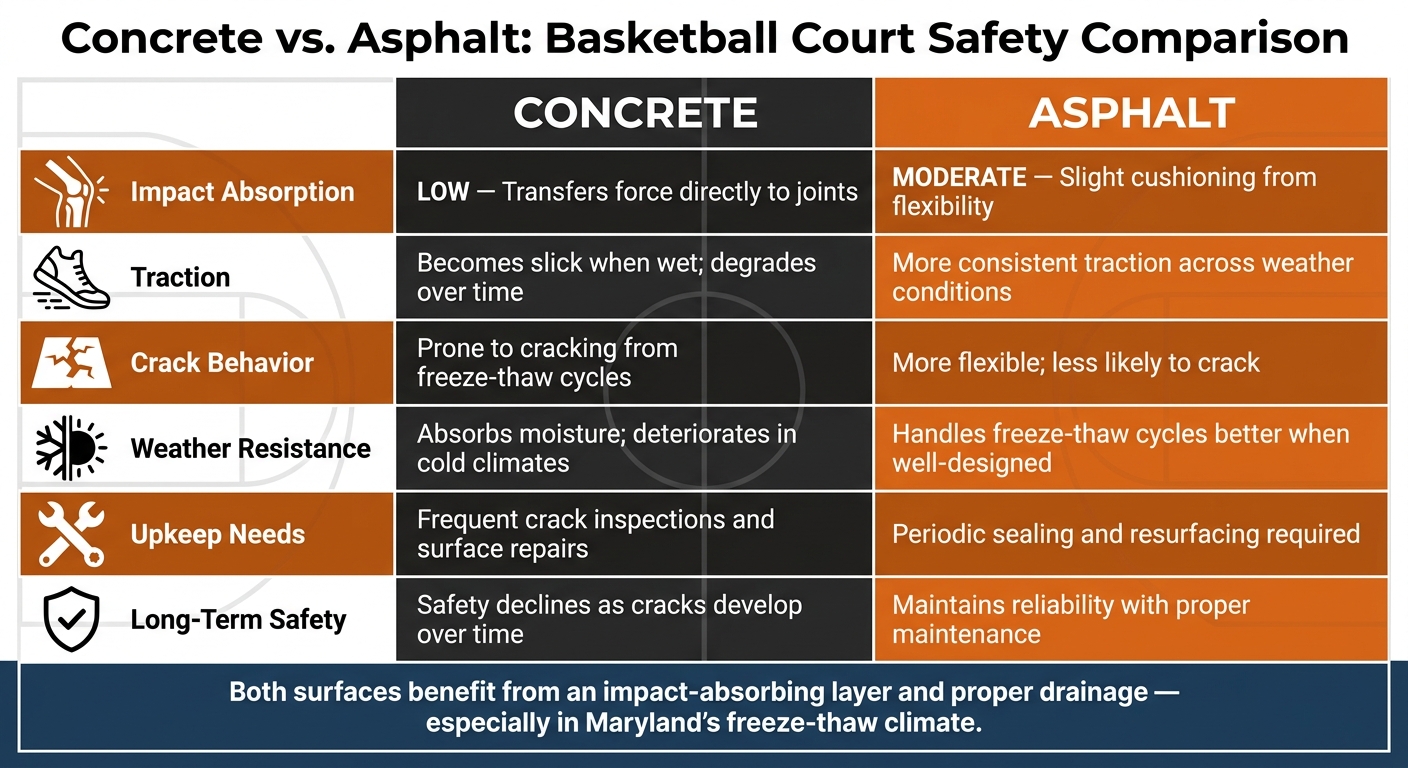
Concrete vs. Asphalt Basketball Court Safety Comparison
Maryland’s unique climate – with its freeze/thaw cycles, frequent wet conditions, and long-term wear challenges – requires a close look at the safety of basketball court surfaces. As we’ve covered earlier, factors like impact absorption, traction, and weather durability vary significantly between concrete and asphalt, especially under Maryland’s demanding conditions.
Comparison Table: Safety Factors
| Safety Factor | Concrete | Asphalt |
|---|---|---|
| Impact Absorption | Low; transfers force directly to joints | Slightly better cushioning due to its flexibility |
| Traction | Can become slick when wet; traction may degrade over time | Offers more consistent traction across different weather conditions |
| Crack Behavior | Easily cracks from freeze/thaw cycles and moisture | More flexible, reducing the likelihood of cracking |
| Weather Resistance | Absorbs moisture, deteriorating in cold climates | Handles freeze/thaw cycles better; resists moisture when designed well |
| Upkeep Needs | Requires frequent crack inspections and surface repairs | Needs periodic sealing and resurfacing for optimal performance |
| Long-term Safety | Safety declines as cracks develop, affecting grip and consistency | Maintains reliability with proper maintenance due to greater flexibility |
This table highlights the strengths and weaknesses of each surface, helping you weigh the tradeoffs depending on your specific needs.
Key Tradeoffs and Recommendations
When comparing these surfaces, it’s clear that neither is a perfect solution – each has distinct advantages and limitations. Concrete delivers a flat, consistent surface that holds up well when maintained. However, its rigidity can strain joints and makes it prone to cracking under Maryland’s freeze/thaw cycles, increasing the risk of trips and falls.
On the other hand, asphalt’s flexibility makes it more forgiving for players, reducing the likelihood of cracks and maintaining consistent traction over time. However, both surfaces lack significant impact absorption, which is important for player safety.
"Concrete surfaces are hard, slick when wet, and inconsistent as they age." – Sport Court [3]
For athletes – particularly children and older players who are more concerned about joint health – considering a modular sports surface layer on top of either base can enhance impact absorption and overall safety. If ease of maintenance is a priority, asphalt may be the better choice. However, if you’re looking for a durable, long-lasting surface and are willing to commit to regular upkeep, concrete remains a strong contender.
Conclusion: Choosing the Safer Surface for Your Court
The comparison between concrete and asphalt reveals a mix of advantages and challenges for each surface. Asphalt’s flexibility can enhance traction during freeze/thaw cycles, while concrete’s durability comes with a harsher impact on joints. However, adding an impact-absorbing layer can make a significant difference in improving safety for either option.
In Maryland’s unpredictable climate, proper drainage is crucial to ensure long-term safety. Including drainage solutions during the design phase can prevent water pooling and reduce potential hazards.
For expert installation and drainage solutions in Maryland and Washington, DC, consider reaching out to Pro Landscapes MD for a free proposal.
"At Pro Landscapes MD, we specialize in creating beautiful, durable hardscaping solutions that seamlessly blend with your landscape." – Pro Landscapes MD
Ultimately, your decision will depend on factors like budget, how often the court will be used, and your willingness to maintain it. By choosing quality materials and incorporating expert drainage design, you can ensure your court delivers both safety and reliable performance.
FAQs
Which surface is safer for kids’ joints?
Surfaces that help absorb impact and reduce stress are much gentler on kids’ joints. Modular sports flooring, such as PrimePlay™, is specifically crafted to cushion impact, cutting down on joint stress and fatigue. On the other hand, concrete is rigid and unyielding, transferring force directly to the body. Over time, this increases the likelihood of joint injuries, particularly for children, growing athletes, and even older players.
How often should an asphalt court be sealed?
Asphalt basketball courts need sealing every few years to shield them from weather damage and prolong their lifespan. This routine maintenance helps preserve the court’s strength and ensures consistent performance over time.
What drainage prevents puddles on a court?
Proper drainage systems, like box drains and pipe drains, help keep courts free of puddles by efficiently directing water away from the surface. This improves water flow, reduces standing water, and creates a safer and more reliable playing environment.
Chat with Us