









- bhavya gada
- No Comments
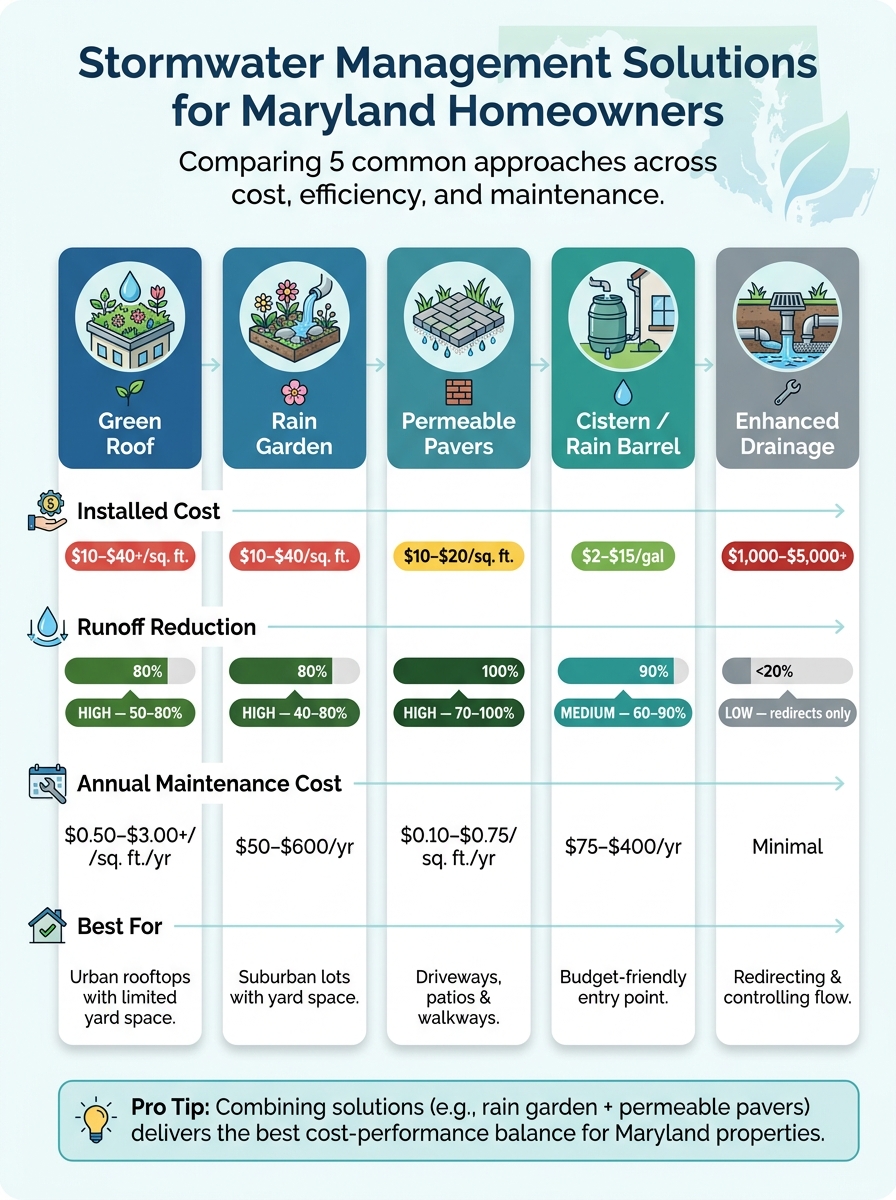
Green roofs are an effective way to manage stormwater runoff, reducing annual rainfall discharge by 50–80%. However, they come with higher upfront costs ranging from $10 to $40+ per square foot, depending on the system type (extensive or intensive) and structural demands. Maintenance costs vary from $0.50 to $3.00+ per square foot annually, with the first few years requiring more attention as plants establish. While suitable for urban areas with limited yard space, green roofs may not be feasible for many Maryland homes due to structural limitations.
For homeowners seeking alternatives, options like rain gardens, permeable pavers, and cisterns provide cost-effective ways to manage runoff. These solutions vary in cost, maintenance, and effectiveness:
- Rain Gardens: Cost $10–$40 per square foot, reduce runoff by 40–80%, and filter pollutants effectively. Ideal for properties with yard space.
- Permeable Pavers: Cost $10–$20 per square foot, reduce runoff by 70–100%, and require periodic maintenance to prevent clogging.
- Cisterns/Rain Barrels: Cost $2–$15 per gallon, capture 60–90% of roof runoff, and are best paired with other systems due to limited storage capacity.
- Enhanced Drainage: Low-cost upgrades like gutters, downspouts, and French drains manage water flow but don’t reduce runoff volume.
Quick Comparison
| Solution | Cost Range | Runoff Reduction | Maintenance Costs | Key Considerations |
|---|---|---|---|---|
| Green Roofs | $10–$40+/sq. ft. | 50–80% | $0.50–$3.00+/sq. ft./yr | Requires structural assessment |
| Rain Gardens | $10–$40/sq. ft. | 40–80% | $50–$600/yr | Needs yard space and proper grading |
| Permeable Pavers | $10–$20/sq. ft. | 70–100% | $0.10–$0.75/sq. ft./yr | Best for driveways or patios |
| Cisterns/Barrels | $2–$15/gal | 60–90% | $75–$400/yr | Limited by storage capacity |
| Enhanced Drainage | $1,000–$5,000+ | Low | Minimal | Redirects water, doesn’t reduce volume |
Each option has unique advantages and limitations. For many Maryland homeowners, combining solutions – like a rain garden with permeable pavers or a green roof with a cistern – offers the best balance of cost, performance, and practicality. Consulting a professional can help determine the best approach for your property.
Stormwater Management Solutions: Cost, Performance & Maintenance Compared
Why do I want a green roof? Benefits? How much do they cost? #homeextension #home #roofing
sbb-itb-843f8be
1. Green Roofs
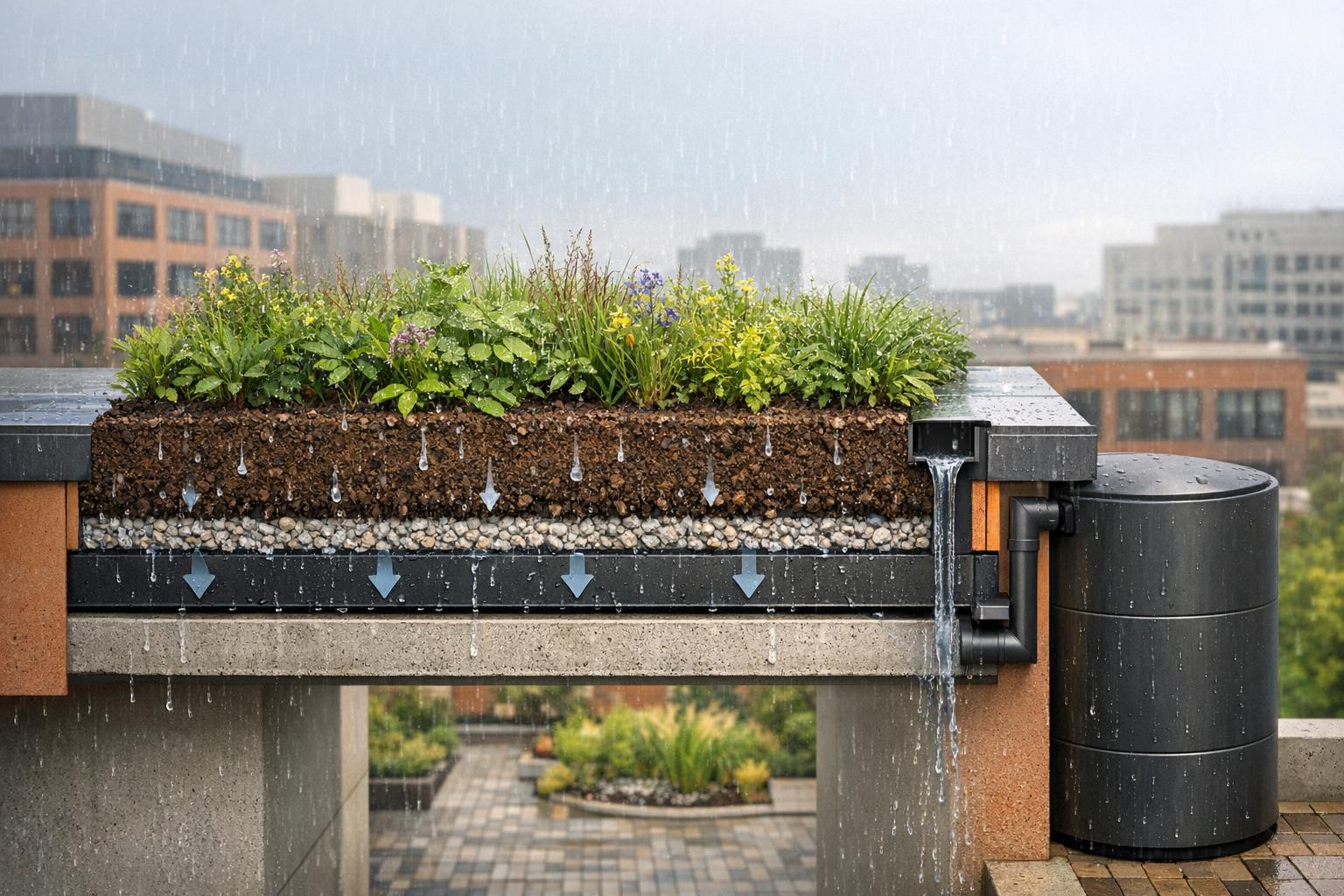
A green roof is essentially a multi-layered system installed on top of your existing roof. These layers typically include waterproofing, a root barrier, drainage, filter fabric, a growing medium, and vegetation. Because of this complexity, green roofs generally cost more than standard roofing or ground-level drainage solutions.
Installed Cost
Green roofs are categorized as extensive or intensive, depending on their design and depth. Extensive systems are lighter, using shallow growing media (2–4 inches) and low-maintenance plants like sedums and native grasses. Intensive systems are deeper (6+ inches), heavier, and capable of supporting shrubs or even small trees, making them more expensive.
| System Type | Installed Cost (per sq. ft.) | Growing Medium Depth | Structural Demand |
|---|---|---|---|
| Extensive | $10–$25 | 2–4 inches | Moderate |
| Intensive | $25–$40+ | 6+ inches | High |
In Maryland, costs tend to fall on the higher end of these ranges due to factors like local labor rates, permitting, engineering requirements, and specific stormwater management standards. Waterproofing and drainage components also add to the expense.
Maintenance Cost
Green roofs require regular upkeep, especially in the first 2–3 years as plants establish themselves. After this period, maintenance costs stabilize. Extensive systems typically cost $0.50–$1.50 per square foot annually, covering tasks like weeding, inspecting drains, replacing plants, and seasonal checks after severe weather. Intensive roofs, with their more complex vegetation and potential irrigation systems, can cost $1.50–$3.00+ per square foot per year. Additionally, safe roof access – like hatches, railings, or contractor mobilization – should be factored into your annual budget.
Runoff Reduction Performance
Extensive green roofs can reduce annual runoff by 40–60%, while intensive systems can manage 50–80% or more. For smaller rain events (up to about 1 inch), extensive roofs often absorb nearly all the rainfall, preventing runoff entirely. During Maryland’s heavy summer storms, overflow may occur, but green roofs still slow the discharge and reduce peak flow, easing pressure on drainage systems. Maryland’s stormwater guidelines officially recognize green roofs as an Environmental Site Design (ESD) solution, meaning they can help meet the state’s first-inch-of-rainfall retention standards [1].
Suitability for Maryland Residential Properties
Most single-family homes in Maryland weren’t built to support the saturated weight of a green roof, especially intensive systems. A structural engineer should review your property before moving forward. Extensive systems are more feasible for wood-framed homes, provided the roof slope is between 2:12 and 4:12. Maryland’s variable climate – ranging from humid summers to freeze-thaw winters – makes plant selection crucial. Hardy sedums, native grasses, and Mid-Atlantic wildflowers tend to thrive with minimal irrigation. Other factors to consider include roof access, shading from nearby trees, and any rooftop equipment that might interfere with installation [1].
2. Rain Gardens and Bioretention
Rain gardens and bioretention cells are designed as vegetated depressions that collect runoff from hard surfaces and allow it to slowly seep into the ground. Unlike green roofs, these systems don’t require structural modifications to your home, making them an accessible and budget-friendly choice for many Maryland homeowners.
Installed Cost
For residential properties, rain gardens generally cost between $10 and $20 per square foot to install. Bioretention cells, which are more complex, range from $15 to $35 per square foot for smaller projects. [1] The price difference lies in the level of complexity. A basic rain garden typically involves excavation, amended soil, plants, and mulch. On the other hand, bioretention cells require engineered soil, underdrains, and precise grading.
| Cost Component | Approximate Share of Total |
|---|---|
| Excavation and hauling | 20–35% |
| Engineered soil mix and compost | 20–30% |
| Plants and mulch | 10–20% |
| Underdrains, stone base, and overflow structures | 15–25% |
| Design, permitting, and mobilization | 10–20% |
When compared to green roofs, rain gardens and bioretention systems are much more affordable. Green roofs start at $10–$25 per square foot for basic systems, and that’s before adding costs for waterproofing, structural engineering, and roof access.
Maintenance Cost
Once the plants are established, maintaining a rain garden is relatively straightforward. DIY maintenance, which involves tasks like weeding, refreshing mulch, and trimming perennials, costs about $50–$200 annually. If you prefer hiring a contractor, expect to pay between $200 and $600 per year, depending on the complexity of the plants and how often they visit. [1]
Runoff Reduction Performance
Rain gardens and bioretention systems are highly effective at reducing runoff, cutting annual runoff by 40–80% when properly designed. They also improve water quality by filtering pollutants like suspended solids, phosphorus, and nitrogen. [1] These systems are particularly good at reducing peak flow during storms, as they hold water and allow it to infiltrate rather than sending it directly to storm drains. For Maryland homeowners near the Chesapeake Bay watershed, this nutrient-filtering ability is especially important for meeting environmental regulations and protecting local waterways.
Suitability for Maryland Residential Properties
Most suburban lots in Maryland – especially in Howard, Montgomery, and Baltimore counties – are well-suited for rain gardens. They can be installed in side or rear yards at natural low points and connected to a downspout or graded swale. However, placement is key: you’ll need at least 10 feet of separation from your home’s foundation and septic system, as well as clearance from major tree roots and utilities. In areas with clay-heavy soils, which are common in Maryland, adding an underdrain can help improve infiltration. [1]
For plants, native species like Black-eyed Susans (Rudbeckia hirta) and Butterfly Weed thrive in Maryland’s wet summers and freeze-thaw winters. Once established, they require minimal irrigation. If you’re planning to incorporate rain gardens as part of a larger landscaping project, companies like Pro Landscapes MD can combine drainage work with grading and hardscaping, potentially lowering mobilization costs compared to standalone installations.
3. Permeable Pavers
Permeable pavers are a practical way to manage stormwater while paving surfaces like driveways, patios, and walkways. These pavers allow rainwater to seep through their surface into a gravel base below, reducing runoff into storm drains. By combining stormwater control with standard paving, they serve dual purposes efficiently.
Installed Cost
The cost of permeable paver systems typically ranges from $10 to $20 per square foot, which is higher than concrete ($6–$12 per square foot) and asphalt ($3–$8 per square foot). However, traditional surfaces often require extra drainage systems, which can make the price difference less significant.
In Maryland, specific conditions can drive up costs. For example, clay-heavy soils – common in counties like Howard, Montgomery, and Prince George’s – often require a deeper stone base and a perforated underdrain for effective drainage. Additionally, older neighborhoods such as Bethesda or Silver Spring, where side-yard access is limited, may face higher labor costs due to equipment challenges.
Maintenance Cost
Maintaining permeable pavers is straightforward. The main task is preventing sediment and organic debris from clogging the joints. Professional vacuum sweeping, performed every one to three years, costs $0.25–$0.75 per square foot per visit, while annual maintenance averages $0.10–$0.25 per square foot. These manageable upkeep costs ensure the pavers continue to deliver strong stormwater management performance.
Runoff Reduction Performance
Permeable pavers significantly reduce stormwater runoff. Research from the University of New Hampshire Stormwater Center found that permeable interlocking concrete pavers reduced annual runoff by about 75% compared to asphalt and achieved more than a 95% reduction in suspended solids [1]. Most residential systems are designed to handle the first 1 to 1.5 inches of rainfall, which covers the majority of storms in Maryland. Additionally, the Maryland Department of the Environment recognizes permeable pavers as an Environmental Site Design (ESD) practice, meaning they can help meet local stormwater management requirements.
Suitability for Maryland Residential Properties
Permeable pavers are ideal for areas with gentle slopes, typically under 5–7%. They also perform well in Maryland’s freeze-thaw winters when built with a non-frost-susceptible, open-graded aggregate base. On properties with poorly draining clay soils, adding an underdrain ensures reliable performance during wet seasons. These pavers are especially useful for driveways, parking pads, and rear patios, particularly in suburban areas where space for separate stormwater solutions like rain gardens is limited.
For Maryland homeowners looking to combine hardscaping with drainage improvements, Pro Landscapes MD offers comprehensive services. Their expertise in grading, underdrain installation, and paver systems ensures a seamless approach to both stormwater management and hardscaping needs. As always, it’s essential to evaluate site-specific conditions when considering permeable pavers as part of an overall drainage strategy.
4. Cisterns and Rain Barrels
In addition to vegetative and permeable surface solutions, storage-based systems like cisterns and rain barrels provide another way to manage runoff. These systems collect roof runoff, storing it for later use, such as irrigation, or releasing it gradually. Their success largely depends on how frequently the stored water is used between rainfalls.
Installed Cost
Rain barrels are the most affordable option for homeowners. A standard 40–80 gallon setup, which includes the barrel, downspout diverter, mosquito screen, and overflow pipe, typically costs $80–$250 installed. This translates to about $2–$4 per gallon, making it a budget-friendly choice.
Above-ground cisterns, with capacities ranging from 500 to 2,500 gallons, come at a higher price – typically $1,000–$6,000 installed. Costs depend on factors like the tank material, whether a pump is required, and the complexity of overflow management. The per-gallon cost decreases with larger capacities, averaging $1–$2.50 per gallon. Underground cisterns, however, are the most expensive, often exceeding $6,000–$15,000+ due to the added costs of excavation, structural requirements, and access challenges – especially in densely packed neighborhoods in older parts of Maryland.
Maintenance Cost
Both rain barrels and cisterns are relatively low-maintenance. Rain barrels require regular cleaning of gutters and screens, an annual rinse, and winterization. Homeowners can handle this themselves or hire a service, which typically costs $75–$300 annually. Cisterns, on the other hand, need pump maintenance, occasional interior inspections, and pre-filter cleaning, with annual costs ranging from $150–$400. Additionally, pumps may need replacement every 8–15 years.
Runoff Reduction Performance
The effectiveness of these systems lies in their ability to capture water efficiently. A network of rain barrels installed at multiple downspouts and emptied regularly for irrigation can significantly reduce peak runoff during lighter rain events. Larger cistern systems, with capacities between 1,000 and 3,000 gallons, can capture 60–90% of annual roof runoff when paired with automated irrigation systems or controlled release mechanisms. [1]
Suitability for Maryland Residential Properties
Maryland’s climate, with frequent rain and warm summers, makes these systems practical and beneficial. Captured water can be used for lawn and garden irrigation, reducing both runoff and water bills. Above-ground tanks are particularly well-suited for suburban areas in Howard, Montgomery, and Baltimore Counties, especially when screened with fencing or plants for aesthetic purposes. However, there are practical concerns to consider, such as freeze protection for exposed pipes during winter and proper overflow management. Excess water must be directed away from foundations and neighboring properties to avoid creating new issues.
Integrating cistern overflow with existing drainage solutions – like French drains, dry riverbeds, or graded swales – can address these concerns. Companies like Pro Landscapes MD specialize in such stormwater management projects, ensuring that storage systems work seamlessly with broader drainage plans. This integration not only reduces immediate runoff but also complements other stormwater strategies, creating a more effective overall solution for Maryland homeowners.
5. Traditional Roof with Enhanced Drainage
Enhanced drainage systems work alongside existing roofing to manage runoff effectively without requiring major structural changes. For many Maryland homeowners, upgrading their roof’s drainage components can address stormwater challenges efficiently. A standard asphalt shingle or low-slope membrane roof combined with improved drainage solutions can tackle common runoff issues without the need for a complete renovation.
Installed Cost
The cost of installing enhanced drainage systems is relatively straightforward:
- Seamless aluminum gutters: These cost about $6–$12 per linear foot installed, which means a complete system for a typical single-family home falls in the $1,000–$2,000 range.
- Downspouts: Each downspout adds about $100–$300.
- French drains: A 50-foot French drain costs between $1,000–$1,500, or $20–$30 per linear foot.
- Dry wells: Installing one to capture downspout discharge ranges from $1,000 to $4,000.
- Yard regrading: Redirecting water flow through regrading can add $1,000–$5,000.
A full package – gutters, downspouts, French drains, and regrading – typically costs between the mid four-digit to low five-digit range for a Maryland home.
Maintenance Cost
One of the advantages of this system is its low-maintenance nature. Gutters need cleaning once or twice a year, a task homeowners can do themselves or outsource for a small fee. French drains and dry riverbeds only require occasional checks after heavy storms to ensure inlets and outlets remain clear. Once the yard grading is complete and stabilized with grass or groundcover, it requires no additional upkeep beyond regular yard maintenance. Unlike vegetated systems, there’s no need for specialized care like irrigation or structural inspections, making this a practical and cost-effective option.
Runoff Reduction Performance
While enhanced drainage systems don’t reduce the total volume of runoff like green roofs or rain gardens, they excel at managing where the water goes and how quickly it gets there. By directing downspouts to vegetated areas, routing water through French drains or dry riverbeds, and grading the yard to prevent pooling near foundations, these systems help mitigate localized flooding, erosion, and foundation damage. The primary advantage lies in controlling water flow and minimizing risks, rather than reducing the overall runoff volume.
Suitability for Maryland Residential Properties
Maryland’s heavy clay soils and frequent intense storms make effective drainage solutions essential. Upgrading to 6-inch K-style gutters can better handle the sudden, high-intensity rainfall typical of summer storms or tropical weather systems. Downspouts should discharge at least 4–6 feet from the foundation, ideally through underground piping to a vegetated outlet. For properties with problematic low spots, persistent pooling, or basement moisture issues, installing French drains or dry riverbeds along the foundation perimeter is often the most practical and economical solution. Companies like Pro Landscapes MD specialize in this type of work, offering integrated solutions like grading, French drain installation, and dry riverbeds to manage runoff effectively before it causes structural issues.
Pros and Cons of Each Solution
Each stormwater management option discussed earlier comes with its own cost considerations, effectiveness, and practical limitations. Here’s a breakdown of the key advantages and challenges for each solution, based on their cost and performance data.
Green roofs stand out for their ability to retain 50–80% of rainfall and reduce peak flow by 40–65%. However, they come with steep upfront costs and require a structural assessment before installation. Rain gardens and bioretention systems are more budget-friendly and can filter out up to 90% of suspended solids, but they require sufficient yard space and regular plant care to remain effective. Permeable pavers, while reducing surface runoff by 70–100% during small to medium storms, are pricier than standard asphalt and need periodic vacuum sweeping to prevent clogging.
Cisterns and rain barrels are easier on the wallet and simpler to install, but their limited storage capacity is a drawback. For instance, a 1-inch storm on a 1,000 sq. ft. roof can produce about 623 gallons of runoff – far exceeding the capacity of most standard rain barrels. On the other hand, traditional roofs with enhanced drainage are the most affordable upgrade but don’t lower runoff volume. Instead, they redirect water, which can increase stress on downstream drainage systems.
| Solution | Relative Cost | Runoff Volume Reduction | Water Quality Benefit | Key Constraint |
|---|---|---|---|---|
| Green Roof | High ($10–$25/sq. ft.) | High (50–80%) | High | Structural load capacity; roof slope |
| Rain Garden / Bioretention | Medium ($10–$40/sq. ft.) | High (70–90% for small storms) | High | Requires yard space; soil suitability |
| Permeable Pavers | Medium–High ($7–$15/sq. ft.) | High (70–100%) | Medium–High | Needs periodic maintenance; affected by freeze-thaw cycles |
| Cisterns / Rain Barrels | Low ($50–$200/unit) | Low–Medium (limited by tank size) | Low | Requires manual emptying between storms |
| Enhanced Drainage | Low–Medium | Low (conveys, doesn’t reduce) | Low | Shifts water downstream; no volume control |
The trade-offs between these options highlight the need for a combined approach to stormwater management. Maryland’s unique climate and property conditions make hybrid solutions highly effective. For example, pairing a green roof with a cistern on an urban rowhouse or combining permeable pavers with a rain garden on a suburban property can maximize runoff control. Companies like Pro Landscapes MD specialize in creating integrated drainage systems, using tools like French drains, grading, dry riverbeds, and environmental pavers to manage runoff efficiently at the site level.
Conclusion
There isn’t a one-size-fits-all answer when it comes to stormwater solutions. Take green roofs, for example. They come with the highest upfront cost – typically $10–$25 per square foot for extensive systems – but they’re a game-changer for urban spaces where ground-level options are limited. If your roof is already due for replacement, the additional cost may be easier to justify, especially when you factor in perks like a longer lifespan (40–55 years), energy savings, and reduced stormwater fees.
For Maryland homeowners with yard space, rain gardens and bioretention areas often provide the best bang for your buck. Installation costs range from $3–$10 per cubic foot of storage, and many counties, including Montgomery, Howard, and Prince George’s, offer RainCheck-style rebates of $7–$10 per square foot of installed surface area. Be sure to check your county’s rebate program, as eligibility and rebate amounts can differ. These systems not only manage stormwater but also blend seamlessly into your landscaping.
Permeable pavers make the most sense during a driveway, patio, or walkway renovation. The cost difference compared to standard asphalt is relatively small, and you’ll gain built-in stormwater management for a surface you already need. On the other hand, cisterns and rain barrels are the most affordable entry point, but their limited capacity means they’re best used alongside other methods.
Maintenance is a key factor in long-term affordability. For instance, rain barrels need winterization, permeable pavers require periodic vacuuming, and green roofs demand consistent care for plants and drainage systems. Be sure to consider these ongoing responsibilities when evaluating costs.
In many cases, combining multiple solutions can offer the best results. A hybrid approach – like pairing a cistern with a rain garden or adding permeable pavers alongside a French drain – can balance budget, space, and performance needs. Since no single solution checks every box, a tailored mix often works best. Companies like Pro Landscapes MD can assess your property’s unique features and design a cost-effective plan to meet your stormwater management goals across central Maryland.
FAQs
How do I know if my roof can support a green roof?
To figure out if your roof can handle a green roof, you’ll need a professional structural assessment. Specialists will check the load-bearing capacity and assess how a green roof might affect your home’s structure. Companies like Pro Landscapes MD focus on stormwater management and drainage solutions, providing expert advice to prepare your property for a safe and durable installation tailored to your requirements.
What is the best option for Maryland clay soils and heavy storms?
Permeable pavers are a great fit for Maryland, especially with its clay-heavy soils and frequent heavy storms. These pavers let rainwater soak into the ground, helping to minimize surface pooling, erosion, and flooding. Given the challenges of clay soil, professional installation by Pro Landscapes MD ensures the pavers remain durable and effective, even in tricky site conditions.
What rebates or permits could impact my project cost?
Your project costs might shift based on local rules and compliance standards. For example, Maryland has stringent runoff regulations that often demand adherence to specific water quality benchmarks, impacting both design and permitting processes. Because drainage solutions involve intricate grading and water flow dynamics, requirements can differ from one property to another. Pro Landscapes MD is equipped to help you navigate these regulations, ensuring your project meets all standards while remaining effective.
Chat with Us