









- bhavya gada
- No Comments
When planning an outdoor kitchen, the choice between countertop height (36–38 inches) and bar height (40–46 inches) is crucial for functionality and comfort. Countertop height is ideal for food preparation, offering ergonomic benefits and accessibility for kids and seniors. Bar height, however, creates a lively, social atmosphere, perfect for casual gatherings and improved sightlines near pools or railings.
Key Differences:
- Countertop Height (36–38 inches): Best for food prep, family-friendly spaces, and seamless appliance integration. Works well in smaller areas and provides stability in windy conditions.
- Bar Height (40–46 inches): Great for socializing, serving drinks, and creating distinct zones. Elevated design enhances views but may require additional stability and taller umbrellas.
Quick Tip: A multi-level design (e.g., 36-inch prep area with a 42-inch bar) combines the benefits of both heights, catering to different uses in one space.
Quick Comparison:
| Feature | Countertop Height (36–38 in) | Bar Height (40–46 in) |
|---|---|---|
| Best For | Food prep, accessibility | Socializing, serving drinks |
| Ergonomics | Comfortable for most users | May require footrests |
| Space Requirements | Smaller spaces | Larger, open layouts |
| Stability | More stable in wind | Higher tipping risk |
| Viewlines | Open and accessible | Enhanced views |
Choose based on your space, usage, and household needs. For a balanced design, consider consulting experts to tailor the layout for your outdoor kitchen.
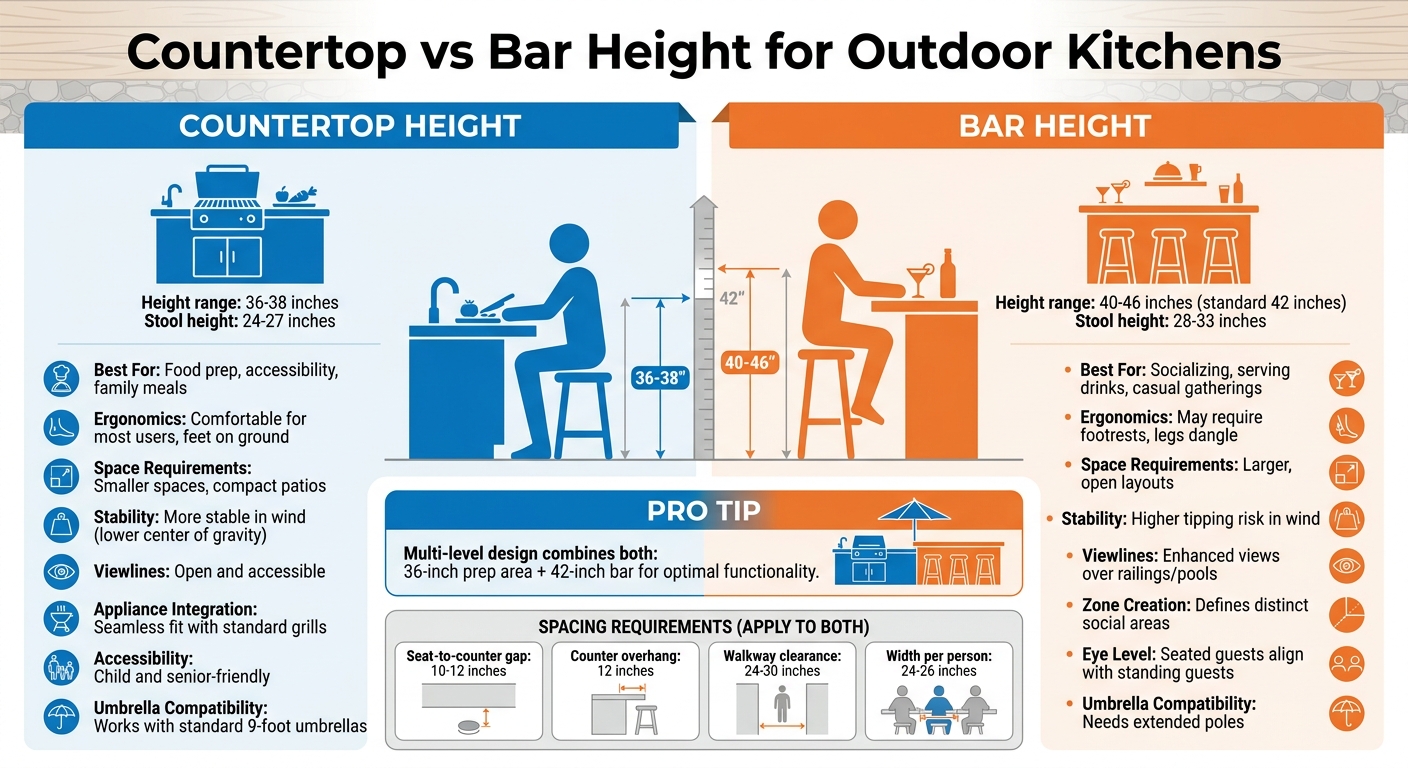
Countertop vs Bar Height Outdoor Kitchen Comparison Chart
Outdoor Kitchen Counter Heights – ConcreteNetwork.com

sbb-itb-843f8be
Countertop Height (36-38 Inches)
A standard countertop height of 36 inches is designed to reduce strain during food preparation, making it a practical choice for most users. However, taller individuals may find a height of 38 inches more comfortable for everyday use[2].
For grilling stations, maintaining the same height as adjacent countertops creates a smooth and unified workspace. If you’re incorporating deeper sinks – typically around 10 inches – a slightly elevated countertop (closer to 38 inches) can help prevent excessive bending and reaching into the sink[2].
Benefits of Countertop Height
One major advantage of this height is its compatibility with outdoor kitchen appliances. Many built-in grills, side burners, and other equipment are designed to fit seamlessly with a 36-inch countertop height, ensuring a cohesive and functional setup[2].
Another key benefit is accessibility. Lower countertops are especially convenient for children, seniors, and individuals with mobility challenges, as they allow users to sit comfortably with their feet firmly on the ground. To ensure sufficient legroom, aim for a 10 to 12-inch gap between the stool seat and the underside of the countertop – this is particularly important in family-friendly designs[1].
Lower countertops also provide extra stability in windy conditions. Their reduced center of gravity makes them less likely to tip over compared to taller bar-height setups. Plus, they pair well with standard 9-foot patio umbrellas, offering reliable shade coverage[1].
However, while these features make counter-height designs highly functional, they may not align with every design preference or aesthetic goal.
Drawbacks of Countertop Height
Despite their practicality, counter-height designs might lack the elevated, social vibe often associated with bar-height setups. This could be a drawback for those who prioritize a more casual, bar-like atmosphere for entertaining guests.
When to Use Countertop Height
Countertop height works best in family-friendly layouts where accessibility and safety are priorities. It’s an excellent choice for households with children or elderly family members, as it minimizes the effort needed to sit down comfortably[1]. For those who spend significant time cooking outdoors, this ergonomic height also helps alleviate back and shoulder strain during long prep sessions[2].
Additionally, smaller outdoor spaces benefit from the lower profile of counter-height installations. This design keeps sightlines open, making the area feel more spacious and less confined. To ensure the setup meets your needs, consider creating a mock-up to test comfort and functionality before finalizing your design[2]. When choosing stools, remember that outdoor foam cushions can compress by 1 to 2 inches under weight, which may impact the ergonomic gap. Always measure the seat height while in use for the best results[1].
Bar Height (40–46 Inches)
While standard countertops are ideal for focused food prep, bar-height surfaces are designed to encourage lively social interactions. These elevated surfaces typically range from 40 to 46 inches in height. As Peak Home Furnishings explains, "Bar height lifts sightlines and creates a pub-style feel; this directly influences social flow by making it easier to chat while standing or perching" [1]. To complement this height, use bar stools with seats positioned at 28–30 inches, leaving a comfortable 10–12-inch gap. Adding footrests 7–9 inches below the seat can also help maintain proper hip alignment. Below, we’ll explore the pros and cons of this elevated design.
Benefits of Bar Height
Bar-height surfaces offer several advantages, particularly in outdoor spaces. They elevate sightlines, allowing guests to easily overlook deck railings, pool equipment, or other yard features. This design naturally creates distinct zones, separating cooking areas from social spaces. As a result, it fosters a relaxed, lounge-like atmosphere where guests can enjoy drinks, appetizers, and scenic views without feeling crowded.
Drawbacks of Bar Height
Despite its social perks, bar height comes with a few challenges. For one, it’s not the most ergonomic option for food preparation. According to A Prepared Kitchen, "a surface set too high leads to shoulder discomfort" [2]. People of average or shorter height may find themselves straining their shoulders and wrists when working at surfaces between 42 and 46 inches tall. Additionally, bar-height furniture has a higher center of gravity, making it more prone to tipping – especially in windy conditions or on uneven ground. To enhance stability, consider placing these surfaces near walls or railings. Another potential issue is shading; standard patio umbrellas may not provide adequate clearance at this height. Extended umbrella poles or mounted shade solutions can help ensure enough headroom.
When to Use Bar Height
Bar-height surfaces are a great choice for outdoor kitchens that prioritize socializing over intensive cooking. They’re perfect for serving drinks, light snacks, and appetizers while drawing attention to attractive outdoor features. To ensure comfort and functionality, leave 24 to 30 inches of walkway space behind the stools and allocate 24 to 26 inches of table edge width per person. It’s also a good idea to test your seating arrangement with a mock-up to confirm the spacing works well. For added durability, opt for stools with reinforced frames made from heavy-gauge steel or aluminum. Up next, we’ll directly compare the pros and cons of countertop and bar heights.
Countertop vs Bar Height Comparison
When choosing between countertop and bar heights, it’s important to know how they differ so you can create a space that fits your needs. Each option serves a unique purpose: countertop heights are typically better for food prep, while bar heights create a more social vibe. Knowing these distinctions helps you design a space that balances functionality and comfort. Let’s break it down.
Countertop height typically measures 36–38 inches and pairs with stools that are 24–27 inches tall. This setup allows guests to rest their feet on the ground or on low footrests, promoting a natural posture. It’s an ideal choice for full meals and extended seating, making it especially comfortable for children and seniors.
Bar height, on the other hand, ranges from 40–46 inches and works with stools that are 28–33 inches high. Bar-height seating is great for casual conversations, as seated guests are at eye level with those standing. Standard bar surfaces are about 42 inches tall[2]. However, this elevated design can leave legs dangling – adding footrests is essential to avoid discomfort. Keep in mind that bar-height tables have a higher center of gravity, making them more likely to tip over in windy conditions[1]. Positioning them near walls or railings can help improve stability.
For both designs, ensure a 12-inch overhang and a 10–12 inch gap between the seat and the countertop for optimal comfort. Don’t forget to account for cushion compression, which can range from 1–3 inches when measuring stool height.
Another thing to consider is shade. Bar-height tables may need longer umbrella poles, as standard 9-foot patio umbrellas can sit too low for seated guests[1]. Countertop-height tables, however, clear standard umbrellas more easily. Lastly, for smooth traffic flow, leave 24–30 inches of walkway space behind stools and plan for 24–26 inches of table edge width per person[1].
How to Choose Between Countertop and Bar Height
Deciding between countertop and bar heights isn’t just about aesthetics – it impacts how functional and inviting your outdoor kitchen will be. Your choice should align with how you plan to use the space, the needs of your household, and the layout you’re working with. Let’s break down the key factors to consider.
Comfort and Ease of Use
Ergonomics should guide your choice. The right height ensures comfort and prevents strain. Ideally, countertops should be positioned 3 to 4 inches below your outstretched arms when bent at a 45-degree angle. Standard countertops (36 inches) suit most people, but shorter individuals may prefer 32–34 inches, while taller users might need 38–40 inches. Testing heights with a mock-up can help ensure everything feels just right.
"A surface that is too low may cause back strain, while one that is too high can make tasks difficult and inefficient." – A Prepared Kitchen [2]
Countertop height (34–36 inches) is great for food prep and family meals, offering a natural posture where feet stay grounded. On the other hand, bar height (40–42 inches) is ideal for casual snacks or socializing but requires integrated footrests to avoid leg fatigue since bar stools often leave feet dangling. Don’t forget to account for cushion compression to maintain a comfortable 10–12 inch gap between the seat and the surface.
Appliances and Seating
Plan for seamless integration of appliances. For example, if you’re installing a deep sink, you might need a slightly higher countertop to avoid bending too much. A 10-inch sink, for instance, might require an extra 4 inches of counter height compared to a 6-inch sink to keep things ergonomic [2].
Choose stools that match your counter height. Counter-height surfaces (34–36 inches) pair well with 24–27 inch stools, while bar-height counters (40–42 inches) need stools that are 28–33 inches tall. If you’re aiming for universal accessibility, consider incorporating a section of the counter that meets ADA standards – this means a height of 34 inches or lower with enough knee clearance [2].
Available Space and Layout
Your space dictates what height works best. Bar height is perfect for social areas near grills or pools because it lets seated guests and those standing maintain eye contact, making conversations easier [1]. Plus, bar height can hide messier prep areas from view, creating a cleaner aesthetic. On the other hand, countertop height opens up the space and works better in smaller outdoor kitchens.
"Bar height seating fits pool decks and raised edges because elevation improves visibility and safety. Given that the table height aligns closer to railing tops, you avoid blocked views and awkward gaps." – Peak Home Furnishings [1]
Leave enough clearance for movement. For main walkways, aim for at least 36 inches of space, while low-traffic areas behind seating can manage with 24–30 inches [1]. If your outdoor kitchen is in a windy area, bar-height tables might not be the best choice – their higher center of gravity makes them more prone to tipping. A split-level design, combining a 36-inch prep surface with a 42-inch serving ledge, can strike a balance between functionality and style. These thoughtful design choices lay the groundwork for expert outdoor kitchen solutions by Pro Landscapes MD.
Pro Landscapes MD Outdoor Kitchen Design Services

Pro Landscapes MD specializes in creating outdoor kitchens for central Maryland homeowners. Their designers understand that choosing the right countertop or bar height is all about the people using it and how it will be used.
Countertop heights are tailored to fit the primary user’s build. While the typical countertop height of 36 inches works for most, Pro Landscapes MD adjusts this to 32–34 inches for shorter individuals or 38–40 inches for taller users. This customization helps reduce strain on the back and shoulders, making the kitchen more comfortable to use.
One popular option is a multi-level setup: a 36-inch surface for food prep paired with a 40–42 inch serving area. In these designs, the grill is set to match the countertop height, ensuring smooth transitions and easy control while cooking. This thoughtful design combines functionality with user-friendly features.
For added accessibility, Pro Landscapes MD incorporates ADA-compliant sections. These are set at 34 inches with proper knee clearance, making them usable for everyone. Practical details, like sink depth, are also considered. For example, a sink that’s 10 inches deep requires a counter that’s 4 inches higher than one paired with a 6-inch sink to maintain ergonomic ease [2].
Whether you’re in Ellicott City, Bethesda, Columbia, or nearby areas, Pro Landscapes MD creates outdoor kitchens that blend style with practical design. Beyond kitchens, they also excel in building patios, walkways, fire pits, and retaining walls – offering complete outdoor living solutions tailored to your needs.
Conclusion
The height of your outdoor kitchen surfaces plays a big role in balancing style and functionality. Choosing between countertop and bar heights largely depends on how you plan to use the space. Countertop height (34–36 inches) is perfect for food prep, family meals, and accessibility, making it a practical choice for kids, seniors, or smaller patios. On the other hand, bar height (40–42 inches) creates a social gathering spot, conceals kitchen clutter, and offers improved views over railings or into the yard.
Each option comes with its own set of benefits. Countertop height is more affordable and stable, ideal for tasks like food preparation. Bar height, while slightly more wind-sensitive, defines social zones and enhances outdoor sightlines. For many, combining both heights – such as a 36-inch prep area with a 40–42 inch serving ledge – offers the best of both worlds, accommodating various activities while maintaining functionality.
Ergonomics are key in outdoor kitchen design. Surfaces that are too low can cause back strain, while those that are too high may make tasks unnecessarily difficult [2].
Collaborating with experts like Pro Landscapes MD can simplify these decisions. They account for outdoor-specific challenges like wind resistance and sink depth, while also addressing details like ADA-compliant sections and multi-level layouts. Their designs seamlessly blend style with practicality.
Whether you prioritize food prep with countertop height or socializing with bar height, Pro Landscapes MD crafts outdoor kitchens tailored to your needs – ensuring every detail enhances both usability and aesthetics.
FAQs
How do I pick the right counter height for my height?
Picking the right counter height comes down to ergonomics and your personal comfort. Standard counters are typically 34–36 inches tall, which tends to work well for most people. If you’re leaning toward a bar-height surface, those are generally 40–42 inches high and better suited for taller individuals or spaces with bar stools.
To find the best fit, try this simple trick: measure your elbow height while standing naturally. Your counter should sit at or just below this level. This ensures a comfortable posture, whether you’re cooking, working, or dining.
What stool height should I use for counter vs bar seating?
When setting up outdoor kitchens, the height of your stools should match the surface height for maximum comfort.
- Counter-height seating pairs well with stools that are 24–27 inches tall, ideal for counters that stand 34–36 inches high.
- Bar-height seating calls for stools between 28–33 inches tall, suited for bar surfaces measuring 40–42 inches.
Picking the correct stool height not only ensures comfort but also provides proper clearance, making your space both practical and welcoming.
Is a split-level (prep + bar) design worth it outdoors?
A split-level design, combining a prep area and a bar, can be a great choice depending on how you plan to use the space. This layout divides the zones effectively: the lower section serves as a prep area for cooking, while the raised bar offers a spot for seating and socializing. It not only improves workflow but also creates a clear boundary between cooking and entertaining areas. Plus, you can customize it to suit your comfort and style. Whether it’s the right fit for you will depend on your available space, budget, and how often you cook outdoors.
Chat with Us