









- bhavya gada
- No Comments
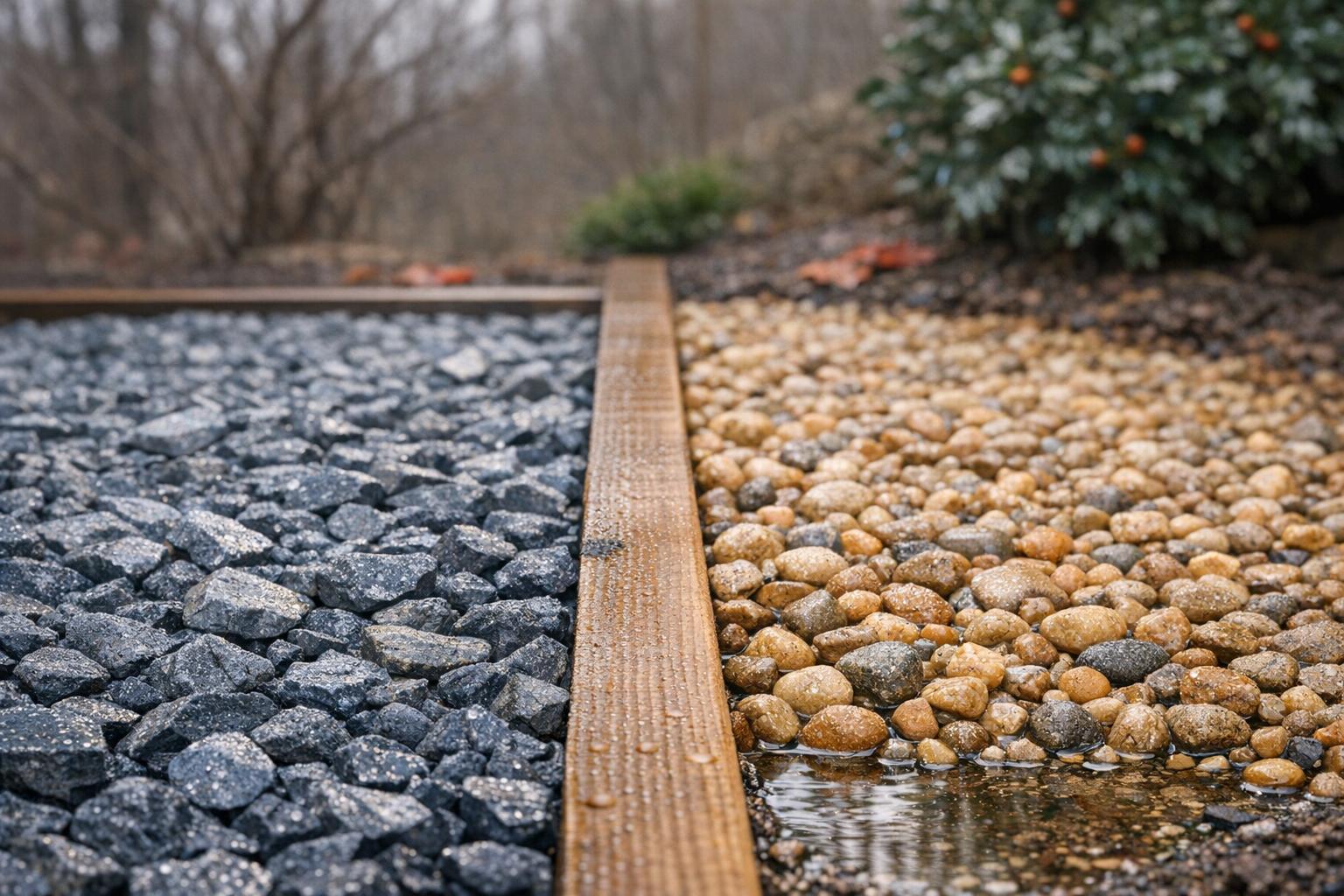
When deciding between crushed stone and gravel for outdoor pathways, understanding their differences is key. Crushed stone is mechanically broken into angular pieces, offering stability and durability for high-traffic areas and slopes. Gravel, formed naturally through erosion, features smooth, rounded stones, making it ideal for decorative, low-traffic paths. Both provide good drainage, but crushed stone resists shifting better during Maryland’s wet and icy conditions. For properties with significant runoff issues, professional drainage solutions may be necessary alongside material selection.
Quick Overview:
- Crushed Stone: Angular, interlocking edges; stable for heavy loads; better for slopes and wet climates; low maintenance.
- Gravel: Rounded, loose stones; softer underfoot; best for light foot traffic and decorative use; requires more upkeep.
| Feature | Crushed Stone | Gravel |
|---|---|---|
| Shape | Angular, jagged | Smooth, rounded |
| Stability | High (locks tightly) | Moderate (shifts underfoot) |
| Drainage | Good (resists erosion) | Excellent (larger voids) |
| Best Use | Heavy traffic, slopes, driveways | Decorative paths, gardens |
| Maintenance | Low | Higher (frequent raking) |
| Cost | $35–$50/ton | $20–$100/ton (varies by type) |
Choose crushed stone for durability and function, or gravel for aesthetics and softer surfaces. Both can enhance outdoor spaces with modern trends, but the right choice depends on your specific needs.
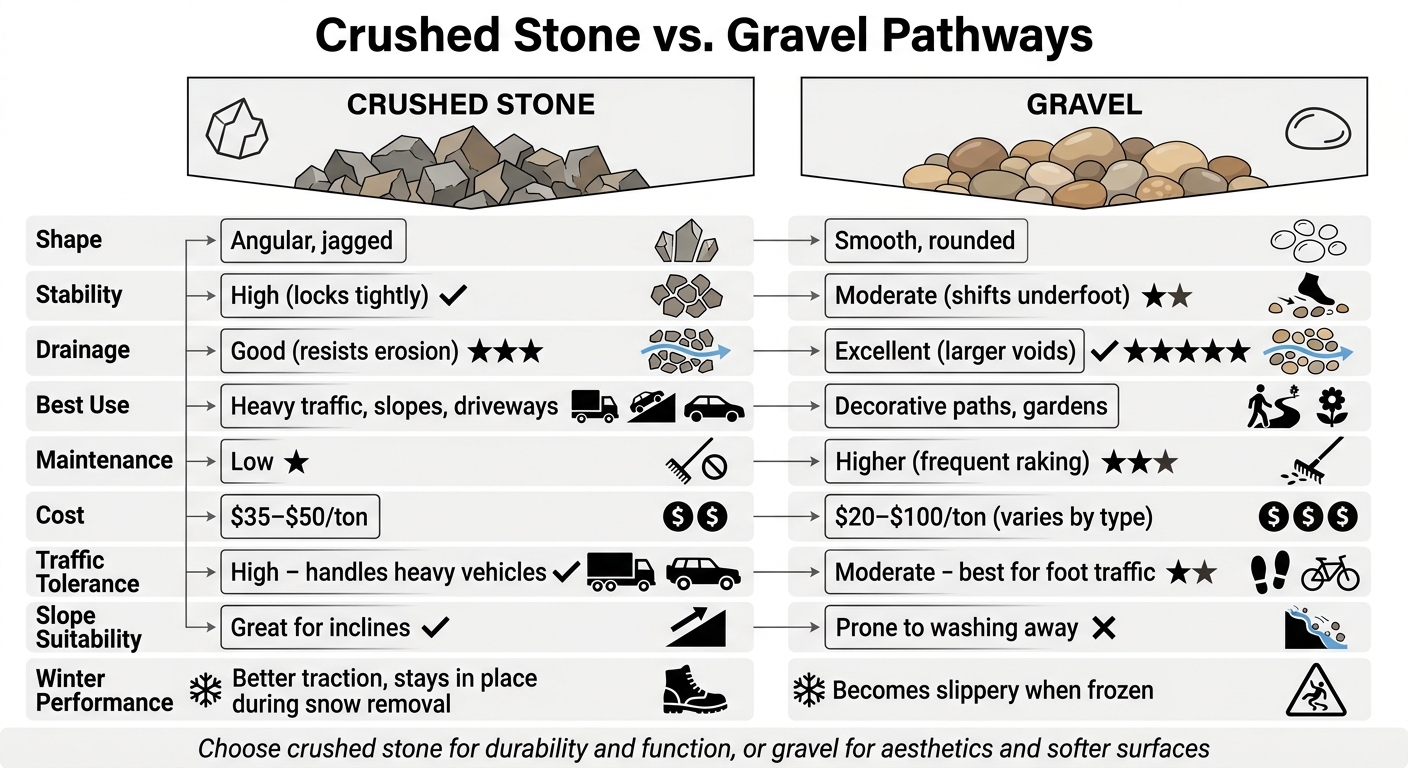
Crushed Stone vs Gravel Pathway Comparison Chart
Comparing Crushed Rock (& Gravel) Sizes and How They’re Used
What Is Crushed Stone?
Crushed stone is made by mechanically breaking down large rocks into angular pieces. Unlike natural gravel, which forms over time through erosion, crushed stone is created in quarries by crushing rocks and sorting them by size [4]. The U.S. Geological Survey clarifies:
"The American construction industry distinguishes between gravel (a natural material) and crushed stone (produced artificially by mechanical crushing of rock.)" [4]
Common source rocks for crushed stone include limestone, granite, dolomite, and slate. The product often contains "fines", or stone dust, which fills gaps between larger pieces to create a denser surface [4]. In Baltimore hardscaping, it’s sometimes referred to as "crusher run", DGA (dense grade aggregate), or QP (quarry process) [4].
Let’s take a closer look at its characteristics and how they contribute to pathway stability.
Crushed Stone Characteristics
The standout feature of crushed stone is its angular, jagged edges. These sharp shapes allow the stones to interlock when compressed, forming a stable surface that resists movement under heavy loads [3].
When compacted correctly, crushed stone creates a dense layer where the mix of stone sizes and stone dust fills tiny gaps. This structure efficiently spreads weight and prevents rutting [3]. Additionally, the tightly packed surface naturally blocks weed growth by limiting light and leaving minimal room for seeds to take hold. For pathways, 3/8-inch stones offer a smoother walking experience, while 3/4-inch stones provide better stability during intense rainstorms, like those often seen in Maryland [2].
Crushed Stone Uses in Landscaping
Crushed stone’s durability and interlocking properties make it a go-to material for pathways. Its ability to compact tightly ensures a stable surface that holds up well under frequent use, whether for foot traffic, driveways, or areas where wheelbarrows and garden tools are regularly used [2]. It’s also effective for erosion control on slopes and serves as a reliable surfacing material for roads [4].
For pathways, a base layer of 2-3 inches of compacted crushed stone is essential before adding decorative top layers [5]. As noted by The Stone Store Staff:
"A solid base [of crushed stone] keeps your path stable over time" [5]
Once installed correctly, crushed stone pathways require minimal upkeep. Adding metal, stone, or brick edging helps keep the material contained and creates clean, polished borders [2].
In the eastern United States, crushed stone is becoming a popular replacement for natural gravel due to its cost-effectiveness and availability [4].
What Is Gravel?
Gravel, unlike the structured, interlocking nature of crushed stone, offers a relaxed and decorative appeal. It forms naturally through the process of erosion, where stones are smoothed over time by water and weather. As the Stone Store Team puts it:
"Gravel is made up of naturally rounded stones that have been worn smooth over time by water and weather." [1]
Since gravel develops naturally, it comes in various forms like pea gravel, river rock, and marble chips, each showcasing a range of colors and textures.
Gravel Characteristics
Gravel’s rounded shape gives it a softer, more decorative look compared to the industrial feel of crushed stone. Without sharp edges, the stones remain loose, creating a cushioned surface that feels gentle underfoot. Smaller stones, about 3/8 inch in size, are particularly comfortable for walking barefoot or in light footwear. In contrast, larger stones, around 3/4 inch, are better at staying in place during heavy rains [2]. This smooth texture makes gravel a favorite for garden paths and patios, offering both comfort and aesthetic charm. These qualities make gravel a practical choice for landscaping projects where a natural and inviting look is desired.
Gravel Uses in Landscaping
Thanks to its unique properties, gravel is ideal for areas with light to moderate foot traffic where a natural, loose finish is preferred. It’s a popular choice for winding garden paths, decorative accents around trees, and filling gaps between pavers. Its excellent drainage capabilities allow water to flow along the natural slope of your yard without requiring complicated grading. With proper edging – using materials like metal, stone, or brick – gravel pathways can last 7 to 10 years, as the borders help prevent the stones from spreading [2] [6]. However, it’s best to avoid using gravel on paths leading directly to back doors, as the small stones can stick to shoes and get tracked indoors [2].
Crushed Stone vs. Gravel: Main Differences
When choosing between crushed stone and gravel for your pathway, it’s essential to consider how their appearance, cost, and functionality align with your design goals. Each material brings unique characteristics to the table, impacting both the look and performance of your project.
Appearance
The most noticeable difference lies in their shape and texture. Crushed stone has sharp, angular edges, a result of being mechanically crushed in quarries. This gives it a rugged and structured look, perfect for modern or industrial-style landscapes. On the other hand, gravel features naturally rounded and smooth stones, offering a softer, more polished aesthetic that works well in informal or "cottage" settings.
Color options also vary. Crushed stone comes in shades like white, gray, pink, and black, depending on the type of parent rock used. Gravel leans toward earth tones, such as tan and brown, often with multi-colored variations.
| Feature | Crushed Stone | Gravel |
|---|---|---|
| Visual Texture | Rugged, angular, jagged | Smooth, rounded, polished |
| Common Colors | White, gray, pink, black | Tan, brown, earth-tone variations |
| Aesthetic Style | Modern, structured, industrial | Natural, informal, cottage-like |
Cost
The price differences stem from how these materials are sourced and processed. Crushed stone, being mechanically produced, typically costs more, ranging from $35–$50 per ton. Decorative gravel, which is naturally occurring, can be pricier, costing $60–$100 per ton, while basic gravel for foundational use is more affordable at $20–$40 per ton [7].
Maintenance costs also differ. Crushed stone tends to stay in place due to its interlocking edges, requiring only occasional top-dressing every few years. Gravel, however, often shifts and scatters, leading to frequent raking and replenishment every one to two years.
| Cost Factor | Crushed Stone | Gravel |
|---|---|---|
| Material Price | Higher (processed mechanically) | Lower (naturally sourced) |
| Installation | Moderate (requires compaction) | Low (simple placement) |
| Maintenance | Low (occasional top-dressing) | High (frequent raking/replenishing) |
Functionality
Crushed stone stands out for its stability. Its angular edges lock together tightly when compacted, creating a firm surface that can handle heavy traffic and loads, making it ideal for driveways or high-use areas. Gravel, with its rounded stones, is more prone to shifting underfoot, making it better suited for light foot traffic or decorative pathways.
Both materials offer good drainage, but they perform differently on sloped terrain. Crushed stone resists sliding and erosion, performing better on inclines, while gravel may migrate downhill during heavy rainfall. This makes crushed stone a more reliable choice for areas prone to Maryland’s wet weather.
| Metric | Crushed Stone | Gravel |
|---|---|---|
| Compaction | Superior – locks tightly | Moderate – tends to shift |
| Drainage | Good – stable when clean | Excellent – larger voids |
| Traffic Tolerance | High – handles heavy vehicles | Moderate – best for foot traffic |
| Slope Suitability | Great for inclines | Prone to washing away |
Crushed stone also holds up better in winter conditions, staying in place during snow removal – a practical advantage for regions like Carroll County or Frederick County. These functional differences make crushed stone a stronger choice for heavy-use areas or challenging weather conditions, while gravel works well for decorative, low-traffic spaces.
sbb-itb-843f8be
Installation Process
Getting the installation right is key to making the most of the materials’ strengths. Both crushed stone and gravel pathways share the same starting steps, but they differ when it comes to layering.
Start by marking the pathway and digging down 4–6 inches, clearing out grass and debris. Ensure the path slopes about 1/4 inch per foot to allow proper drainage – especially important in Maryland’s rainy weather [2]. Lay down landscape fabric to block weeds and keep the stone from settling into the soil.
Here’s how to install each type of pathway.
How to Install Crushed Stone Pathways
Crushed stone pathways need a layered approach to ensure they stay stable. Begin with a 2–3 inch base layer of crushed stone and compact it firmly using a plate compactor. This step is crucial for creating a solid, interlocked surface that resists shifting [2][5]. After compacting, add a 2–3 inch decorative top layer [5].
Compaction is non-negotiable here. Without it, the pathway can develop ruts or settle unevenly over time. Use a heavy tamper or rent a plate compactor to keep the base layer firm [2][5]. To maintain the path’s shape and keep the material contained, install durable edging like metal, Belgian block, brick, or stone [2][5].
How to Install Gravel Pathways
Gravel paths are simpler to install, focusing more on containment than compaction. Spread about 3 inches of gravel on a leveled surface or over a thin sand bed [2]. Since gravel tends to shift, use metal borders that sit about an inch higher than the path surface to prevent stones from spilling into the lawn [2].
For maintenance, Ryan Van Bibber from Family Handyman offers this tip:
"A gravel path will last indefinitely, but it needs upkeep. To keep it looking sharp, rake it and pull weeds monthly."
– Ryan Van Bibber, Family Handyman [2]
Gravel paths work best on flat ground. Avoid using them on steep slopes, as heavy rain can cause the stones to wash away. If you need a path on a slope, consider adding timber or stone steps instead [2]. For comfort, choose 3/8-inch stones, but if stability is a priority – especially in Maryland’s wet climate – opt for 3/4-inch gravel [2].
| Feature | Crushed Stone Pathway | Gravel Pathway |
|---|---|---|
| Structure | Multi-layered (compacted base + top layer) | Single layer of material |
| Installation Effort | Higher; requires compaction work | Lower; basic shovel and wheelbarrow work |
| Stability | High; solid surface from compaction | Moderate; looser underfoot |
| Best Use | High-traffic, durable walkways | Informal paths or light-traffic areas |
Choosing the Right Material for Maryland Pathways
Maryland Climate Considerations
Maryland’s weather, with its rainy seasons and icy winters, makes material choice critical for creating durable pathways.
Crushed stone is a top performer in Maryland’s heavy rainfall. Its angular, interlocking structure helps it stay in place during storms, unlike rounded gravel, which can shift easily. As Darby Pit Gravel & Trucking puts it:
"In wet or icy conditions, the irregular texture [of crushed stone] provides bite, whereas smooth stones can become like ball bearings." [8]
This "ball bearing" effect means rounded gravel often shifts during rain, creating uneven surfaces that require frequent maintenance.
Winter conditions also highlight the advantages of crushed stone. Its rough texture offers better traction on icy surfaces, while rounded gravel becomes slippery when frozen [8]. Additionally, crushed stone holds its position during snow removal, reducing the amount of cleanup needed when spring arrives [8] [2].
For areas prone to heavy drainage, crushed stone is a better choice because it allows water to flow through its air pockets and resists sinking into soft, wet soil. Rounded gravel, on the other hand, can compact and sink without proper support, such as landscape fabric [8] [9].
By understanding these environmental factors, experts can tailor pathway solutions that stand up to Maryland’s challenging climate.
Pro Landscapes MD‘s Pathway Services

Pro Landscapes MD specializes in designing and installing custom walkways that are built to handle Maryland’s weather and your property’s specific requirements. They serve communities across Howard, Montgomery, Carroll, Frederick, Prince George’s, and Baltimore Counties, including areas like Bethesda, Potomac, Columbia, and Ellicott City.
Their services include flagstone and paver walkways, incorporating crushed stone and gravel to achieve a balance of durability and visual appeal. They also provide drainage solutions, such as French drains and stormwater management, which enhance the functionality of well-installed pathways [prolandscapesmd.com].
Whether you’re looking for a sturdy walkway for heavy foot traffic or a decorative path for your garden, Pro Landscapes MD offers tailored recommendations. They assess factors like slope, drainage, and usage to guide material selection. For example, they might suggest a compacted crushed stone base for strength, topped with decorative gravel for a polished look [8]. Their expertise ensures your pathways are both practical and attractive, no matter the season.
Conclusion
Crushed stone and gravel each bring unique benefits to outdoor projects, depending on your needs. Crushed stone, with its angular, interlocking design, provides excellent stability and resists shifting under heavy loads. This makes it a great choice for driveways, high-traffic areas, and structural bases [1]. On the other hand, gravel offers a softer, more decorative touch with its naturally rounded surfaces and variety of color options, making it perfect for pathways or areas focused on aesthetics.
Both materials offer great drainage, but crushed stone tends to require less maintenance, while gravel may need occasional raking and replenishment to keep it looking its best [2]. In Maryland’s wet climate, crushed stone remains firmly in place during heavy rain, while gravel works well for low-traffic, decorative paths if properly contained.
Choosing the right material is all about balancing looks and functionality. If you’re in Maryland, Pro Landscapes MD can help you make the best choice by evaluating your property’s specific needs – like drainage, soil type, and traffic levels. Whether you’re after a durable crushed stone base or a decorative gravel pathway, their expert team ensures a solution that works for your budget and enhances your outdoor space. Reach out to Pro Landscapes MD to start planning your project today!
FAQs
How do I choose the right stone size for my path?
When selecting the stone size for your path, think about both its purpose and the desired appearance. For paths that need stability and support – like those meant for walking or driving – larger, angular crushed stones (such as #57 or #67) are a smart choice. These stones interlock, creating a firm and durable surface.
If you’re aiming for a softer, more decorative look, smaller, rounded gravel (like pea gravel, typically 1/8 to 1/4 inch) is a great option, especially for garden paths. While it’s less stable than angular stones, it adds a more polished and inviting touch to low-traffic areas.
Do I need landscape fabric under crushed stone or gravel?
Yes, placing landscape fabric beneath crushed stone or gravel is a smart move. It acts as a barrier against weeds, minimizes soil erosion, and keeps the surface stable. This setup ensures your pathway stays durable and requires less upkeep over time.
What edging works best to keep stone from spreading?
Metal and plastic edging work well for keeping stone in place. They form a solid barrier that stops the material from spreading, helping to maintain neat and well-defined pathways. Both options are long-lasting and do the job effectively.
Chat with Us