









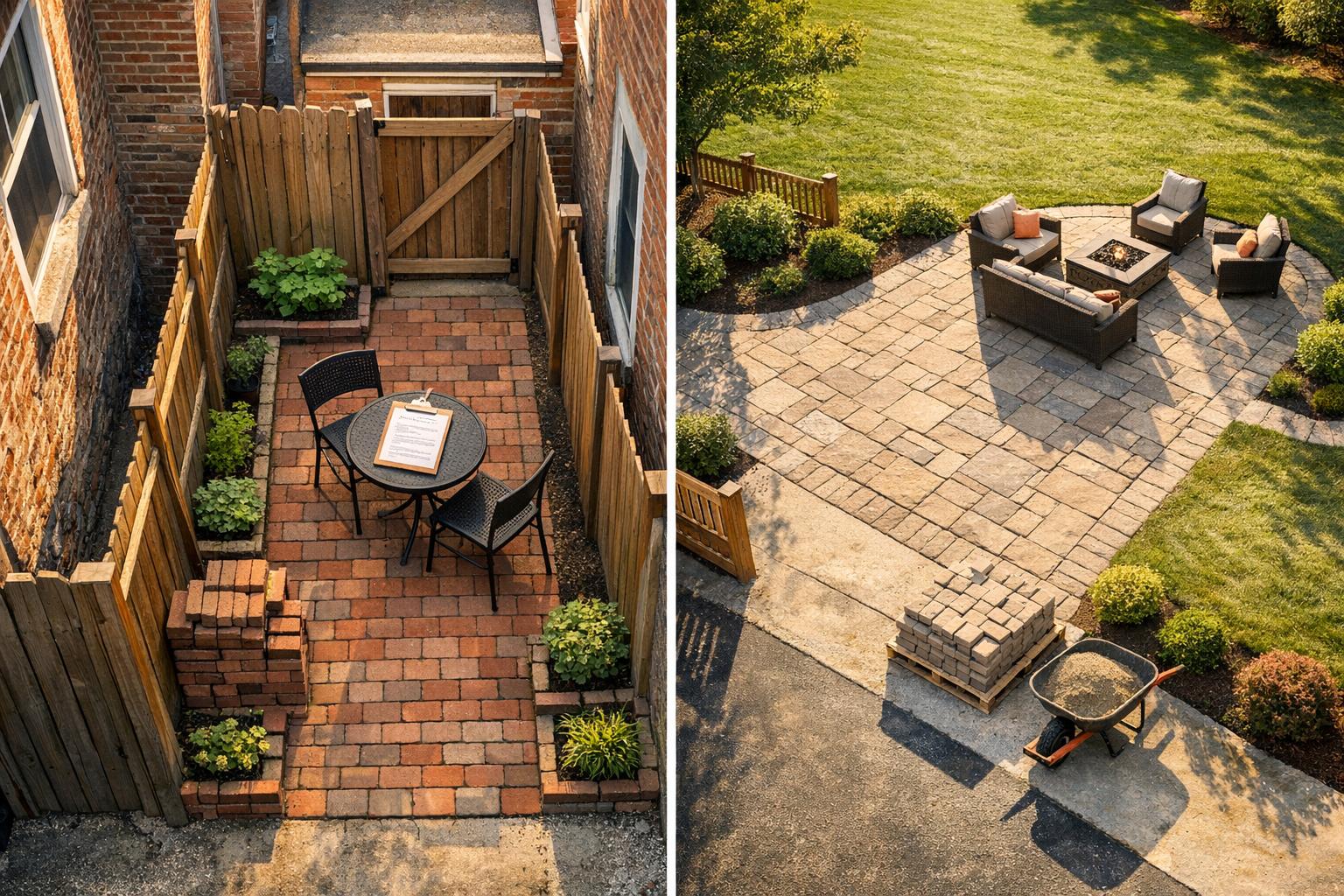
- bhavya gada
- No Comments
Planning a patio in Maryland? Costs vary significantly based on location. Urban patios, like those in Bethesda or Baltimore, often face higher expenses due to limited access, requiring manual labor or specialized equipment. Suburban patios, found in areas like Howard County, benefit from easier access but may incur extra costs for grading or soil stabilization. Here’s what you need to know:
- Urban Costs: $1,500–$12,000 for 300 sq. ft., with delivery fees ($200–$400) and labor surcharges ($500–$1,000+).
- Suburban Costs: $3,000–$9,000 for medium-sized patios, with added expenses for hilly terrain (10%–20% more) or clay-heavy soil prep ($500–$3,000).
- Key Factors: Labor makes up 40%–50% of costs. Permit fees range from $50–$300, depending on the county. Material choices (concrete, pavers, or stone) also greatly impact pricing.
Quick Tip: Urban patios maximize space with compact designs, while suburban patios allow for larger layouts and additional features. Both can yield a return on investment of 30%–80%.
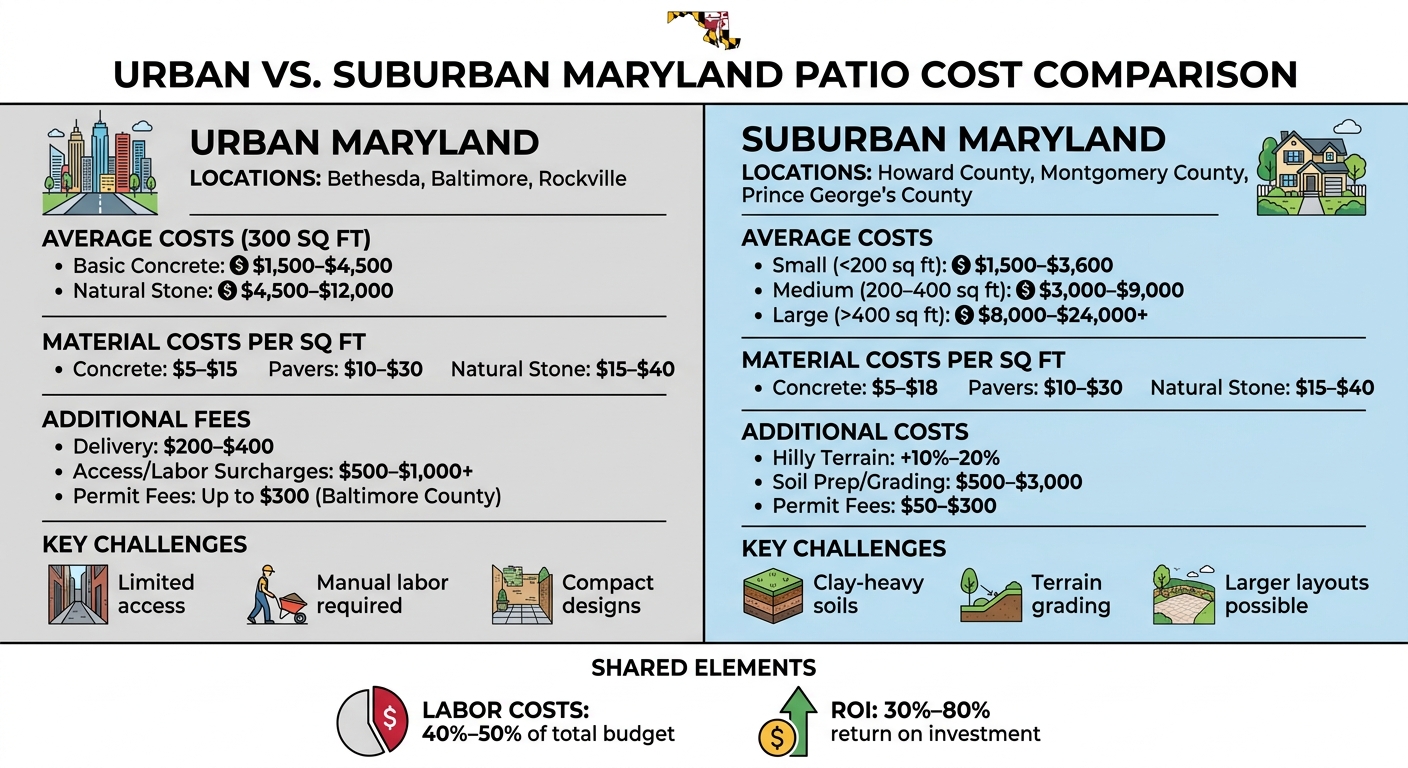
Urban vs Suburban Maryland Patio Costs Comparison
1. Urban Maryland Patio Costs
Average Cost
In Maryland cities like Bethesda, Baltimore, and Rockville, material costs for urban patio projects range from $5 to $50 per square foot, similar to suburban areas [1]. However, urban projects often come with higher overall expenses due to logistical challenges. For example, a 300-square-foot patio made of basic concrete might cost between $1,500 and $4,500, while opting for natural stone can push the total to $4,500–$12,000 [2]. The extra costs largely stem from fees unique to urban settings.
Key Cost Factors
One major factor driving up costs in urban areas is access restrictions. If contractors can’t bring equipment through narrow alleys or tight side yards, you’ll likely face additional charges for manual labor, pump trucks, and permits. These extra costs can add $500 to $1,000 or more to your budget [1][2]. Delivery fees in dense urban neighborhoods typically range from $200 to $400 [2]. Since labor makes up nearly half of the total cost, these logistical challenges can significantly increase the final price. Combined with material selection and patio size, these urban-specific hurdles play a big role in shaping total project costs.
Material and Size Variances
Material choice and patio size also heavily influence costs. Concrete is the most affordable option at $5–$15 per square foot, but it may crack due to Maryland’s freeze-thaw cycles [1][2]. Pavers, priced at $10–$30 per square foot, are easier to install in tight urban spaces since they can be carried through narrow areas and often don’t require permanent foundation permits [1]. For a more durable option, natural stone (like flagstone or bluestone) costs $15–$40 per square foot and can last over 100 years while handling Maryland’s shifting clay soils better [2].
Patio size also plays a role in costs:
- Small patios (under 200 square feet): $1,500 to $3,600
- Medium patios (200–400 square feet): $3,000 to $9,000
- Large patios (over 400 square feet): Costs can exceed $24,000
For urban projects over 500 square feet, additional permits and specialized drainage systems may be required, increasing expenses further [2].
sbb-itb-843f8be
2. Suburban Maryland Patio Costs
Average Cost
In Suburban Maryland, homeowners generally spend between $3,000 and $9,000 for a medium-sized patio (201 to 400 square feet). This size strikes a balance, offering enough room for dining and relaxing without taking up too much of the yard [1]. Smaller patios, under 200 square feet, usually cost $1,500 to $3,600, while larger, custom designs exceeding 400 square feet can range from $8,000 to $24,000 or more [1]. Material costs vary widely, from $5 to $40 per square foot, depending on what you choose. Unlike urban projects, suburban patios often avoid extra fees tied to limited access, though costs for terrain and soil preparation may still apply [1][2].
Key Cost Factors
While suburban projects don’t usually deal with the access challenges seen in urban areas, they come with their own hurdles. For instance, hilly terrain in Montgomery County can increase labor costs by 10% to 20%, and clay-heavy soils in Prince George’s County might require an additional $500 to $1,000 for grading and stabilization [2]. Permit fees also vary by location, ranging from about $50 in Howard County to as much as $300 in Baltimore County [2]. Labor, which typically accounts for 40% to 50% of the total cost, is a key factor that can significantly impact the overall budget [1][2].
Material and Size Variances
The type of material you choose has a big influence on the price per square foot. Concrete, one of the more affordable options, costs $5 to $18 per square foot and can last 25 to 50 years with proper sealing, even in Maryland’s variable climate [2]. Pavers, ranging from $10 to $30 per square foot, are a popular choice due to their excellent drainage capabilities, particularly beneficial during Maryland’s rainy seasons [1][2]. For those seeking long-term durability, natural stone options like flagstone or bluestone cost $15 to $40 per square foot and can last over 100 years [2]. If your yard has a slope – a common feature in suburban areas – plan to set aside an extra $500 to $1,000 for grading and stabilization work [2].
Patio Materials Price Guide | Gravel to Travertine
Pros and Cons
When deciding between urban and suburban patio projects in Maryland, understanding the unique challenges and benefits of each environment is crucial. Here’s a breakdown of the key differences:
In urban areas, tight spaces limit the use of heavy machinery, leading to higher labor costs and additional delivery fees. On the bright side, urban patios often maximize limited space with innovative vertical features and built-in seating, making the most of every square foot.
Suburban settings, such as Howard or Montgomery County, offer easier access for equipment like skid steers and front-end loaders, which can speed up installation and reduce labor costs [1]. However, hilly terrain or clay-heavy soils can increase labor expenses by 10%–20% due to the need for extra grading work [2]. Suburban homeowners also have more freedom to design expansive layouts, incorporating outdoor kitchens, fire pits, and multi-level designs.
| Feature | Urban Maryland | Suburban Maryland |
|---|---|---|
| Site Access | Limited; manual labor or pump trucks often required | Easier; supports heavy machinery |
| Labor Costs | Higher due to tight-space navigation | Lower per square foot with machinery access |
| Permit Fees | Up to $300 in Baltimore County | As low as $50 in Howard County |
| Design Options | Compact, vertical-focused layouts | Larger, sprawling designs with multiple features |
| Delivery Fees | $200–$400 surcharges for city navigation | Lower; trucks can easily access the site |
| Soil Issues | May involve clearing debris or old structures | Often requires grading for clay-heavy soils |
Urban projects often come with hidden costs, like manual excavation surcharges, while suburban projects might face extra expenses from lawn repairs after equipment use. Regardless of location, a well-built patio can offer a return on investment (ROI) of up to 80% [2].
For expert advice tailored to your specific project and location, check out Pro Landscapes MD at https://prolandscapesmd.com.
Conclusion
Understanding the cost differences between urban and suburban patio projects is crucial when planning your custom patio in Maryland. Urban patios often come with extra costs due to access restrictions, while suburban projects may require additional spending on grading and soil stabilization [2].
Permit fees also vary significantly, ranging from $50 in Howard County to $300 in Baltimore County, and labor typically makes up 40% to 50% of the total project budget [2]. Urban sites usually demand more manual labor because of limited space, whereas suburban properties can often accommodate machinery, making installation more efficient.
The return on investment (ROI) for patios in both settings can range from 30% to 80%, depending on the materials and design choices [2]. If your budget is tight, you might consider breaking the project into phases – starting with a solid base and adding features like fire pits or outdoor kitchens later [2].
Before starting, make sure to check local permit requirements, evaluate site access for urban locations, and test the soil for grading needs in suburban areas [2].
Pro Landscapes MD specializes in both urban and suburban patio installations throughout central Maryland, from compact city lots in Silver Spring to spacious suburban yards in Ellicott City. Their team is experienced in tackling challenges like drainage, grading, and access. Visit https://prolandscapesmd.com to discuss your project and receive a tailored quote. With the right planning and these insights, you can create a patio that’s both functional and visually appealing, ensuring you get the most out of your investment.
FAQs
What hidden costs should I expect for an urban patio?
When planning an urban patio, it’s important to account for hidden costs that might not be immediately obvious. For example, the removal of old concrete can add an extra $2–$6 per square foot to your budget. Additionally, you’ll likely need to factor in permit fees, which can range anywhere from $50 to $200, depending on your local regulations. To avoid surprises, check with your local authorities to understand the specific requirements and associated fees in your area.
Do I need a permit for a patio in my Maryland county?
In Maryland, whether or not you need a permit for a patio often depends on its size and the specific conditions of your property. Permit fees usually fall between $50 and $200. To avoid any issues, make sure to review the regulations in your county to ensure you meet all local requirements.
How can I tell if my yard needs grading or soil stabilization?
Take a close look at your yard for signs of trouble. Are there uneven surfaces, areas where water pools, or drainage problems? These could indicate the need for grading to channel water away from your home effectively.
If the soil in your yard feels loose, unstable, or prone to erosion, it might be time to consider soil stabilization. This process helps create a firm foundation, especially if you’re planning any hardscaping projects.
Pay extra attention during heavy rain. Observe how water flows across your property. If you notice concerning patterns, it’s a good idea to consult a professional. They can determine whether grading or soil stabilization is necessary to ensure your outdoor space remains durable and functional.
Chat with Us