









- bhavya gada
- No Comments
In Maryland, installing a deer fence helps protect gardens, landscaping, and property from deer damage. Costs vary based on materials, labor, and property conditions. Here’s a quick breakdown:
- Average Cost: $4,200 (range: $1,400–$7,000)
- Material Costs:
- Plastic mesh: $6–$10 per linear foot
- Metal wire: $10–$15 per linear foot
- Chain-link: $10–$20 per linear foot
- Solid wood: $15–$30 per linear foot
- Labor Costs: $30–$60 per hour (typically 50% of total cost)
- Key Factors: Terrain challenges (rocky soil, slopes), local regulations (permits: $50–$200), and fence height (8 feet recommended).
Fence Types Overview:
- Plastic Mesh: Budget-friendly but less durable (15–25 years).
- Metal Wire: Long-lasting (30+ years) with minimal maintenance.
- Chain-Link: Durable (30 years) but higher installation complexity.
- Solid Wood: Offers privacy and visual appeal but requires regular upkeep.
Proper installation is crucial for effectiveness, especially in Maryland’s varied landscapes. Professional services ensure durability and compliance with local rules.
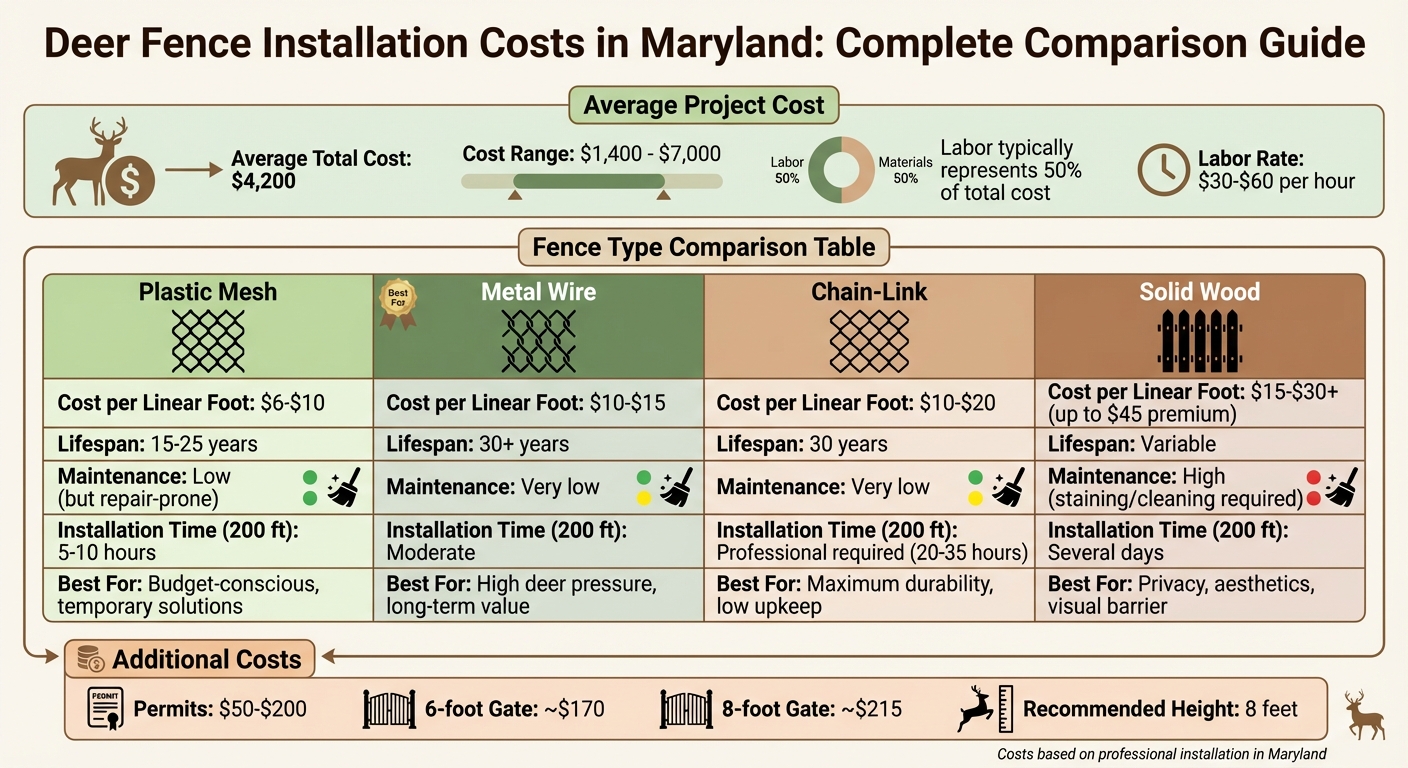
Deer Fence Types Cost and Durability Comparison Chart
1. Plastic Mesh Deer Fences
Plastic mesh fences are a popular and budget-friendly option for keeping deer at bay in Maryland.
Cost per Linear Foot
The cost for plastic mesh fences ranges from $0.85 to $3.35 per linear foot for materials and $6 to $10 per linear foot when installed professionally [1][2]. For a 200-foot perimeter, labor costs can fall between $150 and $800, while gates add to the expense – around $170 for a 6-foot gate or $215 for an 8-foot gate [1][2].
But how well does this material hold up over time?
Durability
When it comes to longevity, plastic mesh doesn’t quite match metal fences. Professional-grade options can last 10 to 30 years, with most averaging 15 to 25 years [1][6][7]. However, exposure to sunlight and fluctuating temperatures can cause the material to become brittle more quickly. As deer fencing specialist Waleed Madni notes:
Plastic fencing generally ages faster than metal deer fencing [5].
Additionally, deer and rodents may chew through the mesh, making regular inspections and quick repairs a must.
Installation Complexity
Thanks to its lightweight and flexible design, plastic mesh is an excellent choice for DIYers. It’s easy to attach to metal T-posts or wooden 4×4 posts [2]. For professionals, installing 200 linear feet typically takes 5 to 10 hours, especially with the right tools – like tensioning kits that include monofilament wire, tighteners, and crimps to avoid sagging [1]. To make the fence more visible to deer, you can add white streamers or warning banners. Securing the bottom edge with ground stakes is also recommended to keep animals from slipping underneath [2][8].
Once installed, routine care is essential to keep the fence in good shape.
Maintenance Needs
Annual maintenance is vital for plastic mesh fences. Check for sagging or damage caused by deer or rodents [1]. Although many plastic fences are treated to resist UV damage, extended exposure to sunlight will eventually weaken the material [1][2]. Clearing brush around the fence line and ensuring the fence remains properly tensioned can help extend its lifespan and maintain its effectiveness.
2. Metal Wire Deer Fences
Metal wire fences are a sturdy and long-lasting option, offering a step up in durability compared to plastic mesh alternatives.
Cost per Linear Foot
If you’re considering metal wire fencing, expect professional installation costs to fall between $10 and $15 per linear foot, while DIY materials range from $1.30 to $3.10 per linear foot[1][2]. Professional labor typically costs $30–$60 per hour, with a 200-foot fence taking 5–10 hours to install[1]. Gates are an additional expense: a 6-foot gate costs around $170, and an 8-foot gate is approximately $215[2]. Opting for a galvanized finish can increase material costs by 10% to 15%, but it can also extend the fence’s lifespan by up to 10 years[1].
Although the upfront costs may seem higher, the durability and longevity of metal wire fences make them a worthwhile investment for many.
Durability
One of the biggest advantages of metal wire fencing is its exceptional lifespan – around 30 years, compared to the 15 to 25 years typical of plastic mesh fences[1]. This extended lifespan can make the higher initial costs more manageable over time, especially for Maryland homeowners looking for long-term solutions. PVC-coated options are particularly well-suited for Maryland’s climate, as they resist rust and corrosion. High-tensile woven wire provides a strong barrier that deer cannot chew through or push aside[8]. For best results, an 8-foot high-tensile woven wire fence is recommended – it effectively deters deer and offers superior impact resistance and durability[8].
Installation Complexity
Metal wire fencing comes in 100-foot rolls, which makes it easier to handle than heavier materials like solid wood panels or chain-link sections[1]. However, Maryland’s diverse terrain – ranging from sloped yards to rocky or clay-heavy soil – can complicate installation. In such cases, specialized equipment may be needed for deeper post drilling[3]. While simpler setups may be manageable as a DIY project, professional installation is highly recommended for high-tensile woven wire fences. Proper tensioning is critical since deer are more likely to crawl under fences than jump over them. To prevent this, secure the bottom wire firmly and ensure posts are deeply embedded to withstand pressure[8]. Adding white streamers or warning banners every 30 feet can also improve visibility, reducing the chances of deer accidentally running into the nearly invisible wire[2].
A well-installed fence not only enhances effectiveness but also reduces the need for frequent repairs.
Maintenance Needs
Metal wire fences are relatively low-maintenance. Annual inspections should be enough to ensure posts remain tight and to address any damage caused by falling trees or severe weather[1]. Maintaining proper tension is crucial for continued effectiveness, and any issues should be fixed promptly. Clearing vegetation along the fence line can prevent posts from shifting and make future inspections easier. While routine care is minimal, it’s essential to stay on top of these tasks to keep the fence performing at its best in the long run.
3. Chain-Link Deer Fences
Chain-link fencing provides a sturdy and reasonably priced solution for Maryland homeowners looking to protect their property from deer.
Cost per Linear Foot
The cost of chain-link fencing falls between $10 and $20 per linear foot, with labor making up about half of the total cost[1]. For a 150-foot fence, you’re looking at a total expense of $1,000 to $3,000[1]. Labor charges typically range from $30 to $60 per hour[1]. If you opt for a color-coated finish, expect an additional $8 per linear foot[1]. Gates are an extra cost, ranging anywhere from $150 to $1,000, depending on their size and whether they include automation[1].
Durability
Chain-link fences have an impressive lifespan of about 30 years[1], outlasting plastic mesh fences by 5 to 15 years[1]. Maryland’s humid climate can be tough on materials, so choosing a finish like galvanized or powder-coated steel is crucial to prevent rust from rain and snow. While these finishes can increase material costs by 25% or more, they add essential protection against corrosion[1]. To effectively deter deer, an 8-foot fence is recommended, as deer are unlikely to jump barriers of that height when the fence is tight and clearly visible[8]. Unlike plastic mesh, chain-link is chew-proof, making it a reliable, long-term option.
Installation Complexity
Installing a chain-link fence is more labor-intensive than setting up mesh fencing. It involves precise post placement, tensioning the heavy material, and using specialized tools, which makes it a project better suited for professionals than DIY enthusiasts[1][3]. Installing 150 to 200 linear feet can take 20 to 35 hours, compared to just 5 to 10 hours for mesh installations[1]. Maryland’s uneven terrain, including sloped yards and rocky soil, often requires deeper post drilling and specialized equipment, which can drive up labor costs[3]. Hiring professionals ensures the posts are securely set and the fence can endure environmental stress. Before beginning installation, it’s also important to confirm property lines to avoid the expense of relocating the structure later[3]. Once properly installed, maintenance is minimal, and the fence will hold up well over time.
Maintenance Needs
Chain-link fences require little upkeep after installation. A yearly cleaning and application of an anti-rust coating will help maintain their functionality over their 30-year lifespan[1]. In Maryland’s moisture-heavy climate, this anti-rust treatment is especially important to prevent corrosion[1]. Regularly clearing debris and inspecting for damage from fallen branches or storms can also extend the fence’s life. For added protection, consider attaching warning banners or streamers – since deer have poor depth perception, these can reduce the risk of accidental collisions that might damage the fence[2].
For expert chain-link fence installation, Pro Landscapes MD offers services designed to handle Maryland’s challenging terrain and weather conditions effectively.
sbb-itb-843f8be
4. Solid Wood Deer Fences
If you’re looking for a fencing option that combines privacy with visual appeal, solid wood fences are a standout choice. While they come with a higher price tag compared to other deer deterrents, their aesthetic value and effectiveness make them a popular option in Maryland.
Cost per Linear Foot
Expect to pay between $15 and $30 per linear foot for standard solid wood fencing installations[1]. If you opt for premium wood or intricate designs, costs can climb to $45 per linear foot[1]. For a typical 150-foot fence, the total cost, including labor and materials, ranges from $4,000 to $9,000[1]. Labor costs alone can run $30 to $60 per hour[1]. Don’t forget to factor in permit fees, which in Maryland typically range from $50 to $200[1][3]. Gates follow the pricing structure mentioned earlier, with an additional $200 for labor[2]. Maryland’s terrain – whether it’s sloped yards, rocky soil, or dense clay – often demands specialized equipment, which can increase labor expenses[3][9].
Durability
While not as long-lasting as metal wire fences, which can endure for 30 years[1], solid wood fences have a unique advantage: they block visibility. This feature makes deer hesitant to approach, as they can’t see potential predators on the other side. As a result, wood fences don’t need to match the height of transparent alternatives to be effective[1]. The lifespan of a wood fence largely depends on the material. Pressure-treated wood or cedar posts are excellent choices, as they resist the effects of Maryland’s humid climate, frequent rain, and ground moisture that can accelerate decay[1][2][8].
Installation Complexity
Building a solid wood fence is a labor-intensive process. Installing a 150-linear-foot wood fence typically takes several days, far longer than the 5 to 10 hours needed for mesh fencing[1]. Posts must be securely and deeply set to withstand impacts and avoid shifting over time[8]. To avoid costly mistakes, confirm property boundaries before installation begins[3]. You can also cut down on labor costs by clearing the installation area of brush and other obstacles beforehand[1].
Maintenance Needs
Wood fences require consistent care to maintain their appearance and structural integrity[1]. Routine cleaning helps prevent rot and buildup, while regular inspections can catch issues like warping or splitting before they worsen[1]. Keeping vegetation away from the wood is crucial, as moisture from nearby plants can lead to damage[1]. Applying paint or stain not only enhances the fence’s appearance but also adds a layer of weather resistance[1]. Compared to low-maintenance options like chain-link or metal wire, wood fences demand more upkeep, which increases their lifetime cost[1][4]. However, for those who prioritize both privacy and aesthetics, the extra effort can be well worth it.
Pro Landscapes MD specializes in installing solid wood fences throughout Maryland, skillfully addressing challenges like uneven terrain, rocky soil, and dense clay during the process.
Pros and Cons Comparison
After examining the costs and installation details, here’s a clear breakdown of the advantages and drawbacks of each type of deer fence. Selecting the right option means weighing your budget, property needs, and how much maintenance you’re willing to handle.
Plastic mesh is the most affordable choice, costing $6 to $10 per linear foot [1]. It’s perfect for those on a tight budget or seeking a temporary fix. However, it has its downsides – it’s prone to UV damage and can be chewed through by deer or rodents [1][2]. While it can last 15 to 25 years [1], you might find yourself making repairs more often compared to sturdier materials.
Metal wire fences offer a great mix of cost and durability. With a price range of $10 to $15 per linear foot [1], they can last over 30 years and require minimal upkeep – usually just occasional inspections [1]. As FenceGuides.com explains:
If you’ve got aggressive deer where you live, then tall metal deer fence is the best defense [2].
Plus, PVC coatings can help these fences withstand the humid weather common in Maryland [1].
Chain-link fences share similar durability with metal wire fences but come with a slightly higher price tag, ranging from $10 to $20 per linear foot [1]. These fences are known for requiring little to no maintenance [10]. However, they are more complex to install, often requiring professional assistance [1][10].
Solid wood fences are the high-end option, costing between $15 and $30 per linear foot, with premium designs reaching up to $45 [1]. They not only provide excellent privacy but are also effective at lower heights. As HomeAdvisor notes:
Deer can’t see through solid wood and are wary of encountering predators [1].
On the flip side, these fences demand significant maintenance, including staining, cleaning, and regular inspections to prevent rot. Installation can also take several days to complete [1].
| Fence Type | Cost per Linear Foot | Lifespan | Maintenance | Installation Time (200 ft.) | Best For |
|---|---|---|---|---|---|
| Plastic Mesh | $6–$10 [1] | 15–25 years [1] | Low (repair-prone) [1] | 5–10 hours [1] | Budget-conscious, temporary solutions |
| Metal Wire | $10–$15 [1] | 30+ years [1] | Very low [1] | Moderate | High deer pressure, long-term value |
| Chain-Link | $10–$20 [1] | 30 years [1] | Very low [1][10] | Professional installation required | Maximum durability, low upkeep |
| Solid Wood | $15–$30+ [1] | Variable [1] | High (staining/cleaning) [1] | Several days [1] | Privacy, aesthetics, visual barrier |
This overview helps homeowners make an informed decision when choosing the best deer fence for their Maryland property, based on durability, cost, and specific needs.
Conclusion
Selecting the right deer fence for your Maryland property involves weighing your budget, property size, and long-term needs. If you’re working with limited funds or need a temporary fix, plastic mesh can be a cost-effective choice. However, for properties dealing with heavy deer activity, metal wire fencing stands out as a reliable option. It typically lasts up to 30 years with little maintenance required, making it a solid long-term investment[1]. For those who value both privacy and aesthetics, solid wood fencing provides a visual barrier that can deter deer even if it’s slightly shorter than the recommended 8 feet. Keep in mind, though, that wood fencing requires regular upkeep and tends to be more expensive upfront.
The success of your fence also depends heavily on proper installation. Labor usually makes up about 50% of the total installation cost, but professional installers ensure your fence is built to withstand deer pressure. They’ll take care to set posts deeply and properly tension the wire – key steps to prevent gaps that deer could exploit. Maryland’s diverse terrain, from rocky hills to uneven ground, often requires specialized tools and techniques, making DIY installation less practical. Professional services, such as those offered by Pro Landscapes MD, help ensure the job is done right the first time, saving you from costly fixes later. To keep labor costs down, clear brush and obstacles along the fence line before the crew arrives. Also, remember to check with your local government about permits, which usually cost between $50 and $200[1][3].
Whether you’re safeguarding a prized garden in Bethesda or enclosing a large property in Clarksville, a well-installed deer fence can provide decades of protection while also boosting your property’s value.
FAQs
How many linear feet do I need to fence my yard?
The amount of fencing you’ll need depends on the size and shape of your yard. For instance, if you have a rectangular yard that’s 50 feet by 100 feet, you’d need about 300 feet of fencing (calculated as perimeter = 2 × (length + width)). If your yard has an irregular shape, you’ll need to measure and add up the lengths of all its sides.
Fencing costs can vary widely, typically falling between $20 and $60 per linear foot, based on the materials you choose and labor expenses.
What fence height works best for deer in Maryland?
For keeping deer out in Maryland, it’s best to use a fence that’s at least 8 feet tall. This height makes it tough for deer to jump over, helping safeguard your property from potential damage.
What factors can increase the total installation cost?
The overall cost can go up depending on factors like the fence’s length, height, materials, and any additional features. Covering larger areas requires more materials and labor, which naturally increases expenses. Opting for taller fences to keep deer out more effectively or choosing long-lasting, aesthetically pleasing materials can also add to the price. Extra touches like gates or decorative elements can further drive up the total.
Chat with Us