









- bhavya gada
- No Comments
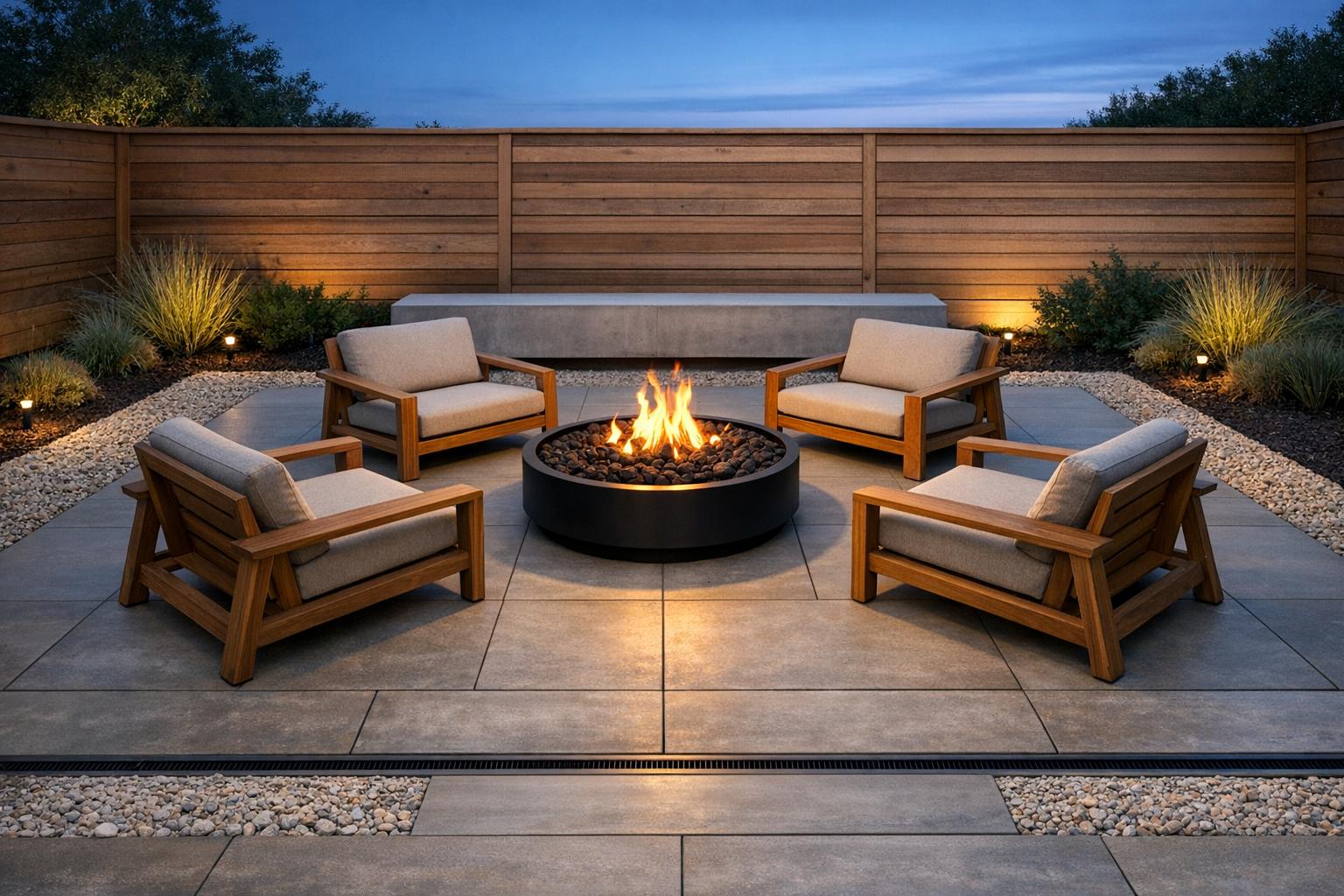
Adding a fire feature to your patio is a simple way to create a warm, inviting outdoor space that you can enjoy year-round. Whether you’re choosing a fire pit or an outdoor fireplace, the key is to balance layout, materials, and safety. Here’s a quick breakdown:
- Plan the layout: Place fire features at least 10 feet from structures, consider wind direction, and ensure enough space for seating and movement.
- Choose materials wisely: Use heat-resistant options like concrete pavers or natural stone, and avoid materials prone to cracking under heat.
- Prioritize safety: Follow clearance guidelines, ensure proper ventilation, and check local codes for compliance.
- Decide on the fire type: Wood-burning options offer a classic feel but require more upkeep, while gas or propane setups are cleaner and easier to maintain.
For Maryland homeowners, where seasonal weather limits outdoor use, fire features can extend patio usability into cooler months and even boost home resale value. While some aspects can be DIY, hiring a professional for tasks like gas line installation and drainage ensures a durable, safe setup.
Pro tip: Sketch your design first, then consult with a local contractor to bring your vision to life.
Planning the Layout and Placement of Your Fire Feature
First, think about how you plan to use your fire feature. A cozy fire pit for two people sharing an evening drink requires a completely different setup than one meant for hosting weekend gatherings of eight or more. For intimate use, a smaller fire pit (30–36 inches in diameter) tucked into a recessed corner is ideal. For larger groups, go for a bigger pit (36–44 inches) and add a hardscape pad that extends 6–8 feet beyond the pit’s edge in all directions. This ensures there’s enough room for chairs, side tables, and easy movement. Once you’ve pinpointed your needs, take a close look at your yard’s layout and characteristics.
Assessing Space and How You Plan to Use It
Start by surveying your yard. Pay attention to wind direction, shading, and natural movement paths. Wind direction is more important than you might think – nobody wants smoke constantly blowing toward their back door or a neighbor’s yard. You can check prevailing wind directions through the National Weather Service or by observing how smoke drifts on a calm day.
Next, consider distance from structures. Fire features should be at least 10 feet away from your house, shed, fence, or any combustible material. In some areas, local codes may require 15–25 feet of clearance, so always check your local regulations and HOA guidelines before committing to a spot. This step is essential – it’s much easier to adjust plans early on than after the patio has been built.
Placement Guidelines for Fire Pits vs. Fireplaces
The type of fire feature you choose will influence its placement. Fire pits are best suited for open, central spaces because they’re designed for 360-degree social gatherings. In contrast, outdoor fireplaces are directional and work well along the edge of a patio, in a corner, or against a property setback. A fireplace can serve as a visual anchor, creating a cozy seating area in front of it. Plus, its structure can act as a windbreak, making the patio area more comfortable.
Regardless of the type, all fire features must be positioned away from roof overhangs, low tree branches, or pergolas unless specifically rated for those clearances. According to the NFPA, outdoor fires are responsible for an average of 10,600 home structure and outdoor fire incidents annually in the U.S., with 49% occurring in yards or open spaces. Many of these accidents happen because combustible materials were placed too close to the flames.
Sizing and Shaping the Patio Around the Fire Feature
When designing your patio, size it around the fire feature – not the other way around. For a round fire pit, leave 3–4 feet of space between the seating and the pit, with 18–24 inches of clearance for movement. This usually means a total patio diameter of 12–16 feet for a setup that accommodates 4–6 people comfortably.
If your outdoor space includes multiple zones, such as a fire lounge and a cooking or dining area, maintain 8–10 feet of separation between the fire feature and the grill or kitchen. This keeps the flow of traffic smooth and prevents overcrowding. Use paver or flagstone paths to connect these zones while maintaining clear movement paths. If your yard has uneven terrain, consider adding retaining or seat walls to level the fire zone. These walls can double as built-in seating – a practical solution often used by Pro Landscapes MD in their designs for multi-zone patios in Maryland. Proper spacing and thoughtful design not only enhance comfort but also ensure a safe and durable setup.
sbb-itb-843f8be
Choosing Materials for Your Patio and Fire Feature
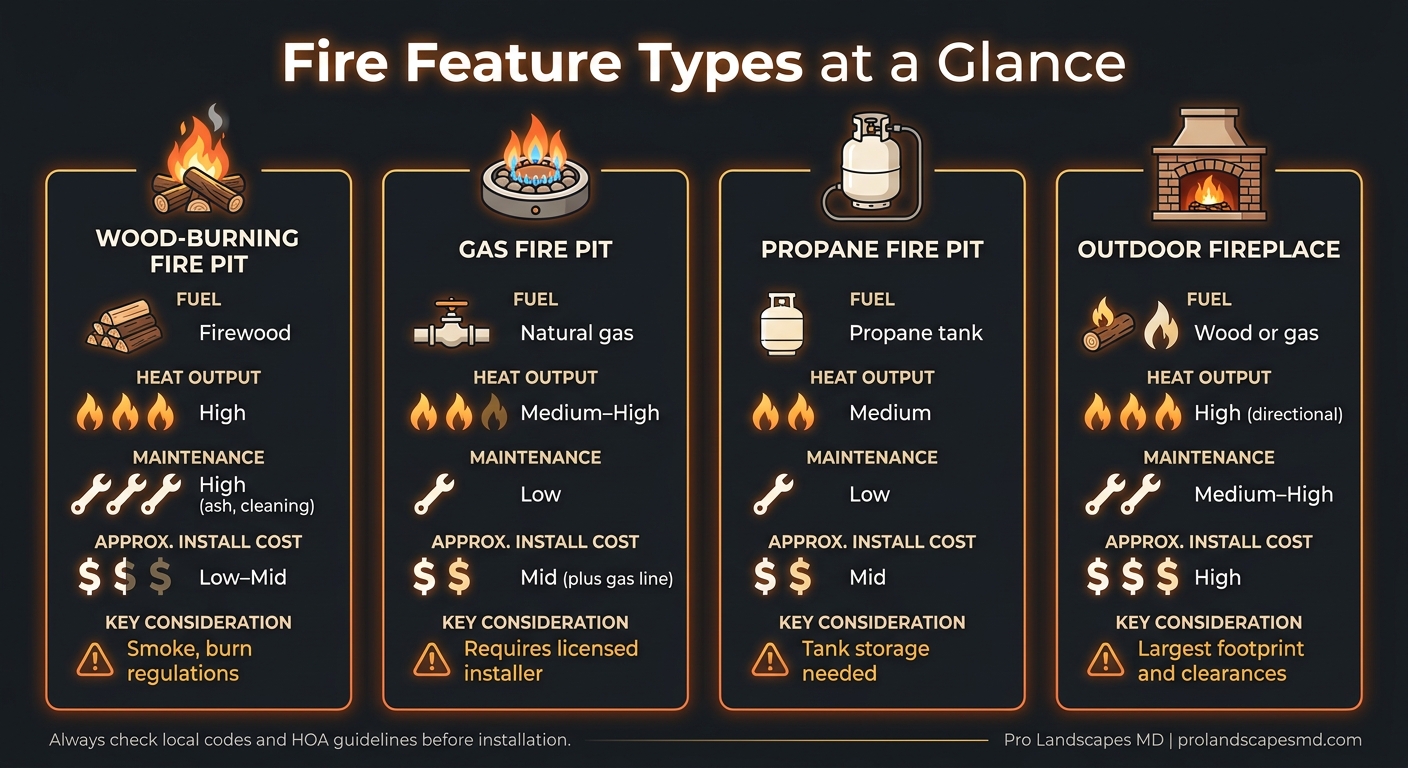
Fire Feature Types Compared: Cost, Heat, Maintenance & More
Picking the right materials is just as important as planning the layout and ensuring safety. Maryland’s weather can be tough on patios, with temperature swings and heavy rain putting materials to the test. Selecting durable options now can save you from expensive repairs down the road.
Comparing Fire Feature Types
When it comes to fire features, you’ve got options: wood-burning, gas/propane, and outdoor fireplaces. Each type offers different levels of heat, cost, and upkeep.
- Wood-burning fire pits bring the classic campfire feel with real flames and plenty of warmth. But they also come with smoke, ash cleanup, and stricter rules. In Maryland, many counties and HOAs require wood-burning pits to be at least 25 feet from buildings and property lines. Seasonal burn bans in some areas can also limit their use.
- Gas and propane fire pits are cleaner and easier to manage. They light up instantly, don’t produce ash, and are less likely to bother the neighbors. However, they can get pricey – installing a gas line can cost hundreds to over a thousand dollars depending on the setup. Propane tanks are more flexible for placement but need proper storage.
- Outdoor fireplaces are the priciest option but make a bold statement. They direct heat and smoke upward, provide wind protection, and create a focal point for seating areas, much like an indoor fireplace. Keep in mind, they require a strong foundation and more space to meet safety clearances.
| Fire Feature | Fuel | Heat Output | Maintenance | Approx. Install Cost | Key Consideration |
|---|---|---|---|---|---|
| Wood-burning fire pit | Firewood | High | High (ash, cleaning) | Low–Mid | Smoke, burn regulations |
| Gas fire pit | Natural gas | Medium–High | Low | Mid (plus gas line) | Requires licensed installer |
| Propane fire pit | Propane tank | Medium | Low | Mid | Tank storage needed |
| Outdoor fireplace | Wood or gas | High (directional) | Medium–High | High | Largest footprint and clearances |
After choosing your fire feature, you’ll want patio materials that pair well with it.
Patio and Surround Material Options
For Maryland’s freeze-thaw cycles, concrete pavers are a top choice. They’re durable, resist damage from de-icing salts, and allow for easy repairs – individual pavers can be swapped out without tearing up the entire surface.
Natural stone, like Pennsylvania bluestone, granite, or flagstone, adds a premium touch and excellent heat resistance. While it costs more and requires skilled installation, it can last for decades if properly maintained. Stick to dense, low-porosity stones to avoid flaking and plan to reseal them every 2–3 years.
Around the fire zone, prioritize fire-safe materials. The inner firebox or fire ring should use fire brick (refractory brick) and high-temperature refractory mortar to handle intense heat. Avoid standard clay bricks, as they may crack. For gas or propane setups, a metal burner pan with lava rock or fire glass helps distribute heat evenly and protects the masonry.
Using Retaining Walls and Stone Finishes to Frame the Fire Feature
Incorporating retaining walls and stone finishes can elevate both the look and functionality of your patio. Retaining and seat walls define the fire zone while adding practical benefits. Seat walls, built 18–22 inches high, provide built-in seating, eliminating the hassle of moving chairs and creating a safer boundary – especially helpful if kids or pets are around.
Keep the design cohesive by using matching pavers, stone veneers, and coping materials. Manufactured stone veneers, like those from El Dorado Stone, are a popular choice for wrapping fire pits and fireplaces. They mimic the look of full-depth stone but are lighter, more affordable, and weather-resistant, making them a smart option for outdoor spaces.
Safety Standards and Construction Best Practices
Once you’ve settled on your layout and materials, the next step is ensuring proper safety measures and construction techniques. These steps aren’t just about compliance – they’re about creating a fire feature that’s both durable and safe. Skipping essential safety checks can lead to costly repairs or even dangerous situations.
Clearance Distances and Ventilation Requirements
Start by checking with your county permitting office or fire marshal for any local updates to the International Residential Code (IRC) and International Fire Code (IFC). In Maryland, counties like Howard, Montgomery, and Baltimore County follow these codes but may have additional requirements.
Clearance guidelines are straightforward. Flames and heat should remain at least 10 feet below any pergolas, roof overhangs, tree branches, or utility lines. Additionally, maintain a 3-foot noncombustible zone around the fire feature. This area should stay clear of furniture, planters, or anything flammable.
For gas fire pits, proper ventilation is critical to avoid gas buildup. While wood-burning setups don’t need mechanical venting outdoors, you should still position them so prevailing winds carry smoke away from your home and seating areas. Avoid placing fire features in enclosed courtyards or three-sided alcoves, as these can trap smoke and sparks.
Finally, ensure your patio base and drainage are designed to support these safety measures effectively.
Building a Stable Patio Base with Proper Drainage
A stable base is key to keeping your patio level and crack-free over time. In most Maryland backyards, this involves digging 7–12 inches deep. Lay down 4–6 inches of compacted crushed stone (preferably ¾-inch minus with fines), followed by about 1 inch of bedding sand beneath your pavers or flagstones. Compact each 2-inch layer using a plate compactor, and install edge restraints – such as paver edging, poured concrete, or masonry borders – to prevent the surface from shifting due to heat or freeze-thaw cycles.
Drainage is just as important as the base itself. Your patio surface should slope ⅛ to ¼ inch per foot away from your house toward a safe discharge point. In Maryland’s rainy seasons, this often means installing French drains, channel drains, or perforated pipes to move water away from both the fire feature and your home’s foundation. Central Maryland’s clay-heavy soils can trap water, increasing the risk of frost heave and uneven settling. For sloped or water-prone areas, consider hiring a professional to plan drainage. Experts like Pro Landscapes MD specialize in stormwater management, French drains, and grading, ensuring your site is ready for construction.
Seasonal Maintenance to Keep Fire Features in Good Shape
Regular maintenance is essential to keep your fire feature in top condition, especially in Maryland’s challenging freeze-thaw climate. Water can seep into small cracks in masonry, freeze, and expand, causing damage over time. Each spring, inspect mortar joints, stone veneer, and the firebox for cracks or loose materials. Promptly patch any issues with refractory mortar to prevent them from worsening.
For gas fire pits, check the burner pan, gas connections, and shutoff valve before the first use each spring. Make sure vent openings are clear of debris, and inspect flexible gas lines for kinks or winter damage. Wood-burning pits require clearing out ash and debris, checking the fire ring or steel insert for rust or warping, and inspecting spark screens for holes or wear.
To prepare for winter, cover metal components with a weatherproof cover and apply a penetrating sealer to natural stone surfaces every 2–3 years. This reduces water absorption and slows damage from freeze-thaw cycles, ensuring your fire feature stays in great shape year-round.
Step-by-Step: Designing and Installing a Fire Feature
Once you’ve established your layout and ensured safety guidelines are in place, it’s time to dive into the process of designing and installing your fire feature.
Measuring Your Space and Sketching a Layout
Start by measuring your outdoor space with a tape measure, and sketch the layout on graph paper. Use a scale where one square equals 1 foot. Be sure to include key details like your home’s exterior walls, doors, windows, and existing features such as fences or garden beds. Take note of factors like foot traffic patterns, shaded areas, and scenic views – these will help you pinpoint the ideal location for your fire feature.
Picture your patio as a collection of distinct outdoor "rooms." Sketch out zones for activities like dining, cooking, and gathering around the fire. Use dotted lines to mark potential spots for your fire feature and evaluate each option to ensure it meets clearance guidelines. Planning everything on paper first can save you from making costly adjustments later. Once your layout is finalized, you can focus on creating a welcoming fire zone with comfortable seating.
Setting Up the Fire Zone and Seating Area
After selecting the perfect location, clearly define the fire zone. A built-in stone seating wall is a great option – it creates a permanent boundary, saves space compared to movable chairs, and gives the area a polished look. Be sure to use fire-resistant pavers that can withstand your local climate.
For safety and comfort, position the inner edge of the seating area about 6–8 feet from the center of the fire pit. If you’re installing an outdoor fireplace instead, you may want to allow for a slightly deeper seating arrangement since the heat radiates in a more directional manner.
"There’s something about a fire pit that just brings people together. Whether it’s for s’mores or stories, it’s a cozy addition that extends your outdoor season." – Pro Landscapes MD [1]
When to Bring in a Professional Contractor
While tasks like sketching your layout, picking materials, and selecting furniture can be fun DIY projects, certain aspects of the installation require professional expertise. Precision and adherence to safety codes are critical for a fire feature that’s both functional and long-lasting.
For example, installing a gas line is a job for a licensed professional. If your yard has slopes or drainage issues, site grading and leveling should be handled by an experienced hardscaper. Structural elements like retaining walls, stone veneer, or permanent fireplaces also demand skilled masonry work to ensure durability and safety.
For these technical aspects, it’s best to rely on professionals like Pro Landscapes MD. They specialize in grading, drainage, fire pit installation, and custom patio construction in areas like Howard County, Montgomery County, and Baltimore County. When evaluating contractors, prioritize those with hands-on owner involvement, proven hardscaping experience, and detailed proposals tailored to your yard and budget. A site visit before signing a contract isn’t just recommended – it’s essential to ensure everyone is on the same page.
Conclusion
Creating a patio with a fire feature involves a mix of thoughtful design, smart material choices, and a strong commitment to safety. Start by deciding how you plan to use the space – whether for quiet family evenings or lively gatherings. This decision will guide your choice of fire feature type and fuel source, ensuring it fits your lot size, local rules, and maintenance preferences. For instance, a gas fire pit often works well in suburban Maryland, where restrictions on wood burning and space limitations are common.
Material selection is just as important. Opt for non-combustible options like concrete pavers, natural stone, or fire-rated masonry to ensure both safety and a polished look. Maryland’s climate also demands attention to the foundation – properly compacted bases and good drainage are key to a patio that stands the test of time.
Safety should always be a priority. Wood-burning units need at least 10 feet of clearance from structures and flammable surfaces. For gas systems, make sure they’re installed and inspected by a licensed technician. And don’t forget to keep a fire extinguisher or hose nearby whenever the fire feature is in use.
For a seamless and durable result, consider working with a local expert like Pro Landscapes MD. They specialize in patio design and installation, fire pit construction, seat walls, stone veneer, drainage, and grading throughout central Maryland and Washington, DC. Their knowledge of local soil conditions, permitting requirements, and climate-specific techniques ensures fewer hiccups and a finished space built to last.
While it’s fun to plan your vision, leaving the technical work – like base preparation, gas line installation, drainage, and masonry – to professionals is a wise choice. A hybrid approach, where you focus on the design while a skilled contractor handles the execution, ensures a fire feature patio you’ll enjoy for years to come.
FAQs
Do I need a permit for a patio fire pit in Maryland?
In Maryland, the rules for patio fire pits differ depending on your city or county. It’s essential to contact your local building department to find out if you’ll need a permit before beginning your project. Pro Landscapes MD specializes in designing and installing custom fire pits that not only enhance the look and usability of your outdoor space but also adhere to professional construction standards.
What fire pit size fits my patio and seating plan?
Choosing the right fire pit size means thinking about your patio’s dimensions and how your seating is arranged. Pro Landscapes MD offers custom fire pits and seating walls that are designed specifically for your space. When planning, consider the size of your patio and the number of people you’d like to comfortably host. Their expert design services can help create a fire pit that not only fits perfectly but also enhances the overall look of your outdoor area.
Which is better for my yard: wood, gas, or propane?
Pro Landscapes MD creates custom fire pits designed to enhance outdoor spaces, making them ideal for cozy gatherings or unwinding after a long day. While they don’t provide direct comparisons between wood, gas, or propane fire pits, each fuel type offers its own advantages. When deciding which option works best for your space, think about factors like maintenance requirements, overall cost, and the kind of atmosphere you want to create in your backyard.
Chat with Us