









- bhavya gada
- No Comments
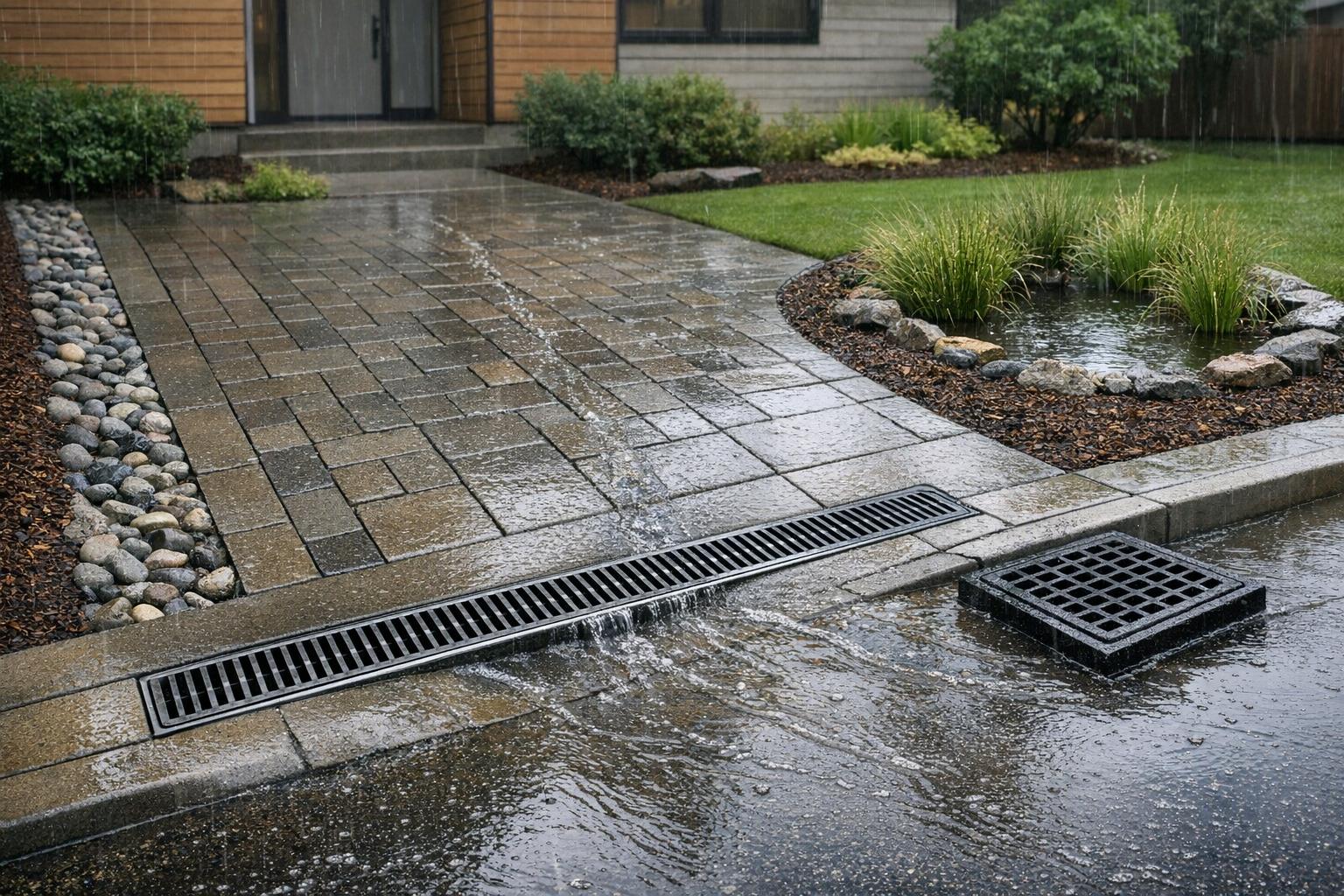
When heavy rainfall hits Maryland, it often overwhelms drainage systems, leading to flooding, soil erosion, and property damage. With rainfall patterns intensifying and sea levels rising, homeowners need effective solutions to protect their homes and landscapes. This article outlines practical strategies for managing stormwater, including system capacity calculations, key components like French drains and catch basins, and eco-friendly options such as rain gardens and permeable surfaces.
Key Takeaways:
- System Capacity: Calculate runoff volume based on roof size and rainfall intensity to design systems that handle peak loads.
- Core Components: Use catch basins for surface runoff and French drains for subsurface water management.
- Discharge Methods: Options like pop-up emitters, dry wells, and gravel fields direct water safely away from foundations.
- Eco-Friendly Solutions: Rain gardens, bioswales, and permeable pavements reduce runoff and improve water absorption.
Proper drainage planning safeguards your property while addressing Maryland’s unique rainfall challenges.
How to Build a Reliable Overflow Drainage System
sbb-itb-843f8be
Heavy Rainfall Patterns in Maryland
Maryland Rainfall Statistics and Drainage System Capacity Calculator
Rainfall Data and Flood-Prone Areas
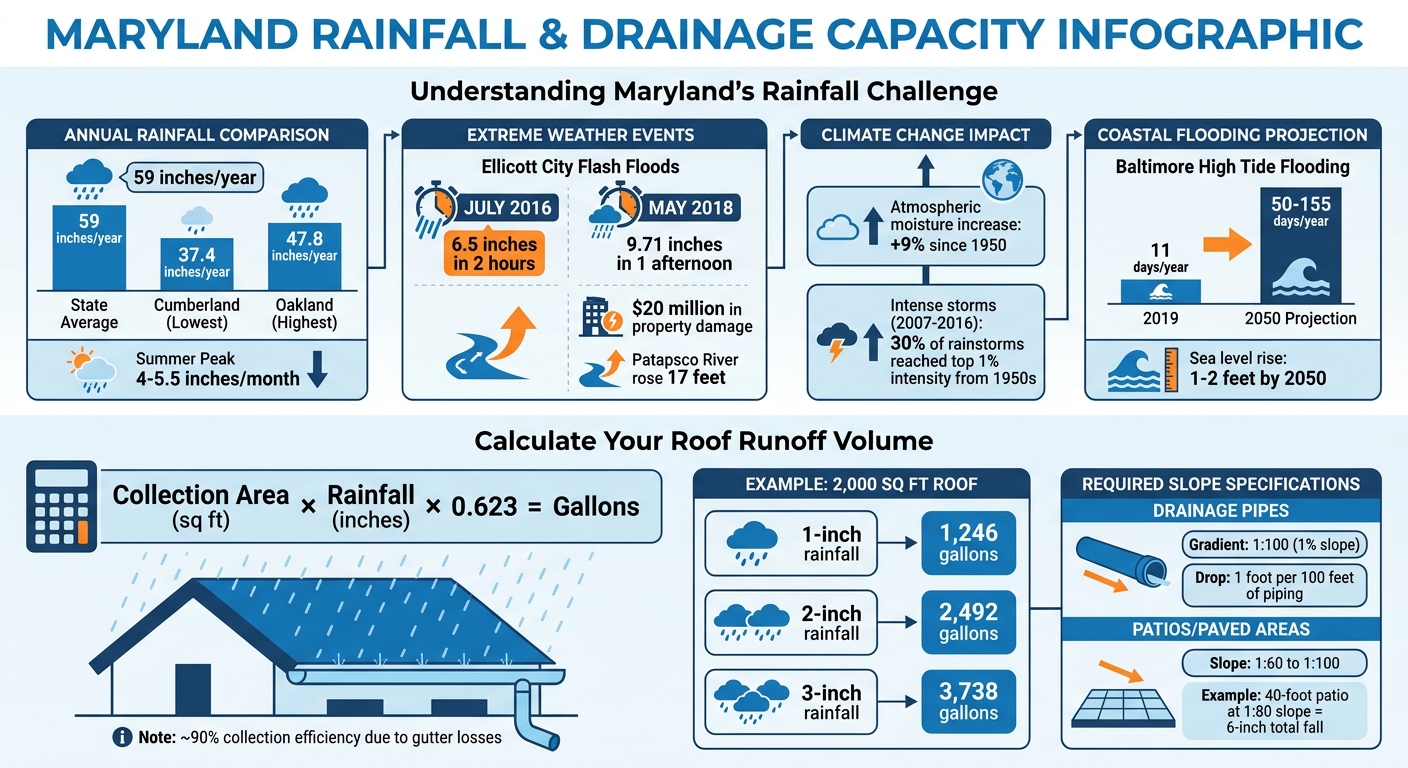
Maryland sees an average of 59 inches of rain each year, with summer months bringing peaks of 4 to 5.5 inches monthly. However, rainfall varies significantly across the state. For instance, Cumberland records the lowest annual total at 37.4 inches, while Oakland tops the charts with 47.8 inches annually [2].
The real danger, though, lies in the short, intense storms. A prime example occurred in July 2016, when a slow-moving thunderstorm dumped 6.5 inches of rain on Ellicott City in just two hours. The result? Flash floods that flipped cars and caused severe damage to downtown structures [3]. Just two years later, in May 2018, the same area endured an even worse storm. A staggering 9.71 inches of rain fell in a single afternoon, causing $20 million in property damage. The Patapsco River, southeast of Ellicott City, rose by a record-breaking 17 feet during this event [5].
Coastal regions face additional challenges tied to rising sea levels. In 2019, the Baltimore tide gauge recorded 11 days of high tide flooding. By 2050, this number is expected to jump to between 50 and 155 days annually, as sea levels rise by 1 to 2 feet. This so-called "sunny day flooding" disrupts stormwater systems, even during moderate rainfalls, compounding the risks posed by heavy storms [4]. These trends emphasize how both extreme weather and rising seas are reshaping Maryland’s landscape [4].
How Heavy Rain Affects Landscapes
Maryland’s atmosphere now holds 9% more water vapor than it did in 1950, fueling more intense downpours. Between 2007 and 2016, nearly 30% of rainstorms reached intensities that would have ranked in the top 1% back in the 1950s [6].
"This heavy rainfall can cause flash flooding and tremendous soil erosion in regions where stormwater is not carefully managed." – Dr. Sara Via, Professor, University of Maryland Department of Entomology [6]
Rapidly moving water during storms erodes mulch, exposes plant roots, and washes away topsoil, often clogging drains in the process. These effects can destabilize both planting areas and Baltimore hardscapes [1] [6]. In low-lying regions, rising groundwater levels – worsened by land subsidence – saturate soils, complicating septic system operations. Additionally, clay-heavy soils struggle to absorb intense rainfall, overwhelming traditional drainage methods [1]. These challenges highlight the importance of engineered overflow solutions to safeguard Maryland’s landscapes.
Core Components of Overflow Systems
Managing overflow effectively is crucial to protecting Maryland landscapes from damage caused by heavy rainfall.
Calculating System Capacity for Heavy Rain
Designing an overflow system starts with understanding how much rain it needs to handle. To calculate capacity, multiply the collection area (in square feet) by the rainfall (in inches) and then by 0.623[8].
For instance, a 2,000-square-foot roof can produce:
- About 3,738 gallons from a 3-inch rainfall
- 1,246 gallons from a 1-inch rainfall
- 2,492 gallons from a 2-inch rainfall[8].
Keep in mind, around 90% of rainfall is typically collected due to losses from gutters and other factors[7].
The slope of drainage systems is just as important as volume. Pipes should have a 1:100 gradient (a 1% slope), which means a drop of 1 foot per 100 feet of piping[9]. For patios or paved areas prone to flooding, aim for a slope between 1:60 and 1:100 to avoid water pooling. For example, a 40-foot-wide patio with a 1:80 slope would need a 6-inch total fall to ensure proper drainage[9].
Multiple Inlet Systems: Catch Basins and French Drains
Catch basins and French drains are two key components for managing heavy rainfall, each serving a specific purpose.
- Catch Basins: These underground structures collect surface runoff from areas like pavements, gutters, and streets. They work especially well in offline systems, where excess water is diverted into storm sewers once the primary system reaches its limit.
- French Drains: Made of perforated pipes surrounded by gravel, French drains are designed to handle subsurface drainage. They’re ideal for inline systems that manage all water flow, using overflow outlets to handle larger storms. In bioretention areas, French drains help ponded water drain within 48 hours, preventing standing water. For hardscapes, catch basins with durable metal grates are recommended, as plastic grates can degrade under UV exposure. In landscaped areas, French drains are most effective when placed at the lowest point to reduce surface water pooling.
Once runoff is captured through these inlets, the next step is selecting the right discharge method.
Water Discharge Methods: Pop-Up Emitters and Gravel Fields
Safely discharging water away from your property’s foundation is the final piece of the puzzle. Here are some effective methods:
- Pop-Up Emitters: These are connected to buried PVC pipes and release water when pressure lifts the cap[10].
- Dry Wells: These underground basins filled with rocks allow water to slowly seep into the surrounding soil. While installation can cost up to $5,000, they handle large volumes effectively[10].
- Gravel Fields: Combining pea gravel with perforated PVC pipes, gravel fields manage runoff at a cost of $10–$100 per linear foot[10].
For eco-conscious options, consider:
- Bioswales: Vegetated channels that slow and filter water, guiding it to areas where it can naturally absorb.
- Dry Creek Beds: Built from rocks, these visually appealing features direct stormwater for about $3–$4 per square foot.
- Swales: Grass-covered ditches that use natural slopes to divert water to gardens or dry wells. Professional installation costs range from $5–$15 per linear foot[10].
Eco-Friendly Overflow System Options
Sustainable drainage solutions use natural processes to handle heavy rainfall while improving water quality and supporting healthy landscapes. These systems help slow down water flow, filter out pollutants, and replenish groundwater supplies. With extreme weather events on the rise – the most intense 1% of rain events in the continental U.S. have surged by 71% since 1958 – these eco-conscious systems provide a natural way to ease the strain on conventional drainage systems [13]. They work hand-in-hand with engineered solutions to better manage excess stormwater.
Rain Gardens for Natural Water Absorption
Rain gardens are shallow, landscaped depressions designed to collect and absorb stormwater from hard surfaces like driveways and rooftops. They can infiltrate up to 30% more water than standard lawns and typically drain within an hour. For the best results, place rain gardens at least 10 feet away from your home’s foundation and avoid areas with septic systems or heavy shade. Since soil type plays a big role – clay soils drain slower than sandy or silty soils – it’s important to test your soil before installation.
A three-zone planting method works well for rain gardens:
- Base plants thrive in the wettest areas.
- Mid-slope plants handle transitional zones.
- Berm plants grow along the drier edges.
Adding a thick layer of organic mulch, like shredded wood or coarse wood chips, helps retain moisture and keep weeds under control. For example, the Clean Rivers Project in Maryland and Washington, D.C., uses bioretention systems to manage stormwater across 30 impervious acres in the Rock Creek area, reducing combined sewer overflow volumes by 96% during an average rainfall year [11][12].
Permeable Surfaces and Dry Riverbeds
To complement rain gardens, permeable surfaces and dry riverbeds offer additional eco-friendly options. Permeable pavements allow water to seep directly into the ground, cutting down on runoff and reducing pressure on storm sewers. These surfaces are ideal for areas like streets, alleys, driveways, and walkways where water tends to pool and flow toward drainage systems.
Dry riverbeds, constructed with rocks and native plants, provide another effective solution. They stabilize soil, prevent erosion, and guide water toward bioretention areas. To ensure proper water flow, these channels should have a slope of at least 2% (or about 1/4 inch per foot). When paired with rain gardens, dry riverbeds boost both water movement and absorption efficiency [11][12].
Pro Landscapes MD: Drainage Solutions for Maryland

Water Management Services
Pro Landscapes MD offers customized drainage solutions designed to tackle water management challenges effectively [17]. Their services include installing French drains, box and pipe systems, sump pumps, and regrading to address pooling and runoff issues [15].
Their approach also incorporates what they refer to as "Aquatic Gardening." This involves using features like dry riverbeds, rain gardens, bogs, and waterfalls to control runoff while enhancing the aesthetic appeal of your property. To ensure long-lasting results, they use high-quality materials for berms, swales, and channel drains [15].
"Drainage challenges require specialized expertise; relying on inexperienced contractors risks costly mistakes." – Pro Landscapes MD [17]
This expertise-driven strategy highlights why Pro Landscapes MD stands out among local competitors.
Why Choose Pro Landscapes MD
Pro Landscapes MD brings a unique edge to the table with formal education in landscape design and horticulture – an advantage that sets them apart from many other landscapers [15]. Their work has earned them recognition on Nextdoor, where neighbors have commended their expertise in grading, drainage, and sod placement. With six recommendations, they’ve been named a "Neighborhood Favorite" [16].
The company’s eco-conscious solutions emphasize using native plants and water conservation practices, which not only manage stormwater effectively but also support local ecosystems [15]. Serving homeowners throughout the Baltimore and Washington, D.C. areas, Pro Landscapes MD offers free site visits and tailored proposals to address specific drainage needs [15].
Conclusion
Maryland homeowners face the challenge of designing overflow systems capable of handling extreme rainfall. While no drainage system can economically manage every storm surge, the key lies in directing excess water through controlled pathways rather than allowing it to cause uncontrolled flooding [19].
The strategies covered in this article – like proper grading, French drains, catch basins, rain gardens, and permeable surfaces – work together to keep water from pooling near foundations, eroding mulch beds, or washing soil onto patios. With features like metal grates and a freeboard of 6–12 inches, these systems are designed to drain standing water efficiently within 48 hours [18].
In Maryland, the dangers of extreme flooding extend beyond property damage. Risks such as drowning and water-borne diseases highlight the importance of well-thought-out overflow designs [14]. By transforming potential hazards into manageable water features, these solutions not only protect your property but can also enhance your outdoor space.
Pro Landscapes MD specializes in creating landscapes built to withstand Maryland’s unique rainfall patterns. Their team of professional horticulturists offers eco-friendly solutions tailored to reduce nutrient runoff and support the Chesapeake Bay watershed. Serving Howard County, Montgomery County, and surrounding areas, they bring expertise in addressing specific drainage challenges to safeguard your home and environment.
FAQs
What size overflow system do I need for my roof?
When designing your roof’s overflow system, its size should align with the total area of your roof and the local rainfall intensity. Start by calculating your roof’s square footage. Then, select a drain size capable of managing the heaviest expected rainfall. For instance, a 3-inch drain can typically handle about 4,400 square feet during a rainfall rate of 2.5 inches per hour. Always ensure that your overflow drains are equipped to meet or exceed the capacity needed for the most intense rainfall in your region.
When should I use a catch basin vs. a French drain?
A catch basin works best for areas with heavy surface water flow, such as driveways or low-lying spots where water tends to pool. It helps prevent flooding by channeling water into underground drainage pipes.
On the other hand, a French drain is designed to handle excess groundwater or constant soil dampness. It uses a perforated pipe surrounded by gravel to direct water away from areas like foundations or basements.
Where can I safely discharge stormwater on my property?
Stormwater can be managed effectively with solutions like rain gardens or bioswales, which help absorb and redirect water away from critical areas like your home’s foundation. These systems work by slowing down runoff, encouraging water to soak into the soil, and minimizing pooling.
Another approach involves drainage systems such as French drains or dry riverbeds. These options are designed to channel water to specific locations, reducing the risk of erosion or flooding. The key is to handle water efficiently while safeguarding both your property and your landscaping.
Chat with Us