









- bhavya gada
- No Comments
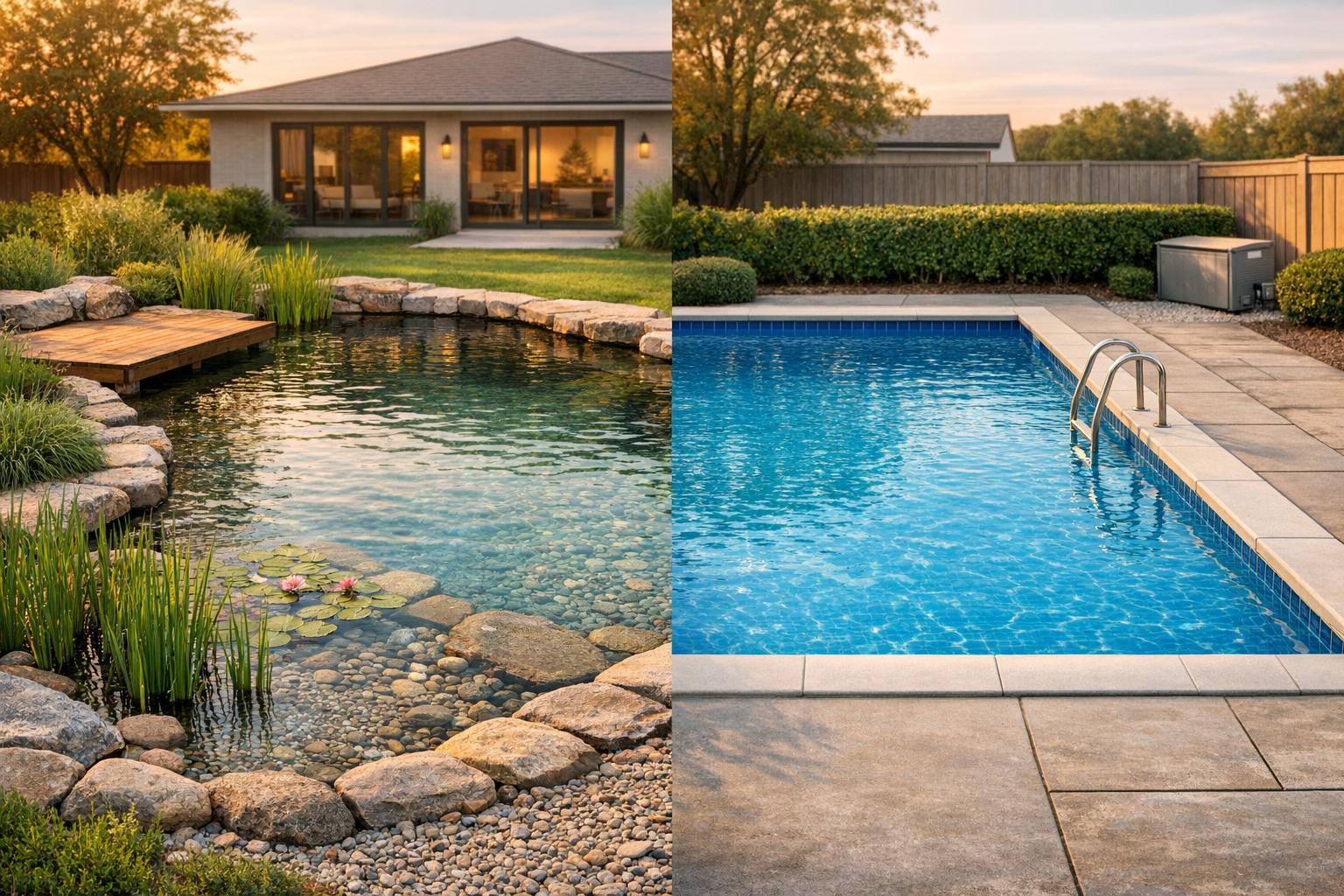
If you’re deciding between a natural pool and a conventional one, here’s the quick takeaway:
- Natural pools: Higher upfront costs ($50,000–$150,000), but lower annual maintenance ($1,250–$2,500). They use plants and bacteria for water purification, are chemical-free, and support local wildlife. They need more yard space for a regeneration zone and take 8–16 weeks to build. Long-term savings can offset the initial investment.
- Conventional pools: Lower starting costs ($35,000–$150,000), but higher yearly upkeep ($3,550–$5,300). They rely on chemicals for cleaning, are easier to heat, and fit smaller yards. Construction takes 4–8 weeks, but they require resurfacing every 10–15 years.
Quick Comparison:
| Pool Type | Initial Cost | Yearly Maintenance | Build Time | Key Features |
|---|---|---|---|---|
| Natural Pool | $50,000–$150,000 | $1,250–$2,500 | 8–16 weeks | Chemical-free, supports wildlife |
| Conventional Pool | $35,000–$150,000+ | $3,550–$5,300 | 4–8 weeks | Compact, easier to heat, traditional design |
Your choice depends on budget, yard size, and priorities like eco-friendliness or convenience.
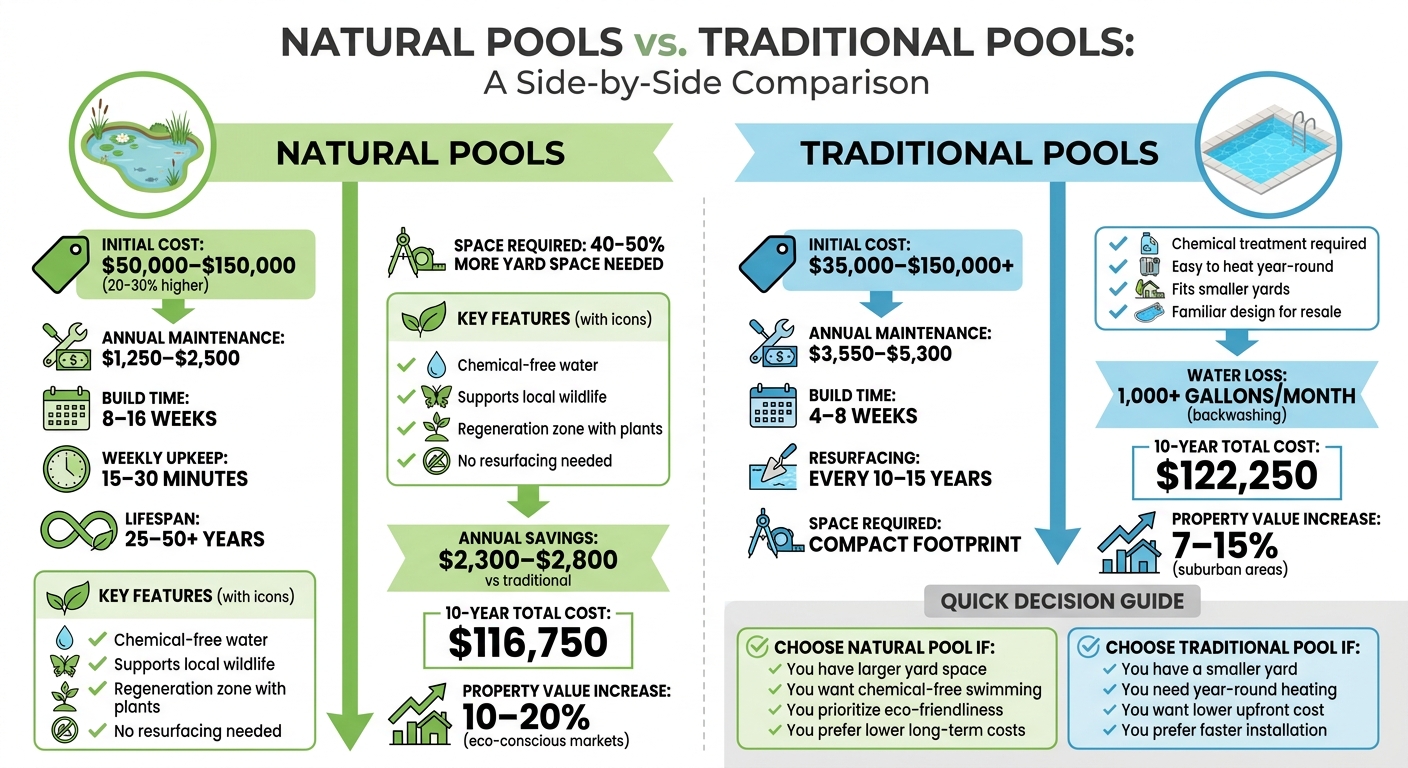
Natural Pool vs Traditional Pool Cost and Maintenance Comparison
How to make a Natural : Organic Pool in America
sbb-itb-843f8be
1. DIY Natural Pools
Building a DIY natural pool comes with a range of upfront costs, typically between $50,000 and $150,000[2]. These costs depend heavily on factors like the complexity of the landscape and the desired pool depth. For example, steep terrain or hard-to-reach areas may increase excavation and labor costs, while deeper pools – beyond the standard 6 to 7 feet – require more materials and water[2]. However, for those on a tighter budget, basic DIY projects can start at just $2,000 for materials[1].
When it comes to maintenance, natural pools are far more budget-friendly compared to traditional pools. They save owners an estimated $2,300 to $2,800 annually[3]. Typical yearly maintenance costs range from $1,250 to $2,500, which includes bacteria treatments ($50–$100), electricity for pumps ($300–$600), and occasional professional checkups ($600–$1,200 for 2–4 seasonal visits)[3]. Unlike traditional pools, maintenance focuses more on gardening tasks, such as thinning oxygenating plants and skimming debris with a leaf net, which takes just 15 to 30 minutes per week. In contrast, traditional pools demand 60 to 90 minutes of weekly upkeep[3]. This simplified approach not only saves time but also supports a cleaner, eco-friendly swimming environment.
The environmental benefits of natural pools are unmatched. Instead of using chlorine or bromine, these pools rely on a "regeneration zone" filled with aquatic plants and beneficial microbes to naturally filter the water[1, 9]. This system creates habitats for local wildlife, attracting dragonflies, frogs, and birds, which in turn help control mosquito populations[1, 9]. Unlike traditional pools that often require annual draining, natural pools are filled once and only need occasional topping off to account for evaporation[1]. As Martin Mosko, Principal Architect at Marpa and Associates, puts it:
"Plants work not only to anchor the soil, but create a natural setting for an old-fashioned, swimming-hole effect."[1]
This natural filtration process not only reduces chemical use but also allows the pool to blend harmoniously with its environment.
Landscape integration is another standout feature of natural pools. At least 50% of the pool’s surface area is dedicated to a shallow, planted regeneration zone, eliminating the need for mechanical filters[1]. The design ensures the pool seamlessly integrates into its surroundings, creating a natural, flowing connection with the garden. These pools also double as stunning water features throughout the year, offering visual appeal even in winter when traditional pools are often covered and unused[3]. With proper construction, a natural pool can last anywhere from 25 to over 50 years[2].
2. Traditional Pools
Traditional pools stand out for their lower initial costs and faster installation compared to DIY natural pools. Prices typically range from $35,000 to $150,000+, depending on the size and materials used[3]. For smaller pools, costs start around $35,000, while custom designs can exceed $150,000. Material choices also play a significant role in pricing: vinyl liner pools cost between $25,000 and $65,000, fiberglass pools range from $25,000 to $85,000, and gunite (concrete) pools are priced between $50,000 and $120,000[2]. Installation is relatively quick, taking about 4–8 weeks, compared to the 8–16 weeks often required for natural pools[3]. As Craig McBride, Founder & Lead Designer at Natural Swimming Pond, explains:
"Traditional pools win for lower upfront cost and year-round heated swimming."[3]
However, the initial cost savings come with ongoing expenses that can add up significantly over time. Annual maintenance costs run between $3,550 and $5,300, covering chemicals, electricity for pumps and heaters, water replacement, professional services, and an amortized resurfacing fee of about $800 per year[3]. Weekly upkeep requires 60–90 minutes for tasks like skimming, vacuuming, and testing chemical levels[3].
Traditional pools also have a noticeable environmental impact. They lose over 1,000 gallons of water each month due to backwashing, and the chemical runoff can pollute nearby waterways, harming ecosystems[3]. Energy usage is another concern; in 2001, pool pumps accounted for 0.9% of all U.S. residential energy consumption. By 2008, these pumps were responsible for 10 million tons of greenhouse gas emissions annually, equating to the emissions of 1.3 million cars[4][5].
When it comes to design and landscape integration, traditional pools tend to have a more functional and less adaptable aesthetic. Common shapes like rectangles or kidney designs prioritize utility but can appear stark or utilitarian when not in use[3]. Additionally, they often remain covered and unused for extended periods. On the plus side, traditional pools can enhance property value, typically adding 7–15% in suburban areas[3].
Pros and Cons
Building a DIY natural or traditional pool comes with its own set of benefits and challenges. Natural pools provide a chemical-free swimming experience, which is gentler on the skin and perfect for families with allergies or sensitivities. These pools also require 40–60% less weekly upkeep and help support local wildlife, attracting birds, butterflies, and other beneficial creatures[3]. Over a decade, they can be more cost-effective due to reduced spending on chemicals and resurfacing. However, the initial investment is higher – typically 20–30% more than traditional pools – and they need 40–50% more yard space to include a regeneration zone with aquatic plants[3].
Traditional pools, on the other hand, have lower upfront costs, ranging from $35,000 to $150,000 compared to $45,000 to $200,000 for natural pools. They also have quicker construction timelines, often completed in 4–8 weeks[3]. These pools are better suited for smaller yards and can be heated for year-round use, making them ideal for activities like lap swimming and diving. However, they come with higher annual maintenance costs, require frequent chemical testing and balancing, and may irritate the skin and eyes due to chloramine exposure. Traditional pools also have a larger environmental impact because of their reliance on chemicals and water waste from backwashing[3].
Here’s a quick comparison of the key differences:
| Pool Type | Key Advantages | Main Drawbacks |
|---|---|---|
| DIY Natural Pool | • Chemical-free water • $1,250–$2,500 annual maintenance • Attracts wildlife • 25–50+ year lifespan[2][3] |
• Higher upfront cost • Requires extra space for a regeneration zone • 8–16 week installation • Challenging to heat[3] |
| Traditional Pool | • Lower initial cost • Compact footprint • Easy to heat • Familiar for resale[3] |
• $3,550–$5,300 annual maintenance • Involves harsh chemicals • Requires weekly testing • 10–15 year resurfacing cycle[3] |
This breakdown highlights the trade-offs between health benefits, maintenance needs, and costs.
Craig McBride, Founder & Lead Designer at Natural Swimming Pond, puts it this way:
"Natural swimming ponds win on health, environment, aesthetics, and long-term costs. Traditional pools win on upfront cost, year-round heating, and broad market appeal."[3]
Ultimately, the best choice depends on your priorities. If you’re looking for an eco-friendly option, have enough yard space, and want a low-maintenance investment over time, a natural pool could be the way to go. On the other hand, if your budget is tighter, space is limited, or you need a heated pool for exercise, a traditional pool might make more sense based on the factors discussed above.
Conclusion
Deciding between a natural pool and a traditional pool comes down to factors like budget, available space, and your long-term priorities. Natural pools typically require a 20–30% higher upfront investment and need about 40% more yard space for the regeneration zone. However, they offer notable savings – around $2,300–$2,800 annually on maintenance costs[3]. Over a 10-year period, the total cost for a medium-sized natural pool averages $116,750, compared to $122,250 for a traditional pool[3]. Natural pools are a great choice for homeowners seeking a chemical-free swimming experience, especially those with larger properties who value an eco-friendly design that supports local ecosystems.
Traditional pools, on the other hand, are better suited for smaller yards and tighter budgets. With initial costs ranging from $35,000 to $150,000 and installation times of just 4–8 weeks, they offer a practical solution for families who want year-round heated water or a more conventional setup that appeals to a broader resale market. Keep in mind, though, that maintenance costs run higher – about $3,550–$5,300 annually – and resurfacing is typically needed every 10–15 years[3].
For either option, modern landscaping and hardscaping trends can make all the difference. Maryland homeowners can turn to Pro Landscapes MD for professional landscaping and hardscaping services that ensure seamless integration of your pool – whether natural or traditional – into your outdoor space. They also handle regional drainage requirements across Howard County, Montgomery County, Carroll County, Frederick County, Prince George’s County, and Baltimore County.
Both pool types can enhance your property value. Natural pools may increase value by 10–20% in eco-conscious markets, while traditional pools typically boost value by 7–15% in suburban areas[3]. Ultimately, the choice depends on your lifestyle, property size, and how much time and effort you’re willing to invest in maintenance. Whether you prioritize sustainability or convenience, there’s a pool to match your needs.
FAQs
Do natural pools work in small yards?
Yes, natural pools can absolutely work in smaller yards, but keep in mind they need enough room for purification zones. These zones are essential for keeping the water clean and can take up a significant portion of the overall space. Costs usually fall between $75,000 and $150,000, so they’re an investment. If you’re drawn to eco-friendly designs and love the look of natural landscapes, they can be a fantastic option – just make sure to plan carefully to match your space and budget.
Can you heat a natural pool effectively?
Yes, natural pools can be heated effectively by incorporating aeration, which helps maintain proper oxygen levels. This process can indirectly regulate the water temperature, keeping it more comfortable. However, the specific methods for directly heating natural pools aren’t detailed in the information provided.
What DIY skills and permits are needed for a natural pool?
Building a natural pool calls for a mix of excavation, landscaping, and ecological design know-how. It involves tasks like digging, shaping the pool area, and setting up natural filtration systems using materials such as gravel, clay, and aquatic plants. Depending on your location, permits might be necessary for excavation, water management, or addressing environmental impact, so it’s important to review local regulations beforehand.
While simpler designs might be manageable as a DIY project, more intricate systems often require professional help and proper permits. Take a close look at your skills and the project’s complexity before diving in.
Chat with Us