









- bhavya gada
- No Comments
If water sits near your house, the fix usually starts with slope, flow, and where the water can safely go. In Harford County, clay-heavy soil and a shallow water table often make yard drainage harder, so the best setup is often a mix of grading, swales, French drains, catch basins, rain gardens, dry wells, and permeable pavers.
Here’s the short version:
- Water near the house: regrade soil so it drains away
- Wet lawn or soggy low spot: add a French drain
- Runoff from a driveway or patio: use catch basins or channel drains
- Erosion on slopes: build a swale or dry creek bed
- Need to keep more water on-site: install a rain garden, dry well, or permeable pavers
- Basement pump discharge: send water well away from the house to a stable outlet
A few facts stand out:
- Rain gardens should usually drain within 1 to 2 days
- In Harford County, work that disturbs more than 5,000 square feet may need a stormwater plan
- Clay soil slows infiltration, so surface flow control is often the first step
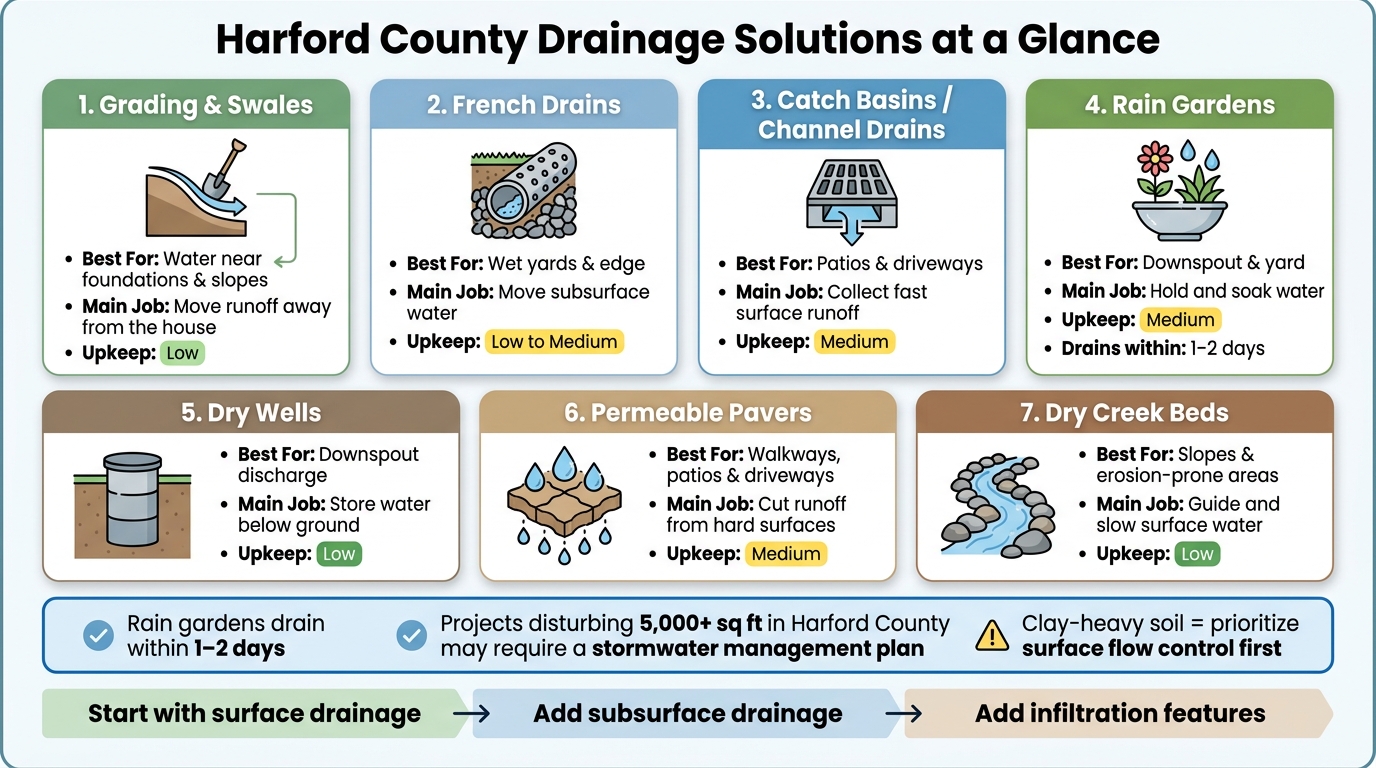
Harford County Drainage Solutions: Quick Comparison Guide
DIY Flat Yard Drainage Project | Yards With No Slope
sbb-itb-843f8be
Quick comparison
| Solution | Best for | Main job | Upkeep |
|---|---|---|---|
| Grading | Water near foundations | Move runoff away from the house | Low |
| Swales / Dry creek beds | Slopes and erosion | Guide and slow surface water | Low |
| French drains | Wet yards, edge seepage | Move subsurface water | Low to medium |
| Catch basins / Channel drains | Patios, driveways | Collect fast surface runoff | Medium |
| Rain gardens | Downspout and yard runoff | Hold and soak water | Medium |
| Dry wells | Downspout discharge | Store water below ground | Low |
| Permeable pavers | Walkways, patios, driveways | Cut runoff from hard surfaces | Medium |
If I were sizing up a Harford County property, I’d start with the surface drainage pattern first, then add below-ground drainage only where water keeps hanging around.
1. Grading, swales, and dry creek beds for surface runoff control
Start with the land itself. If the ground slopes toward the house, or if low spots have formed over time, runoff can end up moving the wrong way. That happens on plenty of Harford County properties. A yard that once sent water away from the home may slowly flatten or even tilt back toward the foundation. Fix that first, and you can solve a lot of drainage trouble without digging into underground systems.
Grading away from foundations
The soil around your home should slope away from the foundation so water doesn’t sit against it. Regrading reshapes that slope and helps move runoff away from the house. Once that part is fixed, swales can direct the water instead of letting it drift back across the yard.
Vegetated swales and stone-lined channels
After regrading, swales and dry creek beds can carry runoff to a legal discharge point or another stable drainage path. A swale is a shallow, wide channel that slows runoff and guides it to a proper outlet. When you line a swale with native grasses or other plants, it can also help trap sediment and filter pollutants as the water moves through.
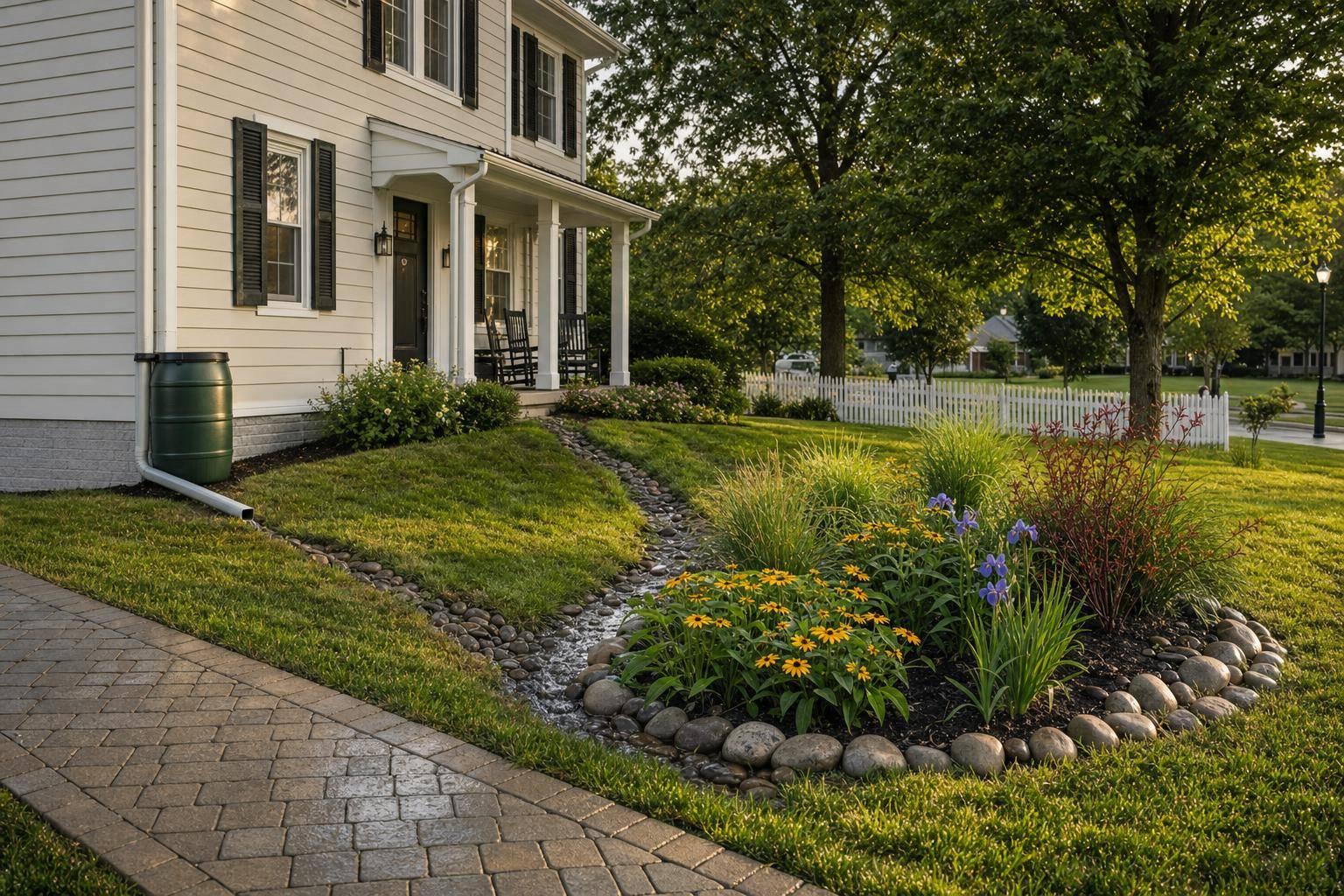
A dry creek bed, also called a dry riverbed, is a stone-lined channel built to give heavy runoff a controlled path in places that tend to wash out. It’s a good fit for steeper slopes and other parts of the yard where erosion is a problem. In those spots, it helps limit soil loss. River rock is one of the most common materials used for this type of feature.
Where surface drainage solutions work best
Surface drainage works best when runoff stays on top of the soil, especially around low spots and slope breaks. It tends to work well on properties with heavy clay soil because it’s often easier to redirect water across the surface than to force it down through dense ground.
If a project disturbs more than 5,000 square feet, Harford County generally requires a stormwater management plan. So before you start regrading, it’s smart to confirm how much area the work will affect. [2]
| Surface Feature | Primary Function | Best Use Case |
|---|---|---|
| Regrading | Foundation protection | Correcting slope that directs runoff toward basements or crawl spaces |
| Swales | Slowing runoff and filtering water | Guiding shallow sheet flow across gentle slopes |
| Dry Creek Beds | Erosion control | Managing fast-moving runoff on slopes or in washout-prone areas |
If water still pools after grading and surface channels, the next step is subsurface drainage.
2. French drains, catch basins, and sump discharge for persistent wet areas
When clay soil holds water in place, below-grade drainage has to do the heavy lifting. After you deal with surface runoff, the next move is to intercept water under the ground before it sits too long.
French drains for soggy lawns and foundation edges
A French drain uses a perforated pipe set inside a gravel trench to collect water and move it to a safe outlet. It’s one of the most dependable ways to deal with repeat soggy areas along foundation edges or low spots where clay-rich soil won’t let water pass through on its own.
A few warning signs tend to show up early:
- Crawlspace mildew
- Foundation settling
- Yellowing grass
Those problems often point to drainage trouble and can signal the need for a French drain.
Catch basins, yard drains, and dry wells
Catch basins and yard drains collect runoff from driveways and patios before it starts pooling. These surface inlets connect to buried pipes that carry water away from the house. That outlet matters. Buried pipes should discharge downhill and never onto a neighboring lot.
For hardscapes that shed water fast, grate drains or channel drains are usually the best match. They’re built for sheet flow, which is the thin, fast-moving water you often see racing across concrete or pavers after a storm.
Where the soil can take in more water, dry wells can help. They store runoff below ground and let it soak into the surrounding soil over time.
Managing sump pump discharge to prevent erosion
A sump pump removes water from basements or other low areas, but the discharge point is just as important as the pump itself. If the line empties too close to the foundation, that water can soak the soil again and find its way right back inside. It’s a frustrating loop.
The discharge line should end well away from the foundation at a stable outlet. Sending that flow into a stone-lined channel or toward a rain garden can slow it down and help limit erosion where the water exits.
Pro Landscapes MD handles drainage installation, French drains, dry riverbeds, grading, and yard leveling for sites that need a professional drainage plan.
If the site can absorb more water, the next step is slowing runoff with infiltration-based features.
3. Rain gardens and permeable hardscapes that reduce runoff
When grading and drains aren’t enough, rain gardens and permeable hardscapes help cut runoff by keeping more water on your property. If water still needs to stay on-site, these infiltration-based features add one more layer of control.
Rain gardens and small planted basins
A rain garden is a shallow, bowl-shaped area filled with loose soil and planted with native trees, shrubs, and flowers. It’s set up to catch runoff from downspouts, driveways, and other hard surfaces before that water reaches the street or a storm drain.
Rain gardens filter runoff, drain in 1 to 2 days, and help reduce mosquito breeding [1].
Placement is a big deal here. The garden should sit downhill from a downspout or paved surface and far enough from the foundation to catch runoff without pushing water back toward the house.
Permeable pavers for patios, walkways, and driveways
Permeable pavers let water pass through joints into a gravel base. That helps Harford County properties absorb runoff more slowly. This can be a smart fit for yards with clay-heavy soil, where natural drainage is limited. It also helps meet local stormwater rules by treating runoff on-site [2].
Pro Landscapes MD installs environmental pavers made for daily use while also improving stormwater performance.
Soils, stone, and plantings that improve infiltration
Rain gardens tend to work best with amended soil, gravel or river rock, and native plants that help water soak in and keep upkeep low [1].
The right setup comes down to the site itself: slope, soil, and how much runoff the property gets.
4. Matching drainage solutions to common Harford County problems
Which solution fits wet basements, pooling water, and runoff from slopes
Once you have runoff under control, the next step is simple: match the fix to where the water begins and where it ends up.
Water at the foundation usually calls for regrading the soil so water moves away from the house. If you’re dealing with active seepage, sump discharge and foundation grading help keep water from sticking around the foundation.
Standing water in lawns often shows up because Harford County has clay-heavy soil. When the ground stays soggy after storms, a French drain is often the right move. Driveway and patio runoff usually works best with catch basins or channel drains.
On sloped lots, swales and dry creek beds help slow water before it washes away topsoil. And when one drainage problem leads to another, it often makes sense to pair a surface fix with a subsurface drain.
Maintenance, durability, and stormwater plan fit
Not every drainage fix asks for the same level of upkeep. Grading and dry creek beds are usually low-maintenance after installation. French drains and catch basins should be checked now and then for silt or debris buildup. Rain gardens need a bit more attention, such as weeding, mulching, and pruning, but once established, they do not need irrigation or fertilizer.
Harford County requires stormwater management for all new development under Chapter 214 of the county code, using Environmental Site Design (ESD) or Best Management Practices (BMP). Projects under 5,000 square feet per parcel, along with some single-family home work, may be exempt from formal plan submission [2]. Before you start, check with the Harford County Bureau of Stormwater Management to confirm what your project needs.
Use the chart below to match the drainage issue with the simplest fix that gets the job done.
| Solution | Primary Purpose | Ideal Use Case | Maintenance | BMP Fit |
|---|---|---|---|---|
| Grading & Swales | Redirect surface runoff | Sloped lots, foundation protection | Low | Standard BMP; ESD |
| French Drains | Subsurface water removal | Saturated soil, soggy lawns | Low to Moderate | Common residential BMP |
| Catch Basins | High-volume surface collection | Driveways, patios, hardscapes | Moderate | Standard BMP |
| Rain Gardens | Infiltration and filtration | Low spots, roof/driveway runoff | Moderate | Preferred ESD |
| Dry Wells | Subsurface infiltration | Concentrated downspout runoff | Low | Recognized ESD |
| Permeable Pavers | Reduce impervious surface area | Driveways, walkways, patios | Moderate | Key ESD component |
Conclusion: Drainage upgrades that protect Harford County properties
Each drainage method in this roundup tackles a different part of the problem. The right fix comes down to where the water starts and how it moves across your property. In Harford County, that often means using a mix of grading, surface channels, subsurface drains, and infiltration features to control runoff and help protect foundations.
Most properties need a custom combination of drainage measures. If a project needs to meet Harford County rules, planning the full drainage system upfront can help you avoid costly revisions later. And if your property has more than one trouble spot – like a wet basement and a sloped backyard – it often makes sense to combine surface and subsurface solutions for a longer-lasting result.
Harford County requires stormwater management design plans for developments that disturb more than 5,000 square feet [2]. Pro Landscapes MD installs grading, French drains, dry riverbeds, and stormwater solutions tailored to Harford County properties.
FAQs
How do I know which drainage solution my yard needs?
Watch how water moves across your property during heavy storms. If you see pooling in low spots, muddy garden beds, or soil washing away, that’s a clear sign runoff needs a new path.
In Harford County, clay-heavy soil can make drainage problems worse. Your yard’s slope, grade, and water table play a big part too. Pro Landscapes MD can look at those conditions and suggest the right fix, such as French drains, swales, or pipe systems.
Will clay soil affect how well drainage systems work?
Yes. Clay soil is dense, and water doesn’t move through it easily. That can hurt drainage and leave water sitting where you don’t want it. In Harford County, clay-heavy soil often leads to surface water pooling.
Good grading helps push water away from your home. And for clay-based soil, French drains are often a solid fix.
Do I need a stormwater plan for my drainage project?
In Harford County, you’ll usually need a stormwater permit if your project disturbs 5,000 square feet or more, or if it moves at least 100 cubic yards of earth.
You may also need a permit if the work adds impervious surface or changes drainage patterns. That can include some retaining walls, driveway expansions, and paver patios. If no waiver or exemption applies, you’ll need to submit a design plan for approval.
Chat with Us