









- bhavya gada
- No Comments
Traditional fire pits can harm the environment with smoke, soot, and carbon emissions. Luckily, there are cleaner, more efficient options for your backyard that use renewable or low-emission fuels like bioethanol, propane, or natural gas. These fire pits also incorporate durable, recycled materials like concrete, steel, or stone, reducing waste and lasting for decades. Whether you’re looking for portability, low maintenance, or a design that complements your outdoor space, there’s a fire pit to suit your needs.
Here’s a quick breakdown of the options:
- Ethanol Fire Bowls: Clean-burning, portable, and low-maintenance.
- Propane Fire Pits: Instant ignition, adjustable flames, and safe for restricted areas.
- Natural Gas Linear Features: Efficient, long-lasting, and ideal for narrow spaces.
- Recycled Concrete Fire Pits: Durable and eco-conscious with versatile fuel options.
- Wood Pellet Chimineas: Classic charm with reduced smoke and cleaner burns.
- Multi-Level Ethanol Gardens: Stylish for sloped yards, using renewable bioethanol.
- Upcycled Metal Drums: Budget-friendly, repurposed materials with efficient airflow.
Each option balances cleaner fuel technology with sustainable materials, offering a better alternative to traditional wood-burning fire pits. Choose one that fits your backyard design, local regulations, and environmental goals.
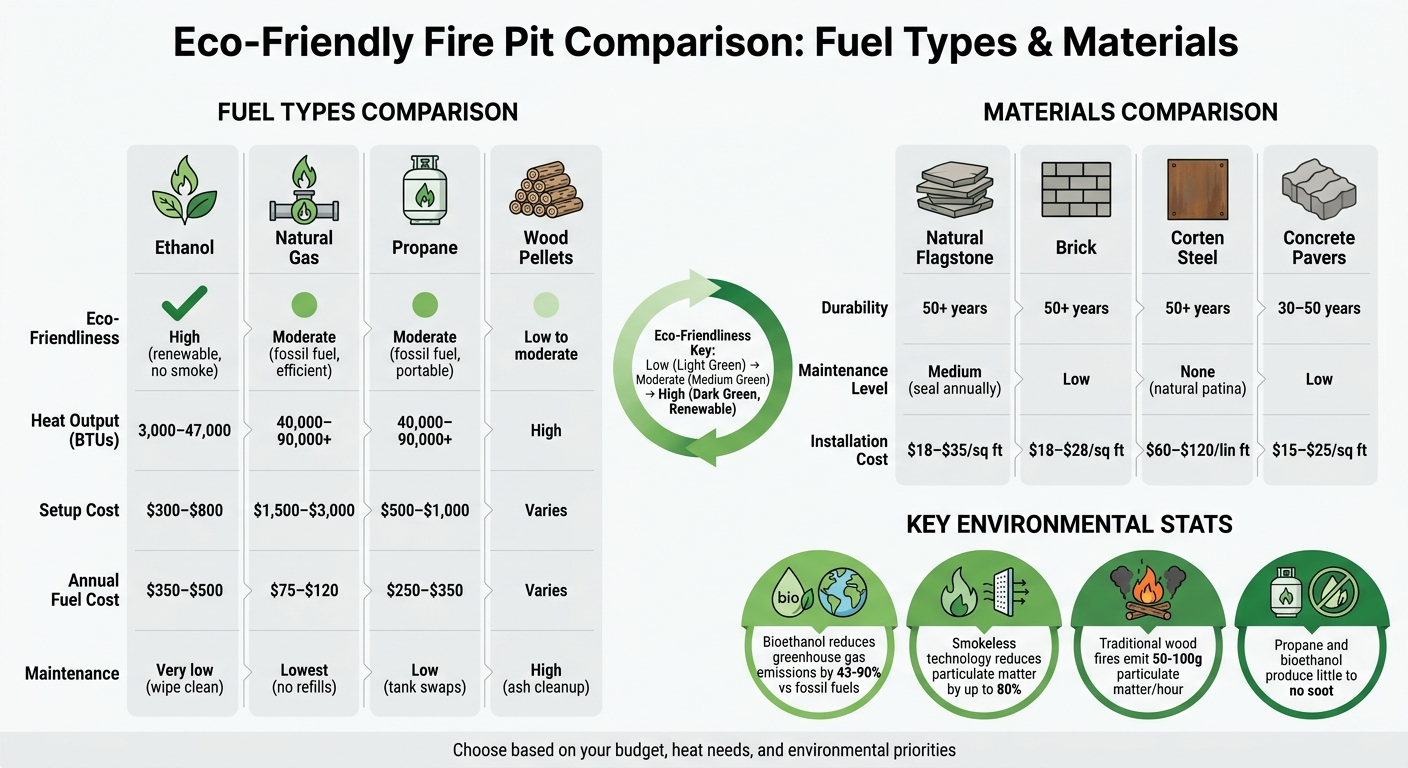
Eco-Friendly Fire Pit Comparison: Fuel Types and Materials Guide
1. Ethanol-Burning Portable Fire Bowl
Eco-Friendliness
Bioethanol fire bowls rely on a renewable, crop-based fuel that burns cleanly, releasing only heat, water vapor, and a small amount of CO₂ – without producing smoke, ash, or soot [4]. As EcoSmart Fire explains:
Bioethanol’s renewable origin and complete combustion make it significantly more sustainable than traditional alternatives, with no ongoing contribution of fossil carbon to the atmosphere [4].
Since bioethanol doesn’t emit harmful fumes, these fire bowls don’t need chimneys, flues, or venting. This not only simplifies installation but also minimizes material waste [4].
Fuel Type and Efficiency
Using premium-grade bioethanol (like e-NRG) guarantees a dependable, efficient burn with no carbon residue or lingering odors [4]. For the best performance, stick to high-quality bioethanol to enjoy a clean, odor-free experience [4]. This efficient combustion also means less frequent maintenance is required.
Durability and Maintenance
Ethanol fire bowls are incredibly low-maintenance. Upkeep is only needed after extended use or when residue becomes visible. Many burners are dishwasher-safe – just place them face down with the lid open. For stainless steel surfaces, use mild soapy water and avoid abrasive tools [4]. To prevent rust or corrosion, always ensure the fire pit is completely dry before covering it when not in use [4].
Integration with Backyard Design
Thanks to their portability and minimal upkeep, ethanol fire bowls can easily complement any outdoor setup. Since they don’t require permanent gas lines or electricity, you can move them around to suit different gatherings or seasonal arrangements [2]. The design also supports environmentally conscious landscaping by reducing installation waste and allowing flexible placement.
Bioethanol’s clean burn – free of sparks or embers – makes these fire bowls safe for wooden decks, as long as proper clearances are maintained. Ensure there’s at least a 0.5-inch air gap between the base and the floor for heat dissipation, 23.6 inches of lateral clearance from flames to structures, and 78.7 inches of overhead clearance from movable items like tree branches or umbrellas [4]. Many models also feature a wide lip that doubles as a ledge for drinks or snacks, transforming the fire bowl into a functional “fire table” for entertaining [2].
sbb-itb-843f8be
2. Sunken Propane Fire Pit with Native Stone
Eco-Friendliness
The sunken propane fire pit blends sustainable materials with efficient fuel technology, making it a smart choice for environmentally conscious outdoor spaces. Using locally sourced native stone helps minimize transportation-related emissions [1]. Plus, natural stone is incredibly durable, often lasting over 50 years [1]. The sunken design not only adds a cozy aesthetic but also shields the flame from wind, keeping the heat contained and reducing fuel consumption [5].
Fuel Type and Efficiency
Propane is a practical and efficient fuel option, offering instant ignition and adjustable flame control, so you can forget about constant tending [5][4]. Its clean combustion means no ash, sparks, or embers to worry about, making it safer and easier to maintain. In areas with fire restrictions, propane fire pits are often allowed when wood-burning options are not, giving them an added advantage for safety and compliance [4].
This clean-burning fuel pairs perfectly with the low-maintenance design of the fire pit.
Durability and Maintenance
Natural stone is not only visually appealing but also low-maintenance. It typically requires just occasional sealing or cleaning to keep its integrity and appearance intact [5][1]. Jeremy Mutschler from Alfresco Backyard highlights this benefit:
"Choosing an eco-friendly fire pit adds another layer of comfort, since a cleaner burn supports ease, clarity, and long-term enjoyment" [5].
For fire pits with walls under 24 inches, dry-stacked fieldstone construction is a clever solution. It uses gravity for stability, eliminating the need for mortar and making it a durable yet simple design choice [1].
Integration with Backyard Design
Sunken fire pits do more than just provide warmth – they help define outdoor spaces. By incorporating grade changes or tiered retaining walls, they create natural "rooms" within your backyard [1][2]. Stone walls around the pit can also double as seating if built at a height of 18–20 inches [1]. For a cohesive look, consider using the same native stone for the fire pit cap, seat walls, and path edging [1].
To keep the area functional, ensure a minimum 2% grade slope away from the fire pit to prevent water pooling. Also, maintain at least 6.5 feet of clearance from trees or overhanging branches for safety [4][1].
Homeowners in Central Maryland can bring this vision to life with Pro Landscapes MD‘s professional hardscaping services.
3. Natural Gas Linear Fire Feature
Eco-Friendliness
Natural gas linear fire features are a cleaner, more efficient option compared to traditional wood-burning alternatives. They produce no smoke, ash, or particulate residue, making them a better choice for the environment [4]. Unlike wood, natural gas combustion releases fewer harmful particulates into the air. Plus, features like instant start-up and shut-down help prevent fuel waste and smoldering. The absence of sparks and embers also reduces the risk of accidental fires, protecting nearby structures and vegetation [5].
Fuel Type and Efficiency
Natural gas provides immediate and adjustable flame height and heat output, eliminating the hassle of building or managing a wood fire [5]. It’s also more budget-friendly than propane, thanks to its continuous supply through municipal gas lines. Linear fire features are particularly suited for long, narrow seating areas and can be seamlessly incorporated into outdoor kitchen counters. To keep installation simple and cost-effective, it’s best to run gas lines before installing counters or bar-height walls [1].
Durability and Maintenance
A standard gas fire feature can last 10 to 15 years, while top-quality models with proper care can function for up to 20 years [8]. Materials like natural stone or high-grade concrete pavers, often used in these installations, can endure over 50 years with minimal maintenance [1]. Keeping these features in good shape is straightforward: wipe surfaces weekly with a soft cloth to remove debris, and clean thoroughly with gentle soap once a month [6]. To maintain burner performance, clean the thermocouple and burners regularly using a soft brush or compressed air [6][7]. In colder climates, it’s important to winterize the unit by shutting off the gas line and storing electronic ignition components indoors [6][7].
Integration with Backyard Design
Linear fire features make a bold statement as a focal point, especially in narrow yards, adding depth and rhythm to the layout [2]. Repeating materials – like matching the fire feature’s stone or concrete with surrounding pavers or seat wall caps – creates a visually cohesive and polished look [1]. Wide rectangular designs can even double as footrests or drink ledges when paired with the right seating [2]. For larger spaces, over 300 square feet, use bigger pavers (such as 24×24 inches) to ensure the fire feature complements the overall hardscape design [1]. Pro Landscapes MD specializes in installing these features, ensuring they blend effortlessly into your outdoor living space.
4. Recycled Concrete Block Fire Pit
Eco-Friendliness
Recycled concrete block fire pits are a great choice for those looking to combine sustainability with practicality. By repurposing concrete blocks, you help reduce landfill waste and conserve natural resources. These fire pits are built to last – often enduring 30 to 50 years – making them a long-term, low-maintenance alternative to wood structures that require chemical treatments or frequent repainting[1].
Fuel Type and Efficiency
These fire pits are versatile when it comes to fuel options. Whether you prefer wood, propane, or natural gas, they provide excellent airflow for efficient and cleaner burning. To keep them running smoothly, it’s important to clear out ash and debris regularly, which ensures proper ventilation and better combustion[5].
Durability and Maintenance
Concrete blocks are incredibly durable and can support structures up to 4 feet tall, making them a reliable option for fire pits[1]. Maintenance is straightforward: remove ash frequently and keep the surface dry to prevent any damage to the masonry over time[4].
Integration with Backyard Design
Recycled concrete block fire pits are a natural fit for modern, minimalist, or even Brutalist-style outdoor spaces[2]. To create a cohesive look, you can use matching concrete for patio edging, seat walls, or pathways[1]. Consider adding built-in seat walls around the fire pit – typically 18 to 20 inches high – to define the space as a cozy outdoor room[1]. For those in warmer climates, light-colored concrete blocks are a smart choice as they reflect heat, keeping the seating area more comfortable. Companies like Pro Landscapes MD specialize in designing and installing these fire pits, ensuring they blend seamlessly with your overall hardscape design.
5. Chiminea with Wood Pellets
Eco-Friendliness
Using wood pellets in a chiminea offers a cleaner alternative to traditional wood fires. These pellets burn more efficiently, producing less smoke while still providing the warmth and ambiance of a wood fire. Unlike gas or ethanol options, wood pellet chimineas retain a classic charm while delivering a cleaner burn. Because the pellets are dry and compact, they combust more completely, reducing particulate emissions and making outdoor gatherings more comfortable. This setup not only minimizes irritation from smoke but also aligns with environmentally conscious practices, creating a welcoming space for longer, more enjoyable evenings outdoors.
Fuel Type and Efficiency
Wood pellets are known for their steady performance and reduced smoke output. To keep them burning efficiently, it’s important to store them in a dry, protected area. A well-designed chiminea naturally enhances airflow, ensuring even burning and consistent heat throughout the night. The combination of efficient fuel and thoughtful design makes these chimineas a great choice for modern backyards, blending functionality with style.
Durability and Maintenance
Pellet-fueled chimineas are easy to maintain. Regularly removing ash and checking vents for blockages help keep the airflow clear and the chiminea running smoothly. This simple upkeep not only ensures consistent performance but also extends the life of the chiminea. With minimal effort, you can focus more on enjoying the warmth and less on managing the fire.
Integration with Backyard Design
Thanks to their vertical design, chimineas are perfect for small outdoor spaces. The upward direction of the smoke keeps the area around the chiminea clear, while its compact footprint makes it a stylish addition to any backyard. In a modern setting, a black steel chiminea pairs beautifully with concrete pavers and clean geometric designs. For a more rustic vibe, combine a metal chiminea with gravel and natural plantings. Always place the chiminea on a non-combustible surface like flagstone, gravel, or concrete for safety. Its tall, striking silhouette not only acts as a focal point but also provides wind protection and steady warmth, making your patio usable even in cooler weather.
6. Multi-Level Ethanol Fire Garden
Eco-Friendliness
A multi-level ethanol fire garden doesn’t just add visual flair to sloped yards – it also takes advantage of the clean-burning properties of ethanol. Bioethanol, a renewable fuel derived from fermented agricultural sugars, offers an eco-conscious alternative to fossil fuels. When burned, it emits only heat, water vapor, and carbon dioxide – no smoke, soot, ash, or particulates[4]. Plus, ethanol fires produce no sparks or embers, making them a safer choice for use on wooden decks or near combustible materials, as long as proper clearances are observed[4].
Fuel Type and Efficiency
The key to getting the best out of an ethanol fire garden lies in using premium bioethanol. High-quality fuel ensures a steady, clean flame and reduces any mild odor that may occur when lighting or extinguishing the fire[4][5]. Unlike gas fire pits that demand permanent plumbing or wood-burning pits that require constant attention, ethanol burners are refreshingly low-maintenance. They don’t need chimneys, flues, or gas lines, which means you can arrange multiple burners creatively at varying heights to craft an eye-catching multi-level fire garden. This simplicity makes ethanol fire features both efficient and easy to manage.
Durability and Maintenance
Ethanol fire features are low-maintenance by design. Stainless steel burners can be cleaned effortlessly – some models are even dishwasher-safe, allowing you to place them face down for easy cleaning. For polished surfaces, a soft cloth works best. During off-seasons, make sure to cover your fire feature only when it’s completely dry to prevent rust or corrosion[4].
Integration with Backyard Design
The flexibility of ethanol burners makes them perfect for sloped yards, turning uneven terrain into a stunning outdoor centerpiece. Multi-level designs allow you to place fire features at varying heights, creating distinct zones with unique atmospheres[1]. Thanks to their zero-clearance design, ethanol burners can be seamlessly built into cabinetry, timber, or stone surrounds[4]. Many models also include 360° adjustable feet, ensuring stability even on uneven surfaces. Just remember to maintain standard safety clearances for the best performance[4]. This adaptability lets you define and enhance outdoor spaces, making each level of your yard a functional and inviting area.
7. Upcycled Metal Drum Fire Pit
Eco-Friendliness
Transforming an old industrial drum or washing machine basin into a fire pit is a smart way to keep metal waste out of landfills while crafting something that can last for years. By adding ventilation holes around the base and sides, you improve airflow, which helps wood burn more thoroughly. This means less smoke and less wasted fuel – a win for both your backyard and the environment.
Fuel Type and Efficiency
This fire pit design sticks to the basics, making the most of traditional wood as fuel. The perforations in the drum allow air to circulate freely, encouraging efficient combustion. As Jeremy Mutschler from Alfresco Backyard explains:
Dry, clean fuel supports steady flames and lower smoke. Proper storage protects fuel from moisture, which can lead to inefficient burns and lingering odor [5].
To get the best results, use seasoned, dry wood to reduce smoke and heat loss. Another option is wood pellets, which produce less ash and work well with the contained design of a metal drum.
Durability and Maintenance
When cared for properly, steel drums can last a lifetime. Regular maintenance includes clearing out ash and ensuring the ventilation holes stay open. After putting out the fire, let the metal cool for at least 15 minutes before cleaning [4]. Moisture is the biggest threat to these fire pits, so make sure the drum is completely dry before covering it to avoid rust [4]. Skip abrasive tools like steel wool, as they can scratch the surface [4]. For certain metals, like Corten steel, a natural rust patina forms over a couple of years, stabilizing the material and eliminating the need for ongoing upkeep [1].
Integration with Backyard Design
The industrial style of an upcycled metal drum fire pit blends effortlessly into rustic or campfire-inspired outdoor spaces. Surrounding the fire pit with gravel or stone creates a heat-resistant base and adds visual appeal. For safety, place the fire pit at least 6.5 feet away from trees or other flammable elements, and ensure there’s a 0.5-inch air gap between the bottom of the drum and the ground to allow proper heat dissipation [4]. This simple, eco-conscious setup not only repurposes old materials but also creates a cozy spot for gatherings that enhances your backyard vibe.
Comparison Table
To help you weigh your options for eco-friendly fire pits, here’s a breakdown of fuel types and materials. The tables below compare them based on eco-friendliness, heat output, costs, and maintenance needs.
Fuel Types
| Fuel Type | Eco-Friendliness | Heat Output (BTUs) | Setup Cost | Annual Fuel Cost | Maintenance |
|---|---|---|---|---|---|
| Ethanol | High (renewable, no smoke) | 3,000–47,000 | $300–$800 | $350–$500 | Very low (wipe clean) |
| Natural Gas | Moderate (fossil fuel, efficient) | 40,000–90,000+ | $1,500–$3,000 | $75–$120 | Lowest (no refills) |
| Propane | Moderate (fossil fuel, portable) | 40,000–90,000+ | $500–$1,000 | $250–$350 | Low (tank swaps) |
| Wood Pellets | Low to moderate | High | Varies | Varies | High (ash cleanup) |
Ethanol stands out as the cleanest option, producing no smoke and using renewable resources. Catherine Traschenko, a Fire Products Design Specialist at DreamCast, explains:
Bioethanol is a low-carbon fuel, made from natural renewable resources… That makes ethanol burners an eco-friendly energy source [9].
For permanent installations, natural gas is a smart pick due to its low operating costs and minimal upkeep. If portability and zero emissions are priorities, ethanol is an excellent choice.
Materials
| Material | Durability (Years) | Maintenance Level | Installation Cost |
|---|---|---|---|
| Natural Flagstone | 50+ | Medium (seal annually) | $18–$35/sq ft |
| Brick | 50+ | Low | $18–$28/sq ft |
| Corten Steel | 50+ | None (natural patina) | $60–$120/lin ft |
| Concrete Pavers | 30–50 | Low | $15–$25/sq ft |
Natural stone and Corten steel lead in durability, lasting over 50 years, while concrete pavers provide a more affordable option with a lifespan of 30–50 years. For ambiance, ethanol is perfect for smoke-free gatherings, but propane or natural gas deliver the heat you need for colder nights.
Conclusion
Eco-friendly fire pits offer measurable environmental advantages while providing plenty of options for backyard design. For example, bioethanol fire pits can cut greenhouse gas emissions by 43% to 90% compared to fossil fuels over their lifecycle [11]. Smokeless technology also plays a role, reducing particulate matter emissions by up to 80% when compared to traditional open fire pits [3]. To put it into perspective, traditional wood fires emit 50–100 grams of particulate matter per hour, while propane and bioethanol alternatives produce little to no soot [11].
Choosing durable materials like Corten steel or natural flagstone not only extends the life of your fire pit but also reduces waste from less durable options. The Minnesota Pollution Control Agency highlights the risks of wood smoke, stating:
wood smoke, while natural, can release harmful chemicals and contribute to air pollution, posing health risks, particularly for individuals with respiratory issues [10].
Clean-burning fuels address these concerns effectively. The use of these materials and fuels not only lessens environmental harm but also ensures a safe and long-lasting fire feature when installed properly.
Professional installation is another critical factor. For natural gas or propane fire pits, certified gas lines and proper clearances are essential to prevent leaks and comply with local safety regulations. Pro Landscapes MD, for instance, specializes in designing and installing fire pits with features like engineered drainage systems – including a minimum 2% slope away from structures to avoid water damage. Their projects, which range from $5,000 to $15,000 for basic patios and walkways, often incorporate sustainable materials like permeable pavers that allow rainwater to naturally filter into the ground. This combination of thoughtful design and sustainable practices ensures a functional and environmentally conscious outdoor space.
FAQs
Which eco-friendly fire pit fuel is best for my backyard?
The best environmentally conscious fuel choice hinges on what matters most to you – cleanliness, renewability, or ease of use. Bioethanol, derived from plant sugars, burns cleanly and can cut emissions by as much as 90% compared to conventional fuels. Natural gas and liquid propane deliver consistent heat while emitting less pollution than wood. If you’re looking for something different, biodegradable briquettes or soy wax-based fuels present non-toxic, renewable alternatives that help reduce environmental harm.
Do I need permits or inspections for a gas fire pit?
When it comes to gas fire pits, permit and inspection rules can differ depending on where you live. In some places, controlled appliances like these might not need a permit. However, other locations could require permits, especially for permanent installations. To stay on the right side of the law, make sure to review your local building codes and fire safety regulations before starting any installation.
Can I install an eco-friendly fire pit on a wood deck?
Installing a fire pit directly on a wooden deck can be risky due to the potential for fire hazards. However, if you want to do it safely, you’ll need to take some precautions. Start by using a fire-resistant barrier underneath the fire pit to protect the wood from heat and stray embers. Also, make sure there’s enough clearance around the fire pit to prevent heat transfer to the deck or nearby structures.
Don’t forget to check your local fire codes and safety regulations before setting up. These rules are there to help ensure your setup is as safe as possible when dealing with combustible materials like wood decking.
Chat with Us