









- bhavya gada
- No Comments
Shoreline erosion is a growing concern, especially in Maryland, where rising sea levels and severe storms are accelerating the problem. If you’re a waterfront property owner, addressing erosion is essential to protect your land and investment. Here’s what you need to know:
- Living shorelines are the go-to solution in Maryland since 2013, using natural elements like native plants, sand, and oyster shells to stabilize soil and prevent erosion. They cost $50–$150 per linear foot and can increase property values by 3%–13%.
- For moderate erosion, hybrid bioengineering techniques (e.g., biologs, stone sills) combine natural and structural elements. Costs range from $150–$500 per linear foot.
- High-energy areas may require hardscaping methods like rip-rap or bulkheads, costing $500–$1,200 per foot, though they risk long-term scouring effects.
- Maryland offers financial incentives, including no-interest loans and property tax reductions, to encourage eco-friendly erosion control.
Living shorelines not only protect your property but also improve water quality, support wildlife habitats, and perform better than rigid barriers during storms. For tailored solutions, consult professionals familiar with local regulations and site-specific conditions.
Case Study: Homeowners Living Shoreline Stops Erosion
sbb-itb-843f8be
Living Shorelines: Natural Erosion Protection
Living shorelines offer a smarter way to combat erosion by absorbing wave energy rather than bouncing it back like traditional concrete seawalls. This approach avoids the scouring effect that worsens shoreline erosion over time. Using materials like native plants, sand, rock, and oyster shells, these systems create a dynamic barrier that works with the water’s natural flow instead of resisting it rigidly[5].
One of the key elements is the role of native plant roots. Unlike shallow-rooted turf grass, native shoreline plants grow deep root systems – often reaching 2 to 3 feet – that anchor the soil securely and strengthen with time[1].
Native Vegetation Plantings
An effective living shoreline relies on carefully chosen plants tailored to different tidal zones. For areas exposed to constant water, species like smooth cordgrass (Spartina alterniflora) and common threesquare thrive. Mid-tide zones are ideal for grasses, rushes, and sedges, while high-tide areas and slopes benefit from plants like switchgrass, little bluestem, and native shrubs[3].
For added visual appeal and functionality, showy perennials such as Blue Flag iris and Marsh Hibiscus not only stabilize the soil but also attract pollinators. To further reduce runoff and prevent soil erosion, a 30-foot riparian buffer of woody vegetation and trees can be included[3].
"Native trees, shrubs, and grasses have expansive roots that hold soil in place and slow erosion from water and overland runoff." – Chesapeake Bay Foundation[3]
A great example of this approach is the St. John’s College project in Annapolis. Here, 80 feet of a failing wooden bulkhead were replaced with native plantings, tidal wetlands, oysters, and underwater grasses. Within just a year, the area transformed into a thriving natural habitat, replacing the old artificial structure[3].
These diverse plantings not only stabilize the soil but also set the foundation for a shoreline that can withstand the test of time.
Benefits of Living Shorelines
The deep-rooting systems of native plants make living shorelines both effective and cost-efficient. These natural restorations can increase property values by 3% to 13% while requiring minimal upkeep[1].
Beyond erosion control, living shorelines act as natural filters. They trap sediment, remove pollutants like nitrogen and phosphorus, and improve water quality. At the same time, they provide critical habitats for species such as blue crabs, finfish, shorebirds, and diamondback terrapins[3].
"Evidence shows that, during major storms, a living shoreline performs better than a hardened shoreline." – NOAA Fisheries[5]
Unlike rigid barriers that deteriorate over time, living shorelines grow stronger as their root systems mature. They adapt to rising sea levels, store floodwater, and cushion storm surges, offering better protection year after year[5].
Bioengineering Techniques for Shoreline Protection
Bioengineering combines natural elements with engineering methods to create shoreline protection solutions that harmonize with the environment. These approaches stabilize soil while encouraging the growth of native plants with deep, anchoring roots. Unlike rigid structures that reflect wave energy and often lead to scouring, bioengineered solutions naturally absorb and dissipate wave energy.
From a cost perspective, nonstructural bioengineering projects range from $50 to $150 per linear foot, significantly less than the $300 to $1,200 per linear foot required for traditional hard armor solutions. Beyond financial benefits, these methods improve water quality by filtering out pollutants and preserving habitats essential for fish, shorebirds, and other wildlife. By blending engineering with nature, bioengineered techniques offer long-term stability while complementing living shoreline practices. Systems like ShoreSOX and biologs exemplify this balanced approach, bridging the gap between natural and structural solutions.
ShoreSOX Erosion Control System
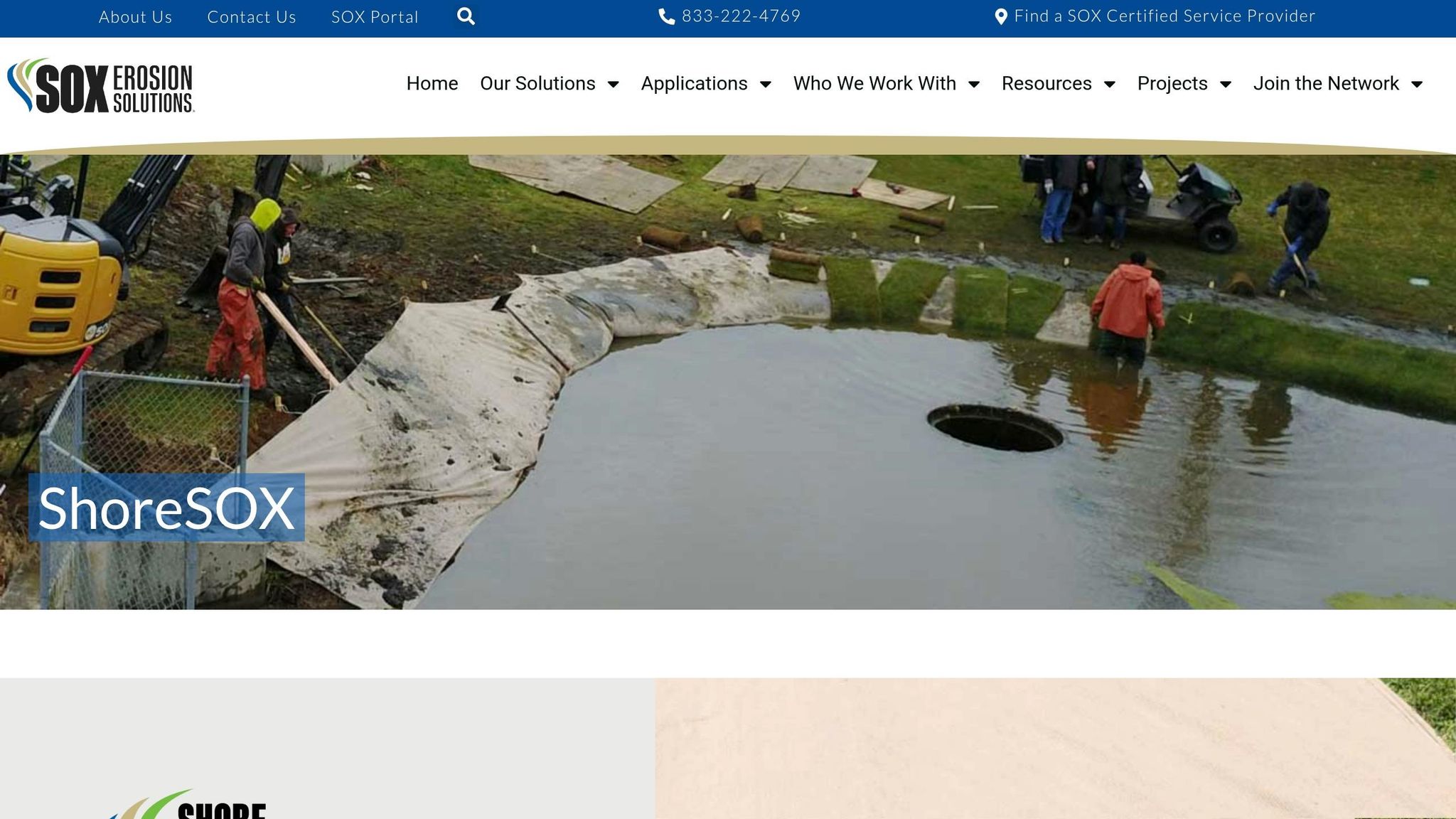
The ShoreSOX system uses biodegradable materials to provide temporary support while native vegetation establishes permanent roots. This solution is ideal for low-energy environments, such as areas where the fetch (the distance wind travels over open water) is 0.5 miles or less, and erosion rates are around 2 feet per year or less. The biodegradable materials naturally break down within 5 to 6 years, by which time the plant roots have become strong enough to stabilize the shoreline on their own.
Coconut Fiber Logs (Biologs)
Coconut fiber logs, also known as biologs, serve as both wave barriers and planting platforms. Made from natural coir fibers, these logs absorb wave energy and allow herbaceous plants to grow directly within them. The Chesapeake Bay Foundation highlights their long-term effectiveness:
"Over five to six years, the biolog will decompose naturally, but the plants’ roots will grow throughout the log to hold the bank or shoreline edge in place." [3]
A practical example comes from a bayfront community in the Carolinas, where 500 feet of shoreline were restored using a combination of coconut fiber logs, marsh grass, and recycled oyster shells. Within just 18 months, the project reduced erosion and enhanced local fish habitats [6]. Costs for this type of nonstructural installation typically fall between $50 and $100 per linear foot, making it an economical choice.
Ongoing maintenance is key to success:
- Clear debris that might smother vegetation
- Remove invasive plants like purple loosestrife
- Water regularly until the plants’ roots fully establish
- Inspect after major storms to ensure materials stay anchored
Hardscaping Methods for Erosion Control
When natural solutions and bioengineering fall short in managing high wave energy, eco-friendly hardscaping steps in as a reliable option. Hardscaping provides strong shoreline protection while maintaining aquatic habitats. Unlike traditional concrete structures, eco-friendly stone designs disperse wave energy, reducing the risk of scouring.
The choice to use hardscaping depends on the energy level of your shoreline. Medium-energy environments, where the fetch (distance to the opposite shore) ranges from 1.0 to 2.0 miles and erosion rates are between 2 to 8 feet per year, often benefit from hybrid systems. These systems combine stone with vegetation and typically cost between $150 and $500 per linear foot.
Stone Sills with Sand Fill
Stone sills paired with sand fill act as a barrier to incoming waves, helping to trap sediments and encourage the growth of native grasses. This approach creates a stable and ecologically friendly shoreline. Unlike vertical bulkheads, which can obstruct nesting habitats for turtles and horseshoe crabs, segmented stone sills maintain the natural connection between land and water. Behind the sill, the sand fill creates a gentle slope that allows wetland grasses to take root and thrive.
"settle sediments and filter pollutants from runoff before they enter the open water" [3]
The shallow-water habitat formed behind these sills supports species like blue crabs, finfish, and underwater grasses. Additionally, the vegetation provides shade, helping to lower water temperatures and increase dissolved oxygen levels, which benefits aquatic life.
Timing is crucial for these projects. Since sills require joint federal and state permits, it’s best to start the application process in the fall if you aim to begin construction by spring. Maryland introduced regulations in 2013 requiring living shoreline techniques, including sills where applicable, and Virginia enacted similar rules on July 1, 2020 [2].
Rip-Rap Alternatives with Native Plants
Traditional rip-rap, which involves piling large rocks along the shore, costs $300 to $500 per linear foot but often causes ecological issues. It can destroy habitats and redirect wave energy toward neighboring properties [1]. A more sustainable option involves toe boulders, which are narrow bands of rocks strategically placed to stabilize sand fill and biologs without fully hardening the shoreline.
This hybrid approach combines the stability of stone with the benefits of native vegetation. The rocks secure the materials, while the plants develop a "living matrix" that provides lasting stability. To protect young plants, use 3- to 4-foot mesh enclosures to prevent waterfowl from uprooting them during their first growing season [3]. Addressing upland runoff is also essential – creating riparian buffers with trees and shrubs can help prevent erosion caused by water flowing from rooftops and driveways.
These hardscaping strategies integrate effectively with advanced shoreline solutions provided by Pro Landscapes MD.
Pro Landscapes MD‘s Shoreline Erosion Services

Pro Landscapes MD combines natural and engineered methods to provide effective, eco-friendly shoreline protection. Their expertise lies in creating solutions that align with Maryland’s living shoreline requirements established in 2013 [2].
Using a mix of native vegetation and custom hardscaping, they design systems tailored to specific wave and erosion patterns. This approach creates a durable, soil-stabilizing barrier that also filters runoff [2]. For properties needing extra reinforcement, they incorporate features like stone sills, gravel berms, and coconut-fiber rolls, ensuring shoreline stability while maintaining water access [2][4].
Their drainage solutions are equally thoughtful, including diversion systems, regrading, and rain gardens. These methods help redirect water away from erosion-prone areas and improve runoff filtration [3][4]. This comprehensive approach highlights their dedication to long-term shoreline resilience.
Pro Landscapes MD also excels in hardscaping projects, offering options like retaining walls, stone veneer, and natural stone steps that blend naturally with waterfront settings. Their use of environmental pavers and sustainable designs allows for hybrid systems that balance structural integrity with ecological advantages. Each project begins with a detailed site evaluation, ensuring custom quotes that account for factors like erosion rates, fetch distance, and existing conditions.
For Maryland homeowners, their designs and installations align with state regulations and showcase a deep understanding of Chesapeake Bay’s unique shoreline dynamics [2].
Comparison of Shoreline Erosion Control Options
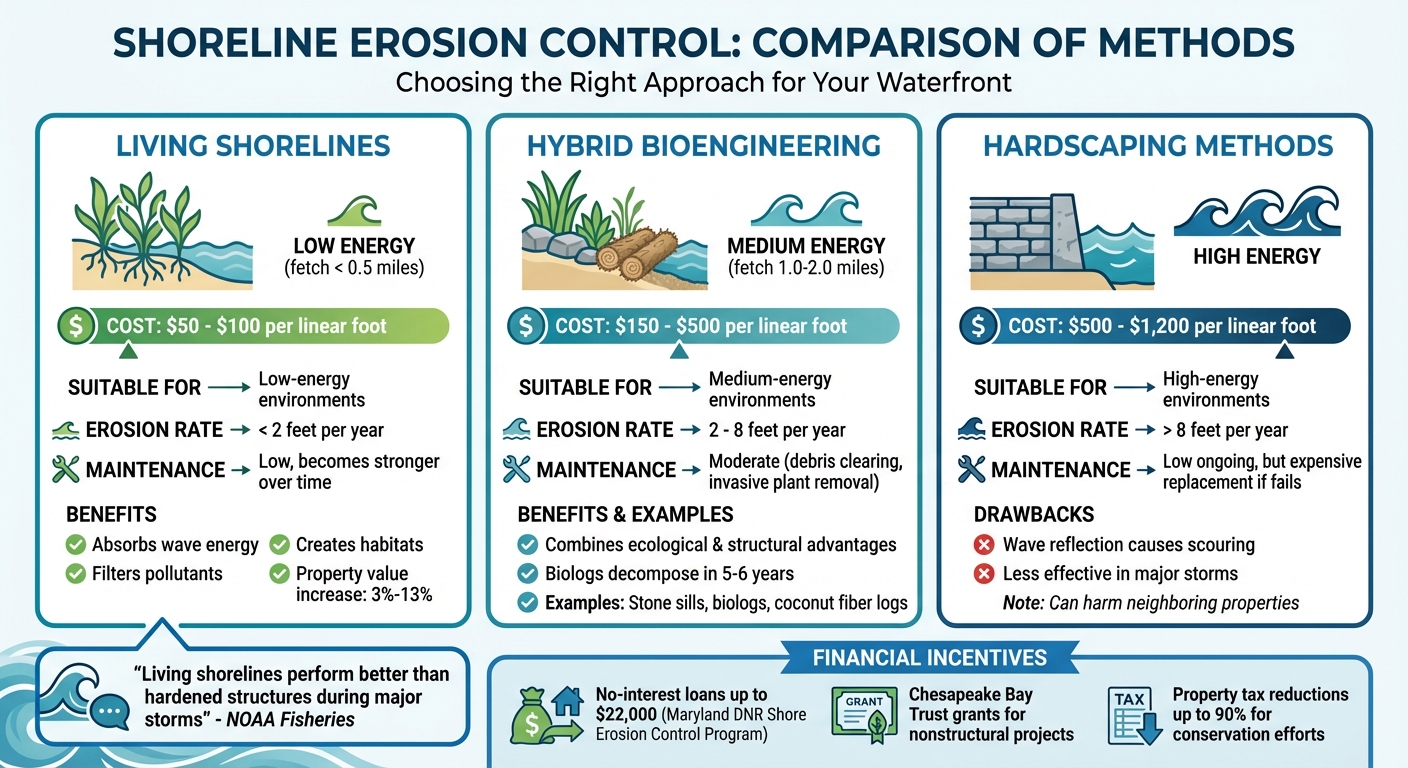
Shoreline Erosion Control Methods: Cost, Effectiveness & Suitability Comparison
When deciding how to tackle shoreline erosion, it’s essential to weigh factors like cost, effectiveness, and maintenance. Maryland’s shorelines, for instance, experience erosion rates that vary widely – from less than 2 feet annually in sheltered coves to as much as 20 feet per year along the mainstem Chesapeake Bay [3]. Here’s how different erosion control methods stack up.
Living shorelines are a cost-effective option, ranging from $50 to $100 per linear foot. They work best in low-energy environments, such as creeks and coves, where the fetch distance is less than 0.5 miles [3]. Over time, they become even sturdier as native vegetation takes root. Unlike hard structures, living shorelines absorb wave energy, which helps prevent the scouring that can harm neighboring properties [4].
For areas with moderate wave activity, hybrid bioengineering techniques are a solid middle ground. These systems cost between $150 and $500 per foot and are ideal for erosion rates of 2 to 8 feet per year [3]. They combine marsh plantings with structural elements like stone sills or breakwaters, offering both ecological and physical benefits. Biologs, often used in these setups, naturally decompose within 5 to 6 years – by which time plant roots have stabilized the bank [3]. For higher wave energy, more durable solutions may be necessary.
Hardscaping methods, such as bulkheads and revetments, are the go-to choice for high-energy areas where erosion exceeds 8 feet annually. These solutions are more expensive, costing $500 to $1,200 per foot [3]. While they require little ongoing maintenance, they can lose effectiveness over time due to wave reflection and scouring. If they fail, replacement costs can be steep [5]. Interestingly, research shows that living shorelines often outperform hardened structures during major storms [5].
Beyond the physical solutions, Maryland offers financial incentives to encourage sustainable shoreline projects. Homeowners may qualify for no-interest loans up to $22,000 through the DNR Shore Erosion Control Program or grants from the Chesapeake Bay Trust for nonstructural projects [3]. Some counties even provide tax breaks, cutting property taxes by as much as 90% for conservation efforts [4]. Additionally, restoring a natural shoreline can boost property values by 3% to 13% [1].
Conclusion
Eco-friendly methods not only protect shorelines but also help maintain the balance of waterfront ecosystems. For example, native plants can grow roots as deep as 2–3 feet, which stabilize soil and become stronger over time [1].
Living shorelines offer more than just erosion control. They filter pollutants, create vital habitats, and absorb wave energy – proving to be more effective than hardened structures during severe storms [2][3][5].
"Evidence shows that, during major storms, a living shoreline performs better than a hardened shoreline" [5]
Restoring a natural shoreline can also increase property values by 3% to 13% [1].
Before starting a project, it’s essential to assess the specific conditions of your shoreline. Factors like wave energy, bank slope, and erosion rates are key considerations. Consulting with professionals who are familiar with local regulations is critical, especially in states like Maryland, where living shorelines are now the default option unless deemed unsuitable [2]. Selecting resilient native plants designed to withstand flooding and wave activity ensures long-term success.
Financial incentives make these projects even more appealing. Maryland homeowners, for instance, can access grants through programs like the Chesapeake Bay Trust’s Living Shorelines Initiative. Additionally, some areas offer property tax reductions for conservation efforts, with discounts reaching up to 90% [3][4].
Whether you’re managing a gently sloping creek bank or a high-energy shoreline, there’s an eco-friendly solution that suits your needs and budget. Protecting your property while preserving the natural beauty of waterfront areas is a win-win. For a tailored and sustainable approach, Pro Landscapes MD can help you achieve the perfect shoreline solution.
FAQs
How do I know if my shoreline is ‘low-, moderate-, or high-energy’?
Shoreline energy levels are influenced by factors such as wave strength, wind, and currents. A low-energy shoreline is characterized by mild wave action, typically found in calm, sheltered environments. Moderate-energy shorelines encounter stronger waves but still have natural features that act as buffers. In contrast, high-energy shorelines endure powerful waves and currents, often located in open, exposed regions. Watching wave patterns and seeking advice from professionals can help you identify your shoreline type and make informed decisions about erosion management.
What permits are needed in Maryland for a living shoreline or stone sill?
In Maryland, you’ll usually need permits for projects like living shorelines and stone sills. The exact requirements depend on the size and location of your project. To make sure you’re meeting all the rules, it’s a good idea to check with the Maryland Department of Natural Resources for detailed guidance.
What Maryland incentives can help fund eco-friendly erosion control?
Maryland provides several initiatives to support conservation efforts, including the Environmental Quality Incentives Program (EQIP). This program offers both financial assistance and technical guidance for projects like erosion control, helping landowners implement sustainable practices.
Additionally, the Maryland League of Conservation Voters promotes programs such as energy efficiency grants and clean energy rebates. While these initiatives primarily focus on reducing energy consumption and promoting renewable energy, they can also indirectly contribute to environmentally friendly erosion control efforts by fostering broader sustainability goals.
Chat with Us