









- bhavya gada
- No Comments
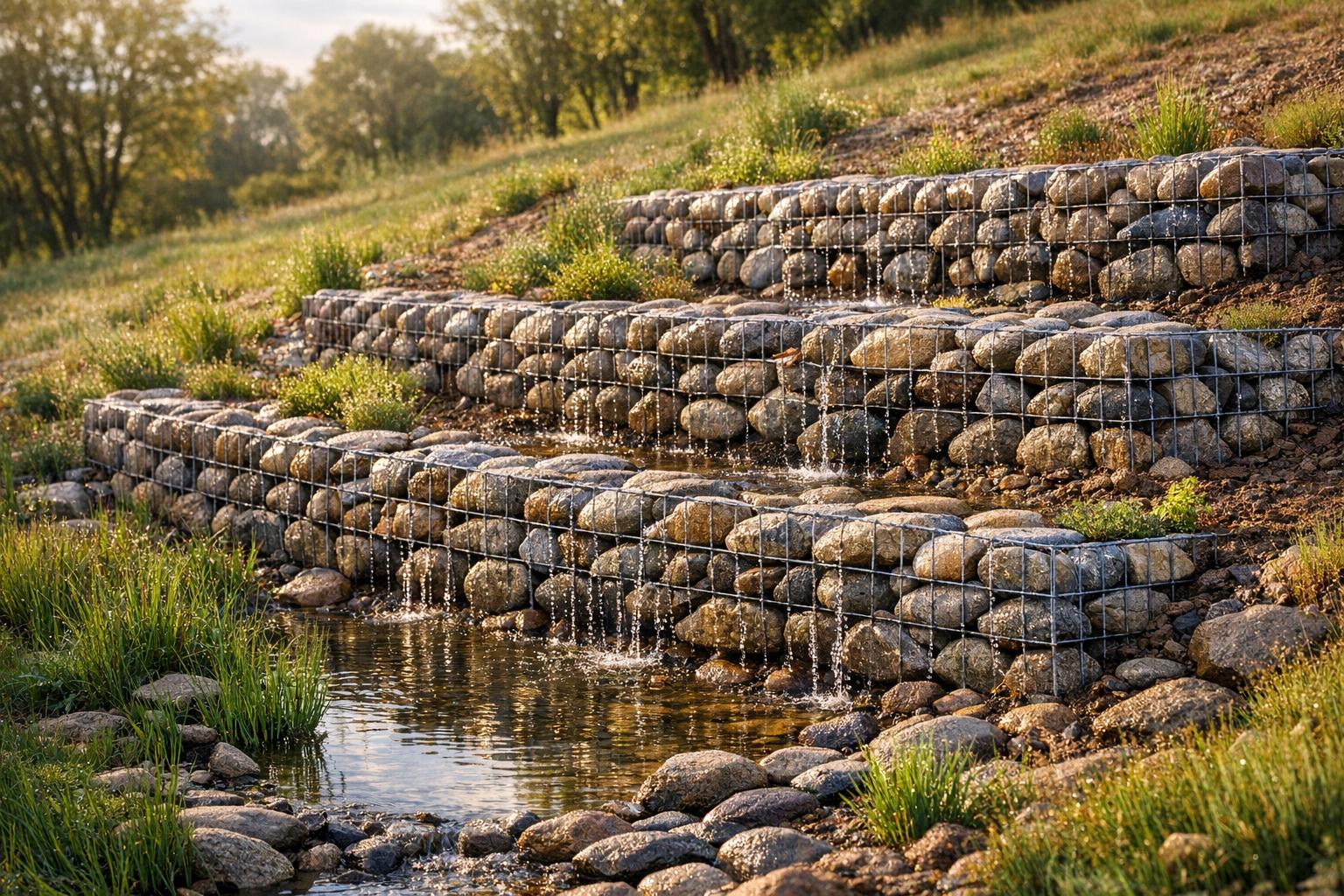
Gabions are wire mesh baskets filled with stones or recycled materials, used to create strong retaining walls that allow water to pass through, reducing soil erosion and managing stormwater. Unlike concrete walls, gabions are durable, flexible, and can use local or recycled materials, lowering environmental impact. Over time, they blend into the landscape, supporting plant growth and wildlife habitats.
Key Benefits:
- Drainage: Water flows through, reducing water pressure and failure risks.
- Erosion Control: Slows water flow, preventing soil loss.
- Material Reuse: Uses local or recycled stones, reducing waste and carbon emissions.
- Longevity: Handles freeze-thaw cycles without cracking.
- Biodiversity: Supports vegetation and wildlife over time.
In Maryland, where heavy rain and freeze-thaw cycles challenge slopes, gabions offer a practical solution for homeowners. They prevent erosion, protect foundations, and help manage stormwater while aligning with local efforts to reduce sediment runoff into Chesapeake Bay tributaries.
For Maryland residents, combining gabions with grading, drainage systems, and native plants ensures a durable and eco-conscious approach to slope stabilization. Experts like Pro Landscapes MD specialize in designing tailored solutions for areas prone to erosion and drainage challenges.
Civil and Erosion Control Gabions Webinar
sbb-itb-843f8be
Research-Backed Environmental Benefits of Gabions
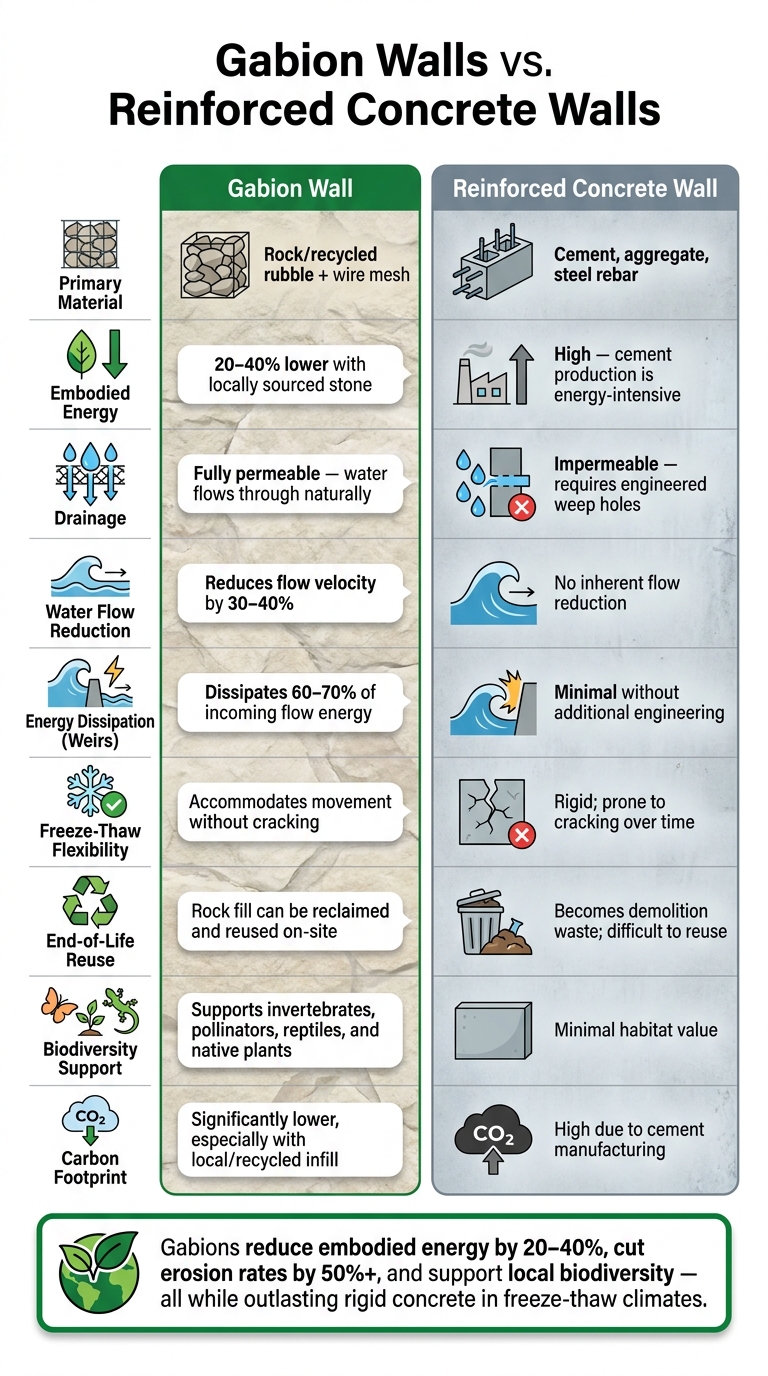
Gabion Walls vs. Reinforced Concrete Walls: Eco-Friendly Comparison
Gabions are more than just an eco-friendly design solution – they offer proven environmental advantages supported by research.
How Gabions Reduce Erosion and Sediment Loss
Gabion structures are highly effective at controlling erosion. The stones inside gabions absorb and reduce the energy of flowing water, which significantly lowers soil erosion. Research on gabion revetments demonstrates that these porous, rock-filled systems can decrease water flow velocities by 30–40%, depending on factors like slope and surface texture. Slower water flow means less force to erode soil and fewer sediments being carried away from the site.
Stepped gabion weirs take this erosion control to another level. Studies reveal that these structures can dissipate over 60–70% of incoming flow energy, reducing the impact on downstream riverbeds and banks. For instance, river training research has shown that gabion toe protections and revetments can cut bank erosion rates by more than half during high-flow events. These findings are based on observations of river sections monitored over multiple seasons.
How Gabions Manage Water Flow
One of the standout features of gabions is their ability to manage water flow. Acting as permeable barriers, they allow water to seep through the stone voids instead of rushing off the surface. This slows runoff and increases infiltration, reducing the volume and speed of water reaching storm drains or nearby streams. This is especially important during intense storms, such as Maryland’s summer thunderstorms, where heavy rainfall occurs in a short period.
Gabion check dams and low weirs are particularly effective in drainage swales or small channels. These structures help spread runoff over time, preventing downstream areas from being overwhelmed. Stormwater design manuals even document measurable reductions in peak discharge rates in residential areas where gabion systems are used. Additionally, the water that infiltrates through gabion voids helps recharge groundwater, replenishing subsurface moisture instead of becoming wasted runoff. These hydrological benefits align well with gabions’ resource-efficient and low-carbon design.
Carbon Footprint and Material Reuse
When compared to concrete walls, gabions have a much smaller carbon footprint. Cement production is one of the most energy-intensive industrial processes, and constructing reinforced concrete walls involves extensive excavation, formwork, and deep foundations. In contrast, life-cycle assessments show that gabion walls have significantly lower embodied CO₂, especially when local or reclaimed materials are used as infill.
For example, sustainability studies indicate that gabions filled with locally sourced rock can reduce embodied energy by 20–40% compared to concrete walls. Using recycled materials, like concrete rubble or fieldstone from the site, can enhance these savings further by diverting waste from landfills and eliminating the need to produce and transport new aggregates. At the end of their lifespan, gabion rocks can be removed and reused on-site, unlike poured concrete, which typically ends up as demolition waste.
Here’s a side-by-side comparison to illustrate how gabions stack up against reinforced concrete walls:
| Factor | Gabion Wall | Reinforced Concrete Wall |
|---|---|---|
| Primary material | Rock/recycled rubble + wire mesh | Cement, aggregate, steel rebar |
| Embodied energy | Lower (20–40% less with local stone) | Higher (cement is energy-intensive) |
| Drainage | Permeable – water flows through | Impermeable – requires weep holes |
| End-of-life reuse | Rock fill can be reclaimed on-site | Demolition waste; difficult to reuse |
| Flexibility in freeze-thaw | Accommodates movement without cracking | Rigid; prone to cracking over time |
Ecological and Habitat Benefits of Gabion Structures
Gabions offer more than just water management and carbon reduction – they create spaces where nature can thrive in ways that concrete walls simply can’t.
How Plants Grow on Gabions Over Time
The porous design of gabions naturally traps dust, organic material, and seeds, creating an environment where plants can take root and grow. Over time, as fine material accumulates in the gaps, mosses and native grasses are the first to sprout. These early colonizers set the stage for deeper-rooted plants, which strengthen the structure as their roots weave through the rocks and into the backfill soil. Within two to five growing seasons, native plants often establish a dense, green cover, especially when seeds are intentionally introduced or already present in the area [2].
For those looking to speed up the process, pockets of topsoil or compost can be added to gabion cells before planting. Hydroseeding with native species suited to the region is another effective strategy. In Maryland, for example, plants like switchgrass (Panicum virgatum), little bluestem (Schizachyrium scoparium), river oats (Chasmanthium latifolium), and native sedges thrive on slopes. Virginia creeper can also work well on vertical faces when managed properly.
Gabions as Microhabitats for Local Wildlife
As vegetation takes hold, gabions become more than just a structural element – they transform into thriving microhabitats. The gaps between the stones create a mix of shaded, moist spaces and sunlit surfaces, offering shelter for a variety of creatures. Ground beetles, spiders, and native pollinators find refuge in these crevices, while small reptiles and amphibians benefit from the cooler, damp recesses [2]. Studies consistently show that gabion systems support a greater diversity of invertebrates compared to concrete walls, thanks to the variety of microhabitats they provide [2].
In Maryland neighborhoods, this biodiversity brings practical benefits. Native pollinators and predatory insects flourish, naturally helping to control pests. Gabion-stabilized slopes can even serve as part of a larger habitat corridor, enriching local ecosystems while also contributing to the structural stability of the landscape.
Gabions and Water Quality in Stormwater Systems
Gabions also play a role in improving water quality. By slowing down water flow, they trap sediments and encourage infiltration [2]. This process captures fine particles – along with the phosphorus, hydrocarbons, and trace metals attached to them – preventing these pollutants from entering storm drains or nearby streams. Over time, as organic matter builds up and microbial communities form within the trapped sediments, gabions begin to process nutrients and contaminants, functioning similarly to a vegetated swale or bioretention cell [2].
For homeowners in Maryland dealing with muddy runoff after summer storms, a strategically placed gabion check dam can significantly improve water clarity. These water quality benefits, combined with their effectiveness in reducing erosion, make gabions a valuable addition to sustainable landscape designs. Professionals like Pro Landscapes MD often incorporate gabions into broader plans, using them as both hydraulic controls and ecological assets.
Practical Guidance for Using Gabions on Residential Slopes
Design Tips for Residential Gabion Walls
For Maryland homeowners, 3–4 ft gabion wall segments are a smart choice. This height simplifies installation, avoids the hassle of engineering permits, and effectively manages the typical slope erosion seen in areas like Howard, Montgomery, and Carroll counties. If you need more height, consider terracing shorter walls. This approach not only offers better stability but also creates planting ledges that can enhance your yard’s visual appeal.
The key to long-lasting performance lies in the details. Start with a base of 4–6 inches of compacted crushed stone to ensure proper leveling and water drainage. Behind the gabion baskets, include a 1–2 ft thick layer of clean angular gravel, separated from the native soil by a nonwoven geotextile fabric. This setup prevents Maryland’s clay and silt from seeping into the rock fill. Additionally, tilting the wall slightly – 6–10 degrees back into the slope – helps counteract soil pressure and prevents bulging over time. For longer slopes or areas near paved surfaces, installing a perforated drain pipe at the base, sloped at 1–2% to daylight, ensures water has a clear exit, reducing pressure during heavy rains.
When selecting stone, locally sourced granite or similar angular rock in the 4–8 inch range is ideal for residential gabion baskets. Angular stones interlock better than rounded river rocks, minimizing movement over time. Plus, using local materials reduces transportation-related emissions, aligning with the eco-friendly nature of gabion projects.
By following these design tips, you’ll set up your gabion wall for durability and ease of maintenance.
Maintaining Gabions for Long-Term Performance
Once installed, gabion walls are relatively low-maintenance, but regular checks help catch small issues before they escalate. Aim for inspections twice a year – once in spring and again after major storms. During these checks, focus on three areas: wire corrosion or broken lacing (especially at corners or near water), any bulging that might indicate drainage problems, and erosion at the base where runoff could compromise stability.
Minor corrosion on galvanized or PVC-coated wire is expected over time, but damaged or rusted sections should be repaired promptly using replacement lacing wire. If you notice small gaps forming due to rock settling, simply add matching stones and secure the lid to keep the structure intact. Also, keep an eye on vegetation. While low-growing native plants are fine, avoid planting woody shrubs or trees too close to the wall, as expanding roots can distort the baskets.
Combining Gabions with Other Maryland Landscaping Features
Gabions shine brightest when integrated into a well-thought-out landscape plan. On sloped properties, they work beautifully alongside permeable paver patios and walkways, offering both functionality and aesthetic appeal. For example, gabion check dams in backyard swales can slow stormwater, promote infiltration, and protect slopes from erosion. This is especially useful in areas like Columbia, Ellicott City, or Germantown, which often experience intense summer storms.
If you’re dealing with issues like roof downspout runoff or driveway drainage, consider redirecting the water into stone swales or dry riverbeds that lead into gabion-protected zones. By combining features like proper grading, drainage systems, gabion walls, and hardscaping, you can create a cohesive and effective landscape design.
"Poor drainage can lead to a variety of problems that can damage your landscape, home foundation, and overall property." – Pro Landscapes MD [1]
For homeowners in central Maryland, companies like Pro Landscapes MD specialize in creating integrated landscape solutions, blending retaining walls, drainage systems, and stormwater management into seamless designs.
Conclusion: Gabions as a Practical, Eco-Friendly Slope Solution
Gabions provide an effective way to stabilize slopes while encouraging natural drainage. Unlike traditional concrete walls that can trap hydrostatic pressure, gabion baskets are designed to let groundwater and stormwater flow through their rock fill. This permeability not only reduces the chances of wall failure but also helps maintain natural drainage patterns, making them a durable choice for long-term use.
Over time, the gaps in gabion structures collect soil and organic debris, creating an environment where native plants can take root. This natural integration strengthens the slope further and supports local ecosystems by offering habitats for wildlife.
In addition to their structural benefits, gabions are environmentally friendly. By using locally sourced or recycled materials, they minimize the environmental impact of transportation and production. They also endure Maryland’s freeze-thaw cycles and allow for easy modular repairs when needed.
To get the most out of gabions, combine them with other erosion control measures like proper grading, geotextile fabric, French drains, and native plantings. This holistic approach makes gabions a reliable and environmentally conscious solution for safeguarding Maryland slopes.
"Drainage problems are complex and require a custom approach for each project." – Pro Landscapes MD [1]
If you’re dealing with eroding slopes or drainage challenges, reach out to Pro Landscapes MD for expert advice. They specialize in retaining walls, grading, French drains, stormwater management, and native planting throughout central Maryland, including areas like Ellicott City, Sykesville, Bethesda, and Silver Spring. With their tailored solutions and free estimates, they can help you protect your property while supporting the health of the local watershed.
FAQs
Do gabion walls need a permit in Maryland?
In Maryland, it’s not explicitly stated whether gabion walls require a permit. However, the state has strict regulations regarding runoff and stormwater management for any landscape modifications. To ensure compliance, it’s a good idea to consult a professional. For instance, Pro Landscapes MD specializes in landscaping and hardscaping projects, including retaining walls and drainage systems. They can help you navigate local requirements and ensure your project aligns with state guidelines.
How long do gabion walls last in freeze-thaw climates?
The lifespan of gabion walls in areas with freeze-thaw cycles hinges on several factors, such as the quality of materials used and how well the installation is executed. Pro Landscapes MD specializes in hardscaping and drainage solutions, offering services like retaining walls and stormwater management to safeguard landscapes against Maryland’s unpredictable weather. For specific guidance on gabion wall durability, it’s best to consult a structural engineer or a landscape architect familiar with local geotechnical requirements.
Can gabions be filled with recycled concrete or site stone?
Yes, gabions can be filled with stones sourced directly from your site or with recycled concrete, making them an environmentally conscious option for stabilizing slopes. This method not only reuses available materials but also adds an attractive touch to your landscape. Pro Landscapes MD offers professional expertise to ensure your gabion installation is effective and blends seamlessly with the surroundings, customizing materials and designs to preserve slope stability in central Maryland and Washington, DC.
Chat with Us