









- bhavya gada
- No Comments
Edible landscaping replaces grass with fruits, vegetables, and herbs, offering food production alongside visual appeal. Traditional lawns, on the other hand, prioritize aesthetics and recreation but often come with high water use and maintenance costs. If you’re deciding between the two, here’s a quick breakdown:
- Edible Landscaping: Produces food, reduces grocery costs, supports pollinators, and uses less water with proper design.
- Traditional Lawns: Provides open space for recreation, requires frequent mowing, and often relies on chemical treatments.
Quick Comparison
| Feature | Edible Landscaping | Traditional Lawn |
|---|---|---|
| Primary Function | Food production + aesthetics | Recreation + curb appeal |
| Maintenance | Pruning, harvesting | Mowing, fertilizing |
| Water Use | Efficient (mulch, drip systems) | High (frequent irrigation) |
| Biodiversity | High (diverse plants) | Low (monoculture) |
| Economic Return | Saves on groceries | None (ongoing costs) |
If you want a mix, a hybrid approach works well – keep a small lawn for activities and add edible plants like berry bushes or herbs for utility. Whether you choose one or combine both, consider your yard’s sunlight, soil, and how much effort you’re ready to invest.
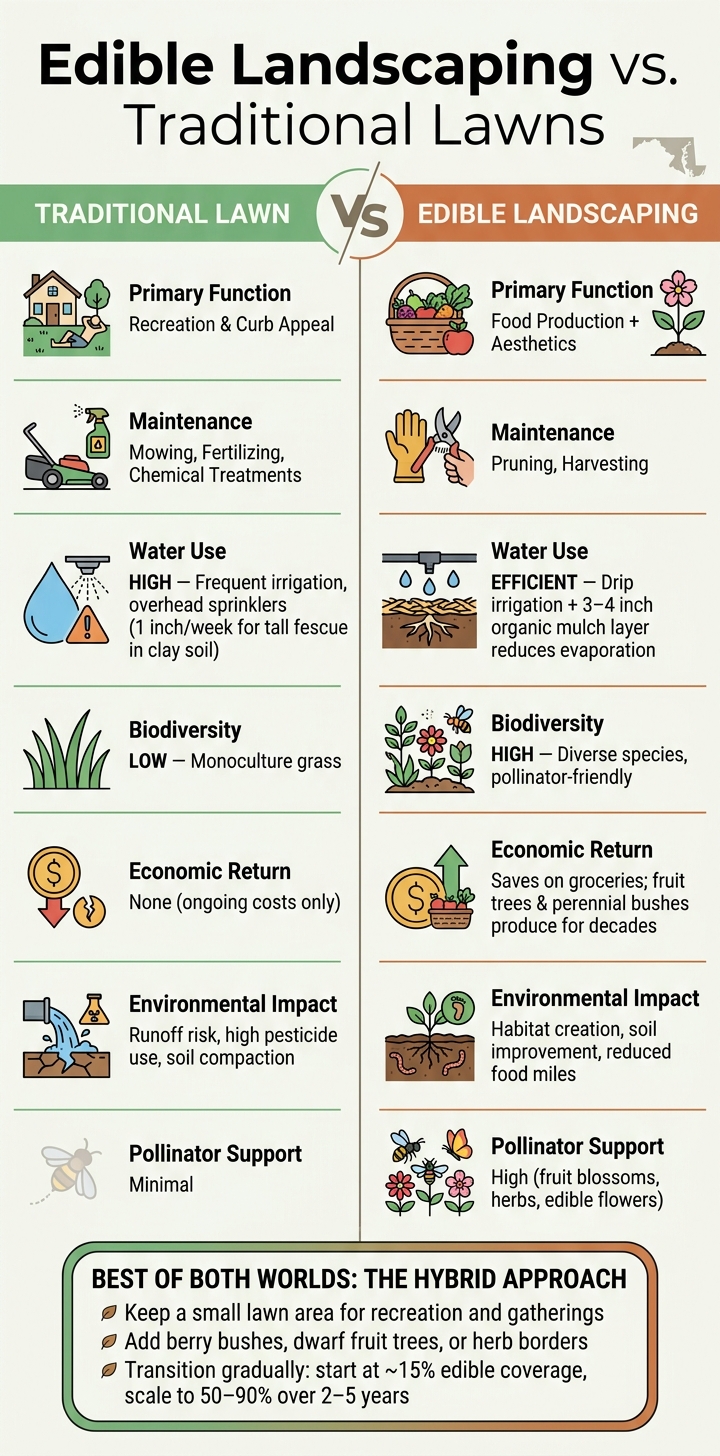
Edible Landscaping vs. Traditional Lawns: Side-by-Side Comparison
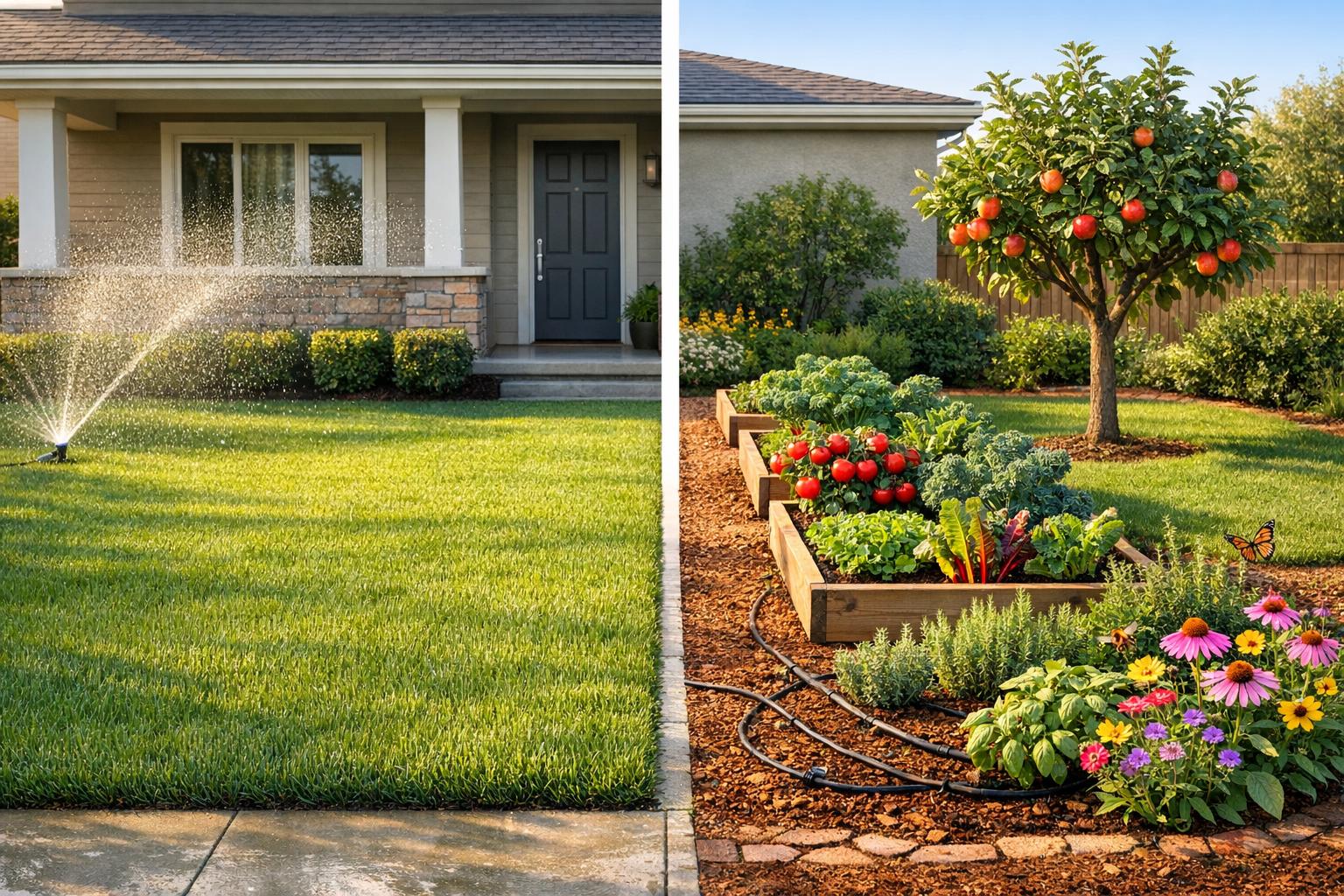
Traditional Lawn vs. Attractive Front Yard Vegetable Garden
sbb-itb-843f8be
What Is a Traditional Lawn?
A traditional lawn refers to turfgrass cultivated and maintained for its neat, uniform appearance. It falls under the category of soft landscaping, which includes living features like plants and grass, as opposed to hardscaping elements such as patios or walkways [2]. In suburban Maryland, traditional lawns have been a hallmark of residential yards, appreciated for their tidy aesthetic and the open space they provide.
Historically, the focus of these lawns has been on visual appeal rather than practical use [1]. For many homeowners in Maryland, a well-manicured lawn is simply part of what defines an ideal yard.
Common Lawn Grass Types in Maryland
Maryland’s climate – marked by hot, humid summers and cold winters – can make maintaining turfgrass a bit of a challenge. Among the most popular options is tall fescue, which thrives in full sun to partial shade but requires frequent mowing and consistent care [3]. For those looking for lower-maintenance options, fine leaf fescues – like hard fescue, creeping red fescue, Chewings fescue, and sheep fescue – are excellent choices. These varieties are known as "low-mow" grasses and perform well in shaded areas [3].
| Grass Type | Best Light Condition | Maintenance Level | Traffic Tolerance |
|---|---|---|---|
| Tall Fescue | Full Sun to Partial Shade | High | High |
| Hard Fescue | Full Sun to Shade | Low | Low |
| Sheep Fescue | Full Sun to Shade | Low | Low |
| Creeping Red Fescue | Shade | Low | Low |
| Chewings Fescue | Shade | Low | Low |
Fine fescues should not be mowed during hot, dry spells to avoid damage [3]. However, they are not ideal for high-traffic areas like playgrounds or areas frequented by pets.
Primary Uses and Appeal
Traditional lawns serve multiple purposes. They provide open spaces for activities like playing, entertaining, or accommodating pets. They also enhance a home’s curb appeal, often playing a role in creating a positive first impression. Additionally, they can help meet HOA guidelines, though Maryland’s Low-Impact Landscaping Law has eased restrictions, giving homeowners more freedom to explore other landscaping options [3].
Understanding the role and characteristics of traditional lawns helps lay the groundwork for comparing them to edible landscapes. Up next, we’ll dive into how edible landscaping offers a different set of benefits.
What Is Edible Landscaping?
Edible landscaping, often referred to as "foodscaping," is all about blending food-producing plants into your yard’s design. Instead of a traditional grass lawn, you can incorporate fruit trees, berry bushes, herbs, vegetables, and edible flowers. Not only does this enhance your home’s curb appeal, but it also provides you with fresh, homegrown produce. By layering plants of different heights, textures, and purposes, you can create a dynamic and productive space that offers far more than a plain grass lawn ever could.
Key Components of Edible Landscaping
An effective edible landscape combines various types of plants, each serving a unique purpose. For example:
- Fruit trees: These can be the centerpiece of your yard, offering shade and seasonal blooms.
- Berry bushes: Perfect for hedges or borders, they add structure and color.
- Herbs: These work well along pathways or garden edges, bringing both fragrance and utility.
- Vegetables: Their bold textures and seasonal colors make them stand out.
- Edible flowers: Plants like nasturtiums and calendula not only look stunning but can also be used in the kitchen.
You can adapt these elements to different design styles. Whether you prefer the clean look of symmetrical raised beds bordered by herbs or a more natural layout with curving rows of blueberry bushes and apple trees, edible landscaping can suit your aesthetic while staying practical.
Edible Plants That Grow Well in Maryland
Maryland’s climate supports a variety of edible plants, provided you choose species suited to the region. Below is a table of plants that thrive in Maryland, along with their roles in the landscape:
| Plant Category | Examples | Landscape Role |
|---|---|---|
| Fruit Trees | Apples, Pears, Cherries, Plums | Shade, focal points, spring blossoms |
| Berries | Blueberries, Raspberries, Strawberries | Hedges, groundcover, fall color |
| Herbs | Rosemary, Thyme, Sage, Lavender | Borders, pathway fillers, fragrance |
| Vegetables | Kale, Chard, Broccoli, Rhubarb | Bold texture, seasonal color |
| Edible Flowers | Nasturtiums, Calendula, Violets, Pansies | Garnishes, hanging baskets, visual interest |
Many herbs, like rosemary and thyme, are naturally resistant to deer – a helpful trait for suburban Maryland gardens. Edible plants can also thrive in challenging areas where grass might struggle, such as steep slopes, shaded corners, or spots with poor soil drainage [3].
Professional Design for Edible Landscapes
A well-designed edible landscape not only looks great but also boosts efficiency by conserving water and reducing upkeep. To create a successful edible garden, you’ll need to consider factors like sunlight, soil quality, plant spacing, and how you use your yard. Most edible plants require 6 to 8 hours of direct sunlight and well-drained soil to thrive [5].
For a polished and functional design, companies like Pro Landscapes MD can help. They specialize in integrating edible plants with existing hardscaping, such as patios, walkways, and retaining walls. Using materials like natural stone and Pennsylvania Flagstone, they can build raised beds and borders that give your yard a structured, cohesive look while producing fresh, delicious food.
Edible Landscaping vs. Traditional Lawns: A Side-by-Side Comparison
Here’s a look at how edible landscaping stacks up against traditional lawns in terms of function, water use, cost, and environmental impact.
Functional Benefits
Traditional lawns are great for open spaces where kids can play, hosting gatherings, or just adding curb appeal. But their usefulness pretty much stops there. On the other hand, edible landscaping takes things further. Imagine fruit trees doubling as shade providers, berry bushes acting as natural hedges, and creeping herbs filling in gaps between stepping stones – all while producing food.
"Edible landscaping combines the beauty of ornamental plants with the functionality of food production." – Al’s Garden & Home [1]
Another perk? You control what goes into your food. Growing your own produce lets you decide if and how much pesticide to use – a level of control you don’t get at the grocery store [5].
| Feature | Traditional Grass Lawn | Edible Landscaping |
|---|---|---|
| Primary Function | Recreation & Aesthetics | Food Production & Utility |
| Resource Intensity | High (mowing, chemicals) | Variable (harvesting, pruning) |
| Biodiversity | Low (monoculture) | High (diverse species) |
| Economic Return | None (maintenance cost only) | High (savings on groceries) |
| Structural Uses | Open ground cover | Shade, fencing, windbreaks |
Water Use and Drought Performance
Keeping a traditional lawn lush can be a water guzzler. For example, tall fescue – common in Maryland – requires frequent irrigation, especially during hot, dry summers. Overhead sprinklers, often used for lawns, aren’t very efficient since much of the water evaporates before it even hits the ground.
Edible landscapes, on the other hand, are smarter about water. A 3- to 4-inch layer of organic mulch around plants helps retain moisture by keeping the soil cool and reducing evaporation [6]. Drip irrigation systems also deliver water directly to the roots, cutting waste. Water needs vary by plant type, but here’s a quick breakdown:
| Plant Type | Typical Water Need per Irrigation |
|---|---|
| Shallow-rooted crops | 0.75–1 inch |
| Medium-rooted crops | 1–2 inches |
| Deep-rooted crops | Up to 2 inches |
| Established tall fescue | 1 inch (in clay soil) |
Efficient watering not only conserves resources but can also save money in the long run.
Costs and Long-Term Value
When it comes to costs, traditional lawns are a constant expense. You’ll be paying for seed, fertilizer, mowing, and watering year after year without any financial return. Edible landscaping, while more expensive to set up initially, pays off over time. Once established, it reduces grocery bills through regular harvests. Plus, fruit trees and perennial berry bushes can produce for decades with minimal upkeep.
Interestingly, grass can compete with nearby trees and shrubs, reducing their growth by as much as 50% [6]. Swapping turf for mulched edible beds around existing trees can actually boost their health and productivity.
Impact on the Environment
The environmental differences between traditional lawns and edible landscapes are stark. Lawns are monocultures that don’t support much wildlife, often require chemical inputs, and can contribute to runoff when the soil gets compacted. In contrast, edible landscapes encourage biodiversity, improve soil health, and attract pollinators with flowering plants like fruit trees and herbs [5].
"You can control the quantity and kinds of pesticides and herbicides you use on your foods." – UCANR [5]
Another benefit? Growing food at home cuts down on the need for store-bought produce, which often travels hundreds of miles to reach your table. That means less transportation, less packaging, and fewer chemicals. For Maryland homeowners aiming for a more sustainable yard, edible landscaping is a step in the right direction.
| Feature | Traditional Lawn | Edible Landscape |
|---|---|---|
| Pollinator Support | Minimal | High (flowers, fruit blossoms) |
| Chemical Control | Often high pesticide use | User-controlled, organic options |
| Environmental Impact | Runoff, high water use | Habitat creation, soil improvement |
| Biodiversity | Low | High |
Choosing the Right Option for Your Property
The best choice for your yard depends on its natural features, how much upkeep you’re ready to handle, and what you want to achieve outdoors.
Assessing Your Yard’s Conditions
Before making any decisions, take a close look at your yard’s natural traits. Think about sunlight, soil quality, drainage, slope, and water availability. Most fruits and vegetables thrive with 6–8 hours of direct sunlight daily for a healthy harvest [5]. Avoid areas prone to waterlogging or compacted clay, as these can hinder plant growth [4]. If your yard has a slope, you may face challenges like erosion or uneven watering, which could require solutions like grading or retaining walls [4].
"Good landscaping is about balance. Start with what your site demands: slope, soil, sun, drainage, wind." – Oasis Biosistema [4]
By understanding these factors, you can decide whether to stick with a traditional lawn, dive into an edible garden, or blend the two for a more versatile yard. Let’s look at how combining these options can create a space that meets multiple needs.
Hybrid Approaches: Combining Lawn and Edible Beds
A hybrid yard design lets you enjoy the best of both worlds – keeping a functional lawn while incorporating edible plants. You can dedicate as much or as little of your yard as you like to edibles, ranging from just 1% to a complete transformation [5].
For example, you might keep a grassy area for kids to play or for hosting outdoor gatherings. Meanwhile, you could swap out decorative shrubs for blueberry bushes, grow raspberries along a fence, or plant a dwarf apple tree in a sunny spot. Ground covers like strawberries or creeping thyme can replace struggling grass patches. This layered approach allows you to enjoy the benefits of both a traditional lawn and an edible garden without overhauling your entire yard at once. Once you’ve found the right balance, you can transition gradually, ensuring a manageable and sustainable change.
How to Phase the Transition Over Time
You don’t need to dive into a full conversion all at once. Start small by replacing a few ornamental plants with edibles, then expand your edible landscape over time. Below is a general phasing model for a quarter-acre lot:
| Phase | Edible Coverage | What’s Involved |
|---|---|---|
| Level 1 | ~15% | Containers, berry shrubs, one fruit tree |
| Level 2 | ~50% | Dwarf fruit trees, raised beds, fruiting shrubs |
| Level 3 | ~90% | Food forest with trellises, greenhouses, and extensive raised beds |
This gradual shift, typically spread over 2 to 5 years, gives you time to learn which plants thrive in your yard, improve soil quality, and avoid becoming overwhelmed by a large-scale edible garden [7]. By taking it step by step, you can create a yard that evolves with your needs while maintaining a thoughtful balance between aesthetics and function.
Working with a Professional Landscaping Service
Once you’ve outlined a phasing plan, the next step is deciding how much of the work you can handle yourself and when it’s better to call in the pros.
When to Hire a Professional
While some landscaping projects are ideal for DIY enthusiasts, others – like fixing drainage issues, managing steep slopes, or improving poor soil – are best left to professionals. For instance, Maryland’s clay-heavy soil and fluctuating freeze-thaw cycles can sabotage even the most carefully planned gardens if foundational problems aren’t addressed first.
"Landscape design is the conscious arrangement of outdoor space to maximize human enjoyment while minimizing cost and environmental impact." – NC State Extension [4]
Hiring a professional can save you from expensive replanting mistakes. If your plans include features like raised beds, fruit trees, retaining walls, or hardscape elements such as patios and walkways, it’s wise to bring in an expert early in the process. Their input ensures that the structures are solid and that your landscaping aligns with water conservation and sustainable design principles.
By leveraging professional expertise, you can streamline the process, avoid setbacks, and enjoy the full benefits of edible landscaping – both in terms of water savings and environmental impact.
How Pro Landscapes MD Can Help

Pro Landscapes MD partners with homeowners throughout central Maryland – including Howard County, Montgomery County, and Baltimore County – to create outdoor spaces that are both functional and beautiful. Their services cover everything from site evaluations and drainage solutions to grading, planting, and eco-conscious hardscaping.
For edible landscapes, their experience in building retaining walls, flagstone walkways, and French drains ensures your garden is prepared to withstand Maryland’s challenging weather. Sturdy paths between planting beds aren’t just visually appealing – they also prevent soil compaction and make harvesting easier, even in muddy conditions [2]. Additionally, they offer environmental pavers and other sustainable hardscaping options that enhance the look of a food-producing yard without compromising its practicality or curb appeal.
As one satisfied client shared: "They came through with everything promised. I love the stacked stones we placed around our trees and flowerbed." This kind of attention to detail – blending stonework with thriving plants – elevates an edible landscape from ordinary to extraordinary [4].
Conclusion: Finding the Right Balance for Your Yard
Choosing between edible landscaping and a traditional lawn isn’t a one-size-fits-all decision for Maryland homeowners. The best option depends on your yard’s specific conditions – like sunlight exposure, soil drainage, and how much effort you’re willing to put into upkeep.
For instance, if your yard gets 6–8 hours of direct sunlight and you’re ready to roll up your sleeves, edible landscaping can be a great way to cut grocery bills, attract pollinators, and reduce your ecological impact. On the flip side, if you value a low-maintenance space for relaxation or recreation, a traditional lawn might still suit you best. And for those who want a mix of both, a hybrid approach could be the answer. Adding edible elements like fruit trees, herb beds, or borders to an existing lawn can give you the benefits of both styles. Even a small edible section – whether it’s a corner of your yard or a border along your fence – can make a noticeable difference [5].
To get started, try a simple sun and soil check to understand your yard’s potential. Begin with small changes, like replacing a few ornamental plants with something edible, such as blueberry bushes or creeping thyme along a path. As you gain confidence, you can expand your edible garden at your own pace [5]. Whether you go all-in on edible landscaping or blend it with a traditional lawn, your yard should work for you and thrive in Maryland’s unique climate.
FAQs
How do I know if my yard gets enough sun for edible plants?
To figure out if your yard gets enough sunlight for growing edible plants, look for areas that receive 6-8 hours of direct sunlight each day. Pay attention to whether parts of your yard experience dappled, partial, or heavy shade, and adjust your planting plans based on what each crop needs and your local environment. Watching how sunlight moves across your yard during the day can help pinpoint the ideal spots for planting.
Which edible plants are easiest to grow in Maryland?
Maryland’s climate is perfect for growing a variety of edible plants, especially if you’re just starting out or looking for reliable options. Some of the easiest ones to grow include tomatoes, peppers, lettuce, Swiss chard, carrots, radishes, beans, and herbs like parsley. These plants not only thrive in the local conditions but also fit well with Maryland’s planting schedules, making them a great choice for gardeners at any skill level.
What’s the simplest way to switch from lawn to edible beds?
To turn your lawn into a garden full of edible plants, start with a solid plan. Choose spots for vegetables, herbs, and fruit trees where they’ll get plenty of sunlight. Next, get rid of the grass by covering it with cardboard or mulch – this helps prepare the soil without harmful chemicals. Once that’s done, enrich the soil by adding compost or organic matter to give your plants a healthy start.
When it’s time to plant, pay attention to how much space and sunlight each crop needs. To make the most of your garden, think about using vertical gardening techniques or pairing certain plants together (companion planting) to maximize your space and boost growth.
Chat with Us