









- bhavya gada
- No Comments
Erosion control in Carroll County, Maryland, is a legal requirement for construction and landscaping projects. Mismanaging erosion can lead to fines, environmental damage, and costly repairs. This guide breaks down the steps to ensure compliance, from determining if your project needs a formal plan to maintaining long-term site stabilization. Key points include:
- When You Need a Compliance Plan: Projects like regrading, retaining walls, or drainage installations often require permits.
- Identifying High-Risk Areas: Focus on steep slopes, low spots, drainage swales, and areas near foundations.
- Hiring Experts: Certified professionals can help create tailored erosion control plans.
- Pre-Construction Steps: Secure permits, plan grading (2% slope is critical), and prepare materials like silt fences and sediment traps.
- During Construction: Install and maintain erosion controls, inspect after heavy rain, and address issues like standing water promptly.
- Post-Construction Stabilization: Use vegetation, grading, and permanent features (e.g., French drains) to prevent future erosion.
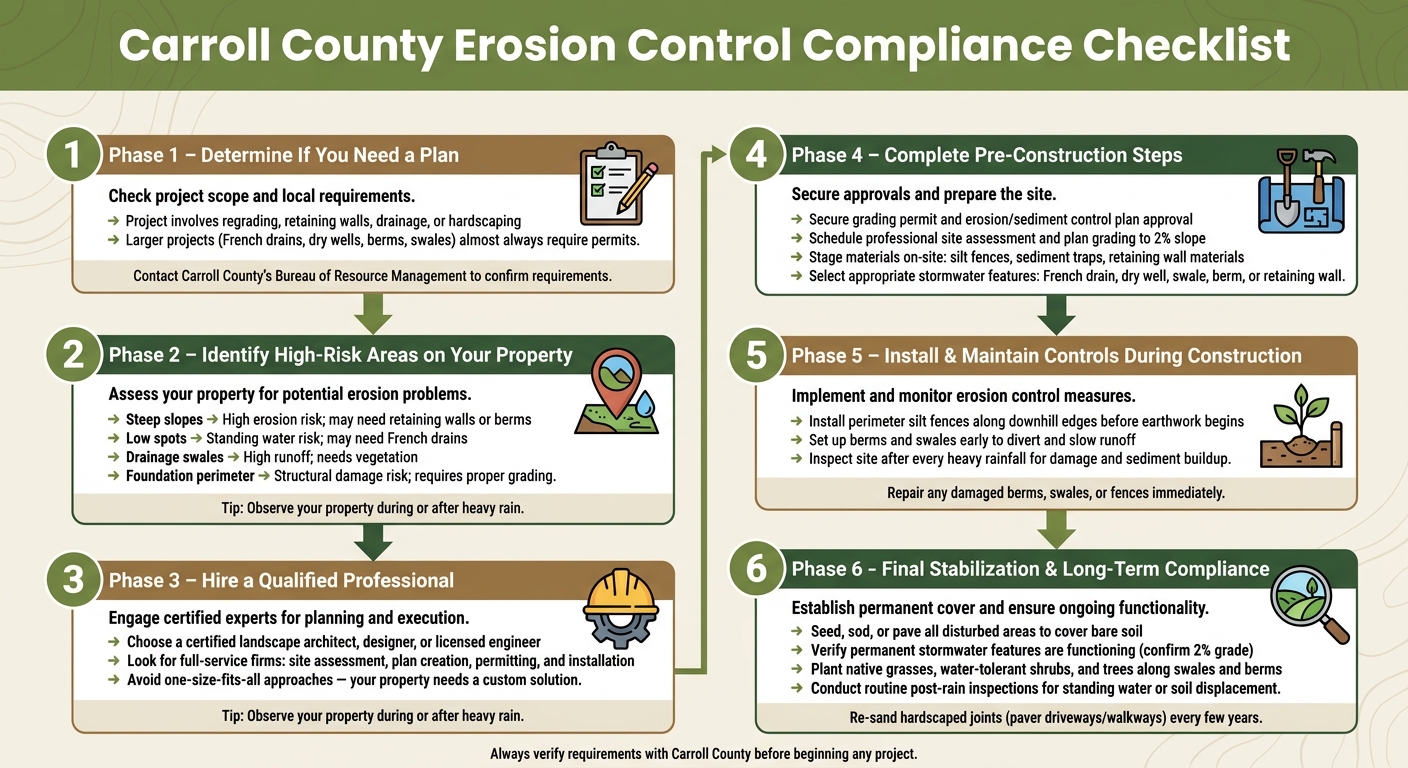
Carroll County Erosion Control Compliance Checklist
Determining Project Requirements for Erosion Control
Before diving into any project, it’s crucial to figure out whether Carroll County requires a formal soil erosion and sediment control plan. This depends on the type of work you’re doing and its location.
When Is a Compliance Plan Required?
Not all yard projects need formal approval, but certain activities – like regrading, installing retaining walls, or building paver driveways and patios – can change how stormwater flows on your property. These regulations exist to manage those changes.
Larger drainage projects, such as adding French drains, dry wells, or creating berms and swales, almost always require permits and adherence to local guidelines [1]. Even smaller hardscaping efforts, like gravel driveways or pathways, can affect water runoff enough to require county oversight [4][5].
"In some cases, a permit may be required for extensive drainage projects." – Pro Landscapes MD [1]
If your project involves significant changes to elevation or drainage, it’s safe to assume you’ll need a plan. Always verify with Carroll County before beginning. Knowing when a plan is necessary helps you identify areas on your property that are most susceptible to erosion.
Identifying Sensitive Areas on Your Property
Some parts of your property are more prone to erosion, and working in or near these areas often comes with stricter compliance rules. Identifying these zones is a key step in meeting Carroll County’s erosion control requirements. Areas like steep slopes, low-lying spots that collect water, natural drainage swales, and spaces near your home’s foundation are considered high-risk zones [1][2].
A practical way to pinpoint these areas is to observe your property during or right after heavy rainfall. Pay attention to where water flows quickly, where it pools, and whether you notice bare soil or sediment being washed away. These are clear signs of erosion-prone areas that may need extra control measures [2].
| Sensitive Area Type | Key Indicators | Common Erosion Risk |
|---|---|---|
| Steep Slopes | Rapid water movement, visible soil loss | High; often requires retaining walls or berms |
| Low Spots | Standing water, soggy ground | Foundation damage; may need French drains |
| Drainage Swales | Shallow natural channels, grass depressions | High runoff; needs vegetation to filter pollutants |
| Foundation Perimeter | Water pooling near walls, damp basements | Structural damage; requires proper grading |
Hiring a Qualified Plan Preparer
After evaluating your project and identifying sensitive zones, it’s wise to hire a certified expert – like a landscape architect, designer, or licensed engineer – to create your erosion and sediment control plan. These professionals craft solutions tailored to your property’s unique layout and soil conditions, taking into account standards like the 2% grading requirement [1][2].
When choosing a professional, look for a firm that offers a complete service package, including site assessment, custom plan creation, permitting, and installation. Avoid anyone who suggests a one-size-fits-all approach – your property deserves a customized solution.
Pre-Construction Compliance Checklist
Getting everything in order before breaking ground can save you from costly delays. With your project requirements in hand, follow these steps to ensure your site is ready and meets all regulations.
Administrative Approvals and Permits
Start by contacting Carroll County’s Bureau of Resource Management to determine whether your project requires a grading permit or approval for a soil erosion and sediment control plan. For larger drainage and grading projects, permits are almost always mandatory [1]. Keep in mind, even smaller projects may not be exempt.
Once you know the requirements, schedule a professional site assessment. Many contractors in Carroll County – serving areas like Westminster, Eldersburg, and Sykesville – offer assistance with the permitting process. For example, Pro Landscapes MD specializes in helping property owners navigate permits and site assessments. After securing the necessary approvals, you can move forward with detailed site planning.
Site Planning and Preparation
A well-thought-out site plan is essential for proper water flow and regulatory compliance. Use the 2% grading standard as your guide to prevent water pooling near foundations and to direct runoff toward designated drainage areas.
Before construction begins, ensure that all erosion control materials are on-site and ready to go. This includes items like silt fences, sediment traps, and any structural materials specified in your plan – such as Techo-Bloc or Allen Block for retaining walls [4]. Having these materials staged in advance helps prevent delays and ensures compliance from day one.
Stormwater Management Considerations
Choosing the right stormwater management features is another critical step. Your selection will depend on factors like terrain, soil type, and the amount of runoff your property experiences. Here’s a quick guide to help match features with specific needs:
| Stormwater Feature | Best Application |
|---|---|
| French Drain | Areas prone to standing water with no natural drainage path [2] |
| Dry Well | Ideal for eco-friendly groundwater recharge when surface discharge isn’t feasible [2] |
| Swale | Natural drainage that integrates with landscaping and filters pollutants [3] |
| Berm | Directs runoff away from structures or toward designated drainage zones [3] |
| Retaining Wall | Controls erosion on steep slopes caused by rushing water [2] |
For properties with severe drainage problems or high water tables, subsurface systems like box and pipe setups might also be necessary. Identifying the right combination of features early – before submitting permits – keeps your project on track and ensures compliance with Carroll County regulations [1].
Installing and Maintaining Erosion Controls During Construction
Once pre-construction planning is complete, the next step is to focus on installing and maintaining effective erosion controls. With permits secured and your site plan ready, it’s time to get physical controls in place before any earthwork begins.
Initial Installation of Control Measures
Start by setting up perimeter controls. For example, silt fences should be positioned along the downhill edges of disturbed soil to trap sediment and prevent it from leaving the site. Before grading starts, check that the site slopes at a 2% grade, which helps direct runoff away from foundations and toward designated drainage areas. Berms and swales should also be installed early to divert and slow runoff effectively [3].
Ongoing Maintenance During Construction
Erosion controls aren’t a one-and-done task – they need regular upkeep, especially after heavy rainfalls. After significant rain, inspect the site for issues like standing water, sediment buildup, or shifting soil. Standing water is a big warning sign, as it indicates drainage problems that can lead to mosquito breeding and lawn mold if left unaddressed [2].
Vegetated swales require close monitoring to ensure plants remain healthy and channels stay free of debris. A clogged or overgrown swale loses its ability to filter pollutants and slow runoff, potentially putting you out of compliance with Carroll County regulations. If any berms or swales show signs of erosion or collapse, repair them immediately to prevent further damage before the next rain.
For sites with more complex challenges, advanced drainage and grading solutions may be necessary.
Drainage and Grading Solutions for Complex Projects
Some sites – like those with steep slopes, high water tables, or large disturbed areas – demand more advanced solutions. French drains, for instance, can redirect subsurface water to a safe discharge point [2]. If surface discharge isn’t an option, dry wells can filter water vertically, while retaining walls can help slow water flow on steep slopes [2].
In cases where drainage challenges are extreme or water volumes are particularly high, a custom box and pipe system may be the answer. These underground systems are designed to efficiently handle large amounts of water [1]. Companies like Pro Landscapes MD specialize in designing and installing these systems, offering services like grading, French drains, dry riverbeds, and comprehensive stormwater management plans. They’re a valuable resource for property owners dealing with complex site conditions [1].
sbb-itb-843f8be
Final Stabilization and Long-Term Compliance
After construction wraps up, ensuring final stabilization is key to preventing erosion and staying in line with Carroll County regulations. By permanently stabilizing disturbed areas, you can protect your site and maintain compliance for the long haul.
Permanent Stabilization Measures
Permanent stabilization involves covering exposed soil to prevent erosion. This can include seeding, sodding, or paving areas disturbed during construction. Keep an eye out for bare spots – they often signal incomplete stabilization, which could lead to compliance issues.
It’s also essential to verify that permanent stormwater features are functioning correctly. For example, maintaining a 2% grade ensures water is directed away from your foundation and toward storm drains or designated drainage areas [2].
| Permanent Feature | Purpose | Key Maintenance Check |
|---|---|---|
| Seeding/Sodding | Covers bare soil, prevents erosion | Look for bare or thin patches |
| Retaining Wall | Slows water flow on slopes | Inspect for shifting or cracking |
| French Drain / Dry Well | Redirects or filters subsurface water | Clear debris from inlets and outlets |
| Graded Landscape | Directs runoff away from structures | Confirm 2% slope is maintained |
Vegetation and Landscaping for Erosion Prevention
Vegetation is one of the most effective tools for long-term erosion control. Planting native grasses, water-tolerant shrubs, and trees along swales and berms can help stabilize the soil. These plants not only anchor the ground with their roots but also absorb and filter runoff naturally [3]. Native species are particularly well-suited to Maryland’s climate, making them a low-maintenance choice once established.
For swales, choose plants that can handle both dry periods and heavy rainfall. On steep slopes, shrubs and trees provide added stability that grass alone can’t deliver. If your property includes hardscaped areas like paver driveways or walkways, be sure to re-sand the joints every few years. This helps maintain permeability and prevents an increase in surface runoff [5].
With stabilization and vegetation in place, regular upkeep will help secure compliance over time.
Post-Construction Inspection and Maintenance
Routine inspections are crucial for long-term compliance. After heavy rain, check for standing water, soggy areas, or soil displacement – these are often early indicators of underlying problems [1].
Inspect vegetated swales and berms regularly to ensure plant health and remove debris. Trim overgrown vegetation and clear blockages to keep water flowing and infiltrating as intended [3]. For retaining walls, watch for signs of leaning, cracking, or soil pushing through gaps. Addressing these issues early can save you from costly repairs down the road [4]. If you notice persistent pooling in low-lying areas despite existing drainage, it may be time to regrade the property to restore proper water flow [1].
Conclusion: Following Carroll County Regulations and Protecting Your Property
Staying compliant in Carroll County boils down to a few essential steps: securing the necessary permits, implementing effective erosion controls, and ensuring proper long-term stabilization. Each of these actions works together to safeguard your property. Skipping any of them can lead to expensive problems down the road. Erosion control is especially critical – it helps prevent issues like standing water, pest infestations, and lawn diseases. Addressing these concerns early can save you from costly repairs later. For certain properties, standard measures may not be enough.
Some sites, such as those with steep slopes, large areas of disturbance, or proximity to sensitive waterways, require more advanced solutions. These might include custom grading plans, retaining walls, or engineered drainage systems, which go beyond what most DIY approaches can handle.
As one expert emphasizes:
"Drainage problems are complex and require a custom approach for each project. These issues can cause long-term damage to your property if not handled correctly, which is why hiring an experienced team is critical." – Pro Landscapes MD [1]
If you’re dealing with a particularly challenging site in Carroll County, Pro Landscapes MD offers specialized drainage and erosion control services tailored to the unique demands of Maryland’s terrain. They even provide free estimates for property owners in Carroll County and nearby areas. By taking these steps, you can ensure compliance with local regulations while protecting your property for the long term.
FAQs
How can I tell if my project needs an erosion control permit in Carroll County?
To find out if your project needs an erosion control permit in Carroll County, reach out to the local department responsible for stormwater and land development. Since requirements depend on the specifics of your site and project, getting expert advice is a smart move. Pro Landscapes MD offers expertise in erosion control and drainage solutions. They can evaluate your site, ensure you meet all regulations, and implement effective stormwater management strategies tailored to your needs.
What should I document for inspections during and after construction?
To align with Carroll County’s erosion control regulations, it’s crucial to document the installation and grading of drainage features such as swales, berms, and pipes during construction. This ensures everything matches the approved plans. Once construction is complete, conduct regular inspections to check for issues like soil settling, surface damage, or debris accumulation.
For systems like modular filters or permeable surfaces, keep detailed records of maintenance activities. This includes tasks like cleaning and repairs to confirm the systems continue to meet water quality and runoff management standards. Consistent documentation and upkeep are essential for compliance and long-term performance.
When should I call Pro Landscapes MD for a drainage or grading plan?
Get in touch with Pro Landscapes MD if you’re facing issues like standing water, flooding, soil erosion, or runoff that could threaten your property’s foundation or landscape. For challenges like steep slopes, areas with heavy foot or vehicle traffic, or clay-rich soil, professional expertise is a must. Their team specializes in creating customized drainage solutions and grading plans to ensure your property stays functional and meets local regulations.
Chat with Us