









- bhavya gada
- No Comments
Erosion control inspections should follow specific guidelines to prevent soil loss, protect property, and comply with regulations. Here’s what you need to know:
- Weekly during active construction and within 24 hours of storms with 0.5 inches or more of rain.
- During vegetation establishment, check every 2–4 weeks and after heavy rain.
- For fully stabilized sites, inspect seasonally and after major storms.
Factors like steep slopes, bare soil, or proximity to waterways may require more frequent checks. Regular inspections help catch small issues, like sediment buildup or drainage problems, before they lead to costly repairs. For homeowners, monthly inspections during rainy seasons or after grading work are a good practice.
Key Tip: Always check local regulations and your approved erosion control plan for specific requirements. Missing inspections can result in fines or property damage.
Inspecting Construction Erosion Controls-Some Examples #ieca #erosion #cescl
sbb-itb-843f8be
How Often Should You Inspect Erosion Control Systems?
Erosion Control Inspection Frequency by Site Type & Phase
The frequency of erosion control inspections depends on the site, but there are clear guidelines to follow, especially in Maryland and across the U.S.
Standard Inspection Frequency Guidelines
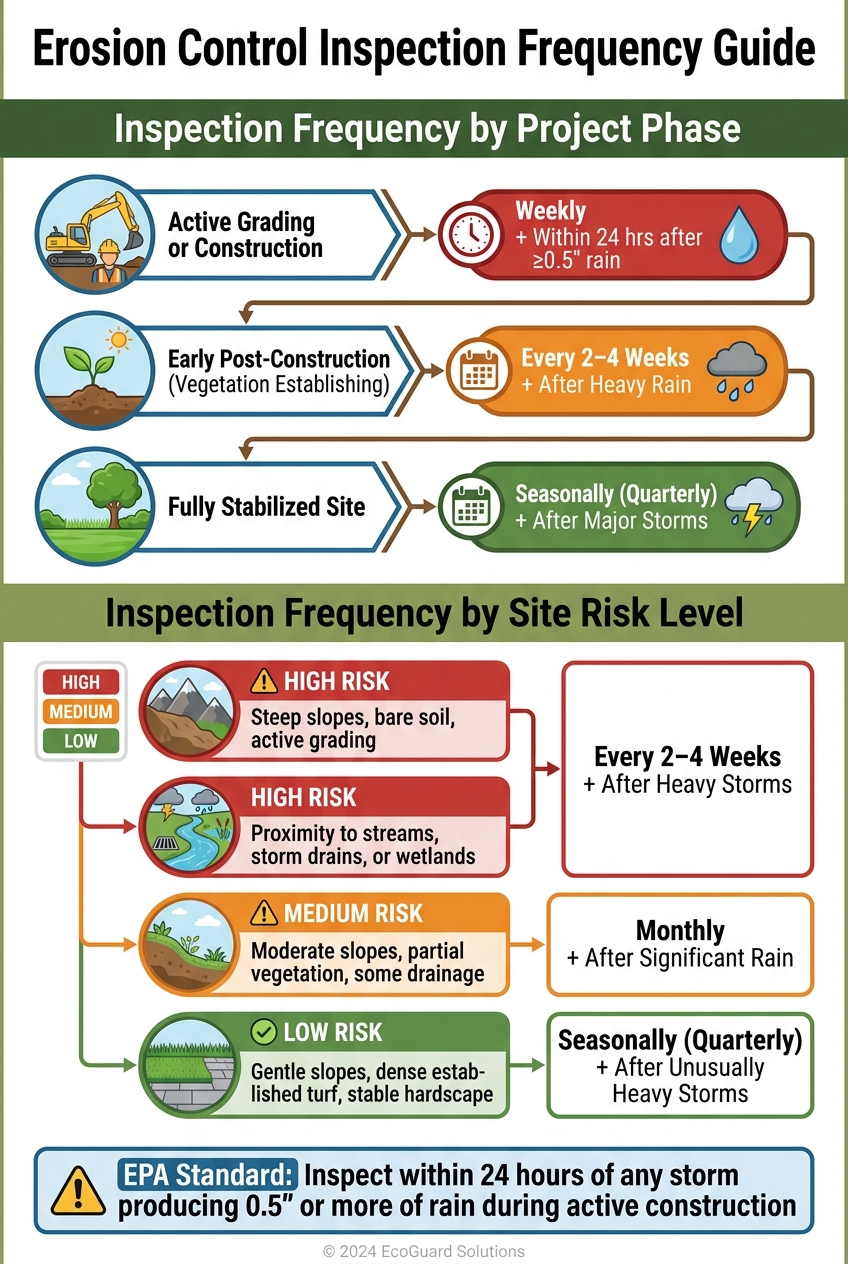
The EPA sets a widely used standard, which Maryland’s erosion and sediment control programs also follow. This standard requires weekly inspections during active site disturbance and an inspection within 24 hours of any storm producing 0.5 inches or more of rain. The EPA’s 2022 Construction General Permit specifically outlines this schedule.
When site activity pauses, some programs allow inspections every 14 days, in addition to post-storm checks. This relaxed approach is only suitable if erosion controls are stable and functioning as intended.
Here’s a breakdown of inspection recommendations by project phase:
| Project Phase | Recommended Frequency |
|---|---|
| Active grading or construction | Weekly + within 24 hrs after ≥0.5″ rain |
| Early post-construction (vegetation establishing) | Every 2–4 weeks + after heavy rain |
| Fully stabilized (established turf, permanent drainage) | Seasonally (quarterly) + after major storms |
In Maryland, counties like Montgomery, Howard, Frederick, Carroll, and Prince George’s typically adhere to Maryland Department of the Environment (MDE) standards. However, requirements can differ slightly by county. Always check with your local permitting or stormwater office and review your approved erosion and sediment control plan, which outlines the required inspection intervals for your project.
These general guidelines are a starting point, but you should adapt them to your property’s unique conditions.
Practical Tips for Homeowners and Small Properties
For homeowners, it’s important to adjust inspection schedules to match your property’s specific needs. After major grading or new lawn installations, perform biweekly inspections. Then, switch to weekly checks for about a month until vegetation stabilizes. Once your site looks stable, monthly visual inspections during spring and fall should suffice.
If your property has steep slopes, clay-heavy soils, or is near streams or drainage channels – features common in central Maryland – it’s wise to increase inspection frequency during rainy periods. A professional team like Pro Landscapes MD can help you create a tailored inspection plan. They specialize in grading, yard leveling, drainage installation, and stormwater management across central Maryland, ensuring small issues are caught early before they become costly repairs.
What Affects How Often You Should Inspect
Erosion isn’t a one-size-fits-all issue – inspection schedules need to be tailored to the specific conditions of your property. Two key factors play a major role in determining how often you should inspect your erosion controls: weather patterns and the level of risk associated with the site.
Weather Events and Seasonal Changes
Weather can be a game-changer when it comes to erosion control. For instance, any time your area experiences at least 0.5 inches of rainfall in a 24-hour period, it’s time for an inspection. Focus on areas like silt fences, swales, drainage outlets, and exposed soil. But rainfall isn’t the only concern. Different seasons bring their own challenges:
- Spring: Snowmelt can saturate the ground, increasing erosion risks.
- Summer: Severe storms can lead to heavy runoff.
- Fall: Fallen debris can clog drainage systems.
- Winter: Freeze-thaw cycles can cause heaving in retaining walls, cracked riprap, or loosened soil along slopes.
If temperatures are fluctuating above and below freezing, be extra vigilant. These weather-related triggers are crucial, but they’re just one piece of the puzzle.
High-Risk vs. Low-Risk Sites
The unique characteristics of your property also have a big impact on how often inspections are necessary. For example, the NRCS points out that increasing a slope from 3% to 9% can more than double the potential for erosion. Similarly, bare or recently disturbed soil erodes much faster – up to 100 times faster – than areas with established vegetation.
Here’s a quick guide to how site characteristics influence inspection schedules:
| Site Characteristic | Risk Level | Inspection Frequency Recommendation |
|---|---|---|
| Steep slopes, bare soil, active grading | High | Every 2–4 weeks, plus after heavy storms |
| Proximity to streams, storm drains, or wetlands | High | Every 2–4 weeks, plus after heavy storms |
| Moderate slopes, partial vegetation, some drainage systems | Medium | Monthly, plus after significant rain |
| Gentle slopes, dense established turf, stable hardscape | Low | Seasonally (quarterly), plus after unusually heavy storms |
Even properties that are considered low-risk can temporarily become high-risk under certain conditions, like new grading, tree removal, or construction activity. During these times, inspections should occur more frequently until vegetation is re-established and drainage patterns stabilize.
For properties in central Maryland, especially those with steep slopes, erosion-prone soils, or drainage systems that feed directly into local waterways, Pro Landscapes MD offers services like grading, drainage installation, and stormwater management. These services can help pinpoint and monitor areas that are most at risk.
Inspection Frequency by Type of Erosion Control Measure
Erosion control systems require different inspection schedules based on their type. Below is a breakdown of how often various measures should be checked and what to look for during inspections.
Temporary Controls
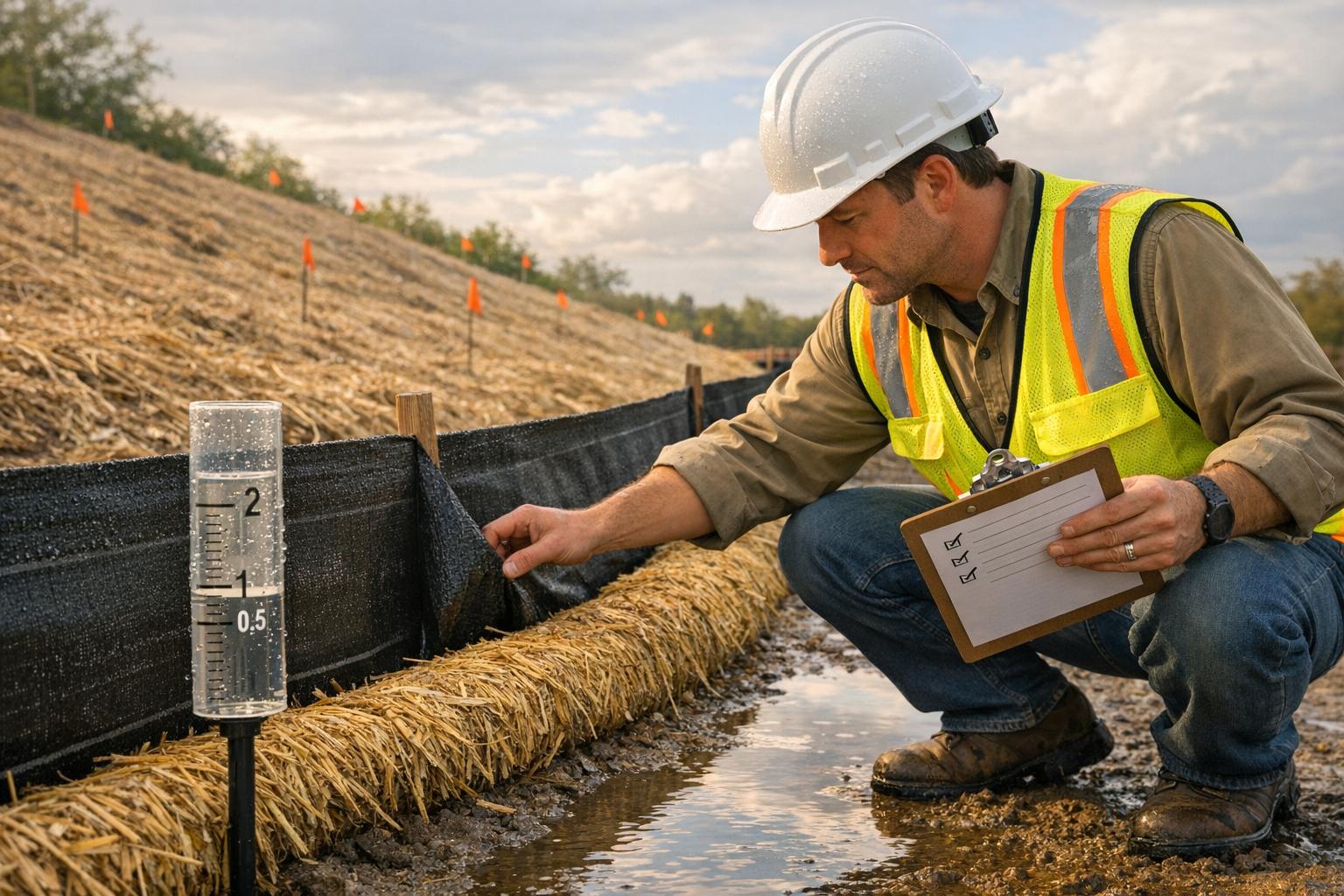
Temporary measures like silt fences, straw wattles, and construction entrances are prone to wear and tear. These should be inspected after heavy rainfall and frequently during active grading periods. Look for sediment buildup, torn or damaged fabric, and any signs of displacement.
Permanent Structural Controls
For permanent structures such as retaining walls, riprap, and hardened drainage systems (like French drains and catch basins), inspections should occur monthly after installation and after storms. Key issues to watch for include cracks, leaning walls, displaced riprap, and soil movement. Pay attention to signs of standing water, soggy areas, or soil erosion near drainage outlets – these could signal potential failures that might lead to more serious problems like foundation damage [2].
Vegetative and Soil-Based Measures
Vegetative solutions, including rain gardens, bioswales, and turfgrass plantings, need monthly inspections during their establishment phase and after heavy rainfall. Check for bare spots, poor plant survival, or water bypassing the intended flow path. Once vegetation is fully established, focus on monitoring plant health and clearing debris that could block water flow. For bioswales, occasional trimming or replanting of water-tolerant grasses and shrubs can help maintain effective filtration. Regular care ensures these measures continue to support landscape stability over the long term.
If you’re located in Maryland and need professional help with inspecting or maintaining erosion control systems, Pro Landscapes MD offers services to keep your property in top shape.
| Erosion Control Type | Inspection Frequency | Key Things to Check |
|---|---|---|
| Silt fences, straw wattles | After heavy rain; regularly during active construction | Sediment buildup, torn fabric, displacement |
| Retaining walls, riprap | Monthly after installation; post-storm | Cracking, leaning, displaced stones, soil movement |
| French drains, catch basins | Monthly; after major storms | Standing water, soggy areas, soil erosion near outlets |
| Rain gardens, bioswales | Monthly during establishment; after heavy rain | Plant survival, bare spots, proper flow path |
| Established turfgrass/ground cover | Seasonally; after heavy storms | Bare patches, runoff channeling, overall plant health |
What to Do During an Erosion Control Inspection
When conducting erosion control inspections, it’s essential to focus on detailed evaluations of key areas to ensure everything is functioning as intended.
Key Areas to Check
A thorough inspection starts with a close look at critical components. Begin by examining the perimeter of structures. Look for signs such as dampness, pooling water, or soggy soil near the base. These can be early indicators of drainage system problems. As Pro Landscapes MD explains:
"Signs of drainage issues include standing water, soggy areas, erosion, and water pooling near your home’s foundation." [1]
Next, move on to the surrounding landscape. Verify that berms maintain the correct height to redirect runoff effectively and that swales are free of debris. Walk along runoff paths to identify any new gullies, patches of bare soil, or water flowing in unintended directions. For permeable paver systems, check for missing joint sand or any cracked or displaced pavers. Address these issues promptly to prevent further damage.
| Area to Inspect | What to Look For | Action if Problem Found |
|---|---|---|
| Foundation perimeter | Pooling water, dampness, soggy soil | Regrade or install drainage; consult a professional |
| Berms and swales | Debris clogs, low berm height, water bypass | Clear debris, regrade berms, replant as needed |
| Permeable pavers | Missing joint sand, cracked/shifted pavers | Re-sand joints, replace damaged pavers |
| Regraded slopes | New gullies, bare soil, runoff issues | Stabilize soil, add vegetation or ground cover |
| French drains/outlets | Pooling water, soggy ground above drains | Clear blockages, check outlet flow |
Documenting these findings is essential to ensure issues are addressed and to stay compliant with any local regulations.
Recording Findings and Following Up
Keep detailed records for every inspection, noting the date, weather conditions, and key observations. This log will help track gradual changes and demonstrate compliance with any permits or regulatory standards tied to erosion control or drainage work [1].
When problems are identified, act quickly. Small issues, like a clogged swale or a bare patch in a vegetative buffer, can escalate rapidly – especially before a rainy season.
"Regular checks for plant health and occasional trimming or replanting may be needed to keep the vegetation thriving and ensure water continues to flow properly." [2]
For more serious concerns, such as persistent pooling or foundation seepage that basic maintenance can’t resolve, it’s time to call in a drainage expert. In Maryland, Pro Landscapes MD offers assessments and tailored repair solutions to address these problems before they lead to costly structural damage.
Conclusion: Keeping Erosion Control Systems in Good Shape Through Regular Inspections
Regular inspections are essential to maintaining an effective erosion control system. Catching problems early can save you from costly repairs related to foundation damage or unstable slopes. With Maryland’s unpredictable weather, post-storm and seasonal inspections are especially important.
The key is timing. Inspect your system after major storms and at the beginning and end of each season. Also, keep an eye out for warning signs like standing water or soggy ground near your property – these could indicate underlying issues.
For challenges beyond routine maintenance, professional help is the way to go. Pro Landscapes MD has over 15 years of experience in creating and maintaining custom erosion control solutions in central Maryland and Washington, DC. Their expertise includes French drains, regrading, berms, retaining walls, and managing permits to ensure compliance with local regulations.
"Our team will handle any necessary permits and ensure all work complies with local regulations." – Pro Landscapes MD
If you’re unsure about the condition of your system, don’t wait. Reach out to Pro Landscapes MD at 410-940-9664 to request a free proposal or set up a site visit. Protect your property by scheduling inspections after storms and seasonal changes.
FAQs
What counts as a “0.5-inch rain” storm?
A 0.5-inch rainstorm refers to total rainfall reaching 0.5 inches or more within a specific timeframe. This level of rainfall plays a key role in erosion control. It can lead to soil instability, overwhelm basic drainage systems, and highlight the need to check stormwater management structures like swales and drain pipes. Keeping track of rainfall ensures these systems work properly to prevent both erosion and flooding.
Do I need to document erosion control inspections for permits?
In places with strict runoff regulations, such as Maryland, maintaining proper documentation is a must. Detailed records of inspections and maintenance ensure your systems align with water quality standards. This not only helps you stay compliant but also keeps your property functioning effectively.
If you’re unsure about managing runoff or meeting documentation requirements, Pro Landscapes MD offers expert advice and tailored drainage solutions throughout central Maryland. They can help you navigate regulations while ensuring your landscape remains both compliant and efficient.
When should I call a professional instead of fixing issues myself?
When dealing with complex drainage problems, it’s best to bring in a professional. Issues involving water flow, grading, or erosion control can lead to long-term damage if not handled correctly. While smaller tasks might be something you can tackle, situations like steep slopes, high-traffic areas, or challenging clay soils require expert knowledge. Persistent flooding, ongoing erosion, or the need to meet local stormwater regulations are all signs that professional assistance is essential. Pro Landscapes MD provides customized solutions to safeguard your property effectively.
Chat with Us