









- bhavya gada
- No Comments
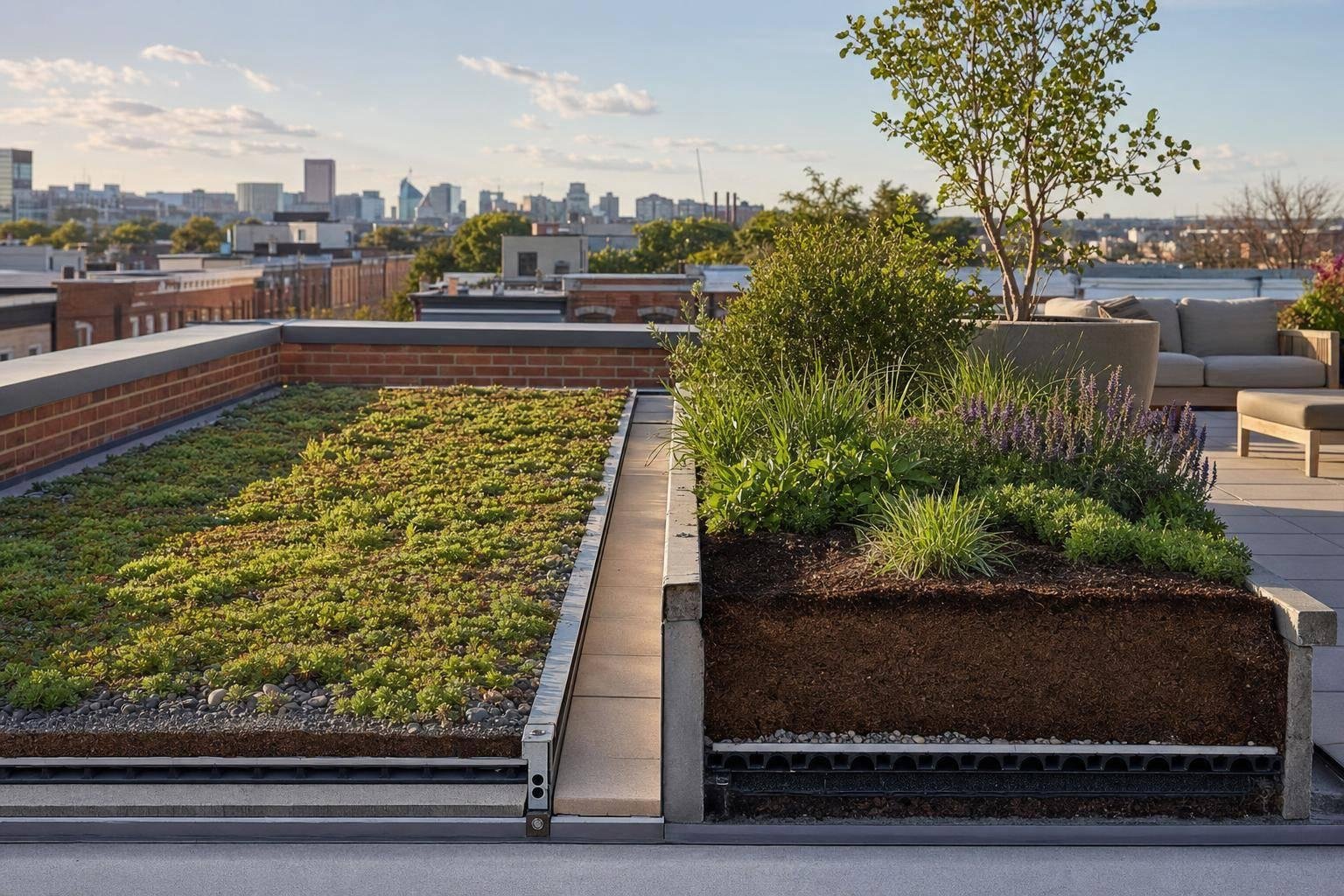
If your roof can’t hold much extra weight, I’d start with an extensive green roof. If you want a roof garden with shrubs, deeper soil, and regular care, I’d look at an intensive system.
Here’s the short answer for a Maryland home:
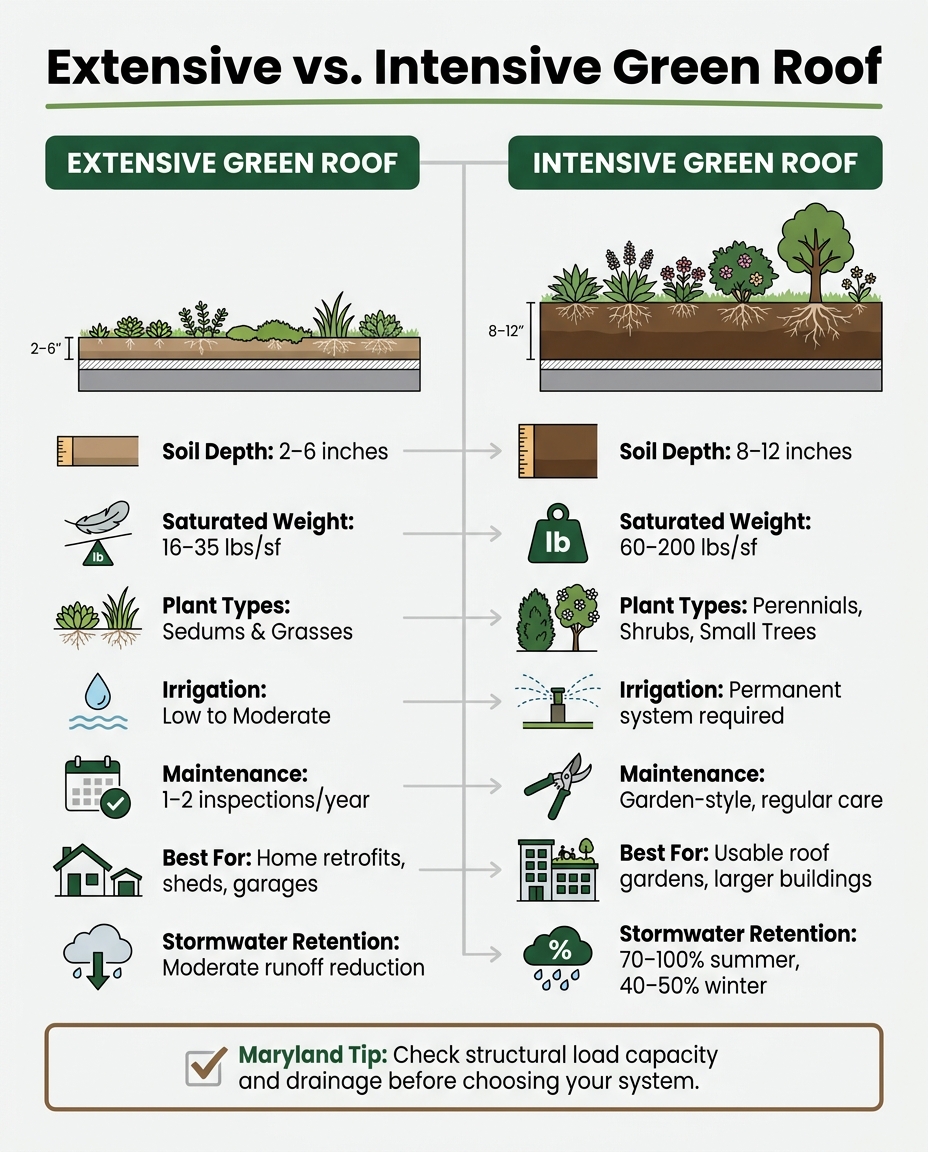
- Extensive roofs use 2 to 6 inches of growing media
- Intensive roofs use 8 to 12 inches
- Extensive roofs are lighter, with about 16 to 35 lbs/sf when saturated
- Intensive roofs can reach 60 to 200 lbs/sf when saturated
- Extensive roofs usually support sedums and grasses
- Intensive roofs can support perennials, shrubs, and some small trees
- Extensive roofs need less care, often 1 to 2 inspections per year
- Intensive roofs need irrigation, pruning, drain checks, and garden-style care
- Green roofs can retain 70% to 100% of runoff in summer and 40% to 50% in winter, with deeper systems often holding more water
My takeaway: for most Maryland retrofits, extensive is the simpler choice. It puts less load on the structure, needs less upkeep, and still helps with runoff and roof heat. Intensive makes sense when you want a usable roof space, the structure can handle the weight, and you’re ready for the extra work and cost.
Quick Comparison
| Factor | Extensive | Intensive |
|---|---|---|
| Media depth | 2–6 inches | 8–12 inches |
| Saturated weight | 16–35 lbs/sf | 60–200 lbs/sf |
| Plant type | Sedums, grasses | Perennials, shrubs, small trees |
| Irrigation | Low to moderate | Permanent system usually needed |
| Maintenance | Light | Higher |
| Best fit | Many home retrofits, sheds, garages | Roof gardens and usable roof spaces |
If I were making the call, I’d check structure, drainage, plant goals, and upkeep first. Those four points usually decide the right system fast.
Extensive vs Intensive Green Roof: Side-by-Side Comparison
REGENERATIVE DESIGN | Green Roof Details – extensive vs intensive green roofs
sbb-itb-843f8be
Extensive Green Roof: Lighter Build, Lower Upkeep
An extensive green roof is the lighter, lower-upkeep choice for many Maryland homes. It often works well on porches, sheds, and detached garages. Because the growing media is shallow, the roof doesn’t have to carry as much extra load. That can make a big difference when structural capacity is tight.
Shallow Soil Depth and Lower Saturated Weight
Extensive systems usually use 2 to 6 inches of growing media.[1] That shallow depth helps keep saturated weight down, which is why these systems can fit roofs with less carrying capacity.
As David Chewey, Landscape Architect, puts it:
"It could easily be a covered garbage bin – a little thing like that – or a shed or free-standing garage, if a structural engineer verifies it can withstand the extra weight."
- David Chewey, Landscape Architect [1]
These roofs are often installed with pre-grown mats or modular trays, which can make the setup process more straightforward.
Sedums and Minimal Irrigation
Sedums are the go-to plant for extensive roofs because they handle drought well and grow in shallow media. The plant palette is more limited here, but that’s part of the appeal. With fewer demanding plants, irrigation needs usually stay modest.
Low Maintenance and Stormwater Benefits
Upkeep is fairly light. In most cases, it comes down to inspections, weed removal, and drain checks.
There’s also a water-management upside. Extensive roofs can slow runoff and hold the first flush before pollutants make their way into local waterways and the Chesapeake Bay watershed.[1] The catch is simple: you get fewer plant choices and less flexibility than you would with an intensive roof garden system.
Intensive Green Roof: Deeper Soil, More Plant Choice, Higher Demands
An intensive green roof gives you more room to work with, but it also asks more from the building. Instead of a simple planted layer, you get deeper soil, more plant options, and the chance to turn a roof into a space people can actually use through our landscaping services. The catch? More weight, a tougher install, and more upkeep.
Deeper Growing Media and Higher Structural Load
Intensive roofs usually use 8 to 12 inches of growing medium. When saturated, they can add 40 to over 150 pounds per square foot to the roof, based on the soil mix and how much water it holds. [2]
That’s a big jump. In plain terms, this isn’t the kind of roof system you add without checking the structure first.
Perennials, Shrubs, and Garden-Style Use
With deeper media comes a much bigger plant palette. Intensive roofs can support perennials, shrubs, and, in some cases, small trees.
That opens the door to a more garden-like rooftop. Instead of a thin blanket of low-growth plants, you can build something that feels closer to a landscaped yard or terrace.
Irrigation, Maintenance, and Stormwater Retention
Intensive systems need a permanent irrigation system. Once you start using mixed plantings, rainfall alone usually isn’t enough.
Upkeep is also more hands-on. Routine care often includes:
- Pruning
- Fertilizing
- Plant checks
- Drain inspections
The upside is stronger stormwater control. Green roofs can retain 70% to 100% of runoff in summer and 40% to 50% in winter. [2]
Those trade-offs make the next side-by-side comparison much easier to understand.
Extensive vs. Intensive Green Roof: Side-by-Side Comparison
When you stack these two systems side by side, four things do most of the heavy lifting in the decision: roof load, plant range, water use, and upkeep. Soil depth and weight shape what the roof can handle. From there, planting style and maintenance needs help narrow the choice.
The quickest way to sort it out is simple: compare load, planting, water use, and upkeep.
Soil Depth, Weight, and Roof Capacity
Extensive green roofs are the lighter option. They use shallow engineered media and put less stress on the structure. Intensive green roofs use deeper soil media, which adds much more weight and often calls for a structural check before anything moves forward.
"Intensive green roofs are usually found on newer, larger buildings that are engineered to support their weight." [1]
That’s the big dividing line. If the roof can’t carry the added load, an intensive system may be off the table from the start.
Plants, Water Use, and Maintenance Commitment
Extensive roofs keep things simple. They usually support low-growing vegetation, often sedums and grasses, and they tend to need less upkeep once the plants are established.
Intensive roofs give you more room to work with. They can support perennials, shrubs, and even small trees. But that extra planting range comes with more hands-on care. Think pruning, fertilizing, and checking drains on a more regular basis.
Water performance also differs. Extensive roofs help reduce runoff. Intensive roofs can retain more water because of their deeper growing media.
Comparison Table: Quick Decision-Making Reference
| Factor | Extensive | Intensive |
|---|---|---|
| Soil Depth | Shallow engineered media | Deeper soil media |
| Structural Load | Lower load | Higher structural load |
| Plant Range | Low-growing vegetation, often sedums and grasses | Perennials, shrubs, and small trees |
| Maintenance Level | Lower upkeep | Higher, garden-style care |
| Stormwater Performance | Runoff reduction | Higher water retention |
These differences matter most after roof structure and drainage are part of the plan. In Maryland, structural capacity and drainage planning usually decide which system makes sense.
Maryland Design Factors and Final Recommendation
In Maryland, the system choice usually gets settled by climate and roof structure before plant selection even enters the picture. Central Maryland deals with heat, heavy rain, and freeze-thaw swings, and that mix puts green roofs under stress. Because of that, drainage, load capacity, and upkeep tend to matter most.
Structural Review, Drainage Planning, and Site Integration
A structural assessment is mandatory before any installation decision is final [4]. Weight is a big part of that review. A fully saturated extensive roof can weigh 16–35 lbs/sf, while an intensive system can weigh 60–200 lbs/sf [3]. For many older Maryland homes, that means reinforcement may be needed before the roof can handle the added load.
The roof also needs to be planned as part of the property’s drainage system. A proper drainage layer moves extra water to gutters during heavy rain. Without it, ponding can add unsafe weight and increase the risk of membrane damage [4]. Pro Landscapes MD provides grading, French drains, stormwater management, and drainage installation across central Maryland.
Once load limits and drainage are addressed, the main decision becomes simpler: how much upkeep do you want, and how much planting range does the roof need to handle?
When Extensive Fits and When Intensive Fits
For most Maryland home retrofits, extensive roofs are the better fit. They’re lighter, they use hardy sedums that can handle rooftop heat and drought, and after establishment they usually need only one or two inspections per year [3]. If the main goals are stormwater reduction and lower upkeep, this is usually the practical choice.
Intensive roofs make more sense when the structure can carry the weight, the budget includes permanent irrigation and regular garden-style care, and the goal is a usable outdoor space with more planting variety. They retain more water and offer more amenity value, but they also require more structural support and more upkeep [3][4].
So the tradeoff is pretty direct: lighter and simpler or deeper and more garden-like. Choose extensive for lower load and lower upkeep. Choose intensive for usable roof space and broader planting, but only when structural capacity and irrigation are already in place.
FAQs
Do I need a structural engineer first?
Yes. Before installing any green roof system, consult a structural engineer.
Green roofs add a lot of weight from soil, plants, and water. A structural engineer can confirm that your building can safely support that load, including the roof’s saturated weight, plus factors like snow and wind – whether you’re working with an existing roof or new construction.
Which green roof type costs more long term?
Intensive green roofs usually cost more over time. They have deeper soil, so the building often needs extra structural support. They also tend to need regular irrigation and more day-to-day care, especially when the roof includes a mix of plants like shrubs and trees.
Extensive green roofs are usually the lower-cost option. They use shallower growing media, support hardy plants that need less attention, and come with less upkeep as time goes on.
Can an existing home roof support an intensive system?
Yes, potentially – but this is not a simple retrofit.
Intensive green roof systems use deep soil to support larger plants, including shrubs and small trees. That extra depth adds a lot of weight. When fully saturated, these systems can exceed 50 pounds per square foot.
Because of that, a professional structural engineer needs to assess the roof’s load capacity and decide whether reinforcement is needed. Don’t assume an existing roof can safely handle that kind of weight without a formal review.
Chat with Us