









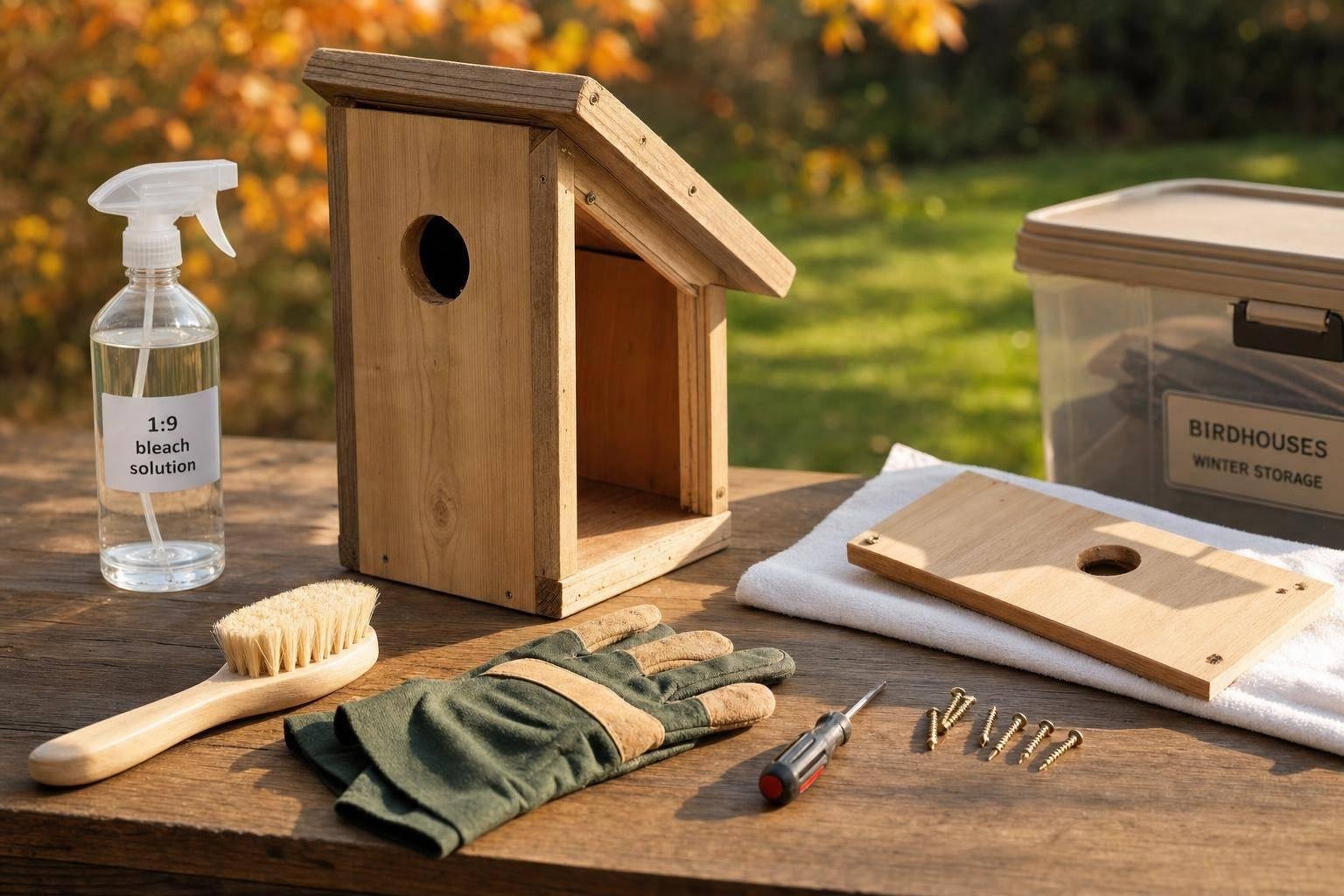
- bhavya gada
- No Comments
If I do one thing for a birdhouse in fall, I clean it, let it dry fully, and then decide if it should stay up or go into storage.
Once nesting season is over, I can safely remove old nests, droppings, unhatched eggs, and other debris. Then I check for rot, loose screws, mold, and insect nests. From there, I either store the box in a dry indoor space or leave it outside as a winter roost if it is still in good shape.
Here’s the whole process in plain terms:
- Clean first: wear gloves and eye protection, empty the box, scrub it, and disinfect with a 1:9 bleach-to-water mix
- Dry it all the way: leave it open in the sun so moisture does not sit inside over winter
- Inspect for damage: check the wood, roof, hinges, screws, and mount
- Watch for pests: remove only abandoned wasp nests; leave active insect nests to a pro
- Choose the next step: store older or spare boxes indoors, or keep sturdy boxes outside for winter shelter
- Check twice a year: once in October or November, then again in spring before nesting starts
A few points matter more than most. Moisture is the main problem in fall and winter, especially in cool, wet places like Maryland. And according to the bleach mix in the article, proper disinfection means 10% bleach and 90% water. That small detail helps cut down on bacteria and parasites left from the nesting season.
| Option | Best for | Main upside | Main risk |
|---|---|---|---|
| Store indoors | Older, worn, or spare boxes | Less rain, ice, and wind damage | No winter shelter for birds |
| Leave outside | Strong boxes in good condition | Can shelter roosting birds | More moisture and weather wear |
My rule is simple: clean it, dry it, inspect it, then let the box’s condition decide.
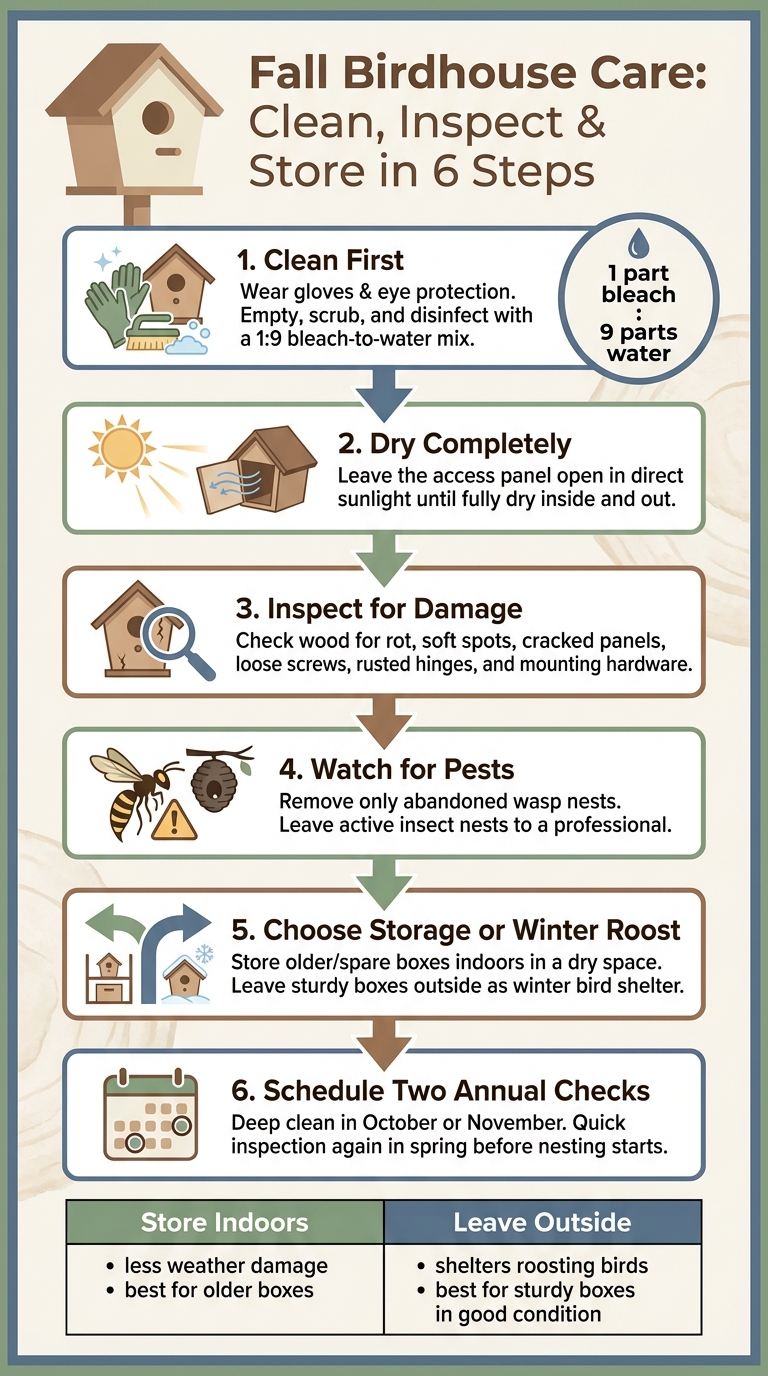
Fall Birdhouse Care: Clean, Inspect & Store in 6 Steps
Birdhouse cleaning, when and how
How to Deep Clean a Birdhouse Interior
After nesting season ends, clean the birdhouse before you repair it or put it away. Old nests can hold parasites and bacteria, and if they stay in the box all winter, that mess just sits there waiting for spring.
Remove Old Nests, Debris, and Unhatched Material Safely
Before you reach inside, put on gloves and eye protection. Old droppings, feathers, and nest material can carry parasites and bacteria. You don’t want that on your hands or anywhere near your eyes.
Open the access panel all the way. Then carefully remove the old nest, unhatched eggs, and any other debris inside the box.
Discard all debris away from the birdhouse site.
Scrub and Disinfect Interior Surfaces
Once the box is empty, scrub the interior with a stiff-bristled brush. After that, disinfect the surfaces with a bleach mix made from 1 part household bleach to 9 parts water.
Do this work outdoors in a well-ventilated area.
Rinse Fully and Dry in Sun Before Closing the Box
After scrubbing, rinse the inside well with clean water so no bleach solution is left behind. Make sure the drainage and ventilation holes are clear too.
Leave the access panel open and place the birdhouse in direct sunlight until it is fully dry inside and out. If you close it while it’s still damp, trapped moisture can lead to mold and mildew over winter.
When the box is dry, inspect it for damage, mold, and pests.
Inspect for Repairs, Mold, and Wasp Nests
With the box clean and dry, give it a close look before you store it for winter or put it back into use. This is the best time to spot small problems before cold weather turns them into bigger ones.
Check Wood, Roof, Fasteners, and Mounting Hardware
Start with the wood. Press on the floor and along the roofline to check for soft spots. If the wood feels soft or spongy, that usually points to rot. Also look for cracked panels, splinters, and wear along the roof edge that could let rain seep in.
Next, inspect the hardware. Tighten loose screws, and swap out rusted hinges before they give out. Then give the mounting hardware a firm tug so you know the box can stay in place through winter storms.
Find and Address Mold Before Winter
Even after a good cleaning, mold can still show up. That happens most often in boxes that sit in heavy shade or in areas that stay damp after repeated rain. Check for a musty smell, dark staining, or fuzzy growth. If you find any, make sure the box dries all the way before storing it.
Once you’ve checked for moisture, take a final look for pest activity before closing the box up.
Remove Abandoned Wasp Nests and Handle Active Insects Carefully
Check the entrance hole and the inside of the box before handling it too much. Wasps, hornets, ants, and bees sometimes move in after birds leave. If you notice insect activity around the entrance hole, don’t open an active nest. Leave that job to a professional.
For abandoned nests – the papery gray nests wasps build – scrape them out only after you’ve confirmed there are no insects inside.
sbb-itb-843f8be
Store the Box Indoors or Leave It Up for Winter
Once you’ve finished cleaning, repairs, and pest checks, you have two solid options: put the box away indoors or keep it outside as a winter roost. The best move comes down to two things: the box’s condition and whether birds in your area may use it for shelter during cold weather.
How to Store Spare Birdhouses in a Dry, Protected Space
A garage, shed, or other dry indoor spot is a good place for any box that’s older, worn, or simply not needed this winter. Try to keep it off concrete floors if moisture could be an issue. A shelf or any raised surface does the job well.
It also helps to keep mounting hardware and small parts with the box in a labeled bag. That way, when spring rolls around, reinstalling it is much less of a hassle.
How to Prep Outdoor Boxes for Cold, Wet Weather
If you’re leaving the box outside, now’s the time to get it ready for winter. For a box that’s still in good shape, tighten the mount, make sure the roof fits snugly, and clear the drainage holes so water can drain before it freezes.
Storage vs. Winter Roost: A Side-by-Side Comparison
| Factor | Store Indoors for Winter | Leave Up as a Winter Roost |
|---|---|---|
| Weather protection | Full protection from rain, ice, and wind | Exposed to winter weather |
| Benefits for birds | No winter shelter available | Provides shelter for roosting birds |
| Moisture risk indoors/outdoors | Low if stored in a dry space | Higher if moisture gets inside |
| Lifespan impact | Helps protect the wood and hardware | More wear from winter weather |
| Best fit | Spare or older boxes | Sturdy boxes in good condition |
Maintenance Schedule and Final Takeaways
A Simple Fall and Spring Maintenance Schedule
Check birdhouses twice a year. Do a deep clean and full inspection in October or November, then do a quick check in spring before nesting starts.
That simple routine goes a long way. Fall is the time to clean out old nesting material, look for damage, and get the box ready for the cold months. Spring is more of a last once-over to make sure the birdhouse is still safe and usable before birds move in.
How Yard Drainage and Placement Affect Birdhouse Life
After cleaning and winterizing, placement still matters. A birdhouse can be in decent shape, but if it sits in a damp spot, it may not last very long.
Well-drained areas help cut down on moisture damage and rot. Placing a box near trees and shrubs can also give it some shelter, as long as the ground still drains well. If water tends to collect around the base, that can shorten the life of the birdhouse.
Pro Landscapes MD offers drainage solutions across central Maryland, including:
- French drains
- Grading
- Yard leveling
Conclusion: Clean, Repair, Then Store or Winterize
Let the inspection guide your next move. Remove old nesting material, clean and dry the inside, handle minor repairs, and clear out mold or insect nests.
Then choose what makes sense for that birdhouse: store it indoors or leave it outside as a winter roost, depending on its condition.
FAQs
When is a birdhouse too damaged to keep outside for winter?
A birdhouse is too damaged to leave outside for winter when it can’t protect birds from the weather or starts to pose a safety risk.
Look for large cracks, rotting wood, or broken panels that let freezing rain, snow, or cold drafts inside. If you can’t repair it well enough to keep it weather-tight, take it down, store it, or replace it.
Can birds still use a cleaned birdhouse in winter?
Yes. Birds can still use a cleaned birdhouse in winter, especially cavity-nesting birds looking for shelter from cold, wet weather.
Cleaning it after nesting season helps keep the inside sanitary and free of debris, parasites, old nest material, and mold. That gives birds a safer, drier place to roost.
What should I do if the birdhouse keeps getting moldy every fall?
Deep-clean the birdhouse after the young birds have fledged. Clear out old nesting material and debris, then scrub the inside with a mild, bird-safe solution to get rid of spores.
Before you put it back together or store it away, make sure the birdhouse is completely dry. It’s also smart to check the ventilation and drainage holes so the inside stays dry and in good shape for the next birds.
Chat with Us