









- bhavya gada
- No Comments
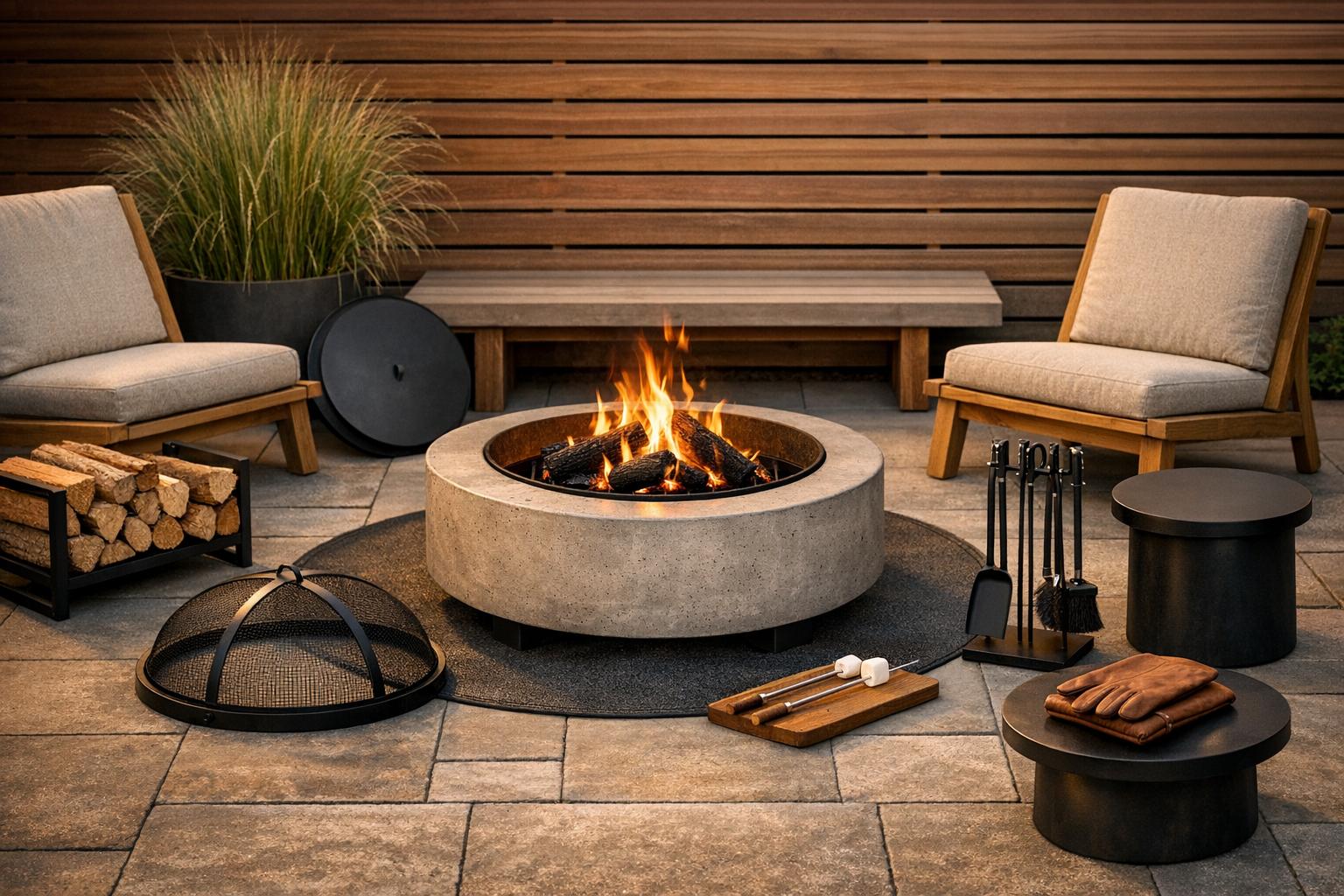
When it comes to fire pits, the right accessories can transform a basic setup into a safe, functional, and inviting space. From protecting your fire pit from the elements to enhancing its usability, these tools are designed to make your outdoor experience better. Here are 10 must-have fire pit accessories:
- Weather-Resistant Covers: Protect your fire pit from rain, UV damage, and debris with durable covers made from high-denier polyester or PVC-lined materials.
- Mesh Spark Screens: Keep embers contained and reduce fire risks with stainless steel or powder-coated spark screens.
- Fire Pit Grates: Improve airflow, create cleaner burns, and secure logs with cast iron, stainless steel, or carbon steel grates.
- Decorative Log Holders: Organize firewood while adding style with durable metal racks or unique designs.
- Heat Deflectors: Redirect warmth outward for a cozier experience using stainless steel deflectors.
- Fire Pit Mats: Shield surfaces from heat and sparks, protecting decks and patios.
- Fire Glass and Lava Rock: Add a sleek or rustic look while covering burners and distributing heat evenly.
- Fire Pit Tool Sets: Boost safety and convenience with pokers, tongs, and shovels made from wrought iron or stainless steel.
- Adirondack Chairs and Side Tables: Comfortable seating and tables complete the fire pit area for relaxation.
- Roasting Sticks and Cooking Grates: Turn your fire pit into an outdoor kitchen with long, durable roasting sticks and adjustable cooking grates.
These accessories not only protect and extend the life of your fire pit but also improve its functionality and visual appeal. Whether you’re looking for safety features like spark screens or stylish additions like fire glass, investing in the right tools can make all the difference.
Best Fire Pit Accessories for your Backyard – A Handy List (Our Favorite Picks)
1. Weather-Resistant Fire Pit Covers
A weather-resistant cover is essential for keeping your fire pit in top condition. Without one, your fire pit is vulnerable to rainwater pooling, UV damage, and debris, which can lead to rust, cracks, and even issues with electronic ignitions.
"A fire pit cover isn’t just a piece of fabric. It’s insurance for your setup. It’s what keeps your investment safe when you’re not using it." – Eben Jol, Creative Media Specialist, Starfire Direct [4]
The best material for durability is high-denier polyester – look for 600D or 900D – with a PVC or PU lining. This combination offers protection against UV rays, water, and wear, lasting through four or more seasons for an investment of $100–$200. Cheaper vinyl covers might seem appealing but often fail in cold weather, making them a poor choice for areas like Maryland, where humid summers, heavy rainfall, and freezing winters are common. Polyester or PVC-lined covers are a smarter long-term option.
To prevent moisture buildup, opt for covers with mesh vents hidden under protective flaps. This feature reduces the risk of rust and mold forming inside gas fire pit components, such as valves and pipes. Avoid completely airtight covers, especially in humid climates, as they can trap moisture and cause damage.
Getting the right fit is just as important. Measure the widest point of your fire pit from edge to edge, then add 2–3 inches for clearance. The cover should extend at least two-thirds of the way down the sides. If your fire pit has features like burner knobs, a spark screen, or an ignition box, include those in your measurements to ensure there are no gaps where water could seep in.
Maintain your cover by hosing it down every two months and inspecting the seams every six months. Taking these steps not only protects your fire pit but also sets a high standard for maintaining all your fire pit accessories. [4]
2. Mesh Spark Screens
A mesh spark screen is designed to sit over your fire pit opening, acting as a protective barrier between the fire and its surroundings. When wood burns, it releases hot embers that can travel several feet before landing on flammable surfaces like dry grass, wooden decks, or patio furniture. A screen helps keep these embers contained, lowering the chance of accidental fires[6][7].
The material of the screen is a key factor in how long it lasts. Stainless steel – particularly T304 or T316 grade – is the most durable choice, built to last over 25 years with minimal maintenance[8]. For more budget-friendly options, carbon steel and powder-coated steel are solid alternatives, though they may need occasional recoating to prevent rust. If you live in a humid area, such as central Maryland, stainless steel is a wise investment to combat moisture-related wear and tear.
Beyond functionality, spark screens also add to the visual appeal of your fire pit. Many are finished with black sand or high-temperature powder coatings that can handle repeated heat exposure[5]. Practical features like integrated handles or lifter rods make it easier and safer to add wood without having to remove the entire screen.
Prices depend on size and material. A 25-inch steel screen typically costs around $129, while a 40-inch heavy-duty stainless steel model can run up to $389[5]. To ensure a snug fit, measure the widest point of your fire pit opening before buying. The screen should extend slightly beyond the edge of the opening to block any gaps where sparks could escape.
For maintenance, clean the screen seasonally with mild dish soap, warm water, and a soft microfiber cloth. Rinse gently using a garden hose on a low-pressure setting, and let it air dry completely. Avoid harsh cleaners like bleach or ammonia, as well as abrasive scrubbers, as these can damage protective coatings and speed up rusting[9]. Storing the screen indoors or under cover during winter months can also help prolong its lifespan.
3. Fire Pit Grates
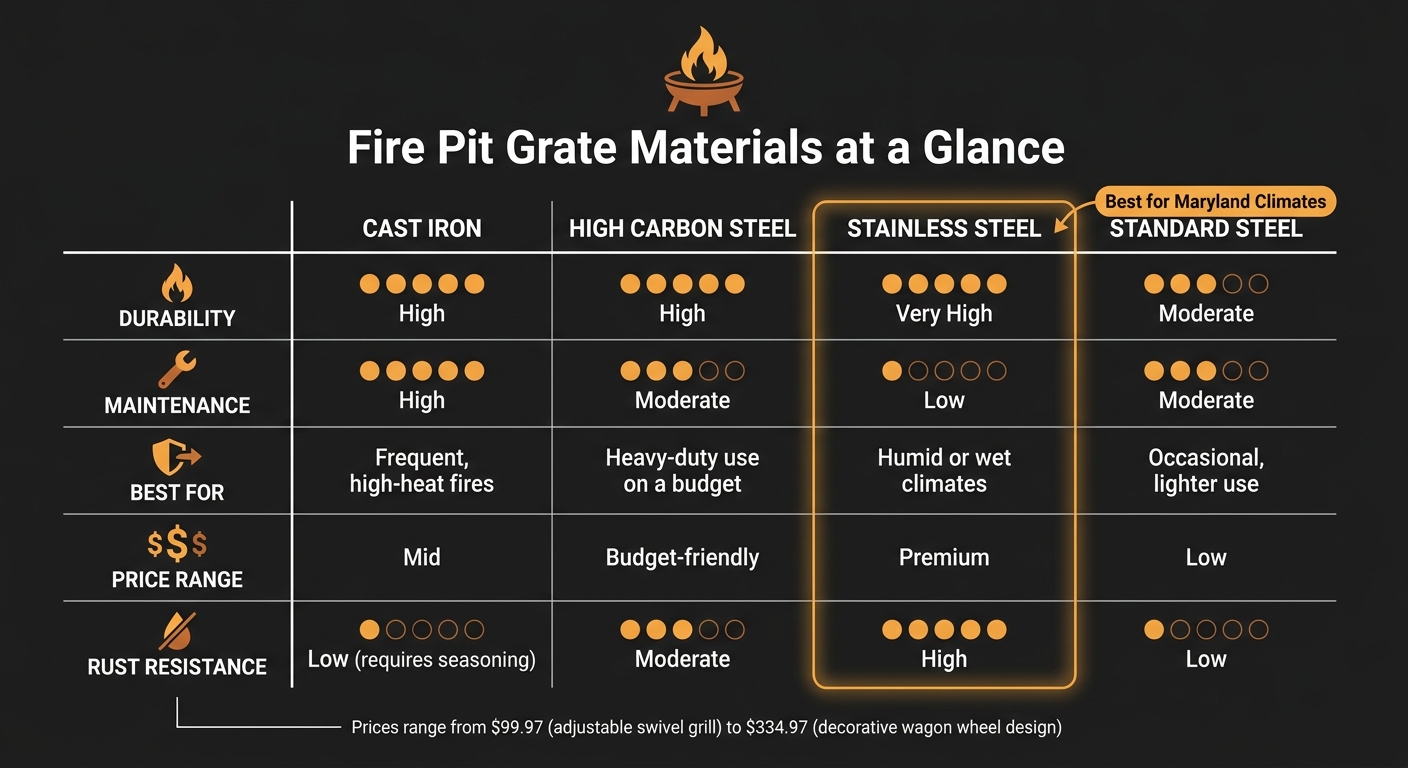
Fire Pit Grate Materials: Durability, Maintenance & Best Use
A fire pit grate lifts wood off the ground, improving airflow to create a hotter and cleaner burn. As Ash & Ember explains, "Fire pit grates work by lifting the fuel off the ground or fireplace floor, which allows air to circulate below and feed oxygen to the fire." [10]. This design not only produces a more consistent flame but also significantly reduces smoke.
Beyond improving performance, grates help secure logs in place and shield the fire pit’s base from direct heat, which can extend its lifespan. The metal framework of a grate ensures stability during the burn, adding an extra layer of safety. Choosing the right material for your grate is essential for both its durability and ease of maintenance.
Material matters when it comes to performance. Here’s a quick breakdown of common options:
- Cast Iron: Known for its ability to endure high heat and retain warmth, cast iron grates are ideal for frequent fires. However, they require regular seasoning with high-heat oils like canola or avocado oil to prevent rust.
- Stainless Steel: A low-maintenance option that resists moisture and is easy to clean, making it a great choice for humid environments.
- High Carbon Steel: A middle-ground option offering solid durability for heavy use without the higher cost of premium materials.
- Standard Steel: Suitable for occasional or lighter fires, though it doesn’t hold up as well under frequent, intense use.
| Material | Durability | Maintenance | Best For |
|---|---|---|---|
| Cast Iron | High | High | Frequent, high-heat fires |
| High Carbon Steel | High | Moderate | Heavy-duty use on a budget |
| Stainless Steel | Very High | Low | Humid or wet climates |
| Standard Steel | Moderate | Moderate | Occasional, lighter use |
When selecting a grate, size is another important factor. Opt for one that’s at least 1 inch smaller in diameter than your fire pit’s inner opening. This allows heat to circulate evenly around the edges [10]. Prices vary depending on style and material, starting at around $99.97 for an adjustable swivel grill grate and going up to $334.97 for a decorative wagon wheel design [10].
To keep your grate in good condition, maintenance is straightforward. Once cooled, use a wire brush to remove ash, as wood ash can trap moisture and accelerate rust [12]. After cleaning, dry the grate thoroughly and apply a thin coat of vegetable oil before storing it. This simple routine can help maintain the grate’s longevity and performance.
4. Decorative Log Holders
A decorative log holder does more than just organize your firewood – it adds a touch of style to your fire pit area. Instead of a messy pile of logs scattered on the ground, a thoughtfully chosen holder can become a standout feature of your outdoor setup. When selecting one, focus on materials and build quality to ensure it stands up to outdoor conditions.
For outdoor use, metal log holders are often the most reliable choice. Options like stainless steel and powder-coated steel are especially durable.
"Firewood metal racks are resistant to rot, insects, and weather damage, making them ideal for outdoor use." [13] – The Woodhaven
While wooden racks have a charming, rustic look, they’re prone to warping, rotting, and weakening when exposed to rain or snow.
Design-wise, there’s something for everyone. You’ll find sleek U-shaped steel racks for a modern vibe, classic hoop designs, ornate wrought iron with decorative scrollwork, or even hammered copper buckets for a cozier, rustic feel. Some models come with built-in hooks to hold fire tools, keeping everything you need in one place. For instance, Grandmix Store offers a house-shaped firewood rack in various sizes, made from stainless metal with baked electrostatic paint. This design not only stores wood but also acts as a striking feature near your fire pit. [14]
Practicality is equally important. Look for a holder that keeps your firewood elevated off the ground. This simple feature improves airflow, prevents moisture buildup, and keeps pests at bay. A standard 37-inch rack, for example, can hold about 30 to 40 split logs – plenty for a cozy evening by the fire. [16] Prices vary depending on the style and materials, starting around $40–$100 for basic steel racks, $120–$250 for more decorative options, and $325–$525 or more for heavy-duty models. [15][16]
Maintenance is straightforward. Powder-coated metal holders only need occasional cleaning to stay in good shape. When storing firewood outdoors, cover the top of the stack with a breathable cover to protect it from rain while preventing trapped moisture and mold. Avoid using plastic covers that seal the stack completely. For safety, place the log holder at least 20 feet away from your home to minimize the risk of pests migrating indoors. [17]
5. Heat Deflectors
When you sit around a fire pit, you might expect to feel a cozy warmth, but much of the heat tends to rise straight up and disappear into the air. This often leaves people around the fire feeling less warmth than they’d like. A heat deflector solves this problem by redirecting heat outward, keeping those nearby much warmer. It’s a simple yet effective addition that depends on durable materials to work well.
"You can feel the heat feet away." – Brian J., Verified Buyer [19]
For the best results, choose heat deflectors made from 304 stainless steel, which can handle high temperatures without warping or rusting. On the other hand, avoid aluminum models, as they degrade over time. One standout example is Heat Warden, which uses 304 stainless steel for every component – including screws, washers, and nuts. With over 1,000 five-star reviews from more than 8,500 customers, it’s a trusted option [20]. Prices for top-rated models typically range between $72 and $204 [18][19].
Some practical features to look for include a central opening that allows you to add logs or tend the fire without removing the deflector. Adjustable-height models are also available, giving you more control over heat distribution. If space is a concern, consider a deflector that nests neatly inside your fire pit for easier storage.
Before buying, double-check the dimensions of your fire pit to ensure compatibility with the deflector. Larger models – like 30-inch options – can be heavier and harder to adjust, especially when exposed to heat expansion. With the right heat deflector, you can boost both the comfort and safety of your fire pit setup while creating a more inviting atmosphere.
sbb-itb-843f8be
6. Fire Pit Mats
Fire pit mats are designed to shield surfaces from extreme heat and stray sparks. Metal fire pits can reach temperatures as high as 800°F, with radiant heat underneath ranging between 200°F and 400°F. This poses a serious risk to surfaces like composite decking, which begins to soften at 176°F and can melt at temperatures between 250°F and 350°F [23]. Beyond heat protection, these mats also catch stray embers, sparks, and grease, making them both a safety feature and a practical addition.
"Deck damage can take a long time to turn up, with wood continuing to smoke for hours before potentially combusting." [21]
This delayed risk highlights why many view a fire pit mat as an "insurance policy" for their deck. Their smooth, waterproof design not only protects but also makes cleaning a breeze.
Maintaining these mats is straightforward. Most models are easy to clean thanks to their sleek, water-resistant surfaces. A quick rinse with a garden hose and some mild soap is usually all it takes. Afterward, let the mat air dry in the shade to avoid discoloration [24].
When selecting a fire pit mat, ensure it’s large enough to accommodate all the legs of your fire pit [23]. Features like reflective edges can improve nighttime visibility, while grommets are useful for securing the mat in windy conditions [22]. Prices vary, with basic models starting around $29.99 to $49.99. For more advanced options, like those made with volcanic rock-fiber insulation and aluminum frames, expect to pay closer to $67.00 [21][22].
7. Fire Glass and Lava Rock
Fire glass and lava rock are two of the most popular choices for gas fire pit media. Beyond their good looks, they serve an important role: they cover the burner mechanism, protect ignition components, and help distribute gas and heat evenly.
Each has its own vibe. Fire glass brings a sleek, modern touch, while lava rock leans into a more natural, rustic aesthetic. Fire glass is tempered and polished, making it smooth and durable. It won’t melt, discolor, or produce soot under high heat[26]. When flames dance through the polished surfaces, the glass creates a sparkling, reflective effect that pairs perfectly with contemporary fire tables. You’ll find it in a range of colors, with favorites like Cobalt Reflective, Bronze, and Ice[26].
Lava rock, on the other hand, offers a rugged, natural look that works well with stone patios or rustic settings. Its porous texture not only adds to the aesthetic but also retains heat even after the flames are out[27].
Want the best of both worlds? Try layering. Start with lava rock as a base to cover the burner, then add 1–2 inches of fire glass on top. This approach combines the heat retention and affordability of lava rock with the eye-catching sparkle of fire glass – all without the cost of filling the entire pit with the pricier glass[27]. For reference, lava rock generally costs $7–$25 per 10 lb bag, while fire glass ranges from $25–$35 per 10 lb bag[25].
Maintenance is simple. To keep fire glass shining, rinse it occasionally with soapy water or a mix of white vinegar and water for tougher grime. Lava rock requires even less attention but can break down over time, so check for small particles that might clog the burner ports and replace as needed[27].
One important safety note: always make sure the media is completely dry before lighting your fire pit. Moisture trapped inside can cause lava rock to crack or pop and fire glass to shatter under heat[26].
8. Fire Pit Tool Sets
Having the right tool set by your fire pit isn’t just about convenience – it’s about safety and functionality, too. Most sets come with essentials like a poker, tongs, shovel, and brush. Some even include an ember rake to help you adjust logs, grip burning wood securely, manage ash, and keep the area neat. Plus, a stylish tool set can elevate the look of your fire pit area.
"Fireplace tools are not merely decorative elements but serve a variety of practical functions." – Northline Express [28]
Material matters when it comes to outdoor use. A good tool set blends durability with style. Wrought iron can handle high heat, but it needs a protective coating to keep rust at bay. On the other hand, stainless steel is ideal for fire pits exposed to rain or humidity. It resists rust and discoloration, making it a low-maintenance option.
"Stainless steel can stand up to the elements without rusting or discoloring. It’s also easy to clean and maintain." – Northline Express [28]
When shopping, ensure the set is specifically designed for outdoor use. Indoor-rated tools won’t hold up – finishes can peel or fade quickly when exposed to the elements. Even with outdoor-rated sets, storing them in a dry spot will help extend their lifespan.
Prices for fire pit tools can vary widely. Basic individual tools like pokers or tongs cost around $12.59–$20.99, while a 5-piece starter set typically starts at $96.65. High-end sets with decorative finishes, such as Graphite Powdercoat or Roman Bronze, can range from $160.79–$249.59 [28]. Beyond their functionality, a carefully chosen set that complements your fire pit can tie the entire setup together, giving it a polished, cohesive look.
9. Adirondack Chairs and Side Tables
Comfortable seating is a must-have for any fire pit setup, and Adirondack chairs fit the bill perfectly. Their wide armrests and contoured seats are designed for ultimate relaxation. As Eben Jol, Creative Media Specialist at Starfire Direct, explains:
"A fire pit draws people in – but the seating keeps them there." [1]
Arranging chairs in a circular layout ensures everyone enjoys equal warmth from the fire while fostering easy conversation. For the best experience, place the chairs 3 to 5 feet from the fire pit – close enough to feel the heat but far enough to avoid stray sparks. Adding side tables not only enhances convenience but also adds a touch of style.
For outdoor furniture that stands the test of time, high-density polyethylene (HDPE) is a top choice. It’s eco-friendly, resistant to rotting, splintering, or cracking, and features UV inhibitors to maintain its color. Some HDPE furniture even comes with a 40-year limited warranty [30]. If you prefer a more classic look, treated wood is another option, though it requires regular sealing or staining to protect against moisture and heat.
Side tables are perfect for holding drinks and snacks. Look for designs 14 to 18 inches tall with slatted tabletops to allow for proper drainage. Prices range from $70–$95 for basic models to $460–$545 for high-end options, such as those from Loll Designs, which boast a 4.75/5 rating for sturdiness and easy assembly [29].
Maintenance is straightforward with synthetic materials – just clean with warm, soapy water and a soft-bristle brush [29][31]. To elevate both comfort and aesthetics, consider adding UV-resistant cushions or weatherproof throw pillows.
For professional guidance on designing and installing your fire pit area, reach out to Pro Landscapes MD.
10. Roasting Sticks and Cooking Grates
A fire pit isn’t just about warmth – it’s also your ticket to outdoor cooking adventures. Whether you’re toasting marshmallows or grilling veggies, having the right tools makes all the difference.
As Greg Baker, Writer and Former Chef, says:
"Food tastes better when it’s cooked on a stick." [32]
When choosing roasting sticks, aim for ones that are at least 30 inches long to keep your hands safely away from the fire [32]. Some premium sticks even extend to 43–45 inches. Look for features like double-tined, U-shaped heads with at least 2 inches of space between the tines. This design secures food better and ensures even heat circulation. A standout option is the Jolly Green Extendable Rotating Sticks, praised by Serious Eats for their wide U-shaped heads and thumb-spin rotation feature.
Here’s a quick price breakdown for roasting sticks:
- Standard telescoping sticks: $26–$30 for a four-piece set
- High-end stainless steel sets (with cases): $50–$80
- Bulk packs of 120 bamboo sticks: Around $23 [32]
For more versatile cooking, pair your roasting sticks with a sturdy cooking grate. Cast iron and stainless steel grates are excellent choices, offering durability and great heat retention. Adjustable-height grates are especially useful, letting you control cooking temperatures by raising or lowering the grate over the flames. After cooking, clean your grate while it’s still warm using a wire brush, followed by a wash with soapy water, a rinse, and immediate drying. This keeps the grate food-safe and rust-free [11].
Cleaning roasting sticks is just as simple. Greg Baker shares this tip:
"Water acts on sugar, and heat acts on gelatin, so I found that soaking the marshmallow sticks in hot, soapy water for five minutes removed all of the residual marshmallow with no scrubbing involved." [32]
However, avoid soaking wooden handles. Instead, wipe them down after cleaning to prevent damage.
With the right roasting sticks and cooking grates, your fire pit transforms into a functional and stylish outdoor kitchen, making every meal an experience worth savoring.
Conclusion
The right accessories can enhance both the style and functionality of your fire pit area. These additions not only protect your setup but also improve its overall appearance. Together, they create a safer and more visually appealing outdoor environment.
"It’s the thoughtful combination of these accessories – from decorative fire media to functional tools – that transforms a simple fire pit into a complete, stylish, and safe outdoor centerpiece." [2]
Choosing the right accessories depends on your backyard’s specific needs. For instance, if your fire pit is on a wood deck, a heat-resistant mat is essential to prevent damage [1]. In a breezy location, a glass wind guard – sized to sit at least 2 inches beyond the burner pan – helps keep flames steady [3]. For wooded areas, a sturdy spark screen offers added safety. Interestingly, over 78% of fire pit owners prioritize accessories for both safety and usability [1], proving that these choices go far beyond mere aesthetics.
Maryland’s diverse landscapes, which include sloped lots and areas with heavy clay soil, bring unique challenges like drainage and leveling. Pro Landscapes MD specializes in designing and installing fire pits and hardscaping features tailored to these conditions. Their expertise ensures that elements like stone surrounds, seat walls, and outdoor kitchens are built on a solid foundation.
Since 1999, Pro Landscapes MD has served central Maryland, offering custom fire pits, patios, and outdoor kitchens designed to last. Whether you’re starting fresh or upgrading an existing setup, their team takes care of everything – from grading and drainage to final hardscaping details – using top-tier materials from brands like Belgard and EP Henry. Contact them today for a free estimate and create a fire pit design that perfectly balances functionality and style.
FAQs
Which accessories should I buy first for safety?
For a safer fire pit experience, begin with the basics: a spark screen, heat-resistant gloves, and a fire pit mat. These tools are crucial for protecting against flying embers, accidental burns, and potential damage to the surface beneath your fire pit.
How do I size a cover, spark screen, or grate correctly?
To determine the right size for a cover, spark screen, or grate, start by measuring your fire pit’s dimensions accurately. For round fire pits, measure the diameter. For square or rectangular pits, measure the length and width at their widest points. Once you have these measurements, add 2–3 inches to ensure a proper fit. Don’t forget to check the height as well – make sure the cover or screen protects at least two-thirds of the fire pit. This helps keep water out and prevents the wind from dislodging it.
What’s best for my fire pit: fire glass or lava rock?
Choosing between fire glass and lava rock comes down to your personal style and how you want your fire feature to perform.
- Fire glass gives off a sleek, contemporary vibe. It not only looks polished but also reflects heat efficiently and is easy to maintain.
- Lava rock, on the other hand, has a more rustic, natural feel. It holds heat well and allows for excellent airflow around the burner.
If you’re torn, why not combine the two? Layering them can give you the best of both worlds – great performance with an eye-catching aesthetic.
Chat with Us